An artists journey

Category: Mastery

  • To Be, or Not to Be.

    To Be, or Not to Be.

    I’m not discussing Hamlet’s famous existential crisis. I want to continue an ongoing theme of mindfulness. To be or not to be refers to our state of mindfulness when we go out shooting.

    Backwards

    John Barclay is an excellent photographer and workshop leader. I read an interesting article where he talked about a student in a workshop who changed John’s approach to photography. The student was a new photographer, but a Zen priest. His work was noticeably better than the rest of the student, even maybe John’s. John said “I had been approaching photography backwards and I believe this to be true for most people. Flint arrived at photography because he had learnt how to become mindful and present in the world, so when he picked up a camera, he’d already done all the hard work.

    What an interesting idea. And I see it playing out constantly. Photography instructors spend massive amounts of time teaching the technical process of taking pictures. Apertures and shutter speeds and depth of field and rules of third and all the other trivia we think is important to taking a good picture.

    But this student, Flint, had already figured out how to see what was interesting. Now he just needed to learn the technical process for recording it. Amazing. He starts out at the level most of us strive over years to attain then just has to learn to use a camera.

    Mindfulness

    John’s takeaway was a change of philosophy. A desire to become more mindful. He states it as “we don’t take pictures, we are taken by them.

    Cutting through the mystical fog that often surrounds its discussion, mindfulness is learning “to be”. We need to be present, to be still, to pay attention, to quiet our minds and let go of the plans and schedules and demands and interruptions that are constantly calling us.

    This is increasingly hard for most of us in the Western world. It’s a 24/7 world. We are over scheduled; we multitask; we carry devices with us that are always connected and bringing us “critical” information that is more important than our art. If we don’t respond immediately to every ding of our devices, we might miss out on something.

    Out culture is the opposite of mindful.

    Why do it

    I believe, and have seen research supporting it, that we cannot really multitask. We work much better concentrating on one thing for quality time, even getting into a flow state. Every time we are interrupted, it takes us at least 20 minutes to fully engage with the previous task we were doing.

    Even more seriously, as artists, we cannot think, reflect, introspect, envision creative new work when we are constantly stimulated and distracted by other things. The arena we perform in is our mind. We must take enough control of our mind that we can focus our creative energy on our art.

    Our work comes from our own mind. We need to carefully protect that and be serious about managing our own thoughts and environment. Outside forces want to impose on us and control our attention. We must fight that.

    How to do it

    Ah, how. That is the challenge. And the challenge is different for everyone and the solutions are different for each. We are each in a different situation.

    My personal experience and what works for me is all I can speak of with any confidence. I do not have a problem with social media, because I have never let myself become addicted to it. I realize this is a problem for many people to day. While I can sympathize, I do not understand it. In the same way that I can sympathize with an alcoholic even though I do not truly understand because I do not have a problem with the addiction myself.

    Social Media

    Social media is one of the worst attention sinks in most people’s lives.

    I know people who are on Facebook, or their drug of choice, dozens of times a day. They feel compelled to immediately respond to everything they see and spend hours hypnotized by short video clips. And if they do not post something every day they fear they will become irrelevant – in a couple of hours. This Fear of Missing Out is a primary tool of the media companies. They have huge staffs of unbelievably smart people working daily on ways to keep us addicted to their service. Results show that it works.

    What would happen if you put yourself in control of your attention instead of defaulting to what the media companies want you to do? For instance, if your main creative time is 8 to noon, then turn off your devices and do not allow yourself to access social media during those hours. Set a meeting on your calendar to block out time for you. Honor it and reserve it for your creative work. Put a wall around yourself and fiercely protect your creative time.

    After that, get in touch with the world and light up your huge network of followers if you need to. But an interesting thing to ask yourself is, in cold marketing and financial terms, what are those likes and followers worth to your business? How much revenue does it bring? Might your time be better spent on your art?

    Benefits

    I am talking generally about mindfulness. I strongly believe that we must be mindful in order to create the art we want.

    Do you ever just take your camera and go for a walk? I highly recommend it. But it is not effective if you are still fully tapped into the online world. Silence the phone, Take out the AirPods so you can actually listen to what is happening around you. Coach yourself to look at the world you are passing through. Really look. Take some time. Walking is good exercise, but forget the personal best goals. Just walk. Maybe even slow down if it will help you to pay more attention.

    It will take practice to slow down and start seeing. Keep doing it. It is a form of meditation to unplug from the connected world and get in touch with what is actually there. Life is a series of moments, and we have to re-learn to recognize them.

    Having a camera along is important to me. It gives me license to look for pictures. This ties back to what John Barclay said “we don’t take pictures, we are taken by them.” I go out, not to force myself to take a picture, but to allow myself to find something that interests me that should be photographed. I am often amazed.

    To be

    To be, or not to be. Being, in the moment, undistracted, is a powerful tool and a strong meditative force for artists. We engage different parts of our mind, waking up the right-brain creative side.

    Plus it has other benefits. We come back refreshed, more alive. Ready to do more creative work. Maybe we even want to keep the devices silenced for longer periods. Unwilling to put out precious attention under someone else’s control.

    Like the student John Barclay mentions, being in the moment is the hard part. Then we pick up the camera and capture it.

    We don’t take pictures. We are taken by them.

    Today’s image

    This was a mindful day in the woods. It was fall. The leaves and undergrowth were changing color. I love that time of the year, but I was feeling a reluctance to just snap pretty pictures of fall trees. On this occasion I got in tune with the rhythm and flow of the day, The wind blowing the leaves and grass. The light moving through all of it. Rather than a normal picture of fall leaves I worked on capturing the movement, the transitory feel of the season. I like it. It seems more in spirit with the day as I remember it.

    I want to hear your comments! Let’s talk!

  • If We’re Not Moving Forward…

    If We’re Not Moving Forward…

    We can get trapped in our own mind. Fear can pen us in. We must constantly remind ourselves of what happens if we’re not moving forward.

    Can’t stand still

    The actual quote, attributed to Sam Waterson, is “If you’re not moving forward, you’re falling back.” There is a lot of truth in that. As much as we sometimes would like to lock things down, we can’t. Time moves on. We move on. Relationships change. People grow apart or together. Our knowledge and tastes and perceptions change.

    Have you ever gone back and looked at some of your art or writing from a few years ago? It can be depressing. Our first reaction is probably that our work was terrible back then. But no, that is not necessarily true. That was the best work we could do at the time. We are seeing what we were at that moment in the past. But we have moved on now and are in a different place. And it’s an ongoing process.

    Fear

    Some of us get trapped in the past by fear. We did some work we thought was very good. Maybe we received some recognition for it. Perhaps we even were so unfortunate as to become famous. Now we are afraid to move away from what we became recognized for in the past, even though we are feeling a pull in a different direction.

    Past work becomes an anchor on our creativity unless we consciously cut it loose. But it is all to easy to fear that we have peaked and will never be able to do any more work as good.

    Well, maybe that is true. Maybe the next body of work we do will be inferior. We won’t know until we do it. When we strike out in a new direction it is quite natural to grope around hesitantly for a while until we find our footing. The first versions of new work could be fairly bad. But if it is where we are being pulled, we will find what we are looking for.

    Growth

    We are growing creatures. Life constantly gives us new stimulus, new knowledge, new ideas. We meet people and have good discussions. We learn new things and connect ideas and resolve old questions and ask new ones.

    At least, we are intended to do that. Some people stay in their rut, doing the same thing over and over without advancing. It’s like the question do you have 10 years of experience or 1 year of experience repeated 10 times? When put like that it seems obvious there is a big difference. But a rut is safe and comfortable. There is no risk. No one criticizes us. But where there is no risk, there is no change, no growth, no reward.

    As artists, we should be comfortable learning and changing. Experimenting with new ideas and ways of looking at our art and the world. Having confidence that our best work is yet to come.

    It really is true that there are only 2 paths. If we stop growing, we start dying. When we find ourselves in the inevitable rut, they can be hard to get out of. You have to very deliberately and carefully steer out. Let the wheels grab the sides and climb out slowly. Your car will complain, but change always causes criticism. Hopefully, you are not in too deep.

    We are different every day

    We are not the same person today that we were yesterday. Like the expression that we can never step in the same river twice. Of course, that does not mean we are jerked around in some type of schizophrenic fugue. We don’t bounce randomly to wildly inconsistent states. At lease, I hope you don’t.

    Who we are, our values and beliefs, stays relatively constant. We build on that base and develop as a person. Growth is usually incremental. Hopefully becoming a better person as we progress. Our art may seem to jump more as we embrace new expressions of what we are feeling. Like Picasso going through a blue period or an African period or a cubism period. He never changed who he was, he just responded in different ways at different phases of his life.

    Our art changing as we grow is natural and healthy. It is much easier said than done, but we should not fear letting go of what we have done in the past, even if we are well known for it. We should trust that we are growing as an artist and being led to new and better work.

    It is exciting to look forward to what is to come and what we have yet to create.

    What would be of life if we didn’t have the courage of doing something new?

    Vincent van Gogh

    Today’s image

    I chose this to represent the daily battle we all face. The internal struggle to rise above conformity and create what we have inside us. Don’t settle. Don’t give in.

  • What Is Creativity?

    What Is Creativity?

    I’ve discussed aspects of creativity before. Mostly from a practical standpoint. It is a topic that has a special call to me. But what is creativity actually? I decided I would do research to find out what the experts say.

    Psychology

    So I set out to find out what people who spend their career studying creativity have to say about it. I have mentioned Teresa Amabile and some of the intriguing papers she has written. They led me to believe there might be useful insight to be learned.

    After some internet research I saw several mentions of a book “The Nature of Human Creativity“, published by Cambridge University Press. It is a collection of papers by 24 psychology scientists that are frequently cited in textbooks and other papers. The first page describes it as “an overview of the approaches of leading scholars to understanding the nature of creativity, its measurement, its investigation, its development, and its importance to society.” Wow! That’s exactly what I wanted!

    I eagerly bought it and jumped in, only to find it was like wading through a swamp. Turns out the giveaway I should have caught was that this was by “leading scholars”. Works like this are written by PhD’s to impress other PhD’s. There is little thought of communicating practical advice to real people. But I have read a lot of PhD and above papers, so I pressed on, although with diminishing enthusiasm.

    Spoiler alert: I gave up about half way through. It’s not that I couldn’t understand it. Instead, I found it very unsatisfying. I could tell there would be no light at the end of the tunnel, because the real answer is that the scientists don’t know. Sure there are lots of theories. Scholars live by making and publishing theories. That does not mean they are very meaningful.

    So, what is it?

    A lot of psychologists accept the statement that “creativity involves the production of original, high-quality and elegant solutions to a certain class of problems – novel, complex, and ill-defined, or poorly structured problems.” [Mumford, Medeiros, and Partlow, 2012] This is one of the simplest and most concise statements defining creativity I have found by the psychologists.

    In practice, though, it leaves a lot of unanswered questions for me. The one word I definitely agree with is production. You cannot evaluate the creativity of something until it is made or built. Someone has to be able to see it, hold it, examine it, compare it to other things. Otherwise it is just an idea.

    But then what about terms like “original” and “high-quality” and “elegant”? What do they mean? Who defines them? And is art included in the set of “novel, complex, and ill-defined” problems they study? To me art is definitely all of those.

    How to measure it

    One of the greatest problems I had with the psychologists, though, is how do you measure creativity? If something calls itself a science then its theories must be measurable and other scientists must be able to repeat and independently verify the results.

    Most of the psychologists agreed, probably correctly, that creativity varied by domain. They pretty consistently solved the measurement problem for their research by using a panel of domain experts in each specific area to score the creative works. The expert scores determined the creativity judgment for any work being evaluated. The fact that the expert’s scores had decent statistical correlation was their “proof” that the measurement was valid.

    That is easy and it takes the researchers off the hook. They do not have to be the judges. To me, though, it is the thing that invalidates the whole research approach.

    Is art different?

    The psychologist’s measurement approach will work OK for engineering or math or software or accounting. Most any problem solving discipline where the problems can be expressed and solution quality can generally be analyzed and agreed on.

    I believe art does not fit this pattern and has a terrible history of valid critical judgment. There are no clear right or wrong solutions in art. Critic judgment is often strongly biased by their opinions and background and training. Just look at the resistance and rejection a new movement like the Impressionists got when they opposed the established Realist intelligentsia. Or look at Paul Klee. History seems to repeat itself about every generation.

    On a much smaller scale, look at typical photography contests or exhibition competitions. Perhaps I am just an arrogant curmudgeon, but I often look at the winners selected and think “you’ve got to be kidding; I throw away better ones than that”. I have done judging (forgive me) and I know judges can come to consensus and select the top 3 entries they like best according to the criteria they have set. But unless a work is a blatant copy, I disagree that they can reliably determine a quantitative measure of its creativity.

    To me this shows that we should have little confidence in the ability of critics to judge creativity in art.

    If we don’t know what it is, how can we do it?

    Sherlock Holmes seems to be the first to state “I know what is good when I see it”. Don’t we as artists do that all the time? Isn’t that the only criteria that can guide us?

    We could say “I don’t know what creativity is, and judges seem to be telling me I must not be creative, and I can’t always do work that is demonstrably original and novel, so I will give up”. If we did that no art would ever be done. At least not by honest, truth seeking artists. It is easy to copy what seems to be popular, but really different work always fights against a headwind.

    But think. Who is it that is telling you your work is no good? The same people who told Monet and Van Gogh and Klee they were no good. I’m glad they didn’t listen. They kept their head and did the work that was unique to them. And the world is better for it.

    We each have to determine what evaluations we choose to accept for our art. Do not give weight to the negative talk by the critics when your inner voice disagrees. Your inner voice may not be right. It may need new training and experience. But you have to trust yourself, and go with your instincts. You really don’t have any other reliable standard.

    Talent or skill?

    So is creativity a talent or a skill? Does it come from the Muses or is it something we are born with? Can we develop and enhance it or are we stuck with what we have? Can other people reliably measure our creativity?

    Probably some or all of that. Don’t expect the answers to come from psychology research . They are at least as blind as the rest of us. If scientists can’t give us objective answers, we have to decide who we listen to. As an artist we need to give greatest weight to our own evaluation. It is the only way we will follow our path.

    One thing I do know is that creativity seems to reward hard work. If we sit around waiting for inspiration, we may be sitting a long time with nothing to show for it. Get busy. Go out in the field or go to your studio and make trash if necessary. Do something. Movement seems to generate creativity. Make your own path and don’t look back.

    Disclaimer

    I am not belittling psychologists. Most of them I have studied seem to be very intelligent, hard working people. I’m just saying I don’t think the methodologies I have seen used in studying creativity are destined to lead to much success in understanding art.

    Maybe they can understand why 2 software developers with seemingly equivalent training and experience can exhibit vastly different levels of creativity and productivity and quality in their work. Something I have often seen first-hand. But that is a different and easier to study domain.

    I wish them luck. But for me, I will not look to psychology research for future help in understanding artistic creativity.

  • Lighten Up

    Lighten Up

    By lighten up I don’t suggest we make more high key images. It’s not a bad idea if you don’t do it much. But I mean to give our viewers more opportunity to figure things out for themselves.

    Serious

    Most of us take the world very seriously. Of course, there are serious issues we live with all the time. I don’t minimize them. But I learned from an expert in culture that, being an official old guy, I typically have less anxiety than most of you younger people.

    Personally, I’m glad. I hate going around burdened down with angst and fear. Instead, when I’m out taking pictures I see joy and hope and feel uplifted.

    I’m not trying to change the world with my images. At best, I hope to help a few people have a better day by looking at my work.

    But another way to lighten things up it to be more ambiguous. I notice that most of my work has a clear subject. Low ambiguity. Also, not so many questions for you to answer for yourself. This is probably a fault.

    Ambiguity

    Ambiguity is a marvelous tool. Used sparingly it can liven up our work and give our viewers more challenges and rewards. Ambiguity means being open to more than one interpretation.

    I recently watched a video on Creative Live by Renee Robyn. She is a conceptual artist who constructs images as composites of many layers. Some of her work leads to various interpretations. I was interested that she said about one that she asked many people what it meant to them and every one had a different interpretation. And none matched what she had in mind. That is ambiguity.

    Ambiguity introduces the option of different interpretation. Of course, that is always possible with any image, but more ambiguity makes it more possible.

    Leave questions unanswered

    As I get older I find my work asking more questions than answering them. Maybe I realize I know less as I age.

    I cynically view that a lot of young people come out of art training thinking they now think deep thoughts and have to raise great questions for their viewers. Later, whether they realize it or not, most of them settle down some and their work says “this is what I see”. Even later, like me, they might come around to saying “these are things I still don’t understand, but I see them different and less rigidly now”.

    Intentionally introducing more ambiguity is one way to move away from imposing my own interpretation on a scene. By leaving more room for the viewer to create their own story it becomes more of a conversation.

    Say more

    It is quite possible to say more by saying less. This is one of the beauties of poetry. Great poetry may introduce deep truths in a few words, but in a way that keeps the reader thinking about it on and off for years.

    I have no images where I claim such insight or depth. But I do think that by leaving more for the viewer to fill in from their own experience and viewpoint, there can be more interest.

    Giving viewers the clear answer to things can come across like a boring lecture. It may be good information, but it doesn’t necessarily engage you. I have this problem with a lot of landscape images I see (and take). It’s a landscape. Beautiful place, great time of year, I’d like to go there, but there’s nothing else. Nothing left for me to figure out or question.

    It seems much more rewarding to hint that there is more depth there to be discovered. To give the viewer a chance to participate, to become a co-creator.

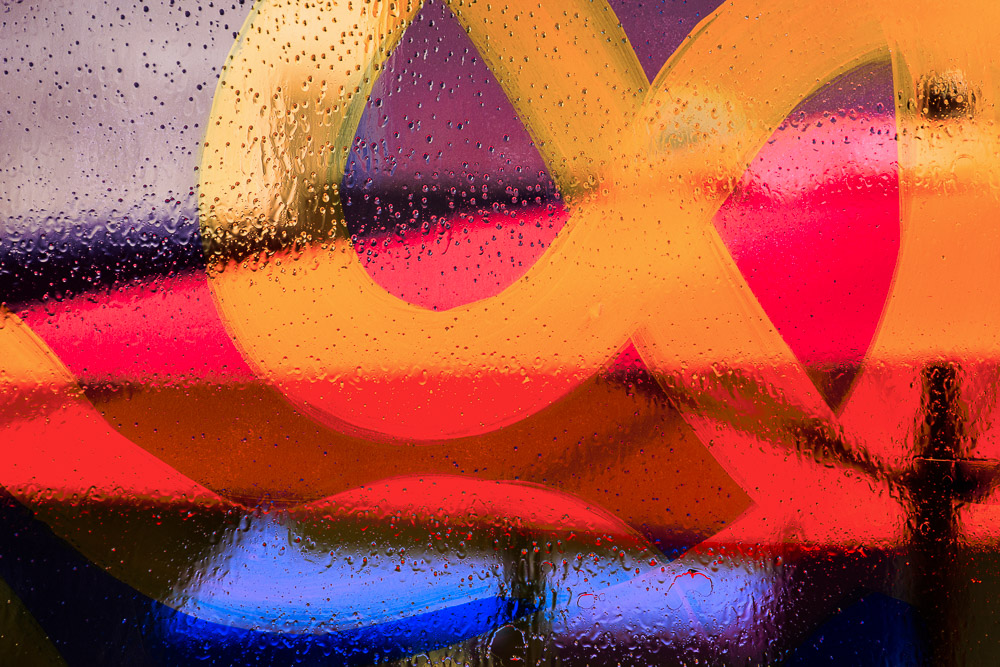
    Today’s image

    This image is a little ambiguous. I’ll let you figure out what it actually is. I left a couple of strong hints, but feel free to make up your own interpretation, your own story.

  • Print It!

    Print It!

    Some would argue that an image is not final until it is printed. More and more I am tending to agree. Print it – you will learn a lot and be a better photographer.

    What is the thing you are creating?

    I am intrigued by the idea of creativity and I have studied creativity research some recently. Real, hard core theoretical psychology. It has been disappointing. One of these days I will write an article on what I have observed.

    One of the things I do appreciate about the papers I have read is that they tend to tie creativity to producing something. Sort of the idea that if you just think creative thoughts, are you creative? If you can’t or won’t produce a creative work, is the creativity really there?

    There is benefit in producing something and holding it up for yourself and others to see and examine. Small images on a screen do not have the impact

    Why a print

    A print is real – a tangible, physical product. It takes on a life of its own; it is held, examined, felt, passed around, hung on a wall. It is permanent.

    Creating a print changes our thought process and our relationship to the image. We must finalize it, because the print will never change. And we have to re-think it in terms of the limitations of the print medium.

    It is kind of like having a child. Initially it is my baby, very closely held and personal and protected. Then it grows up and becomes an independent person.

    And by analogy, the print is made to be permanent and independent. It is a work we have produced for others to have and enjoy.

    What do we learn

    I am amazed by what I learn by printing an image. It was edited for hours until I am sure I am happy with it. Then when the print comes out, it’s “Really? That needs more work”.

    Viewing a print is quite different than looking at an image on screen. We have a different relationship with it. Our perception is very different. Even at a simple technical level, an image on a screen is formed by light being generated, an additive process. A print is seen as light reflecting off a substrate as modified by colored pigments. A subtractive process. The perception and the psychological process is different.

    But ignoring all technical considerations, there is something about a print that points out all the flaws in your image. Seeing it as a physical representation on paper changes how we look at it and what we see. If you want to find out if your image is any good, print it.

    How is it that I can work with an image for hours on screen and not see that sensor dust spot in the sky? Why didn’t I see that the mid tone contrasts are inadequate? And that purple highlight just doesn’t have the punch I wanted. Where did that distracting line leading off the edge come from?

    We see a print more critically. Since it is a different process on a different medium we have a fresh look. And a print is far more limited in dynamic range than our camera sensor or computer monitor, so we have to map it differently to get the result we want.

    A real thing

    Holding our image makes it real. It has weight and texture and it is a permanent work independent of us. To use the baby analogy again, before the child is born it is still kind of an abstract idea. After it is born it is real and living.

    In the days of film, making your first print was often a seminal moment. The experience of seeing a black & white image “come to life” in the darkroom bath is often the moment people say they became hooked on photography. It can be somewhat similar with printing, if you do your own. Seeing this baby of yours coming to life on paper right there in your studio is a joy.

    Have you held a print? Isn’t it magical? And if you hand a print to someone, watch their reaction. Wonder, joy, maybe fear of ruining it combined with a desire to touch it. They only see images on screens. When it leaps off the screen and becomes a real, physical object they perceive it very differently.

    Summary

    I am doing more printing recently. I knew it would be a change and a learning, since I had not done it for a while. But even I was not prepared for it. But I love it. A great print is a thing of beauty. The image becomes real, alive, permanent. Like our child, it grows up and has a life of its own.

    Try it. It could change your viewpoint.