

I still see people agonizing over how much processing they are “allowed” to do on their photographs. But what is a photograph and what does it become if it is processed heavily?
Unique
Photography is rather unique among 2-dimensional art forms. Other forms like painting construct an image directly on the media. It is immediate and tactile. With photography, we usually capture the image whole and then indirectly manipulate the pixels. The final image is produced later.
The tools we have available now allow great freedom in the manipulation that can be done. So much so that some people cry foul and say, “too much, it’s not a photograph anymore.”
Is there a rule here, or are people just expressing their preferences?
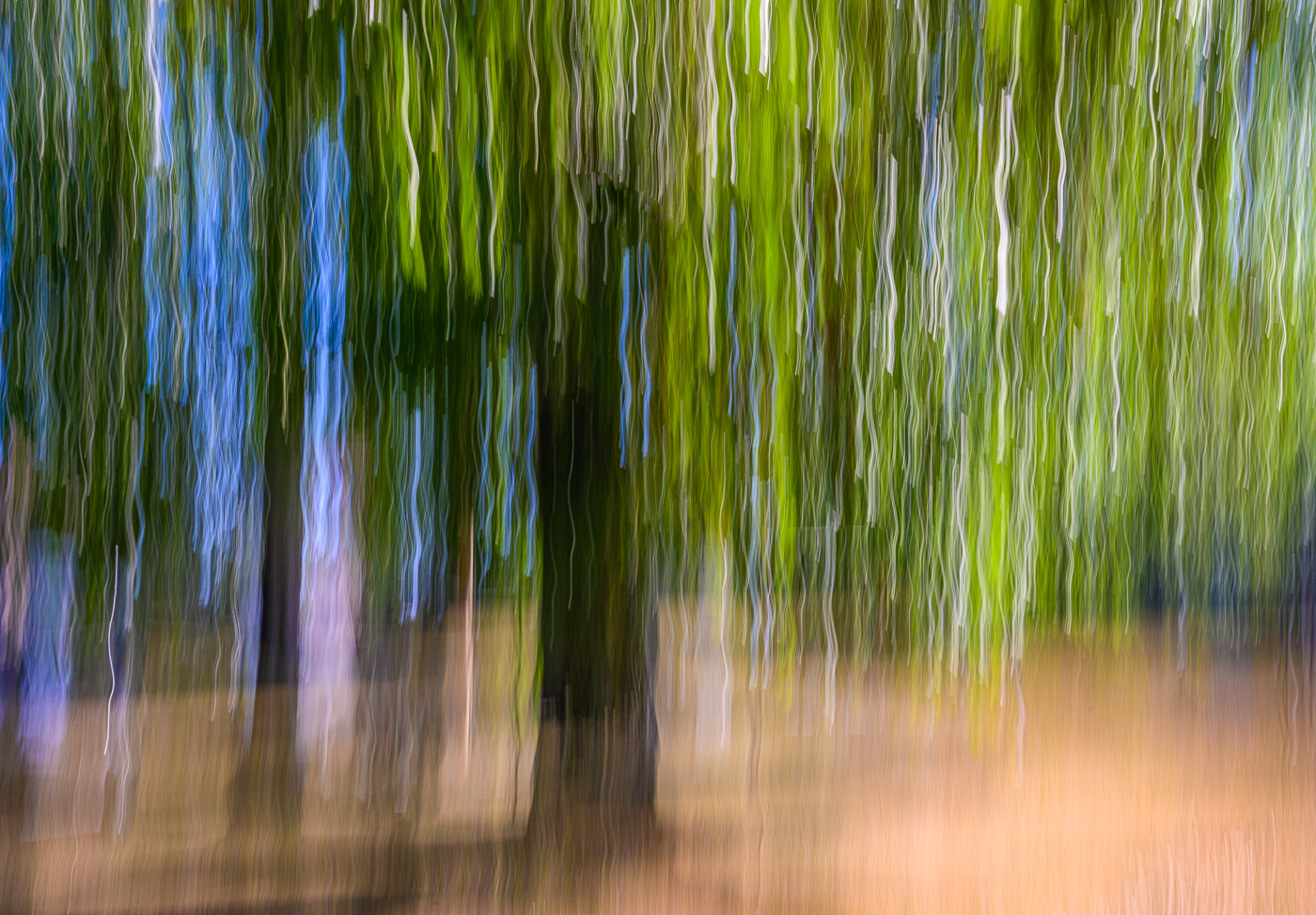 ©Ed Schlotzhauer
Technology
In photography, we never actually touch our pixels, and usually not the media. Light is captured by a sensor or on film. It is digitized. Then we process it as data in our computer. Even when we view the resulting image on a screen or as a print, we still only indirectly see the result of our processing. A pixel, as a digital value, is almost imaginary. It cannot be seen or felt or weighed.
So, we must use a complex tool chain of technology to accomplish our results. Modern cameras are amazingly complex, with processing power that rivals computers of a few years ago. The digital files must be brought into our computer and processed with some of the available application software, depending on our preferences.
Even to view the image requires complex technology. Web browsers or other viewing software using high resolution monitors. Printers with sophisticated error diffusion algorithms, using multiple inks to construct a pleasing representation of what we created. To make a print, the pixels are “sprayed” on a media by a machine, not by our hand.
Even if you use film, it must be developed and printed. It is probably digitized. Then it goes into the technology chain I described above.
 ©Ed Schlotzhauer
Core of reality
But despite the technology differences, a major factor is that traditional photography usually starts with a real scene. This, to me, is one of the great things about photography, but also a problem for many people. In normal practice, we do some corrections and tone changes, remove some distractions, maybe add small things. If we compare the result next to the original scene, nearly everyone would recognize that the photograph represents that scene.
Because of the history of the medium and the nature of the photographic process, many people imply a contract that a photograph must represent reality. Reality being what was actually in front of the camera at the moment of exposure.
If our artistic processing deviates too far from this implied contract, many people get offended. Or at least nervous and filled with doubt.
The question seems to revolve around whether the artist claims the image represent reality or it is art. If I see a photograph of a news event, I expect it to be showing reality. Sure, the exposure could be corrected, and a few very minor distractions could be cloned out. But these changes must not alter the substance of what the image is showing. If a news outlet uses an image that is altered to significantly change the scene, or is created by AI, they will lose all credibility with me. I will never trust them again.
But to me, art has completely different standards. I can’t help what viewers assume, but I can control my intent.
 ©Ed Schlotzhauer
Painting
Let’s contrast this to painting. I believe the same standards exist, but to a lesser degree. If a painting claims to show reality, it must do so. Otherwise, it is art and it can do whatever it wants. But few people expect a painting to represent a scene in exact detail.
Did you know that some portraits of Abraham Lincoln were somewhat false? He was a notoriously homely man. Some portraits softened his features to make him look better. That seems a gray area. Not a faithful representation but not entirely lying.
At the other extreme are the paintings of Albert Bierstadt. He was a romantic artist of the 19th century who glorified the American west. I have been to some of the locations he painted, and I can attest that his images are complete fiction. But they were popular. In those days, very few people could visit those areas, so they believed his paintings as reality.
But the nature of a painting is that the artist starts with a blank canvas and uses a brush or a knife or a pencil to lay pigment on the substrate. It is hands on and considered to be creative. There is little criticism if the artist takes liberties or completely makes up the scene.
Even if you watch a painter working en plein air, the resulting image is seldom a faithful representation of the scene. They take whatever liberties they want to simplify, or eliminate distractions, or change it to be more interesting. It is recognized as being art.
I have never seen one criticized for not looking exactly like the original. People hold photographs to different standards. Even other photographers.
What is a photograph?
So, then, what is a photograph and why do we treat them differently?
I believe it is because many people have a model in their heads that paintings are creative works and can be anything the artist wants to do, but photographs are snapshots of reality and should stay that way. I believe this statement is too restrictive of photography as it exists today.
In the 19th century, when photography became popular, the technology was crude. Photographers could only capture black & white images of still subjects. So the marketing pitch was that they can capture reality in an instant.
We have come a long way. The technology has far fewer limitations. Very high speed or very long exposures can freeze or express movement. Dynamic range is extended. Digital prints are almost perfect. Editing tools are so good that there are few excuses for having an imperfect image – unless that is the artist’s intent. Parts of scenes can be composited together or parts can be “painted” or AI generated.
Because of these greater freedoms, artists are now able to express themselves more. In the same way that Impressionist painters were completely rejected by their Realist contemporaries, we see photographers beginning to push the boundaries and make photographs into something different, and bring criticized for it. Something that does not follow the rules and conventions established by others is initially rejected.
What is a photograph? Maybe it is anything you want it to be. Maybe the distinction is the contract with the viewer. Is it presented as reality or as art?
 ©Ed Schlotzhauer
When is it not a photograph?
I consider myself a photographer and an artist. In my work, I may alter the pixels any way I want to achieve the result I like. I can blur or sharpen. Distractions can be removed. Skies can be replaced. I often composite bits and pieces of many disparate scenes to create something new. I have been known to stretch and twist and flip with little regard to the “truth”. of the actual scene. Sometimes, the more I can forget the original scene, the better my art gets.
With all of this, I am comfortable calling my work photography. Occasionally I call it art based on photography. Depends on the audience.
Since what I do is pixel based, and nearly all of it came from captures of real scenes, It is clear to me that it is photography. It does not matter much to me where the pixels came from as long as they are my original work. It doesn’t matter to me if the end image represents something that exists in reality.
On the other hand, by my value system, if a digital image is AI generated or entirely drawn or painted, it blurs into what I would call Digital Art. The distinction being that there was no image capture at all.
My position is that I will not use AI. I don’t like it, and I don’t plan to use it to create my images. I do not consider it photography. That’s my bias.
My stance
One of my granddaughters is studying animation. Most of her work is based on 3-D models. Is that photography? Not to me. But if one of those artists chooses to call what they do photography, or if someone calls what I do Digital Art, I am not in a place of authority to prevent it. Labels are not important to me.
So, a working definition for me is that it is a photograph if it was made mostly from photographic captures. The degree of processing makes little difference. If it was substantially generated by AI, it was not a photographic capture. But the reality is, there is no rule, and I don’t think there can be.
My contract with the viewer is this: if I claim the image is truth, it should essentially represent the original – essentially, I am not a photojournalist. If it is art, then almost anything goes. Either way, I claim it is a photograph.
I will not give you an AI generated image and claim it is a photograph I made. Neither will I go on a public rant against an artist who does. The philosophers and great minds can debate the fine points. I prefer to go on just making my art however I want to.
Leave a Reply