An artists journey

Category: Mastery

  • What’s the Noise?

    What’s the Noise?

    Noise in digital imaging. Is it a problem? Is it part of the art? Should you be concerned? Are there exotic techniques you need to learn to eliminate the noise?

    Fear

    Many of us have been taught to fear noise. So much so that I know people who would pass up a great shot because the image might be noisy. The fear of noise is an irrational, superstitious fear.

    This seems most common in the landscape photography community. Conventional wisdom, and the teaching of most instructors, says we should always shoot at the “native” ISO of the camera for lowest noise. That would be ISO 64 for my camera. If we don’t, we are increasing the noise in our images and that would be a “bad thing”.

    Have you ever examined the feared noise yourself? Do you understand what it is and what effect it has on prints? Have you confronted the monster and stared it down?

    Noise Technology

    The digital sensor is an amazing piece of technology. It has a HUGE grid of photo-receptive sites. My Z7 has nearly 46 million pixels. A strand of the smallest human hair would cover at least 14 of these pixels. No wonder I see dust spots!

    Did you know that “digital” imaging is actually an analog process? Each receptor “adds up” the number of photons it receives for a frame. This is a scalar value, an analog signal. Each site is read out to an amplifier and analog-to-digital converter where it is transformed into a digital value. The amplification is determined by the ISO setting – dialing in a greater sensitivity corresponds to more amplification. This amplification is one source of noise. Any time you take a very low level analog signal and amplify it, some noise is inescapable.

    But in addition, the sensor chip itself contributes noise. There is a phenomenon called “shot noise”. It is beyond my ability to explain simply, but electrons spontaneously generate noise. It is usually low level and it is temperature dependent. This is why your camera probably has a long exposure compensation mode. It is there to reduce this background noise accumulated over a long exposure. During a long exposure the sensor is powered for long enough to raise its temperature, leading to increased noise. The compensation mode takes another exposure, but with the shutter closed. This reads the background noise level with no light coming in. The camera basically subtracts the noise signal from the original image. It does a pretty good job.

    The amplifier and the sensor noise generation are 2 significant sources of noise in digital imaging. Not the only ones, but they are big. Keep in mind that most of the writers you will see do not have a significant technical background. They sometimes give bad advice because they do not really understand what is happeningl

    What does the dreaded noise look like?

    Take an image with the ISO cranked up pretty high, say 12,800. Look at it at 1-to-1 magnification in your editing software. You will see that it looks kind of like blotchy sandpaper. You are seeing the 2 primary types of digital noise: luminance noise and color noise.

    Luminance noise looks kind of like the grain we used to see in fast black and white film. Some people like it and it does add an interesting texture to some images. Color noise is the mottled color patches you may see at high magnification. I don’t know of anyone who likes that. Both of these types of noise can be compensated for significantly by your editing software, like Lightroom Classic.

    Let me point out that noise is just a part of the image capture. It is not something that, when they see it, the authorities kick you out of the gallery or revoke your artist’s certificate. You have an artist’s certificate, right? πŸ™‚

    Noise Techniques

    Noise is part of the technology we deal with because we do digital imaging. We need to be aware of it and know how to deal with it, if it is a problem for us. I mentioned amplification noise and sensor noise.

    To minimize noise, keep the ISO low, keep the sensor cool, and minimize long exposures. Simple. But what if that doesn’t work?

    I will use me as an example. I often shoot in low light, sometimes hand held with no tripod. And I often use long exposures. Am I doomed?

    Here are the decisions I generally make: if I want the image to be free from blurring caused by shake, I up the ISO until the shutter speed is at about 3x the focal length. Yes, conventional wisdom is 2x, but I find that does not work well for very high resolution sensors, even with great image stabilization. If I want a long exposure for the creative effect, I use it. Noise is not a significant consideration most of the time. And, unconventionally, I usually leave the long exposure noise compensation off.

    Let me address that last one. Why would I leave the long exposure noise compensation off? The noise here is made worse by sensor heating. I shoot a lot in Colorado. Unless it is mid summer, the sensor stays pretty cool. As a matter of fact, it is often more of a problem keeping the battery warm enough to not shut off. And even in summer, it is not a problem to wait a few seconds between shots to let it cool. There have been a few times where I have gotten in trouble with this, but very few.

    So what?

    For me, noise is just a part of the creative balance. Sometimes I want to minimize it, sometimes I actually want to introduce it. Even for the vaunted landscapes, noise can introduce a welcome texture at times, maybe to give a grit for effect or to give subtle interest to a featureless sky.

    I do not fear noise. ISO 400 is my default setting – that is 3 stops over the camera native ISO. I do not mind going to 3200 or 6400 if I need to as a tradeoff to capture what I want.

    With my camera it is hard to discern noise at 400. There is not much to find at 1600. I admit, my old training to favor the lowest ISO sometimes interferes with my artistic judgment. I try to fight it.

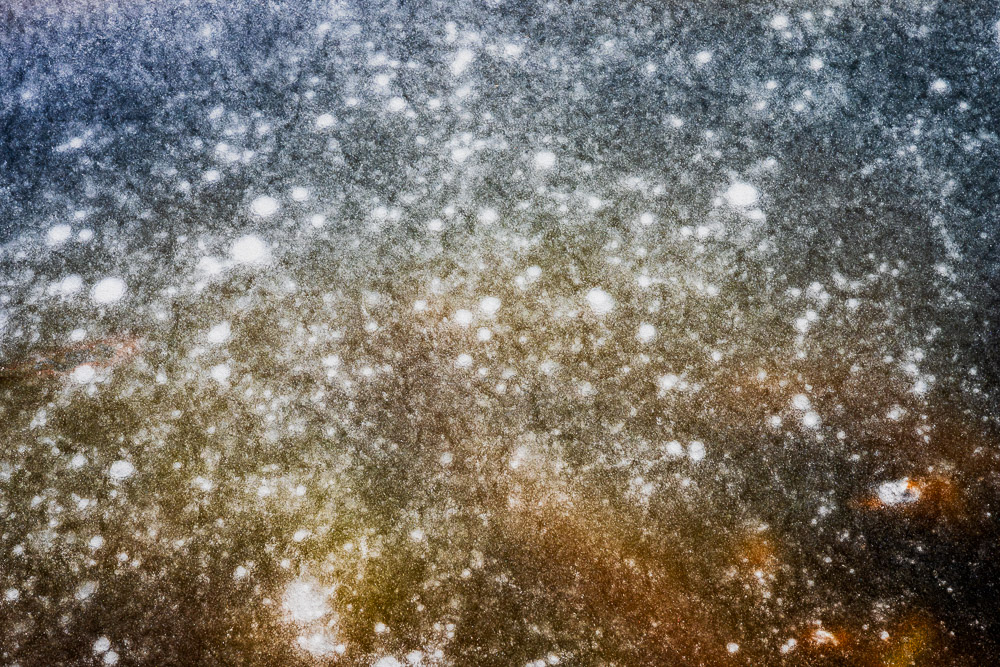
    The image with this article was shot at ISO 6400, with what is, as of this writing, an 8 year old sensor. I’m not ashamed of the noise. It I didn’t shoot at 6400 I would not have gotten the image. Good tradeoff, to me.

    Noise is a traditional part of photography. It is a feature that sets it apart from painting. Black & White photography favored grain for a gritty look. Many artists like the effect. Even the ones who may not use it recognize and accept it as part of the medium. Digital noise is the equivalent.

    So don’t fear noise. Accept it. Use it where you can. Understand where it comes from and what control you have. Your editing tools have ways to reduce it, and they do a pretty good job. Luminence noise is not exactly the same thing as grain, but the overall effect is not that different. Perhaps always totally eliminating noise is not the goal. Did you ever see the slider in LIghtroom Classis in the Effects panel to increase grain? Play with it sometime. It may add to your artistic vision.

  • The Paint is Never Dry

    The Paint is Never Dry

    I find there are 2 categories of images in my library: ones I am “done” with and ones I want to tweak each time I open the file. Furthermore, it seems the ones I want to do something to each time I see them are the ones I like best. I refer to this as the paint being never dry.

    A significant advantage of digital image manipulation is that it is so easy to make changes. This can also be a problem.

    Wet paint

    Modern technology gives us great freedom to edit and express ourselves. It is so easy to make some changes every time we open the file. Oh, I didn’t see that little flaw. I really don’t like the relation of these tones now that I look at it again. Maybe it would have more punch if I pumped some of these colors some.

    But this is a subtle trap. A trap of time, because this is a never ending treadmill of editing, and of lack of confidence. I will write about this confidence problem in the future. Basically, it has been hard to accept that, as an artist, no one can tell me what is “right” or when I am “done”. I am the only one who can decide.

    Prints

    I wrote once about prints being a frozen moment in time. This is one of the great things about prints. They are not changeable.

    A print represents my interpretation of the image at one moment in time. It is very tempting for me to modify it a little every time I print it. But now that I do editions of prints, I have to discipline myself to create exact duplicates for each print in the edition. It would be dishonest and a disservice to the purchasers if each one was different.

    Part of the process of growth is deciding that an image is “done” and is ready to be shown and purchased . And I have to be able to stand proudly and represent it as my art, that I am proud of, even if I see opportunities for improvement.

    Creative vision

    But my creative vision is evolving all the time. It is frustrating to be locked in to printing a series a certain way when I may see it different now. I am resolved, though, that that is the requirement. I will have to exercise my creativity on new images.

    The images are my children, in a sense. But any parent finds out that after they grow up, you have to let them go. Send them on their way to be independent. I can no longer control them or manage them. Kind of the same with my images. When one is sold, the whole edition is frozen, out of my control.

    Oh, but the new images, the ones that haven’t sold yet. They are free to be interpreted and re-interpreted at will. I love to do this, but I recognize the need to let the paint dry at some point.

    As the artist, all my images are resources to me to use any way I wish. Even the editioned ones can be recycled by compositing, over-painting, or radical cropping. Anything that makes it into a whole new work of art. My creative vision can best be applied to new work rather than reworking old things.

    Growth

    I don’t believe doing a great image “uses me up”. I have to believe I have a boundless well of creativity. It is better to go out and create new work. Learn what I can from the best of what I have done and go on from there. Explore a theme and do variations. Discover new themes.

    My curiosity will lead me to new subjects, new visions for old ones, new points of view. I will learn new techniques for shooting and processing.

    It would be devastating to feel that my best work is already done. I would have to quit if that were the case. I feel sorry for the old rock bands who still tour. No one wants to hear their new work. They only want to hear the hits of 40 years ago. They are trapped. I couldn’t do it.

    So, yes, my tendency is to want to constantly rework and tweak everything. I often see things I would change in my work. But discipline has to be applied. Most old work should be left as a memory and a signpost along the way of my journey. Apply the creativity to the new images. Let the paint dry.

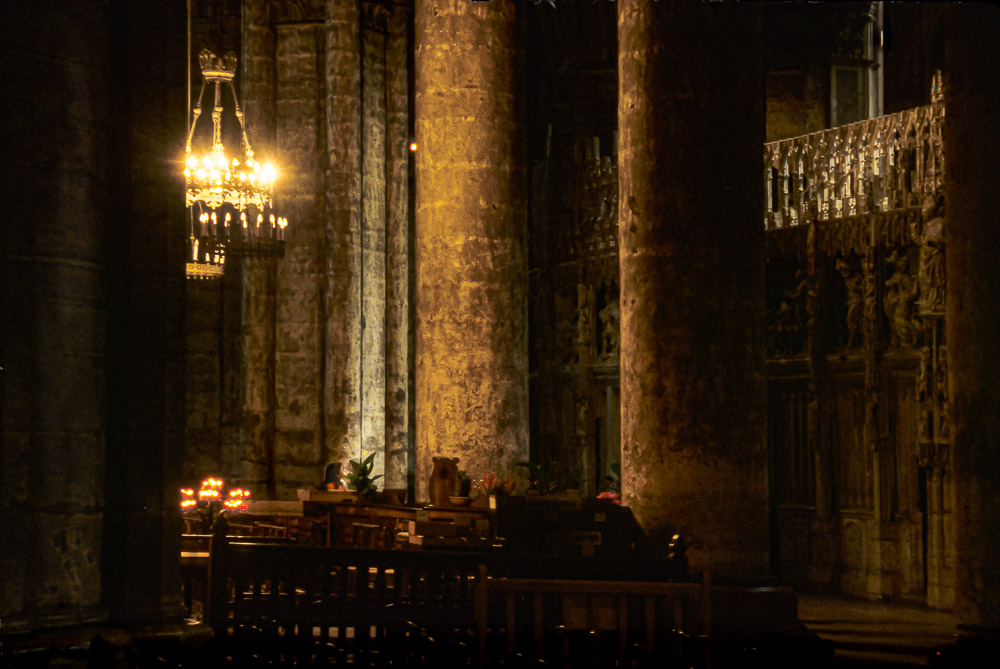
    A confession: even after writing all this about letting the paint dry, I went back and did some minor edits on the image with this article. This is an old image, scanned from film. The quality is not up to today’s standards. But I really like the feeling of the image and the memories it brings back of Chartres Cathedral in France. So I indulged myself in one more little tweak. Do what I say, not what I do.

  • Is It Interesting?

    Is It Interesting?

    I find myself pondering this question a lot these days. More and more I believe the answer to “is it interesting?” overrides many considerations of composition and technique. This is a personal judgment, of course. as is the question of what is interesting.

    Learning

    Art is almost as much about our training as it is about our natural creativity. We all start somewhere, whether we have formal training or we are self taught. When we are learning a skill or an art we concentrate on the mechanics first.

    The tendency is to focus our attention on what we are trying to master. This is natural. What we should recognize, though, is that we may not really be making art in the process. Yes, it is art in the sense that we create it as art, but it is not a mature and well rounded style yet.

    Technique

    Photography is possibly the most technical of the normal arts. We have to master many layers of technology to get skilled at the craft. There is the camera with its hundreds of settings and controls, each of which may help us make a great image or a terrible one. Then there is the computer system required to store and process the image. And the software we choose to use for managing and editing the image. If you are taking it all the way to the end of the chain, there is the whole printing process to learn.

    Each of these areas is a huge field that could require years of study to master.

    If this is where you are, plow into it. Work through the learning process. Get to the point where the camera is a comfortable tool that you can use with little thought. Ideally you should be able to adjust all the major setting in the dark, just by feel.

    The image processing software is probably an even bigger challenge. Photoshop is one of the deepest tools I have ever used, and that is from the point of view of a long career in very complex software development. There are only a few people in the world I know of who totally “know” Photoshop. Julianne Kost comes to mind, but then she is the chief Photoshop evangelist for Adobe. It is her full time job to be able to train people on any aspect of it. Others at about that level are Ben Willmore and Dave Cross. I study and use Photoshop hours a week but I will never get to their level.

    But the good thing is, I don’t have to be a Ben Willmore. As long as I know enough to realize my artistic vision, I’m OK. I know of excellent and successful photographers who I consider to have only a rudimentary knowledge of the tools. They know enough to do what they want to do. I personally can’t be happy unless I feel I have mastered my tools enough to comfortably use them as an extension of my creativity. So I study a lot. But that is just my own burden.

    It should be about creating interesting art, not our ability to use the tools.

    Composition

    The next major pillar of image making is composition. It is another thing that can become a lifelong study in itself. We can burrow into art history, visual theory, Gestalt psychology, and all manner of ideas and opinions.

    We start with only an intuitive feel for good composition, based on art we have seen and our inherent notions of what we like. Probably we cannot express in words what good composition is. As we study and practice we get to where we have a more formal view of it. We can critique our own or other images in terms of their design. Eventually, we can compose our images intuitively, without much conscious thought. We can repeatedly produce compositions that please us.

    Keep in mind that most of this time, we are producing images that are now technically “correct” and have “good” composition. But maybe nobody wants to look at them yet.

    Is it interesting?

    This idea was clarified for me in a book about poetry. (Writing Poems, Robert Wallace. The link is for a later edition of the book) Weird, huh? It is a book about writing poetry rather than a regular book of poems. I find hints and ideas to improve and better understand my art from all sorts of diverse sources.

    The author made the statement that if the poem is not interesting, what good is it? It can have wonderful form, metaphor, irony, symbolism, etc., but if it is not interesting, no one will read it.

    I believe there is something here to apply to our art.

    I have seen, and made, too many technically perfect, classically composed images of … nothing memorable. While I value sharp, well executed images, and pleasing compositions with flow and leading lines and great light, I have come to realize that is not enough by itself to really be art. This is, of course, just my personal opinion. But then all art is a personal opinion. πŸ™‚

    When you have mastered the basics I suggest you first visualize something that will make a memorable image. Then use your acquired skill to capture it perfectly. Don’t just work on technique. You’re better than that.

  • Take It Out

    Take It Out

    A lot of times, our image can be improved by taking out some of what’s there. This point of view tends to come with experience. When we start photographing the tendency is to go wide and try to get “everything” in the frame. It is a learned discipline to restrict our view and take out distracting elements.

    A subtractive art

    One way that photography is fundamentally different from most other arts is that the sensor in our camera automatically records everything it sees. Other arts construct an image by consciously selecting and adding elements to the frame. If you don’t like something in the scene you are painting, don’t include it.

    This creates a very different workflow and thought process for photographers. I have to be aware of everything in the frame in real time. That is, I don’t have the luxury of easily picking and choosing what I will include. Unless I am very careful everything the camera is pointed at will be recorded. Yes, I could spend many hours in Photoshop removing the things that distract, but I don’t like doing it like that. Besides taking a lot of time, I believe it is better to be careful when composing the image capture. I feel better as an artist to get the captured image as close to the desired result as I can get it.

    It takes lot of discipline to make myself aware of every bit of the frame. Even those far away corners where distractions seem to lurk. And those mysterious things poking in from the edges must be seen and dealt with. And that trash in view. Being aware is crucial. I must move or reframe to eliminate distractions.

    You are responsible for every part of your image, even the parts you’re not interested in. – Jay Maisel

    Elimination

    Photography is much more about elimination than inclusion – John Paul Caponigro

    Mr. Caponigro is on to a great truth here. I find when I am composing a shot that I’m caught in a strong tension. “What should I include?” fighting with “what should I exclude?”. Usually this battle plays out quickly in my subconscious. I have a lot of experience. But even so, I sometimes find myself blindsided. I look at an image and think “what is that doing here?” when I was blind to a distracting element.

    I find that the decisions to eliminate things often are more taxing that the ones to go ahead and include them. When you are unsure it seems safer to include it, just in case. This is usually the wrong attitude. If you are not sure it should be there eliminate it. Taking things out, to some limit, usually makes for more clear images. Anything that competes with the main subject and composition should be very suspect.

    Minimalism

    Does the desire to take out distracting elements lead to minimalist images? Maybe. Not necessarily.

    Minimalism tends to be an extreme. To me it can be a bleak and harsh discipline. My work is not minimalist. I love the richness of excellent textures and compositions that may include a lot of elements. Simplicity and reduction of distraction are different from minimalism.

    I would characterize minimalism as a mind set. The process is to take out absolutely everything that is not completely required for the image. My attitude is to strongly consider eliminating everything that seems to be distracting. I allow for occasional riots of seemingly useless complexity when I thing it adds to the image.

    The image with this post is borderline minimalist. If I had removed the grass and the hints of field it probably would qualify for minimalist in my mind. I don’t care. I don’t like labels.

    Ambiguity

    Less information often leads to more interpretation. – John Paul Caponigro

    Have you noticed in some paintings or songs or stories that less is actually more? Less complete information leads to some ambiguity. It allows space for the viewer to fill in what’s missing. Viewers like to be challenged a little, to have to work some to figure out an image. It is engaging and stimulating. It also allows for their private interpretation to be applied. They may well create a story that is different from what the artist envisioned. That is wonderful. It means the image is big enough to encompass multiple points of view.

    Enjoy the creative stimulation of the frame. Deciding what’s in the frame is composition. Where you put the frame is cropping. Keeping things out of the frame is selection, selectivity, defining the subject. Less is often more. Use your judgment and don’t be afraid to take it out.

  • Improvement

    Improvement

    In a recent post I quoted Todd Vorenkamp saying “Search yourself for improvement, not your gear”. I believe that our improvement needs to come from within us, not from better gear. What is your plan to make yourself a better artist? Do you have one? I am an Engineer. I know that nothing gets better by accident. We all need a plan and strategies to improve ourselves. I am not saying we need a 5 year plan or a 10 step process. But we need to consciously strive for improvement.

    Study

    Whatever you believe in and value and spend your life doing, you should be a lifelong student of. We are lucky to live at a time when we have so many channels for learning available to us.

    If you were an aspiring artist in the 16th century you would have to apprentice to a master. There you would spend several years doing grunt work and menial tasks while studying the basics of drawing. Eventually you might advance to a stage where you were trusted to add some parts to a painting the master started. Someday you might be trusted to make copies of the master’s work. Now after 10-15 years you could be deemed ready to go out on your own. Of course, all you know is your master’s style. You don’t really know what you want to be yet. A pretty poor system in my opinion.

    Now, though, there are an abundance of schools and online classes. There are books and magazines. There are mentors available and unlimited examples to view online. Most of us are reasonably close to good museums where we can examine great art at will. We could spend all our time studying and never make an image if we are not disciplined.

    Online classes

    I have gotten lots of good information from classes at CreativeLive and Kelby One. B&H Explora has a great free library to view, among all the sales stuff. Anything by Julieanne Kost is extremely worthwhile. Some other great instructors are Dave Cross and Ben Willmore. I do not receive any compensation for these plugs. Many of these things require subscription. It is worth paying for good instruction. For free stuff, there is more on YouTube than you could ever watch. Be careful. Be wary in deciding who you are going to listen to, especially on YouTube. It’s the wild west.

    One reason I love Julianne Kost, besides that there may not be anyone on the planet who knows more about Photoshop, is that she said “I don’t want a recipe, I want to learn to cook.” This is wise advice. A lot of training presents recipes to do exactly what the instructor did. I don’t want that. I want to know how to fix my own dishes, to create my own recipes. She is good at presenting her training from that point of view.

    The real thing is to do it continually. Learning should be a habit we cultivate for our whole life. We never know all of everything. It might be harder to find new and deeper things to learn, but it is there. I suggest you commit to study as an ongoing process, not an event.

    Critique

    I will put this here, even though I am very bad at it. It has been a long time since I went for a formal critique of my work.

    I know it can be valuable. I remember years ago when I was in a camera club the critique was good discipline. As I matured, I also learned that you had to carefully evaluate it, because most critique was normative. It was trying to mold me to fit the biases of the group or the evaluator. Use at your own risk. Be smart about it.

    I hear there are some good critique sessions you can submit your work to for evaluation. I have not done it, but I would if I found one I trust.

    Possibly the most valuable thing about critiques is that they get you used to hearing negative comments about your work. This, in itself, is good training.

    Experiment

    There is a big difference between 20 years of experience and 1 year of experience repeated 20 times. A lot of people get trapped by their success. They become known for a style and feel they have to keep doing it for fear they may lose their audience.

    I believe an artist grows and evolves throughout their career. Your interests change, your style may change, certainly your point of view changes. How will you follow these changes unless you give yourself permission to experiment some?

    That doesn’t mean you have to suddenly make an abrupt 90 degree turn and go a completely new direction. Experiments may be personal. Most of them will fail. Some, though, will have a glimmer of a new idea, a new viewpoint. Follow up on them. Keep pushing.

    A willingness to experiment and play is healthy. It will keep us fresh and creative as an artist. Evaluate what you have learned about yourself from the experiments and decide what to keep and build on.

    A note about the image with this article: this was the result of an experiment. I liked it. Other people seemed to agree, since it went into a gallery and sold.

    Be open and flexible

    Are you willing to entertain new ideas? New technology and techniques? New points of view that are alien to your normal thoughts? You don’t have to buy in to them. You don’t have to adopt them.

    Stretching yourself with new ideas is kind of like yoga for the mind. You stay flexible. When a mind becomes rigid and inflexible it shuns new ideas, new thoughts. The creative place within us requires fuel, new possibilities, new ways of looking at things. Otherwise we stay in our comfortable rut.

    Creativity is like anything else with our bodies. We have to work at it to develop. If we don’t exercise we lose the ability to move and we get unhealthy. Likewise, being open to new things is an attitude, a habit. We can work to get better at it.

    Think about it

    We should be our own best critic and our own best evaluator. If you’re an artist, how can you not obsess about your art? It is a major part of your life. It should occupy a lot of your thought.

    I am an introvert and an Engineer. That gives me an ability to look at my work fairly objectively. I know that will not be the same for everyone. We are all different.

    But whatever talents we have, we need to learn to be able to evaluate our work fairly. You see what other artists do. You know your own work. What you do has to stack up against your own expectations and your evaluation. We never think we have arrived at the pinnacle. And we shouldn’t. Hopefully we will always be growing.

    Thinking about where we are and where we need to go will help us plot our course. Being realistic will help keep us from deluding our self and also keep us from beating our self up. Don’t be negative. Improvement is a lifestyle. Look for new ideas. Embrace new points of view. Experiment with things that are very different that what we normally do. Grow.

    What’s not here?

    Your equipment is probably not holding you back significantly. Learn to think. Creatively visualize new things. Try new techniques. Grow into the artist you want to be. Then you will do wonders with that expensive new camera. πŸ™‚