An artists journey

Category: Mastery

  • Beautiful Chaos

    Beautiful Chaos

    I am thinking about some words by William Neill in his book Light on the Landscape, combined with an old country song by Diamond Rio named Beautiful Mess. I’m referring to the visual chaos of the normal world around us. Managing this chaos is one of the great challenges and rewards of outdoor photography.

    Visual chaos

    Alas, the world outside is a chaotic place visually. Things just aren’t naturally arranged to make it convenient for us poor outdoor photographers. Plants are in the way. Trees aren’t in the right place for the best design. Rivers bend the wrong way. Clouds are too much or not enough or arranged wrong. Weather doesn’t cooperate. Sigh.

    I say that facetiously, of course. That chaos and the difficulty of making something pleasing out of a cluttered scene is one of the unique and challenging parts of photography. If it was too easy it would be difficult to create outstanding images.

    Bringing order

    I love this challenge. The inner designer in me rises to it. It is a very satisfying mental exercise to try to mold a chaotic scene into a clean and appealing image. This is one of the defining characteristics of photography. Painters start with a blank canvas and selectively add only the elements they want for their scene. But photographers must start with an existing, disordered scene and simplify it.

    We have many techniques to apply to do this. Lens selection will widen or narrow our field of view. We can change our point of view to include significant parts or exclude distracting elements. Selective focus can emphasize the areas of attention. Exposure can be used to darken or blow out parts of the frame where you don’t want any detail. Long exposure can change moving elements into a different graphical design. These and other techniques give us great control over the arrangements of the parts.

    But above all, it is a design challenge. We have to decide what is key to the scene and how to emphasize that and minimize distractions. Is it the S curve of a river or the graphical arrangement of branches? Is it the forms or the leading lines that draw the eye a certain way? Most scenes can be arranged to bring an interesting view. Some more than others, but most can be improved.

    Refine

    Following on from a previous post, we need to very consciously work to refine our design after we set it up. This is a weakness of mine that I plan to improve. I have long training in composition. When I walk up to a scene I tend to do a tremendous amount of subconscious evaluation to select a composition. My natural tendency is to set up and shoot what I visualized as I came on the scene and stop without taking it further.

    But I know that many designs can be enhanced by exploring variations. I will try to discipline myself to do this more diligently. Move – left, right, up, down – look for improvements in the composition with slight shifts. Look closely at the entire frame to make sure there are no distracting elements that could be eliminated by in-camera techniques. Walk more to see if a more dramatic change of viewpoint could help.

    Most of all, I need to make sure I look and think. What I have is good, but can I make it better?

    Don’t over analyze

    A caution, though. Don’t over analyze the situation. Design and creation should be an act of joy. When you are learning new techniques it is normal to have to concentrate a lot on what you are doing. But try to get to the point where it flows naturally. To where you move with it and follow your instincts. Trust your instincts.

    Shooting in the outdoors should be energizing. We should feel excited about what we are seeing and capturing. Don’t let the joy get sucked out for you. Creativity is exciting and invigorating. Most of us aren’t going to get rich at this. We should at least have fun and feel satisfied.

    This is a journey of discovery. Enjoy the journey and have fun!

    Note on the image

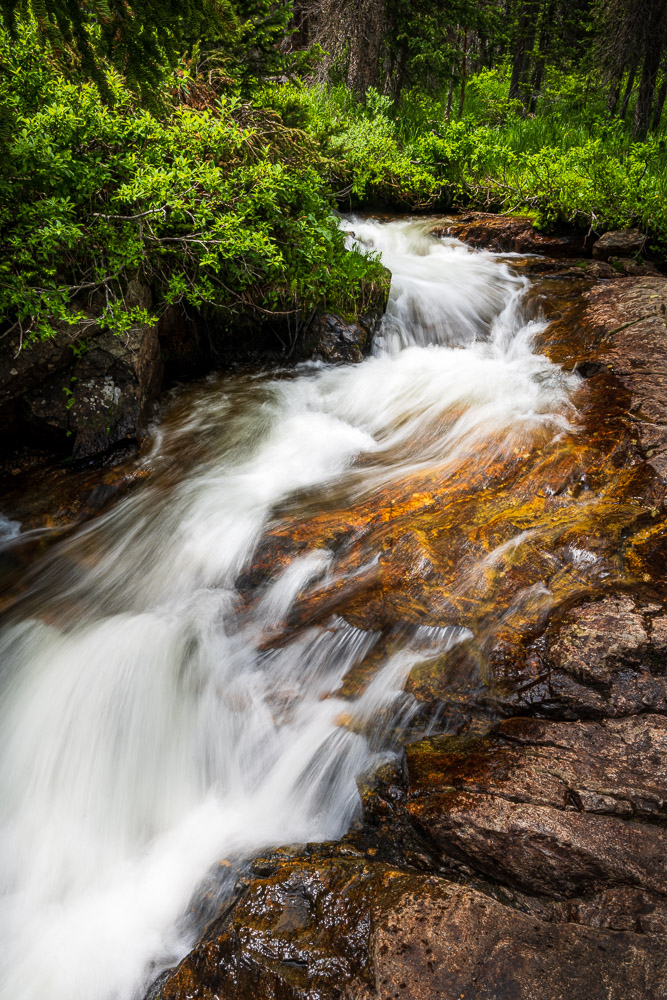
    The image in this article is personally satisfying to me. It is a location that brings me joy and that i return to as often as possible. Despite wading through mud, swatting mosquitoes and trying not to slip in and get swept downstream, I loved the scene. I did follow my advice in 2 significant ways: I worked it until I got to a composition I loved, and I had a great time.

    I hope you will find scenes that bring you such joy.

  • Move

    Move

    No, I am not suggesting you should uproot and relocate. Or join the great resignation and quit your job. These can be beneficial at times, but it’s not what I am talking about. I’m simply saying that art is a physical process. We need to move freely when we are are exploring for images.

    Taking root

    Certain of the images I shoot require a tripod for rock solid sharpness. I actually like this, because it brings a discipline to the process. There is a trap many of us fall into, though.

    When we set the tripod down it’s like it takes root. We’ve gone to the trouble of setting it up, leveling it, composing a shot, and we tend to not move it. It creates inertia. But perhaps that first place we put it was not the optimum location. We need to tell ourselves there is a better placement and we need to find it.

    Use your feet

    When finding the right angle for a shot…’Move your ass’.” – Jay Maisel

    Photography is a physical activity. At least for the type of outdoor photography I do. I walk. I stop and frame up a scene and take a picture. At this point, though, do I go on or explore options? Either answer is right depending on the situation. But are you confident enough in your compositional prowess that you know you got the best shot of the scene?

    I have learned the hard way that many scenes can be improved by “working” them some. Take some more time. Move. Try another angle. Get higher or lower. Take a few steps to the side to eliminate a distracting background. Wait a minute for the light to improve.

    In other words, once I have the shot, I need to look for ways to improve it. Most often, this involves moving, walking, squatting, thinking. One of the great technical advancements of digital photography is that we can see our image immediately. We can examine it and critique it to see how it could be improved. Do it if you have the time and opportunity.

    I tend to quote the great Jay Maisel a lot. He is very quotable. Here is one that elaborates some on this idea:

    “You find that you have to do many things, more than just lift up the camera and shoot, and so you get involved in it in a very physical way. You may find that the picture you want to do can only be made from a certain place, and you’re not there, so you have to physically go there. And that participation may spur you on to work harder on the thing, . . . because in the physical change of position you start seeing a whole different relationship.” – Jay Maisel

    Try variations

    A great scene often has the opportunity to explore variations. Change the crop. Go in for closer detail. Vary the exposure. Look for an angle that shows better shape or lighting or gets rid of distractions. Moving even a step or 2 can make a large change. Out constant attitude should be, “yes, that’s good; how can I make it better?”.

    Again, an advantage we have with digital imaging is that shooting these variations costs us almost nothing. Yes, we have to edit them, but the reality is, that is an embarrassment of riches. We might end up with 10 great images of the scene to choose from. It can be hard to pick the best.

    Moving is an attitude

    This sounds weird. Moving is an attitude? What I mean is that we should always be ready to explore chances of improvement of a shot. Don’t let our tripod get rooted. Have the flexibility to let ourselves try a different angle. That often involves physical movement.

    I believe I have missed many great opportunities by shooting the first composition I saw. I now try to make myself explore variations and be willing to move. One of the great influences in framing a scene is the position you shoot from. And as Jay said, moving and trying new ideas gives us a new perspective on the scene.

  • Seeing What You Believe

    Seeing What You Believe

    Most of us assume we believe what we see. That views ourselves as completely rational and objective. I have started to doubt this. My opinion is that we tend to see what we believe.

    World view

    Don’t believe it? How about your political views? Are you confident you are completely correct and anyone who disagrees with “your side” is an idiot? That usually comes from only listening to one side of the arguments – the ones you agree with.

    Take the Covid “crisis”. Lockdowns are required, or foolish. Vaccination should be required, or should be optional. Isolation is necessary to save lives, or it is causing more problems than it cures. Have you really taken a cool, rational look at all of the facts and arguments on both sides and come to an unemotional decision? No, your decision is based on emotion and on who you listen to.

    What you see tends to be based on the “tribe” you identify with and associate with.

    Rational

    In our current society, rationality is basically a myth. I’m not saying that is good or bad. The problem is not recognizing it. All advertising and news and political discourse and “scientific” pronouncements are targeted to our emotions. Some are designed to breed fear so we are more vulnerable and can be controlled more easily. Some are designed to make us lust for products they want to sell us. In all cases, we are treated as cattle, existing to benefit the power structure you give allegiance to.

    Not recognizing what is happening makes us content to stay in the herd,. If we learn to recognize it, we can gain back some control of our lives. Artists should lead self-examined lives.

    In art

    Enough depressing hand-wringing. This column is about art and us as artists.

    Have you thought about how you decide what to shoot? If I suggest you pick up your camera now and go out for a quick shoot, what are you going to do?

    I suggest that, as artists, we also tend to see what we believe. In this narrow domain, that is not a bad thing. Our world view, our values and beliefs color and shape what we see and are drawn to.

    I am of the group who enjoys going out exploring with little agenda or plan. I wander and shoot what I am drawn to where I am. This is invigorating to me. But if someone else was doing the same thing in the same area, they would get a different set of shots. Why?

    I believe it is because our different values and interests make different subjects stand out. This is part of what makes us all individually creative and interpretive. Out internal view determines how we see the world and what we want to being into our art.

    Boundaries

    I have maintained before that I go out empty and discover what is there to see. Yes and no. I do, but I am not open to shooting everything. I see what I believe.

    As new artists we do tend to shoot everything around us. We don’t really know yet what our true interests are. When we mature more and start building a body of work we start discovering that we are drawn to certain subjects or designs or looks. We can see they are recurring in the work we like. This may be an unconscious process at first.

    Part of this process is us establishing boundaries for our art. Consciously excluding things that take us away from our main focus. Allowing ourselves to walk away from subjects that may have potential, but we know are not our style.

    Let me give a simple example from myself. I am not a portrait artist. I don’t want to do it and, the rare times I have been talked into it, I have been uncomfortable. It wasn’t fun. Portrait photography is a huge and important area, but it is not for me. Candid shots of people are interesting to do, but not formal portraits. So when I am out exploring, I seldom even consider people shots. It is almost completely blocked off from my view.

    Another example: flowers. Take me to a great garden and tell me I have unlimited time there to shoot and I might as well just sit and read a book. Flowers do not interest me much unless I think I can bring something unique to the scene or treatment. This is rare.

    I am beginning to see a pattern that the more we mature in our art, the less widely we shoot.

    Discover your themes

    Let me propose a new year exercise for us all. Go back and pull together a portfolio of the 100 images from last year you appreciate the most. Not necessarily the most meaningful in any social or environmental sense. Not the ones that have the most “likes”. These are the images that you like the best.

    Study this set. Are there themes you can identify? Are there repeating subjects? These probably represent the themes you are most interested in, at least for now. Think about these. Meditate on them. Determine to pursue these themes to a greater depth this year. Explore how to bring out the best treatment of these. Expect to see these subjects or themes when you are shooting, realizing that they interest you. Sensitize yourself to them.

    This is a positive application of seeing what you believe.

  • Over-processing

    Over-processing

    How much post-processing is too much? Is less better? Is there some magic boundary you shouldn’t cross? Over-processing is a controversial topic for many photographers.

    Purity

    Ah, purity, respecting reality, make no changes. This concept and value system is instilled into many photographers, especially landscape artists. I still follow Nature Photography Network. The images are often very lovely. But there is generally, to me, a sterility to them. Most photographers who post here are afraid of departing from literal reality.

    In this group, as in many landscape forums I have seen, there is a real negative feeling about cleaning up distractions, adjusting color to be anything other than the actual original, compositing, or anything else that is not strictly faithful to the original scene. It reminds me of some film photographers who used to make prints with the film rebate showing to prove the image was not cropped.

    The problem I have is the fear to depart from reality. Fear is not a good guide for art.

    What is photography?

    Is photography to be a literal recording of reality? Some people believe that it is. I used to be in this group, way back. As a matter of fact, the camera club I used to be a member of went further to say that a nature image must not show any “hand of man”. That is, there could not be a trail, a contrail, an old mine, anything not completely natural.

    But what is photography, really? I see it as an art medium. Composing interesting images from “real life” scenes in front of a camera is just as valid an art as painting scenes that exist only in the artist’s mind. Just as the painter only includes what is necessary to further the image, the photographer eliminates what is distracting, either in camera or in post processing. The goal and only real measure is the final image.

    In impressionism or modernism or post-modernism or any of the other isms, the artist freely pushes the medium to its limits to give his preferred interpretation of reality. And that, to me, is a key thing that makes it art – it is an artist’s interpretation of the world.

    What prevents photography from doing the same thing? A modern sensor can record a scene in very high resolution, and our software tools allow us to “correct” color and noise and other artifacts to a high degree., Does that mean it is the place of photography to create images that are constrained to faithfully depict reality?

    Is there a line you shouldn’t cross?

    Is there a line, a limit, not to cross? Probably, but it is different for each of us. As an artist, we need to be able to figure it our for our self.

    Our post-processing tools are amazing. They allow a level of control unheard of a few years ago. There is sage old advice, though, that says just because you can doesn’t mean you should. Anything can be misapplied to create garbage.

    It is easy to go to the computer and over-saturate and over-sharpen and re-mix colors in garish ways to make an image into something I would never show anyone. But that line where I have gone too far is personal to me. It would be different for you.

    Go for it

    As I mature, I find the line is moving our toward the horizon. That is, I am finding interesting ways to express my vision using post-processing “excesses”. Is my vision moving or am I learning to use the tools better? I don’t know for sure, but it is probably both. What we discover we can do influences the notions of what we want to do.

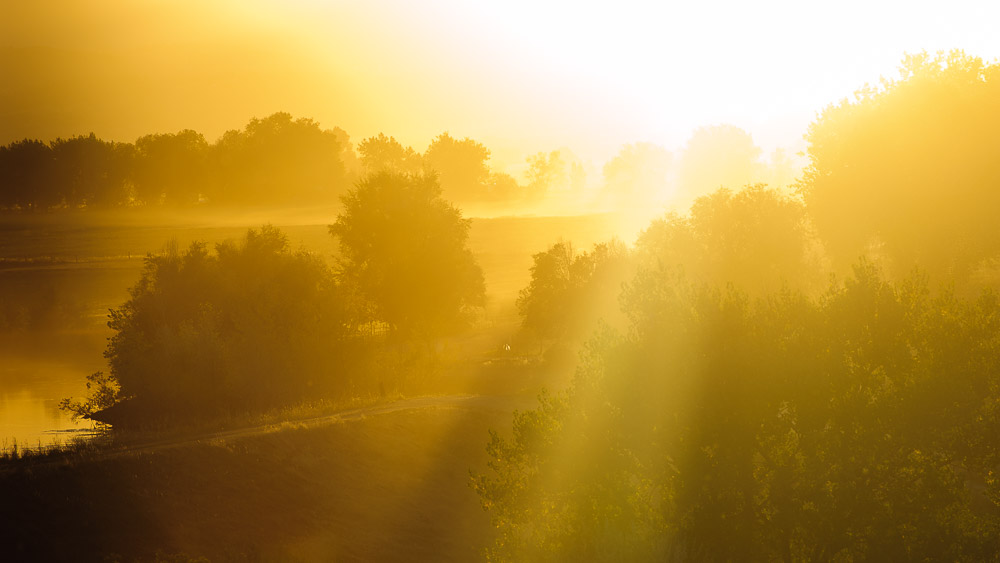
    The image with this article is a completely natural scene that has had what I would consider “moderate” post-processing. I like it much better than the bland original.

    These tools that can be used to create horrible garbage can also be used with great subtly and finesse. Like with a painter, the same paint and brushes can create a useless smear or a respected painting. It comes down to the artist’s vision and how the tools are used.

    Maybe asking if the image is over-processed is not the right question. Maybe the question is did the artist realize his vision? And did the vision resonate with me?

  • Ostranenie

    Ostranenie

    Say what? It is probably a word you have never heard. Ostranenie (good luck on the pronunciation) is a Russian word that refers to “defamiliarizing” scenes so we can see them new. I think it has application to art.

    Definition/history

    The term was created by the Russian writer and critic Viktor Shklovsky in 1917. He was originally referring to poetry as opposed to normal writing. His point was that poetic language was intentionally different from our normal language by being more difficult to understand. By being formal and different, it gives us a different perspective on the world.

    The concept was fairly influential in Europe for a time, known as Russian Formalism. It was picked up in various forms by other writers and playwrights. Even Freud referenced it in his notion of the uncanny.

    How it works

    The Russian Formalists maintained that habit is the enemy of art. Therefore the artist must force the reader (in their case) outside of their normal state of perception.

    The problem with this is that it ends up relying on shock value. But shock wears off and becomes a norm. Then it becomes a degenerate spiral because things have to become more and more extreme to provide shock. Just look at most Amazon Prime or Netflix productions.

    Displacement, alternate reality, removal of what is known – these can become pretty heavy-handed psychological manipulations.

    Application

    A slightly softer definition is “Defamiliarization or ostranenie is the artistic technique of presenting to audiences common things in an unfamiliar or strange way so they could gain new perspectives and see the world differently.” This is actionable and a reasonable artistic device.

    It is easy to see in literature. Science Fiction sets things in a different time or place or it creates environments that do not exist in our world. This lets them make observations about us from the outside. Fairy tales give us great insights on the real world by creating fictional situations. Plays, movies, and poems all do it to some extent.

    How about the visual arts? One artist I see doing this is Brooke Shaden. She creates dark and mysterious scenes to ask questions about our situation. I don’t necessarily resonate with her work, but I respect her artistic technique a lot. And she is a very good instructor. Catch some of her classes on Creative Live.

    Even a simple thing like very long exposures can be a form of this, because it changes what you normally see into something different. My friend Cole Thompson does this well. He sometimes uses long exposures to drastically change what you expect to see in the scene.

    As an unlikely example, black & white photography is kind of this. By removing all color from images our perception is dramatically changed. It is familiar, but unfamiliar. It is definitely a new perspective on the world.

    Personal

    In my own timid way, I like to do this sometimes. Black and white is one example. I am a closet B&W artist. I love it, even though most of my work is dramatically colorful. One of the things I love is its ability to present a new viewpoint on the familiar.

    Time exposures are another common process for me. I like its ability to change our perception of what is happening by shifting the time reference.

    Intentionally distorting a scene to change the way we see it is another technique I like. The image with this article is an example. This is a straight shot, no Photoshop magic. One day I was having lunch in a favorite restaurant a couple of blocks from my studio. I noticed that some of the old windows in this 100+ year old train station were very distorted. If I photographed through them at a certain angle it enhanced the distortion in desirable ways.

    This shot is a view of my downtown. The distortion reduces it to shapes and color while adding an intriguing texture. I like it. Luckily, the manager is a friend and didn’t mind me exploring to my heart’s content.