An artists journey

Category: Craft

  • The Subject?

    The Subject?

    I wrote recently about the sometimes ambiguity of the subject. But the subject itself? I’m not sure I care what it is. Is that heresy?

    Subject is king

    People sometimes travel halfway around the world to photograph a certain thing or event. As I write this, several of my friends are preparing to travel to photograph the upcoming total solar eclipse. Or if a friend corners you to watch vacation pictures or videos, it is of their trip to [______] – fill in the blank of the place you don’t care about.

    The point is that it seems most people are highly fixated on getting the best images of particular subjects that are important to them. This is probably perfectly natural. After all, when we go to the trouble of taking a picture, it should be ‘of’ something, shouldn’t it?

    Most photo instructors emphasize this. Actually, they initially put beginners through a boot camp and hazing packed with technical details and jargon about aperture and shutter speed and ISO and depth of field and … If a beginner survives that, and are still interested in photography, then they are taught to have a foreground, middle ground, and background and a clear and strong subject. Then you work on composition, lighting, exposure, etc. This is standard practice.

    Is it wrong? No, but learning photography is actually a difficult thing. There are many technical levels and esthetic aspects to learn. It takes a lot of practice to get good at all of them. People have different preferred learning styles, so a one-size-fits-all regime may not be appropriate.

    A genre

    Many well meaning experts firmly recommend that their listeners have to pick a subject area and specialize in it. They say if you are going to make a place for yourself in this over crowded field, you have tp be well known for one particular thing.

    Are they wrong? Probably not. It is good advice if your goal is money or fame. So their advice is to become the recognized wildlife photographer, or portrait photographer, or street photographer, or night sky photographer, or … pick your specialty.

    Then they tell us to look at what our “competitors” are being successful with and do more like that. While I can’t believe any “authority” would recommend that artists copy what other artists are doing, I can see where it is shrewd advice for maximizing your income. If you don’t care about your art.

    Develop a body of work

    And then we are told that we have to have a body of work. This sounded mysterious and difficult to me until I figured out they were just saying we have to be able to demonstrate we have done this enough to be taken seriously and we have to show the sustained quality of our work. Oh, well, sure. I have to do that for myself every day. I would call it my portfolio.

    But then they say our portfolio must have a consistent subject focus and style and look. One “expert” I heard recently answered a question about this by using an analogy of an aspiring musician. The gist was if you are submitting an audition tape, it should all be similar type and style. You wouldn’t do some Country & Western and some rock and some bluegrass and some rap.

    Maybe that is good advice if you are trying to break into the music industry. But I don’t think it works for me in my art.

    Conventional wisdom is that our work needs to have a theme or be centered on a cause. After all, we can’t be a “serious” artist unless we are dealing with serious, life and death subjects. Right?

    And we need to have a recognizable look that sets us apart. And our work needs to be cropped to a consistent presentation format, like square. Of course, it should have consistent color grading so it all looks like it came from the same artist. And so on.

    Omnivorous

    Some of us have real trouble with this, though. We are missing that ambition gene that allows us to suborn our artistic vision to the needs of marketing and fame. At least, I suffer from this defect.

    I consider my artistic interest to be omnivorous and wide ranging. To the point where I would assert that I don’t care what the subject is. If it interests me, I will shoot it. And almost anything can interest me under the right conditions.

    I am coming to see that it is not usually the subject that makes a good image. It is my reaction to it, My relation to it. The interest, even love, that comes across to me and my viewer.

    Ultimately, an image can seldom be great unless I love it. And few images of an “interesting” subject will be great to me unless there is a strong connection there. I have heard people debating if you should take a picture if you’re not sure it will be a “portfolio” image. I say, if it interests you, take it. You won’t know until later what your reaction to it will really be.

    An artist

    Am I an artist? My answer is “yes”. The style and theme of any image in my body of work is a record of what I was drawn to at that place and that time when I made the image. I refuse to restrict myself to only shooting rusty 1950’s Chevy trucks in black & white and square cropped. It would make me crazy if I closed down my options like that. I love rusty 1950’s trucks, but I could not exist on a exclusive diet of them.

    I may travel half way around the world to go to a place I am interested in and want to explore. But I don’t go to photograph a subject there. As I explore, I will likely find many images to take. But when I take one, it is because the whole scene grabbed me and tweaked my interest.

    Let me give an example to make it concrete. I am unlikely to ever go on a safari in Africa. But if I did, I wouldn’t care if I came back with a great shot of a lion. Why? I don’t really care about lions. I would be more interested in a nicely formed tree in great light with a stormy sky. Or a native tribesman. Or …

    What seems to happen is, as I’m looking around, something clicks. My subconscious triggers a message to my conscious mind to let me know “there’s a picture there! Get it!”. When that happens, it is not just about a subject. Its the subject, in this place, at this time, in this light, with me in this mood. Bam. That makes an image. Check my current online portfolio. I try to organize it to make it easier for you to browse, but you will see a wide range of subjects and styles.

    The subject

    So the subject? Not as important to me as it seems to be to a lot of people. The subject is only part of a good image. And it’s usually not even the most important part. At least to me. So yeah, I will go so far as to say I don’t care about the subject.

    This is just my personal approach. You do what works for you. I hope you get the shot you want.

    Today’s image

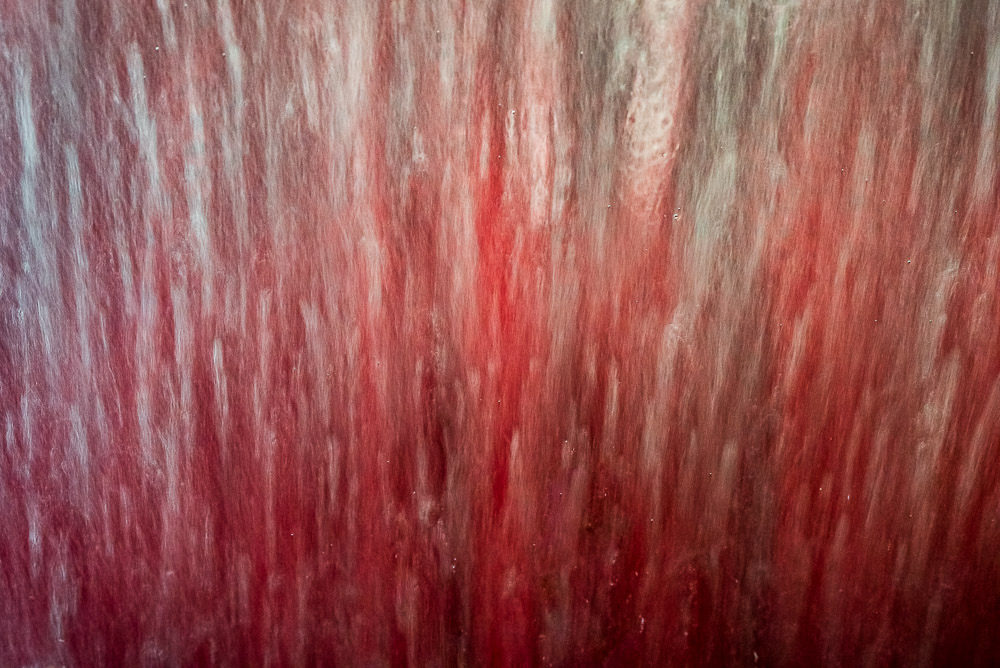
    Today’s image is an example of the subject not being as important to me as the overall look and how I felt about it.. You could argue there is no real subject. I loved it and had to shoot it, even though it was difficult. I won’t say here what it is, but if you write me I will at least give you some hints. 🙂

  • It Is What It Is

    It Is What It Is

    It is what it is. This is actually an expression I hate, but I’m used to it because some of my kids occasionally use it. In one sense, what I photograph is what it is.

    My methods

    I photograph outdoors in natural light. The subjects I shoot are “found” things. Things I encounter on my way and I shoot them as I find them. That is, I do not stages shots. I will very seldom move anything or do any “gardening” to remove distractions or competing elements.

    This is the method that appeals to me. There is a kind of honesty or transparency about it that feels right.

    One of the things I am indirectly pointing out in it is that most of us go through our daily life with blinders on. We tend to be oblivious to most things we encounter unless they are what we are looking for or they seem a threat.

    What I want to do is take these found subjects and elevate them in a way that makes them interesting and to gently say, “see what you missed by not being mindful”.

    Explore

    To accomplish this, I have to be an explorer. I forage for images rather than planning them. And it requires heightened senses. I have to be outside my head and paying attention to things around me. Some may say I’m out of my head, but I will call it outside my head. I have to quiet the inner critic and be constantly scanning around me for interesting things.

    It is a learned skill that I have practiced for quite a while. While I am far from perfect, I feel like I am getting better at it.

    It has become a joy to me. I look forward to these explores. Most often I am just wandering in the vicinity of my studio. Familiar and well worn paths. It constantly surprises me that I can discover new and interesting things in such familiar territory. Some days it is easier than others. But more often than not I find something new or I see something differently. Even if I don’t come back with any images, I have enjoyed getting out and being in tune with what is around me.

    Go out empty

    One of my inspirations is Jay Maisel. I have mentioned him many times. Jay is a famous photographer living in New York City – now Brooklyn. One of the many things he is famous for is just going out rambling every day on the streets close to home.

    He is so good at spotting interesting scenes that it is almost depressing. I would hate him if he weren’t so phenomenal. 🙂

    Jay describes what he is doing as “going out empty”. He wants to go out as unprepared as possible so he can get filled up with what the world has to offer. The point he makes frequently is that if he has a certain thing in mind to shoot, that is a mental block. He might find that, but would probably miss everything else that’s on offer.

    Through lots of practice I have determined this style works well for me, too.

    Make something out of it

    So I explore. I wander. I’m searching for things that catch my interest. And when I find them, I don’t rearrange them or clean them up, except maybe for a stray blade of grass or a piece of trash.

    Therefore, the challenge is to make something out of what is there. Position, crop, lens choice – these all factor in to making the image. Someone has said the picture is already there, we just have to crop it. There is truth to that. The excellent instructor Ben Willmore once said “What elements are adding to the image? What elements are detracting? How do I remove more of the detractions and add more of the good?” That is a good description of the game: try to remove enough of the bad and include enough of the good.

    It is what it is – work with it

    It is often stated that everything has been shot. What matters now is our personal treatment of it. Can we use our unique vision to see the subject in a new and interesting way?

    I choose to work with things that interest me as I find them. It is what it is. How can I make it the best it can be? It can be a challenge, but the reality is there is a lot more interest in the world around us than we usually notice.

    It is a joy to me when someone exclaims over one of my images and I can think – or say out loud – that is right where you go by every day and you’ve never noticed it.

    A final quote from Jay Maisel: I want people to see what I see. It’s all out there. It’s a joy to look at.

    Yes, it is what it is, but it can be more.

    This process works for me. It fits me and there are benefits. I recommend you experiment with it. It might need several outings to become comfortable. You might discover a new world around you.

    Let me know your experience!

    Today’s image

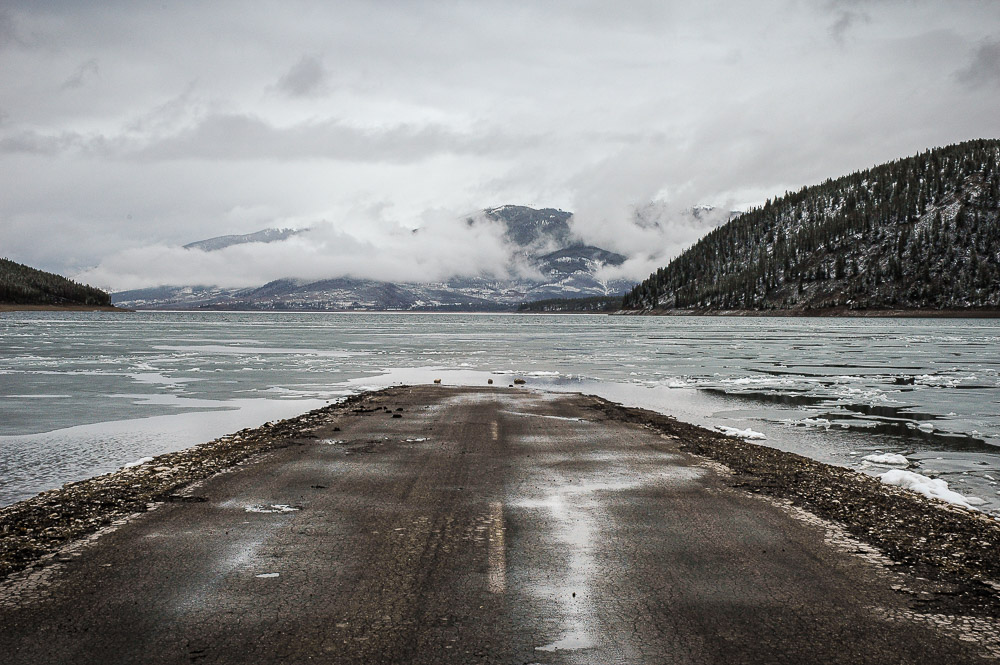
    OK, I didn’t find this around my studio. But thousands of people passed by this daily and I bet few if any ever glanced at the scene closely enough to take notice of it. It was clearly visible from a main highway. There seems to be a story and a lot of unanswered questions wrapped up in a single frame.

    I was driving and I turned around and came back to it. I’m glad I took the time. It is a good memory for me.

    The scene is gone now. But that is a topic for another day.

  • Outside the Frame

    Outside the Frame

    The frame is one of the most important aspects of our images. I’m referring to the edge, the border, not what may or may not surround the outside of a print as it hangs on a wall. Sometimes part of the storytelling is to suggest our viewers think about what is happening outside the frame.

    The frame

    The frame or border around our image is a powerful component of our design. An image is created within a frame. The frame defines the extent and what is included. The frame also defines what is excluded.

    This is one of the unique and beautiful things about photography. A painter starts with a blank canvas and is free to include anything he wants for his image. No limits. And if he doesn’t want something, just don’t put it in. The photographer knows that everything in the field of view of the lens is recorded in his image when the shutter opens.

    So a photograph is constructed by deliberately deciding what is included and what is excluded and what the viewpoint on them is. Unless you are constructing a still life or compositing images together. My focus here is on natural scenes.

    It’s a dance with the frame. It’s a succession of tradeoffs and optimizations. The result is the artist’s unique viewpoint.

    The edges

    Magic happens at the edges. Most of the standard “rules” of composition are relative to the frame. For instance, the famous “rule of thirds” is relative to the frame edges. Leading lines come in from the edge. Diagonals are diagonal because of their relationship to the frame.

    And how often has someone advised you to look carefully for things poking in from the edge of the frame. They tend to be distracting, because things near the edge of the frame are powerful. As you become experienced it is an automatic action to scan the edges to check for these elements.

    The famous Jay Maisel rightly said: “You are responsible for every part of your image, even the parts you’re not interested in.” This seems especially true around the edges of the frame.

    It’s kind of a paradox. Small elements at the edge are distracting. But large features projecting well into the frame are strong design elements.

    A window on the world

    So then our frame is our window on the world. The image is the projection within the frame. We are trained to compose carefully within the frame. To make sure the image is self-contained. Anything outside the frame is unknown. It doesn’t exist.

    Or does it?

    Imagining the unseen

    Have you ever considered using things outside the frame as a design element? Is that even possible?

    Think of a repeating pattern within the frame. If it is not stopped before the edge, we assume it continues. This brings up questions, like does it actually continue? How far does it go?

    Or perhaps you consciously include a shadow coming in the edge of the frame. It can raise questions about what is the thing, is it about to come in, what will happen when it does?

    Have you ever intentionally had someone or something leaving the frame? It can raise questions about why, where is it going? What will happen outside? Why is this composed this way?

    Ever shoot an image with the subject looking out of the frame? It raises lots of questions with the viewer. We try to analyze the person’s expression and figure out if they are looking at something amazing, or startled, or apprehensive. Is something scary coming? We want to know.

    Another example is shooting a tight section of something and leaving the rest to your imagination. We probably know what the overall thing looks like and we start filling is the rest in our mind.

    Today’s image

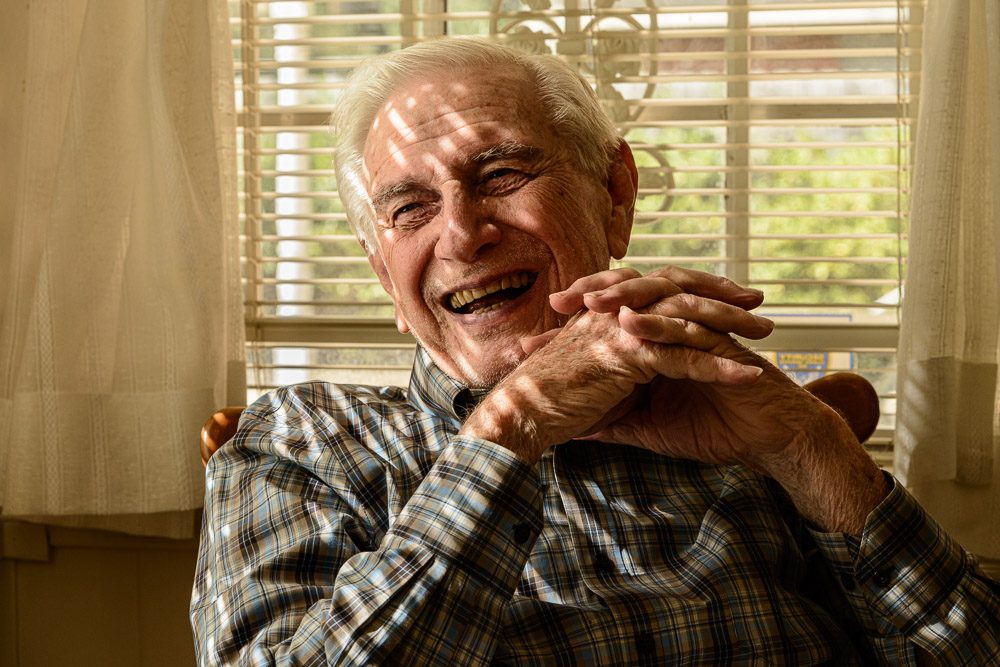
    You want to know who he is talking to. It seems to be a happy moment. We wonder what the conversation is. You want to join in the moment, so you make up your own story about what is going on. All because we are directed out of the frame to complete the scene.

    The frame is a strong component of the composition of our images. We are very careful to arrange things within the frame. But it does not have to fully constrain our world. Sometimes leaving the outside of the frame as a suggestion to tweak the viewer’s imagination can be powerful.

  • Stability

    Stability

    Even the most adventurous of us need a certain amount of stability. But I’m not talking about financial or mental or interpersonal stability today. I’m referring to the never ending debate about tripods vs. monopods.

    Why do we need them?

    Many people today value crisp, tack sharp images. To achieve this requires good cameras, good lenses, and good technique. One primary factor of the technique is minimizing camera shake.

    We tend to talk about camera shake as a binary thing: yes/no, on/off, shake/no shake. The reality is that it is a range. It is kind of like focus. If something is considered in focus, we really mean it has an acceptable level of focus. Good enough for our purpose, not an absolute.

    Likewise, for camera shake, we must take the point of view that it must be minimized enough for our need.

    Most people tend to hand hold their cameras. I know I do when I can. It is much faster and easier. Achieving sharp images hand held requires special techniques that we will discuss later.

    But when we know we need maximum sharpness, the standard response it to pull out the tripod, or monopod. It’s a debate.

    Tripods

    Tripods are the three-legged things we are all familiar with. They seem to have been around forever and they tend to be pretty large. The three equally spaced legs provides an optimum stable platform in all directions.

    Tripods used to be made of wood. Classical and lovely to look at, but heavy, Then they moved to generally bring made of aluminum or alloys. These were lighter and durable. A problem they had, though was vibration. Referred to as dampening when we’re talking about stability. The metal was kind of springy. It would vibrate when perturbed by a force. Like bumping it or when the mirror of your big DSLR “slaps” up to take a picture. The metal legs would vibrate for many milliseconds before stopping. This caused distortion while the shutter was open, which was probably for those same milliseconds.

    Later, most high end tripods moved to carbon fiber construction. This material has many advantages, but, of course, it is more expensive. The carbon fiber is strong and relatively light. It has much better dampening than metal, so vibrations are smaller. And if your hand has ever frozen to a metal tripod in the winter, well, carbon fiber doesn’t do this nearly as bad. For me, that by itself is a reason to switch to it.

    I have an excellent carbon fiber tripod with a great ball head. I use it for some critical images or long exposures.

    Tripod disadvantages

    Good tripods, used correctly, provide excellent stability. But this means you have to have it, there, when you need it. Perhaps this means carrying it miles over rugged trails for that one shot.

    Personally, I don’t do that much anymore. For me, a photo expedition should be a joy. I’m too old to enjoy carrying a heavy tripod a long ways. Sure, there are small versions that strap conveniently to your camera bag, but they have their problems too. Usually the small ones are short and I have to squat down uncomfortably to use them. Or if they are tall enough, they are not stable enough.

    I have a small one that fits nicely in a checked bag for air travel. I often take it. And just as often do not use it.

    And using a tripod slows you down a lot. Deciding where to set it, setting it up, mounting the camera, adjusting and leveling it all take quite a bit of time and effort. Some say this is an advantage, because it makes you spend more time considering what you are shooting and the composition of the shot. I partially agree and have experienced this. But often I am in a flow and shooting instinctively. The tripod absolutely gets in the way of this.

    Monopods

    A monopod is just one leg of a tripod, right? To some people that makes it 1/3 or less as useful as a tripod. Others (including me) would say it can be as useful or more so.

    If you are not familiar with them, try this experiment. Take a broom and hold it upside down with the handle down on the floor. How does it move?

    You will see that it does not move up or down in the vertical axis. It does more fairly freely in a circular arc left and right, back and forth. Is this minimal amount of stabilization worth it?

    To me it often is. The vertical axis is one of the most vibration prone areas for me. And being constrained on the monopod seems to add mass or resistance in the other axes. Either it is real or it is psychological. But in any case, it makes my images more stable.

    Monopod advantages

    Yes, it is unfair to only talk about tripod disadvantages and monopod advantages, but I want to make a point. There are often ways to overcome the disadvantages of a monopod.

    I have a great monopod. It extends to about 7 ft. and has a small but very nice ball head with quick release on it. It is my walking stick. I like that it is light enough and very strong to serve well as a useful and comfortable walking stick. I am far more likely to take it on a hike than I am a tripod.

    When I want to take an image, it sets up quickly – basically just attaching my camera to the quick release. It provides a decent degree of stability, and there are techniques I can use to improve if necessary.

    For instance, if a railing is handy, I can brace the foot of the monopod against my shoe and force the leg tight against the railing. I have taken very sharp 30 second exposures this way. Trees work fairly well, too. Lean the mounted camera against a tree for added stability. It can be a great tool.

    Which to choose?

    I probably seem biased. It is more of a pragmatic choice. Tripods are great for stability. It is usually the best choice for long exposures.

    Monopods are great when you are out on the trail or otherwise away from your car. If you practice and learn to work with it instead of against it, it can improve many situations to an acceptable level.

    I own a really good tripod and a really good monopod. The monopod gets used about 10 times more than the tripod. But I hand hold about 10 times more than either of them.

    Parameters of sharpness

    To put things in perspective, today’s high pixel count sensors force us to use very good technique to get the results we want. If the image moves as much as 1 pixel during an exposure, we can often detect a blur.

    Pixel pitches are measured in microns today. A micron is 1 millionth of a meter. The length of a bacterium is about 1-10 microns. A strand of spider silk is 3-8 microns in width.

    How is it ever possible to take a sharp image?

    Alternatives

    Several things can work for us. The amazing technology in our cameras provides things like in-body stabilization to minimize the effect of camera shake. It usually improves things a lot.

    And the electronics are improving to allow higher and higher ISO settings to be used. I consider 400 ISO to be my normal setting rather than the 64 ISO native value. That automatically gives me about a 3 stop speed advantage.

    The old “rule” when I was shooting film was that, if you are good, you could hand hold at a shutter speed of twice the focal length. This doesn’t work anymore for our high density sensors. People say the shutter speed should be 3-4 times the focal length. But with the better electronics allowing higher ISO with good results, this is often possible.

    Don’t overlook simple but obvious tricks. There may be something to brace the camera on or against. I often lean against a tree or a pole or a wall for added stability. Or I have put the camera on a rock or a bench and used a self timer to trigger the shot. Simple things like these can let you take amazing images in unlikely places.

    And there are simple techniques you can adapt that increase the stability of hand held shots. Things like bracing the camera against your forehead and forcing your elbows close against your body. And exhaling slowly as you slowly press the shutter. A video on gun shooting technique could be helpful. They have studied the problem a long time.

    So tripod or monopod? I lean toward the monopod. But it is not necessarily an either or choice. There are many creative ways to stabilize your camera. Unless you’re out in the desert with nothing around, there is often something that can be used.

    Today’s image

    This was shot in an airport (obviously) with no tripod or monopod. I couldn’t set the camera on the table in the restaurant where we were eating because there was a joint in the glass that was in the way. I put my camera on my camera bag on the floor. This is a composite of several 4 second shots.

    I used a 2 second timer to allow me to get my hand away and not shake the fragile setup. I could have used the camera app on my phone to trigger it, but that is always so tricky and slow to set up that I seldom do it.

  • Find the It-ness

    Find the It-ness

    Sometimes you just have to make up a word when you can’t find the right one. In this case Jay Maisel made it up. I think he is referring to seeing beneath the surface. If we find the it-ness, we are starting to get to a level where we understand more about the scene. Then maybe we can show it to our viewers.

    See past the obvious

    Jay seemed to be telling us to get past the first surface response and burrow down to a deeper response to a subject. The normal mode for a lot of us is to see a scene we like, pull the camera up to our eye, and shoot. Done. Go on.

    But I think Jay i suggesting we slow down and not necessarily give in to our first instinct. With a little more thought and introspection we often come to a different relationship with a subject or scene. In other words, stop and think. Get in touch with why you are reacting to it and see if you can bring that out more.

    There are 3 very interesting videos about Jay Maisel on Kelby One (I am not affiliated with them and I get no benefit for referring them; but it would be worthwhile to subscribe long enough to watch these 3). In each, Jay is spending a day walking around with Scott Kelby, demonstrating his technique and thought process. They are very worthwhile (when Jay is talking, not Scott). It seems like Jay is shooting quickly and instinctively, but keep in mind you are seeing the result of 50 or more years of finely honed craft. When asked about an image he can always articulate a detailed reason why he took it, what it meant to him, and why he composed it like he did. And when he reviews his seemingly quickly grabbed images, it make you want to tell him “I hate you”.

    So maybe there is the promise that, with enough practice, little conscious thought is required.

    Wabi-Sabi

    I always hesitate to bring wabi-sabi up. It is easy to step off into really deep stuff. Apparently you can’t really appreciate it’s true meaning unless you are a native Japanese steeped in Zen Buddhism. There is no simple English translation.

    But that doesn’t deter me from trying. Even though I am American and not at all a Buddhism practitioner. 🙂

    Explanations often start from breaking down the two words wabi and sabi. One good definition says:

    Wabi’ expresses the part of simplicity, impermanence, flaws, and imperfection. On the contrary, ‘Sabi’ displays and expresses the effect that time has on a substance or any object. Together ‘wabi-sabi’ embraces the idea of aesthetic appreciation of aging, flaws, and the beauty of the effects of time and imperfections. The two separate parts when put together, complete each other. They express simplicity and the truest form of an object.

    That seems to be an elegantly simple expression of finding the it-ness of something. Regarding a thing with all its flaws and imperfections and appreciating how it changes and weathers and even decays over time is really getting in touch with its essence.

    More than the subject

    I recently explored the idea of the subject not being the subject. Going on beyond that is this notion of capturing the it-ness of something may be more important that just representing the thing.

    The image with today’s post is an example. This old International truck fascinated me for years. It is about 50 miles from my house, not on the way to anywhere, but I visited it many times. I was never satisfied that I had photographed “it”. I took many pictures of the truck, but I never felt I actually got what I felt about it.

    Finally, one day I was going by and I knew I needed to visit it one more time. Some junk was starting to encroach on it and, after it setting there rusting for years, it seemed possible that the opportunity might go away.

    But this time, instead of jumping out and taking pictures, I just stared and thought a while. I walked around it slowly. All the while I was trying to explain to myself what my feelings were about this truck and how I would take its portrait.

    After thinking a long time, I basically just took this one image. To me, it perfectly captures the personality, the story, the history – the it-ness – of the magnificent old truck. I felt a relationship to it.

    The next time I came by there, it was all fenced off and junk was stacked all around. The picture opportunity was gone. That makes me sad, but I finally had the picture I wanted. I believe this is a true and accurate portrait of this giant of the Colorado plains. This will always be my memory of that good old truck that I have known a long time.

    This is a wabi-sabi story. It is also an example of another of Jay Maisel’s maxims: shoot it now, because it won’t be there when you come back.

    Find interest

    I have said several times that we can find interest in almost anything if we try. We have to get over looking just at the surface. Maybe it’s not the prettiest of its kind. Maybe there are imperfections. Do those give it character? Does it tell a story of it’s past?

    As an extreme example, we have had a lot of forest fires here in Colorado in the last few years. As have many places. It is sad to see a beautiful forest destroyed. But I have found great beauty in burn scars and the re-growth that is happening.

    It seems to be more and more a case for me that interest does not equate to pretty. Almost to the extent of being a negative correlation, where pretty implies less interest. So a perfect flower is a thing of beauty, but does that make it the most interesting? I’m not saying it is always true for me, but a “past its prime” specimen may tell a more interesting story of struggle, survival, endurance, and the passing of time.

    Try it. Like my example of working on the truck, slow down. Think more. Figure out the it-ness of the thing. Then shoot to capture that.