An artists journey

Category: Attitude

  • Mix a New Image

    Mix a New Image

    Recently I was watching a video series on audio mixing. That is a separate story. But I was struck by some of the similarities between the process of mixing for certain genres of music and image editing and creation for certain types of art. It made me think of the ways we mix a new image.

    Audio mixing

    Producing an audio recording is simple but difficult. Let me take a rock band as an example. The group goes into a studio and the source material is captured, sometimes for the group all together but more often by “tracking” each band member individually. It is fairly typical to start with the drummer, because the percussion is the base beat that everything else fits into. Then guitars and/or other instruments are overlaid. Finally, the vocals are recorded last, because the singer needs to hear everything else.

    Each individual or instrument is recorded on one or more tracks. The drum, for instance, might need 10 or more tracks to capture the full drum kit. And there are multiple takes for each track.

    Then in the studio, the recording engineer works with the performers to create a mix that pleases them and had good production value.

    Digital image creation

    Let me take an example of creating a fine art composite image. It will be built of many layers and elements.

    The artist has a general plan for what will be needed and how it will come together. This helps to ensure that all the pieces are photographed and the individual images are created with consistent lighting and perspective and mood and focal length, etc. The artist shoots each element separately.

    Working in the computer, the elements are brought together and blended to create the final image.

    On the surface, there seem to be certain parallels of structure and process. but let’s go a little deeper.

    What really goes on?

    What I observed in several videos and in first hand experience is that a song is basically re-built from scratch in the mixing phase. Of course, simple problems are fixed. Pops and noise is removed. Parts of tracks may be re-pitched. The best parts of several takes are cut together for each performer or instrument to make the master.

    Then it gets weird. After a good basic master is put together the producer goes on to ‘liven up” the sound. This may involve equalizer changes, to tailor the frequency response of a track. It probably involves effects processing that will add delays and reverberation and echoes to give the sound depth and sound like it is performed in a large venue. Maybe even adding things like claps or new percussive effects.

    And it goes on. The producer then may start to “play”. It may involve intentional distortion in parts. It may introduce new sounds that were not in the original recording. As an example, one trick I saw was playing tracks into a garden hose and recording the weirdly distorted sound and mixing it in subtly. You miight even see them put is a track played backwards! Several other very strange techniques can be used to create strangely distorted effects that you would not directly notice, but that add character to the overall sound mix.

    My learning was that, to the recording producer, the original recordings were just raw material to be used, changed, distorted, added to and anything else that could be thought of to produce a sound they liked.

    Similarities

    Isn’t it about the same with photography sometimes? I used the example of fine art compositing. Brooke Shaden and Renee Robyn are 2 good practitioners I think of.

    All the individual pieces that were shot are just raw material. The artist puts them together to create the basic image, then starts to mold it into a final work of art.

    The finishing may involve distortion, warping, masking, radical color changes, and extreme lighting changes. Then new elements are probably introduced, like textures or patterns. There may be multiple layers of them combined using blending modes. Often subtle and not immediately recognized, but making the image into something different.

    An artist using a non-destructive workflow will end up with dozens of layers to create this final image. The end result may only look a little like the original parts.

    Let go more

    This emboldens me to think I am usually too cautious with my vision of what the final image could be. Being an ex-engineer I have an ingrained tendency to go for realism. The final image must look exactly like the original.

    This is probably a mistake. I am self-limiting my artistic freedom. Long past are the days then the novelty of capturing a scene gave interest to a picture. Now an image needs to be a work of art. It needs to show vision and creativity from the artist. That involves letting go of an absolute realistic goal for the image.

    Have you ever heard a “dry” (unmodified) recording of a famous singer? There are very few of them who are so perfect they would let it be heard. All music is heavily processed. It is coming to be the same with images.

    I do not mean AI. That is a separate issue. I am claiming that, to be well received, many images need to be heavily and artistically processed. We have the tools. Let’s use them well.

    A song is built by getting good tracks recorded. Then the producer takes it apart and builds a final song. In a similar way, we can often do the same with an image. The only thing stopping us is our self-imposed limits.

    I will try to learn to not be afraid to mix a new image. Think like a song producer. The original data is raw material to be created with. Post processing is just another tool we use to achieve our vision or feeling.

    Today’s image

    This is me starting to let go. A little. It seems like a pretty conventional aerial image. But of someplace you don’t recognize. Looks can be deceiving.

    Sometime I may describe what it is.

  • Not A Spectator Sport

    Not A Spectator Sport

    For most of us, I believe photography is not a spectator sport. We only learn a little by watching other work, even great photographers. Photography is craftsmanship and creativity and vision. These have to be developed. Watching only helps a little.

    It’s a first person experience

    I have written before about life and our art not being a spectator sport. To me, this is still strongly true. But I’m taking a slightly different direction here. Many of us take workshops or watch videos to observe other photographers taking pictures. I watch a lot of videos, but I have to realistically ask why. What is gained by it?

    The reality is that we do not learn our art or develop our vision by watching someone else. Unless they are an exceptional teacher. But even then, it does us little good until we have internalized it and made it our own style.

    Craft

    Photography is a craft. Any craft has to be learned and then practiced over a long period to master it. So I’m not saying there is never anything to be learned by watching another practitioner work. I’m just saying that it is a somewhat dangerous act. We must be careful what we are taking in.

    Some instructors are good about talking us through what they are doing and thinking. Giving us insight into their thought process. This is very beneficial. As long as we carefully examine what we are learning and deciding what to keep and what to leave.

    The basic craft aspects of photography can be learned, to some extent, by watching a good instructor. Then we have to practice, and practice, and practice… Repetition, evaluation, mistakes, trial and error practice that teaches us how to do the craft. So there is a little instruction then a lot of self-teaching.

    It is easy to make the mistake of trying to mimic a teacher. We respect them and are in awe of their ability, so we want to be just like them. Don’t do that. They have their vision, we have to create our own.

    Creativity

    Our art is not really ours if we are just copying someone else. The instructor we admire and copy may be very creative. Doing the same thing does not make us creative.

    Maybe I’m wrong, but I have studied this a long time. A good instructor may inspire us to be more creative, they may challenge us, they may give us some good ideas, they may even give us some hints how to do it. But we cannot achieve creativity by watching them. It has to come from within.

    Cole Thompson was tempted to copy the style of artists he revered, especially Ansel Adams. He famously started the idea of “Photographic Celibacy” – never looking at other photographer’s work. I think that is going too far. We can learn a great deal from studying other people’s work. But it worked for him and it emphasized the danger of copying other artists.

    We don’t have to be celibate. But we do consciously have to maintain our own identity. Follow our own interests.

    Vision

    What we express with our art is our own vision. We each have a unique vision, unless we are slavishly copying someone else. A tendency when we are starting out is to try to copy someone, because we are insecure. We don’t think we have developed a “vision” yet.

    I think Chuck Kimmerle insightfully captured the essence of it in an article in Nature Vision Magazine #1: “We can’t discuss style without mentioning vision. The two are related but vastly different. While style is fairly easy to describe, vision is much harder to define. At its core is who we are as individuals: our experiences, lifestyles, likes and dislikes, politics, spirituality, family, priorities, and so forth. Our soul. It is the story of our lives, a personal diary if you will, and is what makes us unique. Vision is what drives our style. Unlike our personal style, our vision rarely changes.”

    This vision influences and comes through in the work you produce. We can’t help it. That is one reason why several photographers can be out together shooting the same area at the same time and produce a variety of different images.

    So don’t worry that you don’t have a vision. You do. The trick it to let go and let our vision express itself. Don’t be concerned about it being different from what other artists do. Eventually you will recognize yours.

    Who are you learning to be?

    So watch other photographers and get what you can from them. But never loose sight of who you are learning to be – you.

    Just this morning I watched a short tutorial on an aspect of Lightroom editing by a good instructor. He was very good about describing why he did every step of the process. It was a little valuable. But overall my internal dialog was “nope, nope, that’s interesting, not the way I see it, not the result I would try to get”.

    Was he a bad instructor? Not at all. He is good and quite well known. Was is a useless genre? No. He was editing a landscape image. that’s reasonably close to what I do.

    So why did I reject a lot of what he said? Because I am pretty confident in my craft and vision. I can watch another photographer and not be intimidated or pressured. This is because, for the most part, I have learned to be me. I know what I want to achieve. I appreciate picking up tips on doing the craft better, or easier ways to get to the product I want, but no one is going to (very easily) convince me to become something I’m not and don’t want to be.

    How do you learn?

    So how do you learn? Do you intently study a master and “try on” their style for a while? Do you study basic theory, such as composition, design, color, etc? Do you go to workshops where the instructor shows you where to put your tripod and what settings to use and how to set up your shot to get the same results he got?

    Any or all of this and anything else you do is fine, as long as it works for you. But never forget the purpose of studying is to learn to be a better you. Not a knock-off copy of someone else. No matter how much you admire them. Personally I would shun experiences where the instructor seems intent on making you a copy of them.

    Most of us are self-taught. That is, we do not have a fine art degree with a specialty in photography. We learn through various formal or informal methods. Make the most of it. Learn from every opportunity you get. But you will grow fastest by getting out and working and evaluating and learning from the results. Pick up ideas and techniques anywhere. But don’t ever forget the goal is to grow as an artist and find your own path.

    So is it true that photography is not a spectator sport? Well, that’s a little bit of click bait. Be a life long learner. Eagerly watch other photographers work. Listen to what they say. But discard what does not apply to you. Never forget the goal – be you.

    Today’s image

    I couldn’t find a single image that illustrated this idea of “not a spectator sport”. I guess because I have always believed it and gone my own independent way. This image was chosen because maybe it shows that, if you are in a place like this at a time like this, shoot! Don’t watch someone else. Make your art.

  • It’s OK to be Uncomfortable

    It’s OK to be Uncomfortable

    I recently read an article from a photographer who admitted he sometimes doesn’t stop to take a picture he wanted because he was afraid of what people would think. I understand that. I have been there many times. But I have come to the conclusion that it’s OK to be uncomfortable.

    What will people think?

    You’ve probably been here. I know I have. You are driving down a crowded road and you see a scene you want to photograph. But we decide not to pull off and get out the equipment because we would look foolish standing there beside the road taking a picture. All those people going by would think we’re weird.

    The reality I have learned, though, is that no one thinks about you as much as you do. That is a fact. We overestimate our importance. We will be more free and inventive if we stop worrying about what they may think.

    People go about their dreary lives almost totally focused on themselves and their needs. If they do momentarily notice you, even if they criticize you, you do not know what they are really thinking. Most often, they are responding to something in themselves. Because they do not really care about you.

    I love this quote from Susan Sontag: I envy paranoids; they actually feel people are paying attention to them.

    And from Olin Miller: You probably wouldn’t worry about what people think of you if you could know how seldom they do!

    If that random person driving by thinks you are doing something foolish, so what? How did that affect you? Did you feel it? Did it hurt? No. You do not know what they are thinking and besides, you are doing your art, not theirs.

    The anxiety we feel is internally generated.

    Attract attention

    I understand. I’m very introverted and I am uncomfortable attracting attention. An interesting dynamic because of where I live is that I do attract unwanted attention sometimes.

    In my area there is a lot of wildlife, such as elk, deer, moose, bear, mountain lion, bighorn sheep, pronghorn, etc. I guess I am missing the right genes, but I have little interest in them, other than to observe them. I almost never take wildlife pictures. But if I am setting up to take a picture beside a road, it is not unusual for people to pull off and eagerly ask me what I see. They seem so disappointed when I point to a tree. It’s actually kind of funny.

    And for the occasional street photography I do, I am one of those people who wants to be totally anonymous, unseen. It is uncomfortable when someone “catches” me taking their picture.

    They won’t like me

    So what do I do about this fear that people will think badly about me when I’m out shooting? The right answer is, ignore them. Easier said than done, but that is true of much of life.

    I have learned to try to put them out of my mind completely and get in the zone focusing on setting up the shot I want. Generally this works. Replace the negative concern of fear with the positive action of taking a picture.

    But even if it doesn’t work, more and more I come to the realization that I don’t care what they think. I am not trying to get them to like me or post a Facebook note about how much they admire that photographer they just passed. I don’t care.

    The results I get in these situations validates and justifies my callous “don’t care” attitude toward them.

    What are they going to do to you

    Let’s say some of the passing people give you enough attention to say to themselves “that’s dumb”. So what? What happened? Did you feel it? Did they throw a rotten tomato at you? Did they stop to get your name and take a picture of you to post on Facebook to shame you?

    Of course not. Absolutely nothing happened. They went on down the road and immediately forgot about you. If they were stopped 20 miles later and asked, they probably wouldn’t remember someone standing beside the road taking a picture.

    This is the quandary: we fear what people might think, but the reality is they don’t bother to think about us. And even if they did, it has no effect on us.

    Do what you need to do

    If you do what other people do, you get the results that other people get. – Bill Miller

    We are artists. We see things differently. That means we do things differently. Other people cannot know what our vision is at any moment unless we tell them or show them. Showing them is typically what we do.

    So do what you need to do to make your art. Do not be concerned about what anyone may think about you. First, they probably don’t. Second, it doesn’t matter. You have art to do.

    If you were embarrassed taking the picture feel doubly joyful when you see the great result. You can say to those people passing by who you imagined felt you were silly, “see what you missed”!

    Get over it

    I hope I have encouraged you to forget about your fear of people’s opinion and go for your art. Art is action. It is only an idea unless we create something.

    Act while you feel fear rather than waiting until you feel unafraid. – David Richo, in How to be an Adult

    How sad it is to think about what could have been a great image, except we were too embarrassed to stop and take it. I have done it both ways. I have passed by and regretted it and I have overcome my fear and stopped and usually been happy I did.

    I am old and calloused enough to believe now that I shouldn’t be overly concerned about what I think other people may be thinking. It’s OK to be uncomfortable. If being uncomfortable is a price for making our art, that is what we have to do.

    Courage is resistance to fear, mastery of fear – not absence of fear. – Anon

    To you who have never been intimidated by other people’s opinions, congratulations! You have a talent most of us do not have. Use it well. Don’t be an ass.

    Today’s image

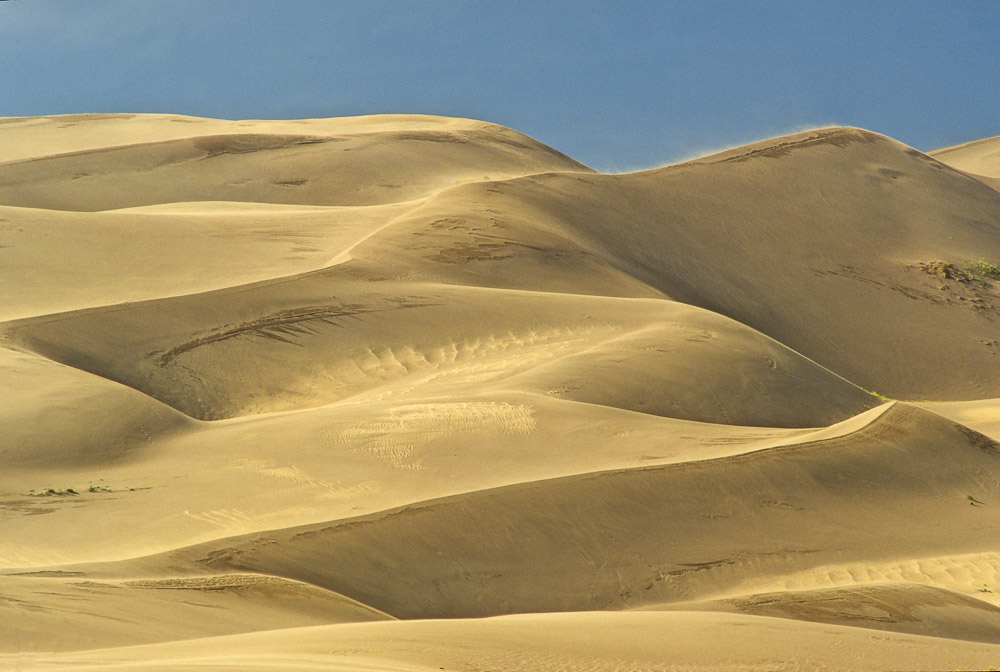
    Do you like this image of the vast Utah plains? I do. It is not a result of trekking hours across the barren desert, watching for rattlesnakes. I took it in a rest stop on I-70, right next to the restrooms. It felt uncomfortable at the time, but I loved the scene and had to take it. At this point, I don’t recall the discomfort. But I still like the image.

    When you see something you like, stop and take it, unless it is dangerous or you have higher priorities at the moment, like a critical appointment. There are some things more important than our art. Not many, but don’t ignore them.

  • Created From Joy

    Created From Joy

    There are many motivations and reasons for creating art. I can’t say any are wrong if the result is art that truly pleases the artist. For me, I am sure my art is created from joy.

    Many motivations

    What is it that motivates artists to create? Trauma? Money? Desperation? Joy? I am not qualified to say, because I can only speak for myself. Without being in the mind of another artist and experiencing their motivations, I cannot know.

    Much has been written on this, but, again, i am not sure we can fully know what motivates someone else.

    We can look at some works and believe they were created as the artist tried to work out some grief or tragedy or great wrong. Or maybe just try to understand life.

    Guernica

    Picasso’s Guernica seems to be a deep reaction to the horrors of war. Actually, he had been given a commission by the Spanish Republicans to paint a mural for the 1937 Paris World’s Fair. He was not making much headway on it and did not seem highly motivated. Then on 26 April 1937 the Nazis bombed the village or Guernica. Picasso was urged to make this his theme and, after reading eye witness accounts of the attack, he did.

    Yes, he was Spanish, although he did not live there at the time and never would again. But rather than being a deeply personal experience for him, he seemed to be able to empathize well enough to bring the emotion through. Anyway, it is considered by many to be his masterpiece.

    This does not prove or disprove anything. It just shows that artists motivations are deeply internal and personal. As much as critics try to analyze and dissect a work, they are groping in the dark unless the artist enlightens them.

    Joy motivates me

    I have discovered myself well enough to understand that joy is my primary motivation when I am making images. Even though I am old and increasingly cynical, joy is what enlightens my work.

    Joy can be a small thing like finding a dew covered spider web in the niche of a wall or it can be the sweep of a grand landscape at the right time, like the image with this article. It is not a particular thing or place or time. It is my reaction to it. How does it move me? What does it bring to me at the moment?

    Finding these moments of joy draws me on from one to the next. The act of selecting a scene to photograph, framing it, composing it, deciding on exposure settings, etc. is a skill. Doing it is a calming and pleasant activity to immerse myself in for a few moments. Everybody takes pictures. To take one that people stop to look at or talk about is art.

    My joy is in capturing and expressing a scene in a way that will be memorable. But even if no one other than me sees it or enjoys it, it is joy and it is my art. No critic or reviewer can take that joy away from me. It matters little what other people think about an image. It can still give me joy.

    Not happiness

    We need to distinguish between happiness and joy. Many people take them as about the same, but they are quite different. Happiness is a pleasant feeling because circumstances made us content at the moment. A warm cup of cocoa on a cold day. An unexpected letter from a friend.

    The next moment, something can take away our happiness.

    Joy is a long term view of life. It comes from within and is not completely dependent on what is happening around us. We tend to be joyful when the way we are living our life is aligned with our values and beliefs.

    Making images that bring me joy definitely aligns with my values and closes the loop. It reinforces my joy. That is, my images come from joy and making them increases my joy. For me, they are created from joy.

    Values

    Do you ever consider your values? The principles you build your life on are too important to go un-analyzed. We are more fulfilled when what we do is aligned with our values and we tend to be frustrated and unhappy when we are opposing them. Think about what you believe.

    I’m not saying everything we do needs to be for some grand social cause. Not at all. I think that tends to make our work stiff and preachy. I am just suggesting we will be happier and do better work if we are doing it for the joy of our feelings and the pleasure of the creativity.

    Try it. You might find more joy in your art and it might come across that way to your viewers.

  • Learning Takes Effort

    Learning Takes Effort

    Contrary to the forest of web sites and blogs and newsletters promising you easy hacks, quick fixes, and effortless skill building, let me disillusion you. Learning takes effort. The more different your new subject is from what you already know, the harder it gets.

    Curiosity

    I think I can speak to this. In a previous post I said I was afflicted with curiosity. That is stated in a humorous way, but I am very serious. I have a deep and burning curiosity about many things. Learning new things or just extending my knowledge of an area occupies a lot of my time.

    I’m the kid who, way back in the days before internet, would spend hours browsing through encyclopedias. Any one remember what those are? Looking up a word in the dictionary could take me an hour. I kept getting sidetracked by other interesting words I see along the way.

    It also drives my approach to photography. I am more interested in finding interesting things, no matter what they are, and making interesting pictures from them than I am in looking for particular subjects or iconic scenes. Almost anything can be a good subject if you can “catch” it doing something interesting.

    Learning

    But if we want to go beyond just an idle curiosity, we have to learn new things. That requires significantly more effort.

    Learning demands a commitment of time and study and effort. And dedication. And drive. It is not easy to master a new subject or field.

    But what is learning, really? It is the ability to independently use knowledge or apply a skill over time and in new situations. As opposed to just recalling facts. The American education system is woefully deficient on this. Our schools teach and measure mainly performance, not learning. That is, what is 3 times 4? Who gave the Gettysburg address and what year?

    It is not that performance is unimportant, but recalling facts for a test is just not making us much more educated. For instance, I love studying history. There are usually several history or biography books around me in various states of completion. But I only care about dates as much as required to be able to put things together in a timeline. It is much more interesting and enlightening to find out why things happened, why to those people, why then, what is the back story.

    Failing

    Actual learning is hard. It requires work. And, sorry, but that is the way it has to be. We learn more deeply when we have to work at it and when we fail.

    Fail?? Yes. I don’t mean like repeat a grade. Failing as in try to use your knowledge and find you are incorrect or inadequate. Then you have to concentrate more on it to learn the right way. This reinforces the correct way and you know and remember it better.

    A small personal experience: one of the things I am learning is French. It’s a long story. You know that old expression that it’s hard to teach an old dog new tricks? That is true for me when it comes to learning a new language. A theory, that seems to hold true, is that it takes repetition and mistakes to learn new words. Repeating them over time builds memory, but repeating the ones you miss more often reinforces them.

    My point here is that the purpose of learning is to be able to use the knowledge or skill independently and with some confidence. We usually can’t do that until we have tried and failed and reinforced it and practiced. This involved making mistakes and correcting them and building on that. This applies to our everyday lives and our art. I don’t recommend that as a way to learn brain surgery.

    Interleaving

    Another learning topic that I have found to be very relevant to me is called interleaving. Conventional wisdom says to practice one thing intensively until it is perfected. Then move on to the next thing. If you are learning tennis, then, you should practice forehands over and over until you have mastered them. Then go to backhands. Etc.

    Interleaving, though, says you should mix a variety of things, even if you have not mastered each of them. So in the tennis example, is says it would be better to mix forehands and backhands and volleys in a match-like experience. There is evidence that this is a better way of learning.

    I am sold, because I do it in many ways with good results. I believe interleaving the activities forms more and stronger connections between different components you are learning. The long term benefit is deeper understanding or skill.

    Learning builds on itself. The more diverse things we learn, the easier it is to learn other new things.

    Dots

    Steve Jobs famously called it “connecting the dots“. He stated it best in his 2005 Stanford Commencement Speech. The picture is that we learn many different, unconnected, things and have experiences we may or not welcome. We can’t look ahead to see how they will connect. But somehow, looking back, they form the path we have taken.

    I love his example of how his audited calligraphy course led to personal computers as we know them. Read it!

    In order to connect the dots, we need a rich set of “dots” in our lives. Because the more we know the more there is to connect to.

    Photography

    What does this have to do with photography and art?

    I am suspicious of typical ways photography is taught. A linear process seems logical and fits well in a course outline, but I believe students should be out making bad pictures from day one. They should have daily or weekly project assignments. As they see their results they can be shown what aperture or shutter speed or ISO or lens choices could do and why they would want to make tradeoffs. They can be shown compositional problems they made and pointed to great artists to see the choices they made. Students can quickly get the hang of manipulating the camera to get results they want and can then get on to the harder part – figuring out what they have to say.

    But in an environment of experimentation and unlimited choices. After all, we are learning to create our vision.

    I believe we should be life long learners and open to new influences. The attitude that we know all we need to know is dangerous. We can always learn something new and get inspiration from new sources. I recently saw work by a contemporary artist I had never heard of. But some of Aline Smithson‘s project The Ephemeral Archive touched me in new ways and opened windows of inquiry for me. And I didn’t think I liked contemporary photography.

    Learn to be comfortable with being challenged with new ideas and with failing. It is one of the best ways to learn. It’s not supposed to be easy.

    If you are making mistakes, then you are making new things, trying new things, learning, living, pushing yourself, changing yourself, changing your world. You’re doing things you’ve never done before, and more importantly, you’re doing something.

    Neil Gaiman

    I want to hear your comments! Let’s talk!