An artists journey

Category: Attitude

  • Throw It Away

    Throw It Away

    This is a controversial subject. I have touched on it before, but it is time to circle back. My assertion is that most of us should throw away more of our work. Horrors! Kill our darlings? Sounds terrible! But I am convinced that one excellent way to improve our work is to throw it away.

    We probably overshoot

    It is so easy now days with digital cameras. There seems to be no cost for shooting a lot of frames. We “work the scene”, taking many shots at different angles and positions and focal lengths. Refining it to find the best view. And then shoot a few insurance shots, you know, in case one doesn’t record properly or we jiggle the camera. You know.

    That’s a pretty typical process and can be useful. But the reality is these shots are not free. We have to edit them, cull through them to select the best, do some “quick” processing to see if they seem worth investing more in. This takes a lot of time. They take up disk and backup storage space.

    So where with film, we might have taken 3 or 4 images of a scene, now we come back with 15 or 20 or more. That can be good. If you really have to work through different views to determine what is best, then do it. Or increased experience might help to get you there in fewer attempts.

    For example, you come to a nice waterfall. So you shoot brackets of apertures from f/ 2.8 to f/22, and brackets of shutter speeds from 1/1000th to 10 sec, and exposures from -3 to +2 stops. Just in case. Why? You should know from experience what you prefer. You should know that f/8 +/- a little is what you like with this lens at this distance. The amount of blurring you prefer is usually achieved at around 1/4 to 1/10 second for this kind of subject. You should know how to expose to the right and prevent clipping of highlights.

    Just that takes it from shooting all possible combinations to intelligently determining what to do. You have a style and preference and you should be comfortable with the craft. Why shoot things you know you won’t like?

    Overshooting creates a huge backlog of work. And lots of wasted disk space. And a cluttered Lightroom catalog. Simplify.

    We keep too much

    OK, let’s say you intentionally shoot a lot of images of a scene as you work it. How much of that do you really need to keep?

    Are you going to keep all the shots in case you later change your mind later about what you like? Don’t. Make an artistic decision and stick with it. Don’t keep that full bracket of apertures “just in case” you change your mind.

    We make it hard on ourselves by second guessing our decisions. Decide what you like in the group, what matches your intent at the time, and throw away most of the others. My experience is that if I didn’t know what I liked at the time, one of the variations seldom captures “it” either.

    The great gets lost in the sea of good

    Are you drowning in a sea of pictures? So much that you can’t locate the shots you like best? I get the impression that this is an increasing problem for a lot of people.

    A solution is a more disciplined filing and catalog system. This is made much easier when there are fewer images competing for our attentions.

    You don’t need 20 decent pictures of that scene. You need the one that represents your best artistic sensibility at the time. And that one should be processed to bring out your vision as you saw it then. It should never be a case of wading through many competing images to pick out the best one.

    Here is a hard lesson I have had to learn: good images are usually worthless. Only great images have any chance of making it. You seldom need the ones that are only good.

    Declutter

    I am arguing for decluttering our catalog by removing images you aren’t going to need. But yes, that means you have to kill some of your darlings. Delete perfectly good images.

    This hurts. Why should you delete good images? Because as I said earlier, we are artists. We have to have the confidence to make a decision and a statement. This is my vision of that scene. None of the other attempts matter. DaVinci didn’t paint 20 variations of the Mona Lisa.

    If you have a catalog of 100,000 images, are they 100,000 excellent images? What good are all those OK images that you will never use? Wouldn’t it be much better to only have 10,000 great images? The numbers are just for discussion. My point is, declutter your environment.

    But, we say, I need insurance shots in case my great image gets corrupted. Really? How often does this happen. And if it does, that is what your backup strategy is there to correct.

    But I really like all those shots. Yes, but when is the last time you used one of them? Why would you use one of them? If they are not the great image you love, their value is close to zero.

    To use the example from before, if you have 100,000 pretty good images, how do you locate that 1 great one you want to submit to a gallery? It is hard to find the signal in the noise.

    Declutter. It hurts at first, but is healthy.

    Tighten up that portfolio

    The same applies to our portfolios and projects. Less is usually more. This is another of those painful lessons experience teaches if we listen.

    Your portfolio should have a max size you pick. If you want to add a new image to a portfolio, make yourself decide which one you will replace. This is hard. But here is a truth: every time you take one out, you make the remaining set stronger. Taking out a picture you love doesn’t mean you don’t love it anymore. It just means that it is not the strongest in the group.

    I don’t think I have ever damaged a portfolio by taking something out.

    Same with projects. That is a little trickier, because sometimes we need images to set a context or help tell our story, but still, they should all be strong. Less is still usually more.

    A personal example. I recently needed to pull together a group of images for an exhibit. The subject was one I love, so I had a lot of images I really liked. In my first pass, I pulled out 162 images I loved that I thought would be great for it. I knew that was a ridiculous number for this exhibit, but I really liked all of them.

    So hard core culling mode on. After my next pass, it was down to 125. Progress, but way out of range still. I had to remind myself that deleting an image from the set doesn’t mean I don’t like it, just that it was bumped by a stronger image of mine. So with a great struggle, I was down to 69. So far I have taken out nearly 100 of my favorite images!

    Narrowing my focus and getting even more selective got it down to 44. It hurt, but now I have narrowed it to 23. I’m kind of stuck right now, but I know I need to get it down to about 15.

    A funny thing has happened, though. At this point I believe ALL of them are great images and I could almost randomly select the next 8 to cut. That is an interesting realization.

    Be reasonable

    In all things you have to make reasonable judgments for yourself. I’m not saying never keep alternate shots of a scene. I routinely keep a few. But I don’t keep duplicates that do not add any value. And I don’t keep alternate images that I know from experience are not my style.

    And there are those shots you know are flawed, but you just love them. Fine. I have a lot of those. Generally they are segregated from my “main” images, but they are important memories for me. Or they tell a behind the scenes story that is valuable to me.

    I use a multi-pass editing process and I usually let images age some before making many final judgments about them. But I figure if I don’t delete about 1/2 of my shots, either I am on a great run (it happens sometimes) or I’m not being critical enough. Often it runs to 2/3 deleted. And by deleted, I mean really gone, erased, trashed, removed, never to be seen again, digital dust.

    It hurts, but the remaining ones are stronger. I want to always be biased toward making the survivors stronger.

    Today’s image

    The project I described above is on France. More about the joie de vivre rather than a tourist view. To present more of a mirror than a window, to refer back to a recent post. This picture is one i am struggling with. Would you keep it? So far I have. I think it says a lot about the environment and culture and spirit of the people. I love it for a number of reasons. If it doesn’t make it into the final set, I will be disappointed, but it means the overall group has a higher bar.

  • Window or Mirror

    Window or Mirror

    It has been observed that photography can be either a window or mirror. The idea has some merit. But like most real world things, it depends.

    Szarkowski

    The idea originated with John Szarkowski, at the time the head of the Department of Photography at The Museum of Modern Art in New York City. It was expressed in an exhibit named “Mirrors and Windows, American Photography since 1960” at the Museum of Modern Art in 1978.

    Mr. Szarkowski was a huge influence on photography for many years. I don’t agree with many of his ideas, but I believe there is something to consider in the ideas behind this exhibit.

    The press release for the show states that “In metaphorical terms, the
    photograph is seen either as a mirror–a romantic expression of the photographer’s sensibility as it projects itself on the things and sights of this world; or as a window–through which the exterior world is explored in all its presence and reality.”

    Let’s try to unpack that.

    A window on the world

    At the beginning of photography, it was seen as a way to quickly capture real scenes. The “writing with light” aspect was a big thing. A landscape or a portrait could be captured much more quickly than by previous artistic media. What a breakthrough! To make a portrait in a few seconds instead of having to sit for days while a painter works! And it was “real”! Indisputable. Unaltered. Exactly what the person or place looked like.

    This notion that a photograph is true to reality carries on strongly today. I see photographers who refuse to alter anything in the frame for fear of being dishonest. And most viewers have a natural belief that what they see in a print is real. Unless an image obviously looks like a fantasy illustration, it must be fact.

    A great many photographers follow this tradition. I started there, too. The idea that an image represented exactly what was there at the time. No illusion or tricks or modification. Many great photographers like Ansel Adams and Gary Winogrand could be placed in this group.

    This could be described as the “window on the world” view. What I choose to frame in the image is bringing the viewer an exact representation of reality. It is an outward looking viewpoint. The photographer is silently in the background. It is not obvious what he was thinking or feeling. There is little clear message beyond “look at this”. And there is always the implication that you could go there and see the same scene.

    A mirror reflecting the artist

    Somewhere in the mid twentieth century (around 1960 according to Szarkowski), many photographer’s intent started to shift. This would describe some great artists like Paul Caponigro and Jerry Uelsmann. It was no longer sufficient to just bring reality. It was important to express my beliefs, to make a statement, to convey my feelings. And it was no longer important that the image depict the scene literally.

    Now the goal became to express the scene as I perceive it. That may require extreme processing or compositing or absolutely anything as long as my intent is brought through. The final image may bear little or no resemblance to the original. That is OK, though, because it is an expression, not a capture of reality.

    There was one idea in the exhibit notes that resonates strongly with me. The image that a scene projects on the artist who then internalizes it and interprets it to the viewer. This seems to me to capture a large range of what is done in art now.

    A natural evolution?

    I believe this movement from window to mirror was fairly natural and predictable. By the 1950’s or 1960’s people had become used to seeing images of the world. Major publications like Life and National Geographic flooded us with images of the world, both landscapes and people. Pictures were becoming commonplace.

    To take landscapes, for instance, there is only room for a limited number of shots of the major sights of the world. The market was saturated. So artists started to differentiate their work by allowing their own personality to show through. The notion of a personal style became important.

    The part of this that seems valid to me is that, while there are millions of photographers out there shooting everything imaginable, only I have my personal point of view and style. Therefore, my images are unique. Even if they are of the same scene many others shoot. That seems to me to be the only chance of artists to carve a niche in the crowded market.

    Both?

    Even Szarkowski was quick to point out that this was not intended to be a clear division of artists. It is an axis, with strong window view points on one end and strong mirror view points at the other. Most people will fall somewhere in between. And they may move back and forth on the axis with time. Although I think the movement is typically from window toward mirror. At least that was my path.

    But even with that said, I do jump around. It depends on the context and what I am feeling at the time. So, for instance, when I go to a new location that excites me, I may start out taking “window” shots. To capture the locale, the scenes I am loving. Many of these are consciously for my own memories.

    If I have the opportunity to spend time in the location, I move past the “window” shots and start feeling a personal view that begins to be expressed. This is now drifting toward the “mirror” end of the axis. But in the same day of shooting I will probably do both. In familiar territory where I spend a lot of time, there is a greater tendency to concentrate on mirror views, since the conventional views are well gone over.

    The metaphor is useful to help us reflect on how we are seeing subjects at any time.

    Neither?

    This idea of window vs. mirror views is just Szarkowski’s concept. That doesn’t make it right or some universal truth. I must admit, though, the model has merit. It is a valuable metaphor.

    Photography started out as a window on the world. Just the fascination of being to quickly capture as “real” scene in all it’s complexity was one of the things that propelled it into popularity. And I think many new photographers still start out intending to shoot realistic scenes of nature or architecture or people. It is a great way to hone our technique.

    And I believe that many who stay serious about the art move toward the mirror end of the axis. It is no longer enough to just present a scene and say “here is what it looked like”. We feel a need to express how we felt about it, or how we perceived it differently than other people.

  • Moving Past Perfection

    Moving Past Perfection

    Photography is a rather technical art form and most photographers get caught up in the gear and techniques. This can be appropriate for some work, but not always. I have stopped worrying about the last line/mm of resolution and absolutely perfect focusing and steadiness. It can be that imperfections can make some images better. I am moving past perfection as a goal.

    Perfection

    Sure, I love technical perfection. I think at some level most photographers do. It is a characteristic of what we can capture. We don’t want to just take a picture of a bird. We want to resolve every detail of every feather. The texture in an image should be so present that the viewer can easily imagine what it feels like. Every part of the subject must be in crisp focus and highly detailed.

    Technical perfection like this is a form of craftsmanship. It shows our viewer that we know how to use our tools and that we can check the craft boxes to prove our work is worthy.

    But this craftsmanship is a table stake, to use a business term. A table stake is the minimum viable offer that will be considered. For example, if you are buying a new car, you would not consider one that does not have a backup camera. It used to be a luxury but it has become an expected necessity. In the same way, digital photography has improved our product so much that there is little room for imperfection. Technical perfection, where is is required, is a necessity to be considered a salable print.

    Unless it is deliberate imperfection. More on that later.

    Don’t let it become the reason for the image

    An overused quote (at least, I seem to overuse it, because I believe it is very insightful) is Ansel Adam’s comment that “There’s nothing worse than a sharp image of a fuzzy concept.”

    I take that to mean that a good image will not be a great image solely because of its technical perfection. Instead, the technical details must serve the mood and intent of the image. Sometimes that means the technical details must be front and center, because they provide the framework that supports the resulting image. But in other cases they may actually subtract from the artist’s intent.

    I keep talking about sharpness, but the same applies to any other technical details. Composition does not make an image. There has to be more there. The absolute peak time and weather conditions at a certain location may help you make a very good image, but by themselves will not guarantee it.

    Who defines perfection?

    But what is “perfection”? That is very difficult. Must every image be 50MPixels or more at 3000 line pairs/mm resolution? Does every picture have to be perfectly aligned with “rule of thirds” lines and points? Does the color balance of the print have to exactly replicate the color of the original scene? How about images that do not have a definite foreground/middle ground/background? And how about the ones where the histogram is just wrong, say pushed too far to the left or right?

    Do these things define perfection? Can we make a great image that violates some or all of these “rules”? If you are thinking about some other articles I have written, you will know that the answer, for me, is there are no rules. There is no authority with the right to define what characteristics my image must have.

    If I have defined for myself that I am doing things in an Ansel Adams style, then that puts me in a box and defines certain expectations of look and sharpness. Or if I have defined that I am doing portrait photography in the style of Richard Avedon, that sets expectations of subject matter and style and print sizes.

    But notice that these are self imposed limitations. I reserve the right to define for myself the nature of perfection for my images. It may or may not include technical perfection.

    How can an “imperfect” image be good?

    If I set the definition of perfection for my images, then what does imperfect mean? It will only be imperfect if I fail to achieve the result I want.

    Think of some of the great shots of photojournalism or street photography. Some of them are a little our of focus. They might be over or under exposed. They might be grainy. But they captured a moment, an emotion, a comment on the human condition that completely overwhelmed all technical considerations. They are great despite their imperfections. Maybe because of them.

    I love (and was infuriated by) the types of comments I used to hear in camera club competitions. A judge might say “the composition would be improved if the photographer had taken 2 steps left”. I appreciate your feed back, but if I had moved left even 1 foot further I would have been over the edge of a cliff. Thank you, I will live with the composition I could get. It works, despite your sincere attempt to improve it.

    Past perfection

    So what do I mean by moving past perfection? For me it is the realization that perfection is not the highest goal. An image can be excellent even if there are technical flaws. Other things can and often are more important. The recording a “perfect” moment that exactly captures the nature and personality and essence of the subject can make a great image, even if there are imperfections.

    Actually, I am finding a lot of my current work is intentionally “imperfect”. I often use camera motion or subject motion as a design element. Some entire projects do not have a single sharp pixel in them. That is what I want, so I am pleased with it.

    A different take on craftsmanship is being able to use your medium to achieve your goals. Would you rather follow your own goals and create work that pleases you or struggle to achieve someone else’s ideal of perfection?

    Judge by your expectations

    No one except you can judge the perfection of your work. The definition of perfection is yours and yours only. They might say they would like it better if it was sharper or more/less colorful, or more/less saturated, of brighter/darker, or composed differently, or if the mid tone contrast was enhanced/reduced. And they may be “right”, in the sense that, after you think about it you decide yes, if I were shooting it again I would change it somewhat.

    But it is you changing your expectations that causes the difference in evaluation. No one else is in a position of judging your work unless you allow them to.

    Today’s image

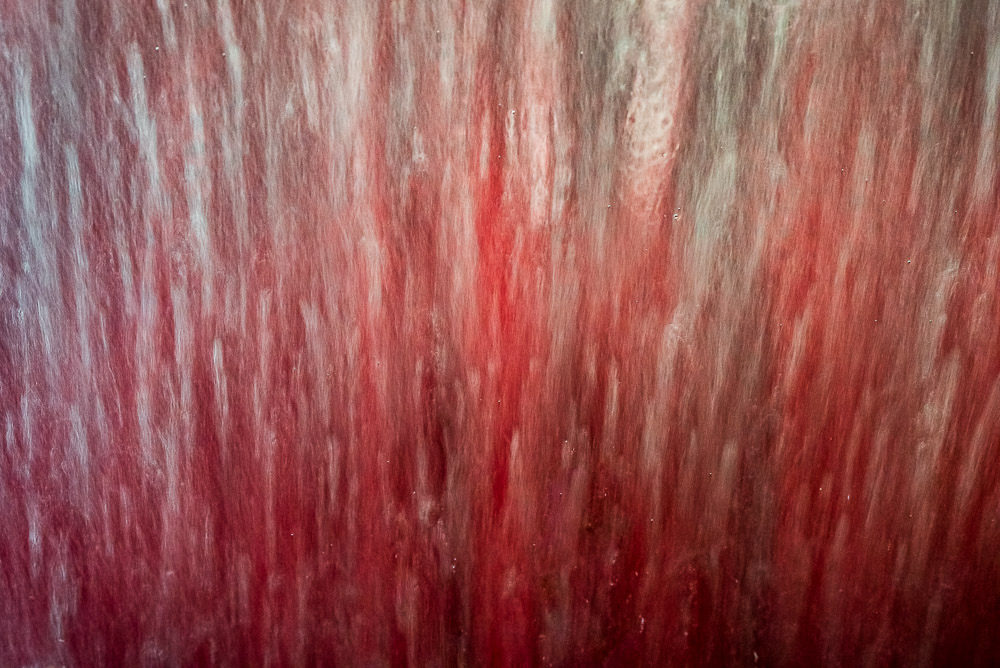
    This is a horribly imperfect image. And it is just what I wanted. 🙂 It was shot out of a fast train in France. I wanted to represent the sense of speed and motion and changing terrain whipping by. There is not a single sharp pixel in the frame. The focus may not be right, I can’t tell. But this was one of the best of many, many tries, and to me, it captures what I was perceiving.

  • Packaged Experience

    Packaged Experience

    Do you create your own photo experiences and adventures or do you rely on packaged experiences? I hope to encourage you to have the confidence to create your own most of the time.

    Packaged experience

    What is a packaged experience? It is any situation where you purchase a ready made happening from a vendor. Someone who offers you a ready to go vacation or adventure you can just step into and passively enjoy.

    A classic example of a packaged experience is a Disney World vacation. Space Mountain and Epcot may be fun and maybe somewhat magical seeming for the kids, but not much for an artist. Another example is a typical vacation cruise. New scenery, good food, but it seldom qualifies as an adventure or a unique experience.

    In both cases, everything is wrapped up in a neat package, all the sharp edges are protected, and a manufactured packaged experience is provided to you. These are exactly the reasons I recommend you avoid them.

    It’s not really an adventure

    An adventure is “an unusual and exciting, typically hazardous, experience or activity”. Packaged experiences are seldom unusual, since you are buying the same product sold to a million other people before and after you. A simulated rocket ride or a roller coaster may seem exciting for a few minutes, because they shake you around and it seems dangerous. But the reality is they are carefully controlled and not at all dangerous, unless you have a serious heart condition. They are a simulation of adventure. Once you reach an age where you realize the Pirates of the Caribbean are not going to stab you, no matter what you do, it should cease to hold much excitement. Unless you step into a Westworld situation, but that is unlikely.

    The packaged experience is in no way unique or dangerous. It’s effects are short lived. There is no long term benefit or learning from it. And even worse from an artistic point of view, it gives you little chance for creativity or exploration of new ideas.

    Maybe the worst part, from my point of view, is that in a packaged experience you did not have to put any of yourself in it. You are a passive spectator.

    Roll your own

    I guess it can seem intimidating if you’re not used to being responsible for your own adventures. And if you are taking the family maybe you want to be extra careful for the kids. But even for them – especially for them – wouldn’t it be wonderful to give them a legacy of being able to amuse and entertain themselves in strange places?

    What does it take? Just a good attitude and the willingness to try it. No special training is required. You have to be open to accepting things as they come and learning to like them. It is almost all your attitude that determines what benefits you will receive.

    Let me give an example of a pattern of things that formed some of my belief in this. Way back, when timeshares were a good thing and not yet ruined by greedy developers, we bought one. Kind of on the spur of the moment. No real planning or investigation. Well, the real utility for us was that we always traded for other locations in some part of the world. So we had a week tied to some location we had never been to. Initially we would get somewhere, explore the area a day or 2, then ask ourselves what we are going to do now? But we were stuck there. Sometimes these places were way out in the middle of nowhere.

    We were forced to amuse ourselves. We would start to explore the vicinity more slowly and carefully. It amazed us what kind of interesting (and photogenic) things we discovered. Looking back on it, I can see what should have been obvious then. Almost every place has interesting things to find, quirky and interesting people, local things they pride themselves on, unique history, local food specialties to try, and just things you have never seen.

    Trust your ability

    We’re just not used to slowing down and looking at what is right in front of us. Instead, we’re looking for the tourist attractions with bright neon signs. The places listed on the tour brochures as welcoming busses of tourists (and having a big gift shop).

    The time share experience taught me to settle in and look around to see what I can find. I can’t remember how many time share trades we did, I would guess at least 20. In all of those, even when we were initially disappointed with an area, there was not one where we went away at the end of a week saying we will never come back there. I remember the very first one we went to was in Palm Desert CA – in August – it was 120F every day. And we loved it. I found fascinating places and sights I had never imagined. We would definitely like to go back, but maybe at a somewhat cooler time.

    I labeled this section trust your ability, but really, little ability is required. The biggest factor is attitude. Keep open and receptive to what is there. This is a learned skill more than any innate ability. I always had a bent toward traveling this way, but the time share experience taught me to recognize and develop it. Now I trust that this is the best way for me to travel.

    Don’t go overboard

    To keep it balanced, let me tell you about a friend I have who is a wilderness photographer. He goes on solo treks in the Rockies all the time, all seasons and weather. He has probably climbed all the peaks around here over 10,000 ft. Many in the winter. Wildlife encounters are not too rare. He builds and stays in snow caves. Blizzards and storms do not dissuade him. I think he is a little crazy. But that is his thing. He gets unique pictures of places and times few other people have seen.

    However, this is not what I am suggesting. It is not at all necessary to go to that kind of extreme to create unique adventures. Just go somewhere new and be open to what is there.

    Try it

    I encourage you to give it a try. It may take several outings before it becomes comfortable. That’s OK. Being uncomfortable is not a bad thing. Sometimes that just means you are learning something new and exercising a new skill.

    To get started, take some short trip, maybe one night. Head out someplace you haven’t been before, but not more than a few hours drive. Stay overnight – I recommend a nice local motel, not a big chain. It will be a little more adventurous and without the sterile industrial feel. Besides, small communities need your money. Then home. During the entire outing, give yourself a mission to stop and see and take pictures of anything even remotely interesting. An overlook, some nice trees, a classic old rusty car, a silly local tourist trap – whatever piques your interest. Let yourself go. Tell yourself you’re not in a hurry and you have permission to stop whenever you like. One of the purposes is to learn to find interests on your own.

    Photo Tours

    Many people I know host photo tours, so I want to address those. Different tours have a variety of goals. For this, let me divide them into 2 groups: tours that take you to famous sites and promise you to make the same well known pictures, vs tours that provide stimulation, discussion, and training while also taking you to interesting locations you have never been. I would call the first kind a packaged experience and advise you to avoid it. The second type, however, would be an enjoyable growth and learning experience. The sights and actual images you get are secondary to the adventure and new experiences. That is the kind of experience I would appreciate.

    Do it

    I know this isn’t for everbody. Some of you are such hard core Type A personalities that you can’t go to the hardware store with out written goals and a definite plan. So the idea of heading off anywhere without a well researched plan would be horrifying.

    But for the majority of us, I encourage you to give it a try. And persist long enough to get over the discomfort and have a fair test to see if you like it. When you learn to see like this, every outing becomes an adventure. Walks in your town become new and filled with sights you never noticed. Trips where you actually get away are more exciting, because you are constantly discovering new things that are not on the tourist brochures. Things that are special to you, that become “yours”. It can revolutionize your life.

    Today’s image

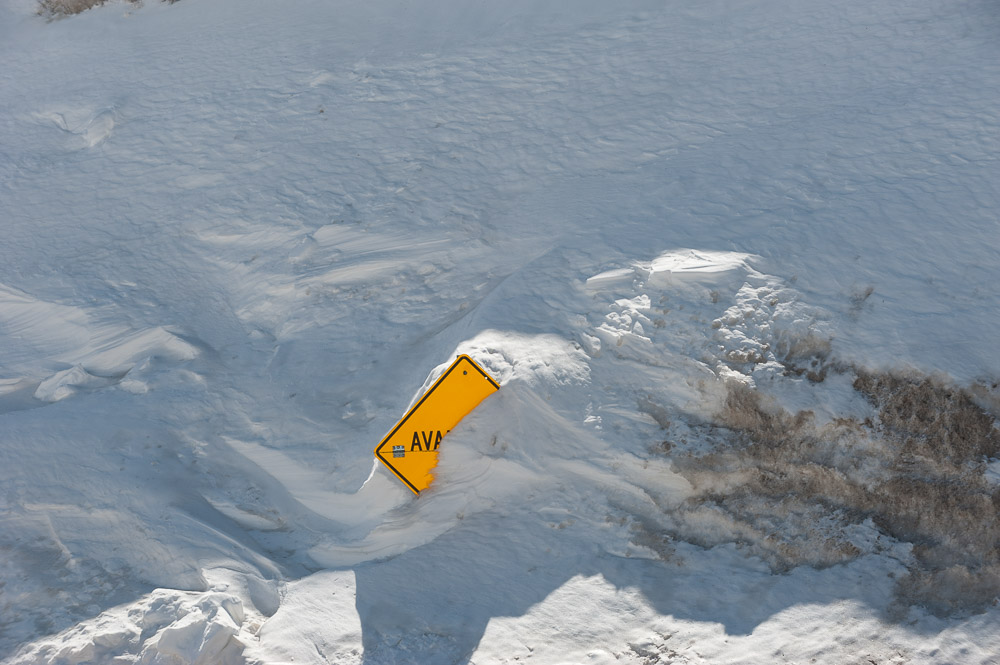
    An interesting road sign found on a tiny back road in Devon, England. We were staying at a time share miles out in the middle of nothing. Wandering around, we found many terrific discoveries. It was a lovely area that is a special place for us still. No tourist map or guide book would have taken you here.

  • Gratitude

    Gratitude

    This article is going to be published around Christmas, so I will be going off the normal artistic or technical track. I think it is important to keep an attitude of gratitude. It focuses us and keeps us open to more of what is going on around us and keeps our life balanced.

    What is gratitude

    Gratitude is an attitude of thankfulness and appreciation. That can seem out of place in today’s world, but I believe it is just as appropriate now as ever.

    Gratitude comes from the realization that I am very fortunate. I am very blessed in my circumstances. When we think soberly about it, we all know that none of us deserves good things, just because we are alive. We may have worked hard for what we have, but hard work alone will not determine the outcome.

    I am healthy and fit enough to do what I want. Even at my age I do not take any medications and I do not have any chronic diseases. I get to set my own schedule and priorities. Few people consider that they have enough money, but the reality is that right now I have all I need and don’t have to worry about it. That in itself gives me tremendous freedom. My mind is still mostly intact (some people may disagree). I love to exercise my creativity in my art and I get the opportunity to do it about as much as I want. And one of my great joys is learning new things.

    This is not bragging. I am telling you I realize I am blessed. I am not smart enough or talented enough or skilled enough to have created this situation on my own. The odds are way against it.

    Basically, gratitude means I do not believe everything I have comes from my own talent and effort and I am extremely grateful for what I have.

    Why is it important

    Gratitude helps keep us humble. It makes it easier to see our self in context: we are limited and occasionally foolish and occasionally bad tempered and we make a lot of mistakes, but sometimes we can be creative and generous and giving. And it helps us realize no one really cares much what we do, so we better do what helps satisfy our own goals and gives us satisfaction.

    So if we make a mistake or if our work is not selected for a show we entered or even if someone criticizes what we do, so what? We are just human like anyone else. Those things may hurt, but it is just part of going through life. Other people’s opinion should not affect us too much.

    What effect does it have on us

    A healthy sense of gratitude leads to contentment and inner peace. Contentment is a decision to accept and get the most out of whatever comes. Not to say you don’t try to change things and better our circumstances, but still be grateful for what we do have and are.

    Contentment is not the same thing as happiness. Happiness depends mostly on our circumstances. Happiness is the temperature is just right. I had a very nice lunch. A friend called and asked me out. I received some unexpected good news. These happiness moments are rather ephemeral. When something goes wrong it can quickly go away.

    Contentment, though, being an attitude or a decision, tends to have a long term flow through our lives. It is not so influenced by circumstances or events. It is an internal value that warms and comforts us all the time.

    Gratitude unlocks the fullness of life. It turns what we have into enough, and more. It turns denial into acceptance, chaos into order, confusion to clarity, a meal into a feast, a house into a home, a stranger into a friend. Gratitude makes sense of our past, brings peace for today and creates a vision for tomorrow.

    Melody Beattie

    And emphasizing the receptivity that comes from gratitude, the great Paul Caponigro says

    I strive to undo my reactions to civilization’s syncopated demands and hope that inner peace, quiet, and lack of concern for specific results may enable a stance of gratitude and balance – a receptiveness that will allow the participation of grace. This meditative form of inaction has been my true realm of creative action.

    Paul Caponigro

    Faith

    I couldn’t really talk about gratitude without pointing out that it acknowledges something bigger than us. My belief is that the gifts I have and the opportunities I have received are a gift from God. I don’t expect or require most of you to share my specific belief, but I have to mention it. It is the basis of so much.

    If you are your own god, you will eventually realize that you are a very poor god, with no power and no promise for a better future.

    Gratitude

    So I urge you to cultivate a spirit of contentment and gratitude. Be at peace within yourself. This leads to a rich life and a joyful spirit of exploration and creativity.

    In the Christmas season when this was published, I urge you to seek contentment and realize the greater blessings we have.