An artists journey

Category: Attitude

  • Created From Joy

    Created From Joy

    There are many motivations and reasons for creating art. I can’t say any are wrong if the result is art that truly pleases the artist. For me, I am sure my art is created from joy.

    Many motivations

    What is it that motivates artists to create? Trauma? Money? Desperation? Joy? I am not qualified to say, because I can only speak for myself. Without being in the mind of another artist and experiencing their motivations, I cannot know.

    Much has been written on this, but, again, i am not sure we can fully know what motivates someone else.

    We can look at some works and believe they were created as the artist tried to work out some grief or tragedy or great wrong. Or maybe just try to understand life.

    Guernica

    Picasso’s Guernica seems to be a deep reaction to the horrors of war. Actually, he had been given a commission by the Spanish Republicans to paint a mural for the 1937 Paris World’s Fair. He was not making much headway on it and did not seem highly motivated. Then on 26 April 1937 the Nazis bombed the village or Guernica. Picasso was urged to make this his theme and, after reading eye witness accounts of the attack, he did.

    Yes, he was Spanish, although he did not live there at the time and never would again. But rather than being a deeply personal experience for him, he seemed to be able to empathize well enough to bring the emotion through. Anyway, it is considered by many to be his masterpiece.

    This does not prove or disprove anything. It just shows that artists motivations are deeply internal and personal. As much as critics try to analyze and dissect a work, they are groping in the dark unless the artist enlightens them.

    Joy motivates me

    I have discovered myself well enough to understand that joy is my primary motivation when I am making images. Even though I am old and increasingly cynical, joy is what enlightens my work.

    Joy can be a small thing like finding a dew covered spider web in the niche of a wall or it can be the sweep of a grand landscape at the right time, like the image with this article. It is not a particular thing or place or time. It is my reaction to it. How does it move me? What does it bring to me at the moment?

    Finding these moments of joy draws me on from one to the next. The act of selecting a scene to photograph, framing it, composing it, deciding on exposure settings, etc. is a skill. Doing it is a calming and pleasant activity to immerse myself in for a few moments. Everybody takes pictures. To take one that people stop to look at or talk about is art.

    My joy is in capturing and expressing a scene in a way that will be memorable. But even if no one other than me sees it or enjoys it, it is joy and it is my art. No critic or reviewer can take that joy away from me. It matters little what other people think about an image. It can still give me joy.

    Not happiness

    We need to distinguish between happiness and joy. Many people take them as about the same, but they are quite different. Happiness is a pleasant feeling because circumstances made us content at the moment. A warm cup of cocoa on a cold day. An unexpected letter from a friend.

    The next moment, something can take away our happiness.

    Joy is a long term view of life. It comes from within and is not completely dependent on what is happening around us. We tend to be joyful when the way we are living our life is aligned with our values and beliefs.

    Making images that bring me joy definitely aligns with my values and closes the loop. It reinforces my joy. That is, my images come from joy and making them increases my joy. For me, they are created from joy.

    Values

    Do you ever consider your values? The principles you build your life on are too important to go un-analyzed. We are more fulfilled when what we do is aligned with our values and we tend to be frustrated and unhappy when we are opposing them. Think about what you believe.

    I’m not saying everything we do needs to be for some grand social cause. Not at all. I think that tends to make our work stiff and preachy. I am just suggesting we will be happier and do better work if we are doing it for the joy of our feelings and the pleasure of the creativity.

    Try it. You might find more joy in your art and it might come across that way to your viewers.

  • Learning Takes Effort

    Learning Takes Effort

    Contrary to the forest of web sites and blogs and newsletters promising you easy hacks, quick fixes, and effortless skill building, let me disillusion you. Learning takes effort. The more different your new subject is from what you already know, the harder it gets.

    Curiosity

    I think I can speak to this. In a previous post I said I was afflicted with curiosity. That is stated in a humorous way, but I am very serious. I have a deep and burning curiosity about many things. Learning new things or just extending my knowledge of an area occupies a lot of my time.

    I’m the kid who, way back in the days before internet, would spend hours browsing through encyclopedias. Any one remember what those are? Looking up a word in the dictionary could take me an hour. I kept getting sidetracked by other interesting words I see along the way.

    It also drives my approach to photography. I am more interested in finding interesting things, no matter what they are, and making interesting pictures from them than I am in looking for particular subjects or iconic scenes. Almost anything can be a good subject if you can “catch” it doing something interesting.

    Learning

    But if we want to go beyond just an idle curiosity, we have to learn new things. That requires significantly more effort.

    Learning demands a commitment of time and study and effort. And dedication. And drive. It is not easy to master a new subject or field.

    But what is learning, really? It is the ability to independently use knowledge or apply a skill over time and in new situations. As opposed to just recalling facts. The American education system is woefully deficient on this. Our schools teach and measure mainly performance, not learning. That is, what is 3 times 4? Who gave the Gettysburg address and what year?

    It is not that performance is unimportant, but recalling facts for a test is just not making us much more educated. For instance, I love studying history. There are usually several history or biography books around me in various states of completion. But I only care about dates as much as required to be able to put things together in a timeline. It is much more interesting and enlightening to find out why things happened, why to those people, why then, what is the back story.

    Failing

    Actual learning is hard. It requires work. And, sorry, but that is the way it has to be. We learn more deeply when we have to work at it and when we fail.

    Fail?? Yes. I don’t mean like repeat a grade. Failing as in try to use your knowledge and find you are incorrect or inadequate. Then you have to concentrate more on it to learn the right way. This reinforces the correct way and you know and remember it better.

    A small personal experience: one of the things I am learning is French. It’s a long story. You know that old expression that it’s hard to teach an old dog new tricks? That is true for me when it comes to learning a new language. A theory, that seems to hold true, is that it takes repetition and mistakes to learn new words. Repeating them over time builds memory, but repeating the ones you miss more often reinforces them.

    My point here is that the purpose of learning is to be able to use the knowledge or skill independently and with some confidence. We usually can’t do that until we have tried and failed and reinforced it and practiced. This involved making mistakes and correcting them and building on that. This applies to our everyday lives and our art. I don’t recommend that as a way to learn brain surgery.

    Interleaving

    Another learning topic that I have found to be very relevant to me is called interleaving. Conventional wisdom says to practice one thing intensively until it is perfected. Then move on to the next thing. If you are learning tennis, then, you should practice forehands over and over until you have mastered them. Then go to backhands. Etc.

    Interleaving, though, says you should mix a variety of things, even if you have not mastered each of them. So in the tennis example, is says it would be better to mix forehands and backhands and volleys in a match-like experience. There is evidence that this is a better way of learning.

    I am sold, because I do it in many ways with good results. I believe interleaving the activities forms more and stronger connections between different components you are learning. The long term benefit is deeper understanding or skill.

    Learning builds on itself. The more diverse things we learn, the easier it is to learn other new things.

    Dots

    Steve Jobs famously called it “connecting the dots“. He stated it best in his 2005 Stanford Commencement Speech. The picture is that we learn many different, unconnected, things and have experiences we may or not welcome. We can’t look ahead to see how they will connect. But somehow, looking back, they form the path we have taken.

    I love his example of how his audited calligraphy course led to personal computers as we know them. Read it!

    In order to connect the dots, we need a rich set of “dots” in our lives. Because the more we know the more there is to connect to.

    Photography

    What does this have to do with photography and art?

    I am suspicious of typical ways photography is taught. A linear process seems logical and fits well in a course outline, but I believe students should be out making bad pictures from day one. They should have daily or weekly project assignments. As they see their results they can be shown what aperture or shutter speed or ISO or lens choices could do and why they would want to make tradeoffs. They can be shown compositional problems they made and pointed to great artists to see the choices they made. Students can quickly get the hang of manipulating the camera to get results they want and can then get on to the harder part – figuring out what they have to say.

    But in an environment of experimentation and unlimited choices. After all, we are learning to create our vision.

    I believe we should be life long learners and open to new influences. The attitude that we know all we need to know is dangerous. We can always learn something new and get inspiration from new sources. I recently saw work by a contemporary artist I had never heard of. But some of Aline Smithson‘s project The Ephemeral Archive touched me in new ways and opened windows of inquiry for me. And I didn’t think I liked contemporary photography.

    Learn to be comfortable with being challenged with new ideas and with failing. It is one of the best ways to learn. It’s not supposed to be easy.

    If you are making mistakes, then you are making new things, trying new things, learning, living, pushing yourself, changing yourself, changing your world. You’re doing things you’ve never done before, and more importantly, you’re doing something.

    Neil Gaiman

    I want to hear your comments! Let’s talk!

  • Out of Context

    Out of Context

    Every image has a context, the setting or framework or circumstances where it was created. Sometimes we try to tell the context to our viewers. But really, aren’t most images viewed out of context?

    The setting

    Every traditional photographic image has a context. It was created someplace, about someone or something, for some purpose. That is an inescapable reality. Photography records the world around us. But how important is it for an artist to bring the context to the viewer?

    If I am showing you street photography, it might help to tell you the country I’m in. That may help frame the culture, architecture, people we’re seeing. But, say I’m shooting in the USA for an American audience. Does it really matter if it is in New York City, or Cincinnati, or Seattle, or Dallas? You look at the image and try to read the subject and deduce what the scene means to you.

    Context in this case is supplied from a shared cultural experience. We all know enough of what it is like in a large American city to understand the image.

    Or for a landscape, if it is an interesting picture, does it really matter if it is the Colorado mountains instead of the Sierras, or the Maine coast as opposed to the Oregon coast? The impact of the picture is what intrigues us.

    The story

    And about story, we are told repeatedly that we must tell a story in an image or a project. I struggle with this. Somewhere I missed the training to understand this. Or I read too much into what “story” means.

    One legacy of growing up as an Engineer is I start out thinking fairly literally about a proposition. To me a story has character development, conflict, and resolution. What writers call the story arc.

    Personally, I don’t think many images tell much of a story unless they are about people. Even then, when we see a person we are compelled to figure out or create a story to explain what we see them doing, or their expression, or gesture. Regardless of the artist’s intent.

    But I seldom present images of people. To me, a landscape or an old rusty truck or an abstract motion blur doesn’t tell a story. If it does, the story would be something like “pretty” or “gritty” or “interesting shapes”. Is that actually a story? That seems weak.

    My inclination is to say most images do not, by themselves, tell a story. But they might provide enough structure for the viewer to invoke whatever memories or meanings they want. To create a story for themselves.

    Do we have to supply the story?

    As artists, we often feel compelled to write the story and present it to our viewer to help understand the image. Or, more likely, a gallery requires us to do it. Sometimes that is successful. If they actually take the time to read it. Maybe for a photo project people will read the artist statement summarizing the intent of the project. Maybe.

    Even if viewers read a title, they tend to make up their own story about what the image is. Is that bad? I don’t think so. It is their story. If they are happy with it, great. I sometimes ask viewers to tell me what they are thinking when they see one of my images. Often I am surprised. Sometimes they are far off of what I saw and felt or what the image is actually “about”. Their story may be completely outside the context of the “real” image. But they are not wrong, because this is what they experienced. I believe the best art leaves room for varying interpretation.

    I know that a well written story sometimes adds a lot of context to an image. But part of me thinks a strong image should stand on its own. If I have to explain it, it is lacking impact. A type of exception I often see is a project like Cole Thompson’s Ghosts of Auschwitz. His images are strong and impactful by themselves, but a few words taking you to the context of where they were taken and what he was feeling makes it a deeper experience.

    Maybe the story is already there

    What I’m about to say goes against all the conventional wisdom we normally hear. Maybe we do not write the story. Perhaps, in general, the scene is already telling its story. We see it, recognize it, frame and compose it, and try to help it tell its story in the best way we can. But it is its story, not ours. Maybe we give ourselves too much credit.

    If this is true, maybe we are documenters more than creators. This aligns with an interesting statement Ben Willmore makes when he says that in composing a scene we should reduce the negatives and enhance the positives. Doing that does not really change the story. Maybe we can slant the story some and write some of our own vision into it.

    I am not minimizing the creativity and skill needed to make a good image. Not at all. I know it is exceptionally hard and I wrestle with it every day. I’m just suggesting that maybe we are not actually writing the story. Rather, we are helping our subject tell its own story. Maybe our job sometimes is to recognize the story that is already there and help to bring it to life.

    In isolation

    This idea carries over into viewing an image. When we view an image in a gallery or on the wall or online, we are typically seeing it in isolation. A gallery may provide a title and perhaps even a short statement posted on the wall next to the image. People may or may not read it.

    Does that matter? Once an image is printed and hanging on a wall, it is complete in itself. When someone looks at it, their appraisal or appreciation of it does not need to be tied to my knowledge of the context or its meaning to me. The image tells its own story, or it does not.

    I actually love to provide an image that raises more questions than it gives answers. It would be a joy to me for someone to buy it and hang it on their wall at home and pause over it every time they see it. For them to feel free to create varying stories to fit it. When they are showing it to friends I want then to say “today I see…”.

    When they buy the print I could give them a written description of what it is, the context where it was created, and what it meant to me. But then it is all my story. Isn’t that taking away some of their joy and creativity in participating in the art?

    An image exists

    So if we typically see images by themselves, that means when a viewer takes the time to look at it, the print has to be strong enough to “tell it’s own story”. Or at least to tell a story to them. It must be able to communicate something meaningful to the viewer. Perhaps its job is to connect to memories or to raise interesting questions that make people want to live with it.

    If we have to use words to complete the image, maybe it is not strong enough. The words can supplement the effect, but they should not be required to make us see it as a good image.

    Context could be important, but usually we should not push it too hard. As artists, we should not be so arrogant as to believe the viewers will or should internalize the context and meaning we intended. Part of their appreciation can be to make their own stories. As an artist I have created this image, but I have to send it our on its own to make its place in the world.

    Today’s image

    To me, this image has a lot of story. But who wrote the story? Not really me. I saw it, and stopped and took the time to frame it and compose it and narrow in to what I thought the story was. Then I edited it some, not altering any important components.

    I can’t honestly say “look at this great story I told”. No, I found a story already existing and tried to put a little of my touch on it to bring it to you.

    Would knowing the context make this a better story? Or would it interfere with you discovering your own story?

  • The Subject?

    The Subject?

    I wrote recently about the sometimes ambiguity of the subject. But the subject itself? I’m not sure I care what it is. Is that heresy?

    Subject is king

    People sometimes travel halfway around the world to photograph a certain thing or event. As I write this, several of my friends are preparing to travel to photograph the upcoming total solar eclipse. Or if a friend corners you to watch vacation pictures or videos, it is of their trip to [______] – fill in the blank of the place you don’t care about.

    The point is that it seems most people are highly fixated on getting the best images of particular subjects that are important to them. This is probably perfectly natural. After all, when we go to the trouble of taking a picture, it should be ‘of’ something, shouldn’t it?

    Most photo instructors emphasize this. Actually, they initially put beginners through a boot camp and hazing packed with technical details and jargon about aperture and shutter speed and ISO and depth of field and … If a beginner survives that, and are still interested in photography, then they are taught to have a foreground, middle ground, and background and a clear and strong subject. Then you work on composition, lighting, exposure, etc. This is standard practice.

    Is it wrong? No, but learning photography is actually a difficult thing. There are many technical levels and esthetic aspects to learn. It takes a lot of practice to get good at all of them. People have different preferred learning styles, so a one-size-fits-all regime may not be appropriate.

    A genre

    Many well meaning experts firmly recommend that their listeners have to pick a subject area and specialize in it. They say if you are going to make a place for yourself in this over crowded field, you have tp be well known for one particular thing.

    Are they wrong? Probably not. It is good advice if your goal is money or fame. So their advice is to become the recognized wildlife photographer, or portrait photographer, or street photographer, or night sky photographer, or … pick your specialty.

    Then they tell us to look at what our “competitors” are being successful with and do more like that. While I can’t believe any “authority” would recommend that artists copy what other artists are doing, I can see where it is shrewd advice for maximizing your income. If you don’t care about your art.

    Develop a body of work

    And then we are told that we have to have a body of work. This sounded mysterious and difficult to me until I figured out they were just saying we have to be able to demonstrate we have done this enough to be taken seriously and we have to show the sustained quality of our work. Oh, well, sure. I have to do that for myself every day. I would call it my portfolio.

    But then they say our portfolio must have a consistent subject focus and style and look. One “expert” I heard recently answered a question about this by using an analogy of an aspiring musician. The gist was if you are submitting an audition tape, it should all be similar type and style. You wouldn’t do some Country & Western and some rock and some bluegrass and some rap.

    Maybe that is good advice if you are trying to break into the music industry. But I don’t think it works for me in my art.

    Conventional wisdom is that our work needs to have a theme or be centered on a cause. After all, we can’t be a “serious” artist unless we are dealing with serious, life and death subjects. Right?

    And we need to have a recognizable look that sets us apart. And our work needs to be cropped to a consistent presentation format, like square. Of course, it should have consistent color grading so it all looks like it came from the same artist. And so on.

    Omnivorous

    Some of us have real trouble with this, though. We are missing that ambition gene that allows us to suborn our artistic vision to the needs of marketing and fame. At least, I suffer from this defect.

    I consider my artistic interest to be omnivorous and wide ranging. To the point where I would assert that I don’t care what the subject is. If it interests me, I will shoot it. And almost anything can interest me under the right conditions.

    I am coming to see that it is not usually the subject that makes a good image. It is my reaction to it, My relation to it. The interest, even love, that comes across to me and my viewer.

    Ultimately, an image can seldom be great unless I love it. And few images of an “interesting” subject will be great to me unless there is a strong connection there. I have heard people debating if you should take a picture if you’re not sure it will be a “portfolio” image. I say, if it interests you, take it. You won’t know until later what your reaction to it will really be.

    An artist

    Am I an artist? My answer is “yes”. The style and theme of any image in my body of work is a record of what I was drawn to at that place and that time when I made the image. I refuse to restrict myself to only shooting rusty 1950’s Chevy trucks in black & white and square cropped. It would make me crazy if I closed down my options like that. I love rusty 1950’s trucks, but I could not exist on a exclusive diet of them.

    I may travel half way around the world to go to a place I am interested in and want to explore. But I don’t go to photograph a subject there. As I explore, I will likely find many images to take. But when I take one, it is because the whole scene grabbed me and tweaked my interest.

    Let me give an example to make it concrete. I am unlikely to ever go on a safari in Africa. But if I did, I wouldn’t care if I came back with a great shot of a lion. Why? I don’t really care about lions. I would be more interested in a nicely formed tree in great light with a stormy sky. Or a native tribesman. Or …

    What seems to happen is, as I’m looking around, something clicks. My subconscious triggers a message to my conscious mind to let me know “there’s a picture there! Get it!”. When that happens, it is not just about a subject. Its the subject, in this place, at this time, in this light, with me in this mood. Bam. That makes an image. Check my current online portfolio. I try to organize it to make it easier for you to browse, but you will see a wide range of subjects and styles.

    The subject

    So the subject? Not as important to me as it seems to be to a lot of people. The subject is only part of a good image. And it’s usually not even the most important part. At least to me. So yeah, I will go so far as to say I don’t care about the subject.

    This is just my personal approach. You do what works for you. I hope you get the shot you want.

    Today’s image

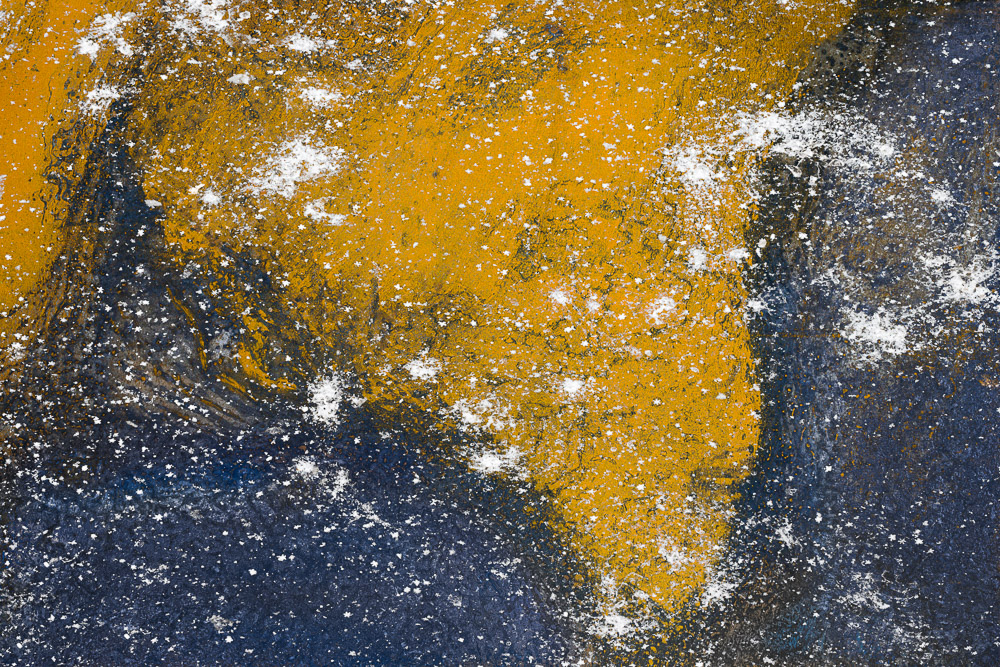
    Today’s image is an example of the subject not being as important to me as the overall look and how I felt about it.. You could argue there is no real subject. I loved it and had to shoot it, even though it was difficult. I won’t say here what it is, but if you write me I will at least give you some hints. 🙂

  • It Is What It Is

    It Is What It Is

    It is what it is. This is actually an expression I hate, but I’m used to it because some of my kids occasionally use it. In one sense, what I photograph is what it is.

    My methods

    I photograph outdoors in natural light. The subjects I shoot are “found” things. Things I encounter on my way and I shoot them as I find them. That is, I do not stages shots. I will very seldom move anything or do any “gardening” to remove distractions or competing elements.

    This is the method that appeals to me. There is a kind of honesty or transparency about it that feels right.

    One of the things I am indirectly pointing out in it is that most of us go through our daily life with blinders on. We tend to be oblivious to most things we encounter unless they are what we are looking for or they seem a threat.

    What I want to do is take these found subjects and elevate them in a way that makes them interesting and to gently say, “see what you missed by not being mindful”.

    Explore

    To accomplish this, I have to be an explorer. I forage for images rather than planning them. And it requires heightened senses. I have to be outside my head and paying attention to things around me. Some may say I’m out of my head, but I will call it outside my head. I have to quiet the inner critic and be constantly scanning around me for interesting things.

    It is a learned skill that I have practiced for quite a while. While I am far from perfect, I feel like I am getting better at it.

    It has become a joy to me. I look forward to these explores. Most often I am just wandering in the vicinity of my studio. Familiar and well worn paths. It constantly surprises me that I can discover new and interesting things in such familiar territory. Some days it is easier than others. But more often than not I find something new or I see something differently. Even if I don’t come back with any images, I have enjoyed getting out and being in tune with what is around me.

    Go out empty

    One of my inspirations is Jay Maisel. I have mentioned him many times. Jay is a famous photographer living in New York City – now Brooklyn. One of the many things he is famous for is just going out rambling every day on the streets close to home.

    He is so good at spotting interesting scenes that it is almost depressing. I would hate him if he weren’t so phenomenal. 🙂

    Jay describes what he is doing as “going out empty”. He wants to go out as unprepared as possible so he can get filled up with what the world has to offer. The point he makes frequently is that if he has a certain thing in mind to shoot, that is a mental block. He might find that, but would probably miss everything else that’s on offer.

    Through lots of practice I have determined this style works well for me, too.

    Make something out of it

    So I explore. I wander. I’m searching for things that catch my interest. And when I find them, I don’t rearrange them or clean them up, except maybe for a stray blade of grass or a piece of trash.

    Therefore, the challenge is to make something out of what is there. Position, crop, lens choice – these all factor in to making the image. Someone has said the picture is already there, we just have to crop it. There is truth to that. The excellent instructor Ben Willmore once said “What elements are adding to the image? What elements are detracting? How do I remove more of the detractions and add more of the good?” That is a good description of the game: try to remove enough of the bad and include enough of the good.

    It is what it is – work with it

    It is often stated that everything has been shot. What matters now is our personal treatment of it. Can we use our unique vision to see the subject in a new and interesting way?

    I choose to work with things that interest me as I find them. It is what it is. How can I make it the best it can be? It can be a challenge, but the reality is there is a lot more interest in the world around us than we usually notice.

    It is a joy to me when someone exclaims over one of my images and I can think – or say out loud – that is right where you go by every day and you’ve never noticed it.

    A final quote from Jay Maisel: I want people to see what I see. It’s all out there. It’s a joy to look at.

    Yes, it is what it is, but it can be more.

    This process works for me. It fits me and there are benefits. I recommend you experiment with it. It might need several outings to become comfortable. You might discover a new world around you.

    Let me know your experience!

    Today’s image

    OK, I didn’t find this around my studio. But thousands of people passed by this daily and I bet few if any ever glanced at the scene closely enough to take notice of it. It was clearly visible from a main highway. There seems to be a story and a lot of unanswered questions wrapped up in a single frame.

    I was driving and I turned around and came back to it. I’m glad I took the time. It is a good memory for me.

    The scene is gone now. But that is a topic for another day.