An artists journey

Tag: fine art photography

  • The Histogram is Just Data

    The Histogram is Just Data

    I don’t mean to be insulting, but I cannot understand when people look at histograms as some magical, mysterious, and intimidating technical artifact. It is not. It is just data about what our sensor is seeing. The histogram is just data, and it is useful. Use it. Do not be afraid of it.

    Trigger

    A newsletter I received today triggered this semi-rant. But looking back, I see it has been over 3 years since I wrote about histograms, so it is probably time to revisit the subject. This actually is a subject I feel some passion for and believe it needs to be better understood by photographers.

    The newsletter author declared that our histograms lie. I realize that click-bait is commonly used to try to get people to read articles, but I still feel it is being somewhat underhanded. Now, in fairness, the newsletter author made some valid points – except for the part about histograms lying.

    What is a histogram?

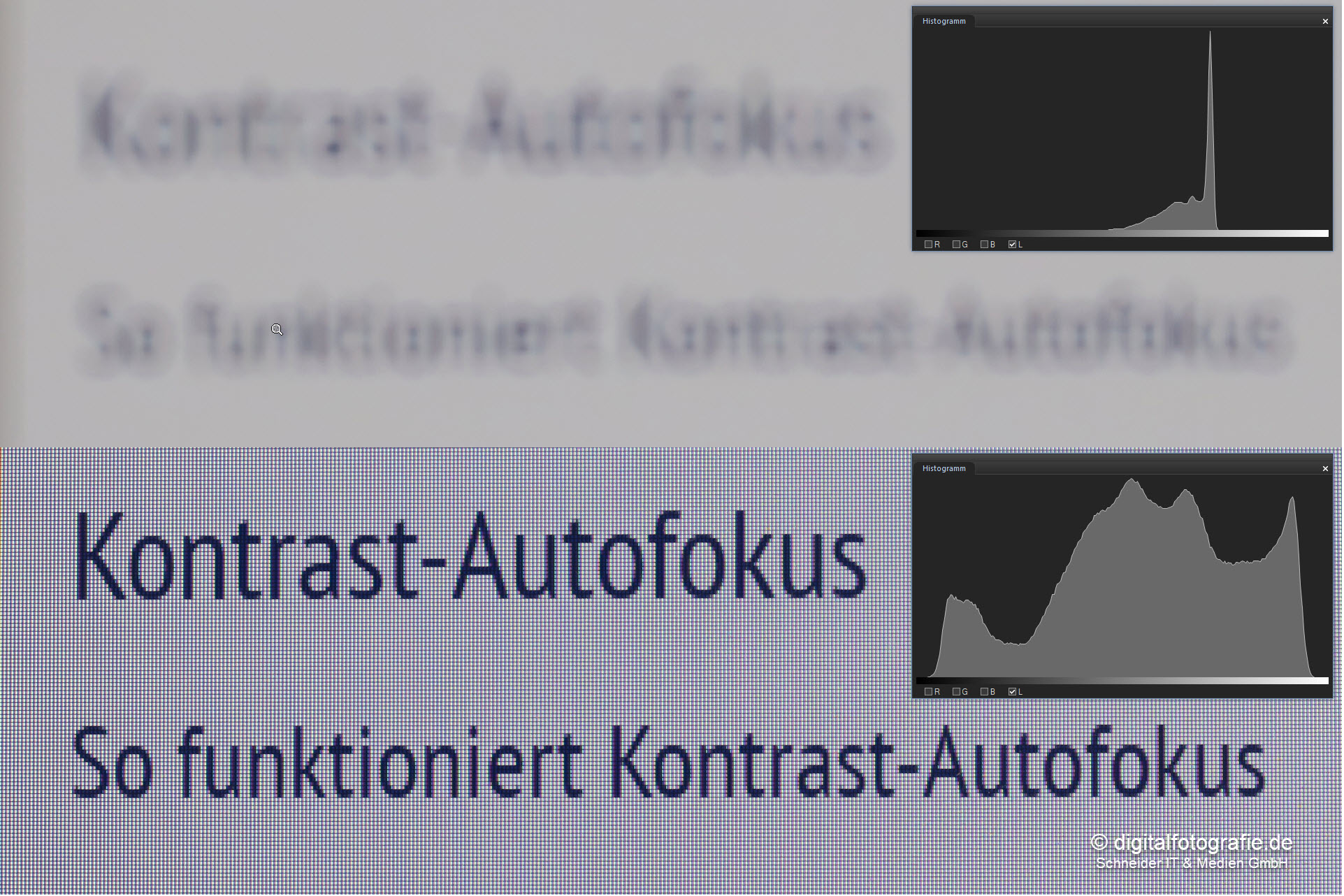
    We see this graph of some data and maybe it does look complex and mysterious if you are not used to working with data and don’t know where the data comes from. Let’s get over that by understanding how simple but effective it is.

    By convention we play like our cameras measure light in a range of 0 to 255. There are no units: 0 represents black and 255 is pure white. The convention came from the history of early digital cameras. It is obsolete today, but still used. That is a topic for another day.

    So there are 256 possible values of brightness (0-255). If we go through and count the number of pixels of each value – the number of pixels in the image that have value 0, the number of pixels in the image that have value 1, etc. – and put them on a graph, we have a histogram.

    Here is a simple example:

    Again, black is on the left going to white on the right. Even without me showing the actual image, we can see that there is a “bump” of dark values on the left and a larger hill of bright values on the right. In between is a relatively low and even count.

    What can we learn from this? It is a black & white image, because there is no separate data for red, green and blue. There is high contrast because of the hills at the dark and bright ends. It is bright but not overexposed. There are deep blacks, but not enough to have lost important information. So, even without seeing the image, we can tell a lot about it. Is the image exposed “correctly”? Ah, that is the question my rant is based on.

    This is why histograms are useful. They are useful data about our image. It gives simple information to help us understand our exposure better.

    Benefit

    Today’s mirrorless cameras bring us the amazing benefit of real-time histograms. We can select to see the histogram live in our viewfinder or on the display on the back.

    What is the benefit? We see an immediate graphical view of the exposure the camera is determining. In the example above, we can see that the light tones are very bright, but not overexposed.

    I routinely use it to watch for “clipping” of brights or darks. If there is a large hump of data jammed up against the left or right edge, that is probably a problem. I will often choose to override the camera’s exposure determination to avoid these peaks.

    Again using the example above and knowing that my camera was in aperture priority mode, we see that it chose 1/750 second as the shutter speed. That works OK in this case, but if I did not agree, I would have easily used the exposure compensation dial to adjust the exposure. I do this a lot.

    So the histogram is a quick and easy to get a feeling for the “shape” of the exposure.

    They don’t lie

    Now coming to the basis of my rant: histograms do not lie (actually, they do; I will say how later and why it doesn’t matter).

    The newsletter author gave the example of a picture of some fruit on a dark table with a black background. She said the histogram lied because the camera did not give the exposure she wanted. It tried to make the whole image evenly exposed.

    No, the histogram is just a straightforward measurement of the data. If you take your temperature but don’t like the reading you get, it is silly to say the thermometer lied.

    What the author was describing was that she wanted to expose to have the same look as the scene she saw. This was a case of disagreeing with the camera’s matrix metering calculation. It was doing it’s job of trying to capture all the data that was there and preventing blown out blacks. But she decided to use exposure compensation to force the camera to expose the scene the way she wanted.

    The histogram did not lie. As a matter of fact, she relied on it to do her exposure compensation values. She used the histogram to determine how to override the camera exposure calculation.

    Actually, I would have used the camera’s original exposure determination. I like to have all the data available to work with. This is called exposing to the right. Bringing the brightness down in post processing to the level she wanted is simple, non-destructive, and does not add noise. Capturing the compensated image the way she wanted irreversibly crunches the blacks.

    They lie

    I said they don’t lie, but they do a little. For speed and efficiency the histogram is derived from the jpg preview of the image. Same as the preview shown in the viewfinder or camera back. If you study jpg processing you will see that it alters and discards a lot of information to give a good perceptual result.

    So the histogram is not actually looking directly at the literal RAW data from the sensor. But there is little observable discrepancy. On my camera, I find that it exaggerates the highlight values very slightly. Still, I typically back the exposure off to avoid highlight clipping, so it adds a little conservatism into the process.

    Trust the data you see. It is good enough.

    They’re not the photographer

    The histogram gives you data. It does not determine exposure. People talk about “good” or “bad” histograms. This is a misunderstanding. There are no absolute good or bad ones. What counts is did you get the exposure you wanted.

    There are valid artistic reasons for shooting what some people would consider bad histograms. If it is what the artist wants, it is correct.

    Histograms give us a reading of the exposure. They do not determine what is right. It gives some insight on what the automatic exposure calculation in the camera is trying to do.

    Use it

    The histogram is a brilliantly simple and wonderfully useful tool. We are lucky to have real-time histograms available to us now. It is a game changer. But it is just data. Do not be afraid of it.

    The histogram does not lie. But it does not automatically ensure that the exposure is exactly what you want. You have to sometimes take change and override the camera settings. When you do, the histogram is there showing you the result of your decisions.

    It is not magical or mysterious. It is a great tool. Use it. A craftsman know how to use his tools.

  • How Not to be Creative

    How Not to be Creative

    You can find suggestions everywhere about how to be creative. I decided to turn it around and offer suggestions on how not to be creative. Is that creative? 🙂 I can’t guarantee that doing the opposite will make you creative, but perhaps they may be warning signs for consideration.

    Creativity

    We all want to be creative (I hope). But what it is? How do you define it?

    We all have different views and expectations. For photography, maybe it comes down to making images that seem fresh and “different” in a good way. They say that everything has been photographed. I don’t buy that. But even if it has, there are new viewpoints or treatments or lighting on our subjects. And there are still lots of things no one has thought to photograph.

    Few of us will create wholly new art genres the world has never seen. Few of us really want to. But we can do work that people look at, come back to, and admire as a whole new way of seeing a subject. We can project our feelings onto the print, giving it our unique stamp.

    We often use the metaphor of the muse inspiring us to creativity. If the muse is with us we are creative. If she is not, we can’t seem to do fresh work. Yes, our creative inspiration seems to come and go; to have highs and lows. I do not believe some imaginary Greek goddesses actually have anything to do with it. It is really happening within us.

    So rather than chasing after creativity, I want to look at ways to stifle the creativity we have.

    Distraction

    If you live in the Western world, you are probably paralyzed by distractions. Our devices and entertainment rather successfully compete for all of our time and mental bandwidth.

    People open their phones dozens of times a day because of fear of missing out (FOMO). We are expected to be online and available to our employers 24/7, even when on vacation. The wonders of the internet has opened up far too many “opportunities” to spend our time and attention.

    But rather than being an incredibly empowering technological aid to us, it has become the master we are slaves to. People are online at work all day then spend many hours at home doom scrolling funny cat videos or new dance moves or movies we don’t really care about.

    So, a great way to subvert your creativity is to be so distracted we do not have time for original thought. Creativity requires quiet time and very limited distractions. In general, the more attention we give our phones and other devices, the less opportunity to be creative we have.

    The technology is not bad in itself. I have 1G fiber and i would not want to let go of it. What we do with it is where we can hurt ourselves.

    Stress

    Another great creativity killer is stress. Stress focuses all of our attention on the problems we are facing.

    The world always tries to keep us treading water. Just a couple of days ago my fuel pump went out, while we were driving in a hard to access location in the mountains. Do you know how long it takes and what it costs to get your car towed over Trail Ridge Road in Rocky Mountain National Park? And do you know what it costs to replace a fuel pump? That can peak your blood pressure.

    That’s just one little example. All of us deal with many sources of stress all the time. It comes with life.

    Like our devices, stress occupies all of our attention if we let it. When we are stressed and worrying, we are seldom thinking creative thoughts. It seems more survival mode.

    So, to kill creativity, give in to worrying about stress. Fixate on those problems. Live with a survival mentality.

    Of course, we can’t just wish our stressors away. We need to deal with them. How we deal with them is up to us. Attitude is a big deal.

    Trying too hard

    Want to chase away the muse? Trying too hard is a good way.

    We should always be trying hard. What I mean, though, is trying to force our self to create something on our schedule. Just sitting there saying “I have to create something; now; do it; right now”. How does that work for you?

    Maybe it works better for you than it does for me. If I try to force myself to be creative it seems to have the opposite effect. I am a total blank.

    Actually, I can often lure creativity to visit me by ignoring it and thinking about or working on something else. I believe artistic creativity comes from the subconscious. Our minds need to be occupied with something not too demanding so our subconscious can be free to wander and think new thoughts. But then we must be conscious enough to realize what just happened and capture the idea.

    Too busy

    Another good way to not be creative is to be too busy. Busy with demanding tasks that occupy all our attention and mental bandwidth.

    The world around us encourages a high level of busyness. What do you say when someone greets you? “How ‘ya doing?” “Man, I’m staying really busy!” It’s almost a badge of honor.

    Being busy is much better than being idle. But like most things, when taken to an extreme, it can be destructive.

    If you are one of those super busy people with a full calendar, how do you find time to be creative? Maybe it is as simple as doing some prioritization and putting some blocks of time in your calendar where you will let your mind relax and give yourself the space to focus on your art.

    Imitation

    The last creativity killer I want to talk about is imitation. Are you trying to make art like your mentor or favorite artist?

    I believe this is a trap because we cannot be them. We can make work that looks a lot like theirs. But this is looking backward at what they have done in the past. We cannot be in their mind and have the same thoughts and influences that will guide them to new work. So all we can really do is copy them. That is not creative. We are not adding anything new.

    Can we learn from other artists? Of course! That is how advancements are made. The critic Lionel Trilling is quoted as saying “Immature artists imitate. Mature artists steal.” Many others have said similar things in slightly different ways. The consistent point made is that we take what we can learn from others and add it to our own art. Just imitating them, though, is a dead end.

    Conclusion

    Creativity is something we all have in varying amounts. It is an enabler and motivation of being an artist. But we are surrounded by many powerful forces that want to stifle our creativity.

    All the creativity sucking problems I list here are real and probably attack most of us most days. They are easy to identify but very hard to overcome.

    We cannot just pretend they are not there. Instead, we have to be very aware of them and actively work to fight them. If we don’t, we will be sucked into their trap and our art will never be seen. The path of least resistance is to give in and let our creativity be choked out.

    Fight!

  • Another Way to Copy

    Another Way to Copy

    My previous article talked about using presets to make our work look like another artist‘s. This is going to continue talking about another way to copy another artist. Not directly or intentionally, but with the same result. That way is going to the same locations.

    Trendy locations

    It seems like locations are as trendy and popular with photographers as clothes styles are with some other people. Can’t you look at a lot of popular photography and score pretty well in a “guess the location” game?

    Some locations get over-photographed to the point of becoming cliche. Do you get tired of seeing pictures of Iceland or Greenland or the Antarctic or Africa? A little closer to. home, how about Yosemite or the Tetons or the Palouse region or fall images from Vermont?

    It is not at all that these places are not beautiful. Just that there is a herd instinct to rush to do the same thing. It seems like a photographer publishes a nice image of a fresh new location and everybody wants to follow to get, what, the same picture?

    The problem of visiting iconic locations

    There is nothing wrong with these locations. Absolutely not. They are iconic because they rightly deserve to be. The problem is our own and what we commonly do when we get there.

    From my own experience and from reading others’ experiences it seems there is a common trap we fall into. An often photographed location causes a certain amount of awe and wonder. We see the famous image we have dreamed of and shoot it. And then we are kind of done.

    Most of us can’t, on that first visit, see beyond the obvious. This is common. The location is famous and grand and set apart in our mind as this special thing. We have always seen it a certain way and we are locked into only seeing it that way.

    Access is important

    What is the difference between our shots of iconic locations and the, probably better, work we do routinely? One significant difference is access. I want to thank Brooks Jensen, the editor of LensWork magazine for helping me see this insight in issue 152, Editors Comments. He, in turn, was inspired by a comment of David Hurn. He proposed that the most important aspect of a potential subject is that we have access to it.

    What we routinely see and shoot we become very familiar with. We become analytic in looking at it. Having the freedom to frequently return to the location gives us the opportunity to see and evaluate it in all seasons and weather and lighting conditions. From all angles and possible views. It becomes an old friend we know well. When we take a shot of it, it likely captures its true personality. We know its best side and its worst.

    These familiar scenes may not be the grand locations most people think about. But we can represent them in meaningful ways, because we know them well. And we know them well because we have access to them.

    Access, frequent return visits, is what builds this familiarity.

    Approaching an icon

    So what strategy can we use when we get the chance to visit one of the. icons? I agree with Mr. Jensen that photographing exotic locations is actually more difficult than photographing the familiar.

    Don’t avoid. traveling to these places! Travel is usually worthwhile for many reasons. But perhaps we need a strategy for approaching the great locations.

    I suggest that when we get there, give in and have fun shooting all the normal tourist views. These are your first impressions. Then when that is out of your system, slow down and start being more analytic. Be suspicious of the conventional scenes you just captured. Try to look beyond them. Find a new point of view you have never seen. Ask yourself how you feel about this thing or place. How you relate to it and perceive it. Why are you taking this picture? Stop and think and just look a while before proceeding.

    Make it a mini photo project. That involves having a theme, a point of view, knowing what you want to say, maybe having a story behind it. You will probably find that few if any of your initial “wow, I’m here” shots make it into the final project. The important ones will be the more thoughtful views where you were interacting with the subject on a deeper level.

    Go your own way

    We can even use that learning to take back to the familiar subjects we see every day and have easy access to. The familiar should not be less exciting. Probably it should be more exciting, because we have the access and opportunity to get deep into the subject.

    Sometimes I go out among my familiar surroundings with nothing in mind. My plan is to just react to these familiar subjects in, hopefully, a fresh way. Sometimes I go out with a project in mind, looking for opportunities to add to it. Either way works, because of the frequent and easy access I have to the material. On our home ground we have an advantage. No one else gets so much access to the subjects you are intimate with every day.

    Never try to copy another artist, unless you are doing it for your education, to learn a new approach. Do not publish these as your original work. You are copying. Trust that you have a viewpoint and believe you have something to say with your work. You do.

    Today’s image

    No challenge guessing the location. Yes, I shoot icons. Everybody does. This was not my first visit to it, so I approached it differently. I didn’t want just another tourist shot of the famous Eiffel Tower.

    After walking around it for a while, I was drawn to this composition. I felt inspired by its immense size and beautiful curves and lines. I didn’t have a wide enough angle lens to capture it in one shot, so I had to shoot multiple and manually stitch them together.

    Maybe this is still a common shot of the icon, I don’t know. I don’t look at many others. But is seems different to me and I like it. It is one of my best memories of it.

  • Buy My Presets, Make Work Just Like Me!

    Buy My Presets, Make Work Just Like Me!

    Maybe I’ve just gotten on some bad mailing lists, but it seems I am being bombarded by offers to get the “secret sauce” of many photographers. Promises that if I will just take and use their presets I will now have all I need to be just like them. No sweat; no learning, just buy my presets, make work just like me.

    Plugins and presets can be good

    I use plugins, presets, profiles, Photoshop actions, and whatever else I can use productively. There is nothing inherently wrong with any of them. They can be great productivity tools and they are getting more capable all the time.

    Lightroom Classic’s latest technology allowing us to include “AI” masks in a preset – adaptive presets – that can be a great help. This is one reason a larger preset market is appearing. Including the automatic masks makes the presets more general.

    Adobe includes quite a few presets and profiles in Lightroom Classic. Many of them are useful. If you include all of them in your lists you will be wading through hundreds of choices. That’s before buying sets of them from other photographers.

    Maybe it’s just me, but I find too many choices overwhelming. If you are exploring a look for an image, are you really going to try out hundreds of options? Maybe once every few months just to stimulate ideas. But routinely doing that would waste lots of time.

    That is why I carefully curate a small set of presets and profiles that are important to me and that I may actually use. This gets into the next topic.

    If you didn’t make it, you probably won’t know when to use it

    I have tried downloading a couple of sets of presets from well known photographers. What I find is that the presets represent their thinking and choice sets. They had dozens or hundreds of minor variations of some basic edits. E.g. make the sky a little more blue, make the sky even more blue, make it real blue, make the foreground a little warmer, make the foreground even more warm, etc.

    But there was little there I could not do as well and faster by myself, since i know how to edit in Lightroom Classic. If I want to make the sky more blue, that is some simple, almost automatic edits that I can do in a few seconds with little thought. Doing it myself is much faster than searching through hundreds of presets someone else made and that have confusing names.

    I removed all the ones I downloaded.

    What I find is that if I want to repeat something fairly consistently, I make a custom preset for it. Then I can find it easily, because it is in my User Preset list and I know what I called it and why I made it. Even though it is probably duplicating what many others offer in their preset sets, I will never find theirs and I would not recognize the strange name they called it.

    But if I make it, I know what it does and where to find it. Besides, the adjustments reflect my vision, not someone else’s.

    Profiles

    Profiles are another rich area in Lightroom Classic. They have gotten very powerful in recent releases. If I am doing a B&W conversion in Lightroom, I will usually run through a short list of my favorite B&W profiles to get a starting point.

    In some ways profiles are more powerful than presets, but also more mysterious. Presets do their work by changing the normal settings we can see. It is easy to apply a preset then go look at the settings and modify them to our preferences. A profile’s work is hidden in the internals of Lightroom. You can’t really see how it did what it did.

    This is a problem for me. Maybe I am too much of a control freak, but I take the responsibility for knowing how to create the image I produce. Besides, vintage photography looks and “modern” color styles are not very appealing to me. That seems to be the main application of many profiles.

    Craftsmanship

    I would never say we have to suffer for our art, but I do believe we have to be a good enough craftsman to be able to realize our vision. That is an argument for doing the work ourselves. This is one of the arguments against AI generated “art”. For me, there is a serious question of authorship if we are unable to create the work entirely our self.

    I will capture my own image, not download something someone else shot. My image curating will be done by me. I feel I need to be able to edit and craft my work to the point of being a final image. I will also print it, to the limits of my small printer. That whole cycle is important to me. I feel it defines a lot of me as an artist.

    If it actually did it, why would I want it?

    But this is just looking at mechanisms and process. What is going on behind the scenes in the editor. The overarching question for me is why would I use these artist-specific presets?

    Sorry, but I don’t want my work to look like yours. Perhaps I will analyze what appeals to me about some feature of your work and find out how to do some of that on my own. But I do not want a preset that says “make this image look like <_______> did it”.

    How much different is using a “make it look like x did it” preset from telling ChatGPT (or one of it’s cousins) to “create a landscape image of the Grand Tetons in the style of Ansel Adams”?They are not quite the same, but too close for my comfort. I am deadly serious about wanting to follow my personal vision and do work that creatively expresses what I feel.

    No, I will stumble along in my own way, taking my own path, missing out on the ease of being able to simulate various other artists. The risk is not worth the reward for me. I would feel like a fake.

    Thank you for your offer to buy your presets and easily make work that looks just like yours. I will pass.

    Today’s image

    This is taken in a rail yard near my studio. Nothing very special (although if you look at those rails you can wonder, like I do, how a train stays on the track). Maybe it is not a very good image. But it is all mine. I am responsible for every pixel. The original image is mine and no presets or profiles or plugins were used. No attempts to imitate any other photographer’s style. Just like I want it to be.

    Do you use other photographer’s presets or profiles? Let me know. I am curious. No criticism if you do, I just welcome your experience and thought process.

  • Mix a New Image

    Mix a New Image

    Recently I was watching a video series on audio mixing. That is a separate story. But I was struck by some of the similarities between the process of mixing for certain genres of music and image editing and creation for certain types of art. It made me think of the ways we mix a new image.

    Audio mixing

    Producing an audio recording is simple but difficult. Let me take a rock band as an example. The group goes into a studio and the source material is captured, sometimes for the group all together but more often by “tracking” each band member individually. It is fairly typical to start with the drummer, because the percussion is the base beat that everything else fits into. Then guitars and/or other instruments are overlaid. Finally, the vocals are recorded last, because the singer needs to hear everything else.

    Each individual or instrument is recorded on one or more tracks. The drum, for instance, might need 10 or more tracks to capture the full drum kit. And there are multiple takes for each track.

    Then in the studio, the recording engineer works with the performers to create a mix that pleases them and had good production value.

    Digital image creation

    Let me take an example of creating a fine art composite image. It will be built of many layers and elements.

    The artist has a general plan for what will be needed and how it will come together. This helps to ensure that all the pieces are photographed and the individual images are created with consistent lighting and perspective and mood and focal length, etc. The artist shoots each element separately.

    Working in the computer, the elements are brought together and blended to create the final image.

    On the surface, there seem to be certain parallels of structure and process. but let’s go a little deeper.

    What really goes on?

    What I observed in several videos and in first hand experience is that a song is basically re-built from scratch in the mixing phase. Of course, simple problems are fixed. Pops and noise is removed. Parts of tracks may be re-pitched. The best parts of several takes are cut together for each performer or instrument to make the master.

    Then it gets weird. After a good basic master is put together the producer goes on to ‘liven up” the sound. This may involve equalizer changes, to tailor the frequency response of a track. It probably involves effects processing that will add delays and reverberation and echoes to give the sound depth and sound like it is performed in a large venue. Maybe even adding things like claps or new percussive effects.

    And it goes on. The producer then may start to “play”. It may involve intentional distortion in parts. It may introduce new sounds that were not in the original recording. As an example, one trick I saw was playing tracks into a garden hose and recording the weirdly distorted sound and mixing it in subtly. You miight even see them put is a track played backwards! Several other very strange techniques can be used to create strangely distorted effects that you would not directly notice, but that add character to the overall sound mix.

    My learning was that, to the recording producer, the original recordings were just raw material to be used, changed, distorted, added to and anything else that could be thought of to produce a sound they liked.

    Similarities

    Isn’t it about the same with photography sometimes? I used the example of fine art compositing. Brooke Shaden and Renee Robyn are 2 good practitioners I think of.

    All the individual pieces that were shot are just raw material. The artist puts them together to create the basic image, then starts to mold it into a final work of art.

    The finishing may involve distortion, warping, masking, radical color changes, and extreme lighting changes. Then new elements are probably introduced, like textures or patterns. There may be multiple layers of them combined using blending modes. Often subtle and not immediately recognized, but making the image into something different.

    An artist using a non-destructive workflow will end up with dozens of layers to create this final image. The end result may only look a little like the original parts.

    Let go more

    This emboldens me to think I am usually too cautious with my vision of what the final image could be. Being an ex-engineer I have an ingrained tendency to go for realism. The final image must look exactly like the original.

    This is probably a mistake. I am self-limiting my artistic freedom. Long past are the days then the novelty of capturing a scene gave interest to a picture. Now an image needs to be a work of art. It needs to show vision and creativity from the artist. That involves letting go of an absolute realistic goal for the image.

    Have you ever heard a “dry” (unmodified) recording of a famous singer? There are very few of them who are so perfect they would let it be heard. All music is heavily processed. It is coming to be the same with images.

    I do not mean AI. That is a separate issue. I am claiming that, to be well received, many images need to be heavily and artistically processed. We have the tools. Let’s use them well.

    A song is built by getting good tracks recorded. Then the producer takes it apart and builds a final song. In a similar way, we can often do the same with an image. The only thing stopping us is our self-imposed limits.

    I will try to learn to not be afraid to mix a new image. Think like a song producer. The original data is raw material to be created with. Post processing is just another tool we use to achieve our vision or feeling.

    Today’s image

    This is me starting to let go. A little. It seems like a pretty conventional aerial image. But of someplace you don’t recognize. Looks can be deceiving.

    Sometime I may describe what it is.