An artists journey

Tag: fine art photography

  • Take a Cheap Trip

    Take a Cheap Trip

    Most of us like to vacation. Travel is booming at levels not seen for years. Popular vacation spots are often overcrowded. And costs continue to increase. What if I suggested a way to take a cheap trip? One that may benefit your photography. And it’s not a timeshare sales pitch.

    High costs

    Travel inflation seems to be higher than other inflation in general. It restricts some of what we can do.

    A trip overseas for a few weeks can be out of reach, both in money and the time required. It can suck up our entire savings for a year or more. Even taking a local road trip is getting to be a burden and out of reach for some of us.

    But some of us rely on travel to refresh and relax us. What are we to do?

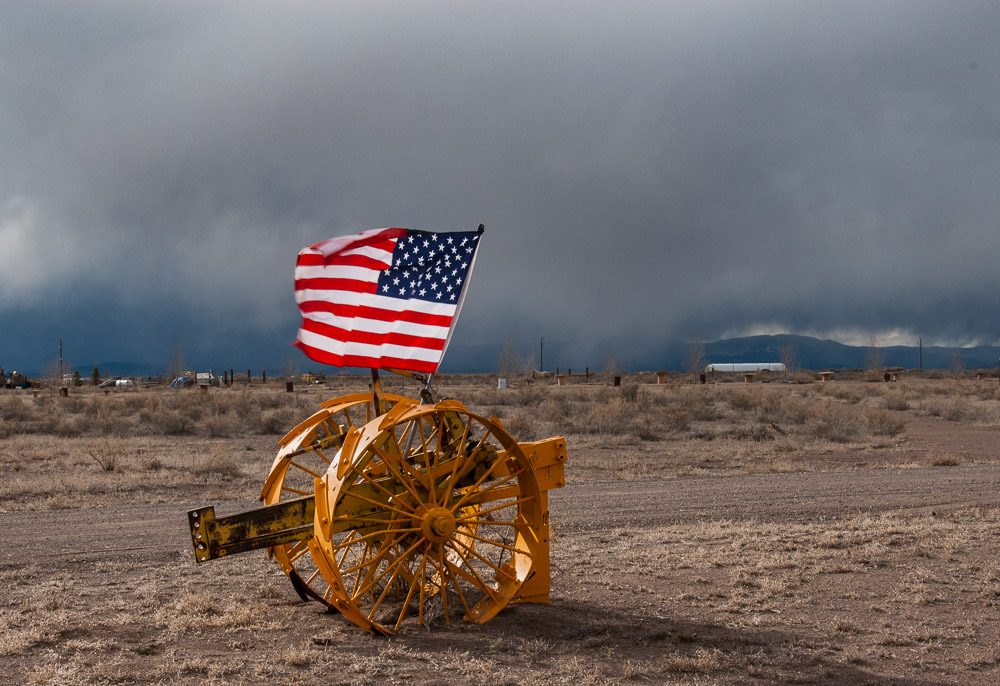
    Antique narrow gauge steam locomotive snowplow©Ed Schlotzhauer

    Why do photographers travel?

    Photographers seem to have a special fondness for travel. We expect the travel experience to renew us, shake out the cobwebs, invigorate our vision and interest. And we want to come back with exciting new images to show and talk about.

    This has long been the case. From the beginning photographers tended to travel.

    As soon as the technology allowed fairly portable equipment, it seems like photographers were traveling. Matthew Brady traveled and photographed extensively during the American Civil War. Other famous artists like William Henry Jackson and Ansel Adams shot exclusively outdoors. And I’m just highlighting American photographers.

    These artists traveled to places most people couldn’t go in those times. They opened up our understanding of the world and what was going on. In this, they did a great service.

    Our travel expectations are probably more modest. We will seldom go to uncharted lands no one has ever seen. But we go to places new to us. Or at least places outside of our normal routine. It is enlightening and changes our perspective and understanding. That is usually a good thing. And refreshing.

    I think a yearning to travel is an inherent part of society these days. Especially for photographers.

    Shake it up

    But I promised you a cheap trip. Here goes: shake up something you usually do.

    Yes, that’s it. That’s all.

    We all fall into ruts. Shooting the same subjects in the same way with the same lens in the same lighting. It becomes a habit. A habit is where we avoid thought and go through life on automatic. Shake that up by changing something. Force yourself to confront a different situation where we have to think.

    One simple thing is to pick one lens we seldom use and photograph exclusively with it for a while, say a month. Some of us are naturally wide angle shooters. Switch to a telephoto. Some of us see only telephoto shots. Switch and only carry a wide angle for a while. Or a macro lens and only shoot closeups. Or a fish eye, or a tilt/shift. If you are a landscape photographer, try street photography. If you do portraits, try night skies.

    And yes, just carry that one lens. Not your whole kit. It will force you to play the game.

    Maybe try putting aside your “serious” camera for awhile and only use your phone. Or shoot with the expectation that you will process everything to black & white. Maybe it could be as simple a thing as deciding everything you are doing now will be cropped square.

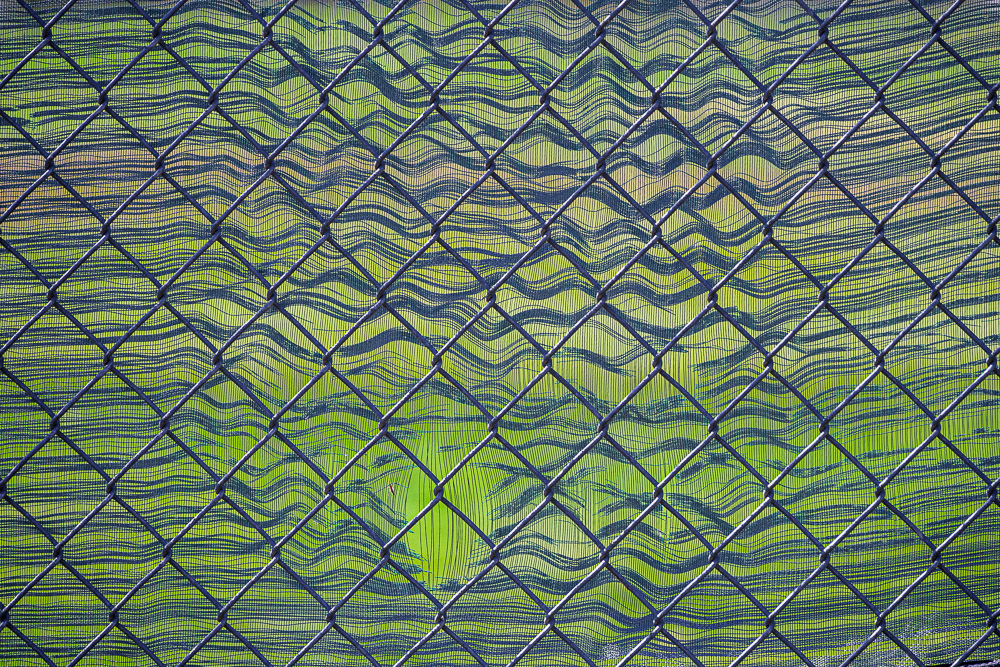
    Chain link fence with frayed cloth©Ed Schlotzhauer

    Just do something different

    It really does not matter what you choose, as long as it is different enough from what you usually do. During this time you are not concentrating on adding to your portfolio. The goal is to break free from your normal habits and learn to see better. Think again.

    How is this a cheap trip? Travel encourages us to see different. We are out of our comfort zone. We become more mindful. Basic assumptions have to be re-examined. Things look new and different so we pay more attention to them. Making a change in our routine triggers similar things.

    One way to simulate that same effect as travel to force our self out of our normal rut. A cheap and easy way to do that is to force a change in how we see through our camera.

    Sound too easy? Try it. You may be surprised.

    Practice mindfulness exercises

    Making a change like this is one example of a mindfulness exercise. I’m not talking about chanting and navel gazing. The purpose of mindfulness is to set aside our preconceived notions and expectations. Wall out the distractions that are enticing us to other things. Learn to be in the moment, and to look around and actually see what is there.

    Some people can get there through meditation. Some others through travel or workshops. Maybe for you going to a museum and looking at the work of great masters does it. But regardless of the mechanism that works for you, mindfulness comes down to creating a still place for yourself. A place where you can set aside distractions and competing thoughts for a while. Where you can free yourself to really see and consider what is around you for what it is. Where you can immerse yourself in the experience of creating.

    In a canal©Ed Schlotzhauer

    A cheap trip

    I am not really joking when I say changing up your normal routine or environment occasionally is a cheap trip. It can produce some of the same benefits we often get from travel. Granted, it may not be as much fun, but it is a lot cheaper. And you can do it anytime or anywhere.

    No, I’m not suggesting that this is an excuse to go buy that great new lens you have been wanting. Of course, whatever excuse works for you is up to you. But that shoots down the idea of a cheap trip.

    Getting out of our normal territory and traveling to a new location often puts us in a more mindful attitude as we shoot. It amazes me that everything we see becomes an interesting subject. Part of that is because we set aside the uninterrupted time to be there and shoot. But I believe a large part of it is that we are seeing things new. That refreshes and energizes us.

    I am suggesting another way to stimulate a similar effect of travel is to change something about our routine. Something to make us think, reconsider, focus more on what we are doing. Something to make us see past mechanics and rules of composition and social media likes.

    Make it a habit to challenge yourself like this periodically. It does not require an uncomfortable 10 hour plane ride.

    Today’s image

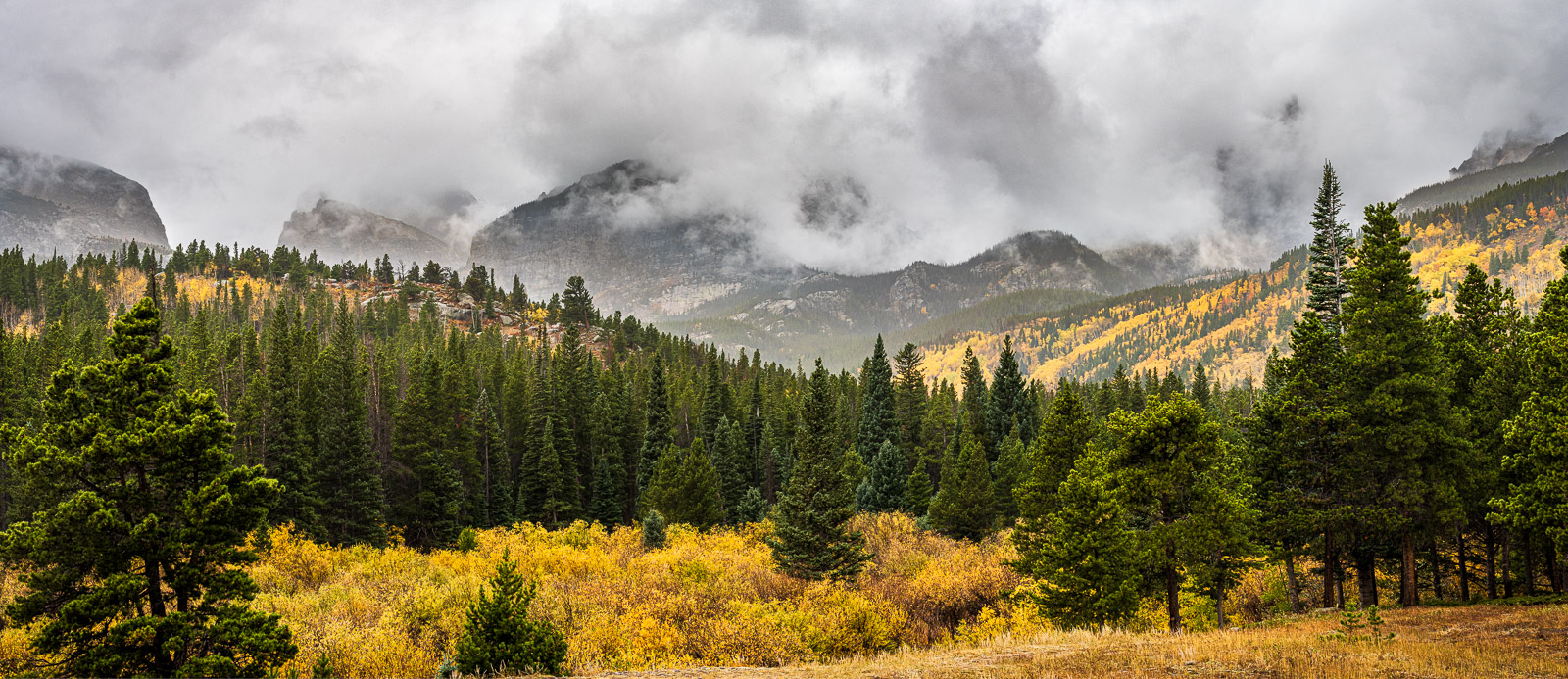
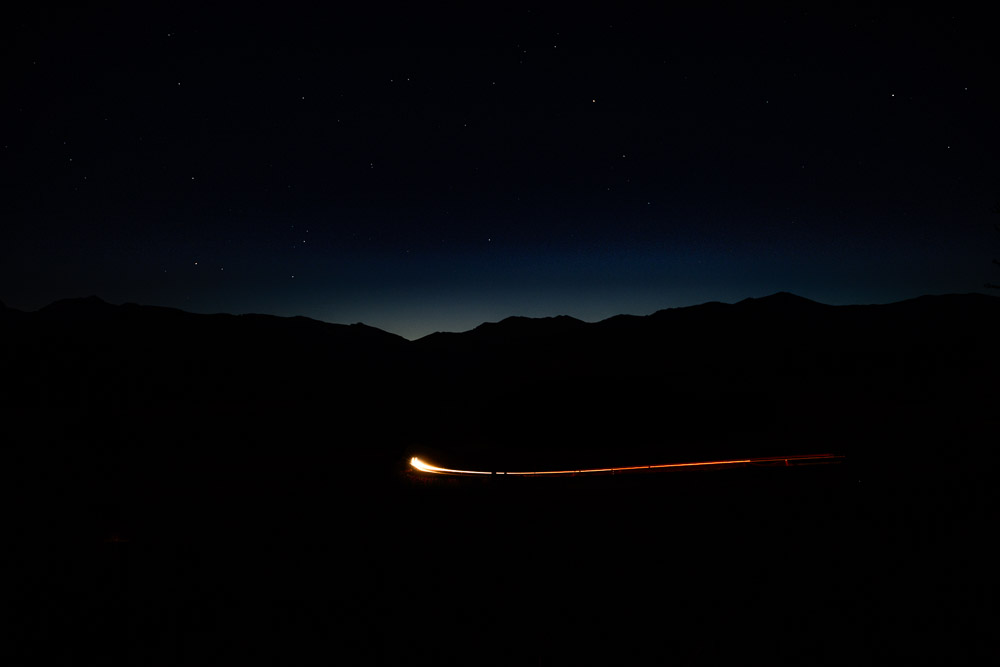
    The image at the top of this article is an example of shaking myself out of a rut. This was taken in the Rockies in fall. Normally during this time I am concentrating on beautiful fall colors and aspen trees.

    In this case, I tasked myself with ignoring the leaves and shooting the mountains after dark. No trees or fall colors visible. This is the Eisenhower Tunnel from the Loveland Pass road. Stars are just becoming apparent as the last light fades, illuminating the mountain silhouettes. The trail of lights in and out of the tunnel adds unique interest.

    I felt good about it. Definitely not a conventional fall landscape.

  • Why Do We See 255 Everywhere?

    Why Do We See 255 Everywhere?

    Do you ever wonder about the magic number 255 you see all over Photoshop and even in Lightroom Classic if you look? It seems like 255 pops up everywhere. Why is that? It is a strange number to choose.

    It’s just a number

    First let me say that now, 255 is just a number without meaning. It is the number chosen to represent the maximum value of a channel or color. Something must be used to represent the maximum value. Looking back, 100 (as in 100%) would have probably made more sense. But we have 255, for reasons I will explain.

    Think of it like Fahrenheit and Centigrade scales. The boiling point of water is 212 in Fahrenheit and 100 in Centigrade. Either way, it represents the same thing, the boiling point of water. That does not change no matter how the number is represented.

    So, when you see 255 just read it as the maximum value of that thing. If that is the level you wish to understand, this would be a good point to stop reading this article. 🙂

    Personally, I hope you continue. Understanding some of the history and details of our tools can only help improve our craft.

    Roots in binary

    Before we go deeper, I need to justify where the number 255 comes from. It is rooted in binary coding. It is not a random, arbitrary number.

    Please pardon me for going full on Geek here. I so seldom get to use my training that it is fun to do sometimes. A very, very brief background: when computers were being developed, it was found to be simpler and more reliable to create circuits that were either on or off, no in between states. This was called a bit. A piece of data that was either off or on, noted as 0 or 1. An advantage of this seemingly silly decision is that the bits could be made very small and can be operated on very fast.

    Dev on market©Ed Schlotzhauer

    A single bit by itself isn’t very valuable. To represent realistic information and do calculations, bits were grouped together in larger units. The next widely used unit was 8 bits. This came to be called a “byte”. Eight bits is a byte – Geek humor.

    It turns out that 8 bits is enough to start holding useful information. For instance, it will hold 1 character. It can code all the upper- and lower-case letters, punctuation, and some special symbols. At least in English. And we will see that it holds a useful amount of image data.

    Let me give a very simple description of digital value coding using just 3 bits:

    This table shows all possible combinations of 3 bits. Each combination of the 3 on/off values represents a value. The encoded values range from 0 to 7.

    Going back to the byte, the 8 bits encode 256 values, 0 to 255. This is the origin of the magic 255. It is just the largest value that can be represented by 8 bits.

    History of Photoshop

    It is hard to think that there was a “before Photoshop”. Thomas Knoll needed ways of doing analysis on images for his PhD thesis. In those days, nothing was available, so he taught himself programming and developed a library of operations. Here is an interesting interview with Thomas.

    His brother John worked for Industrial Light and Magic. He saw applications for image processing in some things they were doing, so he encouraged Thomas to enhance his library. Eventually they decided to try to make it a product. Adobe was interested. It is amazing how things come to be.

    In the days when the library, later Photoshop, was developed, the state of the art of image representation was to code each pixel as 3 8-bit values. One byte each for red, green, and blue. Each color had the value range 0 to 255. This number scheme became baked into Photoshop and leaked out as a standard metaphor of the user interface. This tends to happen when engineers or scientists develop user interfaces.

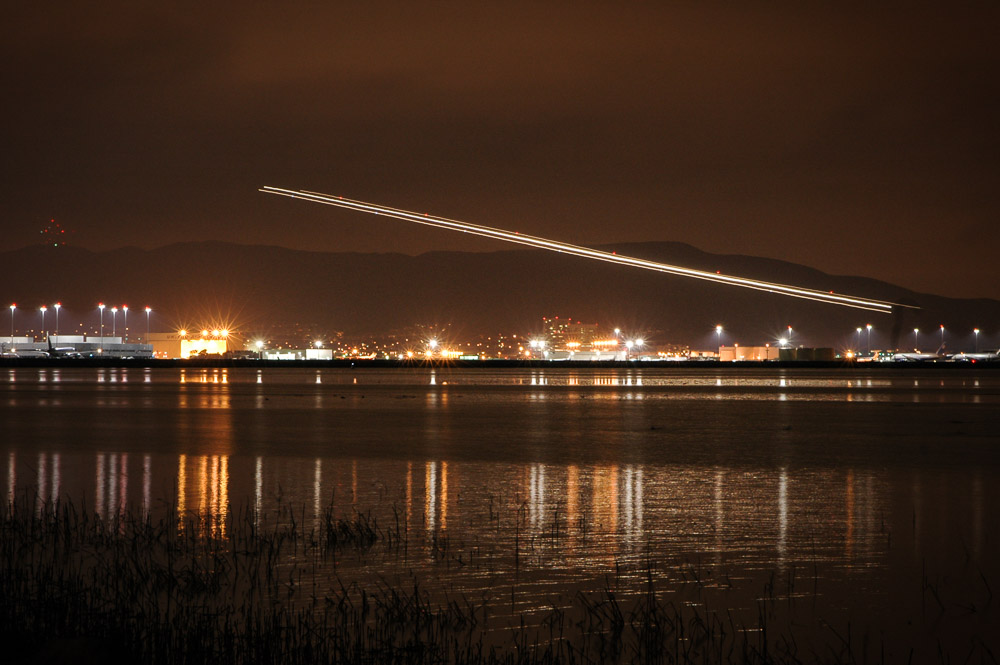
    Airplane taking off. A short project.©Ed Schlotzhauer

    Today’s data

    Early digital cameras shot 8-bit images. Today, though, images and Photoshop have grown well beyond that. As an example, my Nikon Z7 II captures 14-bit data. Each red, green and blue channel is 14 bits. That is 16384 values per channel instead of 256. Some other cameras have even more bit depth.

    Photoshop allows us to select if we will treat our files as 8 bit or 16 bit or 32 bit data. With all these variables it could impose a huge burden on the user to deal with the actual value range of the data he is editing. Some of these numbers get to be staggering and difficult to work with (for 32-bit data each channel has 4,294,967,296 values). Adobe chose to keep the maximum number we see at 255. In effect, it became an arbitrary measuring scale we work with across the apps.

    By the way Lightroom uses 32-bit data internally. You do not get a choice. But even in Lightroom (Classic at least) the 255 illusion peaks through in one place. Look at the Tone Curve tool. The scale is 0 to 255.

    Still, it’s just a number

    Like 212 Fahrenheit or 100 Centigrade, it is just an arbitrary number to represent the same thing, the boiling point of water. Adobe has kept that historical number 255 and given it the implied meaning of “maximum”. It no longer has a tie to the actual size of the data we are editing.

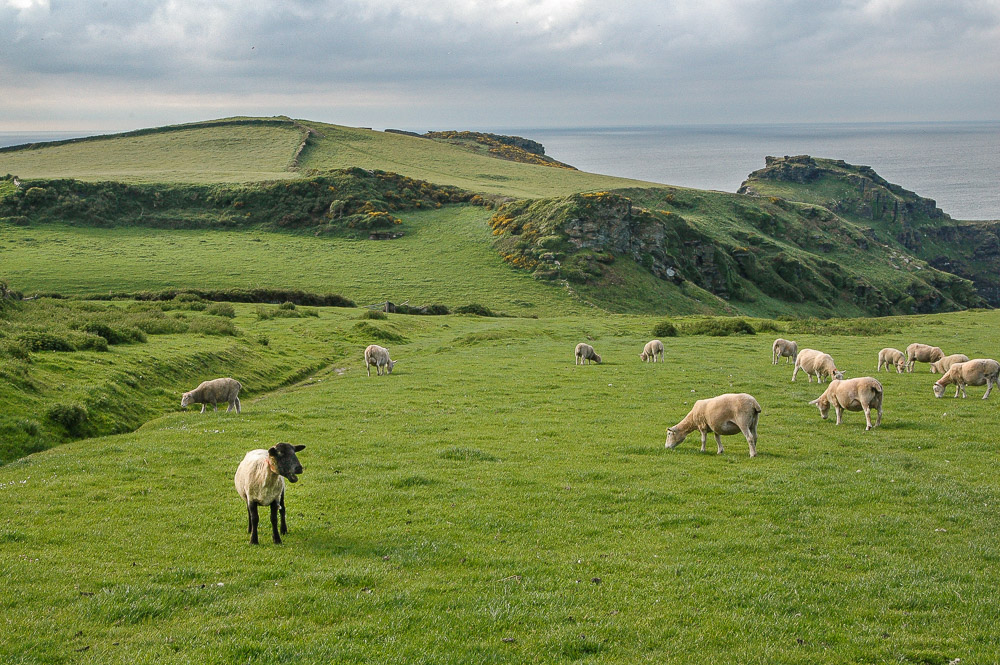
    Lone, dissenting, different sheep©Ed Schlotzhauer

    They have done us a service in this. It saved us a lot of mental complexity when we are editing. But a simplification comes with some challenges. People tend to forget why the simplification was made. Even that one was made at all.

    When you are using your editing tools, just accept 255 as meaning “maximum”. Do not forget and think that your data only goes to 255. Or that it has somehow discarded all those other wonderful bits our modern cameras give us. When someone tells you that white is 255/255/255 and seem to think that is the actual value of their data, remember that is just numbers on a scale. Smile to yourself, knowing you probably understand it at a deeper level than they do.

    I don’t have many images in my catalog that are actually 8-bit data. I am very glad the technology has moved on in wonderful ways. And I am grateful for the simplified scale that normalizes what I see when I am working with all this data. Thank you, Adobe. This is something you did right. It doesn’t matter what the number is, something had to be defined as a convenient value for “maximum”.

    Today’s image

    The image at the head of this article is, in actual fact, made of 8-bit data. It is a 6 MPixel 8-bit jpg file. All the data values are really 0 to 255 per channel. Back in 2006 that was about the best I could do with the camera I had. It’s not terrible. I like the image, but I wish I could shoot it again with a modern camera.

    As a matter of fact, all the images in this article are 8 bits. I wanted to emphasize that it was a very workable system. These are fairly representative of what Thomas Knoll designed Photoshop around.

    Side note

    Unlike at the time when Photoshop was developed, in today’s digital systems we seldom worry much about a few bytes. Every time I press the shutter on my camera it writes about 50 million bytes to my memory card. If I take that file into Photoshop and bring it back as a TIFF, it grows to more like 500 million bytes. That’s why I must have a lot of memory in my computer and many terabytes of storage.

    I mentioned that digital bits could be made very small and fast. As an example, Apple’s M5 processor, the current chip model as of this writing, has 28 billion transistors on the basic, “low performance” version. And it is clocking (operating on) those bits at around 3 GHz (3 thousand million operations per second). That is hard to comprehend. It certainly wasn’t anticipated when Thomas Knoll developed Photoshop.

  • Being a Tourist

    Being a Tourist

    Yeah, we’re highly trained and experienced photographers who always take “serious” photographs (whatever those are). But do you ever find yourself being a tourist? I recommend it as a balance to our vision.

    Tourist

    Tourism is huge business. Especially after Covid restrictions people seem to be in a frenzy of wanting to travel. So much so that it has become a problem for popular areas. And many people are just rotten and inconsiderate tourists. Don’t be a bad tourist. I am not discussing any of these issues. Just the subjective point of view of a tourist.

    Tourists queue in front of the Louvre in Paris in 2017. The museum shut down for one day earlier this year after employees walked out due to overcrowding (Credit: Getty Images)

    I have written before about how I like to travel. This is a different take on it.

    The desire for travel and tourism seems to be inherent in most of us. It is a longing to explore and experience new and different things.I liked this definition of what a tourist is:

    In simple terms, a tourist is an individual who embarks on a journey to explore new places, experience different cultures, and seek relaxation or adventure. They are the adventurers, the beachcombers, the culture enthusiasts, and the thrill-seekers. They are the ones who venture beyond their everyday lives to discover the wonders that the world has to offer.

    As a photographer

    All of those things can be true of a tourist, but a photographer may have additional objectives. I realize that many people on vacation only want to take selfies and classic tourist shots of iconic places. Nothing wrong with that if it is what gives you pleasure. But I am discounting it here, because I have additional goals and, if you are reading this, I figure you do too.

    Pinocchio?©Ed Schlotzhauer

    Whether traveling or being in my home area, I want to shoot images that reflect my vision. That bring a unique and different perspective on what I am seeing. This can be a challenge as a tourist. We are in unfamiliar territory seeing new sights with perhaps a tight schedule or even the dreaded “group tours” to deal with.

    If we are traveling to a distant location for vacation, we probably cannot justify taking all the gear we would like to have. We may have language and transportation challenges to overcome. And we may not be in full control of our schedule.

    Ultimately, unless you are one of the fortunate ones who can plan a multiple week stay in one location, we are under real or perceived time pressure. I hope you do not plan one of those “6 countries in 5 days” trips. But even with a more leisurely schedule, we know we have places to go and things to see in the time we have.

    This means we do not usually have the luxury of settling in and getting to know an area. To find the rhythms and pace of the place. To learn to see beyond the superficial. We are a tourist.

    Out of control

    In effect, this renders us out of control. We have to live with the schedule and the travel arrangements and the lighting and the weather and whatever other conditions you encounter. Usually we cannot say “I will come back tomorrow to get a better shot”. Tomorrow we are likely to be someplace else.

    Color spill©Ed Schlotzhauer

    And in this situation it is very hard to have a feel for what is good. Everything is different from our normal experience. Wow, what a great street scene we think. But in reality it is mediocre at best. If we looked around or spent much more time we could do much better. But we don’t know because we do not know what to expect and what is good and bad and we are pressed for time.

    We know that if we could control the circumstances better we could make better images. But we usually can’t do that.

    If you are a control-oriented person, this will be extremely frustrating. I am not a controlling person, I tend to take things as they come, but it can still be quite annoying even to me.

    Out of your comfort zone

    Being a tourist in an unfamiliar area puts us out of our comfort zone. Everything is new and calling to us to be photographed. It is hard to take more than standard tourist shots, because we do not have time to think much about each subject. We may not have the chance to walk around it to view it from different viewpoints or contemplate it at leisure before having to rush off to the next sight. And we seldom have the chance to compare it to other similar scenes to find the best one.

    Dealing with this and making shots we will be happy with when we get home takes a lot of discipline. We have to learn to be flexible and able to respond to circumstances instead of carefully planning and controlling our shoots.

    Strategies

    I have informally developed some strategies I use to try to survive in these situations. Let me cover it with disclaimers: these kind of work for me; no guarantee they will be right for you. As always, these are descriptive, not prescriptive. I do not believe in dictating a methodology to anyone.

    Refreshing glass of cider©Ed Schlotzhauer

    When you are a tourist, everything is interesting. Go ahead and shoot that tourist shot. You will want it for the memory. Now that that is out of the way, pause and look for the more interesting thing. That may be a detail of the main subject. It may be something totally different if you turn around and look. If you are on a dreaded group tour, spend time scanning for interesting shots while the guide is describing the current historical monument.

    I try to go with some project ideas in mind. This helps to channel my thoughts away from just the tourist views to some themes I will be paying attention to. On a recent trip to France my themes I tried to keep in mind were: antiquity, Joie de vivre, trees, devoted to God, and think B&W. It is not that I was actively working on these project ideas. Just that they gave me a framework for considering the sights I encountered. I find doing this gives me more focus and helps me avoid running off randomly in all directions.

    And I try to get into a kind of flow state. I am unlikely to truly achieve flow, but I can approximate is by being tuned in to what is happening around me. The goal is a heightened sense of awareness. In this mode I recognize a possible shot more quickly and can be ready to react to it. I want to be shooting instinctively for fast moving situations and more meditatively when possible.

    Being mindful

    I know it doesn’t sound like it from what I said above, but I think the thing that helps is to be very mindful. Experience openly and freely, but keep the analysis running in the background. Take it all in but be very conscious of how you are reacting to it. Quickly reinterpret what you are seeing through your own vision filter.

    Remember, as a tourist you are breaking out of the ordinary. Use that you your advantage. Shake up your habits.

    We all tend to form habits. Talking about photography, John Szarkowski referred to this as “habitual seeing” . Being a tourist everything is fresh and new. It is a great chance to break some habits and see things in a new way, flex your mental muscles. Try to bring this new found ability to see back as one of the important souvenirs of the trip.

    In the definition I gave of a tourist above, one of the key words to me is “experience”. If we are mindful and actively trying to capture that experience we are more likely to get some images that represent how we felt and experienced the trip.

    If it fails

    Keep in mind I am suggesting that you be experimenting on what may be a big expensive trip. When you are trying something new, you may get worse results, not better. No guarantees.

    My argument is: that’s OK. You’re not going on a National Geographic assignment where you are contractually obligated to bring back certain results. This is our art. We should always be experimenting. If you are disappointed with some of your results but you come back a better artist, isn’t that a win? It is for me. The experience is more important that the product we bring back. However, in my case, my wife is there beside me taking all the conventional selfies and tourist shots on her phone. So they will be there if I want to see them. 🙂

    These shots of mine are all “tourist” images from a trip to France. Hopefully they are not just standard boring travel shots.

  • En Plein Air

    En Plein Air

    This is a big buzz with my colleagues who manually put pigment on a substrate (e.g. they paint). There is an aura that makes it something exotic about creating “en plein air”. Actually, plein air is what I do, too.

    Plein air

    In itself, plein air art is not a new concept, or even an artistic concept. It has been done commonly by painters since the 1800’s.

    It is sometimes spoken like an advanced technical term. Something your have to be an insider to truly appreciate. But it is just an everyday French phrase. I have been studying French recently (another story) and was surprised to find this in normal use. It literally means “plain air”, or outdoors. Nothing fancy or hidden there. If you go to a “plein air” concert it just means you are going to an outdoor concert.

    Silhouetted tree at sunset©Ed Schlotzhauer

    In painting

    So if you are a painter and you gather up all your stuff and take it outside to paint scenes from nature or whatever is in front of you, you are painting “en plein air”. Does that make it different or special? Maybe. Monet thought so. I”ll talk about that in a minute.

    But to give the painters credit, it required some technical and workflow innovations for this to happen. We forget history sometimes.

    It used to be (pre-1800) that artists had to find or buy their own pigments. Then they had to purify them and laboriously grind them into an extremely fine powder and mix them in a binder, usually a type of oil. By the way, you know those beautiful warm, rust toned palettes favored by Renaissance artists in Italy? Ochre pigment was a common, naturally occurring mineral there. Coincidence?

    But then, sometime in the early 1800’s, the technology for producing and selling pigments already ground and mixed and in tubes was developed. This allowed the artists two things: first, they could get any colors they wanted. But second, and more important for this discussion, it became much easier to take your oils with you. As the desire to move about grew, enterprising vendors also developed smaller, portable easels and pre-stretched prepared canvases. Artists were not tethered to a studio nearly so much.

    Now artists could pack their gear into a relatively small bundle and go where they wanted. One of the places they moved was outside.

    Monet

    I find I use Monet as an example a lot. I like his work, but another thing is that he was an innovator and revolutionary. He fought the entrenched art establishment and helped establish a whole new style. Something photography is still struggling to some extent to do.

    Monet was one of the early practitioners of the plein air movement. One of the motivations of the whole Impressionist movement was his and others desire to paint outdoor scenes in the light of the moment. As Guy Tal put it in his marvelous book The Interior Landscape, (I get no incentives for promoting it) “Monet famously credited the success of his work to the emotions he felt when working out in nature … As Monet himself put it, ‘My only merit lies in having painted directly in front of nature, seeking to render my impressions of the most fleeting effects.’ “

    Working outside and observing fleeting effects. That’s what I like to do, too!

    Moving clouds, moving lights©Ed Schlotzhauer

    I work outdoors

    The same impulse motivates me, even though the technology I use is very different. I find and capture my images almost exclusively outdoors. Shooting in a studio does not motivate me.

    Seeing things most other people do not see excites me. Finding those things, even if they are little, seemingly insignificant things, that I can show you in a new way gives me joy. Especially if I can show you something and you share my joy and excitement.

    I admit I do not have the patience for painting. It’s too slow for me. Spending a few hours or days capturing a scene would be so frustrating to me that I would quickly give up. Seeing something, visualizing what this could be and what to do with it is hard and takes lots of experience. That is one of the fun and creative parts of photography to me. And it is fast enough to not bog me down or interrupt my creative flow. The process of capturing and producing the artifact doesn’t need to be so difficult.

    Other than post processing work on my computer, my images come from outdoors, en plain air.

    A new genre?

    Have I created a new genre of art? Should I trademark the term “plein air photography”? Sign up for my workshop!

    Well, I probably can’t do that. Photography has always been strongly associated with the outdoors. I think the first surviving photograph was an outdoor scene. Admittedly early photographs were outdoors because that’s where a good light source was available. Flash had not yet been invented. Even when it first was, it was difficult and dangerous to use (and smoky).

    But those are technical considerations. The fact remains that photography has always had a strong connection to the outdoors. Especially for crazy people like me who photograph outside year around in a place like Colorado.

    Snow, wind, cold - all the ingredients for a great photo shoot.©Ed Schlotzhauer

    It’s the outdoors that motivates me. I’m a hunter. That’s where I find most of my prey. And my inspiration. It is not an uncommon obsession. Look at publications like Luminous Landscape, Nature Photographer’s Network, Outdoor Photographer magazine and many others.

    To the painters, if working outside motivates you, excellent. We share a common bond. I hope the outdoors inspires us both to do our best work. But working outdoors is not a new concept or unique to painting. Plein air just means “outside”.

    I’ll be looking for you outside. But we will just pass each other. I’ll be moving about a lot discovering and shooting a lot of things while you are painting. Not to say one is better or worse, just very different art forms. Both en plein air. Let’s wave to each other.

  • The Magic of the Lens

    The Magic of the Lens

    Do you ever stop to think about your lenses, besides wanting a shinny new one? There is a magic of the lens that we seldom consider and perhaps do not even understand.

    Many constraints

    My perception is colored by my background as an engineer. I see a modern lens as serving so many constraints that it is a wonder they do the job as well as they do. We expect high resolving power and “good” bokah. It needs to have a good zoom range but be small. It must be weather sealed and rugged, but inexpensive. And, of course, issues like low chromatic aberration and great edge to edge sharpness and low distortion and minimal light falloff (vignetting) and minimum flare are all givens. Oh and blazing fast auto focus, too.

    The poor lens designers are in a tight place. Luckily for them computer design tools have advanced greatly. Also, new materials are available to help overcome some of the design problems of the past.

    Still though, we ask a lot of a professional grade lens. Probably more than we realize.

    Simple lens

    We have an idea in mind of how a lens works. You probably did an experiment in High School Physics with a simple lens. Then you took it out and fried some ants.

    What we normally picture is a biconvex lens. Don’t let a fancy word scare you. That just means both sides are thicker in the middle than on the edge. Like this:

    By DrBob at the English-language Wikipedia, CC BY-SA 3.0, https://commons.wikimedia.org/w/index.php?curid=2065907

    The rays (red lines) illustrate how the lens focuses on a point. That focusing is what images the outside world sharply onto our sensor.

    This is true. It works. But nothing in life is simple anymore.

    Reality

    The reality is that, because of our high expectations and the piles of constraints to satisfy, real lens design has to be much more complex.

    I am going to use the Nikon Z 24-120 f/4 zoom as an example. For two reasons: it is a representative high quality modern design, and I like it – a lot. It is my go-to lens for everyday use.

    Lens design has gone far beyond the “simple” lens pictured above. Here is a cutaway of the Nikon lens:

    Photography Life: https://photographylife.com/reviews/nikon-z-24-120mm-f-4-s

    We can see that it has many lens elements (a word for a piece of glass in a lens) – 16 of them to be exact. Few of them are simple biconvex elements. Some of them are exotic glass. Things like high refractive index (they bend light more sharply than regular glass) or other properties. Some are aspherical. This means they are quite complex designs to achieve specific results. These are hard to design and manufacture. Usually they are necessary to correct for effects of other things and make the resulting image better.

    Zoom

    Let’s look at a few specific features. This lens has a 5x zoom range, from 24mm to 120mm. Now you would think that, for the lens to zoom 5x, it would have to get 5 times longer. This would be true for a straightforward design.

    However, us users of the lens would not like that. It would have to be very big and bulky to do that. And it would be awkward when zoomed all the way out. It would be long and off balance the camera.

    But complex design magic and some of those special lens elements allow them to shortcut physics. it zooms over the 5x range while only extending to less than twice it’s collapsed length. Amazing and very welcome.

    Reflections

    The real world is not a well behaved bundle of parallel rays coming into the lens, like in the simple lens picture above. Light is coming from everywhere. Most of it is what we want to end up on the sensor. But a lot isn’t. Light coming in from a sharp angle tends to “bounce around” inside the lens and cause a lowering of contrast. Kind of a fog look.

    Modern lenses have special coatings on the glass and use some of the special types of glass i mentioned to fight this. These go a long way to canceling the reflections.

    It used to be that shooting in the direction of a very bright source, like the sun would always cause unwanted internal reflections that degrade the image. Now it is amazing how little that happens. I really only worry about that if the sun is directly or nearly directly in view.

    Abstract study in texture and shape©Ed Schlotzhauer

    Chromatic aberration

    Chromatic aberration is something we seldom consider, except when we are getting down to the last details of a final print. One of the nasty realities of physics is that each “color” of light is a different frequency. The amount of “bend” the lens gives to light is dependent on the color (frequency) of the light. This means not all the colors focus at the same point. That’s bad.

    Have you every looked very closely at magnified blowup of a sharp edge in one of your photos? Especially if it is in a high contrast lighting situation. You may see a slight fringe of green or purple around the edge. This is called chromatic aberration. Not all the colors focusing together.

    One of the purposes of the exotic glass and all the elements in modern lenses is to minimize this. They do a pretty good job.

    But they are not perfect. Luckily it is a simple check box in Lightroom Classic to have the software automatically remove chromatic aberration.

    Other considerations

    If you ever carry a camera around all day you learn to appreciate light weight. Lens designers would like to design their lenses with a very sturdy metal shell and structure. But we would not like to carry that. Modern plastics and design techniques have allowed the designers to create our lenses at a more user friendly weight while still being sturdy enough to hold up to hard use. Thank you.

    Did you know that some lenses make the light come into the sensor is a certain direction to make the sensor receive the photons better? Did you know that most of our zoom lenses, especially, have quite a bit of distortion and vignetting and resolution falloff at the edges? Those are some of the things that are part of the tradeoffs. But one reason they are traded off is there’s a bit of perceptual and software slight of hand.

    First, we don’t notice it much. Really. We are not as sensitive to it as you would think. Unless you spend your time photographing test charts. Second, many of us set Lightroom Classic to look at the model of the lens and automatically apply a “correction” to the image we see. Adobe has a database of lenses with mathematical models to correct their distortions. This is a good thing.

    As a matter of fact, Nikon has a special deal with Adobe such that the great Z 24-70 f/2.8 lens is automatically corrected in Lightroom Classic, whether or not the user selects that. It is impossible to defeat it. Hardware and software are joining in a symbiotic relationship. Making an image is a blend of both and it will only increase with time.

    Almost everything done to solve one problem creates another. This is why designs are so complex and expensive. Everything is a tradeoff. It is all a question of how good can we make this property while not letting that other one get worse than a certain level.

    Example black & white image©Ed Schlotzhauer

    Magic

    I am in awe of these brilliant designers. They achieve beautiful balance. Like I said, I regularly use this example lens I have talked about and I am generally very happy with it. But let me emphasize that pure, unexcelled technical perfection is not usually my goal. A lens like this is “good enough” for 99.9% of my needs.

    For me, as a user, I take the camera out and start using it. What I see and feel is more important than technology. Sometimes, though, my engineer nature kicks in and makes me marvel at the complexity. But really, I shoot and expect my great gear to capture what I want. And it usually does. Marvelous.

    The magic of the. lens. Like most good magic, how it works is invisible to us. But occasionally stop to consider how lucky we are and what an incredible piece of technology we have attached to our camera body.

    Feature image

    The image at the top was shot with this Nikon Z 24-120mm f/4 zoom lens I have been using as an example. This is the Hotel de Ville in Paris – their Town Hall. You can’t really tell in this small jpg, but I am completely happy with the capabilities of this lens. If the opportunity arose I am sure I could make a very good 60″ print of this. Here is a section of it zoomed to 100%.

    100% section, ©Ed Schlotzhauer

    Let me assure you that I am not affiliated with or sponsored by Nikon. I am just using this nice lens that I use frequently as a representative example of what a modern zoom lens is and is capable of doing.