An artists journey

Category: Photography

  • Too Many Photographs?

    Too Many Photographs?

    Do you shoot too many photographs? Can we shoot too many? I think this is a question we can only answer individually. A lot of it depends on why we are shooting.

    Easy to do

    We are blessed with amazing digital technology that allows us to frame and compose and take photos rapidly. And some of our cameras can vacuum up 20 or more images a second if we want to. Memory cards are so large now that we can keep stuffing images into them for days and days.

    This is one of the things I love about photography compared to other arts. The way I shoot is usually spontaneous. See it – take it. Maybe think about it some and try some alternate compositions. Maybe.

    Working like this fits my personality. I have shot for so many years that much of the thought process of composition, exposure, etc. is subconscious.

    But a downside of this is that it is easy to shoot a lot of frames. Sometimes more than I ever intended.

    Dancing in the Rust©Ed Schlotzhauer

    Travel

    One of those times when we take many more images than usual is when we travel. Everything seems new and different and special. We are compelled to shoot. And we do.

    On a 3 week trip to France I shot over 4000 images. And I think I am rather disciplined. I know people who take many thousands more images than me on a trip.

    This is not a problem, unless it becomes one for us. It is fun and exciting. A benefit of traveling as a photographer is to take new and interesting images. We reward ourselves by putting our self in a “target rich” environment with our photography equipment.

    We seem to give ourselves permission to take more pictures when traveling. I don’t know why. We should feel total permission all the time.

    Projects

    Another thing that seems to generate a lot of images is a project. Assigning our self a theme or topic to focus on for a time can be energizing. Directing our attention can stimulate new energy and creativity.

    But it takes a lot of great candidate images to put together a story line and a few excellent selects for the final portfolio. When we focus on a project we suddenly see opportunities in places we never dreamed. That can lead to a lot of shots.

    There aren’t any metrics that matter for something like this. But for something to discuss, I figure that to get to a final set of 20 images for a project I need maybe 100-200 strong images that do a great job of representing the theme. To get to those strong selects may require hundreds of attempts. And this is for 1 short term project.

    I have some long term projects that I have accumulated a thousand or more candidate images for. And counting.

    Terra Incognita©Ed Schlotzhauer

    Arguments against

    It seems to me that the arguments against shooting a lot of images come down to 2 things: cost and time.

    It is said that shooting digital images is free. This is not true. If you care about treating your images as an important asset, they have to be managed and curated. This is an overhead expense we have to consider.

    Cost

    Disk space is getting pretty cheap, but that is offset by the quantity we require. I have an obscene amount of disk space. My main image storage is a 20TByte RAID disk. It is roughly half full. In addition, I am a fanatic about backup. A Time Machine backup runs every hour incrementally backing up to an external hard disk. In addition, I have another large network RAID disk for backup plus yet another external drive. These get complete backups of my images and Lightroom catalog every night.

    And once a week I run a backup that I keep offsite for more safety.

    Rotating magnetic drives wear out and have to be replaced. I have a stack of bad ones waiting for me to get into a mood to smash with a sledge hammer. I almost got there this week. SSD’s have an advantage of speed and reliability and I am in a slow process of switching to them as the price gets more reasonable. I don’t have a stack of them to smash – yet.

    This setup is definitely not cheap and has to be managed.

    Ice Streamlines©Ed Schlotzhauer

    Time

    But that is “just” money. There is another hidden cost that sneaks up on us.

    It takes a tremendous amount of time to load, examine, cull, sort, tag, and file all these images. And then the promising ones require a lot of editing. This can add up to a major time investment.

    Without a disciplined approach to managing our images, we basically end up with a “shoe box” full of pictures. A very large shoe box where is is almost impossible to locate an image we have in mind. Can you quickly locate your best images? How do we search for candidates for a project if we have 10’s of thousands of random files on the computer but no organization system?

    I spend more time selecting and filing and editing than I do shooting. And I shoot almost every day.

    I consider this a major unaccounted cost of shooting. The cost is in time. Time that is necessary to spend, but that we cannot apply to more creative parts of our art.

    Learning/growing

    Have I convinced you to shoot less? I hope not. That is not my goal.

    I believe the benefits of shooting a lot outweigh the costs. I just believe in being upfront about the costs so we can make an informed decision.

    For one thing, improving requires a lot of practice to hone and refine our skills. Our vision will only develop over time as we come to understand what we like and are drawn to.

    Cartier-Bresson said your first 10,000 photos are the worst. I think that is true, but it does not mean your next 10,000 photos will be great. Just better. It takes a lot of practice.

    Photography is a combination of art and craft. Both of those improve with practice. but only if we are honestly evaluating our work. Be your own worst critic.

    Linus Pauling said “The best way to have a good idea is to have a lot of ideas and throw away the bad ones.” I think this applies to photography as well. Are all of your shots keepers? I hope not. If they are, you are not out on the edge pushing yourself to try new things.

    Shoot a lot, experiment, do foolish things that probably will not work. Who knows? That is one way discoveries are made. And it can be a lot of fun.

    Why

    But most fundamentally, why are you shooting? Is it to make money? Is it to get likes on social media?

    Know what your goals are. I cannot criticize your goals. That is your personal choice.

    I can say I have come to understand that in my life, my goal in making pictures is the joy of creating something that gives me pleasure. The satisfaction of being creative and creating something I consider beautiful or interesting. Selling prints is welcome and a pleasant validation, but not my driving motivation.

    I am my main audience. If other people like my work, that is nice and it makes me feel good. But if they hate it, I will still create for myself. If I like my images, I am still being successful, even if everybody else dislikes them.

    Dallas Love Field abstract©Ed Schlotzhauer

    No

    So no, I’m not shooting too many photographs. They are for me. You will see few of them, so you do not care how many I shoot.

    I shoot when I travel. I shoot for projects. Just walking around my hometown gives me all the reason I need to shoot something interesting. Something that no one else was likely to see in the same way.

    My art is an important creative outlet in my life. It keeps me young (relatively). Art makes me think and keep a mindful attitude in the world around me. It feeds my curiosity.

    This is worth it to me despite the cost and time involved in keeping up with it. Whether I shoot many or few images does not matter. What matters to me is the art I am able to create and the satisfaction I get from it.

    I sincerely hope you are able to get as much joy from your work.

  • What You See Is What You Get

    What You See Is What You Get

    This is a well worn cliché with many meanings. I would like to attach a new one to it. What you see is what you get is also a description of our photography process.

    History

    You can predict that I like to get into the background of things. The phrase seems to have originated in the mid 20th century. It was popularized by Flip Wilson in the 1960’s show “Rowan and Martin’s Laugh In”. Anyone remember that? I have to confess that I do.

    I will talk about meanings of the phrase, but one historical meaning was also special to me. “What you see is what you get” (abbreviated WYSIWYG) became a theme for personal computers back in the 1980’s. Before that, computers were terrible at dealing with fonts and layouts. Along came the Apple Macintosh and things changed radically. Thank you Steve jobs! But that is a topic for another time.

    Conventional meanings

    The normal usage of the phrase implies things are exactly as they appear, simple, no hidden meaning or content, clear.

    For example:

    “On a side note, with Jake, what you see is what you get; he’s always upfront.”

    “In this political climate, it’s refreshing to see a candidate for whom what you see is what you get.”

    “The website builder offers a what you see is what you get editor, making it easier for non-technical users to create professional-looking sites.”

    We all know what we mean when we say the phrase, at least if you speak colloquial English.

    Looking at a Monet©Ed Schlotzhauer

    In our photography

    I am proposing a new facet for this old phrase. As photographers, we have to see something to photograph it. So, what we see, is what we get.

    That sounds blindingly obvious, but think about it a moment. In today’s world, the ability to notice things is getting to be a rare and precious talent. We live in culture of distraction. Every tech device in our lives is fighting for our attention.

    But you are a photographer. I assume it is different for you. You have developed the skill of noticing things. To do that, you have to look and be aware. In order to even do that, you have to have the discipline to disconnect from most of the distraction that is keeping other people in addiction.

    It seems like it is the goal of people today to have the least contact with the outside world they can. Almost like they want to live in a Matrix-like simulation.

    Distraction

    Next time you walk around in your city pay attention to what the people around you are doing. How many are looking around, seeming to take in what they are seeing? Compared to how many are glued to their phones or isolated with headphones. If they are looking around, is it with their phone camera in front of them to record everything they see so they can post it on social media? Do they have to get a selfie in front of that pretty sight, rather than actually looking at it?

    The goal of most people seems to be to isolate themselves from the world around them. A 24/7 always on stream of TikTok, YouTube, Facebook, music, or movies provides an exciting alternative to the seemingly boring, mundane life and surroundings people have in their daily lives.

    If people are on mass transit, they are plugged in and doing their best to block out the world around them. If they have to walk a few feet from their car, they are already checking email or Facebook. My state even felt the need to make it illegal to as much as pick up a cell phone when we are driving. It was that big of a problem.

    And then there is the self imposed distraction of always being in a hurry. We rush and try to multi-task. Many people now do not even take all of their vacation, because we are too busy and afraid of falling behind. But that puts blinders on us. In our frantic hurry, we do not see much of what is around us.

    I am in no place to give any kind of judgment about people’s desire to block out or deal with the world. Everyone gets to choose their path. That doesn’t make all choices equally beneficial. If we are artists, that puts us in a different context.

    Avalanche©Ed Schlotzhauer

    Mindfulness

    A theme I can’t help coming back to frequently is mindfulness. Not in any kind of Zen practice, with painful poses and mantra chants. I don’t bend that way anymore.

    Like most great ideas, mindfulness is very simple and extremely complicated.

    From the viewpoint of photography, It is simple, because at its core , it is just about being aware of where you are, what is around you, possibilities of interesting colors and patterns and compositions and movement and subjects.

    Just being aware. Training yourself to be in the habit of looking. Turning down the volume of distractions and looking around with an open mind. Being willing to think about things around you. Being willing to slow down some.

    It is complicated, because it is exactly the opposite of what most of the world is trying to get you to do. Instead of closing into your little cocoon you have to open up to experiencing outside stimulus. This means consciously fighting against distraction that are trying to capture you.

    Crazies

    I love a quote from Lee Ann White I found recently. “If you make photographs when no one else does, you get photographs no one else does.” Simple and obvious. I think it was part of what inspired me to describe this idea of what you see is what you get.

    I’m not suggesting taking the idea of being where no one else is to extremes. My friend Dean is an example of doing that. He is full on crazy (IMHO). For example, he goes solo trekking in wilderness areas of the Colorado mountains for days at a time in the worst winter conditions. And seems to enjoy it. And gets unique shots to prove it. That’s extreme even by my standards.

    As a matter of fact, I know a lot of fairly crazy photographers. But that is not a requirement for doing good work.

    This mindfulness I am recommending does not require existential danger or major travel ventures. It just requires us to be aware. To look around and see more than most of the people around you are seeing.

    Old man pushing bicycle up hill in Italy©Ed Schlotzhauer

    Give it a try

    Look at everything you see as a picture. What is the interest here? How would I frame and compose it? What should I do with the lighting? What depth of field should I use? Is there a better viewpoint?

    We can be going through that thought process without even getting out our camera. I hope, though, that it compels you to make the picture. I want you to get so excited about what you are seeing that you have to give it a try.

    Have you ever stopped on the way to work because something caught your eye in a new way? Even after driving the route every day for years, today you saw something different. I have.

    Just 3 days ago I was driving my normal route that I have done for thousands of times and I had to pull off in a cemetery. In the many years I have been by it nearly every day I have stopped less than a dozen times to actually go in and see it. That day was one. It was a bitterly cold day with a beautiful layer of hoar frost covering the trees. It compelled me to turn in. I’m glad I did.

    What you see is what you get

    If we do not see it, we will not photograph it. If we are not mindful and paying attention we will not see it in the first place. Just making the effort to look is a necessary first step. Mindfulness is a habit, a thought process. It is something we can learn through practice.

    Even then we will not get the picture unless we give ourselves permission to stop and take the picture. Without taking the action we will never have it or the joy of the memory. Be one of the few who is paying attention.

    I’ll wave at you when I see you pulled off on the side of the road shooting pictures of something i can’t even see. Looking a little crazy. And happy.

    See it. Do it.

    You see what you think, you see what you feel, you are what you see. 

    If with a camera you can make others see it – that is photography.

    Ernst Haas

    The featured image

    I thought it would be good to describe the image at the top of this article. It is exactly a “what you see is what you get” as I describe here. My wife and I were staying in a hotel downtown Denver for some reason. Probably a weekend away.

    This was a scene looking right out our balcony. It is not composited or edited other than normal color and sharpness. The reflections were exactly this. I was fascinated and still do not understand how such diverse scenes could be captured on the windows. And I loved the distortions. I’ll take it. I’m glad I looked out and noticed it.

  • The Magic of Silhouettes

    The Magic of Silhouettes

    We’re all familiar with silhouettes. Do you ever think about why they are interesting? I believe there is a kind of magic of silhouettes.

    What silhouettes are

    “A silhouette is the image of a person, animal, object or scene represented as a solid shape of a single colour, usually black, with its edges matching the outline of the subject. The interior of a silhouette is featureless, and the silhouette is usually presented on a light background, usually white, or none at all.”

    You are familiar with them. You see them often. A featureless black form in a picture. Have you ever thought how something that shows no detail can be interesting?

    We know from experience that they happen when a foreground object has a bright light behind it. A simple explanation and they are easy to generate, but that by itself does not explain their impact.

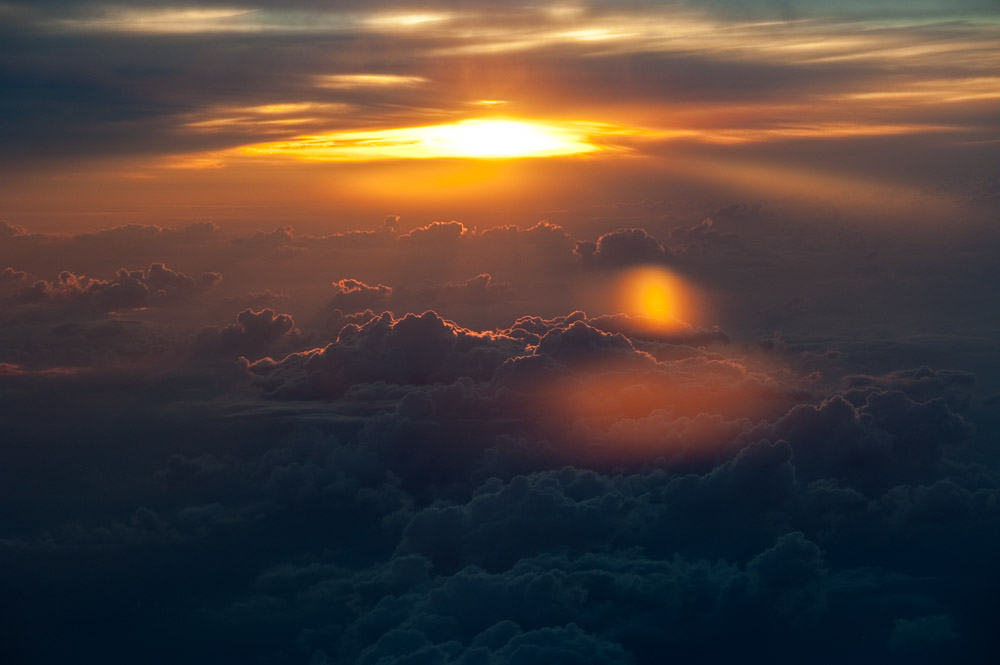
    On mountain top looking toward setting sun. Reflecting on life?©Ed Schlotzhauer

    Origin

    I love history and finding out how things came to be. I assumed silhouettes have been an artistic technique for centuries. Not exactly. It mainly dates from the 18th century. Cutting portraits out of black paper became a popular and inexpensive art form. It was especially popular for miniatures, small images on lockets and things like that.

    You can argue the technique was used by Greeks and others as far back as 7 to 8 centuries BC on some of their pottery. Perhaps it is possible to include some even older cave art. But as far as I could find, there was no name given to it back then and the technique seems to have fallen mostly out of practice until the 18th century.

    Here is a piece of nerd interest that will be of absolutely no use to you, but is an intriguing part of our history. The word “silhouette” is not an artistic or technical term. In 1759 Étienne de Silhouette was the French Finance Minister during the Seven Years War. The country’s finances were hard pressed and he had to institute a lot of unpopular austerity measures. So much so that people began to use the term “silhouette” to refer to things done cheaply.

    This was the same time period (18th century) when paper cutouts were becoming popular for portraits and the name transferred and stuck. Silhouettes were an inexpensive art form. It fascinates me that no one remembers Étienne de Silhouette, but we use his name all the time without realizing it.

    Looking through clock, Musee Orsay©Ed Schlotzhauer

    Why are they interesting

    But that still leave open the question of why they are interesting. Just being black does not make it interesting. Being featureless would seem to make them less interesting, not more. Why do they catch our interest?

    They are somewhat different from what we normally see, but that should not in itself be enough to make them special. There are a lot of “gimmick” techniques that photographers and other artists use to try to catch our interest. Generally these fads do not have staying power and fade out as quickly as they appear.

    I believe there is something fundamentally important and intriguing about silhouettes that catches our attention and has lasting power. There seems to be something about them that captures the essence of a subject.

    Less is more

    Less really is more sometimes. This is particularly true in photography, where our super megapixel sensors capture lots of information and detail. We can confuse our viewers with too much detail. I generally love lots of detail, but the subjective experience we want to present is more important than technical details.

    A silhouette is an exercise in simplicity. We remove all information about a subject except its outer form. The way our marvelous brain works, this is usually sufficient for us to recognize the object.

    But even though we recognize it, it is presented in a completely different form. With no interior detail we only have its outline. We are left to guess what is in the big, black, featureless area in the middle of it.

    And we do. We fill in the blanks. Based on our experience, we “know” what is in that shape. But still, the mystery remains and we perceive it different. We see it in a new way.

    It is an exercise in simplicity and minimalization. Absolutely nothing except the information about its shape.

    Similar to black & white

    In some respects silhouettes are related to black & white photographs. They often are presented in black & white. I believe there is a reason for this beyond just the big black area.

    The beauty of black & white is that it removes all color from the image. Color is the most powerful visual sense. We tend to see it first. It can overpower everything else.

    But when the color is removed, we more fully perceive the shapes and tonal relationships that are there. The image is transformed into a different art form, giving us an altered way to see it.

    Silhouettes are like that, but with an emphasis on just the shape of the isolated black forms. The shapes become the subject of the image. There is generally no tonal range in the silhouetted object, just form.

    So, although silhouettes are often made as black & white images, that is not required. It is often preferable to leave the color information in the rest of the image to emphasize the difference of the silhouetted objects and to draw more attention to them.

    Silhouetted tree against glass skyscraper©Ed Schlotzhauer

    The featured image

    The image featured at the top of this article illustrates some of these points. This was taken in a field on a tiny, nameless back road in northeast Oklahoma. I doubt if I could find it again.

    I chose to make both the foreground and mid ground black. Everything that is black is featureless black silhouettes. But there is no problem at all knowing what they are. Adding interior detail would not have improved the image. I could argue that it would have weakened it. It is the exterior shapes we see.

    And this is a case where I felt that preserving the color of the background helps set the context and emphasize the shapes of the foreground. I believe the color adds to the mood.

  • If You Were There

    If You Were There

    One “rule” I hear about expressiveness is “is this creative, or is it the same picture anyone would take if they were there?” I struggle with this. Should I care what picture you would take if you were there?

    Obvious

    I think I understand the intent of this phrase. Most pictures are fairly obvious. At least, to the photographer.

    You come out at tunnel view in Yosemite, stop, and shoot the scene you see. You are doing the same thing and getting basically the same picture thousands of other people do every day.

    Obvious and uncreative. Yes, that is judgmental, but it is very difficult to get creative with such an iconic scene.

    As we grow in our artistic journey, we should try to avoid doing the simple and obvious thing. We should find something fresh and creative to add to the image. But at a famous icon location, good luck. It has been shot in every light and every weather.

    You might catch an eagle flying by in the foreground carrying a large fish, just as a storm breaks allowing a majestic sunbeam to light up the scene. That would stand out. Some. But wouldn’t anyone else there shoot it, too?

    I don’t see you

    But here’s one of the things: I didn’t see you there when I was shooting most of the images I like best. Maybe you chose not to be out in the sub-zero cold, or not in a remote location where few people go. I didn’t see you embarrassing yourself too, shooting photos out the window of any of my recent flights. You weren’t around when I was in the junkyard looking for interesting rusty old trucks.

    How broadly do I interpret the “if you were there” question? Do I question what a dozen other photographers would have done if they were magically transported to where I am now? I think that the fact that they are not here is significant.

    Perhaps it means that what I choose to see and give significance is part of my unique style. What I am drawn to by my own particular mindfulness.

    A fact is that there are seldom any other photographers around me when I am shooting. I guess few people care about the things that call to me.

    Pinocchio?©Ed Schlotzhauer

    On a recent trip to France we did some short tour groups part of the time. Sure, I would look at what the guide is talking about, maybe even shoot a couple of pictures to remember it. But I found myself wandering off on side trips. The light is great over here. Look at the scene down this side street. That window is interesting. Look at this ancient stone work. Occasionally I would lose the group completely and have to go try to find them. Luckily for me my wife would sometimes come looking for me. I would hate to be a guide with me in the group.

    My point is, no one else was tagging along on these side trips. It was just places and things I was being drawn to. No one else. If people had followed me, they likely would have shot some of the same things I did. But they didn’t seem to be called to do that.

    I don’t know what you would do

    Another, even bigger factor, is that I cannot predict what you would shoot, even if you were there. It has become obvious to me that I am drawn to some things most other people would ignore. And vise versa.

    If you were flipping through my portfolios you would likely be thinking to yourself “that’s weird; I wonder why he shot that”. Even if I was shooting at a location you were familiar with, you probably would say “I didn’t see that, or if I did, it did not register with me as being a picture.”

    The point being that a significant part of our personal style is our vision – what we are drawn to. What we are mindful of. Some things seem to jump out to me. Other things jump out to you.

    This is one of the reasons I don’t trust the test of “if you were there, would you shoot the same picture?” We have different interests and values. If you were standing right beside me, you may well chose to not shoot at all. Rather, you would probably get engaged by something off to the side that I ignored.

    Zig-zag shadow©Ed Schlotzhauer

    Expressiveness

    We are told that we have to add our own expression, our own point of view and feelings to distinguish our images. While I believe this, I also don’t believe it is something to worry too much about.

    If we are an artist, we have a burning need to express our view. Just do it.

    Fall in love with every frame. You are taking the picture because you love it, right? If that is genuine, it will come through. Never try to fake it. You should not have to.

    If you are an artist, you make images that express your feelings and beliefs, or at least, what interests you in a scene. If you are a businessperson, you take pictures that you calculate will make the most money. Some of us are a mix of both. Only you can set your own goals.

    Balanced between. Which path to take? Uncertain.©Ed Schlotzhauer

    Do my own thing

    So I plan to bumble along on my own path, not worrying about what other photographers may or may not do. One reason is that there seldom are any around. Another is that I believe I have a different viewpoint and value set than them.

    I’ll be the guy you see stopped along the road shooting a picture of who knows what. I’ll be the geek shooting out the window of the airplane, even at night. You may drive by and see me wandering around out in a snowstorm.

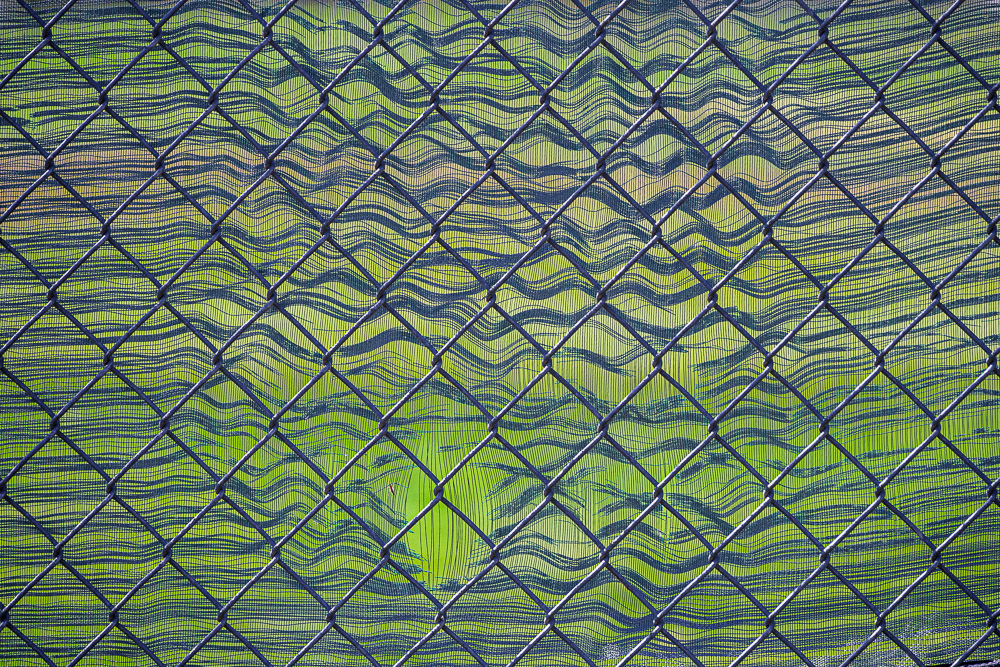
    Anything that interests me is fair game. It is the dead of winter as I write this. Today I shot up through patterns of snow on a grid what was part of a sign above a sidewalk. I shot ice patterns forming along a river. Some majestic old Cottonwood trees silhouetted against storm clouds drew me in. I did not see a single other photographer. Not even someone using a cell phone camera.

    If you were walking with me, would you have seen these things? Even if you did, would they interest you enough to shoot them? In the cold?

    Maybe. Maybe not. I’m not going to bother worrying about what interests you. I have trouble keeping up with what interests me.

    I hope you do, too.

  • It’s Just a Camera

    It’s Just a Camera

    That piece of technology we use to make images, it’s just a camera. Not magic or sentient or automatic. It still needs someone to take the picture.

    Brushes

    I really like my camera. It is a good tool to use to make images I like. When I’m in the field, my camera is the vehicle for my creative expression.

    Have you ever had someone look at one of your pictures and say “Wow, you must have a great camera”? Or see you taking pictures and say “You must be a professional, since you have a big camera.” I have. Many times. Now, I basically just smile and go on.

    But if you see a painting hanging in a gallery, who looks for the artist and tells them “Man, those must be some great brushes you have.” Or, seeing a nice wood carving, tell the sculptor “you must have some really sharp chisels”.

    The public has a tendency to attribute a good photograph to the camera more than to the photographer. Being a piece of technology, somehow there is the implication that the camera somehow made the picture.

    As artists, we should not encourage this attitude.

    Canterbury Cathedral©Ed Schlotzhauer

    A box

    At it’s most basic, a camera is a box that keeps out light. The name comes from “camera obscura”, which was a dark space, often a room, with a small opening to let in light. This caused an inverted and reversed image to be projected on the back wall. It is believed this technique has been used since 500 BC.

    The first “modern” cameras were wooden boxes that had a lens on one end and a holder for coated glass plates on the other. This is how many great historical photographs were exposed.

    They have certainly become much more sophisticated now, with auto focus, camera shake compensation, exposure measurement, ability to automatically set exposure parameters, etc. Too much to list. The user manual for my Nikon Z7 II is 823 pages. Astounding, but it still doesn’t take the pictures. At it’s most basic, it is still a closed box to keep light off the sensor until time to record the image.

    I appreciate many of the features in modern cameras. They make my art easier and extend the range I can operate in. It is great to have our little “dark spaces” getting smaller all the time. Even to becoming little flat things we can put in our pocket (phone).

    I fear there will come a point where we will face some major decisions.

    It’s still a tool

    Right now our cameras and phones have amazing capabilities. Some of them are just basic technological advances. Some are deemed “AI”. Many of the best features are appearing first in our phones.

    The ability to “sweep” our phone across a scene and have it automatically stitch together a panorama is very useful. Face detection is common now and can be useful for some types of work. An interesting feature I have seen is where, when taking a group shot, some cameras actually take many images and pick out and merge together the “best” look for everyone. At least, ones when they are smiling and their eyes are open.

    Features like these make shooting pictures less technical and less stressful. Anyone can get “professional” level results. That is probably a good thing. It is an aid.Lines of graves in Arlington Cemetary. A poignant moment.©Ed Schlotzhauer

    A coming “revolution”

    There are still some of us who want to make the artistic decisions ourselves. Even if it is difficult and requires lots of training. Even if we make mistakes and bad choices. Those don’t matter. It is our art, our decisions, our responsibility. The technology is likely to get a lot more intrusive.

    Probably right now most major camera manufacturers and all phone makers have teams of smart people trying to go all in with AI. People who actually believe in it and confidently think AI actually is or will become intelligent. Some who actually think AI can do art.

    I can imagine one of the user stories they are working from: “(Camera speaking) Attach the 24-70 lens. It is best for this shot. Move me 34.7 inches left and lower me 9.3 inches. I detect a glare. Attach the lens hood. Place the subject at the Rule of Thirds point I am illuminating in the viewfinder. I will shoot it now and remove the non-subject person traversing the frame. I am also correcting the 3° tilt to the right and the overall color. Done. “

    To me, this is a dystopian scene. I do not want to relinquish my artistic vision to anything, especially a machine. I am very willing to use smart tools to assist my work. In-camera features like eye identification and focus tracking can be very handy. On the computer, making it easier to make selections or to remove distractions is useful. But I do not plan to give control over to the camera to make it’s own decisions

    Plasticity.

    In The Interior Landscape, Guy Tal states

    For any medium to be useful to an artist, it must allow a generous degree of plasticity. It must lend itself readily to subjective expression of concepts and feelings originating in the artist’s mind and not just those inherent in or commonly associated with the subject.

    Mr. Tal was not referring to AI here, but I believe it applies. An AI controlled camera could probably expose images that would be regarded by most consumers as pleasing. The pictures would be a faithful and well exposed depiction of the subject. Most users would be happy. Unfortunately, the AI could not know the subjective expressions that are in my mind. It cannot know my vision and intent.

    Again in The Interior Landscape, Guy Tal states

    There are well-established compositional templates knows to impress viewers, requiring only mechanical skills but no expressive intent. Art raises the bar. Art requires from the artist a degree of emotional investment and an elevated subjective experience, as well as the skill to express visual concepts beyond “here’s something pretty,” “look where I’ve been,” or”see how lucky I was”.

    I resonate with this concept of plasticity. It gives structure to my desire to create images that are not simply representations of what is there. I want to use the camera and other parts of the technology of photography simply as tools to help me capture what I visualize and feel.

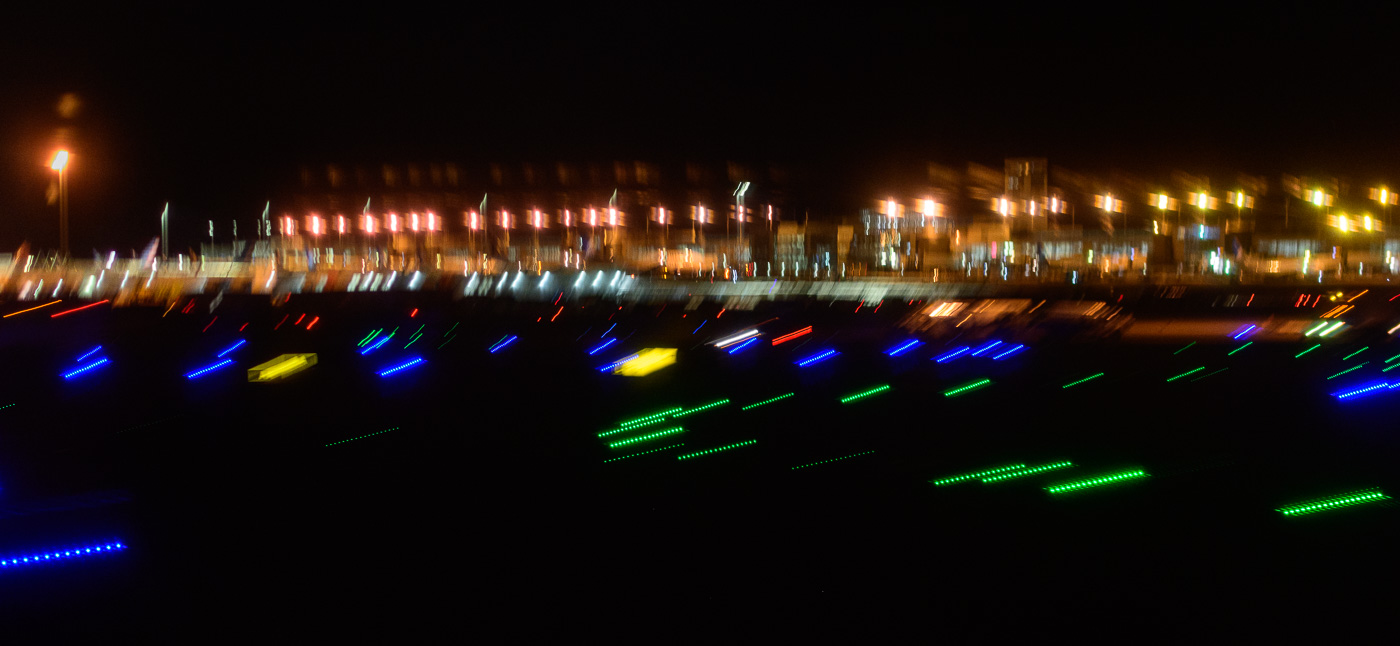
    Airport at night©Ed Schlotzhauer

    Make art

    You might get the impression that I am not a fan of AI. Well, I definitely am not a true believer. It could be a useful tool for some things. One of the big problems is that most people do not understand its limitations, so they believe it is something it is not.

    By it’s nature, AI cannot be creative. It is a compendium of what it has been trained on. The output of AI is a statistical prediction of a response given an input. So, at best, it is an average of what it has been given. It cannot think or feel or have inspiration.

    I am a human. I do think, get depressed, find inspiration, feel love, and see things in my own quirky way. If those are faults compared to AI, then I readily admit to being deeply flawed. But from those flaws, and all the other strange bits of my makeup, I can create art. Because my art comes from my unique human understanding and viewpoint.

    I like my camera. It is a great tool. I have actually read most of the user manual in order to know what features it has and to pick which I choose to use. The reality is that I probably only use, I would guess, less than 20% of its capabilities. That’s OK. It’s a tool, not the center of my attention.

    I know that designs have gotten so good that camera manufacturers are up against boundaries of physics. It is easier to add value through new “intelligent” tricks than to expand resolution or dynamic range or reduce noise. AI is a hype magnet and a path of least resistance. I get it.

    Who/What is in charge?

    But if the next camera I select is bloated with AI features and the price is double because of that, I will pass. I can even envision them wanting me to pay a monthly subscription to use the features in my new camera. If these things happen, my next camera is likely to be an older, used camera with less features but better raw performance and easier manual operation. Yeah, I’m an old curmudgeon. I get to be. I’m the artist in charge.

    The camera does not make images. The artist does. It will continue that way for me as long as I have something to say about it. And I do. 🙂

    So modern cameras are wonderful tools. I would love to have a new one. But are you an artist or just someone who takes pictures? If you are an artist, do not forget that the camera is basically just a dark box that holds the lens and sensor in the right positions. It is an instrument allowing us to create art. The artistic intelligence is in you. Do not surrender your artistic vision to a machine.

    Photography is based on technology more than most other arts. That does not mean the technology makes the art.

    “The equipment of Alfred Stieglitz or Edward Weston represents less in cost and variety than many an amateur ‘can barely get along with.’ Their magnificent photographs were made with intelligence and sympathy – not with merely the machines.”

    Ansel Adams