An artists journey

Category: Mindfulness

  • The Magic of the Frame – 2

    The Magic of the Frame – 2

    All 2 dimensional art exists within a frame. It is a constraint imposed on us. It can also be beneficial, because it requires choices. This is the magic of the frame. This article is an expansion on a discussion of the frame I did several years ago.

    Finite

    I do 2 dimensional art. Most paintings or photographs are. But besides being flat, 2 dimensional works are also bounded. They cannot extend to infinity, although they may capture images of near infinity.

    So a print may be 20×30 inches, or maybe 6×9 feet, but there is a limit. A print of a landscape scene is not the size of the original scene.

    And because the print is bounded, there are edges. The edges create the frame, or more precisely the bounding rectangle of the image. I am assuming rectangular prints for the discussion. So in simple physical terms, the frame is the box that encloses the print.

    Why rectangular?

    Most paintings and photographs, and therefore their frames, are traditionally rectangular. Have you wondered why? And why and how a round lens makes a rectangular image?

    I have looked into this and have found technical reasons and pragmatic reasons, but no real answer. Lenses are round for a good reason – they are easier to make and making them rectangular would introduce lots of distortion. The lens throws a circular image on the focal plane of the camera. The the light that falls outside of the sensor is cropped. We never see those parts.

    Sensors are rectangular for technical and pragmatic reasons. Sensors are very large silicon chips made by normal semiconductor processes. Rectangular chips pack efficiently on a wafer. If they were, say, round, there would be lots of wasted space between chips. Since they are very expensive to make, the manufacturers are anxious to minimize costs. Also, digital cameras mimicked film cameras which exposed rectangular patches on film. Again for efficiency to maximize the film use.

    And finally we expect prints and images to be rectangular. It is the convention developed over centuries of painting. And it is less expensive to make and frame rectangular prints and canvases.

    So rectangular prints are conventional and the path of least resistance.

    A window

    The frame, though, is much more than the constraint of the shape of the sensor or print. Something magical happens when we look through the viewfinder or crop our image in our processing software.

    What we see through the viewfinder becomes our window onto the world. This window in where we pour much of our creativity. As we move and zoom and continue to examine our subject through this window we decide how we want to present it. What is important to bring out. What should be excluded.

    We may realize the interest is not the whole scene, but only certain parts of it., and they should be presented from a certain point of view. So we adjust our window and keep searching for the magic.

    After all, if we are an artist we want to bring something to our viewers that is more than just what anyone would have shot if they walked up on the scene. We bring our own interpretation. Part of this is what we chose to have in our window.

    Composition

    Over the centuries many “rules” of composition have been formed. I put it in quotes because there are no real rules. The “rules” are observations of patterns that have been found to be generally pleasing to viewers.

    It was very interesting to me to realize that most of these “rules” are relative to the frame. Let’s take a look at a few.

    The rule of thirds helps to increase dynamic tension by placing the subject along the intersection points of dividing the window into 3 groups horizontally and 3 groups vertically. This is totally relative to the frame.

    Along with that is the oft quoted “do not put the subject in the center” – of the frame.

    The horizon should be level – relative to the frame.

    Diagonals can add a lot of interest to many compositions. The diagonals exist because of their relation to the frame.

    Leading lines are often recommended. They help encourage the viewer’s eye to lead from the frame to the subject and keep them exploring.

    We need to be careful to not have distracting elements at the edges of the frame.

    Unless it is really your intent, we must be careful to not cut the subject off at the edge of the frame.

    This could go on a long time. Go examine your favorite composition rules and see if they are not mostly describing relationships to the frame.

    Artist’s judgement

    So really, at one level, the work of an artist is to arrange the elements within the frame in the most pleasing or impactful way. This is the magic of the frame. It is the canvas where we compose. It is the crucible where our creativity is tested.

    Since the camera sensor captures everything in the frame, it is not only critical to arrange the elements as we wish, but it may be as important to know what to exclude. That is one of the tricks of photography. What is in view of the sensor will be in our image unless we consciously figure out how to eliminate it.

    I think Henri Cartier-Bresson had great insight when he said “A photograph is neither taken nor seized by force. It offers itself up.” There are amazing scenes all around us. We have to see them then be able to compose them to create a great image.

    Much of the artistry is in working the frame: figuring out what is significant and how to present it within the frame. It is the stage where we work our magic. The frame is more important in our work than we usually express. This is what, to me, is the magic of the frame.

    This image

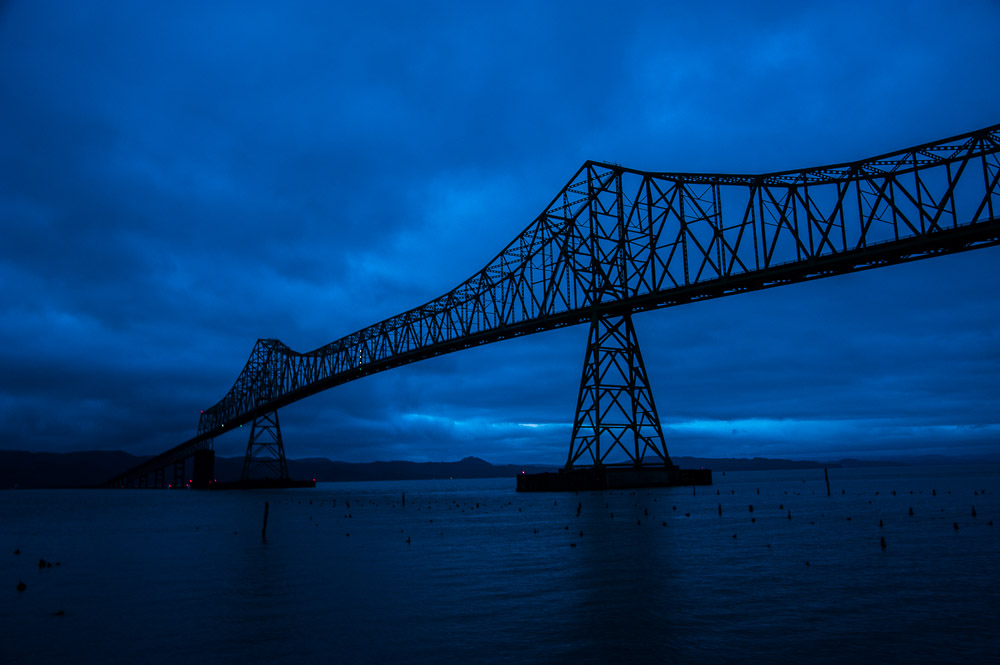
    This illustrates framing. The diagonals and leading lines make it much more dynamic. I was intentional about what to include and exclude and how to frame it. At least, as much as I could on a tossing sailboat in a strong wind.

  • Go Out Empty

    Go Out Empty

    I often advise us to go out empty. This, at least, fits my working style and my personality. I don’t always follow my own advice. And regret it.

    Go out empty

    Go out empty is famous advice from the great Jay Maisel. What he meant is to not have preconceived ideas of what you want to photograph. Instead, be mindful (I doubt if he used that expression) and react to what you find.

    That way you will get the maximum good from the situations you encounter instead of being disappointed with not finding exactly what you wanted to find. What’s there might make an interesting picture. What’s not there, well, that doesn’t make much of a picture.

    When he lived in downtown Manhattan, Jay was famous for going out on the streets every day just wandering and taking pictures. He would occasionally get great images. Sometimes nothing. But even with nothing, he was not disappointed in not finding what he was seeking, since he wasn’t seeking anything in particular.

    I have been to New York City and I will be quick to admit that the streets there are far more interesting than the streets of my small little town. But still, I believe the principle applies wherever we are.

    I believe the basic premise of what he is advocating is to find joy in what you are shooting. Really look at it, Discover the interest. Be receptive. Inspiration is overrated. Shoot interesting things.

    No planning?

    Does that mean we should never plan anything? No, there are times to plan. Even Jay would plan carefully when he was doing commercial shoots. For instance, he shot the first Sports Illustrated Swimsuit covers. He had a crew and models and scouted locations, etc.

    When someone is paying you for results, you have to deliver what they want. This will involve careful planning and preparation.

    What I am discussing, though, is what most of us “fine art” photographers do when we are shooting for our own satisfaction and creativity. Different people have different personalities, but I am in the group that does best when reacting to scenes rather than trying to set them up.

    Falling into the expectation trap

    I advocate going out empty and I usually do it. But on a recent trip I fell into the trap of setting expectations for what I wanted to photograph.

    I was in central Florida visiting family. One afternoon I was able to slip away for a few hours to visit a favorite nearby place, Lake Louisa State Park. It has lakes and beautiful trees and swamps and incredible red water.

    A few times before I have found and photographed some gorgeous trees. In my mind, that is what I wanted to revisit and explore. It didn’t work out well. This was summer, not winter, and the foliage was very different. Some trails had been re-routed and I could not find the trees I wanted. And it was miserably hot and raining. Not al all pleasant or condusive to what I wanted to do.

    I was very disappointed until I reminded myself to explore what is there, not get stuck on what wasn’t. It was actually beautiful when I let myself see it. With the storms, the sky was very different from what I had seen before. The rain give a different look to the tree trunks and foliage. After some false starts, I was able to get some interesting shots before the thunderstorms and pouring rain chased me out.

    Don’t do what I did

    Do not fall into the trap of letting preconceived ideas block your creativity. Be mindful of where you are and what is there. Get into the flow and work the scene. Make something out of what you find. Look at your surroundings fresh and discover the good that is there.

    Today’s image

    The image today is from this aborted trip to Lake Louisa. It was during the calm before the storm. That really is the color of the water. It contains lots of decayed vegetation that has flowed slowly through the swamp and turned that color. Not what I expected to shoot, but beautiful and interesting.

  • If You Can’t Beat ’em

    If You Can’t Beat ’em

    You have probably heard the old phrase “if you can’t beat ’em, join ’em”. It can actually be pretty good advice for some situations. Sometimes it is better to abandon your preconceived assumptions and respond to the actual conditions.

    Previsualization

    Many famous artists, from Ansel Adams onward, preach that we should previsualize the end result before we shoot. One accepted meaning of it is that the photographer can see the final print before the image has been captured. In other words, based on his experience, the photographer knows what end result he will be able to achieve before pressing the shutter release.

    Mr. Adams, ever the teacher, broke it down into 4 steps:

    1. Need or desire for the picture. Why are you taking it?
    2. Discovery. Recognize the essential composition that can be made.
    3. Visualization, the process of anticipating what the result will look like.
    4. Execution. Doing everything right to make it happen. This is image capture through post processing.

    I would not go on record as disagreeing with Ansel Adams, but I think there are a few assumptions wrapped up in this that we can look at. The advice may not be a universal truth.

    For one thing, if you are a commercial photographer contracted to get a certain image for a client, yes, planning and previsualization is important. Also, if it is a “one in a lifetime” situation where you know the opportunity will never repeat for you, be very diligent and make sure you get the shot you want when you have the chance.

    But another angle I don’t think I have heard talked about is personality. Some people are naturally planners. They work best when they are following a carefully thought out script. They need a high degree of structure in their environment. Other people don’t work that way.

    Generational changes

    And consider the differences in technology and capability of editing now compared to Mr. Adam’s day. You can see that we tend to favor a different style of capturing images.

    For Mr. Adams, making an image was slow and expensive and fairly difficult. A lot of heavy gear had to be set up. Looking at the upside down color image on the ground glass of his view camera and trying to visualize the resulting black & white print took a lot of skill and experience. And the 8×10 film sheets were expensive and he could only carry a limited number with him in the field. So yes, previsualization was necessary in that generation.

    Now, though, digital imaging is “free”. And we have great sensors and real-time histogram displays. Most of us can immediately see a fair representation of the captured image on our camera screen. We know what we captured.

    Since the images are basically free and quick to do, we can “work a scene”, shooting and looking at the captured images while we hone in on the result we want. We should seldom have any question of whether of not we captured the image correctly. The larger question is, did we get what what we want. It is not uncommon to shoot several or even dozens of images to finalize the result we want.

    Trying to force it

    Now I will readily admit that I am much more in the “no planning” side. I enjoy spontaneity.

    Something I see at times that makes me sad is photographers who go out with a rigid expectation of what they will accept. Many of them tend to battle against conditions they cannot overcome and go away disappointed. Maybe even feeling like a failure.

    In deference to the planners, I love this quote from a great planner:

    β€œIn preparing for battle I have always found that plans are useless, but planning is indispensable.”

    Dwight D Eisenhower

    Thinking through the situation and trying to anticipate what may happen can give great insight on what we may decide to do. However, once the battle starts, e.g. we are in the field to make the image, nothing is likely to go as planned.

    Adapt

    When we discover that our plans are falling apart, we can double down and try to force it to work, or we can adapt and reevaluate what we can do.

    One aspect of creativity is to be flexible, to adapt to the situation and make the best of it. Make the best of the situation. Perhaps you got to the great scene and it is raining or snowing. Not what you planned. Use it. Get what you can. The result may be even better than what you planned.

    One of the principles of improvisation artists is that each step is “yes, and…”. That carries the momentum forward to the next step. Whenever you say “no”, it blocks the flow and makes it hard to go forward. So don’t block your flow. Respond to whatever situation you encounter and creatively figure out how to use it.

    Let it flow

    As artists, we are trying to creatively interpret the world around us. I find an ideal to enable this is to get into a flow state. This seems to be a peak of creativity and energy and concentration. This lets us work with the situation rather than fight it.

    Previsualization can give us an idea of what we want to achieve. We might even make the image as planned. But never overlook the opportunity to make a more compelling and engaging image.

    Maybe we do not get the image we anticipated. Often we get a better one. But even if it is a disappointment, as long as we did the best possible in the situation, we should be happy. I have said before that it is better to be lucky than good. But this is not luck. It is creatively adapting to circumstances.

    Today’s image

    This is a “bored at an airport” image. While waiting for a flight I wanted to capture scenes of airport operations. But I was frustrated by the reflections I could not eliminate. They were interfering with the image I had in mind to create.

    But on some thought, I discovered that maybe the reflections were integral to the scene. People waiting patient and trusting while a huge amount of complex logistics of running an airport went on just outside. Outside of their interest and curiosity. They just wait like cattle until their flight is called.

    This was definitely a “if you can’t beat ’em, join ’em” situation. I think the resulting image is better than what I originally set out to make. What do you think?

  • No Camera

    No Camera

    I often write about carrying a camera all the time and even using it as a tool to get into a flow state for photography. I just did the opposite. I went off on a 3 day trip with no camera. Well, my phone, but I didn’t use it.

    Why take a camera

    I have said that having a camera with me gives me license to think photographically. It is true. This technique often helps be get off dead center and get moving.

    Most of the time, the feel of a familiar camera in my hand and the click of the shutter propels me into a creative zone. I start seeing possibilities I was overlooking before. After the first frame or 2 things start to flow.

    I wrote a couple of weeks ago about side trips and excursions. One example I used was taking my wife to the airport then wandering in the eastern Colorado plains. What i didn’t say was that I drove for a couple of hours without “seeing” anything to shoot. Finally I basically forced myself to get out the camera and shoot a couple of frames. After that I “found” over 300 images by the time I got back that evening. About 1 per mile that I drove. Some were quite good. Many more are ones I’m glad I shot, just for the experimental value if nothing else.

    Jerry Uselmann said “The camera is a license to explore.”. I find it to be true for me. Besides, as the great Jay Maisel said “It’s a lot easier to take pictures if you always have the camera with you.

    Why not take a camera

    On the other hand, I sometimes, but rarely, deliberately leave the camera at home. I mentioned the trip I took last week where I did not take the camera.

    There seemed to be a need to back off some. This is unusual for me, but I sometimes get so far behind in my processing that I feel like I am just shooting blindly and loosing touch with my work. And getting un-creative and un-inspired. So I decided to slow down producing images and work more on assimilating what I have already done.

    I have slowed down shooting for a couple of weeks, but I haven’t completely stopped. Given that, though, when this short trip came up, I reluctantly talked myself into altogether abstaining by not even taking my camera. It is the first time I have done that for a long time.

    OK, it was frustrating at times, but not as bad as I thought it would be. Granted, this was a fast family trip and I knew the weather would be bad. Those things helped. But before it would not have dissuaded me.

    In a strange sense, it was kind of liberating to not feel any pressure to take pictures. It did not stop me from practicing composing images in my mind. But since it was impossible to shoot them, it as all just a fun creative exercise.

    Recharge

    I’m pretty good about having accurate intuition about what I need to do for my physical and mental health. I think I realized I was getting a little burnt out and needed to back off some. This exercising of depriving myself of the opportunity to shoot was actually kind of refreshing.. It was a recharge.

    Just the 3 day event was healthy and useful but not enough. I plan to stay slowed down for a few more weeks. It will let me decompress and get back in touch with my current work and what directions I am going. Some of the time can be used to re-evaluate and do some soul searching. And to catch up with culling and filing and processing.

    If you are doing intense physical training it is critical to plan in rest days. Otherwise your body breaks down and you do more harm than good. Likewise if you are doing intense mental activities like studying for finals, you have to take breaks to let your brain catch up and process information.

    I think it is the same thing with art. We love doing our art. We want to do it. But we need to realize our body and mind need to rest sometimes.

    Go off and do something unrelated. Take walks without a camera. Read a book. Write letters – remember paper and pens? Start a journal. These are good for your mind and your creativity. It recharges us and prepares us for the next intense push.

    I consider my experiment of leaving my camera at home on that last trip to be a success. Sometimes it is more productive to not do anything.

    The image

    The image today is one of the ones I shot on that day I described when I took the excursion in eastern Colorado. I like doing portraits of weathered old houses like this. It was probably abandoned during the Dust Bowl days. Nothing but clouds to the horizon.

    I didn’t show any pictures from the trip where I didn’t take a camera, because, well, I didn’t take any. πŸ™‚

  • License to See

    License to See

    I have written before on learning to see. This is a follow on to that and talks about a psychological tool that works for me to see more and move to actually making images. When I pick up a camera, that is a license to see.

    We forget to see

    I have made the point many times that as adults, we become so busy and caught up in daily life that we protect ourselves by closing our world down around us. Our interest and curiosity doesn’t extend much beyond our immediate problems of every day life. Job, kids, kids activities, paying bills, maintaining the house and car. It seems like there is not much room for anything else.

    Yet every day as we go to work or kids activities or shopping, we pass through a beautiful and interesting world. But mostly we don’t pay much attention to it. It just doesn’t seem important because we are focused inward.

    We are robbing ourselves of a lot of joy and good mental health. Learning to see more of what is around us is great for our head and our attitude.

    We have to relearn to see

    I hate to repeat myself, but I think this is important. Seeing more of what is around us is a learned skill. One that can be developed with practice.

    We used to do it. As kids we were interested in everything around us. This gets beaten out of us as we grow up. But the fact that you used to do it means you still could. It’s a matter of relearning and practicing.

    It’s also a matter of valuing it and increasing its importance. If you are an artist, I believe it is a vital skill. Isn’t that one of the important things that distinguishes us from non-artists? We observe, we see things, we see things different. To see things different, we have to first see things.

    Awareness comes first

    Seeing, in my view, starts with 2 things. First is curiosity. Curiosity helps us eagerly seek to find out about things. It gives us the motivation to see. Second is awareness. Curiosity is necessary, but it can be directed inward. We can get lost in our head and not do anything external. Awareness helps get us in touch with the world around us.

    In more flowery language than I usually use, Eden Maxwell says: “To be aware is the prerequisite for experiencing life beyond illusion, your own, or the cumulative self-consciousness amassed by society.”

    Awareness requires us to be, well, aware. Sorry. It seems too simple and obvious, but do you actually practice it? We can practice doing it. Driving to work tomorrow, after you pass a car ask yourself: what color was it? What make was the car? What color shirt was the driver wearing? When you go for a walk stop and look at a tree you pass all the time. Did you ever really notice the pattern of the branches and the shape of the leaves? Did you see that bird’s nest? Pay attention to the reflections in windows you go by.

    All these things add to your awareness of things around you.

    My hacks

    But these things require work, or worse, thinking. It seems most people don’t want to do those things anymore. Everyone wants a quick hack to make it seem like they can do something.

    So let me present 2 tools that work for me. I will call them “hacks”. For me they are a license to see. They trigger action.

    The first is picking up a camera. Yes, that simple. With a camera in hand I become immediately focused on making images. It amazes me how this works, but it usually does. I may think I am being aware and thinking like an artist, but a camera in hand focuses me. Most often I fall into the zone and flow and move toward actually making images instead of just thinking about doing it. The camera is compelling. This usually works even with an iPhone in hand.

    There are times, though, when my head just doesn’t seem to be in it. Then I have to go to the next hack: take a picture. Something happens to me mentally when the shutter clicks. The sound triggers years of muscle memory and behavior. It breaks the fear of not being able to find a subject. I am in motion now. The mental block is removed and I can go on creating images. This first frame may be intentionally a throw-away. It doesn’t matter how good it is. Now I am across the barrier and actively making images.

    Artists

    As artists, we have to be more aware of the world around us. We have to see better to help interpret life and the world to other people. Seeing is a learned skill that can be practiced and improved.

    I hope these simple “hacks” – picking up a camera and taking a picture – work for you. They are tools I use all the time in my own life, especially when I am not feeling motivated. It gets me out of my head and actually moving and doing something. Once in motion things seem to roll along better.

    Today’s image

    Following my own advice, one day sitting, bored, in a car wash, I decided to pick up my camera and see what I could do. I am happy with the result. It was not planned, it happened because I held my camera and looked around. The world is rich in images and interest. We just have to see.