An artists journey

Category: Mindfulness

  • Photographing the Unseen

    Photographing the Unseen

    Photographing the unseen? That is impossible isn’t it? If you can’t see it, how could you take a picture of it?

    Ostranenie

    Osranenie is a concept. It is based on showing things in a new way, from a new point of view. I have written on this before and I want to circle back to give some practical applications. No, I still don’t know how to pronounce it.

    Central to the concept is that the artist tries to force the reader or viewer outside of their normal state of perception. The goal is to make you break your normal habits and look at things different.

    A unique ability of photography

    Photography is uniquely suited to help see things outside of our normal perception. Other types of art, like painting, are generative. That is, you start with a blank canvas and what appears is what the artist envisions.

    Photography is totally the opposite. It is basically subtractive. The camera captures everything in its field of view. It is up to the artist to be selective in framing and composing to restrict the image to what he wants to present.

    That is well understood, but in addition, the camera settings and attachments allow exploration of states that we cannot perceive with our normal sight. Without any special tricks, my camera allows shutter speeds from 1/8000th of a second to 30 seconds. And the long exposures can be extended to any length I desire. I can also change lenses to give different perspectives on a scene.

    Photography may be, at heart, a mechanical and technical based art, but that technology allows us to peek into the world in unique ways.

    Camera vs eye

    As humans, our marvelously designed eyes work in a totally different way than a camera. We constantly scan around and “snapshot” small slivers of our field of view. Our minds seamlessly stitch this constantly changing stream of images together, kind of a real time panorama. We don’t notice it happening. What we think we “see” is actually a model built from these scans and our interpretation of its meaning and our experience with similar subjects.

    The camera has no built in biases. It just represents what it gathers in one exposure.

    Time extremes

    I have mentioned time as a variable of photography. But so what? How can that give us a new perception?

    If I adjust my camera to take a frame at 1/8000th of a second, it does it. The result is a frozen slice of an instant that we cannot perceive with our normal vision. A cascade is a classic example. Shooting at a very short shutter speed freezes the motion of all the water and allows us to examine what is truly happening in an instant. All the complexity and the turbulence we cannot perceive.

    On the other extreme, if I expose it for seconds, the water will blur into streaks that give an impression of the overall motion going on. We sort of understand that this is what it might look like over time, but we can’t actually see it unless we take a picture.

    Here are a couple of (not very good) examples. Actually, I seldom use short shutter speeds on water so I had to go out to the local river and generate an illustration.

    Water flowing at 1/400th second
    Short shutter speed, 1/4000th second
    Water flowing at 1/10th second
    Long shutter speed, 1/10 second

    In the first case, the water seems crystal-like, frozen. In the second case there is a distinct impression of motion and flow. The point in each case is that this is not what we actually see when we’re looking at the waterfall. Each is a bending of our perception, revealing new views on the world to us.

    Space

    Our cameras also have the ability to give us different perspectives on the space around us. Our eyes have a fixed focal length that is around 40-50mm equivalent for a 35mm camera. And we see the world in a horizontal format. But we can put a variety of lenses on our cameras to give views from extreme wide angle to extreme telephoto. And we can rotate our camera in different orientations.

    We’re used to seeing our “normal” point of view – that’s why 50mm is called a “normal” lens. A wide angle stretches our view, Things converge in unexpected ways. Lines make distinct new compositions. Buildings “bend” in funny ways. It brings together much more width of view than we are used to seeing.

    And the opposite, a telephoto lens, compresses our view. It narrows in on a small area, like when we look through binoculars. It gets us closer to something we would not normally be close to, such as a wild animal. And it lets the artist draw our attention to details of small parts of a scene.

    Each of these effects is a distortion or exaggeration of our perception. It is not what we actually see, but it allows us to discern the world around us in new ways.

    Motion

    Our perception of motion is another effect the camera can record but that we perceive much different. Try an experiment: move your head rapidly from side to side. You don’t really notice much as your head is moving. As soon as you stop you have a clear view of the scene before your eyes. Our mind kind of “skips over” the motion.

    Or try another experiment: stand beside a road and start straight ahead as cars go by. What do you notice? Something obscures your vision briefly, but we tend to ignore it. It’s more of a distraction to what we are watching.

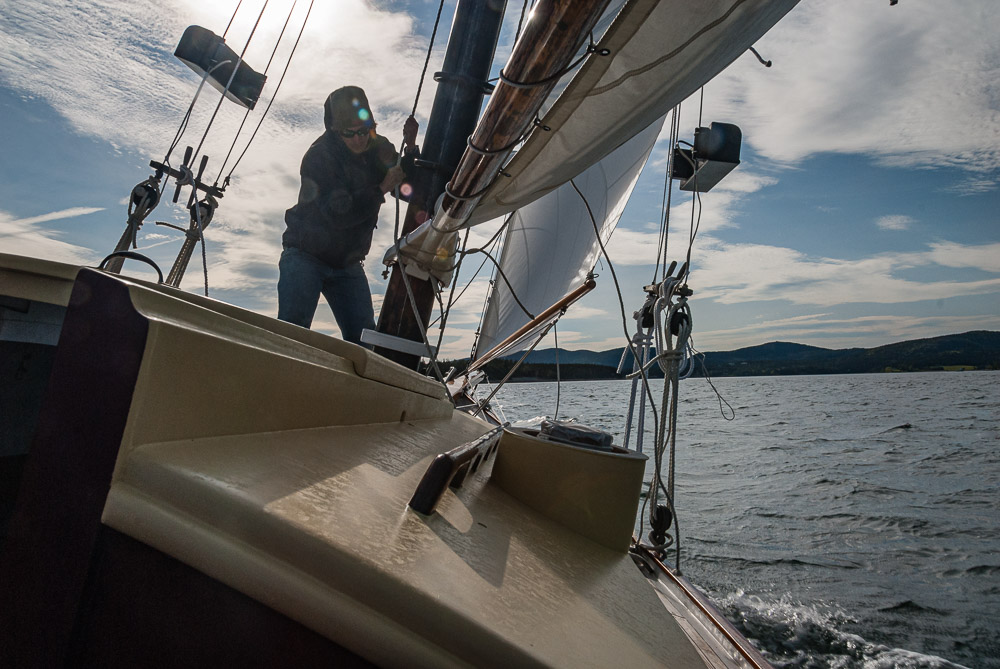
    The camera, though, sees all that passes in front of it. It doesn’t know to ignore some things as immaterial. I often use the technique knows as intentional camera movement (ICM) to achieve reality distortions to show the world in new ways. The image at the top of this article is such a motion capture. You know what the scene is, but you also know that you have never actually seen the world like that. It helps you think of it is a different way.

    Color

    Another thing we have excellent control of now is color. More or less, change the hue or saturation – it’s easy with our tools. These things could not have happened in early photography.

    I feel the need to single out one significant category of color manipulation that we are very familiar with. Black & white. This is not the way we see the world. By presenting an image without color information, our perception is changed drastically. It keeps us from getting distracted by color and helps us to really look at the shapes and tones and forms in the scene.

    We don’t produce a black & white print now because we are limited by the medium. A black & white print got there by the artist deliberately deciding to remove the color. We may not think of it this way, but black & white images are a deliberate distortion of our perception to help give us a new point of view. It is an alternate reality.

    Bending reality

    Photography has the ability to bend reality in many ways. That is one of the things I love about it. I am not ashamed of it. It is not cheating or an artifice. It is using our creativity to create art.

    I think this quote expresses it well:

    In our time it seems entirely appropriate that the widest choice be open to artists. Those using the camera or other photographic means to produce works of artistic merit should seek to exploit their medium in the most adventurous ways … The derogatory use of the term artifice is more often than not a bugaboo. Art is artifice. Its reality is of another nature than that of the purely physical world.

    Aaron Scharf

    A different perspective

    I really appreciate that photography has abilities to give us different perspectives on the world. I am tending to push in these directions more and more in my work. Of course, artists in other media can do most of these things, but they would have to either have an amazing ability to visualize the unseen, or they would likely take a picture to show them the unknown and then paint it. Photographers do it directly.

    Maybe it is stretch to call this bending of perception ostranenie, but I don’t think so. I doubt if the term will ever catch on. Probably a good thing, because then I would have to learn to pronounce it.

    There are few actually new things in the world. The idea of ostranenie was penned in 1917 – 106 years ago as I write this. But I am happy that photography lets us push the boundaries into new visualizations of reality. It is a uniquely capable art form.

    Let’s go out and shoot the unseen and impossible! Keep on bending! Get outside of normal perception.

  • Exploration

    Exploration

    I firmly believe exploration is a foundation of art. Without it, we become stale and stagnant and eventually just start repeating the same things over and over. Exploration leads to growth and creativity.

    Many ways to explore

    I consider myself an explorer. It is a fundamental activity that I pursue. But I seldom go off to uncharted lands. There are countless ways to explore. Many without even leaving my studio.

    Exploring often involves travel, but it also encompasses the ideas of searching and inquiry and discussion and evaluation. It is more a mental activity than physical. Just being in an exotic location does not automatically classify, for me, as exploring. That depends on what you bring from the experience.

    When I read books by artists or view videos about artistic technique and thought, that is exploring. It is an inquiry process. I ask questions of myself and attempt to answer them. The process stretches us. Once stretched, we don’t come back to the same shape.

    I sometimes spend hours at a time “exploring” on my computer. No, I don’t mean watching TikTok. Exploring editing possibilities and compositing possibilities. Reviewing images and trying to discover new things in them.

    When I go out wandering in my local neighborhood, that is exploring. I do it with an open mind, seeking to see things in a new way. It is amazing that I can usually find new sights or see familiar ones in a different way. That is exploring.

    Feed your creativity

    At the heart of exploring is curiosity. Curiosity is the fountain that waters art. We need to have an active and healthy curiosity to sustain us.

    Most people aren’t overly afflicted with curiosity. Is your curiosity a living and active part of you? We have various needs that have to be met, things like food and shelter and emotional satisfaction. I consider my curiosity almost on that level. I wouldn’t die physically if it died, but mentally and emotionally I would be very damaged.

    Curiosity can be fed and nurtured to help it to thrive. There are many ways and I’m sure each of us responds in different degrees to each. Some that work for me are reading, learning new things, looking at good art, listening to intelligent people talk, a change of scenery, and play. All of them are consciously done activities that stimulate my brain. I believe this is very important for a healthy, creative life. The fact that you are reading this means you probably feel the same.

    The one that probably seems out of place to most people is play. Are you too serious and grown up to play? I hope not. It is actually very important. In a newsletter, Srinivas Rao once said “When we play, we return to a childlike state of curiosity”. I believe this attitude is important for artists. Through play we discover opportunities to extend our artistic vision.

    If you believe something is interesting, you are right. Go with it. Follow it to see where it leads. Considering something play lowers the barriers of expectation. No big deal if it is a failure – we were just playing. Brilliant!

    Get out of a rut

    Without experimentation that is driven by curiosity, we get stuck in ruts. We repeat the same old way of seeing and thinking all the time. Do you have any self imposed “I always do it this way” limitations? We need to view life fresh. Spend a certain part of your time just playing and trying random and ridiculous things. Do something silly. Have fun.

    Brooke Shaden once said creativity is curiosity + experimentation. I think that is a good viewpoint. Experimentation helps us discover new things to encourage us to climb out of the rut. Curiosity drives the experimentation. I think most exploration begins with “what if…”.

    Head in the clouds

    Has someone told you you have your head in the clouds? They were probably not complimenting you. Most people are so focused and pragmatic that anything other than today’s goals seems useless. As artists, we can’t be that. We are on a lifelong quest to create and see the world differently. Sometimes that is best to do from the clouds.

    If I can reframe “head in the clouds” to mean healthy exploration backed by wide-ranging curiosity, then I want to be called that.

    Be an explorer

    Become an explorer. That doesn’t necessarily mean we have to jump on a plane to a remote corner of the world. Your attitude determines it. It may just mean going outside with a fresh, new attitude. Let your curiosity guide you. Give yourself permission to play, to experiment, to do silly things. Shoot something new. Go extreme in post processing. Find new themes. No telling where that might lead.

    I consider myself an explorer. It is the way I live my life. It has nothing to do with how many frequent flier miles I have. Wherever I am and whatever I’m doing I’m looking at interesting sights, examining compositions, thinking about themes or possible projects. Curiosity compels me to always be seeking.

    Today’s Image

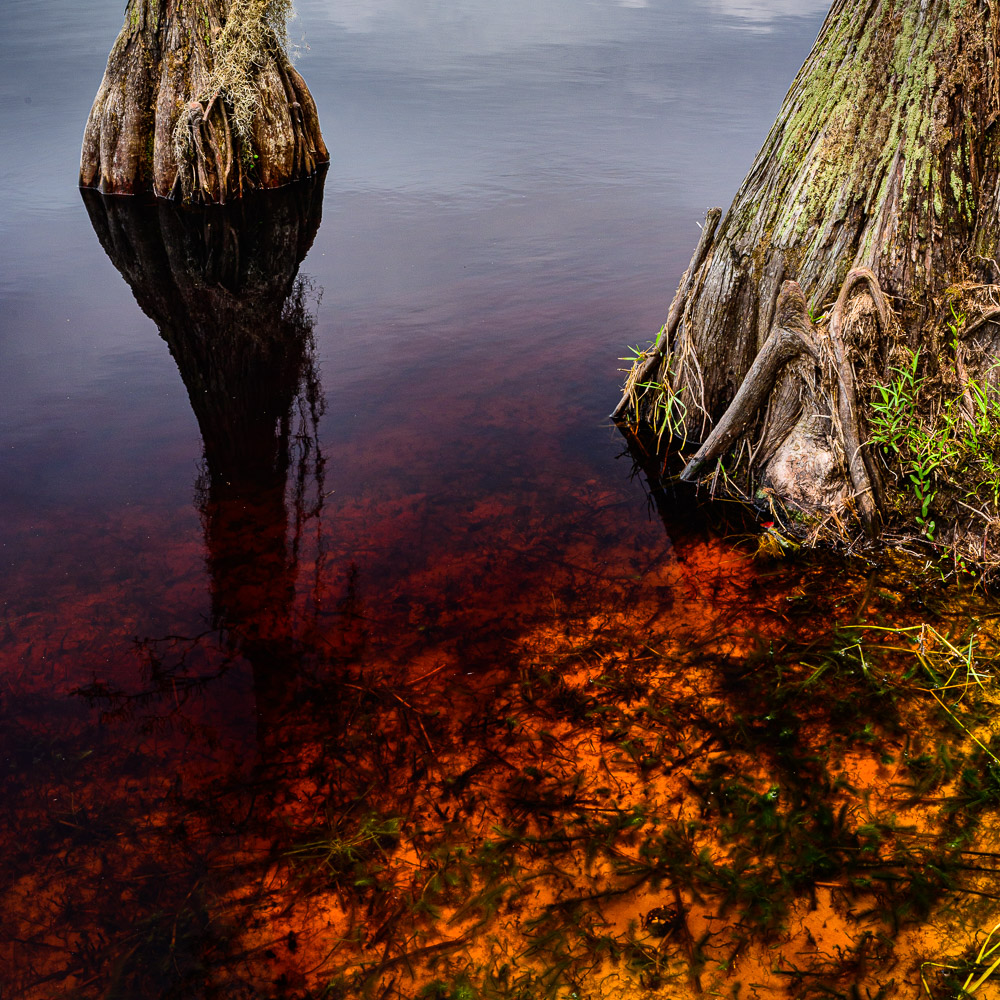
    I love this image. It is built on some things most people would never stop to look at, much less photograph. It was put together in a playful way with some post-processing magic thrown in to flavor it. Complete play. It is a joy to me. I hope you enjoy it.

  • Learning to See

    Learning to See

    Learning to see is something we all need to constantly practice. Seeing is actually a learned process. Yes, we can image scenes on our retina, but that is not what I mean. With practice we can learn to see more of what is around us, to be more aware and mindful.

    We learn to not see

    Children seem filled with a sense of wonder at everything around them. It all seems exciting and amazing. But somewhere along the path to becoming an adult, this excitement is squeezed out of us.

    In school our peers pressure us to look down on everything with disdain. Being excited about things is “not cool”. In our work life we have to learn to develop a single-minded focus on the tasks of the job. Non-essentials get pushed away. We may get married and have a family. This is great, but it focuses us even more on the day-to-day activities we have to do to earn a living and keep the household going.

    Eventually we no longer really see anything except the immediate problem that seems important. To some extent, we have to do this. It is a survival technique. But it takes away so much potential joy and beauty from our life.

    It takes an effort to start to see

    Are you at a point in your life now where you realize there is more going on around you that you are not perceiving? You look at other people’s art and become aware that it is not just about great iconic locations. They seem able to find beauty and interest in all kinds of places. They are attuned to their surroundings and open to more.

    Practice seeing. No, really. That sounds silly, but maybe it is time to re-learn how to see. That vision that came so easily and naturally when we were a child can be regained to a great extent.

    You know that it takes practice to develop any skill. Why does it seem strange to practice seeing? Isn’t seeing a critical first step in making art?

    Does it seem unlikely that seeing is something that can be learned? We just do it. I believe it is a skill that can be improved. The fact that we used to do it easily but forget how over time means we have the inherent ability to see better. Sharpening that skill can make a huge improvement in our art.

    Overcome lazy habits

    As I mentioned before, we tend to narrow our circle of interest as we “grow up”. Part of this is a coping skill, but some of it is just laziness. We’ve seen it all. We’re bored with it. It is all the same, so why pay attention?

    You would be surprised at the interest all around if you were just looking. Seeing more is rewarding in itself. It brings more interest to our life.

    Like developing most new habits, a key first step is awareness. When you are out walking or driving or riding your bike, make a habit of reminding yourself to look around. Changing any habit takes time and you will need to remind yourself over and over to do it.

    Pay more attention to where you are and what is going on. Even if you do not improve your art, improving your situational awareness will keep you safer.

    Try to become more curious about what is around. Where does that road go? Those tree branches make an interesting shape. I’ve never noticed that this little stream is quite lovely at certain times. Look at the great reflections in that glass.

    Curiosity is the magnet that helps pull us to look more. It is also a trait that can be developed. If you re-awaken your curiosity you will find it almost impossible to keep from seeing more interesting things around you.

    Becoming mindful

    I almost hesitate to say we need to become more mindful. The concept is great and true and is a good description of what we need to be able to see more. The problem is that too many people go overboard with it. It gets all wrapped up in transcendental meditation and eastern religious practices. You do not have to be a yogi to be mindful.

    As the link above states, “Mindfulness is the basic human ability to be fully present, aware of where we are and what we’re doing”. That is harder than it sounds. Consequently, many say “we don’t want to spend time to learn what this means. Give us a quick hack that will let us do it in 10 minutes”. So it becomes a program someone is selling. Or a mystical incantation. Or something you wedge into a daily meditation regime.

    Instead of all that, just pick out a certain time and place and practice for a little while clearing your head of the normal clutter that vies for our attention. When you go out for a walk, whether or not you bring your camera, forget about the project that is due tomorrow or tonight’s game, or what you will fix for dinner – and especially Facebook or your personal social media addiction. Instead, try to be fully aware of just the moment. Where you are, what you feel, what sensations you are experiencing. Look around with curiosity. Try to see things you have never seen before.

    It may be hard or even frustrating at first. Push on. It gets easier.

    The more you see

    When you really get in to it, you will find this exercise relaxing. Getting out of the normal grind for a few minutes is refreshing. It is a vacation for your head. And you start to see more things. Interesting things you never noticed before. Even right there in your neighborhood. You will probably find the experience to be invigorating and something you want more of.

    As a matter of fact, it is a feedback process. The more you begin to see, the more you see, the more you like to see, the more you want to see. Each outing, it becomes easier to see new things. You find it easier to focus you attention on the external things in your environment. Things that you used to pass by with no recognition start to become very interesting in themselves. It is a mental game that sparks new interest and awareness. You come back from an outing refreshed instead of tired.

    Practice

    Start slow. You will “fail” a lot at first. That’s OK. As long as you keep trying, you will get there. Just commit to doing it.

    Don’t think you have to go out for 3 hours with a totally clear head, completely open to new sights and sounds. Maybe someday, but don’t frustrate yourself with setting a goal like that initially. Start with 10 minutes. Just walk around and note a couple of things you haven’t seen or haven’t paid much attention to. Then celebrate by rewarding your self with a coffee – or your preferred beverage or treat.

    It is a cause for celebrating. It is a step toward re-awakening your awareness of the world around you. Dare I say, you are becoming “mindful”?

    Today’s image

    The image with this article is an example of what I suggest for your exercise. I was stuck in the Orlando airport. Everything was shutdown temporarily by a thunderstorm. I got bored reading and walked around to stretch a little.

    Then I noticed the trains coming in from the terminal. This one was mostly empty because no flights were going. It was beautiful. I shot several images and this one captured the spirit of the occasion.It brings me joy. I am glad I noticed it.

  • Real Reality

    Real Reality

    As I write this in November 2022, Meta (Facebook) has just laid off about 11,000 employees. I feel sorry for the people, but it got me thinking about virtual reality vs “real reality” I don’t know about you, but I greatly prefer real reality.

    Virtual reality

    Have you noticed that many of the largest tech companies (Meta, Microsoft, Google, etc) want to move us to a world where we experience life through virtual reality goggles. We would sit in our chair and “experience” any place or time, we can do things that would be illegal or impossible in the real world. And generally is seems to be perfectly safe.

    In the virtual world we don’t have to worry much about the consequences of our actions. Game over. Restart. We don’t die or go to jail. What’s not to like?

    Real life

    Contrast that with the real world. Things take time and money and most of us have to work to earn a living. We are “stuck” in the era we are born in. Our society has lots of laws and restrictions we have to live with. We get hot and cold and wet. We get sick and break bones. People can be cruel. Marriages break up. We die.

    Wow, the virtual world sounds pretty good, doesn’t it. πŸ™‚

    It’s about the experience

    To me, one of the differences is a safe, manufactured, managed experience vs what life brings us and what we can find in the world. The real world is real. The virtual world is fake. Even when the technology gets to the point where the virtual world looks real (it’s a long way from it now), it is still fake.

    Deep down inside, you know fake experiences are fake. Unless you live your life with only fake experiences.

    Let me chance making you upset with me. I don’t have much use for Disney World or other similar entertainment vendors. It may be fun to take the kids or grand kids there, if they’re under about 8, just to watch their excitement as they are entertained. But otherwise, I can’t escape the knowledge that it is all fake. It is all a manufactured experience made by a large corporation. That leaves me completely unsatisfied. Except for a good roller coaster. πŸ™‚

    When you know the pirates on the river cruise aren’t able to attack you, it looses any terror. When you figure out the rocket ship you’re flying isn’t going to crash no matter how badly you “fly” it, there is little incentive. Even that good roller coaster that thrills for a couple of minutes, in reality, has no lasting hold for us. It will not fly off the track or crash into something or drown you when it seems to plunge into the lake. Shallow experiences. It is just shaking us around in a safe and controlled way.

    Being there

    This quote captures an essence of the notion of “being there” in real life:

    When I am out, I am there to be in the countryside, to have an experience; to notice, to engage, and perhaps record some good data with my camera. I am not thinking about making images, otherwise, I risk missing the experience altogether, and that seems counter intuitive. The experience comes first.

    Alister Benn, “Luminosity & Contrast”

    It’s not a game. No one is directing it or controlling it. No ads are being served up to us. It is the wild, unpredictable, real world. I agree with Alister’s description of the experience being key. The experience triggers our interests and creativity. We may not even know why we are drawn to an image at the time. We will figure it out later. Right then it is our subconscious speaking to us. But the experience has to be real to be meaningful.

    Safe?

    If there is no risk, there is no reward.

    When we are experiencing the actual world, we are not necessarily safe. If I am in the mountains taking pictures, I could get lost; I could make a misstep and break my leg; i could slip and fall off a cliff; a bear could attack me. Or if I am in the city shooting images, I am even more at risk.

    The fact that there is danger involved heightens the experience. People these days seem to believe that anything unsafe is bad and should be avoided. The reality is that life is unsafe. We don’t know what is going to happen 5 minutes from now.

    Putting our self in situations that can be uncomfortable or even a little dangerous can be good for us. We become more self reliant and able to think and handle situations. It gets the blood pumping and sharpens our senses. A little real danger is far more exciting than a lot of fake danger.

    To me, the dangers of being a couch potato and spending our lives anesthetized in entertainment outweigh the dangers of exposing ourselves to the real world. Entertainment is a dangerous drug.

    Don’t be stupid

    Oh, I can’t say that can I? It would imply that some people do not use good judgment. But as I talk about risk and experience, let me balance that with the counsel to do it realistically. You have to appraise the level of the risk and your capability. I’m not saying you should put yourself in danger.

    For instance, when I talk about going out in very cold conditions and snow, I dress appropriately. I have the equipment. And a good 4-wheel drive to get around. And a lot of experience. Getting a good picture is not worth killing myself.

    Don’t put yourself in any situation that you can’t handle or that is not worth the potential cost. Get training on identifying and countering the types of threats you could face. Most of all, be aware of yourself and what’s going on around you. Situational awareness applies even out in the woods. Be realistic and make sure you are physically and mentally capable of what you are doing.

    Live a real life

    My art involves outdoor photography. I do all of my shooting outside. As such, I have to get out in it. Weather almost doesn’t matter. Today, as I write this, it was 22F and snowing and with enough wind to make it pretty chilly. I was out walking nearly 5 miles in it. It was a nice day. The experience was more memorable than the images I got.

    It is not always pleasant. That is not my goal. Life isn’t always pleasant. Where I live we have temperatures from 110F to -20F. We can have winds over 60 mph. There is snow and blizzards and thunderstorms, even tornadoes and wildfires. Being out in those things makes you take a moment and say “Wow!”. It is real life.

    I feel real and alive and in the moment when I am out experiencing the world live. I am a player, not a spectator. Despite the limitations of my opportunities and capabilities, I want to experience life for myself. I am not content to let a corporation or a game developer or a movie maker package an experience for me, to feed me the same program they give to 1,000,000 other people.

    Look at the image with this article. Look closely in the top right. That woman is living a real life experience at the moment.

    Live life to make art

    Artists are often pictured as counter-culture, wild, living on the edge. To some extent, that is true. We don’t have to look different or dress different, but we should be different. Our art is about bringing experiences to people. As such, we have to experience things ourselves. That is a source of inspiration for us. Our passion from what we experience needs to be felt by our viewers.

    Do we have to suffer to make art? Is danger required? Of course not. Monet painted many of his great works in his back yard. The issue to me is are we actually living a life that fuels our creativity and vision? We have to have real experiences, not fake, packaged, safe entertainment.

    I don’t think I can generate passion for my viewers playing a flight simulation wearing a virtual reality helmet. It may be enjoyable, but it is a fake experience. I don’t want to show fake experience to my viewers. We don’t have to hang out over a cliff to live life. But get out. Be real. Live your own life, not something someone else packages and sells you. Take risks where necessary. Be yourself.

  • Apples or Oranges

    Apples or Oranges

    If you’ve taken a personality test, it probably showed you to be either rational or emotional. This may be true for most people, but you are an artist. This notion of your personality being a binary, either/or relationship probably presents a false dichotomy. It is based on built in assumptions that go back many years. People are not such a simple thing where you can label or classify them easily into rational or emotional, apples or oranges.

    Basis

    People have been trying to figure out human behavior, well, as long as there have been humans. There was a flurry of activity in the late Nineteenth and early Twentieth century time period. Two prominent psychoanalysts of the time were Carl Jung and Sigmund Freud.

    I won’t attempt to go into their beliefs. It is too deep and depressing and actually not that useful. One outgrowth of Jung’s theories, though, that has become ingrained in our culture is a model of personality theory.

    Jung postulated that there are patterns of personality common to most people. Many personality tests have been developed. You may have taken one or more of them. They can seem very insightful, but in the same way a horoscope can seem to predict events or behavior. We tend to believe what we are told from an “authority”. I do not recommend you bother with any of the tests.

    Anyway, one part of Jung’s theories is that people’s personality tends to be rational or emotional.

    Only choice?

    What I observe is that people are complex creatures. A simple model can predict some behavior of large populations of people, but is too simple to say much about an individual. Each individual has innate tendencies, but they are also modified by past experience, beliefs, education, circumstances, age, and a host of other factors.

    And we have this annoying habit of jumping around all over the map at different times as far as our behavior seems to go. Let me use myself as an example. I have a rational mind trained by decades of engineering experience. I fit that mold well at the time. But I also have become intuitive and emotional. I follow my feelings and intuition first. Rational thought is generally used to analyze my intuitive decision and justify or reject it.

    Also, in another completely different dimension, I am very introverted. If we were together at a networking event there is a very good chance you wouldn’t know I was there, because I probably wouldn’t come talk to you. I’m too shy. Yet I have little trouble speaking in front of a large audience. I actually enjoy it and feel relaxed and welcome spontaneous discussion and questions. Weird. Complicated. Contradictory. But that is what people are.

    Artist viewpoint

    This is about artists, though. Let’s focus down on this strange group.

    I believe artists have to be both rational and emotional. At least if you are a photographer.

    Rationally, we have to know our tools and processes. We have to understand what we can and can’t do and how to use the technology to accomplish what we want. Using the equipment, both camera and computer, need to be second nature. No matter the actual complexity. As effortless as a painter using a brush.

    The rational mind also gives us purpose and continuity. We decide where we are going, what our goals are, and how to market our self. Without a conscious focus on these things, we will drift. Our rational side helps us work out composition, framing, exposure considerations, and lighting.

    But on the “soft” side, we have to understand our feelings and intentions. Why are we doing what we do? What experience are we trying to bring to our viewer? If we do not have strong feelings for our work how can we expect our viewers to? For most work, if we are not conveying strong emotions, it will fall flat.

    Those of us who are naturally rational may have trouble with this. But it is possible to bend, to learn, to open up. We have to.

    It’s a balance

    The trick for artists is that we have to balance these two sides. Most non-artists can get away with not having to do that as much. Think of your stereotype of an accountant. Cold, objective, numbers person? Unemotional?

    An artist needs balance. The rational side will decide what we are trying to do and what path we will follow to get there. It keeps us focused. Yet if we are totally rational our work will be static and dry. Precisely composed and technically perfect, but empty.

    Our feelings will bring us passion and emotion, love of the image. Our viewers will sense this. They want to feel what we were feeling when we created it. But if we live totally in our feelings we will drift. We will follow every whim that tweaks our interest at the moment. We could even become one of those self-indulgent stereotyped artists whose personal life is a mess, who can’t keep focus on any goals and neglect their family and friends and even personal care.

    Talking about that tendency to go too deep into the emotional side, Sean Tucker said:

    Our rational minds are the foil that serves to balance those tendencies. They allow us to go deep but stay tethered to something truer and more stable than our shifting moods. They allow us to make our way far into the maze, knowing that we still have a thread to follow back into the light when we are done.

    Sean Tucker, The Meaning in the Making

    I love this image of the rational mind providing a safe path back when we have run off too deep into the wilderness of our feelings. We need to explore this maze, but we need to be able to get out, too.

    Don’t be put in a box

    Never allow yourself to be defined into a box by other people. Always surprise them, and yourself. Do the unexpected. If someone labels you as something, understand that that is just their opinion. It does not make you into anything. Other people’s expectations should not define us. You do not have to be either an apple or an orange.

    Likewise, do not put yourself into a box. It limits your thinking. It artificially places bounds on what you can and can’t do. What thoughts you will allow yourself to even think. How much freedom you have to experiment.

    Always do new things and try new ideas. This self-limitation is an even more serious problem, because we do not think there is anything we can do about it. Be aware of it and fight it.

    When we feel trapped in one of these boxes, rather than accepting it we should ask “who put the box there” and “so what?” That is someone else’s box. If someone comes up to you on the street and draws a chalk box around you on the sidewalk and tells you you are in this box, just step out of it and keep going. Let them have their box. You don’t have to be in it.

    Balance

    I believe, as artists, we have to be both rational and emotional. I’m not trying to give a new personality theory. Are we exhibiting both conflicting traits at the same time or are we bouncing back and forth between them? Don’t know and don’t care. The results are all that matter to me.

    It doesn’t have to be either apples or oranges. That is letting someone else define the problem. We are walking a tightrope. If we get overbalanced too far one way or the other, we will fall off into the pit. We won’t like that and won’t be doing much satisfying art there. But we have to walk the tightrope. It is part of the artist calling.

    Today’s image

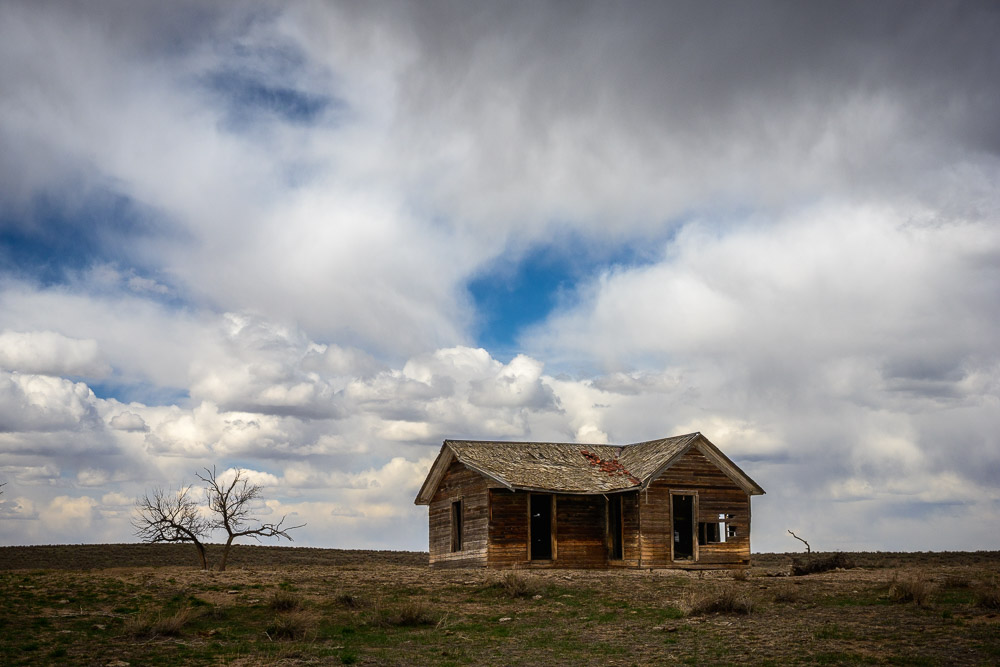
    The image above represents this tightrope. I took a brief time to get a reasonable composition, proper exposure, depth of field, balance of forms, etc. That was mostly instinctual. But mostly, I hope you get how I feel about the guy. And I hope it makes you feel something, too, and think about him. I have my story, influenced by the range of sights and emotions at the time. I’ll let you tell your own.