An artists journey

Category: Creative Ideas

Ideas about creativity and the creative process.

  • The Highway – Update

    The Highway – Update

    I’ve written before about shooting from the car. I enjoy driving and I do a fair amount of my image captures during car trips. My advice has been to avoid freeways or major highways when you do this. On a recent driving trip I decided to reevaluate this. To drive some freeways to see if they still have the same effect on me. Spoiler alert: the highway is a creativity killer.

    Please understand that my advice here is from my personal experience modified with my personality. Even more than most of my articles. Your behavior may be completely different.

    Highway anesthesia

    What I had found and observed was that driving a freeway is a mind numbing and deadening experience. The miles roll by at high speed. My attention narrows to mainly the road and cars ahead of me. The goals become to get to the destination, pass that traffic in front, and don’t get a ticket.

    I may pass by beautiful or interesting sights, but there is too much inertia to stop. He impetus to push on down the road was powerful. It would require something truly amazing to break into my coma and pull off, let all the traffic I passed get ahead of me, and look foolish with all the passing cars staring at me. So I seldom do it.

    On the freeway, I may see something potentially interesting, but I can usually talk myself out of stopping. I can convince myself it wasn’t really great. That I will find a better view down the road. Or that it is too dangerous to stop here (maybe a valid objection).

    Whatever the reason or excuse, the whine of the wheels is hard to interrupt.

    A test

    I just got back from a 2700 mile driving trip through parts of Colorado, New Mexico, Oklahoma, Texas, and Kansas. That is a lot of open miles. I decided to check to see if my anti-freeway prejudice still holds. To see if I can overcome the bias against stopping.

    I drove over 300 miles on freeways or major divided highways. Well, I did not stop for a single picture during any of those miles. I told myself I would stop when I wanted to. I thought about it. But nothing I encountered could inject enough energy to make me do it.

    In fairness, a lot of this time I was not in what would be considered pristine landscape areas. But I consider the test valid, because other times, in the same general areas, I got some interesting pictures while driving smaller roads. I believe the difference was the attitude I have when driving smaller roads.

    i examined my reactions as carefully as I can and verified that driving freeways causes a different mindset. I am reluctant to stop or to go back to shoot an image. It is hard to break the rhythm, to stop. The highway is hypnotic.

    A comparison

    Here is a comparison of a specific subject. I drove through huge areas of wind turbines. In one case, on a back road, I stopped and took some side roads and even walked in some fields and got some interesting shots including the turbines, Another time, driving a high speed highway, I drove by a perfectly composed scene, with a single stark white turbine out in a field, with a perfect clear blue sky. The turbine was parked and it was perfectly positioned with one blade pointed straight down and the other 2 lifted in a perfect, symmetrical “Y” and directly facing me. But I drove by it. I wouldn’t bother to stop. I still kick myself about that missed opportunity.

    One of the main differences was that on the back road, it was easy to interrupt the trip for promising pictures. On the freeway, even a very interesting image couldn’t convince me to stop.

    Another subjective comparison: there are people I know who would pay $1000 to avoid driving across Kansas. I can understand that. But a partial solution is to get off I-70 and take back roads. When I do this I am much happier and I usually come back with some decent pictures.

    Why?

    I wish I could give a definitive explanation of the root cause of this. If I could, I might be honored as a respected psychologist. But I’m not and I can’t.

    I have theories, though, based on my on reactions and introspection. Remember, anything I say here is unscientific and may only apply to me.

    I believe the way I travel sets a context, a framework of perception and decision making. On the freeway there is the implicit goal of making progress. Getting to the destination as soon as possible. Minimize stops or interruptions. I’m in a rhythm and I don’t want to break it.

    Driving down the freeway and seeing a picture causes a conflict. Now 2 sets of goals are in opposition: speed vs. interrupting the trip for something that actually slows things down. The conflicting goals have to be weighed and balanced. But even if I decide the scene was worth stopping for, the moment is gone. I’m a mile down the road and it would take miles of driving to backtrack to it. And it is much easier to justify that it probably wasn’t worth it and let the momentum carry me down the road.

    On a small back road, though, the pace is slower, the traffic is light, and I have put myself in a position of committing to looking for images instead of covering as many miles as possible. Traveling this way also seems to keep me more alert. I am more actively engaged with my surroundings and paying attention, not only to the road, but to everything around. There is a constant background thread of playing with compositions in my mind as I drive by them. It is very educational.

    My travel style

    My preferred travel style is to only plan on making 300-400 miles a day at most. I avoid nearly all freeways and large divided highways. I then give myself permission to stop whenever something interests me and even to turn off for side trips according to my whim. Unlike the typical male, I will even turn around and go back when a light bulb goes off and I recognize I have passed an interesting scene.

    As an extreme example on this trip, we got from Colorado to New Mexico via back roads – well hardly what you would call roads and you would be hard put to find them on a map. My Jeep was caked with mud and I left it on during the rest of the trip as kind of a badge of honor. But we saw very interesting things and I got some good images.

    My wife knows, on a driving trip, to bring lots of books and magazines to read while we are stopped. I am very fortunate to be able to create this environment for myself. It would not work for everyone. As a matter of fact, most would probably hate it.

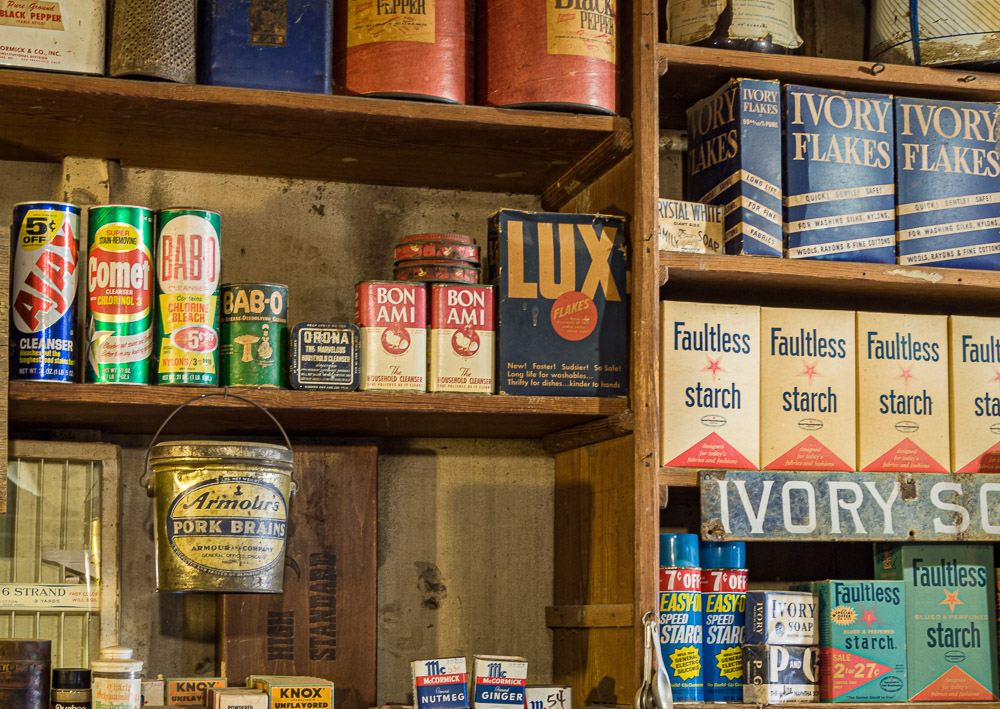
    For fun, the image with this article is from back roads in the Texas hill country. It is the old General Store in Luckenbach (yes, that one). Not my normal style, but it was fun.

    Slow down

    My recommendation is to slow down and give yourself permission to stop for anything interesting. I fully realize this will not work for everyone. But have you tried it? If you are on vacation, can you take an extra day or 2 for your art? What do you have better to do?

    I have practiced this on most driving trips for years and I can completely recommend it. Your mileage may vary. It is a very personal choice.

  • Improvement

    Improvement

    In a recent post I quoted Todd Vorenkamp saying “Search yourself for improvement, not your gear”. I believe that our improvement needs to come from within us, not from better gear. What is your plan to make yourself a better artist? Do you have one? I am an Engineer. I know that nothing gets better by accident. We all need a plan and strategies to improve ourselves. I am not saying we need a 5 year plan or a 10 step process. But we need to consciously strive for improvement.

    Study

    Whatever you believe in and value and spend your life doing, you should be a lifelong student of. We are lucky to live at a time when we have so many channels for learning available to us.

    If you were an aspiring artist in the 16th century you would have to apprentice to a master. There you would spend several years doing grunt work and menial tasks while studying the basics of drawing. Eventually you might advance to a stage where you were trusted to add some parts to a painting the master started. Someday you might be trusted to make copies of the master’s work. Now after 10-15 years you could be deemed ready to go out on your own. Of course, all you know is your master’s style. You don’t really know what you want to be yet. A pretty poor system in my opinion.

    Now, though, there are an abundance of schools and online classes. There are books and magazines. There are mentors available and unlimited examples to view online. Most of us are reasonably close to good museums where we can examine great art at will. We could spend all our time studying and never make an image if we are not disciplined.

    Online classes

    I have gotten lots of good information from classes at CreativeLive and Kelby One. B&H Explora has a great free library to view, among all the sales stuff. Anything by Julieanne Kost is extremely worthwhile. Some other great instructors are Dave Cross and Ben Willmore. I do not receive any compensation for these plugs. Many of these things require subscription. It is worth paying for good instruction. For free stuff, there is more on YouTube than you could ever watch. Be careful. Be wary in deciding who you are going to listen to, especially on YouTube. It’s the wild west.

    One reason I love Julianne Kost, besides that there may not be anyone on the planet who knows more about Photoshop, is that she said “I don’t want a recipe, I want to learn to cook.” This is wise advice. A lot of training presents recipes to do exactly what the instructor did. I don’t want that. I want to know how to fix my own dishes, to create my own recipes. She is good at presenting her training from that point of view.

    The real thing is to do it continually. Learning should be a habit we cultivate for our whole life. We never know all of everything. It might be harder to find new and deeper things to learn, but it is there. I suggest you commit to study as an ongoing process, not an event.

    Critique

    I will put this here, even though I am very bad at it. It has been a long time since I went for a formal critique of my work.

    I know it can be valuable. I remember years ago when I was in a camera club the critique was good discipline. As I matured, I also learned that you had to carefully evaluate it, because most critique was normative. It was trying to mold me to fit the biases of the group or the evaluator. Use at your own risk. Be smart about it.

    I hear there are some good critique sessions you can submit your work to for evaluation. I have not done it, but I would if I found one I trust.

    Possibly the most valuable thing about critiques is that they get you used to hearing negative comments about your work. This, in itself, is good training.

    Experiment

    There is a big difference between 20 years of experience and 1 year of experience repeated 20 times. A lot of people get trapped by their success. They become known for a style and feel they have to keep doing it for fear they may lose their audience.

    I believe an artist grows and evolves throughout their career. Your interests change, your style may change, certainly your point of view changes. How will you follow these changes unless you give yourself permission to experiment some?

    That doesn’t mean you have to suddenly make an abrupt 90 degree turn and go a completely new direction. Experiments may be personal. Most of them will fail. Some, though, will have a glimmer of a new idea, a new viewpoint. Follow up on them. Keep pushing.

    A willingness to experiment and play is healthy. It will keep us fresh and creative as an artist. Evaluate what you have learned about yourself from the experiments and decide what to keep and build on.

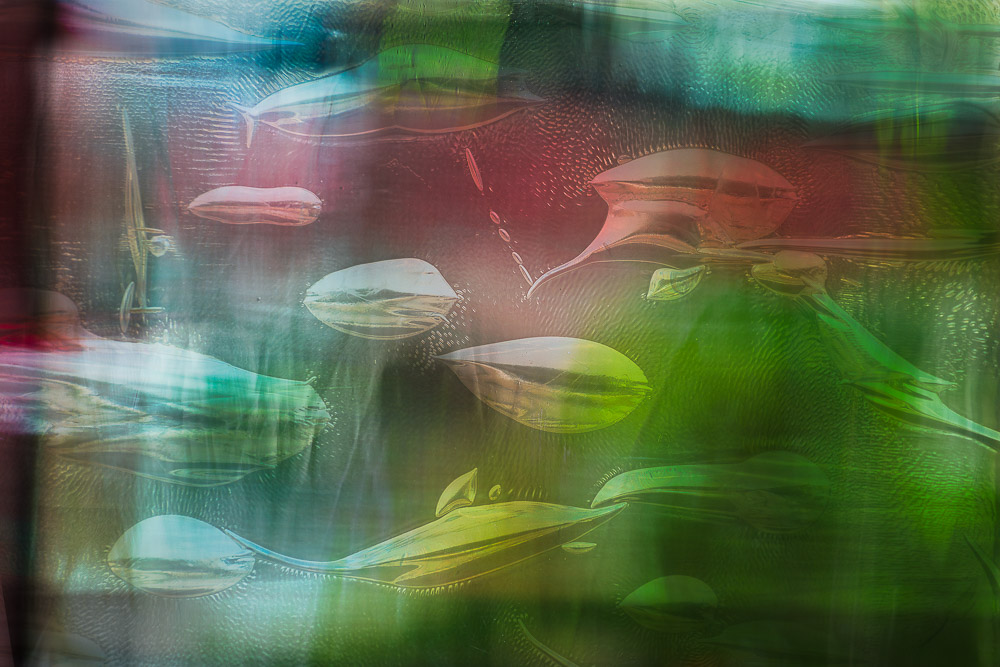
    A note about the image with this article: this was the result of an experiment. I liked it. Other people seemed to agree, since it went into a gallery and sold.

    Be open and flexible

    Are you willing to entertain new ideas? New technology and techniques? New points of view that are alien to your normal thoughts? You don’t have to buy in to them. You don’t have to adopt them.

    Stretching yourself with new ideas is kind of like yoga for the mind. You stay flexible. When a mind becomes rigid and inflexible it shuns new ideas, new thoughts. The creative place within us requires fuel, new possibilities, new ways of looking at things. Otherwise we stay in our comfortable rut.

    Creativity is like anything else with our bodies. We have to work at it to develop. If we don’t exercise we lose the ability to move and we get unhealthy. Likewise, being open to new things is an attitude, a habit. We can work to get better at it.

    Think about it

    We should be our own best critic and our own best evaluator. If you’re an artist, how can you not obsess about your art? It is a major part of your life. It should occupy a lot of your thought.

    I am an introvert and an Engineer. That gives me an ability to look at my work fairly objectively. I know that will not be the same for everyone. We are all different.

    But whatever talents we have, we need to learn to be able to evaluate our work fairly. You see what other artists do. You know your own work. What you do has to stack up against your own expectations and your evaluation. We never think we have arrived at the pinnacle. And we shouldn’t. Hopefully we will always be growing.

    Thinking about where we are and where we need to go will help us plot our course. Being realistic will help keep us from deluding our self and also keep us from beating our self up. Don’t be negative. Improvement is a lifestyle. Look for new ideas. Embrace new points of view. Experiment with things that are very different that what we normally do. Grow.

    What’s not here?

    Your equipment is probably not holding you back significantly. Learn to think. Creatively visualize new things. Try new techniques. Grow into the artist you want to be. Then you will do wonders with that expensive new camera. 🙂

  • A Sense of Wonder

    A Sense of Wonder

    Remember wonder? Most of us came with a sense of wonder. Think of a kid at Disneyworld. Or that kid with a brush or a pencil or sidewalk chalk drawing their creations. Or just playing with toys.

    Somewhere along the way this sense of wonder is squeezed out of most of us. We “grow up” and see everything coldly and analytically, or we live in fear of everything that could happen to us. Of course we have to grow up, but losing our joy and wonder of the world is a tragedy.

    My point of view here is mainly that of an artist, but the comments generally apply in a much broader scope. In a sense this article is a followup to a previous one on learning what excites us.

    Wonder drives us

    As artists (or well-balanced people) wonder is what makes us take a fresh look at everything around us. It propels us forward to discover and explore. Wonder lets us walk around the block and see something we have never noticed before that interests us or leads us to make a connection with something else.

    Wonder is the “what if?” that leads us to see new things or try new things. Without it we tend to do the same things over and over mechanically, routine. As artists we can easily get in a rut. We always produce similar work, because that is what we do. Maybe that is what we became known for.

    A rut is stagnant. It always goes the same places. We don’t grow. Eventually we get bored with what we are producing and it shows.

    Wonder feeds our curiosity

    One of the greatest benefits we have as humans is curiosity. Most of us are not grubbing around to look for our next meal or to simply survive. We want to create, to make our mark. We know there is something more than the day to day activities that occupy us. Questions intrigue us and we want answers. Or at least, we want to try to figure them out.

    I believe, and this is totally non-scientific, that wonder leads and drives our curiosity. If you don’t wonder at something why would you be curious? Wonder sparks the “how?”, “why?”, “what if?”, “could I?” side of us. It shows us there are new dimensions to explore, new sights we have not found yet.

    Being open and receptive to wonder makes us take a fresh look at the world around us.

    Permission

    Are you looking around you and really seeing things? Or are you moving through life in a fog, with your headphones on and buried in your phone?

    Not to sound judgmental, but that is what I observe of most people around me. The reality is that wonder is a still, small voice that needs quiet to be heard. It is easily drowned out by noise. The world around us inundates us with a constant stream of media designed to keep us captive and tuned in to their stream. I know from my own experiments that I have to unplug to activate my wonder and curiosity.

    Try it. Go out sometime without a camera or sketch book, just you. Leave your phone in your pocket. Put away the headphones. Just wander. It will seem very strange at first. Disconcerting. But keep at it.

    After a while I predict you will start to look around more. You will start to actually see things, maybe for the first time. Let your curiosity feed on it. What is that? Was this always here? That’s interesting, but I’ve never noticed it.

    It basically comes down to giving your self permission to slow down and explore. This is a hard step for some of us. Practice it. It is kind of like meditation. It may seem strange at first, but it gets easier and more beneficial with practice.

    And in my experience, it works the same driving in a car. That is, turn off the radio and just look around (as much as you safely can). Give your self permission to take side trips, to stop and look at anything that catches your eye. Let those cars pass you. Try it. It feeds your mind and it gets easier with practice.

    Play

    I started off talking about the natural wonder we had as children. To some extent we can recapture it. We just have to un-learn some of our adult traits. A good path is to learn to play again.

    As kids we played a lot. BTW, I hope you let your kids have lots of unstructured time for play. Not with socially relevant or educational toys, but with a box or some paper or string or … Anyway, adults can play, too. It is good for us. Very good.

    Follow your curiosity. Pursue goals that probably won’t lead to a profitable outcome, but that you are interested in. Learn something new.

    As an artist, assign yourself a strange project. One you have never done before and aren’t likely to put in your portfolio. Explore the dark recesses of your tools, like Photoshop blending modes for example. Not to create something great, but to explore and find out what might happen.

    That’s one of the things about play, it is usually unstructured and just for you. There is no intent to produce something for other people. The benefits are indirect and very personal.

    Be different

    I highly recommend you redevelop a child-like wonder for your work and the world around you. Give your self permission to be unconventional. You will start to see more. You will become more curious about things. Hopefully you will act on your curiosity. Observe, experiment, plan to throw your experiments away. The joy and learning is in the doing or the seeing.

    In my art I have followed my curiosity and am starting to see beyond the traditional limits of my media. I push past the conventional views I have long held and try to re-imagine the normal. I am doing whole new views of common everyday scenes. You may not like it. Nobody has to other than me. But it renews me. I feel like I am opening up new doors.

    Please try to renew your art and your life. It is the only life we have.

  • Projects Give Focus

    Projects Give Focus

    Sometimes when we feel burnt out or empty and aren’t finding anything exciting to shoot, setting ourselves a project to do can help to focus our creative energy and invigorate us. For some of us, the projects become the core of our work.

    Focus

    I tend to be an omnivore photographically. I look for interesting scenes, almost regardless of what the subject is. So, in other words, I shoot everything. Sometimes that leads to my attention being stretched too thin.

    Temporarily selecting a particular subject for a project focuses my attention and energy down to a narrow point. Rather than finding any interesting subject I spend some time tuned up to only a certain subject.

    I find that this period of focus can be refreshing. I would not want to permanently exclude a broader viewpoint. That would become boring and it is not my style. But doing it for a short time is a good creative exercise.

    Creative channel

    Creativity is an ephemeral thing. It seems to come and go. Once we have developed it, I don’t really believe it ever goes away, but I do see it get stronger and weaker at times. When we cannot feel the pull of our creativity, it is scary. We doubt ourselves. We fear that we are a fraud.

    At these times taking on a project can often be a great refresher for me. Picking out something that interests us and is very narrow and specific presents a new challenge. Just the slight seeming reframing from “go be creative” to “find a creative approach to this subject” creates a very different exercise.

    I’m fairly competitive and like solving problems. A project is a challenge and a problem solving opportunity.

    For a short time I get to narrow my focus down to just the project subject. It fills my thoughts. My creativity has a clear goal. It becomes a problem to solve.

    I find that good things come out of this.

    Body of work

    A lot is said about having a well curated body of work. Projects can add greatly to this. When done, the project may only be 10-20 carefully selected images. But hopefully, they have a theme, a consistent style, and they tell a story. This helps build your body of work.

    Several projects in your portfolio are like boulders in a stream. They stand out as the rest of the collection flows around them. They are solid cores that the rest build on.

    Ansel Adams famously said “Twelve significant photographs in any one year is a good crop.” I would say that, in the digital world, we shoot a lot more and probably our standards have relaxed from Ansel’s. Still, shooting projects increases our probability of good images. We have most of our creativity focused on a certain theme for a period of time. That has to help. These great images build our portfolio.

    Doing good?

    The process of selecting a project is subjective. Some people feel they can and should contribute to a cause. Whether that is wilderness preservation or global warming or human trafficking or any other large important cause, that can be great. You can feel like you are making a difference in the world. And maybe you are. I would not discourage you. Wanting to do good is a great human trait.

    But a project does not have to be grand in scale or in impact. It only has to be focused in scope and interesting to you. Remember, first, the project is for your benefit. It can be as small or large, as local or global as you want. The purpose of the projects I am talking about is to energize you. To get you through a creative slump.

    For instance, I am doing a project on speeding trains. Sounds dumb. Maybe it is. But I see something in these that inspires me to work it. I like what I am seeing so far. As a matter of fact, I dropped this blog for a few minutes to go out and capture one going by. I hope you don’t mind the interruption. 🙂

    Only projects?

    If projects are so good, why not only do that? A valid question. Some artists only do projects, like Brooke Shaden or Jennifer Thoreson. It works for them. It is aligned with their creativity and the way they see the world.

    A project-only world doesn’t work for me. As I said before, my interests are wide ranging. I like to go out empty and be inspired by what I find. That is just me. I find that contrasting this with occasional projects gives me a good balance and it keeps me sharp and energized.

    I will certainly not try to tell you you have to do it like me. Your mileage may vary.

    Remember, we are discussing art, not brick laying. Art is a purely creative process. There is no one way or objective right or wrong. If anyone tells you it has to be done a certain way, run. Fast. Don’t look back.

    Try assigning yourself projects occasionally. They do not have to be big or long or hugely involved. Pick something of interest that you would seldom work on. This gives yourself permission to spend time on it. Let your creativity focus on the project and see what you come up with. Hang your 10 best images from the project on your wall and consider them. It might become a habit.

  • To Be

    To Be

    No, I’m not addressing the existential “or not to be” question. I was triggered by reading questions from photographers about planning photo trips. There were lots of concerns about locations and what lenses to take and time of day or even time of year, but it seems to me they are missing a fundamental point. You are an artist. You are going out to be, to create, to be inspired. Collecting a stack of the same standard pictures everyone else takes is not the goal.

    Being the same

    I have written on this before. I hope you believe your task as an artist is to create new work, your own work, not imitate what has already been done. Yes, Yosemite is full of iconic locations. If I was there I’m sure I would shoot at some of them. The difference is these shots would be just for me, to remember being there. I would not be shooting for my portfolio unless I encountered exceptional and unique circumstances at one of these overshot scenes.

    I see a lot of photographers actively planning trips to these locations to intentionally try to duplicate these iconic shots. It makes no sense to me. If that is what you like, have fun. Each of us is motivated by different things. But if you were starting out as a writer would you write a knock-off of Moby Dick just so you could have a copy of it you could say you made? I hope not. Write your own book.

    Maybe you don’t really know who you are as an artist yet. I understand. I’m still trying to figure it out for myself. I decided long ago, though, that imitating other people will not help me create my own work.

    Letting go

    If you are not going to imitate other work then you are put in a potentially scary place: you have to create on your own. But what if I can’t? What if I’m not really creative? Maybe I don’t have anything to say? These are all normal and valid concerns.

    You will never know until you try. And guess what, when you try you will probably fail. How’s that for encouragement?

    I want it to be encouraging, though. When you start doing anything new you are not good at it at first until you try and fail and practice – a lot. As a matter of fact, if it is too easy you are either not challenging yourself enough or you have picked something that will not keep your interest for long. If it is too easy it becomes boring.

    Let go and start doing your own art. Follow your own vision, not someone else’s. Don’t visit all the iconic locations to recreate someone else’s art. Focus on your own ideas.

    Sometimes you will be left high and dry creatively. That’s OK and normal. Push on. Don’t fear that. Use that time to start understanding what interests you. Believe that you have a creative voice. Keep digging and you will find it.

    Put yourself in a different place

    One strategy I like to use is to intentionally ignore the popular, iconic locations. I like to seek out little known things that most people have never seen. I love the challenge of finding something in nothing.

    I’m lucky in that from my house I can be in the Colorado mountains in 30 minutes or far out on the eastern plains in less than an hour. I go to these places a lot and enjoy them immensely.

    But I also wrote recently about driving through the heartland and finding interesting things to photograph. That takes a special discipline and mindset. It is fun for me after long practice. I have come to firmly believe there are interesting scenes almost anywhere.

    This brings up a special point. There are interesting scenes all around. You don’t have to go to mountains or national parks or famous locations to do your art. You don’t have to take off for 2 weeks to travel to exotic locations. Beauty and interest is everywhere. Most of it is ignored by everyone around you. Learning to see what is there is a skill that can be learned.

    React, create

    Learn to be open to what is there around you. Accept it and embrace it as creative possibility. What can you do with it? Just “be”.

    You have seen people who thinks selfies or family shots mean lining everyone up in front of a location and giving big fake smiles for the camera. I’m not criticizing them because that makes them happy. I want to encourage you not to try to manage your shots like that. Accept what is there and work with it. Use your creativity to isolate it, to make it interesting for other people, to point out this interesting thing they probably didn’t see.

    A photographer friend wrote this in a private newsletter:

    “To just be. That is what it is all about. When I find a high place with views all around, every sense just soaks it up into my pores. It is subtle; the opposite of the raucous and titillating world in which we normally live. … These sounds mean vast open spaces and pure freedom. I can peer into this space, keeping my gaze wide. At first I see the far-off trees and rocks and snowfields. Each thing has meaning. …

    But after a while my gaze becomes soft, and I focus on the air between myself and the distant ridges. Everything becomes a soft palette of shape and color, devoid of meaning or expectation. The world just is. My experience of sound, sight, and senses just are. If I look for myself I fail. I literally can’t see “me” without a mirror – not my face or head, the features we most often associate with identity. It’s times like these that I can look for myself and just see the beautiful world. It is in this place where I can be exactly what I was designed to be. Just me. And for a brief moment, I am a bird sweeping into the storm.”

    When we can learn to experience places or events in this manner we can just be and flow with them and into them. Even if it happened on a walk in our neighborhood. The experience becomes part of us and we reflect it back out in our work. What we produce is something from deep within. It is honest. It may even surprise us.