An artists journey

Category: Creative Ideas

Ideas about creativity and the creative process.

  • It’s Messy

    It’s Messy

    Despite the image some artists try to present, the artistic process is messy. At least, for me. It is not a clear, linear path from inspiration to end result. Sometimes things don’t work. We hit dead ends. We change our minds. Even after arriving at what I thought was the end product, I may decide I don’t like it. When people look at the result, they cannot see the messy way we got there.

    Vague goals

    I can’t speak for other artists, only myself. Most of the time I only have a vague notion of what I intend to achieve when I start an image. Sure, I may have a general idea, or a theme, or I may be thinking of a project I am working on. But that is a kind of an idea, not a plan. It is definitely not precise.

    I hear artists describe having a definite plan from the beginning, with everything sketched out in detail. I sometimes envy them. But most of the time I think that sounds like a boring process. There is no room for inspiration on the spot. When I start pulling a final image together I often let what I see on the screen guide and inspire me to the end. I am glad I work in a medium that is very malleable.

    So I guess I’m a bad artist because I don’t know for sure where I am going when I start a work. Or maybe this is the process that works for me. I like to be flexible and adaptive.

    Evolving ideas

    Another side of my adaptive process is that I am open to exploring new ideas as I go. Ideas tend to build on each other, spawning new ones or modifying what I was thinking. I often end up seeing an image in a completely different way from where I started.

    For this to happen, I have to be open and receptive. Being locked into a rigid plan blocks this exploration and learning. I seldom hesitate to change my vision part way through the process. Even to discard an image because it no longer is shaping up the way I now see it.

    You could argue that I would be more efficient to do my experimenting and work out my vision before starting to refine an image. Perhaps you are right, but that is what I had to do when I was designing major software projects as an Engineer. The reality is that I am too visual to do that now as an artist. I have to see it, then make modifications.

    Mistakes

    I freely admit I make mistakes. I don’t plan them, but I don’t necessarily see them as failures.

    An “oops” is often followed by a “huh, that’s interesting; I wonder if I could use that?” Sometimes a mistake will open up a new view or thought process. It can make me see new possibilities.

    These are often happy accidents. They can lead to a creative new end and maybe even a modification of my “style”. The result of a mistake is often a realization of something I could do but I’ve never thought of it before. It is unlikely the mistake creates a finished work that I love, but it informs a new direction I could explore. It is a growth opportunity.

    Seeing new opportunities

    Opportunity is a key word in this process. My background is a long history of realism. So it can be hard for me to “loosen up” and take an image in an unexpected direction.

    To counter that, I often force myself to spend some time considering unusual processing or unlikely seeming combinations of images. Most of these experiments are failures, in the sense that they seldom make it to the final image. However, they can inform my vision. There may be some aspect of the processing that I like and work in to future images. Or it may encourage me to try something else along the same line that I do end up liking.

    We live in great times for exploration. Our image processing tools are the best anyone has ever had. Our high quality digital images have the most detail and potential for post processing that has ever existed. The barriers to our vision are mostly internal. We just can’t see it or give our self permission to go there.

    Failure to recognize

    Have you ever viewed an image in your editing software and been really undecided about it? It is not what you wanted. Your instinct is to delete it. But something way in the back of your mind says to keep it for a while.

    That happens to me. I have said before there is something cathartic about deleting images I don’t want to have around. But sometimes I need to keep them. To let them age a while. Or maybe to let my subconscious work on them a while.

    Now realistically, most of the time, when I look at them later, I know there wasn’t really anything of interest there. But sometimes… That is the joy of this. Sometimes there is an undiscovered gem. Very rarely I look at one of these saved images and realize my subconscious was trying to show me something I did not perceive at the time. This particular image may not be great, but there is a realization there that can inform my work going forward.

    That is an a-ha moment. A growth opportunity. After I get over beating myself up for not realizing the potential at the time I can add it to my repertoire of situations and patterns to look for. I have grown as an artist. Maybe it can even help me be more receptive while I am shooting.

    The image with this article is one of those slow to recognize ones. Look it over and see how many pairs of things you can find. It amazes me. I did not consciously recognize that when I shot it, but I think that is what was drawing me to it.
  • Finding Inspiration

    Finding Inspiration

    Are you empty sometimes? Are there times when you don’t have any ideas or new projects? We tend to desperately put pressure on ourselves to find something creative and new, but this is often counter-productive. So how do we go about finding inspiration?

    Relax

    Ouch. This can be hard. Our art is important to us. We need to be proactive and driven to produce. But first. relax.

    If you are in a slump creatively, just go with it. You will come out of it. But the more pressure you put yourself under the harder it sometimes is. It is very hard to force ourselves out of a slump. Our subconscious will eventually get re-engaged and start pumping out the great ideas. Give it time to rest and rejuvenate.,

    Take a walk

    Really. “Waste” the time. Carry your camera or not, it’s up to you, but don’t require yourself to take any pictures.

    When you walk, go slow. This is not mainly for the exercise. It is for your head. Look around. Look at everything. See things as it for the first time. Play the game that you just teleported to [your favorite exotic destination] and you are looking around in wonder at everything. Try to see how many things around your neighborhood you never really “saw” before.

    None of these may be in your “style” or preferred subjects, but learning to see new things is good.

    Read a book

    I have heard it said that most adults never read another book after they graduate from school. Maybe that is just males. 🙂 Even so, I hope that is a false statement. Books are one of the most important inventions in history.

    Reading something new will expand your thinking. Studying something related to your art will give you a new appreciation of different styles and ideas. It may teach you something you can apply to improve your images and refresh your creativity.

    Even if not, you will still be better off mentally for exercising your brain. Books are a major repository of the collected wisdom of centuries.

    Watch an educational video

    I can say to watch videos because I do not produce any videos. I’m not selling anything.

    The good thing about the internet is that there is a wealth of information there, free or for relatively low cost. There is probably no aspect of our art that someone doesn’t have a video about.

    That being said, the “signal to noise ratio” (the percentage of useful information) is fairly low. Be careful of who and what you take in. Even so, it is not too hard to find good stuff.

    If you are up to it, it can even be healthy to watch bad videos. That sounds weird, but do you find, as you get more mature and confident in your craft that you can sift the good from the bad? If you watch a bad video, or one you disagree with, it can be empowering to be able to refute the presenter and know why you believe they are wrong, at least for you. It can help bolster your confidence.

    Read other artist’s blogs

    You are reading mine. Thank you! I would love to hear your thoughts.

    Probably thousands of blogs are written every week. Pick a few new ones to add to your list. They do not have to be leaders in your field. Look around and find artists in other fields whose work you admire, who influence you, whose style you admire. Follow them. This is another great source of wisdom and inspiration.

    I follow a few people. Not many. But I am constantly amazed at the wisdom they give away.

    Be open

    None of these suggestions will do much good unless you open yourself to receiving what they might give. Openness is an attitude. Our attitudes are under our control.

    Are you totally focused on one subject? Why? Widen your view. Have you become cynical? As you learn to look around more, re-awaken your wonder and joy. Find new things that excite you. Cast a wider net. Get enthused about something. Give yourself permission to try new things.

    Inspiration sneaks up on us when we aren’t expecting it. The more we can be open and receptive, the more often we will find it. I find that stimulating my mind with new thoughts and learning new things helps keep me open to inspiration. Try it!

    About the image here

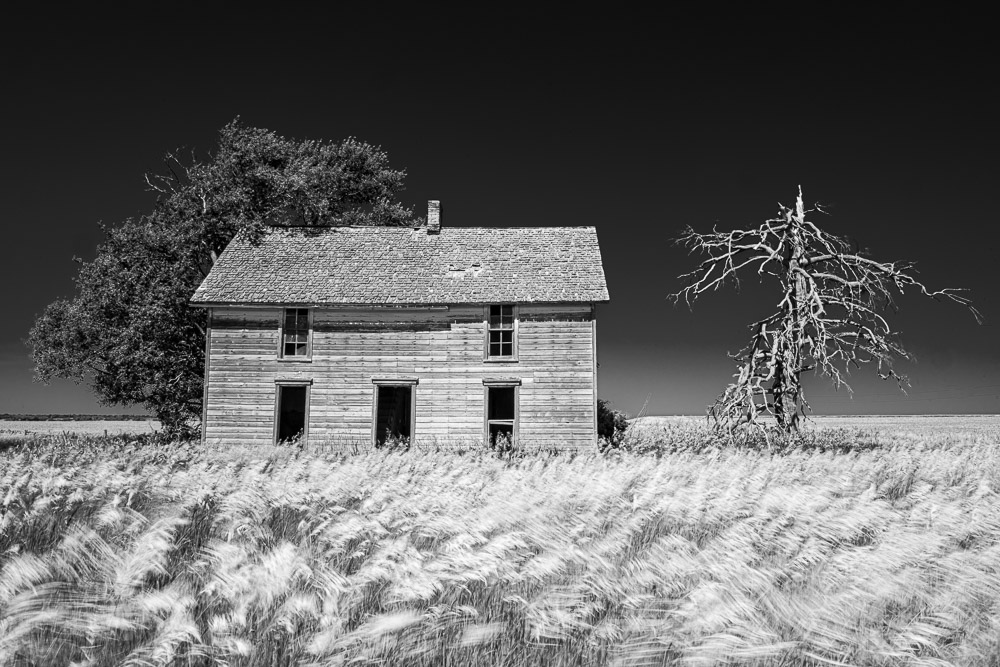
    I can’t claim this is super creative as such, but I am very happy I made this image. This is the epitome of depressing conditions: way out in the midwest, nothing around anywhere, temperature was 108F, winds blowing so hard I had to hold the tripod, totally clear blue sky – what to shoot? I decided the interest was the wind. How to capture the effect of it? I think, by being open to exploring new ideas, I made something good out of it. At least, I’m happy with it.

    This image is part of a series I am working on, tentatively called “Maria”. It is not published yet.

  • Wonderment

    Wonderment

    Do you still have a sense of wonder? Can you get excited by simple, ordinary things around you? If yours has faded I hope I can refresh your excitement and help you redevelop wonderment.

    It came built in

    When we were small, most of us had this wonderment. Everything was new and fresh and exciting. An ice cream cone, a kitten, a flower, a ball, a bicycle – they all captivated us. We could go out and play all day with a cardboard box.

    But then somewhere along the line, we “grew up”. It is what we were supposed to do. At least, that’s what they said. We became too “mature” for that child-like wonder. Cynicism replaced wonder. Boredom chokes out the joy we had.

    Are our lives better off based on cynicism? Perhaps we should try to recapture some of what we had. I believe we can relearn some of this joy and wonder if we work at it.

    Change the context

    Most of us lead pretty routine, repeatable lives. Making a change to the routine can wake up new ways to see things. Go out for walk. Get up earlier. Sleep in later. Instead of going to one of your normal restaurants fix a picnic and go to a park. Stop and look at a sunset. Really look.

    See a road you haven’t been down? Take it. See what’s there. It will probably only take a few minutes, but you expand your viewpoint and feed your curiosity. It’s worth it to me. Even is it is ugly and awful and seems to be a waste, I believe you are better off for breaking the routine and trying it.

    Feed your curiosity

    Are you still curious? I ask seriously. Many people don’t seem to be curious about the world around them. I think that is part of the cynicism that shuts down the desire to know more. For some it is enough to try to decide what’s for dinner and which TV show to watch.

    If you are reading this blog I hope that is not you. I hope you burn with curiosity about a variety of subjects. Let that drive you to do something. Look it up. Build something. Try something new. Read a biography of someone you admire.

    Let me give a small example that is completely off topic from art, but relevant to the idea of curiosity. My city is installing fiber to the house broadband throughout the town. So for months there has been strange equipment around putting the conduits underground. I was curious about how that worked so I looked up some articles on horizontal boring. It is pretty fascinating. It is a much better way of installing pipes in areas where there is already a lot of utilities in the way. Now when I see this equipment I have a better idea of how it works and I feel better for taking the time to satisfy my curiosity.

    I believe curiosity goes hand in hand with our sense of wonder. They each support the other. As you let your curiosity grow and feel its way in different directions your wonder will grow at what you are discovering. And your wonder encourages you to be more curious.

    Slow down

    Slowing down can be hard for us. The world pushes us forward at breakneck speed. Faster, be more productive, multi-task, don’t slack off.

    But slowing down sometimes (and unplugging from media and social networks) can be very good for us. When we take it slow for a change we see new things. We see things in new ways. Let your mind rest and catch up. Give it some time to relax and think.

    And like changing the context, slowing down allows us to see things different. Instead of flashing by with little thought we can take a new look at things around us. Start to really see. Seeing leads to wonder.

    One of the things I love to do is show someone a picture and have them say “that’s pretty neat, I’ve never seen that before.” And I point out to them that it is a block from where they are and they’ve passed it 100 times without seeing it. Some people are insulted. But some learn from that that there are interesting things to see all around ir you are receptive.

    Travel

    This is an easy one. Travel takes us to new locations, out of the norm, maybe out of our comfort zone. This is good. Things seem new and different, and for a while we tend to look around more.

    It has always been said that travel is broadening. I agree. The change in perspective and environment and getting out of the usual can be very good for us. One of the hard things is to bring this awakened viewpoint back home. We so quickly fall back into our ruts.

    You have control of your attitude. Come back from the trip with a commitment to see your local area as if it was an exotic destination. Sounds silly, but try it.

    it’s an attitude

    You control your ability to find wonder around you. It is an attitude and something you can practice to improve. Like learning any new habit, it takes time and hard work.

    First, you have to decide that a new sense of wonder is worth it. It might take a while to rediscover that spark and recognize it. Then you have to practice finding it. Then you have to keep on pushing yourself to keep looking with fresh eyes, even when everything seem so boring.

    Be open to it

    Wonderment is really something we find within ourselves. We have to look inside and discover that we are curious and new things we see and find can be exciting and worthwhile.

    Climb out of your rut. Take a fresh look around. See with new eyes and a new attitude. Practice, practice, practice.

    Somewhere inside is still some of that child-like wonder we used to have. When we bring it out again we have a fresh and exciting life. Be amazed.

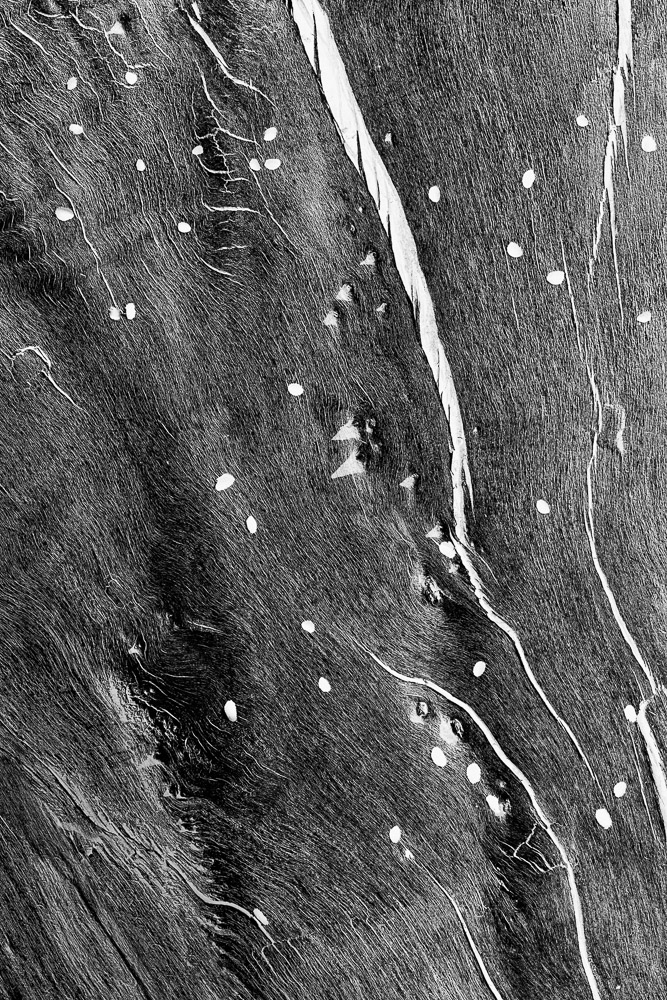
    Note on the photo: This is a perfectly common and ordinary scene where I live. You would probably walk by it with barely a glance. I have changed it in ways that makes it abstract and difficult to recognize, and to me, it exudes wonder.

  • Craft Completes Magic

    Craft Completes Magic

    Craft completes magic. I read this in a book on writing poetry by Robert Wallace. This was a new thought to me. It is unusual in my world for a random phrase to seem to crystalize immediately as truth. This did. I have often written about the 2 sides of art as being the creative, the magic, and the technical, the craft. I love the way this brings them together and completes the whole.

    The magic

    Oftentimes we artists focus almost exclusively on the creative aspects of what we do. After all, we think this is what separated us from other artists. And to a large degree, it is true.

    So we look at the work of others we admire. We plan or write or set projects to focus our thoughts. We look for the new and different. The driving challenge is how can we bring a unique perspective to the things we see in the world.

    Sometimes the muse visits us and we feel we have truly made magic. It is a great feeling. Creativity breeds creativity. We try to go on to leverage this new stage into even more.

    But, have you ever had a guilty feeling, looking at your new creative work, that it could have been executed better? Not necessarily more creatively, but with better craftsmanship? Sometimes we don’t know how to make our great idea into a finished work of art. Concentrating too much on just one aspect can throw us off balance.

    The craft

    I believe our craftsmanship is as important as our creativity. Not a replacement, but to balance and complete our work. It’s this completion I want to emphasize.

    There are 2 tendencies I see in a lot of photographers that disturb me. Some seem to feel that a technically perfect image is a good image. Some others take the attitude that “I’m a creative, I don’t know the ‘techie’ stuff”. I believe that either of these, if they drive your behavior too much, lead to bad ends.

    Ansel Adams famously said “There’s nothing worse than a sharp image of a fuzzy concept.” This, to me, is the danger of overemphasizing technical perfection. I see this a lot in online critiques where the objections are things like not enough depth of field or that the color correction may not be completely true to the original scene. The reality in many cases is that no amount of technical improvement is going to give this image life.

    If you don’t have an emotional connection with the scene and a definite point of view to share, then it isn’t going to get great by technical skill.

    On the other hand, it frustrates me to hear even professional photographers dismissively say they don’t do “tech”. Sorry, but photography is a uniquely technical art form. If you don’t understand and appreciate and know how to control the technical aspects you are at a severe disadvantage. You can end up with images that show a great idea but you were unable to produce a gallery-worthy image.

    The whole

    There is a symbiotic relationship between the creative and the craft. Mr. Wallace, who I quoted at the start, related it to the two legs of a runner. The creative leg propels you forward. Then the craft leg helps you bring it into being, which also thrusts you forward to another level. These work together, alternating, each with strengths to add. Neither is complete without the other.

    A comedian doesn’t just walk out on stage and think up funny things. He spends many hours on each skit, refining and rehearsing and tuning it before you ever hear it. Likewise, a magician spends countless hours working on an illusion to make it smooth and believable, to make the magic happen. A musician practices day in and day out for years to get and stay good. Yes, famous musicians still practice scales. It trains their technique.

    Art is hard work. It is hard to do creative things and it requires great skill to make it real. No one can tell you what you can or can’t do, or how you should do your art. But I believe that if we don’t put in as much work on the craft side of our art as on the creative we will never achieve what we could.

    A boring image will never be great because it was technically perfect. On the other hand, you don’t get a free pass to ignore the craft because you are a “creative”. As the initial quote says, craft completes the magic.

  • Cooking

    Cooking

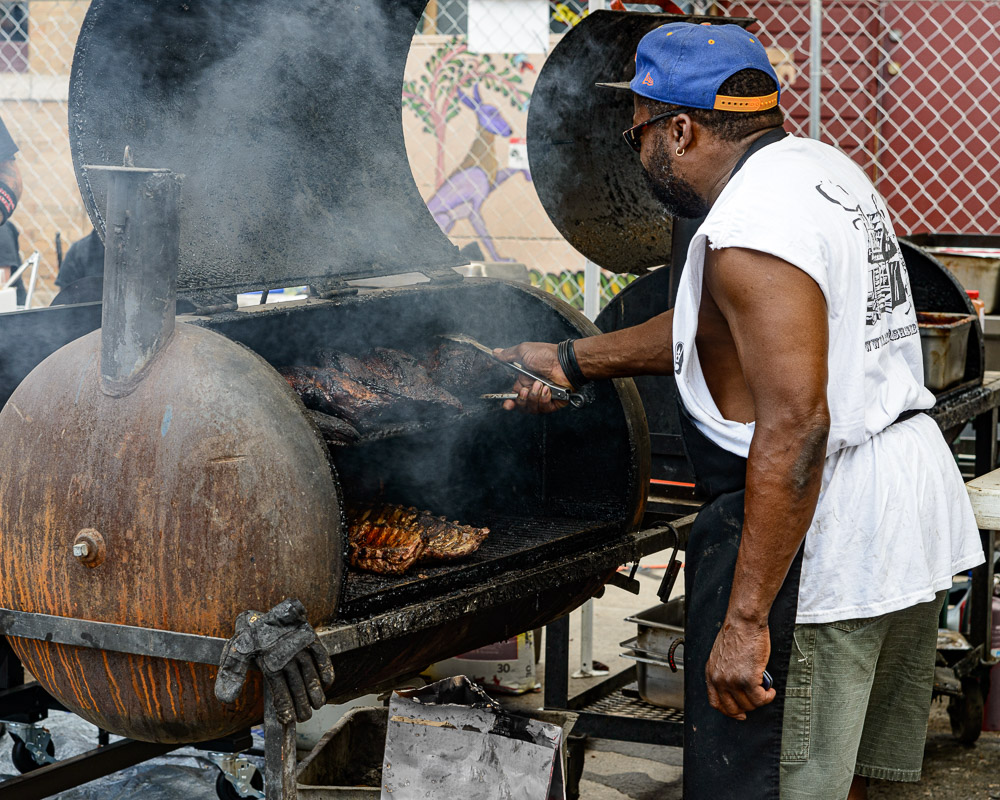
    No, you’re not in the wrong place. I have not suddenly changed from writing about art and photography to giving cooking lessons. I am exploring an idea that occurred to me recently. I think our cooking style reflects our photographic style, and maybe vise versa.

    Weird, but stay with me for a minute.

    Cooking styles

    Do you cook? I hope so. It is rewarding and satisfying. A kind of art in itself.

    What kind of cook are you? Do you follow the “rules” (e.g. follow the recipes) or do you “wing it”? Is your pantry and refrigerator well stocked so you can always come up with something? Or do you take your recipe to the store and buy what you need for it? Is your goal to exactly recreate the dish as specified in the recipe or do you apply creative license? Do you plan our the week or months meal list ahead of time or do you come home and try to decide what is for dinner that night?

    We are all in different situations and make different tradeoffs. For instance, if you are cooking for a large family you tend to do things different than if you are cooking for one or two. If you are cooking for someone with food restrictions you may have to plan more carefully.

    I’m intrigued by the idea that how we cook gives some insight on us as an artist. I think you will see where I lean in my thinking.

    Recipe follower

    Some people follow recipes exactly. They will not even try it unless they have all the ingredients and equipment necessary before starting.

    If you exactly follow the recipe I think that says something about your style. Could it mean you are likely to follow influential artists and try to create in their style? Do you enjoy going to workshops where a leader will guide you to locations and help you compose shots to get similar results as theirs?

    Maybe this means you also browse social media and photo sites looking for images you like to give yourself ideas for your work. Is your reaction “I wish I had shot that; I’ll try to do it”? Then research the location so you can plan to go there and capture something similar.

    Recipe is a suggestion

    Another approach I observe is the cook who looks at recipes, but mostly for motivation and ideas. They will freely substitute ingredients and end up with something substantially different from the recipe. Good, but not the same.

    This cook, I believe, has greater confidence and experience. They know they can cook. That is not the issue. What I want to make tonight and how do I like it seems to be the basis of their decisions. A recipe, to them, is a kind of general guide. Descriptive, not prescriptive, to get sociological.

    The recipe calls for an ingredient they don’t care for, so they substitute something else. It calls for something they don’t have, so they use something they have on hand. Not random substitutions, but based on knowledge of the ingredients and their effect on the dish. All the while, they know they will create something good, regardless of how close to the recipe it is.

    Artistically, it seems this person is more likely to say yes, thanks, but I see it a little different. I’m going to shoot this other view. They have the confidence to follow their own vision, even if an instructor is trying to lead them in a different way.

    What recipe?

    Another cooking style I see is someone who seldom if ever consults a recipe. After all, most cuisine styles are fairly simple. There are general principle about how to combine things and what things go together to create certain flavors. Italian food has certain patterns based on certain ingredients, as does Mexican or Chinese or most any other recognizable type. When you learn the patterns almost any dish can be created. Most dishes are variations on the pattern. No recipe needed.

    This person is experienced and confident. They can go into their pantry and quickly envision a dish based on what is there. If they served it to you, you would probably say “that is very good. What is it?”. And they would just say it is an Italian inspired dish they made up.

    As an artist, they probably would not be in the instructor led workshop. They would just be out on their own, following their own muse, confident in their own decisions and style. Their attitude would be that they may not be as good as that instructor, but they would rather make their own decisions and go their own way.

    The best style

    Which of these styles is best? I think it is impossible to say. What you are is what is best for you.

    But I wonder if there is a progression? When we start don’t we strictly follow recipes? As we get more confidence and experience perhaps we learn to be more free with the recipe. Eventually we learn the principles well enough that we give ourselves wide latitude in creating according to our own tastes.

    I will admit that, in cooking, I am somewhere between the “recipe is a suggestion” and “what recipe?”. I have extensive files of recipes and cook books that I used to follow. If I have something in mind to fix I may still consult a recipe, but more for inspiration and to get an idea of what ingredients the recipe designer used. When the cooking starts I am likely to set the recipe aside and “wing it”. What I serve may only slightly resemble the original, but it will be good. 🙂

    No one told me how

    This comes around to a fundamental truth of being an artist: you are on your own. You are solely responsible for your art. No one can make the artistic decisions for you. It is a lonely but empowering place.

    You can either spend your time copying your favorite teacher or develop the skill and confidence to go your own way. Until you find your own way it is not really your art yet.

    Even when you are determined to be your own person, it doesn’t come with instructions. It can be very difficult and unsettling: this or that subject, what treatment or color palette, reject what I used to do and go a different direction? No one is there to guide you. It really is a “the buck stops here” situation.

    Hence, the idea that the person who can endure, even thrive, in this situation probably also expresses himself in his cooking. I believe the artist is often comfortable also making creative decisions in the kitchen. Recipes become unnecessarily restrictive – just another set of rules.

    Unscientific

    If you haven’t thought it already, let me be the first to say this is totally unscientific. It is my hypothesis. My own idea. I do not intend to do a scientific study to prove or disprove it. I just put this out here to help us understand ourselves better as artists. Let’s just think about it and kick it around.

    I don’t want you to perceive this as a black & white, all or nothing proposition. It is more a metaphor of art. For instance, if I am trying a new recipe for a dish I am unfamiliar with, I usually follow a recipe. Once. 🙂

    What do you think? Is there any correlation between artists and their cooking style? Let’s discuss it! I want to hear from you!

    Excuse me for now, though. I have to go home and figure out what is for dinner.