An artists journey

Category: Creative Ideas

Ideas about creativity and the creative process.

  • Go To A Forest

    Go To A Forest

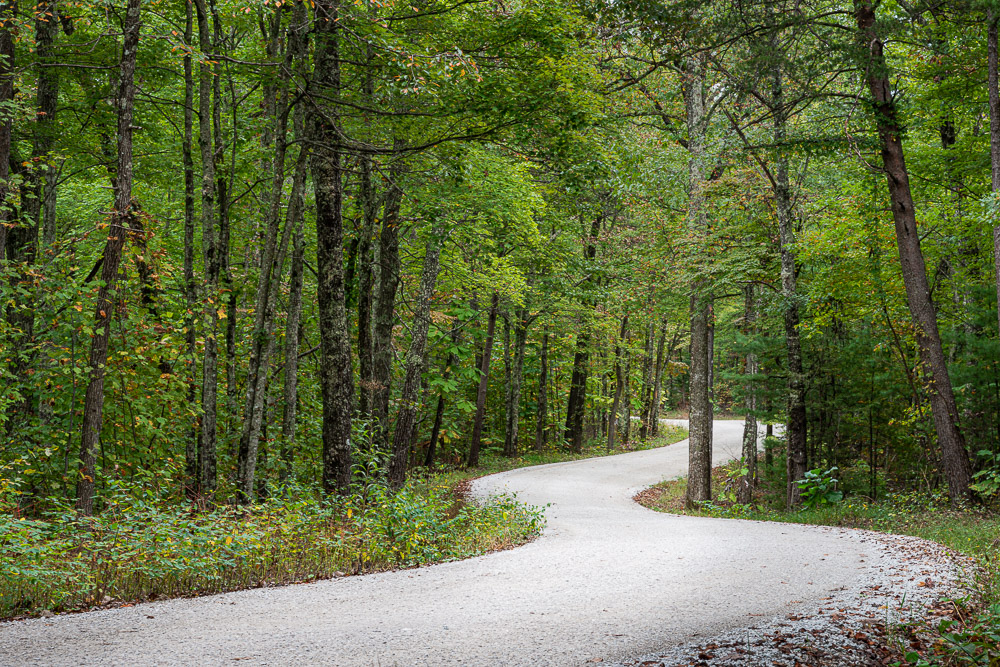
    I realized recently that, by intuition, I have long practiced what is now called “forest bathing”. I hate the name but I believe strongly in the benefits. Go to a forest frequently. It is one of the best places I know to hangout. Decades of research has shown this practice to have significant benefits of health and well being.

    Shinrin-yoku

    In Japan it is called “shinrin-yoku”. “Shinrin” means forest and “yoku” means bathing. It is defined as a short, leisurely visit to a forest. Researchers say it is a type of natural aroma therapy. The idea developed in Japan and has been practiced there since the 1980’s, Perhaps it is a little easier and more accessible there since forests occupy 67% of the country. But the benefits seem to transfer anywhere.

    Somewhat more descriptively shinrin-yoku means bathing in the forest atmosphere, or taking in the forest through our senses. I like this better. Maybe I’m too literal, but “bathing” is really only used in a metaphorical sense. I relate better to the idea of taking in the forest through our senses.

    One of the main researchers in Japan, Dr. Qing Li, says “This is not exercise, or hiking, or jogging. It is simply being in nature, connecting with it through our senses of sight, hearing, taste, smell and touch.”

    Health benefits

    According to the Wall Street Journal the US Environmental Protection Agency reports that the average American spends 93% of his time indoors. Nielsen Research says that in 2019 the average adult spent 11 1/2 hours a day consuming media. And half of 18- to 29-year-olds surveyed by the Pew Research Center said they were online “almost constantly”.

    This unbalanced lifestyle can lead to serious consequences, from overweight and poor posture to depression and anxiety. During the Covid lock downs it has probably gotten even more extreme.

    The good news is that 2 hours or less of wandering is a forest a couple of times a week is shown to increase the number of “natural killer” cells in a person. These are a powerful defense against cancer and other toxins. It is thought that the natural oils released by the trees creates a natural aromatherapy that triggers this.

    Emotional benefits

    There are some very positive physical reactions to being in the forest, but there are also many important emotional and psychological benefits. One scientific study reported “The forest bathing significantly increased the score for vigor and decreased the scores for depression, anxiety, fatigue, and confusion.”

    I am not trying to present scientific research here. Go investigate that yourself. I just want to encourage you to give it a try and see if there is benefit to you. It is to me.

    I will quote Dr. Qing Li again, because I would not state it like this: “The key to unlocking the power of the forest is in the five senses. Let nature enter through your ears, eyes, nose, mouth, hands and feet. Listen to the birds singing and the breeze rustling in the leaves of the trees. Look at the different greens of the trees and the sunlight filtering through the branches. Smell the fragrance of the forest and breathe in the natural aromatherapy of phytoncides. Taste the freshness of the air as you take deep breaths. Place your hands on the trunk of a tree. Dip your fingers or toes in a stream. Lie on the ground. Drink in the flavor of the forest and release your sense of joy and calm. This is your sixth sense, a state of mind. Now you have connected with nature. You have crossed the bridge to happiness.”

    That’s kind of over-the-top new age for me, but it is proven by decades of research and practice and by my own independent experience. This has been my practice for a long time and I always look forward to it and get benefit from it.

    No running

    Do you have to do anything special? Not really. As a matter of fact less is better. The purpose is not exercise. No running, that increases stress instead of reducing it. A leisurely stroll will do. No goals or plans are required. Just being out in nature does it. Let your body tell you. Follow your nose. One very important requirement, though – UNPLUG. No phones, no music, no email, no interruptions.

    This will be hard for you Type A’s. It’s not a competition. Don’t chart your progress or try to better your performance each time. No destination is required. Just wander and enjoy nature. You don’t even have to be fit.

    About 2 hours of forest wandering will give you time to unwind, relax, de-stress.

    City bathing

    I coined that term as far as I know. I mention this because the research shows that being in a forest (the denser the better) and on natural surfaces has by far the most benefit.

    But over 60% of us live in cities. There are no forests close by, only the occasional park. Is this the same? No. Being out in real nature is best and gives the best and fastest results.

    So should you not go out wandering until you get a chance to journey to the forest? I say no. go out anyway. Don’t give up good just because you can’t have best.

    My own anecdotal results are that there are benefits to wandering in a city if you do it right. Again, your mindset makes much of the difference. Unplug. Go out looking around, seeing everything in a new light, like for the first time. Make it a time for refreshing, not just exercise. Destination is not important. What you see is not important as long as you let yourself really look around and see. Be delighted by little discoveries.

    Even in the city it is possible to go out wandering and come back more refreshed and de-stressed.

    Let yourself go

    Try to get to a forest regularly. That’s the best. When you can’t, wander urban “forests”. Let all your senses come into play. Explore. Take a break from your electronic masters.

    And even when you’re not out wandering, turn off the TV, unplug from media. Start to use your mind on your own. Read. Practice music or art. Learn something new. Talk to family and friends. Move your body.

    I believe there are excellent health benefits from forest bathing. I highly encourage you to research it and give it a try. Or several tries. But many of us could improve our lives just by cutting down on media consumption, using our bodies and senses more, and becoming more independent and self-directed.

    This is highly unusual in this blog series. Up to now I have not used the words “photography” or “camera” or “art” (well once) in this article. Art is about much more than technique or media. Our mental and physical well-being determines a lot of what we accomplish. We live in an unhealthy world. Please take care of yourself. Forest bathing is one good way to start.

    Post Script

    As I write this it’s a beautiful day in Colorado. We had about 5 inches of fluffy last night. It’s lovely – much better than driving in it late last night. The temperature is a balmy 25 F, which sure beats the sub zero spell of a few days ago.

    I just got back from a walk in a local natural area near my studio. Not what the forest bathers would like since it is only sparse trees here, mostly deciduous. But at least I have lakes and a river. It was great to be out in it. One point where I depart from the forest bathers is that I always bring my camera. Not to make it a serious photo outing, but I believe it encourages me to look closer and see more.

    My point is, just do it. I try to nearly every day. Yes, I was out walking when it was -10 F. I don’t necessarily recommend that, but if you dress properly it’s not bad. For me, the benefits are great. Even if you are stuck in a city most of the time do something. Go find a tree and introduce yourself to it. Thank it. But unplug and get out.
  • Being Timid

    Being Timid

    Aren’t most of us pretty timid with our art? We are intimidated to stray outside the safe boundaries of convention. We follow the trends or a favorite artist. At the root of it, we are too timid to be ourselves or go as far as our vision wants to take us.

    I hope this does not apply to you. It would be great if I am just preaching to myself. Probably not, though.

    Playing it safe

    Safe doesn’t get us in trouble. Safe doesn’t get us criticized for being weird or different. If our art is safe we will get nice comments on social media.

    At some point in our lives we will confront a dilemma, though. If our vision takes us in a direction that is no longer “conventional” we have to decide which path to follow. Do we play it safe and stick to what everybody likes or do we go where our vision is taking us?

    Going our own way is not safe. Just like starting a business is not safe. Or making investments is not safe. But if done well, these things usually lead to greater freedom and satisfaction than remaining in our safe boxes.

    If you keep denying your artistic values you will eventually either give up your art or lose your creativity. That seems a very high price to pay for safety.

    Who are you trying to please?

    Maybe I talk about this too much, but I keep making the point that the main audience I need to be concerned about is me. I would love for people to like my work and give me praise and buy my prints for their walls. But if they don’t and I still like my work, I’m successful. It is hard to remember sometimes, but I know it is true.

    Let me remind you that I am talking about what we call “fine art”. If you are a portrait or wedding or commercial photographer you do the work your clients want. They hired you to do that for them. You try to put your own creative spin on it, but when it comes down to it, the client calls the shots.

    In this fine art world I, as the artist, am called on to be creative, to boldly give my own interpretation. To make it my vision. If I am holding back because I’m timid then I am probably not pleasing myself or my clients.

    Don’t worry about making other people happy. If you intend to photograph as truthfully as you can, your days as a member of polite society are numbered, anyway. (Paraphrased from Stephen King)

    Are you willing to be an outcast if necessary to be pleased with your art?

    Be bold

    Timid is safe. Timid doesn’t discover new, creative things. We should, instead, take chances. Be bold. Go for it.

    I give you this advice, but I have recently discovered that I am still too timid. The epiphany startled me when I realized I am not fully following my vision where it wants to lead me. After giving the advice, I found out I was still timid. I apologize.

    I won’t go into detail, because my vision is mine and wouldn’t do you much good, but I realized I am still too conventional in my subject choices and post processing. I don’t make New Year’s Resolutions, but I have resolved to loosen up and take more risks.

    The realization that I have been stopping short of where I want to take my images was a blow to me, because I thought I was being pretty bold. It was a wake up call, but it had the feel of a discovery that was true and freeing. Long years of studying conventions of composition and post processing were deeply ingrained. I have to break through and let my imagination take me to new heights.

    How will I know if I have gone too far? It will be when I decide it’s too far. Then I may back off some.

    Only those who will risk going too far can possibly find out how far one can go.TS Elliott

    You don’t know you’ve gone far enough until you’ve gone too far. – John Paul Caponigro

    No fear

    I will try to keep this in mind as I start to experiment more. I know that there will be a lot of mistakes and failed experiments. But that is the only way to learn when you’re making a path where no one else has been.

    The magic is in you. I’m convinced that fear is at the root of most bad photography. Remember that the best photographers understand that YOU is more important than NEW. The magic is in you. – Jay Maisel

    I believe in looking reality straight in the eye and denying it. Garrison Keillor

    It’s time for me to seriously question reality. It is fearful but exciting.

    This will be an interesting journey. A growth period. A time of stress but joy. I’ve been there before and I trust my creativity and vision to take me through this to come to a new place. I hope you will come with me through the adventure.

    Let me know where you are in your journey and what you think!

  • Copying

    Copying

    Most people would say that copying is wrong. They would acknowledge it as plagiarism or even intellectual property theft. Yet successful things are usually copied. This could be visual art or books or products or fashion or almost anything. Less creative people copy the work of more creative ones.

    I’m not going into the plagiarism issues except to say that reproducing someone else’s art as your own without attribution or acknowledgment is always wrong. Give credit to the originator.

    Copy to learn

    We generally start out copying artists we admire. This helps us to perfect our craft and analyze how they created the work. We can study their composition and lighting and equipment choices and editing to see the decisions a good artist made. It is educational and can be enlightening. When you are learning something new I recommend copying examples you admire at first.

    Don’t stay here. It should be a learning experience that you quickly move on from.

    Studying and even copying other artists helps you build your mental catalog of scenes, ideas, tips, how-to tricks, possibilities, and aesthetics. They are all parts of the wonderfully complex experience of developing your own style. Your style will contain elements of other artist’s styles, but only pieces. Not a direct copy.

    Don’t copy, steal

    Picasso famously said “good artists copy, great artists steal“. Steve Jobs also quoted this frequently. It is believed Picasso meant that a good artist will only copy what someone else did but a great artists will adopt (steal) the parts that resonate with him and incorporate it in his own art.

    This gets at the myth of creativity that deludes many people. The reality is that there is little true creativity in the world. Anything we create builds on things we have seen other people do. Accept that. Use it to your advantage by being more open about stealing bits from others. How you modify it or combine it with other ideas is what makes it your own.

    I struggle with cynicism, but the idea that there is little true creativity is comforting. It takes off the pressure to feel like I have to come up with something so “out there” that nothing like it has ever been seen in the world. I can’t do that regularly. I don’t think many can.

    However, I can be quite happy with an occasional “wow”. If I can surprise and sometimes delight myself and my viewers, that is enough. That is creativity.

    Who do you want to be?

    Don’t waste time trying to be someone else. When we copy, we are just being a pale shadow of them. It is not really us. What audience are you trying to win praise from? The only praise that really counts is our own.

    Is this egotistical? Maybe. But at some level all artists are egotistical, because we feel we have something worth sharing with the world. I believe that if you don’t love what you are doing you will not persist in trying to share it. Being an artist is hard enough. If you don’t really believe in what you are doing, then why do it?

    I love the story Cole Thompson shares about the hurtful critique he got that changed his life. Please forgive me for copying it here, but it is some of the best advice I’ve ever heard:

    During the last review of a very long day, the reviewer quickly looked at my work, brusquely pushed it back to me and said “It looks like you’re trying to copy Ansel Adams.”  I replied that I was, because I loved his work! He then said something that would change my life:

    “Ansel’s already done Ansel and you’re not going to do him any better.  What can you create that shows your unique vision?”

    Those words really stung, but the message did sink in: Was it my life’s ambition to be known as the world’s best Ansel Adams imitator? Had I no higher aspirations than that?

    How about you (or me)? Who are we trying to be the world’s best imitator of?

    Much more satisfying to be yourself

    I’ve been there and I am thankful that I have grown beyond it. I am completely my own person now. I look at other artists work with admiration, and with an eye to steal the ideas that resonate with me. But I am not interested in copying them. It would give me no pleasure.

    I will not be satisfied in being an imitation of someone else. I will proudly present my own art. My own point of view. Whether or not it is accepted and regarded by others I can take comfort in knowing this is me. This is my vision. It is who I am.

    So if you are copying other artists, fine. Learn from it and never present it as your creation. But move on and get to the place where you can take all those bits you have stolen from others, process them and your ideas through your own mind and spirit, and bring out something new, because it is you. You will be much happier with the result.

  • One Lens

    One Lens

    We photographers often lug around so much stuff it ends up getting in our way and hampering our creativity. Let me recommend occasionally challenging ourselves to try a minimalist approach. Start with sometimes only going out with one lens and one camera body. One lens? Are you serious?

    Yes. Some interesting things can happen if you really go with it. You learn to see in new ways.

    Which lens?

    Does it matter what lens you use? I don’t know. But probably not. The exercise is about discipline and mental training. Don’t take a 14-400 mm lens (does such a thing exist?) to make sure all your options are covered.

    Just pick a good lens. When is the last time you used that 50mm prime? Yeah. Mine is usually not even in my camera bag. That is one reason it is a good one to choose for this exercise. For many of us, our lowly, unappreciated 50mm may be our sharpest lens. Just because it doesn’t cost a lot doesn’t mean it’s not good. These lenses are usually excellent.

    The image with this post was taken on a “50mm-only” hike. I’m sure I would have framed the scene a little different if I had my normal zoom, but this made me think. And I like it. 🙂

    The lens is not the key, though. If you have a telephoto eye then a 70-200mm might be the answer. Better yet, maybe a fixed 105mm if you have one.

    Limit yourself

    Limit yourself?? That seems absurd. After all, as creatives we do everything we can to remove limits. To envision new things. To create.

    Much good art happens as a result of exploring the limits of a medium. If we walk around festooned with multiple camera bodies and several lenses we definitely are not about limits. We’ve got everything covered. We are confident we can always get any shot we see, right from where we are standing. That is, if we can get the tripod set up and figure out which lens to use and get it installed in time before the moment is gone.

    But if we limit our self to one lens a different mindset happens. If you’re really in the game you quickly learn to visualize the field of view the lens sees. Now we start to reframe the composition process. We work to the limits of the lens we have instead of picking the one we want to use at the moment. Now we begin to be drawn to scenes appropriate for what we have. Eric Kim says “By limiting your field of view, you are forced to capture reality into your limited frame in an interesting and novel way.”

    Limitations can actually be very creative and enabling. The composition isn’t right from here, move. Yes, actually use your feet as a composition tool. Can’t take that shot because it requires a super telephoto? Don’t bother with it. Find a better shot that works with what you have. You quickly adapt to screening out the “not applicable” things and zeroing in on things that will work. It can be quite freeing and creative.

    Get out of your comfort zone

    One of the benefits of the exercise is that it gets you out of your comfort zone. Things that get you out of your comfort zone are usually useful. They may be uncomfortable (hence the name), but they can help us to see and perceive better. As artists I believe we owe it to ourselves to push the limits and try new things.

    One very uncomfortable question is “what if?” What if I used a wide angle instead of a telephoto? What if I used a long exposure instead of freezing the action? What if I got down low and shot up to this subject? I’ve only got a 50mm lens, how can I creatively capture this subject? These kinds of explorations help us to break habits of always approaching shots a predetermined way. Consciously forcing ourselves to look at things differently is very healthy.

    See with new eyes

    This is what this is all about. Seeing with new eyes is part of what is required to be creative. We have to put things in perspective – usually a new perspective. Walk around it to see another side. Take a different viewpoint. Change the lighting. Change our approach to capturing images. As artists we owe it to ourselves and our viewers to bring something dynamic and interesting to our images. I believe we have to always be looking for new paths, new insights.

    Stretching ourselves is always good, if we learn from it. Just like stretching and flexibility exercises are good for our bodies. They keep us fit and slow down the effects of aging. Creative exercises to stretch our mind and vision is at least as beneficial. Our bodies will age regardless but our minds can be sharp until the day we die.

    But a challenge here is to learn from it. We get stretched by things that happen to us but we tend to shrug them off and try to get back to normal ASAP. But it is useful to ask what can we learn and change in our lives? It is healthy to force ourselves to stretch.

    In the same way, an exercise like restricting yourself to one lens is a mental exercise, creativity training. It can stretch us and help us get new insight on our vision. And you will appreciate not carrying so much stuff. That in itself is freeing.

  • Intimate Landscapes

    Intimate Landscapes

    The term Intimate Landscape was coined by Eliot Porter. It was the title of the first one-person color photography show at The Metropolitan Museum of Art, New York, back in 1979. By convention it refers to isolating one small part of a scene rather than the entire vista. Even though it is called “Intimate Landscape” the technique can be used for almost any type of subject.

    Details rather than sweeping whole

    Landscapes can generally be approached at 3 levels: whole scene, micro/macro view of extreme details, and “in between”. This “in between” area is what we will be discussing. Some consider it the Goldilocks region – not too big, not too small.

    It is easy to pull up to a beautiful, vast landscape view and immediately want to pull out your widest angle lens and capture the whole sweeping scene. That’s great. It will probably be a beautiful image. I’m not suggesting there is anything wrong with that. But unless there is something really magical going on, it tends to look like every other visitor’s picture of the same place.

    I am also going to ignore the macro end of the spectrum for now. This is the domain of the crazies with specialized gear and their own language, who will set up a strange looking rig with focus stages, wind blocks, multiple flashes, and run a 200 image focus stack set. You know who you are 🙂 – I’ve been there too.

    To me the distinguishing characteristic of intimate landscapes is the focus on details rather than the whole.

    Describe the whole by a part

    In formal logic intimate landscapes are related to the process of inductive reasoning. That’s just for free, there is no real reason you need to memorize that. Inductive reasoning is making broad generalizations from specific observations. In logic this can be dangerous – Harold is a grandfather; Harold is bald; therefore all grandfathers are bald. This is a non-sequitur. The conclusion does not follow from the facts.

    But we are not talking about formal logic, we are discussing art. Art is what we feel and perceive. Using parts to give insight on the whole is a valid and very useful technique.

    For instance, let’s say I am looking at a beautiful mountain scene in Colorado, because I hang out there a lot. If I shoot the whole scene it may be very beautiful, but it is a very specific location. You may have been there and seen the same thing. You expect to be able to go to a map and pinpoint the exact spot and be able to go there and see it.

    But what are the features and details I am drawn to? I find that when I focus on these details it helps me to interpret the whole. The details become much more general. They are views of things we all have seen and relate to rather than just a particular place. They are vignettes, glimpses into the grand scene. The detailed scenes represent the concept or essence of the place without pinning it down to a specific location. To me this is more powerful and easier for us to relate to. The part really can represent the whole.

    Telephoto eyes

    Jay Maisel was the first I can remember to express the concept of having “telephoto eyes”. He is not the only one. What he is saying is that he has a natural tendency to zoom in on details in a scene. I discovered that this is my natural inclination, too.

    For many years I shot almost exclusively with a moderate telephoto lens. Recently I have made myself use a wider angle much of the time. This is more to train myself to be able to see other options than because I switched my perspective. And because the Nikon Z 24-70 f/2.8 I am using is a really sweet lens.

    But my instinct to to isolate details. It is the way I perceive scenes. I have to interpret it by deconstructing it into component parts. It requires some patience. To look beneath the obvious beauty of the whole and find the parts that make it up. To me, the parts represent and describe the essence of the scene. And they transcend a particular location and bring out what is interesting about places like this.

    An intimate scene, to me, focuses our attention on nuggets of significance. Guy Tal has a book entitled “More Than a Rock“. He describes that a picture of a scene can take on significance greater than the obvious object. That is the way I feel about intimate landscapes. If I isolate a cascade in a larger scene, it can become more than just a particular place. It says something about mountain cascades in general.

    Opportunity for interpretation

    This generalization process is very attractive to me. I can stop just making pretty pictures of particular places. Now I can respond to the parts individually and emotionally. I can interpret the details in their own right. It is my reaction to and view of cascades or trees or rocks, regardless of the specific location. They take on a life and meaning of their own.

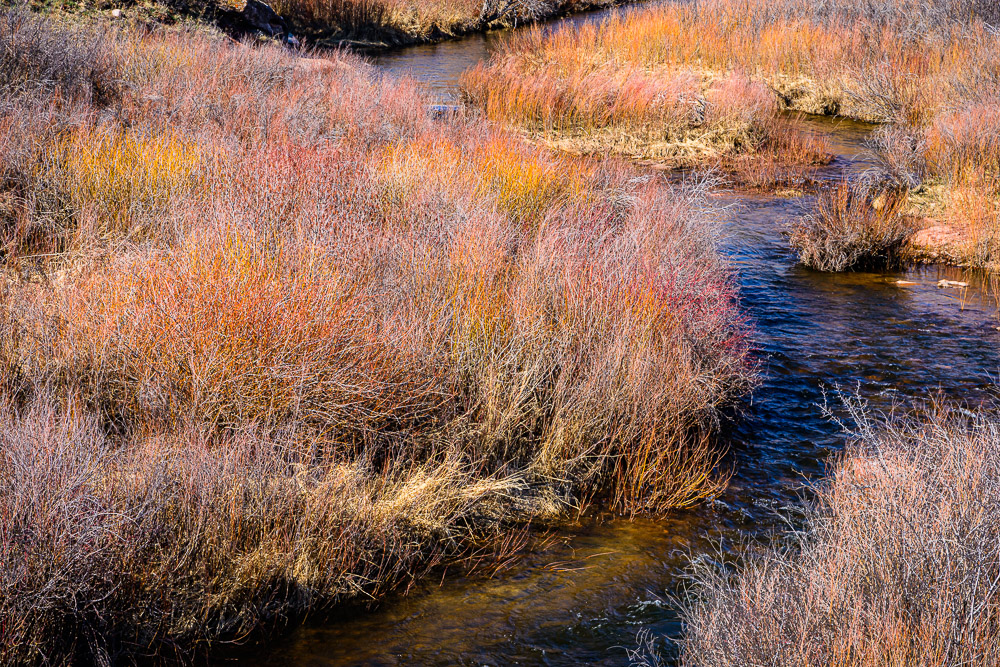
    The process involves deliberately paring away everything that is not adding to my interpretation of a particular detail. The details become independent of any certain location. Without the context of the whole scene they represent the things that catch my attention and that I want to share with viewers. For example, the image in this article of a brook meandering through willow bushes is very representative of many typical locations in the part of the world I hang out in a lot. It is very characteristic of the area, not of the specific location.

    So for me, I view it as a process of breaking a wide scene down to the individual components that make it interesting to me, interpreting the parts, and from that coming to a greater appreciation of the whole scene. I don’t claim this is a conscious process I do methodically or deliberately for every scene. I’m just thinking through how I seem to react to views and trying to understand why.

    We all should seek to understand what we do and why. Even if we are not entirely successful we might learn something about ourselves.

    Intimate landscape

    Maybe it’s quirky and peculiar. Maybe me and Jay Maisel and Eliott Porter and Guy Tal and a few thousand other photographers are the exception. I tend to see the world in details, in bits and pieces. These details come together for me to paint a picture of the whole.

    Sometimes the whole scene is necessary. But more often I find the details help me take it apart and decide what is important to me.

    Anyway, that’s the way I perceive things. I’m glad for the concept of intimate landscapes. It makes me feel a little sane. If you approach the world differently, that is fine, as long as it works for you.