An artists journey

Category: Creative Ideas

Ideas about creativity and the creative process.

  • Boundaries

    Boundaries

    We have or experience boundaries in all aspects of our lives. Some boundaries are essential. Boundaries set limits to define acceptable behavior to allow society to function. But the boundaries I am talking about here are the ones we accept or even impose on ourselves in our creative world.

    What is it that bounds you?

    Most of us are limited by the beliefs we have accepted or been taught. Beliefs are not at all bad. They are necessary. It is when they limit you into a box you can’t break out of that they become a burden. Beliefs should be carefully examined and modified or discarded as we progress through life. Sometimes our beliefs become outdated because we grow to a new level of understanding.

    That is pretty philosophical. Let me take a simple example of a landscape shot. We know what it looked like and we believe it should look like that. But why? Why is it only allowed to look like the exact reality that was there? What is reality? What if you want it to be different? It is probably only your beliefs that prevent you from experimenting with something else and maybe ending up at a completely different place.

    Who sets your boundaries?

    Most of us learned photography from educators or mentors or tutorials. This is great. All are good ways to build skills and learn the craft.

    Many of us, though, simply accept and follow the instruction we were given. We might even proudly tell people “I learned the style of [____] from [____ ]” (fill in your favorites). Congratulations. But so what?

    The great artist you learned from has developed a set of values and skills over the years. They are based on their perceptions, the way they see the world. Their art reflects themselves and their experience. As it should. When they teach a student they are training them to think or view things like themselves.

    Why should you follow their precepts? Doing so limits you to being an inferior clone of the instructor. When we develop our own vision and become confident in the worth of our creativity we will have to uproot some of those fences our instructors put in place to help guide us.

    All the education you have received is good, in that it makes you what you are today. Learn all you can from all sources but reserve the right to form your own opinions. Don’t be complacent. Follow your own path.

    Technical boundaries

    All artistic medium have their own boundaries. Whether it is material properties or technology or physics, everything we use has limits.

    The wonderful cameras I use have hard technical limits. For instance, even though they have excellent dynamic range (the range of dark to light they can capture) it is not as great as some subjects I want to photograph. I have to learn techniques to deal with the limit, like HDR. Or I have to learn to make art that exploits those limits to create something new.

    Great artists tend to push the envelope of their medium. They discover ways to use the limits to express themselves in new ways. Don’t be afraid to push the limits.

    Mental limitations

    For most of us, though, our values and beliefs define our boundaries, not the medium. We hold ourselves back. We avoid pushing past or even seriously questioning the fences we have set up in our minds. Worse, we don’t usually even realize these limitations.

    A lifetime of criticism and training gets deeply embedded. You have to do this. Never do that. Always compose like this. Avoid doing this in post processing. Repetition leads to acceptance and eventually we become blind to alternatives. Fearful, even of trying anything outside the norm as we know it.

    Do you remember the famous Apple 1984 ad? You should watch it. It is a great classic and it has a very important message. Group think and indoctrination prevails in any group. It doesn’t change until someone stands up to it and says “I don’t think so”.

    Overcoming boundaries

    Your biggest creative boundaries are deeply held within you. You have to accept that they are there and learn to take them out and examine them and decide if they should stay or go.

    I recognize that this advice will only be useful to about half the population. The ones who are introverted enough to have the gift of introspection. I know enough extroverts to realize that they don’t think this way. I’m not saying that is good or bad, but since I don’t understand you I can’t offer much advice for you. Personally I observe that a disproportionate percentage of artists I know are introverts.

    I believe the first step to becoming our own is to ask “why”? Ask it of ourselves when we turn back at a “don’t go there” point. Ask it of other people who tell you you shouldn’t do something. Listen to the answers. Be honest with yourself.

    If you find the answer is because somebody you respect told you that is not the way to do it, maybe it is time to experiment. Maybe doing it is right for you even if not for them.

    Asking “why” puts you in a somewhat of a confrontation position. I don’t like that, but I realize it is necessary sometimes. You may get scorn or criticism. You may get evasive answers. But ask, at least ask yourself. Remember, as far as your creative direction, you are the only one who can answer.

    Permission to color outside the lines

    In a previous post I referenced a Calvin and Hobbs cartoon that is very meaningful to me. If you remember, Calvin was doing a paint by number but he wasn’t using the color codes or painting in the lines. When it was pointed out to him, it seemed a bizarre concept to want to paint their picture rather than his own.

    That is perfect! If we accede to other people’s boundaries, we create their art, not our own.

    I have been following this path for years but I still find myself stopped by boundaries I had not consciously acknowledged. I have to constantly give myself permission to go further, do it different, don’t worry about whether or not it looks like the original. It is important to remind myself that if I feel it I can try it. If I can express a reason that makes sense to me, that is good enough. I may not like it after I try it but it is very important and healthy to try something different.

    It is hard to truly give yourself permission to color outside the lines.

    But learn to do it. Make yourself do it. It is worth it. You start to discover what you really see and feel. It becomes your art.
  • Play by the Rules

    Play by the Rules

    OK, I admit it, I don’t do well with rules. I’m a “ask forgiveness, not permission” guy. I don’t cheat and I never take advantage of people, I just don’t necessarily play by the rules. And for context, this discussion is mainly about the world of art, so don’t extrapolate my malady too far.

    Even if you don’t read the rest of this post please study this cartoon. A classic Calvin & Hobbs from the great Bill Watterson. This has been on my wall for at least 20 years. It perfectly captures my feelings about rules. πŸ™‚

    Whose rules?

    Ah, this is a root of the problem. Who has the authority to make up rules I have to follow? Where did they get this power? What governing board set the standards?

    Now, I’m not an anarchist in my everyday life. Not entirely. But in my artistic domain I do not give anyone authority to dictate rules about my work.

    It seems to be human nature to want to control other people. Perhaps it is a power trip. Perhaps it is financially motivated to protest self interests. Maybe it is insecurity. I am a big believer in the old saying “Those who can, do. Those who can’t become critics”. Correct me if I’m wrong, but I have seldom seen successful and respected artists put themselves forward as a critic. They do not see any need to, they are too busy creating. And if someone else wants to go off a different direction, fine.

    What rules?

    The art world has no shortage of rules to live by. Each little group wants to exclude you if you don’t play by their rules. So my work may be criticized because it it too realistic, too abstract, too colorful, too little color, lacking in social message, too much social message, too sharp, too blurry, too painterly, no people, only people, etc.

    Even on a more safe level of visual theory, there is the “rule of thirds”, rules of balance, of leading lines, of framing; there has to be a definite foreground, middle ground, and background; don’t put the subject in the center, expose to the right, the subject has to be sharp, water should be smoothed with long exposure, never shoot in the middle of the day, always shoot on a tripod, …

    Being Conventional

    None of these so called rules make a work of art. If you are new to the craft these guidelines help you quickly learn to make images that are accepted as “conventional” and inoffensive.

    Let me give an anecdote from my own experience. It goes way back, so I’m sure the statute of limitations has expired. I was an early adopter of Photoshop. The excellent camera club I was a member of had monthly competitions. I was the first to enter a “Photoshopped” image. It, of course, won the blue ribbon, because the post processing improved the basic image a lot. When I “confessed” how it had been processed and modified there was a lot of hand wringing and discussion. Some people even wondered if such images should be allowed in their competition. What I did was outside the norm and the expectation, therefore maybe a violation of the rules. At the least it was suspect as not being fair or in the proper spirit of photography. Yet, they chose it as Best of Show.

    I have not been associated with that group for a long time, but from what I have seen, it would be almost impossible to win a contest there now without significant Photoshop processing. A new normal. Since it is conventional it is acceptable.

    Why have rules?

    I think I was on the right track earlier when I said rules create works that are accepted as conventional. Rules are normative, to use the proper term. Accepting a set of rules defines a baseline, a norm, it regularizes things.

    There are times to follow the rules exactly. My accountant needs to follow accepted practices. I fully expect my doctor to follow best practices as he has learned them and as his profession requires. If I go to a restaurant I want them to follow all the health and safety and food preparation regulations.

    But for artists? Well, yes. This may seem like I’m spinning 180 and shooting down my own arguments, but I believe the widely known rules are valuable for artists. Knowing and following them would protect the world from some of the useless stuff thrown around by people who do not know the history of their medium, its limits, or the social conventions people like to abide by.

    I believe all new artists should learn the rules and spend quite a bit of time creating boring and conventional work. It is good practice and it instills some discipline. I’m not saying artists should go to art school. That works for some but not everyone. I don’t believe there are any valid credentials that qualify someone to be an artist.

    After the rules are well understood, then comes the time to start exploring the edges. To start experimenting with breaking the rules that are limiting you if that is consistent with your style. Most experiments will be failures and the learning is that the rules are there because they point out something of general truth. But sometimes… Sometimes some new truth is discovered. Sometimes creatively breaking a rule leads to good art.

    If I break the rules?

    What happens if (when) I break one or more of the rules? Do the art police come and confiscate my computer? Do I go on a secret list shared by galleries and collectors to blacklist my works?

    Actually, nothing happens. If I break a rule it is an experiment. The experiment will have one of 3 outcomes:

    • I love it, do more like that;
    • I hate it, don’t do it again;
    • or that’s interesting, it has promise, I need to modify it and try again.

    And the people who view and potentially purchase my work will look at it and either say:

    • wow, I love it
    • yech, I hate it
    • or eh, don’t care.

    The combination of these 2 sets of votes determines if breaking the rule was a success. And my opinion about what I like is the overriding vote. Note in my value system customers have a vote but people who are just critics do not.

    Creating somebody else’s art

    Playing by the rules guides us to create art that is acceptable to the largest audience. Like the paint by number cartoon above, we, in effect, create somebody else’s art. Our art follows the pattern that many other people follow. “Wow, it looks like Ansel Adams.” “Wow, it looks like John Shaw.” “Wow, it looks like John Paul Caponigro.”

    These are good people to look like, until you develop your own style, your own vision of what you want to say. Then the rules are holding you back. At some point you have to make your own rules. To be you, you have to make something different.

    Nothing new is ever created without a painful break from the past. Impressionism would never have been established if Monet, Renoir and the others had listened to conventional wisdom. John Rewald, in History of Impressionism, said The only thing to be learned from the critics was how to suffer the sting of their attacks and carry on just the same, accomplishing a task which more then any other required serenity.

    If you play by the rules you will just get better and better at what everybody else does. That is not a waste. But to create something new and creative, rules, like eggs for an omelet, have to be broken.

  • Subjects Choose You

    Subjects Choose You

    Subjects choose you. The Canadian photographer Geoffrey James said this. It has stuck with me because I see it happening in my work. Despite my intent to work a certain project I often find myself taken by subjects I did not anticipate.

    Sidetracked

    Most of us have been there. We set out intending to shoot a certain subject or work a certain project, but we find ourselves sidetracked,

    I know some photographers are totally disciplined and do not do anything without a plan. And they seldom do anything off the plan. Of course, if you are doing a corporate shoot and you have hired models and a crew and rented a venue and arranged lighting and equipment, insurance, permits, etc. then you have to make sure you complete the assignment and make your client happy.

    I am happy that that is not the world I live in. It is great to have the luxury of being completely self-directed. I pursue what interests me, so I am very vulnerable to getting sidetracked. I love it. πŸ™‚

    But even I sometimes go out with intent to pursue certain subjects or projects. If I keep my focus and actually work the project, I may get some images I like. But if I come back with almost nothing I set out to do, is that a wasted day? Usually not.

    Blinders

    I usually characterize myself as an explorer. But even so, it is not necessarily completely wide open exploration. I am often focused in a certain direction, say a project I am working on.

    Human psychology is such that when you fix on an idea or you are looking for something particular, most other things are blocked out. An extreme and humorous example of this is called the “invisible gorilla” experiment. Watch the video before reading the article. You can learn something interesting about perception.

    These perceptual blinders are true of almost everyone, even “professional” artists. I don’t claim to be immune. But I do try to examine what is going on sometimes and see if I have blinders on and if that is bad.

    Since I am exploring I try to look around and allow myself to be drawn to new ideas or to perceive new stimulus. Quite often these take me completely out of the mode of the project I was working on. I actually enjoy that! It means I was drawn to something that interested me more.

    Can’t control our mind

    The mind is amazing. It is constantly taking in the stimulus around it and filtering and analyzing it to make associations and meaning. This is not artificial intelligence, it is actual intelligence, and is much better.

    Sometimes your mind tries to help you by filtering out things you don’t seem to be interested in, like we discussed before with the invisible gorilla. But if you loosen the restrictions and allow it to associate over a wider range it can recognize interesting possibilities we did not consciously see.

    I like to work in this more free, wide ranging mode. I have spent decades training my mind to recognize possibilities I might want to pursue. After all that time I should have the confidence to give it the chance to run free and do its best. It is not unusual for my mind to bother me with a recognition of something I want to see, but am overlooking.

    I should let it go, because it will anyway.

    The subconscious is strong

    “The force is strong in this one”. Actually, that is true of most of us. If you have examined your art and the work of others you admire, if you have spent a long time training yourself to recognize scenes of interest to you, your mind will do it subconsciously. You actually have to work to shut it off.

    One common model of competence has 4 stages as we progress up the scale. When we are operating at the unconscious competence level, we are not even consciously aware of what we know and what we are doing. It is “second nature”. We operate on an instinctual level.

    This is awesome for someone like me who relies on an instinctual recognition of scenes and compositions and possibilities. My subconscious is always analyzing my surroundings in the background. Sometimes it triggers a recognition of something I should see. I can’t describe the how or why. It is just that, without giving it direct thought, a light or something goes off and I realize there is another scene I should investigate. This is subjects choosing me.

    It is very related to a state of flow. That can be a great place to be. The art just seems to move through me. I can’t explain it and then is not the time to analyze it. If I have time, if the stimulus is not coming too fast, I can try to being my conscious mind up to speed by expressing to myself why I was drawn to a scene. Sometimes there is no time and it would kill the flow.

    Go with it

    If I am smart I will recognize what is happening and just go with it. Let my subconscious lead me to things I know I am interested in but didn’t see. I almost feel guilty calling myself an artist. It seems I am just a vehicle for something larger that is expressing itself through me.

    But I am not claiming any spiritual or supernatural basis to this. I recognize that my incredible mind, after long training, is just doing its job. This wonderful machine is helping me recognize things I would have wanted to know about, even if I was not consciously paying attention.

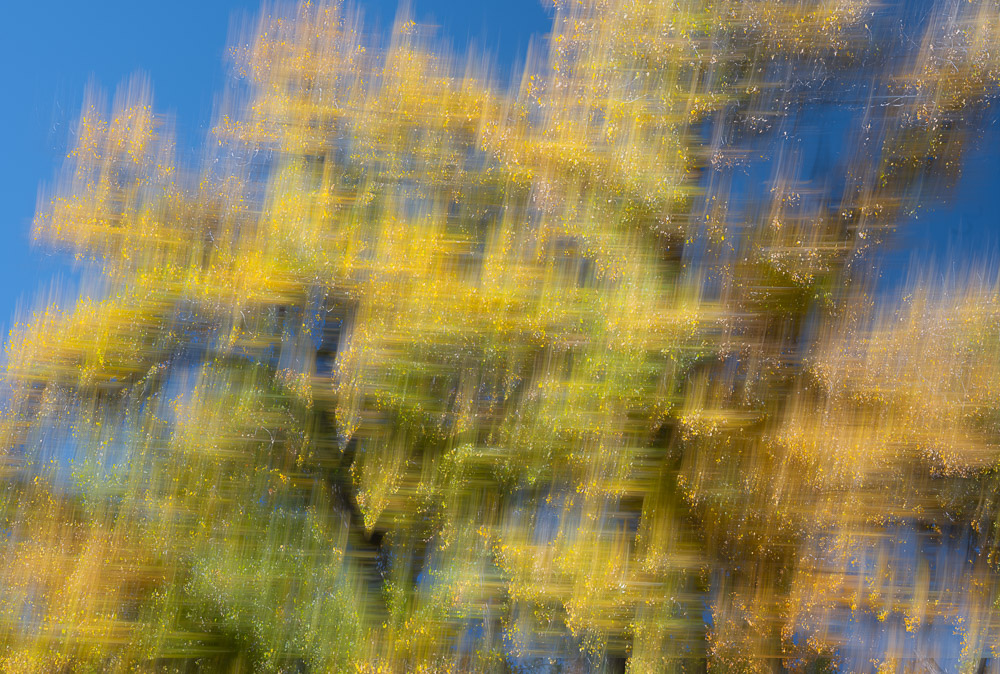
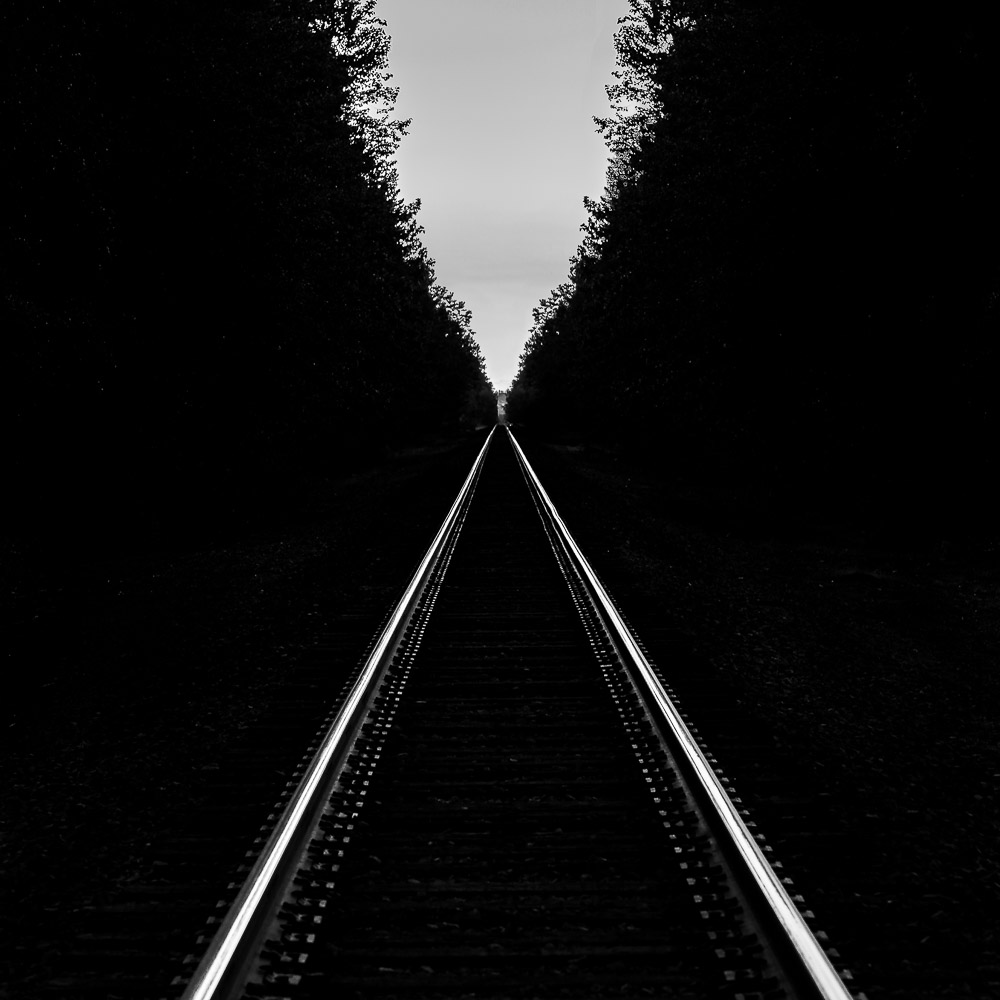
    Let me mention the image with this post. I was searching for great scenes on a beautiful fall afternoon. I was racing through the forests, surrounded by peak color leaves in upstate New York at sunset. Suddenly I was compelled to screech to a halt and turn around and backtrack. My subconscious had recognized this scene even though I thought I was only interested in leaves. I’m very glad I did. This was the keeper. I do not remember any of the leaf images.

    It is joy. It is instinctual. Letting go and following the flow often leads to things I love. Subjects choose you, and it can happen in the most wonderful ways

    Go with it.

  • Afflicted with Curiosity

    Afflicted with Curiosity

    I admit, I have the disease. I am consumed with curiosity. It drives a lot of what I do. It pulls me in different directions. I am afflicted with curiosity.

    And I’m glad.

    In one of his books, Jonathan Kellerman has a character say “Most people aren’t overly afflicted with curiosity. It separates the creative and the tormented from the rest of the pack.” I think he has captured the idea very well.

    Curiosity

    What is curiosity, really? Is it a learned skill or a inherent personality trait? Is it good or bad?

    Dictionary.com says it is “the desire to learn or know about anything; inquisitiveness”. That is a good start. Like any fairly large concept, there is a lot more to it.

    I like that it is presented as a “desire”. There is a longing. Something burns inside you causing you to pursue things. A variety of things. You never know where it will lead you.

    Inquisitiveness is a great work, too. It implies exploration, searching, investigating. Curiosity is the basis of learning. I mean real learning, not what passes for it in our education system. Learning comes from wanting to know about something and working to figure it out.

    I am no authority, but my thought is that some people have a greater tendency to curiosity than others, but it is a skill that most people could develop. If they really want to.

    What ifs

    Curiosity starts with a question: what if, how, why? The desire to answer such questions and what we do about it can change us. Sometimes these questions are about something no one else has done. At least, we do not know if they have. The questions can arise because of something we have seen someone do and we wonder how it was done.

    Regardless of what sparked the question, something compels us to dig or investigate or try things until we satisfy the need, scratch that itch. A simple question may be satisfied by a few articles found on the internet. Some lead us into years of investigation and experimentation and end up changing our lives. This is the danger and excitement of curiosity – we do not know where it will lead.

    A drive or a diversion?

    I am presenting curiosity as mostly good, because I believe it is, but is that always true? Have you ever been in a situation with a boss/teacher/parent where the answer is a cold “because I said so”? Have you worked in an environment that had written procedures to handle every situation and you could not deviate from them? Asking too many why or how or why not questions can get you in trouble in these places. There are places that intentionally stifle curiosity.

    My reaction is that I have to get out of those situations. I get very frustrated if I can’t ask why and try something new, That is just me. I am driven by curiosity and am generally suspicious of rules.

    In some cases curiosity can be a diversion from the path you need. Many skills require repetition and long practice. For example, martial arts or music or golf need an instructor to guide you and you have to put in the hours to master it. Too much curiosity while you are building your base knowledge can delay or interfere with your training.

    This brings up the idea that there may be a proper time for curiosity. There is a tension and a natural balance between the right time and the wrong time. Sometimes you are not ready to ask certain questions. More preparation may be necessary.

    A base for curiosity

    This may be controversial, but I believe to be really effective, curiosity needs a good base of knowledge and maturity. It is something that builds over time and with great effort. The more you know, the more separate concepts you have, the easier it is to build on them and connect the dots.

    When you start on the path to learn something new, you are a novice. You don’t really know much about the subject you are studying. It is great to have curiosity, let that motivate your study, but do not believe you understand it yet. Be humble enough to know that you don’t even know how to ask good questions yet. Be patient.

    I subscribe to the model that your knowledge is a network of concepts. Learning something new builds on these concepts and ties them together in new ways. The wider your base of concepts the better you can see relations between new things. The more fertile your imagination becomes, allowing you to imagine possibilities that are not obvious to others.

    It is a never ending process. I hope to be learning new things and seeing new possibilities until the day I die. The better the mix of knowledge to build on, the richer the environment.

    Everyone has a different mix. In my case, I have a strange brew of things from photography theory and practice to artificial intelligence, software architecture, software development, user interface design, graphic design, sculpture, business, and general technology. Temper that with Christianity, raising kids, being married for a LONG time, and the lessons learned from making my way in the world over decades. I am happy to have this network of knowledge. I believe it helps my creativity and feeds my curiosity. It makes me the unique person I am.

    Do you have to be curious to be a good artist?

    This is a tough question to answer in a politically correct way. The simple answer is that I’m not qualified to answer it. I’m not sure anyone is.

    A more realistic answer is that I don’t know, but I can’t think of a great artist who was not curious. Think of Leonardo daVinci. He was a scientist, engineer, architect, he studied color and texture and anatomy and the perception of the human eye. Few artists are so extremely wide ranging, but the ones I know of share an extreme curiosity.

    In taking classes from artists as diverse as Peter Eastway or Karen Hutton, a theme that comes through strongly is that you have to explore and be driven by your curiosity. They assume that you will bring your own point of view and not imitate anyone else. And why would you want anything else? Your curiosity will draw you in a unique direction with a style that is all your own.

    This is not a proof that curiosity is necessary. But it is hard to disprove it.

    Give in to your curiosity

    I strongly encourage each of you to give in to your curiosity. Allow it to lead you to new places. Be an explorer.

    Personal projects are a good vehicle for trying new things. Pick a project that challenges you and stretches you in a new direction. Maybe a subject you seldom do. Maybe a new type of processing you never use. Set a time limit for yourself if that is the way you work. At the end, evaluate it and decide if you have learned anything valuable that you want to carry forward in your work. It does not matter if you end up with “portfolio pieces” from the project. It is the exploration that is the benefit.

    Explore, reinvent yourself, follow your creativity, stay fresh. Don’t do things a certain way because you’ve always done it or because a respected teacher taught it that way. This is your art. Go your own way. Follow your curiosity.

    I’m definitely tormented. I think I am creative in my own limited ways. It is curiosity that makes it happen. I hope I do not recover.

  • It’s Been Done

    It’s Been Done

    It’s been done. A dreaded phrase we hear all the time that is meant to dismiss and disparage our creative work. Don’t fall for it. Just because someone says it has been done does not mean you don’t have just as much right to do your own take on it.

    Over and over

    Artists have always done the same subjects over and over. There are only a limited number of subjects and not that many truly different ways to approach them.

    Are you not going to do ponds because Monet had “done” them? Are you not going to do a night sky because Van Gogh was the only one to be able to do that? Are you not going to do landscapes because there are no more to do after Ansel Adams finished? Are you going to forever avoid flowers because O’Keeffe did everything that could be done?

    Of course not.

    Are you going to avoid shooting any subject that has ever been photographed?

    Let’s see, landscapes have been done; portraits have been done; street photography has been done; abstracts have been done; food has been done; travel has been done… It is getting pretty hard to find something that has never been shot. Near impossible.

    So “never been done” must not be the important test.

    Every artist repeats subjects other artists have done before. The real question is, do I have something new to say? Can I make this fresh and unique? Can I offer something that will make my viewers think new thoughts?

    Writers, for instance, all write the same stories but try to make them fresh. It is said that there are only, depending who is giving the data, 3 to 36 fiction plots. All books are a variation of the basic patterns. A. Hyatt Mayor has an interesting take on it when he says: The really original artist does not try to find a substitute for boy meets girl, but creates the illusion that no boy has ever met a girl before.

    Likewise, can we create the illusion that our work is original?

    Do it different

    Just because a famous artist did the subject before does not mean they created the definitive work that can never be topped or even equaled. An artist should have an unshakable belief in his vision. We should not be timid and shy away from controversy. No critic owns the right to disallow your work.

    Creative thinking may simply mean the realization that there is no particular virtue is doing things the way they have always been done. Rudolph Flesch

    If we are going to do things the way they have always been done, then why bother? If we are just copying other work,that is not adding anything interesting to our art. Re-envision what has been done. Do it different.

    Creativity is not usually something radically new. Usually it is an incremental build on the past. It is the little twist we came up with that makes it uniquely our own. It is our own spin on the conventional way it has been done.

    I think artists of necessity are a little crazy. Obsessed. Focused. This drives us to separate ourselves from the crowd. To share our vision and show that we see things differently. I seem to be putting in a lot of quotes this time, so here are 2 more:

    Follow your enthusiasm … The only quality common to all great artists and creative people is that they are obsessed with their work. Richard Avedon

    If you are not criticized, you may not be doing much. Bill Swanson

    Apply your style and vision

    Our vision usually applies to the unique way we see the same thing other people see. We will not often see something that no one else in history has ever seen before. The secret is what we bring to the common. Can we make something new out of things everyone else sees? Can be see different? Be different?

    That is what we are called on to do as artists. Everything has been seen or thought of before. But how can we bring a new interpretation, a fresh point of view, an unencumbered view?

    Finishing with a final quote:

    I believe in looking reality straight in the eye and denying it. Garrison Keillor

    Most people are burdened with reality. A thing is what it is and can’t be anything else. What a limiting view! A thing can be almost anything we can envision it to be. That is creativity.

    Don’t waste time being an imitation of anybody. Spend your life being yourself.