An artists journey

Category: Craft

  • Photography is About Light

    Photography is About Light

    Stating the obvious? I think we sometimes forget the fundamentals of what we are doing and working with. No light, no photography. Photography is about light.

    Writing with light

    Remember that our word “photography” comes from 2 Greek words that together mean “writing with light”. So, from the beginning of our art form, it was understood that we were recording light on some type of photo sensitive material. Glass plates or tintype or film back then. Mostly digital sensors now.

    Technology changes but still we are recording light.

    Embrace that. It is what we are all about as photographers. Photography is about light.

    Low light is not no light

    Our technology improves all the time. It is possible to get sensors that do a fair job of imaging at 250,000 ISO. Maybe more. I don’t track the latest. The highest ISO I found with a quick scan was the Nikon D6 at 3,280,000!

    A 250,000 ISO is about 11 stops of additional exposure above a nominal ISO 100 setting. Eleven stops is a huge amount as exposures go. I haven’t tried it, but at ISO 250,000 I bet you could make a properly exposed landscape shot lit only by starlight.

    But the point is that very low light is not the same as no light. Have you ever been in a cavern deep underground where they turned off all lights at some point? Then we encounter the eerie experience of actual, total blackness. In those conditions it is impossible to see anything. Put your hand right in front of your face and you can’t tell it’s there. There are absolutely no photons to impinge on our retina.

    We could do no photography in total blackness. Of course, other artists would be almost equally disadvantaged. I suppose, theoretically, painters could make marks on their canvas in total blackness, but they would have no way to know what they were creating. Sculptors could mold clay by feel, but they would have very limited feedback on what they were doing. But photographers cannot do anything without light.

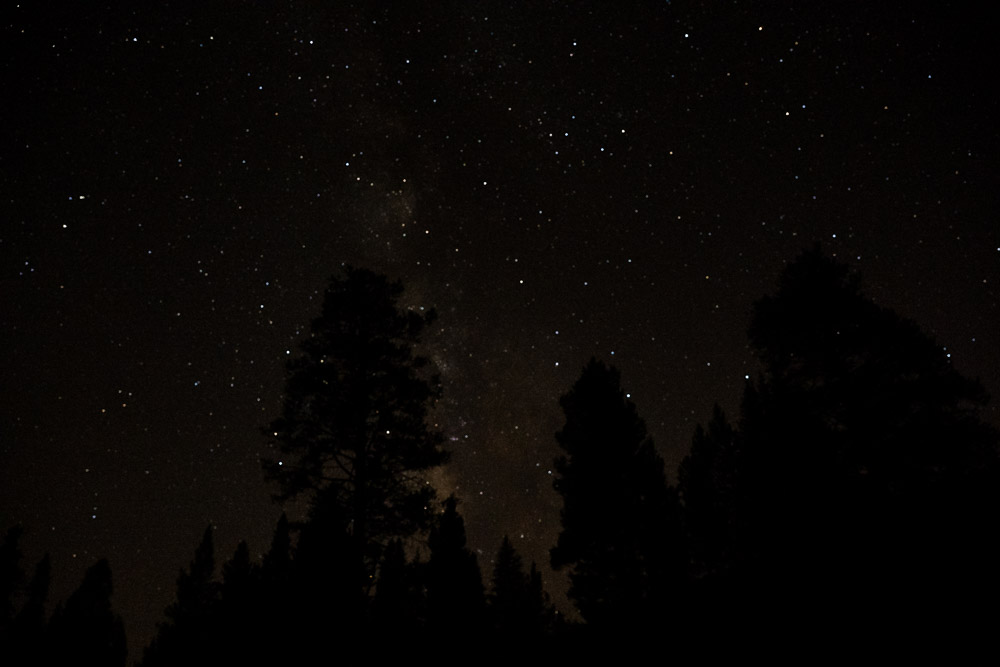
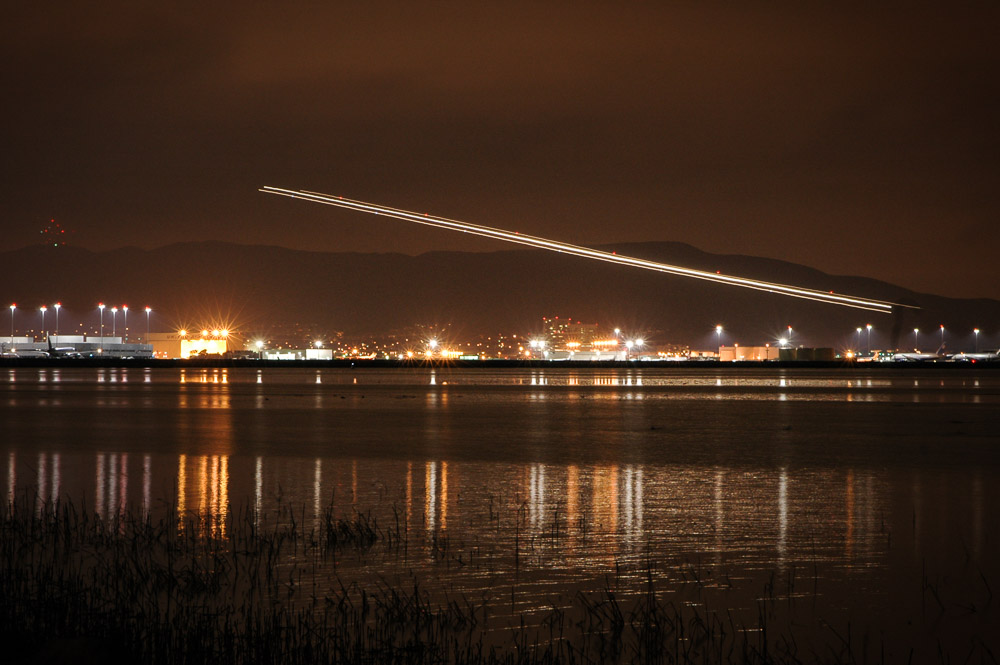
    Night shot, Airport.©Ed Schlotzhauer

    Computational photography

    One clever way to get better results in low light is used in your cell phone and by astronomers. It is generally called “computational photography”.

    Computational photography does not rely on the result of one frame. Instead, tens to thousands of shots are taken and processed by computer to bring out detail.

    This is how your phone takes decent pictures in low light despite having a tiny sensor. It is actually shooting bursts of dozens of frames. Then it quickly processes them in the phone. It uses averaging and other more sophisticated techniques to reduce noise and bring out the desired detail. I am surprised at how well it works.

    Astronomers have special needs in photographing distant galaxies. The light levers are so low that there is nothing to see with our eye. So, they instead take hundreds, maybe thousands of images with the regular sensor on their telescope and run them through dedicated processing software. Using combinations of specialized image processing algorithms and AI, their computers “reconstruct” what is probably there.

    My astronomer friends have shown me some of their new “telescopes” they got recently. These surprising instruments are generally about the size of a moderately thick hard cover book. They rely on small, cheap optics and lots of computation, but produce amazing results.

    Techniques like these let images be created in what seems like black conditions. But the reality is, it is not black. Just very low levels of lighting. If it was actually black, no photography.

    A blurry night shot©Ed Schlotzhauer

    See the light

    As I said, the purpose of this is to remind us that our art is based on light. We need to develop a heightened awareness of the light around us, because it is critical to our art. It changes all the time and is different in different conditions.

    it has been observed that a fish probably does not think about water. But we need to think about light, which is almost as important to us as water is to a fish.

    Light has many characteristics and most all of them affect our photography.

    We need to be intensely aware of the quantity of light at any time, its color, is it direct or diffuse, its angle, whether it is steady or changing, is our subject lit directly or indirectly, and many other properties. It sounds complicated. But learning the light is part of the craft. Learning to apply it creatively is part of the art.

    For instance, it is almost an axiom of photography that you do not photograph in the middle of the day. Like the “rule of thirds”, this is one of those rules I take pleasure in violating. The reality is that it completely depends on what subjects you are shooting, the nature of your light source, and what your goals are. Shooting at midday often enhances the texture of materials. In a dense forest it can create interesting dappled light patterns. In a slot canyon or a cathedral, it can create beautiful light beams. And diffuse overcast light may be perfect for many subjects, with high brightness and soft, even illumination.

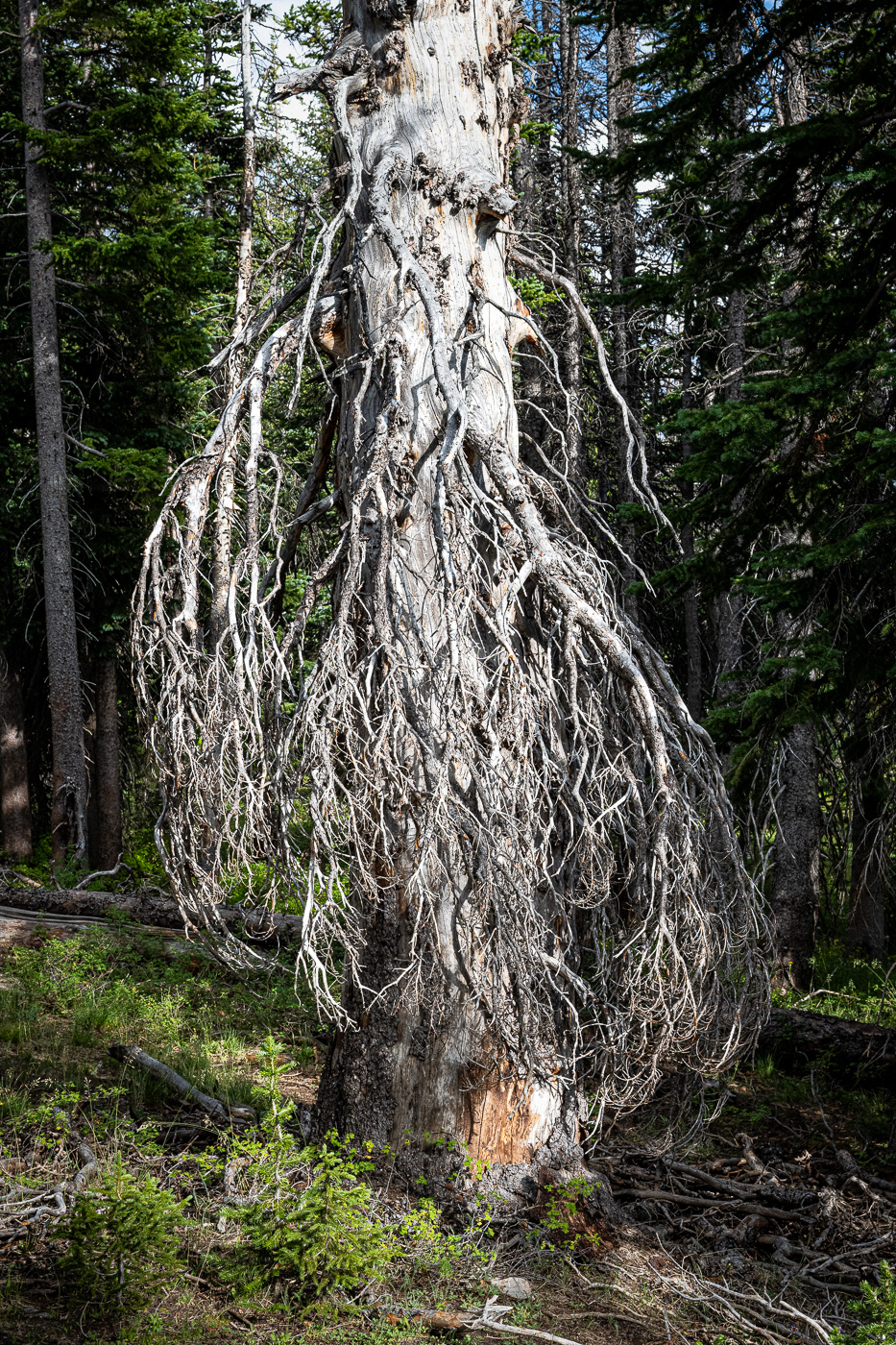
    Dead branches. Interesting range of tones.©Ed Schlotzhauer

    And as a practical matter, I am not a National Geographic photographer on assignment. I can’t spend a week in the field waiting for the “perfect” shot I went out to find. I have to be creative enough to make the best use of what I find at the time I’m there.

    There are no rules, only what you can do with what you have.

    Tonality

    Tonality is one of those important things we need to think about and know how to use. It simply refers to the difference of luminance of the parts of our image. The tonality is what lets us distinguish all the parts. It creates separation of various areas.

    Think of a blank white piece of paper. This effectively has zero tonality. There is no image, because without tonal separation we cannot resolve anything. Any actual image we create has a range of tones.

    If the tones are squished together, our image is low contrast. Not much tonal separation. Maybe this is what you want, like a foggy scene.

    On a sunny day there is a wide range of tones. We refer to it as high contrast. Sometimes it can be too much. Do we need to use exposure or editing techniques to tame the contrast? But that is our creative choice

    A low-key image involves pushing most of the tones down towards dark. But the remaining light tones stand out. Likewise, if we create a high-key image, with most of the tones pushed toward light, the remaining dark tones stand out.

    Our eyes are very sensitive to tonality. We perceive tiny differences in illumination levels. Use of tones is a creative process. It should be part of our thought process and toolbox.

    One of the ultimate expressions of pure tonality is black & white photography. All color is stripped away, leaving only tonality to create the image.

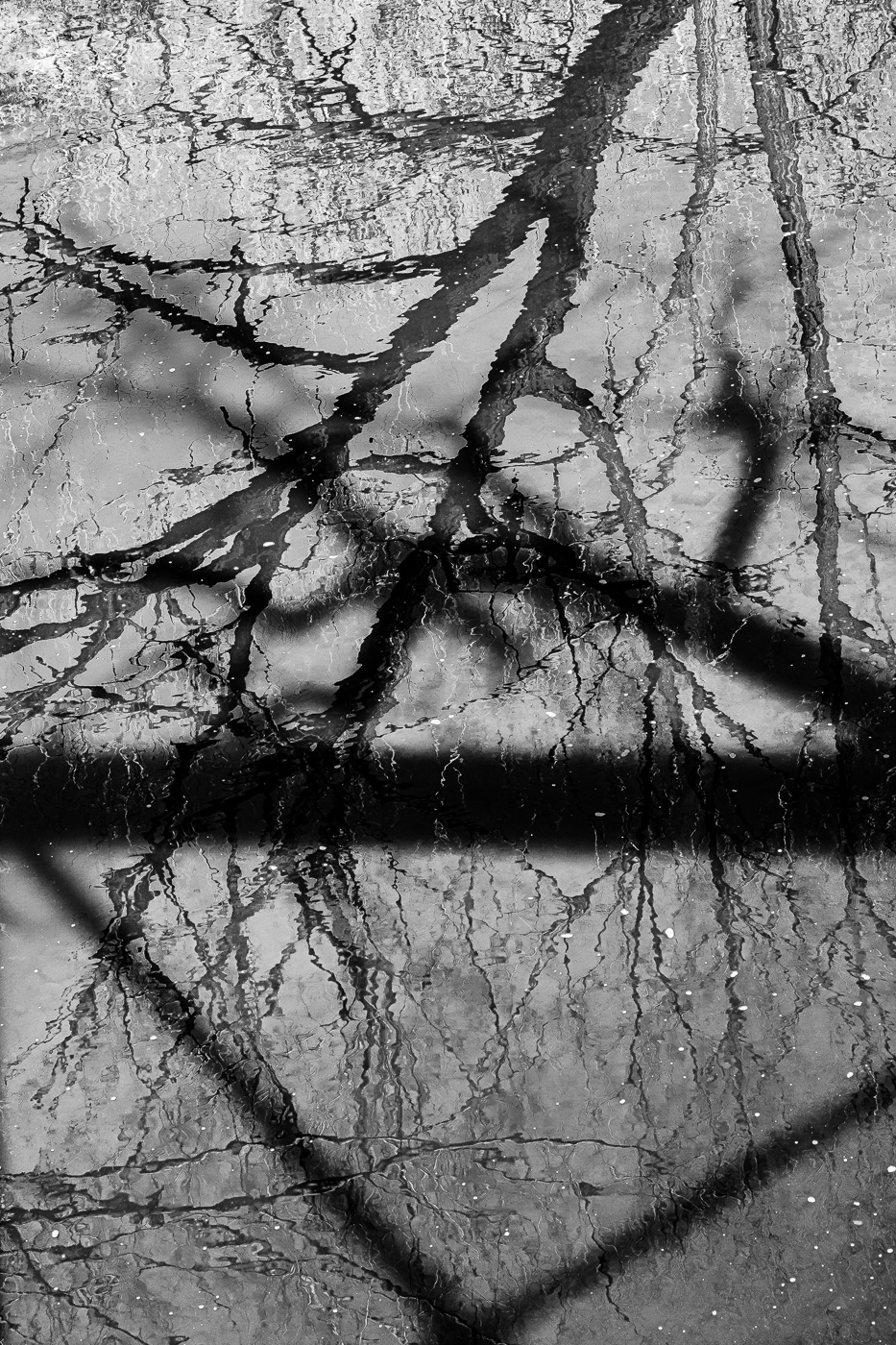
    Tree reflection. Black & white.©Ed Schlotzhauer

    Color

    Our eyes are an incredible design. The rods and cones have different purposes but work together to give us sight. But overall, our eye is less sensitive to color than to illumination levels.

    Think of being in a dim room at night. We can make out the objects around us, but the colors are hard to distinguish. Turn the light on fully and the colors pop.

    Similarly, in our images, good color requires good light. We can’t see vibrant, saturated color in dim light. I mentioned low key art. Have you noticed that most of it is black & white? This is a practical result of not being able to see much color in low light.

    I believe some people’s artistic vision is drawn to color and some to black & white. If you are a color person you have to be doubly aware of light. Not enough and our brilliant colors fade.

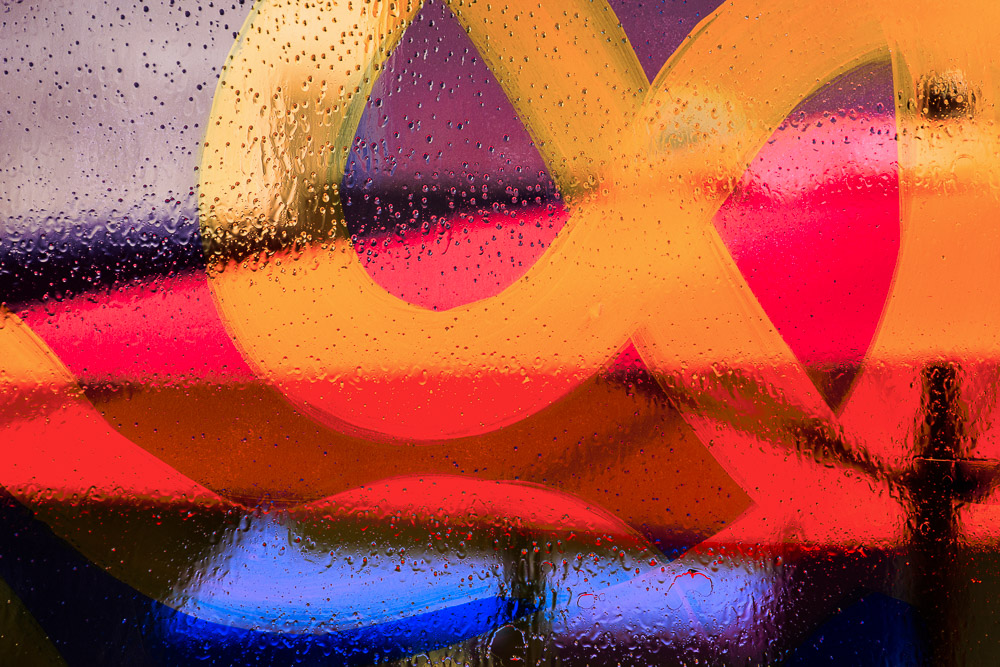
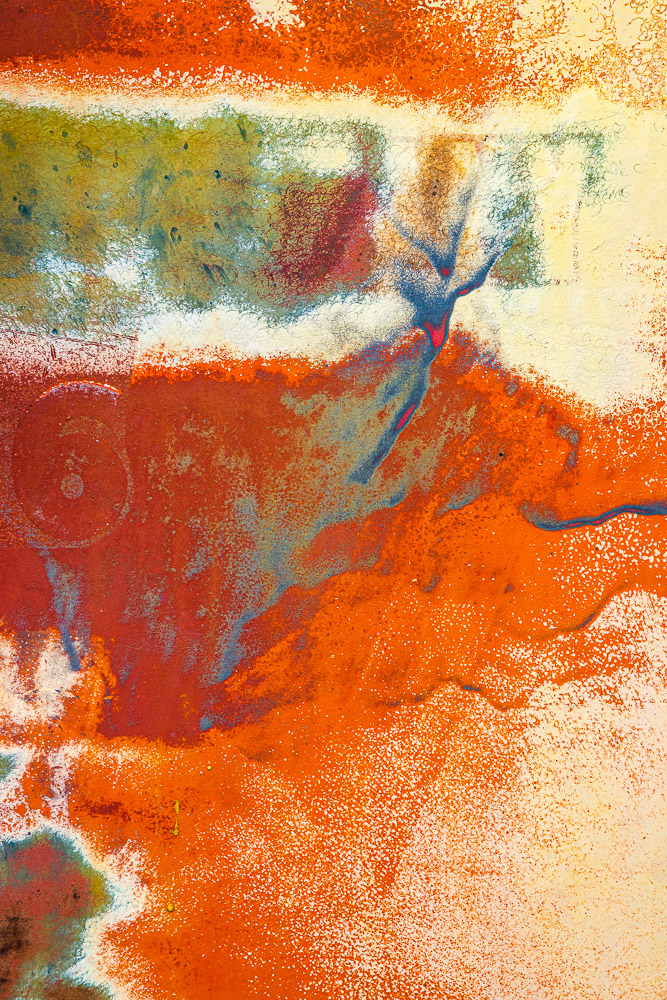
    Graffiti abstract©Ed Schlotzhauer

    Creativity

    All art processes are defined by their technology. Photography is based on light. We cannot do photography without light. To be a photographic artist, we need to be intensely aware of light and how to use it to our advantage.

    Recognize it not as a limitation, but as a creative tool. Light is a marvelously varied thing. We are artists. We paint with light. Learning it and being constantly aware of it and deciding how we want to use it for any image is part of the art.

    We are seldom in a place where there is no light, like the underground cavern I mentioned earlier. There is always light around. It may just be moonlight or city lights or a flash. We may decide there is not enough light to make the image we want sometimes, but there is always light to work with. Recognize it. Use it creatively.

    Light is fundamental to photography. Learn to see it for what it is and learn to use it creatively. It is what you are photographing.

  • The Color Is…

    The Color Is…

    Color is one of the major considerations in our photo processing. And it can be hard. Have you ever considered how many tools and settings there are to control color in Lightroom and Photoshop?

    But where are you on the color concern spectrum? For you, is color:

    1. Critical. It must exactly match
    2. Important
    3. An annoyance
    4. Just a design variable
    5. Don’t care

    Why do we need to change it?

    Despite all of the great technology we have, color is still an imprecise and slippery thing to deal with. Different camera manufacturers often create their own unique ‘look”. Fuji, for instance, has profiles built in for some of their famous films (remember Velvia?). But because of different technology and processing tradeoffs, there are subtle differences between, say, Nikon and Canon. There are even small variations between samples of the same camera model,

    The color variations are magnified as we move further along the processing chain. What we see is greatly influenced by the decision to shoot RAW or JPEG, and if JPEG, what color balance is chosen. And is our monitor calibrated to ensure it correctly represents the colors in the digital file?

    Finally, when we make a print everything can change drastically. The print is strongly influenced by the paper we choose and the printer’s ink set. Using good profiles for the printer and paper combination helps to produce an output that is “similar” to what we edited on screen, but it will never be the same. Just the move from illuminated pixels in RGB space to reflected light from a paper substrate in CMYK space means they can never be exactly the same. The physics is completely different.

    The variations along the way are the process of color correcting the image.

    Most of us do not see or pay much attention to these differences. The importance to us depends on our application.

    Graffiti abstract ©Ed Schlotzhauer

    Tools

    The color correction tool chain starts back in our camera. Specifically, the color balance setting.

    The color of the light on our scene varies greatly in different conditions. Bright sunlight is completely different from open shade, as is a cloudy, overcast day. Indoors under tungsten or fluorescent lighting and. even LED’s give different color casts.

    Out eye/brain automatically adjusts for most of these differences, but the camera does not. The color balance setting in the camera is a means to dial out the color casts. But this is only useful for JPEG images and the preview we see in camera. Color balance has no effect on RAW images. Those compensations are made in our image editing software.

    My camera stays set to Auto White Balance. I only shoot RAW, so it has little effect on my processing or results.

    Lightroom

    When I say “Lightroom” that is a shorthand for “Lightroom Classic”. That is the only version I care about. But I”m pretty sure everything I say about it applies to both applications. There are differences in color representations in other RAW image processors like Capture One, but I do not have enough experience with them to say much.

    Lightroom is packed full of ways to change the color of our image. In the Develop module you are never far from something that can modify color.

    Some of the controls change color globally, that is, for the whole image. Just scanning down from top to bottom (I think my controls are still in the default order), we start with profile. This can be a simple selection of default balance or you can set any of the many provided color effects, including black & white toning.

    Next there is the white balance adjustment to allow us to adapt the image to a color that should be neutral. Next to that is the color balance selection to partially compensate for lighting conditions.

    Right under them is the Temp and Tint sliders. Vibrance and saturation do not actually alter colors much, but they have a strong effect on the look of colors.

    Then there is the Tone Curve, where we can adjust red, green, and blue channel properties directly, followed by Color Mixer and Color Grading. Finally there is the Calibration group where we can control hue and saturation of each channel.

    All of these are only the control that affect the whole image. We have many of the same controls to perform selective adjust color in regions (like a linear gradient) or spots (e.g the brush tool).

    Illustrating its the journey©Ed Schlotzhauer

    Partly driven by the application

    Hopefully, you get the impression that Lightroom gives us a lot of control of color. It must be important. I won’t even go into Photoshop with its many adjustments. I trust the point is made. This is not a “how to”.

    Color adjustment is a large part of what we may deal with in post processing.

    Maybe.

    It depends on our application and needs.

    If you are doing product photography, the customer is very concerned that the color of their logo or product absolutely matches their specification. Portrait customers have a fairly narrow tolerance for off colors in people’s faces. Or you may have a self-imposed rule that the final color must exactly match the original scene.

    In these cases you are probably using gray cards or Color Checker swatches to ensure you faithfully match the original. You may even be calibrating your camera to minimize discrepancies. You will probably be using many of these Lightroom controls to adjust the colors to balance out shifts or color casts.

    I’m a Fine Art Photographer

    But I’m a Fine Art Photographer. I dislike that term and I’m not completely sure what it means, but I do know that what I create is art. Art is not tied to a real scene. Maybe someday I will get into a discussion on indexicality, but not today. By my definition, anything I want to do as art is acceptable.

    I may not care at all about the color of the original scene. I’m certainly not fanatical about matching it or balancing color casts. My consideration is how the resulting image looks (to me) and what effect it has for the viewers.

    Yet I do use most of the color controls I listed earlier. Except I very rarely use Calibrarion to adjust color, but that’s just me and my thought process. All the other controls, in global and regional and spots, are tools I use frequently.

    Color is a subtle thing. Almost imperceptible shifts can create large perceived changes. It can be tricky, or impossible, to achieve an effect I have in mind. But I try.

    Abstract image with serious gamut problems.©Ed Schlotzhauer

    Not an absolute

    Breaking the assumption that my image must look like the original was difficult for me. Coming from a very technical, engineering background made me think in absolutes. Precision was important. But now that the assumption is broken, it is freeing. The realities I started with no longer hinder my vision (as much).

    Even so, I do not usually create comic book-like pop art. Unless I want to for some reason. But, on the other hand, I do often enjoy making images that are so extreme you will think I modified them too much, even if I did little at all.

    Sometimes color is the subject. Sometimes an image “needs” to be a different color than the original. An extreme use of color modification is black & white. Yes, taking away all color and just leaving tonality is extreme color manipulation.

    In the questions I posed at the start, I’m usually operating at about 4 or 5. It is a tool I can apply to accomplish my vision. Not something I am stuck with because that’s what the original was.

    Great, saturated color©Ed Schlotzhauer

    Do what you need to do

    Color perception is one aspect of a visual image. But it is a powerful one. With our technology, we are blessed with extreme ability to control or modify color. Don’t be afraid to use it creatively.

    Unless you are working in an application that demands absolute fidelity to the original, color becomes just another design element to be used for art.

    Make your art. The color is… what you need it to be.

    Today’s feature image

    Is this the “right” color? I don’t know. First, I didn’t have a gray card with me. Second, even if I did, I couldn’t have held it out the window at 40,000 ft. Third and most important, I don’t care.

    This is what I remember seeing at the time. It is the way I chose to make the image look. It is art. I like it like that.

  • Why Do We See 255 Everywhere?

    Why Do We See 255 Everywhere?

    Do you ever wonder about the magic number 255 you see all over Photoshop and even in Lightroom Classic if you look? It seems like 255 pops up everywhere. Why is that? It is a strange number to choose.

    It’s just a number

    First let me say that at this point in time, 255 is just a number without meaning. It is the number chosen to represent the maximum value of a channel or color. Something has to be used to represent the maximum value. Looking back, 100 (as in 100%) would have probably made more sense. But we have 255.

    Think of it like Fahrenheit and Centigrade scales. The boiling point of water is 212 in Fahrenheit and 100 in Centigrade. Either way, it represents the same thing, the boiling point of water. That does not change no matter how the number is represented.

    So when you see 255 just read it as the maximum value of that thing. If that is the level you wish to understand, this would be a good point to stop reading this article. 🙂

    Personally I hope you continue. Understanding some of the history and details of our tools can only help improve our craft.

    Roots in binary

    Before we go deeper I need to justify where the number 255 comes from. It is rooted in binary coding. You are probably familiar with digital notations. We have lived with it for so long it seems to permeate everything around us.

    Please pardon me for going full on Geek here. I so seldom get to use my training that it is fun. A very, very brief background: when digital computers were being developed, it was found to be simpler and more reliable to create circuits that were either on or off, no in between states. This was called a bit. A piece of data that was either off or on, noted as 0 or 1. The advantage of this seemingly silly decision is that the bits could be made very small and can be operated on very fast.

    Dev on market©Ed Schlotzhauer

    A single bit by itself isn’t very valuable. To represent realistic information and do calculations bits were combined together in larger units. The next widely used unit was 8 bits. This came to be called a “byte”. Eight bits is a byte – Geek humor.

    It turns out that 8 bits is enough to start encoding useful information. For instance, it will hold 1 character. A byte is big enough to code all the upper and lower case letters, punctuation, and some special symbols. At least in English. And we will see that it holds a useful amount of image data.

    Let me give a very simple description of digital value coding using 3 bits:

    Each combination of the 3 on/off values is assigned a value. The encoded values range from 0 to 7.

    Going back to the unit we called a byte, the 8 bits can encode 256 values, 0 to 255. This is the origin of the magic 255.

    History of Photoshop

    It is hard to think that there was a “before Photoshop”. Thomas Knoll needed to develop ways of doing analysis on images for his PhD thesis. In those days, nothing was available, so he taught himself programming and developed a library of operations. Here is an interesting interview with Thomas.

    His brother John worked for Industrial Light and Magic. He saw applications for image processing in some things they were doing, so he encouraged Thomas to enhance his library. Eventually they decided to try to make it a product. Adobe was interested. It is amazing how things come to be.

    In the days when the library, later Photoshop, was developed, the state of the art of image representation was to code each pixel as 3 8 bit values. One byte each for red, green, and blue. Each color had the value range 0 to 255. This number scheme became baked in to Photoshop and a standard metaphor of the user interface.

    Airplane taking off. A short project.©Ed Schlotzhauer

    Today’s data

    Early digital cameras shot 8 bit images. Today, though, images and Photoshop has grown well beyond that. As an example, my Nikon Z7 II captures 14 bit data. Each red, green and blue channel is 14 bits. That is 16384 values per channel instead of 256. Some other cameras have even more bit depth.

    Photoshop allows us to select if we will treat our files as 8 bit or 16 bit or 32 bit. With all these variables it could impose a huge burden on the user to deal with the actual value range of the data he is editing. Some of these numbers get to be staggering (for 32 bit data each channel has 4,294,967,296 values). Adobe chose to keep the maximum number we see at 255. In effect, it became an arbitrary measuring scale we work with across the apps.

    By the way, Lightroom uses 32 bit data internally. You do not get a choice. But even in Lightroom (Classic at least) the 255 illusion peaks through in one place. Look at the Tone Curve tool. The scale is 0 to 255.

    Still, it’s just a number

    Fahrenheit or Centigrade. It is just an arbitrary number to represent the same thing, the boiling point of water. Adobe has kept that historical number 255 and given it the implied meaning of “maximum”. It no longer has a tie to the actual size of the data you are editing or the maximum value of an 8 bit chunk of data.

    Eerie headstones©Ed Schlotzhauer

    They have done us a service in this. I would hate to think of the mental complexity I would have to go through if this number changed all over the place to be the actual values I am working with. But a simplification comes with some challenges. People tend to forget why the simplification was made. Even that one was made at all.

    When you are using the curves tool and other things, freely accept 255 as meaning “maximum”. Do not forget and think that your data only goes to 255. Or that it has somehow discarded all those other wonderful bits our modern cameras give us. When someone tells you that white is 255/255/255 and seem to think that is the actual value of their data, remember that is just a number on a scale. Smile to yourself knowing you probably understand it at a deeper level than they do.

    I don’t have many images in my catalog that are actually 8 bit data. I am very glad the technology has moved on in wonderful ways. And I am grateful for the simplified scale that normalizes what I see when I am working with all this data. Thank you Adobe. This is something you did right. It doesn’t matter what the number is, something had to be defined as a convenient value for “maximum”.

    Today’s image

    The image at the head of this is actually 8 bit. An 8 bit jpg file. All the data is actually 0 to 255. Back in 2006 that was about the best I could do with the camera I had. It’s not terrible. I like the image, but I wish I could shoot it again with a modern camera.

    As a matter of fact, all the images in this article are 8 bit. I wanted to emphasize that it was a very workable system.

    Side note

    In today’s digital systems we seldom worry much about a few bytes. Every time I press the shutter on my camera it writes about 50 million bytes to my memory card.

    I mentioned that digital bits could be made very small. As an example, Apple’s M4 processor, which is their main CPU as of this writing, has 28 Billion transistors. On one chip. That is hard to comprehend. It certainly wasn’t anticipated when Thomas Knoll developed Photoshop.

  • Being a Tourist

    Being a Tourist

    Yeah, we’re highly trained and experienced photographers who always take “serious” photographs (whatever those are). But do you ever find yourself being a tourist? I recommend it as a balance to our vision.

    Tourist

    Tourism is huge business. Especially after Covid restrictions people seem to be in a frenzy of wanting to travel. So much so that it has become a problem for popular areas. And many people are just rotten and inconsiderate tourists. Don’t be a bad tourist. I am not discussing any of these issues. Just the subjective point of view of a tourist.

    Tourists queue in front of the Louvre in Paris in 2017. The museum shut down for one day earlier this year after employees walked out due to overcrowding (Credit: Getty Images)

    I have written before about how I like to travel. This is a different take on it.

    The desire for travel and tourism seems to be inherent in most of us. It is a longing to explore and experience new and different things.I liked this definition of what a tourist is:

    In simple terms, a tourist is an individual who embarks on a journey to explore new places, experience different cultures, and seek relaxation or adventure. They are the adventurers, the beachcombers, the culture enthusiasts, and the thrill-seekers. They are the ones who venture beyond their everyday lives to discover the wonders that the world has to offer.

    As a photographer

    All of those things can be true of a tourist, but a photographer may have additional objectives. I realize that many people on vacation only want to take selfies and classic tourist shots of iconic places. Nothing wrong with that if it is what gives you pleasure. But I am discounting it here, because I have additional goals and, if you are reading this, I figure you do too.

    Pinocchio?©Ed Schlotzhauer

    Whether traveling or being in my home area, I want to shoot images that reflect my vision. That bring a unique and different perspective on what I am seeing. This can be a challenge as a tourist. We are in unfamiliar territory seeing new sights with perhaps a tight schedule or even the dreaded “group tours” to deal with.

    If we are traveling to a distant location for vacation, we probably cannot justify taking all the gear we would like to have. We may have language and transportation challenges to overcome. And we may not be in full control of our schedule.

    Ultimately, unless you are one of the fortunate ones who can plan a multiple week stay in one location, we are under real or perceived time pressure. I hope you do not plan one of those “6 countries in 5 days” trips. But even with a more leisurely schedule, we know we have places to go and things to see in the time we have.

    This means we do not usually have the luxury of settling in and getting to know an area. To find the rhythms and pace of the place. To learn to see beyond the superficial. We are a tourist.

    Out of control

    In effect, this renders us out of control. We have to live with the schedule and the travel arrangements and the lighting and the weather and whatever other conditions you encounter. Usually we cannot say “I will come back tomorrow to get a better shot”. Tomorrow we are likely to be someplace else.

    Color spill©Ed Schlotzhauer

    And in this situation it is very hard to have a feel for what is good. Everything is different from our normal experience. Wow, what a great street scene we think. But in reality it is mediocre at best. If we looked around or spent much more time we could do much better. But we don’t know because we do not know what to expect and what is good and bad and we are pressed for time.

    We know that if we could control the circumstances better we could make better images. But we usually can’t do that.

    If you are a control-oriented person, this will be extremely frustrating. I am not a controlling person, I tend to take things as they come, but it can still be quite annoying even to me.

    Out of your comfort zone

    Being a tourist in an unfamiliar area puts us out of our comfort zone. Everything is new and calling to us to be photographed. It is hard to take more than standard tourist shots, because we do not have time to think much about each subject. We may not have the chance to walk around it to view it from different viewpoints or contemplate it at leisure before having to rush off to the next sight. And we seldom have the chance to compare it to other similar scenes to find the best one.

    Dealing with this and making shots we will be happy with when we get home takes a lot of discipline. We have to learn to be flexible and able to respond to circumstances instead of carefully planning and controlling our shoots.

    Strategies

    I have informally developed some strategies I use to try to survive in these situations. Let me cover it with disclaimers: these kind of work for me; no guarantee they will be right for you. As always, these are descriptive, not prescriptive. I do not believe in dictating a methodology to anyone.

    Refreshing glass of cider©Ed Schlotzhauer

    When you are a tourist, everything is interesting. Go ahead and shoot that tourist shot. You will want it for the memory. Now that that is out of the way, pause and look for the more interesting thing. That may be a detail of the main subject. It may be something totally different if you turn around and look. If you are on a dreaded group tour, spend time scanning for interesting shots while the guide is describing the current historical monument.

    I try to go with some project ideas in mind. This helps to channel my thoughts away from just the tourist views to some themes I will be paying attention to. On a recent trip to France my themes I tried to keep in mind were: antiquity, Joie de vivre, trees, devoted to God, and think B&W. It is not that I was actively working on these project ideas. Just that they gave me a framework for considering the sights I encountered. I find doing this gives me more focus and helps me avoid running off randomly in all directions.

    And I try to get into a kind of flow state. I am unlikely to truly achieve flow, but I can approximate is by being tuned in to what is happening around me. The goal is a heightened sense of awareness. In this mode I recognize a possible shot more quickly and can be ready to react to it. I want to be shooting instinctively for fast moving situations and more meditatively when possible.

    Being mindful

    I know it doesn’t sound like it from what I said above, but I think the thing that helps is to be very mindful. Experience openly and freely, but keep the analysis running in the background. Take it all in but be very conscious of how you are reacting to it. Quickly reinterpret what you are seeing through your own vision filter.

    Remember, as a tourist you are breaking out of the ordinary. Use that you your advantage. Shake up your habits.

    We all tend to form habits. Talking about photography, John Szarkowski referred to this as “habitual seeing” . Being a tourist everything is fresh and new. It is a great chance to break some habits and see things in a new way, flex your mental muscles. Try to bring this new found ability to see back as one of the important souvenirs of the trip.

    In the definition I gave of a tourist above, one of the key words to me is “experience”. If we are mindful and actively trying to capture that experience we are more likely to get some images that represent how we felt and experienced the trip.

    If it fails

    Keep in mind I am suggesting that you be experimenting on what may be a big expensive trip. When you are trying something new, you may get worse results, not better. No guarantees.

    My argument is: that’s OK. You’re not going on a National Geographic assignment where you are contractually obligated to bring back certain results. This is our art. We should always be experimenting. If you are disappointed with some of your results but you come back a better artist, isn’t that a win? It is for me. The experience is more important that the product we bring back. However, in my case, my wife is there beside me taking all the conventional selfies and tourist shots on her phone. So they will be there if I want to see them. 🙂

    These shots of mine are all “tourist” images from a trip to France. Hopefully they are not just standard boring travel shots.

  • En Plein Air

    En Plein Air

    This is a big buzz with my colleagues who manually put pigment on a substrate (e.g. they paint). There is an aura that makes it something exotic about creating “en plein air”. Actually, plein air is what I do, too.

    Plein air

    In itself, plein air art is not a new concept, or even an artistic concept. It has been done commonly by painters since the 1800’s.

    It is sometimes spoken like an advanced technical term. Something your have to be an insider to truly appreciate. But it is just an everyday French phrase. I have been studying French recently (another story) and was surprised to find this in normal use. It literally means “plain air”, or outdoors. Nothing fancy or hidden there. If you go to a “plein air” concert it just means you are going to an outdoor concert.

    Silhouetted tree at sunset©Ed Schlotzhauer

    In painting

    So if you are a painter and you gather up all your stuff and take it outside to paint scenes from nature or whatever is in front of you, you are painting “en plein air”. Does that make it different or special? Maybe. Monet thought so. I”ll talk about that in a minute.

    But to give the painters credit, it required some technical and workflow innovations for this to happen. We forget history sometimes.

    It used to be (pre-1800) that artists had to find or buy their own pigments. Then they had to purify them and laboriously grind them into an extremely fine powder and mix them in a binder, usually a type of oil. By the way, you know those beautiful warm, rust toned palettes favored by Renaissance artists in Italy? Ochre pigment was a common, naturally occurring mineral there. Coincidence?

    But then, sometime in the early 1800’s, the technology for producing and selling pigments already ground and mixed and in tubes was developed. This allowed the artists two things: first, they could get any colors they wanted. But second, and more important for this discussion, it became much easier to take your oils with you. As the desire to move about grew, enterprising vendors also developed smaller, portable easels and pre-stretched prepared canvases. Artists were not tethered to a studio nearly so much.

    Now artists could pack their gear into a relatively small bundle and go where they wanted. One of the places they moved was outside.

    Monet

    I find I use Monet as an example a lot. I like his work, but another thing is that he was an innovator and revolutionary. He fought the entrenched art establishment and helped establish a whole new style. Something photography is still struggling to some extent to do.

    Monet was one of the early practitioners of the plein air movement. One of the motivations of the whole Impressionist movement was his and others desire to paint outdoor scenes in the light of the moment. As Guy Tal put it in his marvelous book The Interior Landscape, (I get no incentives for promoting it) “Monet famously credited the success of his work to the emotions he felt when working out in nature … As Monet himself put it, ‘My only merit lies in having painted directly in front of nature, seeking to render my impressions of the most fleeting effects.’ “

    Working outside and observing fleeting effects. That’s what I like to do, too!

    Moving clouds, moving lights©Ed Schlotzhauer

    I work outdoors

    The same impulse motivates me, even though the technology I use is very different. I find and capture my images almost exclusively outdoors. Shooting in a studio does not motivate me.

    Seeing things most other people do not see excites me. Finding those things, even if they are little, seemingly insignificant things, that I can show you in a new way gives me joy. Especially if I can show you something and you share my joy and excitement.

    I admit I do not have the patience for painting. It’s too slow for me. Spending a few hours or days capturing a scene would be so frustrating to me that I would quickly give up. Seeing something, visualizing what this could be and what to do with it is hard and takes lots of experience. That is one of the fun and creative parts of photography to me. And it is fast enough to not bog me down or interrupt my creative flow. The process of capturing and producing the artifact doesn’t need to be so difficult.

    Other than post processing work on my computer, my images come from outdoors, en plain air.

    A new genre?

    Have I created a new genre of art? Should I trademark the term “plein air photography”? Sign up for my workshop!

    Well, I probably can’t do that. Photography has always been strongly associated with the outdoors. I think the first surviving photograph was an outdoor scene. Admittedly early photographs were outdoors because that’s where a good light source was available. Flash had not yet been invented. Even when it first was, it was difficult and dangerous to use (and smoky).

    But those are technical considerations. The fact remains that photography has always had a strong connection to the outdoors. Especially for crazy people like me who photograph outside year around in a place like Colorado.

    Snow, wind, cold - all the ingredients for a great photo shoot.©Ed Schlotzhauer

    It’s the outdoors that motivates me. I’m a hunter. That’s where I find most of my prey. And my inspiration. It is not an uncommon obsession. Look at publications like Luminous Landscape, Nature Photographer’s Network, Outdoor Photographer magazine and many others.

    To the painters, if working outside motivates you, excellent. We share a common bond. I hope the outdoors inspires us both to do our best work. But working outdoors is not a new concept or unique to painting. Plein air just means “outside”.

    I’ll be looking for you outside. But we will just pass each other. I’ll be moving about a lot discovering and shooting a lot of things while you are painting. Not to say one is better or worse, just very different art forms. Both en plein air. Let’s wave to each other.