An artists journey

Tag: psychology

  • Subjects Choose You

    Subjects Choose You

    Subjects choose you. The Canadian photographer Geoffrey James said this. It has stuck with me because I see it happening in my work. Despite my intent to work a certain project I often find myself taken by subjects I did not anticipate.

    Sidetracked

    Most of us have been there. We set out intending to shoot a certain subject or work a certain project, but we find ourselves sidetracked,

    I know some photographers are totally disciplined and do not do anything without a plan. And they seldom do anything off the plan. Of course, if you are doing a corporate shoot and you have hired models and a crew and rented a venue and arranged lighting and equipment, insurance, permits, etc. then you have to make sure you complete the assignment and make your client happy.

    I am happy that that is not the world I live in. It is great to have the luxury of being completely self-directed. I pursue what interests me, so I am very vulnerable to getting sidetracked. I love it. 🙂

    But even I sometimes go out with intent to pursue certain subjects or projects. If I keep my focus and actually work the project, I may get some images I like. But if I come back with almost nothing I set out to do, is that a wasted day? Usually not.

    Blinders

    I usually characterize myself as an explorer. But even so, it is not necessarily completely wide open exploration. I am often focused in a certain direction, say a project I am working on.

    Human psychology is such that when you fix on an idea or you are looking for something particular, most other things are blocked out. An extreme and humorous example of this is called the “invisible gorilla” experiment. Watch the video before reading the article. You can learn something interesting about perception.

    These perceptual blinders are true of almost everyone, even “professional” artists. I don’t claim to be immune. But I do try to examine what is going on sometimes and see if I have blinders on and if that is bad.

    Since I am exploring I try to look around and allow myself to be drawn to new ideas or to perceive new stimulus. Quite often these take me completely out of the mode of the project I was working on. I actually enjoy that! It means I was drawn to something that interested me more.

    Can’t control our mind

    The mind is amazing. It is constantly taking in the stimulus around it and filtering and analyzing it to make associations and meaning. This is not artificial intelligence, it is actual intelligence, and is much better.

    Sometimes your mind tries to help you by filtering out things you don’t seem to be interested in, like we discussed before with the invisible gorilla. But if you loosen the restrictions and allow it to associate over a wider range it can recognize interesting possibilities we did not consciously see.

    I like to work in this more free, wide ranging mode. I have spent decades training my mind to recognize possibilities I might want to pursue. After all that time I should have the confidence to give it the chance to run free and do its best. It is not unusual for my mind to bother me with a recognition of something I want to see, but am overlooking.

    I should let it go, because it will anyway.

    The subconscious is strong

    “The force is strong in this one”. Actually, that is true of most of us. If you have examined your art and the work of others you admire, if you have spent a long time training yourself to recognize scenes of interest to you, your mind will do it subconsciously. You actually have to work to shut it off.

    One common model of competence has 4 stages as we progress up the scale. When we are operating at the unconscious competence level, we are not even consciously aware of what we know and what we are doing. It is “second nature”. We operate on an instinctual level.

    This is awesome for someone like me who relies on an instinctual recognition of scenes and compositions and possibilities. My subconscious is always analyzing my surroundings in the background. Sometimes it triggers a recognition of something I should see. I can’t describe the how or why. It is just that, without giving it direct thought, a light or something goes off and I realize there is another scene I should investigate. This is subjects choosing me.

    It is very related to a state of flow. That can be a great place to be. The art just seems to move through me. I can’t explain it and then is not the time to analyze it. If I have time, if the stimulus is not coming too fast, I can try to being my conscious mind up to speed by expressing to myself why I was drawn to a scene. Sometimes there is no time and it would kill the flow.

    Go with it

    If I am smart I will recognize what is happening and just go with it. Let my subconscious lead me to things I know I am interested in but didn’t see. I almost feel guilty calling myself an artist. It seems I am just a vehicle for something larger that is expressing itself through me.

    But I am not claiming any spiritual or supernatural basis to this. I recognize that my incredible mind, after long training, is just doing its job. This wonderful machine is helping me recognize things I would have wanted to know about, even if I was not consciously paying attention.

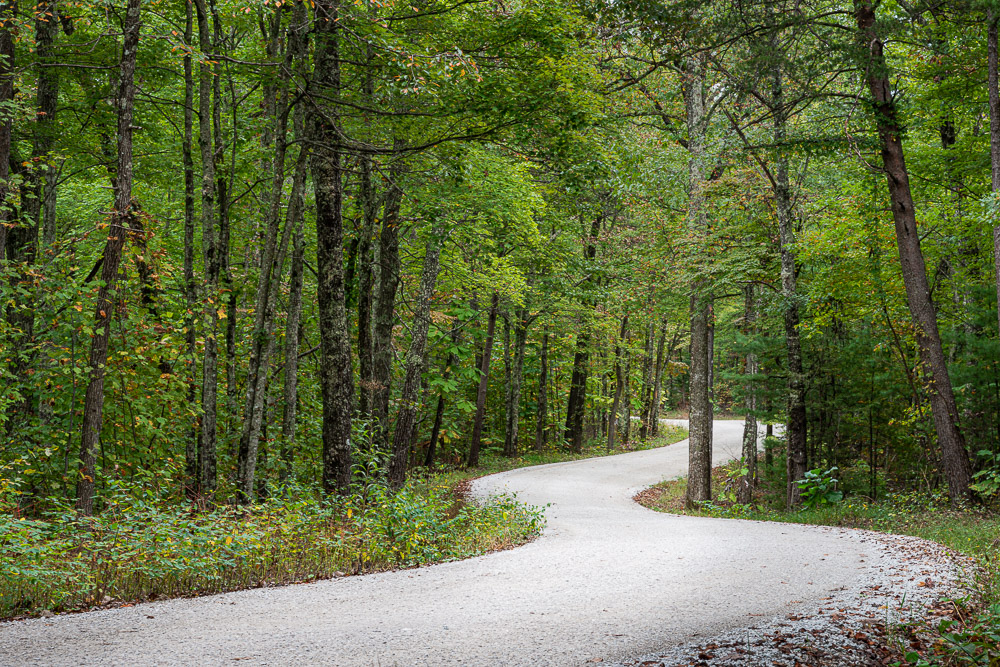
    Let me mention the image with this post. I was searching for great scenes on a beautiful fall afternoon. I was racing through the forests, surrounded by peak color leaves in upstate New York at sunset. Suddenly I was compelled to screech to a halt and turn around and backtrack. My subconscious had recognized this scene even though I thought I was only interested in leaves. I’m very glad I did. This was the keeper. I do not remember any of the leaf images.

    It is joy. It is instinctual. Letting go and following the flow often leads to things I love. Subjects choose you, and it can happen in the most wonderful ways

    Go with it.

  • Vulnerable

    Vulnerable

    Being an artist is creative and rewarding. It is also a position that is vulnerable and lonely. I made my career in an objective, logical engineering world. In contrast, the artist’s world I live in now is based on opinion and perception. I have never felt so vulnerable and out of control.

    Lone-wolf

    A popular view is that the artist is a lone wolf. Fiercely independent, self-sufficient, going his own way regardless of what anyone thinks. To a certain extent, this is true. I think an artist has to have the fortitude to maintain his independence in the face of adversity and pressure to conform.

    Unfortunately, there is a cost to being this lone wolf. A lone wolf is, well, alone. He is isolated, vulnerable, having to go it alone. It’s a position where you don’t have a support infrastructure. You don’t really have people to build you up when you are knocked down. You don’t have people to take care of things and offload work from you – you have to do everything yourself. This can get debilitating at times.

    Some artists maintain a network of mentors, confidants, and collaborators. I envy them.

    Courage

    For me, one of the hardest things is to have the courage and determination to keep pressing on. I am not a natural marketer. It is hard to “put myself out there”. Making noise for myself is a very uncomfortable thing. Especially when I am continually getting knocked down emotionally and passed over.

    An artist has to believe in himself. To believe he has a vision and a message that people should pay attention to. This has to carry him through rough patches when things seem to be going against him. When you seem to be a lone voice in the world, this can be hard to maintain.

    Coming in in the morning with a fresh resolve can be trying. Sometimes it is difficult to say “I am an artist; I believe in myself and know I have something to bring the world”. And act on it.

    Rejection

    Rejection is a part of life, especially for an artist. We have to expect it, even seek it. If you are not being rejected, you’re not trying.

    But it takes a toll. I think even the strongest pay an emotional cost when we are rejected. It’s like being back in school and not being picked for the team or not receiving the scholarship or just not being asked to sit at the table with the “cool” kids. You know it is going to happen sometimes, but it still leaves a bruise.

    With rejection the world seems to be telling me I’m not good enough. That I don’t stack up to the competition. That I probably should just give up.

    But the world is a bitter and heartless place. I have to shrug it off and believe my own inner voice rather than a message some stranger is giving me. I have to believe in myself, even when others don’t.

    Indifference

    Possibly even worse than rejection is indifference. When my art seems to not matter at all to anybody. When everything seems to be futile.

    This is another tool the world uses to try to crush the aspirations of most artists. and it works a lot of the time.

    I sometimes think I would rather have someone write me and tell me they hate my work. At least they took a moment to acknowledge it. (No, it’s an exaggeration. I’m not really asking you to tell me how much you hate what I do.)

    Will power

    This has been much more negative than I usually am. Vulnerability can do that. Rejection and isolation can be cumulative.

    But I think the real point I am trying to make is that these things will come. They happen to everybody. The question is, what am I going to do about it?

    I said an artist has to believe in himself. That is kind of trite, but nevertheless true. Being vulnerable or discouraged or feeling isolated are part of what we have to accept if we call ourselves an artist. If we are feeling down are we going to pick ourselves up, metaphorically, and find the will to go on? Or are we going to pack it in and stop doing our art? It is our call. Nobody else can decide.

    I know of artists who claim to seek rejection and collect rejection letters. Good for them, if they are telling the truth. But good for them regardless, because the attitude is right.

    If I apply for something and get rejected, I have to understand that just means I was not right for that exhibit or the juror was looking for a different style or the gallery has a different culture. The rejection was not a legal certificate from a higher authority saying “you’re not an artist and you should give this up immediately.”

    I am an artist. I believe in what I do. That has to come from inside. If I listen to what other people say I will doubt myself. If I doubt myself, it will inhibit my creativity and my ability to express my vision and my will to apply for that next opportunity. I’m a lone wolf.

    Vulnerable

    Back full circle to the idea of vulnerability. Yes, I am vulnerable in the sense that I am out there, on the edge, exposed to the world, all alone. I have to take the hits and survive. I have to have a strong enough belief in my ability that it can carry me through the rejections and indifference.

    This can be one of the hardest parts of the art world. Many artists are introverts and somewhat shy and self doubting. We have to get over ourselves and put our work out there for the world to deal with. Rejection will come, but we have to go on if we believe we have something worthwhile.

    I will close with a favorite quote from Theodore Roosevelt, popularized recently by Brene Brown:

    It is not the critic who counts; not the man who points out how the strong man stumbles, or where the doer of deeds could have done them better. The credit belongs to the man who is actually in the arena, whose face is marred by dust and sweat and blood; who strives valiantly; who errs, who comes short again and again, because there is no effort without error and shortcoming; but who does actually strive to do the deeds; who knows great enthusiasms, the great devotions; who spends himself in a worthy cause; who at the best knows in the end the triumph of high achievement, and who at the worst, if he fails, at least fails while daring greatly, so that his place shall never be with those cold and timid souls who neither know victory nor defeat.

    To me, this is what it is about. I have to be in the arena to become what I want to be.

  • Open to the Unexpected

    Open to the Unexpected

    When you go out to shoot do you know before you leave exactly what you want to find? Many people do. I feel sorry for them. I greatly prefer to “go out empty” as Jay Maisel would say and let the amazing world around me surprise and delight me. Learn to expect the unexpected.

    This is absolutely my opinion and my photographic style. I am a fine art photographer who works primarily outdoors. The world outside is my canvas. If I were a portrait or commercial photographer I would have to do things differently. When there are crews and talent and art directors and contracts to fulfill, I recognize that the photographer has to plan and organize tightly. I am glad that that is not my world. I thrive on spontaneity.

    Subjective vs. Objective

    In a recent webcast by Chris Murray on Nature Photographer’s Network, he discussed the idea of objective vs. subjective photography. (Sorry but this is a fee site, but you can sign up for a free month.) It was a good talk. He spend a lot of time on his journey from objective to subjective.

    He characterized objective images as ones that document a scene and subjective images as images that convey how the artist felt about or responded to the scene.

    I think most of us start out objective. It happened naturally when we point our camera at a beautiful landmark and get a picture that makes us say “wow, that’s beautiful”. But if it has no more interpretation by us, it is not really different from the hundreds or thousands of other captures of that scene.

    The thing I want to point out here, though, is that Chris said when shooting objective images he would research a location, decide the time of year and time of day that would be best for it, and go there and sit until the conditions were what he expected. He told about camping on a mountain for 3 days waiting for the image he visualized.

    The image he got was a beautiful scene in the Adirondack Mountains. But my reaction to it was “meh…”. (Sorry Chris). To me it did not have any passion or depth. He got almost exactly the shot he planned, but my thought was “why?”.

    What do you miss?

    What did he miss while he was waiting 3 days on that mountain for the “right” time and conditions? Maybe nothing, but maybe a lot. To me that is too great a price to pay.

    I have heard other photographers talk about fighting for a tripod spot at a grand, iconic spot, realizing that they were about to take the same shot that thousands of others take every year. Then they turn around and see a scene the other direction that is more meaningful to them. One that most of the other photographers failed to see because they were totally fixated on the iconic scene.

    I try to be open and aware of what is around wherever I am. Same applies as much if I am walking a downtown street as if I am in a wilderness. Wonderful images can be discovered anywhere.

    Avoid preconceptions

    If you decide before you head out what you want to shoot, you put mental blinders on yourself. It is a fact that you only see what you expect to see.

    This is called “selective attention”. A famous, effective, and short demonstration of this is in this video. Watch it! It is very enlightening. I won’t give a spoiler here, but this applies to any of us. If you are only looking for birds you will tend to only see birds.

    Maybe that works OK for you. It’s not what I want for me. I want to be open to all the exciting things around me. And there are a lot of them. Many of my favorite images are things I would not have known to look for if I was making a list beforehand. I don’t want to miss out on the excitement of truly seeing and openly exploring what an area has to offer..

    Grow

    We all need to practice our skills and our visualization. Even the most famous and experienced photographers make themselves take time for personal projects to keep from getting stale and to grow in creative ways. Learning to avoid the trap of preconception can be part of that growth.

    All artists need constant practice. Pablo Casals was possibly the greatest cellist.

    The world’s foremost cellist, Pablo Casals, is 83. He was asked one day why he continued to practice four and five hours a day. Casals answered, “Because I think I am making progress.”
    — Leonard Lyons

    Repetition is one thing. I have advocated for that before. It is necessary. But there are other ways of learning to break your habit of preconception.

    A great thing to do is to go minimalist. Go out for a day of shooting with one camera body and one lens. I can hear you sputtering now. ☺ “But I might need my fisheye; or I might need 400mm”. No, not if you don’t have it. Practice getting great shots with what you have.

    An interesting thing happens when you let go and go with it. Let’s say you just take your 50mm prime. When you get into it, you will quickly start to see the world from the 50mm perspective. This is probably a type of selective attention, but it is forcing you in a different dimension. Instead of being selective on subjects, you are selecting your viewpoint on the world around you. It is a great exercise.

    I did something similar on a larger scale. My natural vision is telephoto. My ideal lens is 70-200mm. Even longer is great for me sometimes. I like to crop in on details. But for over a year I have switched to mainly shooting with my wonderful 24-70mm. I think it has helped me grow in my creativity. I am surprised at some of the new things I see.

    Let yourself be surprised!

    For me, my art is a voyage of discovery. It is exciting because I never know what I will find. I like to be surprised!

    When I can get into seeing the excitement and possibilities all around me there is sometimes so much to shoot that I have to just stop and take some deep breaths. Slow down. Decide how I feel about what I am seeing and what I want to say. Pace myself. It can be an embarrassment of riches. I am drowning in the imagery.

    The image with this article is an example. I was head down by a lake shooting grass and reflections. That is all I was paying attention to. Eventually I noticed that things were changing and getting colorful. Looking up, I discovered this gorgeous thunderstorm was forming practically right by me. This became the picture. The other images I shot that day are forgotten.

    It even applies to post processing. Sometimes I shoot frames just because my instinct tells me there is something there I am not consciously seeing. Sometimes whatever I was drawn to becomes apparent in post. As I work an image, something magical begins to emerge. It is like creating an image in front of me on the screen directly from light and the manipulations I am doing to coax out an elusive something. That is a joy, too. It is the kind of surprise that makes art worthwhile.

    So I invite you to stop limiting yourself artificially. Don’t block your vision by deciding in advance what you only want to find. Let go. React. Be open to the unexpected. Go out empty, as Jay Maisel famously says. Enjoy discovering what there is instead of being frustrated by what you can’t find.

  • Hunting the Image

    Hunting the Image

    Certain types of photography have a lot in common with hunting. At least some types of hunting. This can heighten the experience for many artists.

    Some of the ideas for this article come from Michael Freeman’s excellent book The Photograper’s Eye. I encourage you to read it. It is part of a series, all excellent. And no, I get nothing from recommending this. I seem to base a lot of ideas on Freeman’s writing. He is one of the most articulate and insightful photography authors I know.

    Street photography, wildlife photography, even portrait photography have the characteristics of having a “decisive moment”, as the great Cartier-Bresson said.

    He also said: “Photography is not like painting. There is a creative fraction of a second when you are taking a picture. Your eye must see a composition or an expression that life itself offers you, and you must know with intuition when to click the camera. ” He also said “once missed, the opportunity is gone forever“.

    In my opinion, street photography is perhaps the highest form of this art. It is done in the chaos of busy, uncontrolled scenes. The photographer does not influence or position the subject or typically even ask for their cooperation. He has little control over lighting or crowds passing by. All the many decisions of recognition of an interesting scene, composition, exposure, framing, and the trigger of the decisive moment must take place in the artist’s mind in an instant. One second is a luxury in this field.

    And when the moment passes, it is gone forever. Forget it and go on the the next opportunity.

    Preparation

    The artist can do some important things to prepare for street photography. One of the simplest is to become so familiar with your equipment that it is an extension of your mind. Adjustments must be instantaneous, automatic. If your camera requires traversing through menus to adjust required settings, that will probably not work. You should be able to set up your camera in the dark.

    Another thing to do to learn to be good at this is developing an enhanced ability to observe and be aware. In flying this is called “situational awareness”. It really just means you are constantly attentive and alert. The US Marines would say your “head is on a swivel”. You have to be aware of everything going on around you. The more quickly you can recognize a developing scene, the better chance you have of capturing it.

    Hunting

    This brings me to the hunting analogy. I used to really enjoy bow hunting. Stalking through the woods tracking a quarry really focuses you and heightens your senses. I was successful in never actually shooting an animal. Eventually I realized I enjoyed the process of hunting much more than I wanted to kill something and I would be much happier hunting with my camera than with a bow or a rifle.

    Cartier-Bresson also said, in an uncharacteristically Zen-like statement, “In whatever one does, there must be a relationship between eye and heart. One must come to one’s subject in a pure spirit.” I choose to interpret is as meaning that when you go out seeking images, you must focus your whole mind and attention on what you are seeing. You must have all your skill and concentration turned up full. All your spidey senses tingling and ready to pounce.

    It is best to go out empty, as the great Jay Maisel says. He means do not bring preconceived ideas of what you want, because that is all you will see. Instead you must be completely open to what is going on all around you. It may be totally different from what you thought would be happening, but that’s OK. Embrace what is there and make the best images possible.

    In case you hadn’t guessed, I love street photography. It takes me out of my comfort zone. It gives me intense practice in mental focus, fast reaction, decisiveness. I may not be great at it, but I enjoy it and I think it helps improve my other photography.

    This awareness and tension and flow becomes almost a spiritual state. Hours can pass without you being conscious of the time. Like with any state of flow, it can be euphoric We are called by instinct and intuition to be intensely aware of those peak moments that define our subjects.

    The hunt is on!

    Let me know what you think!

  • Inertia

    Inertia

    Inertia is a principle of physics that says a body in motion tends to stay in motion and a body at rest tends to stay at rest. This is a fundamental physical property of the world. Inertia is also, I believe, a mental attitude.

    Some of this harkens back to one of my favorite blog posts called “A Road Less Traveled“, but with a different slant.

    Most of us stay very busy “doing” our lives. We have job, family, bills to pay, Facebook posts to read and reply to, clothes to wash, etc. It’s full time trying to keep up with all the demands and expectations. There never seem to be time to kick back and do the things we wish we could do.

    Is that really true or are we our own worst enemies sometimes?

    Safe and comfortable

    It is always easier to keep on doing the same things the same way. It seems safe and comfortable. The familiar ruts are easy to travel. Following the ruts means we don’t have to make hard decisions or examine ourselves. We don’t bring up uncomfortable questions.

    It takes a rather large injection of energy to change. But we’re so busy and tired we don’t have the energy. Inertia. It keeps us doing the same things over and over. Ooh, that sounds like the famous quote Insanity: Doing the same things but expecting different results.

    No, I’m not saying any of us are insane (I don’t know you and I wouldn’t admit about myself). But many of us have this characteristic of insanity: repeating the same unsatisfying patterns over and over without questioning why. It’s the easy way.

    The reality is few of us are as helpless as we think. If you are feeling ground down by your job, increase your skills and get a better job. If you don’t like your environment or don’t feel safe, move. Stop watching the news, that will make anybody less depressed. Take 24 hour breaks from Facebook (or your drug of choice) at least once a week. The world will not come to an end. You don’t need to check your phone every 10 minutes. Put it on airplane mode for hours at a time. Take more charge of your life. Stop assuming you are powerless.

    And then you can start controlling more of your life, start adding in things that are more meaningful to you. Reading, meditation, spending more time with friends, playing with your kids, learning new skills, doing art. It’s not making sweeping changes in your life; it’s taking small but deliberate steps toward your values and beliefs.

    Bump, bump, bump

    I love this quote from Winnie-the-Poo:

    Here is Edward Bear, coming downstairs now, bump, bump, bump, on the back of his head, behind Christopher Robin. It is, as far as he knows, the only way of coming downstairs, but sometimes he feels that there really is another way, if only he could stop bumping for a moment and think of it.

    A.A Milne

    Most of us are bumping down the stairs with a vague idea that there should be another way. We are not really helpless. But change takes determination, energy, conscious effort, and a vision of where we want to go. It is uncomfortable at first. It can be scary. Start small and build your confidence. Small successes lead to larger ones.

    What about “creatives”?

    This blog is ostensibly about art and my artistic journey. Does this idea of inertia apply?

    Oh, yes. Definitely. It is the old saying that when you point a finger at somebody, you have 3 fingers pointing back at you.

    I have to consciously fight this all the time. It is too easy to keep taking the same path, to create the same images over and over. I have to constantly ask myself “Why am I doing this? What am I trying to say here? Do I still really resonate with this subject or style? Do I have a better idea I feel like I should try, but it seems risky? What if I fail?”

    Artists can easily get stuck in a rut. Then they stop growing and developing and exploring their creativity. It is an humbling self-examination I have to go through all the time. For an artist, maybe more than most people, “no risk, no reward” seems to apply.

    Call to action

    I am not a believer in “New Year’s Resolutions”. I am not throwing out another suggestion of something to make a half-hearted attempt to do and then give up in 3 weeks. I am suggesting you take one thing you are not satisfied with and decide to change it.

    Please, start recognizing some of your frustrations as inertia. This is something you can do something about. Force yourself to take action to change a few things. Start taking control of your life.

    And check my gallery at photos.schlotzcreate.com. You may find images that bring you peace or help focus your energy.

    As always, I welcome your comments.