An artists journey

Tag: psychology

  • Hunting the Image

    Hunting the Image

    Certain types of photography have a lot in common with hunting. At least some types of hunting. This can heighten the experience for many artists.

    Some of the ideas for this article come from Michael Freeman’s excellent book The Photograper’s Eye. I encourage you to read it. It is part of a series, all excellent. And no, I get nothing from recommending this. I seem to base a lot of ideas on Freeman’s writing. He is one of the most articulate and insightful photography authors I know.

    Street photography, wildlife photography, even portrait photography have the characteristics of having a “decisive moment”, as the great Cartier-Bresson said.

    He also said: “Photography is not like painting. There is a creative fraction of a second when you are taking a picture. Your eye must see a composition or an expression that life itself offers you, and you must know with intuition when to click the camera. ” He also said “once missed, the opportunity is gone forever“.

    In my opinion, street photography is perhaps the highest form of this art. It is done in the chaos of busy, uncontrolled scenes. The photographer does not influence or position the subject or typically even ask for their cooperation. He has little control over lighting or crowds passing by. All the many decisions of recognition of an interesting scene, composition, exposure, framing, and the trigger of the decisive moment must take place in the artist’s mind in an instant. One second is a luxury in this field.

    And when the moment passes, it is gone forever. Forget it and go on the the next opportunity.

    Preparation

    The artist can do some important things to prepare for street photography. One of the simplest is to become so familiar with your equipment that it is an extension of your mind. Adjustments must be instantaneous, automatic. If your camera requires traversing through menus to adjust required settings, that will probably not work. You should be able to set up your camera in the dark.

    Another thing to do to learn to be good at this is developing an enhanced ability to observe and be aware. In flying this is called “situational awareness”. It really just means you are constantly attentive and alert. The US Marines would say your “head is on a swivel”. You have to be aware of everything going on around you. The more quickly you can recognize a developing scene, the better chance you have of capturing it.

    Hunting

    This brings me to the hunting analogy. I used to really enjoy bow hunting. Stalking through the woods tracking a quarry really focuses you and heightens your senses. I was successful in never actually shooting an animal. Eventually I realized I enjoyed the process of hunting much more than I wanted to kill something and I would be much happier hunting with my camera than with a bow or a rifle.

    Cartier-Bresson also said, in an uncharacteristically Zen-like statement, “In whatever one does, there must be a relationship between eye and heart. One must come to one’s subject in a pure spirit.” I choose to interpret is as meaning that when you go out seeking images, you must focus your whole mind and attention on what you are seeing. You must have all your skill and concentration turned up full. All your spidey senses tingling and ready to pounce.

    It is best to go out empty, as the great Jay Maisel says. He means do not bring preconceived ideas of what you want, because that is all you will see. Instead you must be completely open to what is going on all around you. It may be totally different from what you thought would be happening, but that’s OK. Embrace what is there and make the best images possible.

    In case you hadn’t guessed, I love street photography. It takes me out of my comfort zone. It gives me intense practice in mental focus, fast reaction, decisiveness. I may not be great at it, but I enjoy it and I think it helps improve my other photography.

    This awareness and tension and flow becomes almost a spiritual state. Hours can pass without you being conscious of the time. Like with any state of flow, it can be euphoric We are called by instinct and intuition to be intensely aware of those peak moments that define our subjects.

    The hunt is on!

    Let me know what you think!

  • Inertia

    Inertia

    Inertia is a principle of physics that says a body in motion tends to stay in motion and a body at rest tends to stay at rest. This is a fundamental physical property of the world. Inertia is also, I believe, a mental attitude.

    Some of this harkens back to one of my favorite blog posts called “A Road Less Traveled“, but with a different slant.

    Most of us stay very busy “doing” our lives. We have job, family, bills to pay, Facebook posts to read and reply to, clothes to wash, etc. It’s full time trying to keep up with all the demands and expectations. There never seem to be time to kick back and do the things we wish we could do.

    Is that really true or are we our own worst enemies sometimes?

    Safe and comfortable

    It is always easier to keep on doing the same things the same way. It seems safe and comfortable. The familiar ruts are easy to travel. Following the ruts means we don’t have to make hard decisions or examine ourselves. We don’t bring up uncomfortable questions.

    It takes a rather large injection of energy to change. But we’re so busy and tired we don’t have the energy. Inertia. It keeps us doing the same things over and over. Ooh, that sounds like the famous quote Insanity: Doing the same things but expecting different results.

    No, I’m not saying any of us are insane (I don’t know you and I wouldn’t admit about myself). But many of us have this characteristic of insanity: repeating the same unsatisfying patterns over and over without questioning why. It’s the easy way.

    The reality is few of us are as helpless as we think. If you are feeling ground down by your job, increase your skills and get a better job. If you don’t like your environment or don’t feel safe, move. Stop watching the news, that will make anybody less depressed. Take 24 hour breaks from Facebook (or your drug of choice) at least once a week. The world will not come to an end. You don’t need to check your phone every 10 minutes. Put it on airplane mode for hours at a time. Take more charge of your life. Stop assuming you are powerless.

    And then you can start controlling more of your life, start adding in things that are more meaningful to you. Reading, meditation, spending more time with friends, playing with your kids, learning new skills, doing art. It’s not making sweeping changes in your life; it’s taking small but deliberate steps toward your values and beliefs.

    Bump, bump, bump

    I love this quote from Winnie-the-Poo:

    Here is Edward Bear, coming downstairs now, bump, bump, bump, on the back of his head, behind Christopher Robin. It is, as far as he knows, the only way of coming downstairs, but sometimes he feels that there really is another way, if only he could stop bumping for a moment and think of it.

    A.A Milne

    Most of us are bumping down the stairs with a vague idea that there should be another way. We are not really helpless. But change takes determination, energy, conscious effort, and a vision of where we want to go. It is uncomfortable at first. It can be scary. Start small and build your confidence. Small successes lead to larger ones.

    What about “creatives”?

    This blog is ostensibly about art and my artistic journey. Does this idea of inertia apply?

    Oh, yes. Definitely. It is the old saying that when you point a finger at somebody, you have 3 fingers pointing back at you.

    I have to consciously fight this all the time. It is too easy to keep taking the same path, to create the same images over and over. I have to constantly ask myself “Why am I doing this? What am I trying to say here? Do I still really resonate with this subject or style? Do I have a better idea I feel like I should try, but it seems risky? What if I fail?”

    Artists can easily get stuck in a rut. Then they stop growing and developing and exploring their creativity. It is an humbling self-examination I have to go through all the time. For an artist, maybe more than most people, “no risk, no reward” seems to apply.

    Call to action

    I am not a believer in “New Year’s Resolutions”. I am not throwing out another suggestion of something to make a half-hearted attempt to do and then give up in 3 weeks. I am suggesting you take one thing you are not satisfied with and decide to change it.

    Please, start recognizing some of your frustrations as inertia. This is something you can do something about. Force yourself to take action to change a few things. Start taking control of your life.

    And check my gallery at photos.schlotzcreate.com. You may find images that bring you peace or help focus your energy.

    As always, I welcome your comments.

  • Gestalt

    Gestalt

    No, not Gesundheit. Gestalt psychology is a a system that looks at things as a whole rather than just parts. It goes for the “big picture”.

    What does a relatively obscure European psychology theory from the early 20th century have to do with anything I have been discussing here? Quite a lot, actually. One of the famous summaries of Gestalt principles is “The whole is different than the sum of its parts.” I believe this is profoundly true for many things, especially photography.

    Proponents of Gestalt included notables such as Immanuel Kant, Ernst Mach, and Johann Wolfgang von Goethe. Actually knowing who they were is not important, just that you have probably heard the names. It is interesting to me that the theory developed as a reaction to the prevailing trend of the day to break things down to the smallest possible parts. Something that still happens with some people to this day.

    A brief explanation of Gestalt

    A simple explanation of Gestalt is that the human mind makes patterns, it completes fragmented shapes to make wholes, it extends dots to see lines, etc. We are designed to complete pictures. The following figure shows an example of this. It is called the Kanizsa triangle. The Gestalt principle of closure is illustrated.

    Kanizsa Triangle

    Almost everyone sees 2 equilateral triangles in it. There are actually no triangles. Our brain “closes” the straight line segments to see one triangle and we “close” the shapes of the cutout circle segments (Pac Man?) to see the other one.

    Other Gestalt principles include similarity, proximity, continuity, and common regions. I’m not going to go into them here. I have no illusion of this being a course on psychology.

    Examples

    My point is that that these principles are real and common to most people. They are used by designers and artists all the time to guide our perception of images. Here are some examples from my library. They were not shot consciously thinking about Gestalt psychology, but they show some things that trigger my mental library because I have learned over time that they work.

    Implied lines

    Here you see the shadows forming dark lines going from upper left to lower right. They are formed by our mental connection; they do not really exist. The three sets of shadows do not even touch each other.

    Implied arc

    In the lower part of this image you see an arc of yellow lights. They are really just discrete points. Since they are closely spaced and in a regular pattern, we see a complete arc. And it continues despite the dropout on the far side.

    Implied region

    The area inside the magenta line is seen as a distinct region of the image. Inside the line is one area, outside is another separate one. It’s not really true, but that is the way we see it.

    Application

    The marvelous human brain is unsatisfied with incomplete forms. We “fill in the blanks” unconsciously. And it is even rewarding. You feel more satisfied by solving a puzzle, by completing an image from clues. A few points is seen as a line, some repeated shapes is a region, things in proximity seem to go together. It is amazing. When an artist works with his viewer to make a game it can be fun for both.

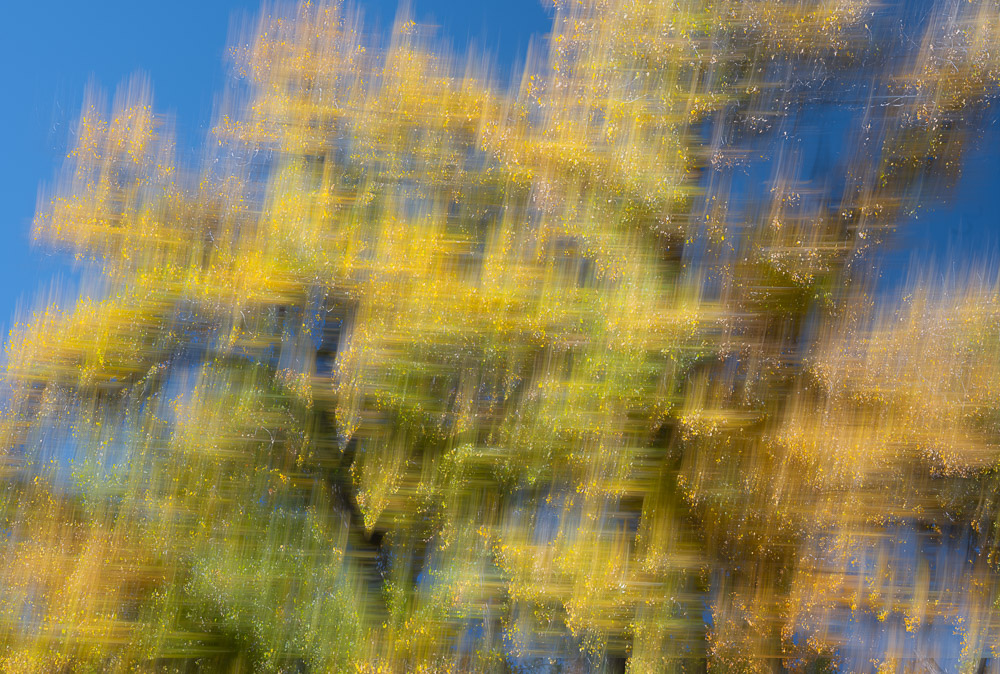
    So how about the image at the top of this topic? A few arcs? A couple of rectangular blobs? Or is it a spotlighted figure? Or a spider?

  • Image Library vs Creativity

    Image Library vs Creativity

    I recently wrote 2 articles that seem, on the surface, to be contradictory. In When The Flash Goes Off I discussed the cognitive theory that we recognize images we like based on a library stored in our mind. In It’s Complicated I argued that there is a creative side of our mind that discovers and creates new things. Which is right? I believe both are. It is recognition from the image library and creativity, not either or.

    I believe that when I am searching for images, the mental library is being scanned all the time. This is a fairly conscious activity. I have asked my mind to let me know when there is something there that I probably want to be aware of. This is the active hunting phase.

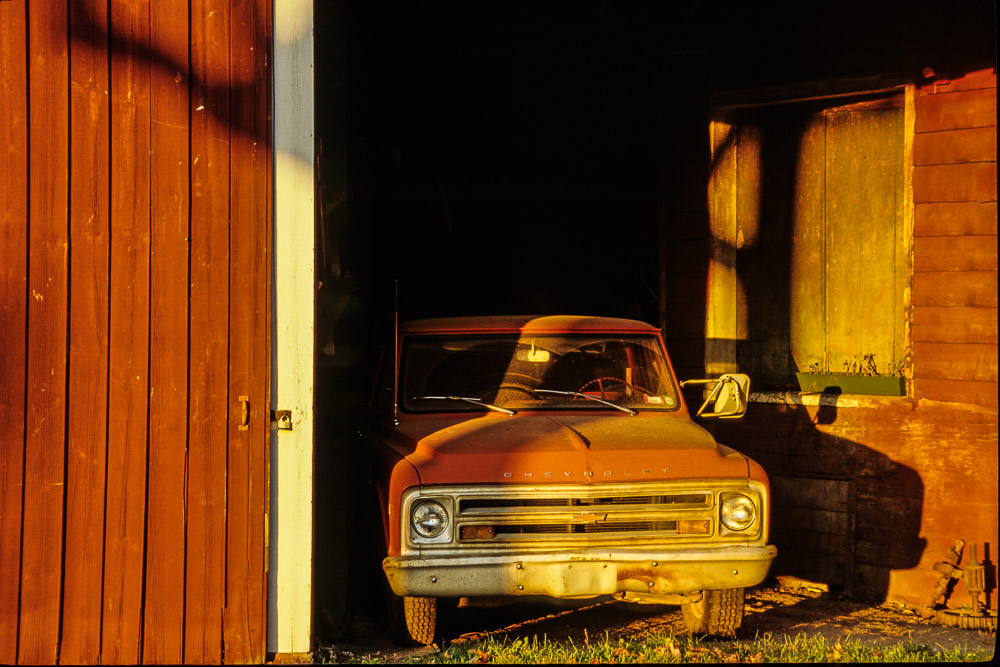
    Here is an example from a recent shoot. I was near Leadville Colorado. One of my favorite areas in the world. Cruising around the old mining area I came on this scene below. I love old mining cabins, beaver ponds, ice, mountain views, and historic areas. So those are all filed in my image library. This hit on all of these. It was immediately obvious that I would have to stop and work on this scene. No chance of going past it. My head was exploding.

    Colorado Mining Cabin, Late fall

    Vs. Painting

    By the way, why does this hunting work much better for photography than for painting? Because a painting is constructed from nothing. The canvas starts blank. The artist must decisively choose and place every element wanted. The camera, instead, constantly receives massive amounts of information. Every place the camera is pointed and every time the shutter clicks, there is a complete, fully formed image. The photographic artist’s job is to sift, reduce, minimize, compose, organize this embarrassment of riches to select what would be a worthwhile image from all this. A completely different mindset from painting. And this is why the mental image library works to locate promising scenes.

    Where is creativity?

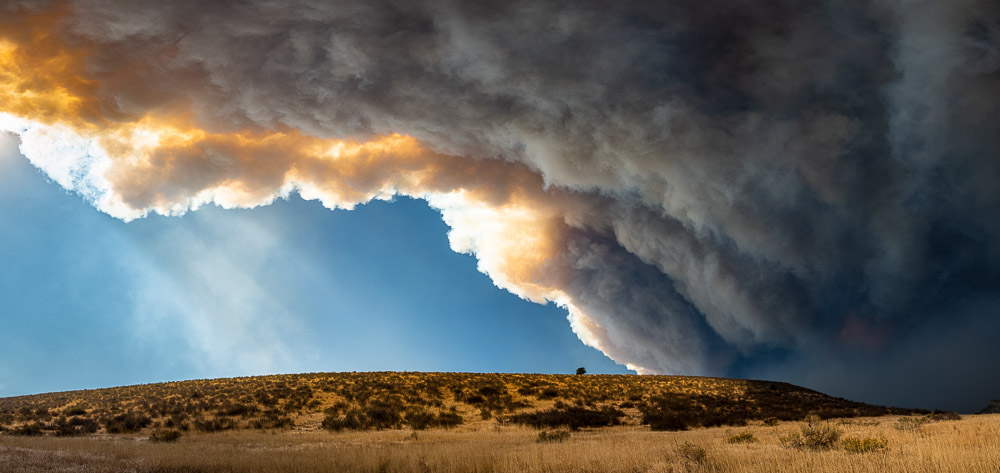
    Contrast the mountain cabin above to the image at the top of this post. This was taken on Loveland Pass in late fall in the early evening after sunset (burrr – very cold). This image was preconceived before I got to the location. The reason I was at Loveland Pass was specifically to look for this. I challenged myself to explore the concept of “dark” and this was one variation that formed in my mind. I had never taken an image quite like this before. This one, as a matter of fact, is a composite of several time exposures.

    I hope this is perceived as a valid and fresh take on the concept of “dark”. I hate the phrase “out of the box” and seldom apply it to myself. Maybe because I fought long and hard to never let myself be confined to a box. Too many people toss it off casually. The trouble is, it’s easy to say it, but doing it takes a lot of discipline.

    So this was not a result of my mental library. It was a new creative event. I consciously pre-visualized the image rather than recognizing it as I passed by. Actually, it was too dark to have recognized much of anything.

    So where did it come from? In this case, I posed a project for myself and that got the other side of my subconscious mind working on solutions. This is one source of creativity. Other creativity drivers are looking for connections, asking “what if”, and seeing examples of other work. The subject of creativity is too big for here. It needs other posts.

    Complementary

    Mental image library or “out of the box” creativity? Yes, both.

    These are not in opposition. Rather they are just 2 different aspects of our marvelous minds at work. They are complementary. Together they are 2 of many tools we have that allow us to see and create great images.

  • It’s Complicated

    It’s Complicated

    Last time I wrote about the cognitive theory of vision that says we have a library of images stored in our mind and we automatically match them against scenes in front of us. This time I will say, it’s complicated. Nothing in life is that easy and straightforward. The simple theory can’t explain everything.

    To reference one of my favorite quotes from The Count of Monte Cristo (movie version). “it’s complicated”. Life and art is. A model, like the model I described last time, is a simplified version of reality. It may be useful to explain some things, but it cannot fully describe real life.

    The safe path

    If it is true that we are drawn to reproduce images we already know we like, we get stuck. Now, I think many people would acknowledge that this is true and they spend much of their career remaking the same images. Maybe they are OK with this. It is, after all, safe and comfortable.

    I can only speak for myself, but safe is not my goal. Safe gets boring and all the same. If I were a wedding or portrait photographer I’m sure I would have a different attitude. I’m not, so I can get as far “out of the box” as I want.

    Where is creativity?

    If we only remake images that match our mental library, where is the creativity? Where is that spark that takes us completely outside the normal? What causes a change of direction?

    The answer is: I don’t know for sure. But I know it happens. While I believe creativity is a learned process, it is undeniable that it sneaks up on us unexpectedly sometimes. Maybe we intentionally go out looking for something new. Maybe a familiar scene make us ask a question that leads us in a new direction. Sometimes we might have just had something weird to eat and it sparks our brain in a strange way.

    Be receptive

    I believe creativity is something you can practice and stimulate and cultivate. But those things only encourage it to happen. When it happens, when something new hits you out of the blue, you need to be receptive to it. Sometimes our natural reaction is to resist the risky new “thing”. We may not even recognize it as an entirely new direction at the time we first see it.

    Embrace the new idea. Run with it and see where it goes. At worst you decide you don’t like it. Better to have tried and failed than to not try at all. At best, though, it may change you. It may be a new viewpoint on the world.

    Think of Bilbo in The Hobbit. He did not want to leave home, but he came back changed in ways he could never have imagined. Most of us are not inviting life changing experiences like that when we follow a creative instinct. But it may be a close as we come.

    Personal

    I’m an artist. If I go through life taking the same pictures over and over, because that’s what is in my mental library, I am stale. I thrive on creativity. I enjoy following my curiosity to find new things. I am refreshed by expanding my vision in new ways. It makes me grow. It keeps me young.

    I embrace creativity, not for its own sake but for what it does for my vision. When I grow to a new place in my art I find I need to add some new images to that mental catalog and maybe remove some that I do not care for any more. That is life. That is growth. It’s complicated, but awesome.

    Let me know what you think!