An artists journey

Tag: psychology

  • Competition

    Competition

    Why is it that we feel like we are in competition with other artists? Maybe, at its root, it is envy or insecurity. I don’t like to live in a competition. My desire is to make art and share my vision with other people. I believe that feeling we are in competition with other artists leads to problems for ourselves and can be a malignant stress eating away at us.

    Not competing until…

    Most people merrily go through their lives enjoying art without feeling any sense of competition. But for those of us who become artists, unfortunately, we tend to become critical and competitive.

    Once we are in the game we tend to look at other artist’s work more critically. It is hard to not think we could do better. Or think that our image that was similar was better composed and executed. Maybe we are right. Often, though, it is our ego or fear talking.

    Theodore Roosevelt (may have) once said “Comparison is the thief of joy”. Regardless of who said it, it is true that comparing ourselves to others is seldom beneficial and uplifting.

    Fear

    Why should we fear looking at someone else’s work? I think a lot of us are insecure. We aren’t secure in our conviction about the adequacy of our artistic skills. We have to boost our confidence by convincing our self that we are as good as them. Perhaps we fear failure and are unwilling to put our work out in the world publicly and face the potential criticism and rejection.

    It is not really a zero sum game – one winner and everybody else looses. When we see someone’s work that is good and excites us, we should be happy. It was a great achievement by them and it can inspire us to rise to greater levels in our own work.

    But doesn’t their achievement strike fear into us? Oh no, we aren’t any good, why am I calling myself an artist, how can I ever compete with them? This is our insecurity turned to fear. We try to compensate by criticizing the other artist’s work. Maybe it will make us feel better. If we believe our self.

    Jealousy

    Another negative feeling we may get is jealousy. We may not like to admit it, but think about it. Other people are getting praise and attention. They are selling well and making a lot of money. I should be in this gallery instead of them.

    We wish we were them. So we resent them. We look for ways to tear them down and to prove, even just to ourselves, that they are not so great. To believe that we are just as good.

    But don’t forget, you are jealous of them because you recognize their talent. That should be sobering.

    Become a critic

    Even if we don’t have full on, green-eyed jealousy, we may become a critic. To paraphrase George Bernard Shaw’s famous quote: “Those who can, do. Those who can’t become critics.”

    We can get to this point through festering fear or envy or jealousy. We try to put ourselves above the other artist. To give ourselves credentials to label them, to minimize their achievements, even to just nit-pick (the top left corner is not in perfect focus).

    Let me be very controversial and say I don’t think there are many critics who are worth listening to. Unless a critic has demonstrated history of creativity and success in similar art forms, they should be just another voice of someone entitled to their personal opinion.

    If George Lepp or John Paul Canponigro gave me a critique I would listen closely and thank them for their opinion. I would carefully consider it and may or may not act on it. If I decided to critique George Lepp, he probably wouldn’t listen to me at all. As he should. I have little experience in his genre and zero track record compared to him.

    Competitive market

    It is unavoidable a highly competitive market. We are always being compared to other artists. Fairly or unfairly, there will be winners and losers. The best don’t always win. “If you make it they will come” is ridiculous. There are biases and vested interests and politics at play everywhere.

    When we compete – and we always compete – we need to avoid the attitude that we are competing against “all those other artists”. That is turning our view out to worry about forces we cannot control. Instead, do your best and make work you are proud of.

    Sure, for a particular contest, we could research the judges and their styles and biases and research the audience and what usually sells and create work designed to score well here. It might work. But whose art are you creating? Is your work going to be dictated by other people’s attitudes?

    Relax

    Fear, jealousy, envy, and being critical are self-destructive attitudes. Look at other artist’s work and admire the ones you like. Go to them and sincerely congratulate them. It will have rewards for both of you. You will reclaim your self confidence and creativity. Getting over the competition and fear and jealousy will free up your emotional energy to create art.

    The reality is that we have our own unique vision, our own style and viewpoint. We are best off when we try to be the best version of our self we can be and create our own art. Even is nobody appreciates it. (cue a vanGogh discussion here 🙂 ) Unless you are starving and view your art as a job to earn money, it is better to follow your own vision. It would feel good to win that contest, but wouldn’t it be more rewarding to feel very proud of what we created?

    Art is an intensely personal internal journey. Hence the tag line for my blog: An artist’s journey.

  • Unrecognized

    Unrecognized

    Sometimes things are right there staring us in the face. But we don’t or can’t see it. We fail to see what should be obvious. This in an internal problem. We don’t get to blame anyone else. Don’t go through life with unrecognized interest all around.

    Unrecognized artist

    “Unrecognized” is a fairly ambiguous word. Well, not really ambiguous, it is just that it can be applied so many ways. One of the first things that comes to mind when I hear the phrase is my sadness at being an “unrecognized” artist.

    Even though I have sales and good gallery representation and I get exhibited, it feels like nothing. Failure. I seek to be more widely known. A goal is to share my vision with many more people.

    But this aspect of “unrecognized” is not what I am discussing in this article.

    Unrecognized beauty

    Most people I know sort of drift through life in a daze. We follow our normal paths, doing basically the same thing all the time without really seeing things around us.

    If we recognize the rut we are in, we can climb out. At least enough to make a difference. Just deciding that we are going to pay more attention to things around us will go a long way.

    There is beauty all around us, even if you live in a city. Disappointed that you don’t live in Yosemite? Get over it. Learn to appreciate where you are. Even if you are not thrilled with your environment, by learning to look more closely we can usually find things, even little things, to brighten our day. Is there a flower, or a tree, or a pattern of light and shadow on a building that catches your eye? Look at it. Stop and take a moment to appreciate it.

    This will grow a habit of mindfulness. It will help us become more aware of what is there and more grateful of the little scenes that brighten out day, make us feel more alive.

    Unrecognized self

    Many of us, I’m pointing to myself, too, have trouble recognizing where our creative instincts are leading us. We change all the time. It can be hard if we feel like we are starting to be recognized for a certain style or subject. We fear that changing would lose our market. But at least that person is aware of what is going on. Most of us, I feel, one day realize that what we are drawn to is different from what we have been practicing for a long time. This can shake us to our bones. But it can also be refreshing and invigorating to re-align with where our subconscious is directing us.

    I think this quote from a very good photographer from the past, David Vestal. is enlightening.

    As we work, we come to know more and become more patient and less inclined to rush past our own work that we don’t yet recognize. Now I am quicker to see in my own new work the “accidental” good photos that I used to ignore.

    Mr. Vestal points out 3 key things that are common and key to our artistic growth.

    Know more

    As we practice our art we learn. Our technical abilities grow and our creative capabilities are stretched. The more we learn the deeper vocabulary we have to express what we see and feel. We also have more ability to examine our art and critique it.

    If we’re lucky, we even get to a point where we know what we don’t know. But the path of knowing more sometimes means we grow away from the positions we held in the past.

    More patient

    Mr. Vestal describes part of the growth process as becoming more patient. With ourselves. I know for myself, I feel less need now to shoot quantities of images. I used to be in a frenzied rush to capture everything that was the least bit interesting. These days I will usually come back with fewer images. I can see something nice and not feel the need to take a picture. Sometimes it is sufficient to just acknowledge it and appreciate it. I would rather have a few images that excite me rather than a whole pile of “OK” pictures.

    I think this also applies to our results and growth as an artist. Have you ever found yourself trying to “force” a great image. I do. Maybe less than I used to. As I grow I am more interested in trying to see more clearly what is there and understand how I perceive it, what I want to do with it. Sometimes it doesn’t come. Rather than be a big frustration, it is an opportunity to try to figure out why.

    Have you ever come upon what would be one of your “standard” images, one you would always shoot, and said, “no, that doesn’t interest me today”? Something is speaking to you to tell you you have grown to a new position.

    Recognize

    To me, the phrase in his quote “less inclined to rush past our own work that we don’t yet recognize” is brilliant. I sometimes run across something while I am looking for a particular image. Something I didn’t think was very good, but for some reason I kept it. Looking at it some time later I liked it much better. Sometimes I realize that if far more representative of my current vision that things I used to shoot.

    He describes them as accidentally good shots. I believe these accidental shots are sometimes our subconscious trying to show us something we don’t recognize yet. As we grow in our artistic concept, we have to leave the past behind. We become bored with what we used to proudly do. Recognize that feeling. Learn from it. It is time to move on.

    I have described before that I tend to be fairly brutal about culling out bad or uninteresting shots. Sometimes, though, I am compelled to keep an image that I don’t think I like. Sometimes I find, later, that this image is significant to me. It may even be a pivot to a new direction in my journey. I did not recognize it at the time, but I did perceive that there was something there that made me keep the image and come back to it later.

    Be receptive

    I believe we should learn to be more receptive to these signals our subconscious is sending us. The subconscious mind is more powerful than the conscious mind. It understands us better. It is not deluded by ego or financial considerations or social media followers.

    I have heard it said that this message from our subconscious is usually not a light bulb going on, it is more like a tickle on the back of our neck. That little feeling that there is something here we are missing or need to figure out. Maturity is learning to be aware of this hint and follow it to see where it leads us.

    How about you? Have you ever puzzled over an image you couldn’t figure out, only to recognize later that it was a harbinger of a new direction for your creative work? The way to a new creative plateau? Did you trust your instincts and embrace the new direction? What was the result?

    I would like to know! Leave a comment or email me.

  • Labels

    Labels

    We use labels as a short cut to knowing what to think about things. But when we do this without conscious knowledge of what we are doing we blind ourselves to a lot of the world around us. It is probably one of the causes of social, racial, class, sexual biases today. Once we assign a label to someone or something, we cease to see them for what they are. They become what our label stereotypes them as. As artists, we severely limit ourselves if we allow labels to get in the way of actually seeing things.

    Shortcut

    Labels serve a function. They help us quickly sort through the barrage of information we get every day. They also help make the world around us more predictable. When I recognize something as a phishing email or a spam call I can quickly deal with it without having to analyze it or waste time. I get dozens of emails a day, but I can quickly label most of them as useless or useful and dispose of them.

    We use labeling all the time as a prediction tool. I’m about to cross the street and a car is approaching the intersection. It is a fairly late model car and they seem to be obeying the law. I can mostly ignore them. They are not a threat.

    Likewise, I’m walking at night and another person is approaching. They look like they share the same labels I apply to myself, so they are probably “safe”. Does this imply some bias? Of course. That is one of the functions of labels.

    Self-fulling

    We can observe, and psychologists have researched and proven, that labels tend to become self-fulfilling. If a student is told he is smart, his effective IQ usually goes up. In the same way, if a student is told he is deficient, his IQ goes down. And teachers tend to treat them according to the labels.

    Labels set boundaries on the thing we are labeling. To us, it is only this. It cannot be more. When we correctly label unimportant things, it helps us be more efficient. I can get through my emails more quickly. I may occasionally mislabel one and miss something I would have wanted to see, but, oh well. Usually I am right. And it is faster.

    But labeling people is a dangerous thing. People are much harder to judge and the consequences of labeling them wrong can be high. People deserve to be given a lot more leeway in our “judgments”.

    The great old story about the founding of Stanford University after being rebuffed by Harvard is probably not true, but this one probably is:

    In July 1998, William Lindsay of Las Vegas said he contacted an unnamed Scottish institution of higher learning by telephone and told them he intended to give some money to a university in Scotland. Taking him for a crank, the person he spoke to rudely dismissed him. His next call to Glasgow University met with a warmer reception, and in March 2000 that school received a check for £1.2 million, enough to endow a professorship in Lindsay’s name.

    I’m sure you have your own story about labeling a person and then later finding you were very wrong. Did you feel a little ashamed?

    Danger for artists

    Setting aside the moral problems with labeling, as artists we are severely limiting ourselves when we trust labels to tell us about the things around us. We are putting blinders on ourselves. Labels prevent us from really looking at things and seeing them for what they are.

    As an artist, I need to be open and receptive. I need to be able to see things in fresh, creative ways. I can’t do that if I artificially put the things I am seeing into labeled boxes. Labels are fast and convenient, but I feel they get in my way of creativity. And they take away a lot of potential enjoyment we could get from seeing common things in new ways.

    Guy Tal brought out interesting points related to this in his insightful book “More That A Rock“. (I get no compensation for the link; I just point it out to you because it is useful) The title is based on a famous quote by the great photographer Edward Weston:

    This then: to photograph a rock, have it look like a rock, but be more than a rock.

    Mr. Tal goes on to say in the preface to the book:

    In the context of photography, therefore, representation is accomplished primarily through technology and skill, and a fortuitous convergence of “right” place and “right” time. Creativity requires something beyond objective qualities that are inherent in subject, tools, or circumstances – something subjective originating from the unique mind of the photographer that would not have existed had they not created it.

    To use Mr. Tal’s terminology, I am constantly trying to get past representation and find creativity. I believe this type of subjective creativity is difficult, if not impossible, if the thing we are considering is hidden behind labels. Unless we learn to overcome the tricks our minds play.

    Mindfulness

    This brings me around to a subject I keep coming back to more and more – mindfulness.

    To be a creative person ,we have to learn to manage our mind and attitude. We have to train ourselves to stay aware and attuned to interesting things around us. One big part of this is to consciously decide to see beyond labels.

    I don’t think there are any tricks or cheats. No shortcuts. We just have to be aware of being aware. Training and practice.

    Try this sometime. It will be weird at first. Take a block of time to practice mindfulness. Go out walking (or whatever) and keep asking yourself “What is this I am seeing? Have I ever seen anything just like this? How would I make an interesting picture of this?” And do it. Stop and make a picture. Even of silly things: reflections is a window. A chalk drawing on a sidewalk. A flower in someone’s yard. Set your expectations low. You are not doing this to get wonderful pictures. You are training yourself to see and consider more things.

    Give it an honest try a few times, then see if you are developing a new ability to see more and deeper. To see beyond labels. If not, write me. I would like to know why it is not working. And , even if it does work, feel free to write me and let me know what you discovered. I would like to share your experience. My email address is in the sidebar.

    The image with this article is one of these. I was having lunch near my studio and noticed the way the corner windows were creating abstract reflections. I stopped eating and shot some intriguing juxtaposed scenes. This is one actual image, just found by chance. And because I was looking.

  • Excuses

    Excuses

    Excuses, we have them for every occasion. There’s nothing interesting here. It’s too hot. It’s too cold. I’m too busy. The weather is not right. I don’t like this light. I’m not good enough. I’m shy. It could go on for a page or more. Excuses are our way of letting ourselves off the hook when we are scared or don’t want to do something.

    As a heads up, this is about the dreaded topic of marketing. In case you want to stop reading now. 🙂

    Why make excuses

    Excuses are a way of absolving ourselves of responsibility. We shift the blame to someone or something else. It lets us off the hook. We didn’t fail, it was “their” fault we couldn’t do it.

    Have you done that? I sure have. We don’t want to feel bad about ourselves. After all, we have a self image to nurture. The problem is when we rely on excuses to not do anything.

    Fear

    A lot of times we make excuses because we are afraid of doing something. Contact that gallery? No, they wouldn’t want my work. Submit for that show? No, I’m not good enough.

    Fear of failure keeps us trapped in our own prison. We build a cage of excuses around us to protect ourselves from failing. But we can become trapped in a cage of our own making.

    But we’re thinking about it wrong. What we fear almost never happens and not achieving our objective is not the same as failing.

    What we fear

    I believe a lot of us artists are introverts. We shun confrontation and don’t like to be criticized. Even if we are not introverts most of us do not like these things. So we fear that if we put our self forward we might be rejected. People might even think bad of us.

    Here’s what I am learning: we will be rejected, again and again, and no one really knows who you are or cares enough to think bad of you. That sounds harsh, but it should actually be somewhat comforting.

    I apply for a show and my submissions are rejected. I don’t know why. They do not give a critique. Perhaps what I entered doesn’t appeal to the juror. Perhaps they had different styles in mind. Maybe the juror was in a bad mood at the time. I cannot know. But what they didn’t say was “you are a failure; I hate your work; you are not worthy of being an artist; don’t ever enter this event again”. No, it was just a rejection. Get over it and go on.

    Trying

    You know the old Yoda line “Do or do not. There is no try“. It is a great line, but kind of misleading. Like Luke in the scene with Yoda, if we do not believe we can do it, we are probably right. The reality is that for most things, trying is all we can do. We cannot always create the outcome we want as long as we are dependent on other people’s decisions.

    Trying does not mean we doubt ourselves. It means we recognize that many of the attempts we make will not succeed. And we’re willing to live with that.

    It’s the trying that we fall short on. We’re afraid so we never try. We get a rejection so we stop trying. Persistence is required in order to succeed.

    As I have said before, “build it and they will come” doesn’t work. We have to let people know about ourselves and our work. This is called promotion. It is called marketing. That is not a bad word. It is what makes us recognized and successful.

    Just do it

    For years I had the attitude that I love doing art but I hate marketing. I am shy so I am not good at it. People will eventually recognize the worth of what I do.

    Ain’t going to happen.

    People are not out there waiting anxiously to “discover” me. They do not know I exist and don’t really care. I have to take definite and active steps to make them aware of me. It may take many attempts before they will take a serious look at my work and see something they like. This is called “marketing”. I now see it in a different light. Rather than being a distasteful thing I should do, but don’t, I see it as an exciting opportunity to promote myself and be recognized.

    No more excuses.

    The great Wayne Gretzky famously observed “You miss 100% of the shots you don’t take.” You cannot succeed unless you try. I have finally internalized that. Just coming to believe that made it far less distasteful. Starting to do it and discovering that a rejection is not fatal and no one blacklists me for trying has made it far easier as I go along.

    Try something. Act quick. Learn from your mistakes. Keep trying. Believe in yourself and never give up.

    You haven’t failed unless you don’t try. Stop making excuses. Just do it.

  • The Decisive Moment

    The Decisive Moment

    Henri Cartier-Bresson was well known for promoting the “decisive moment”. I know from experience that in some situations there is an optimum instant to capture the image you want. But for some it becomes a mantra. Let’s examine some nuances of the concept of a decisive moment.

    Sometimes it is not a precise moment

    Almost all of my work is shot outdoors. Sometimes I shoot straight landscapes. Often other found objects around me.

    I believe I have the experience to say that in these outdoor settings, the “decisive moment” may last from a second to many minutes. Or I may have to wait an hour for the moment to occur. In a slowly changing landscape scene it can be difficult to recognize which moment was decisive – and hope you had the presence of mind to capture it.

    In these situations, there may well be a decisive period of time, maybe not an actual moment. It often requires great patience rather than lightning fast reflexes.

    A decisive moment

    I have shot some sports and kids. These are areas with definite decisive moments.

    Sports is easier, in a way. Most sports have a rhythm, a pattern. Once you learn it for a particular sport, you can anticipate the action and predict the best moment. It still may be difficult and you may not be in the best position, but you often will know when it will happen.

    I consider kids more challenging than sports. They are unpredictable. Their moods and expressions can change quickly. Framing then, lighting them, and being in position with the right lens and camera settings requires constant attention. Then on top of all of that is the delicate trigger you need to “spring” at the right moment, when the expression or activity is just right. You have to be fully engaged and in the moment.

    I make it harder on myself, because I never do formal portraits where I try to control things. I greatly prefer being in the environment where they are comfortable and letting them basically forget about me. Candid shots are what I like.

    Now is the decisive moment

    This brings up one of the main points I want to make here: now is the decisive moment. Wherever we are and whatever we are doing, we should consider it a decisive moment. We need to be in this moment. Things will never be the same. We will never have exactly this light or these clouds. We won’t feel the same or look at the subject the same.

    This used to be a problem for me. I would see something interesting, but I was on my way to do something else “important”, so I didn’t stop. If I even remembered what interested me, it was usually not the same when I came back. The light was wrong. The vegetation had grown up and obscured it. It was raining and foggy. Just not the same. If I wait a couple of months before coming back, it may be a housing addition now!

    Well, it may still be a problem, but I recognize it and fight it now. I am much more prone to go ahead and stop and get the shot when I see it. If I am late to something, I don’t mind asking forgiveness. It has not become a problem, except maybe for my wife. She knows now to bring something to read, because I will stop at unpredictable times and places.

    Being mindful

    This all now brings us to the larger issue of mindfulness. Not the pseudo-spiritual mumbo jumbo we get from the self-help crowd. Real mindfulness involves being in the moment. Being fully aware and conscious.

    Modern society does it’s best to train us to not be mindful. We are constantly distracted and entertained. Other people’s ideas bombard us and lead us to pay attention to what they want us to do. But learning to think our own thoughts and to look around and actually see what is there is necessary and healthy.

    Do you walk down the street looking around and actually seeing what is there, or are you scrolling Facebook or email to make sure you don’t miss something? Where is your focus?

    Do you ever take time for yourself? To think, to consider things, to read? Not to think about work or politics or where you are going with your friends tomorrow night. Is the idea of being alone with yourself scary or exciting?

    I suggest you practice being alone in your own head. It might be hard at first. Give yourself some time to just think and to just look around, not expecting something – just looking. Making a quiet place in your head could be a welcome retreat in our noisy, distracting world.

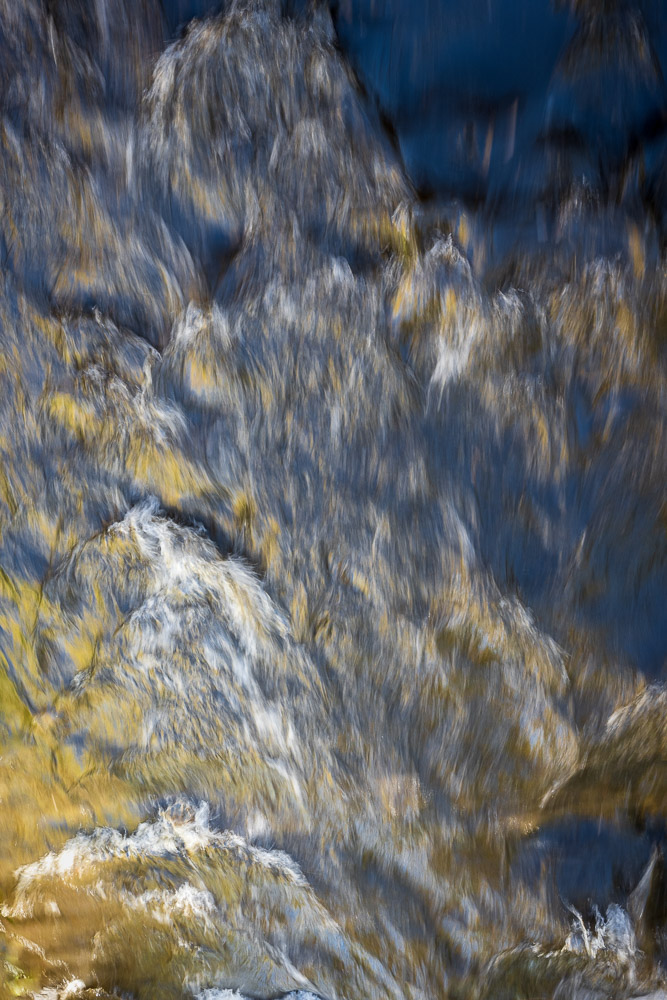
    The image with this post is a result of just being mindful. I noticed this scene on a walk along an ugly little canal in town. The location was not “pretty” in itself, but the conditions were right to make an image I love. I am very glad I took the time to notice it.

    Do you practice mindfulness? Let me know your experience!