An artists journey

Tag: creativity

  • When the Flash Goes Off

    When the Flash Goes Off

    The process of taking a photograph is intensely personal, yet there are probably commonalities among the population of artists. I am a hunter, a stalker. I call that instant when I recognize there is a viable picture in front of me “the flash going off”. It is often a blinding recognition.

    Disclaimer: some of this was inspired by Michael Freeman. I highly recommend his great book The Photographer’s Mind. It is part of a really good series. I will get no revenue from recommending this.

    Let the camera make the decisions?

    Long ago, back in the 1940’s, Bill Brandt said “Instead of photographing what I saw, I photographed what the camera was seeing. I interfered very little, and the lens produced anatomical images and shapes which my eyes had never observed.” I haven’t researched him enough to know if he was being truthful or if this was a tongue in cheek exaggeration.

    Maybe it works for you, but if I just let my camera roam unattended, it doesn’t do much useful work. Maybe I’m kidding myself, but I think I am completely guiding and directing the image making process. I may let the camera give me its opinion of things like exposure, but I make all the final decisions.

    A theory of the process

    OK, I make the creative decisions. How do I do that for scene selection and composition? Have you ever tried to analyze your process for making an image? Many of the things that happen are so fast or are part of such a deep experience base that we are barely aware of what is going on. And if we try to slow down the process enough to reflect on in, it becomes a muddle. I did an experiment once of trying to describe how to tie my shoes. I know how to do it, I can do it quickly and precisely, but to describe it – well, try it.

    A possible explanation of the photography process is taken from cognitive vision theory. The basic idea is that, over time, we develop a history of the types of images that we are drawn to, that excite us or interest us. A photographer creates a mental library of these images.

    The mind is quite fast at recognizing patterns and matching expectations. When we see a scene we seem to process it through our library and almost instantly recognize a promising image or reject it. This theory makes sense to me, as I recognize that scenes that have features I like seem to jump out at me.

    Drive by

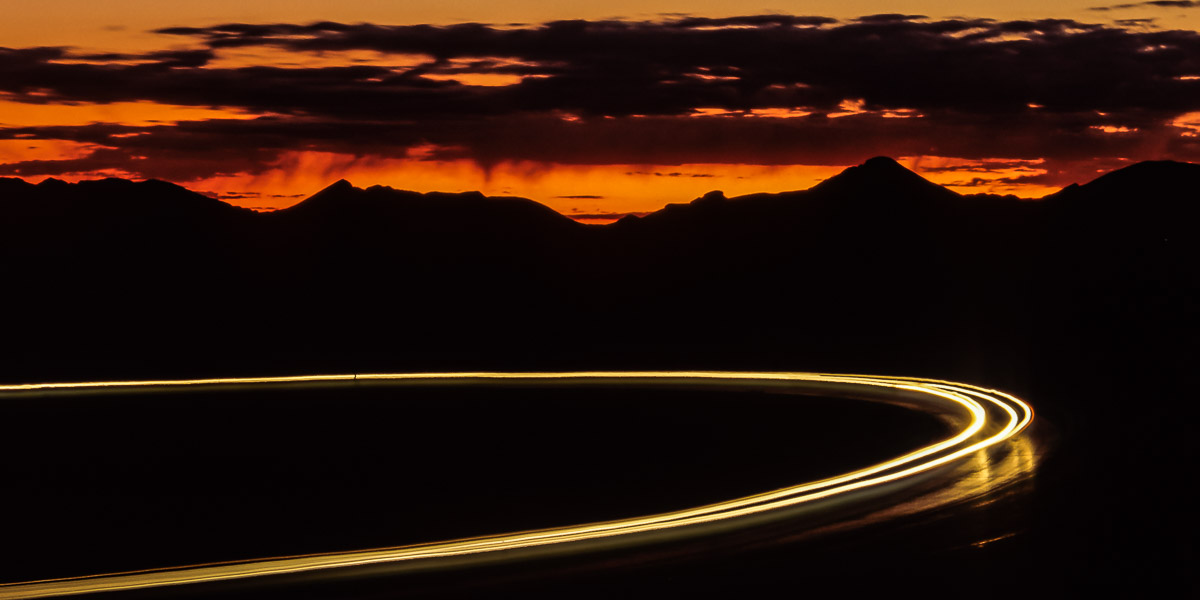
    Some anecdotal evidence for this is what I see of my scene recognition behavior while I’m driving. It is not unusual for that flash bulb to go off alerting me of something that is probably worthwhile to photograph – about a quarter of a mile after I drive by it. Like this image with this post.

    It is hard, mentally, to turn around on the highway and go back to check something out. It is especially hard when my wife is along. She rightly says “why didn’t you stop when you first saw it instead of having to go back?” I can’t get her to understand that when I am driving my mind is primarily occupied with that. The image recognition process is running in the background. This causes it to be delayed a few seconds. But when it gets a hit, it is like a highlight replay. It is clear and obvious, despite my having passed it by.

    I’m usually glad when I bite the bullet and go back for the image. Whatever triggered the response is usually worth checking out. I admit, though, I sometimes take a picture even when I don’t like the scene, just so I don’t have to admit to my wife that it wasn’t worth going back for.

    Learned library

    This library, if it really exists, must be learned. We don’t come prewired with it. Although it could be said that some things, like sunsets, are universal. How do we create the library? Well, we all see images all the time. When we see something that appeals to us perhaps we somehow add it to the library.

    A better way is to very consciously go through our catalog of images we have saved. Sort them into 2 piles, the ones we really like and want to build on, and the ones we are cool to and don’t really care about. Study the keepers. Decide what attracts us about them. Thinking about them will help build the library of images that match our vision.

    Conclusion

    The mind is incredibly powerful at recognizing patterns and matching images. Allow it to help sift through the clutter all around us. Pay attention when the flash bulb goes off. That is our pattern recognizer trying to tell us something important.

    Let me know what you think!

    To see the kinds of things I respond to, check out my galleries at photos.schlotzcreate.com

    Next week I will give an alternative viewpoint to this.
  • Is Black & White a “Thing”?

    Is Black & White a “Thing”?

    Is Black & White photography an art form in its own or is it a way to salvage images that just didn’t work in color? Hear me out before you flame me. I love B&W and believe it is a special medium.

    History

    Black & White is where we started. It is our history and beginning. Looking only at commercial films, the early world was totally black & white. There were a variety of film designs, with tradeoffs of speed, contrast, fog level, etc. Because processing was done chemically, the entire roll had to be exposed at the same speed. Generally, a photographer became familiar with a handful of films. Lots of work was required to become familiar with the film’s exposure characteristics. Different films were selected for different uses and effects.

    In the black & white days lots of work was done in camera to adjust the tone values. Filters, usually red or orange, were used while shooting. Their selection was based on the artist’s subjective judgement of predicting the outcome.

    The system worked pretty well for decades.

    Color

    Then along came color. It really took off in the 1950’s with the introduction of Kodachrome.

    Finally ordinary consumers had what they thought they were missing – a color image. Color film sales dominated black & white.

    Digital

    In the early 2000’s digital cameras became practical and affordable. Now color film was eclipsed and it virtually disappeared from the market. Digital had better resolution, better dynamic range, it was cheaper, and we could print our own pictures on cheap inkjet printers.

    So why, with all these advances, does anyone care about black & white anymore?

    Digital saved black & white

    The technological benefits that made digital imaging take over mainstream photography also brought huge advances to black & white images. A modern sensor is amazing. It captures more information than black & white film and it captures and retains the color information. This can be used later to tailor the tonality of the b&w image. And it allows far more control than color filters and a chemical darkroom.

    The tools we have, like Lightroom and Photoshop, are very advanced and are able to exert a degree of control that would have been unthinkable in the film days. At the same time we have highly mature multichannel inkjet printers with sophisticated inks giving us archival prints. Added to that the development of many types of papers for printing and the options available to a black & white artist today makes this a golden age.

    Why black & white?

    But color is readily available and everyone can print it cheaply. Why would anyone still want black & white?

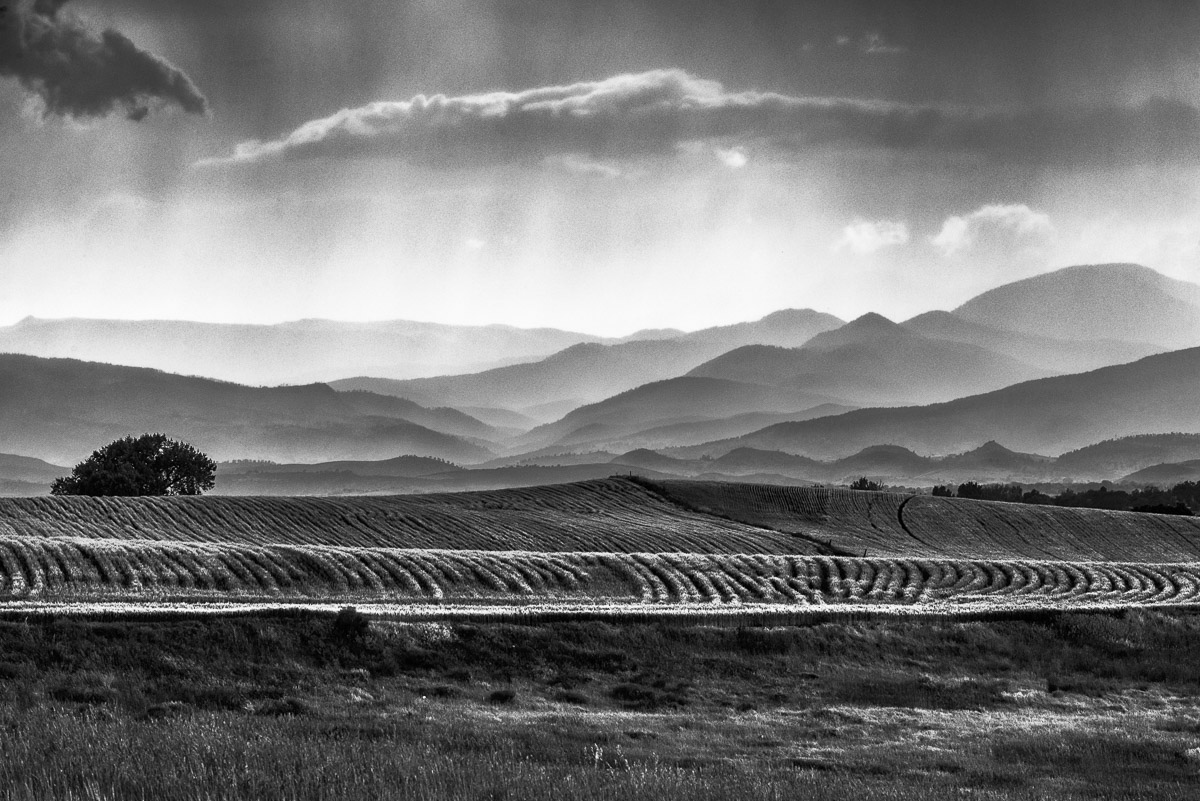
    This gets to the heart of the issue. A black & white print is perceived as an entirely different experience. Black & white sheds the distraction of color. What is left is tones, shades of gray. These emphasize the shapes and forms of things. Composition and graphic design comes more to the fore. It is an alternate view of reality. That causes us to look at the image differently.

    This difference is the beauty of it. It is a different interpretation of the world. The viewer immediately sees it is different and the artist can lead them through his composition more easily to see what he wants to emphasize.

    I have heard photographers say “this didn’t work in color, lets try black & white”. That is a very limited perspective. I would turn it around and say “this image really needed the color information to make it work, so we can’t do it in black & white”.

    Ansel Adams once said “the negative is the score, and the print is the performance”. This is still true, except the negative is a raw file and the print and processing are all done digitally. No dark room. No chemical mess.

    So is black & white a thing in its own right? Definitely! It is a great art form with a long and glorious history. Today is the best time ever to be doing or viewing black & white images!

  • Art or Craft?

    Art or Craft?

    Is photography a “pure” art or is it a craft? One of the arguments against photography is it is too quick and easy. Anyone can do it. It only takes a moment, not days or weeks to create. Let’s examine that.

    It’s a medium

    Photography is a medium. It is a technology for expressing images. It seems to me that any medium that produces the results the artist wants is a valid medium. I know people with formal training in painting who switched to photography because it better expresses what they want. I have also known people to go the other way, moving to painting after doing photography. That indicates they are equivalent medium.

    Any art form is a craft

    An artist is a craftsman. To be at the top of your field you have to develop an excellent ability to use the medium you have selected. For photography that is one thing that distinguishes the person who “just takes pictures” from the artist. A tremendous depth of craft and technique has to be mastered to make great fine art photography. I have used photoshop for nearly 20 years and I am still learning new ways to use it all the time. Hardly a day goes by that I don’t spend some time learning and practicing to improve my craft.

    What is art vs. craft?

    Some have said that art is based on creativity while craft is skilled application of technique. Something you learn from practice. That is a little obscure, basically that if you build the same things over and over it is a craft. Hmm….. That might sweep out a lot of artists.

    Most of us have an inherent understanding of the difference between art and craft, even if we can’t articulate it clearly. Hardly anyone would claim that selfies at Disney World are art.

    The harder part seems to be asking ourselves if the “art” we are presented is really art. What is that indefinable but perceptible thing that takes a work from just a well executed piece of craft to being called art? We often call it creativity, but that is hard to define. But we all have our values and preferences. I know the things I call art. I’ll leave it to you to define your own.

    The point for this blog, though, is that the question of art or craft is independent of the media.

    Photography is too easy

    The story here is that you just point at something, click the shutter and you have an image you are trying to sell as art. It was too quick and easy. You have to suffer for art. It isn’t art unless it required hours of labor.

    So if it is easy it’s not art? But a good painter thinks painting is easy. A good sculptor thinks sculpting is easy. A good writer thinks that is the hardest thing in the world. Oops – wrong argument. The point is that easy is relative and subjective.

    It seems to me the discussion should revolve around did you, could you, would you. Did you take a picture just like that? Or did you look past it? Could you have done this? Ignoring the “my kid could have painted something like this splotch of color” reactions, could you really have captured this image? Do you have the technical knowledge, the equipment, the time to invest, the image processing skill, and the eye to have seen and composed the image? And would you? Would you really see this, or would you have walked by in a fog of busy thoughts that occupy most of us too much?

    Capturing an image in the way the artist wants it can take days, months, even years. Realize that some of the images you quickly dismiss were long term projects. And for an artist, an image is never finished out of the camera. Each one requires extensive processing. This is one of the great creative processes in photography.

    Are you ready to say it can’t be art unless it was hand carved from marble?

    It’s a creative act

    The same amount of creativity goes into photography as any other work that considers itself art. The technology may be very different, the process may be different, but it is still creativity. Creativity is hard and requires a lot of work on the part of the artist. Good art is art and craft. There is something that sets some works apart as not just craft. It is easy to recognize but hard to define.

    Because it is so hard to define, be careful. It is fair to say that an image doesn’t appeal to you. Be careful judging that it is not art.

  • Looking vs. Seeing

    Looking vs. Seeing

    We all look at things every day. Do we really see them? What’s the difference?

    When we’re driving, for example, we look at everything around us. (I hope! Put that phone down!) What we mostly see are threats, dangers, problems to work around. Is that car going to run the red light? Does that driver seem distracted, so I should move away from them? Is that pedestrian going to walk in front of me? That construction is blocking the lane I want to be in so I have to make a different plan.

    We look at things like this all the time, but we don’t really see them. That’s not inappropriate for a situation like driving. After all, when the guy swerves into your lane and nearly hits you, you don’t really care what he is wearing or what color his eyes are. Looking is sufficient to take in the essential information to let us get by. Doing it is efficient. It prevents us from having to waste time and energy examining things that probably are not directly important to us.

    Unfortunately, most of us go through life in this state. Things are happening all around us but we only see the minimum necessary. We get in the habit of not noticing. It simplifies our life and reduces the clutter of things we have to examine and consider. Simple is not always better. It can lead to a minimal existence. We are aware of enough to stay out of trouble but we don’t always appreciate the beauty, irony, joy, pathos that is swirling all around us.

    But what about those of us who consider ourselves artists? We don’t want to just get by. We don’t want the minimum connection to the world around us. Artists and creatives should see more. One of our jobs is to wake up people to what they are missing in the world around them. That decision comes with costs. Actually seeing is much harder. It takes a lot more effort.

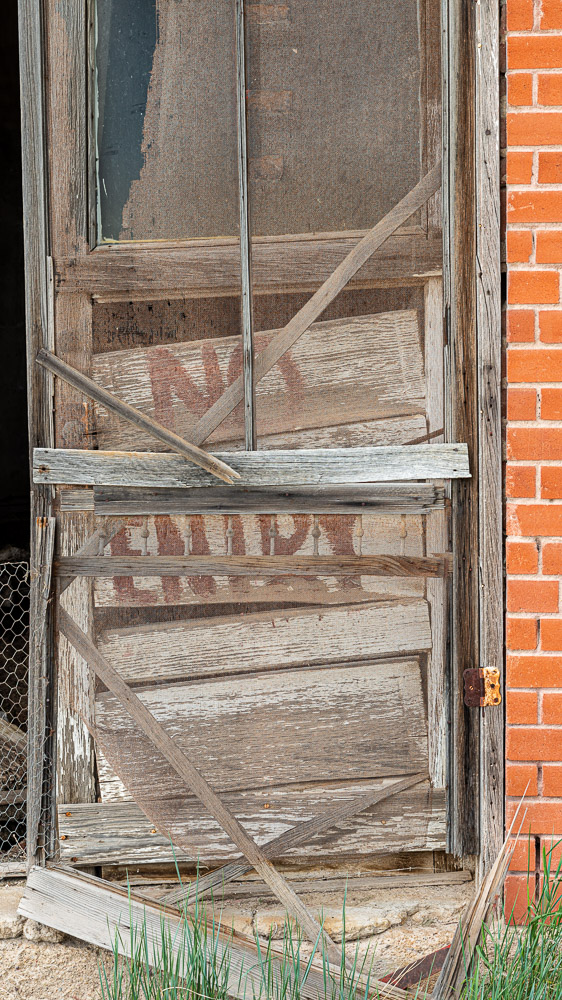
    What do I mean by that? Say I am walking down the street. I walk by a door. On the looking level it is easily dismissed as “door is closed, nothing to watch out for there”. But what about what the door actually is? It’s texture and color. Is it tagged with interesting grafitti? Is it weathered and rough or smooth and modern? Where does it lead? When is the last time I say someone go in or out it? Does a door like this say anything about our environment, or about people’s relations to each other, or about the people who built it and their history?

    Going through like this way takes much more awareness, more intention, more thought. And it is distracting. Sometimes we get lost in something we have seen and end up late to an appointment, maybe even miss lunch. It fills our minds and crowds out Facebook or the TV shows we watched last night. It focuses us on something we did not expect when we left the house.

    All in all, I think seeing is a better existence than just looking. It is more rewarding, if for no other reason that that we are more in tune with our environment; with the world around us. It encourages us to take in more, to examine things more deeply. I try to practice seeing every day. When I don’t, I feel like I have drifted through the day in a daze.

  • I Don’t See Anything Interesting Here

    I Don’t See Anything Interesting Here

    I had just parked at a trail by a river near my house. It was a crisp late fall day. As I was getting my equipment out of the car a woman passed me coming back from the trail. She asked if I was going to take pictures. (Seemed obvious to me, but people are funny) She then gave the pronouncement “I don’t see anything interesting here.” I was stunned and probably said something non-committal like “I’ll take a look anyway”.

    That has stuck with me. I’m still trying to figure it out. Sometimes it seems deep; sometimes it seems just silly. But it intrigues me.

    I must confess that I have the same problem at times. Sometimes I set out with the idea that I am looking for a certain “thing”. I don’t advocate that and I have written against it, but I fall into the trap sometimes. Our marvelous, adaptive brains do amazing things to “help” us achieve our goals.

    A funny thing happens when you go looking for something. It seems that that’s all you find. It is just human nature and it can hardly be avoided. If you go out looking to take a picture of a monkey then all you will see are monkeys or non-monkeys. Your focus and perception are tuned to reject anything that is not a monkey. You are often throwing away wonderful scenes because of your mental blinders.

    But to take it a step deeper, it raises some interesting questions that I have to ask myself. Things like, is everything interesting? What does it take to be worthwhile to take a picture? How much of a picture’s interest is based on our perception at the instant? Is it a failed outing if I don’t get a good picture? Who says if an image is interesting?

    It is my position that many things are interesting in the right conditions. I believe this to be generally true. I don’t agree with some post-modernists who seek out intentionally bland and uninteresting subjects, but I believe many things can be interesting. But on this day, in this light, in this weather it may not be interesting. So don’t force it.

    What makes it worthwhile to press the shutter? When I’m in doubt I usually ask myself “is this actually an interesting picture? Will I actually use this?”. If I can answer that it is or might be, I press the shutter. I also need to follow up and ask if this is the best time, location, atmosphere, lighting, etc.

    Ah, but how much of the interest is based on our perception at the time? A lot of it, I think. I trust my perception, my instinct, when it is calling to me. But I tend to err on the side of taking too many images. Sometimes when I’m editing later I ask myself “what I was thinking?” as I delete blocks of images. But sometimes there is a rewarding payoff. Those happy times when I discover my intuition was really on to something and I have a gem there. Of course, since I only had a vague idea of the worth at the time I might only have a sketch that I need to go back and work in more detail. But still, my subconscious is sometimes more perceptive than my conscious mind. Some say perception is reality. I don’t know, but perception certainly guides our view of reality.

    And one of the painful questions, is it a failed outing if I don’t come back with a good picture? I have come to the conclusion that there are seldom failed shooting outings. They are all useful, if only for practice. Being out, with your senses sharp and searching, getting to take pictures – how can this be bad? You don’t hit a home run every time at bat.

    Then there is the existential question of who gets to say if it is interesting? My answer is, the audience I am trying to please. In my case, that is me. Of course, I hope some other people will like it, even occasionally buy it. I will be the judge, though, of worth or success of an image. I may be wrong and I may change my mind over time, but it’s my call.

    So how about that day. After she “challenged” me about no interesting pictures I was determined to prove her wrong. That is the wrong attitude. I regret it. Following my normal process would have helped. I allowed her to throw me off. So I don’t like much of what I got that day. But it wasn’t a total waste. I hope you like the image at the top of this article.