An artists journey

Tag: creativity

  • Moment Hunting

    Moment Hunting

    An intriguing Japanese concept called Ichigo Ichie has recently been revealed to me. It literally means “one time, one meeting”. A better translation may be “once in a lifetime”. An expanded translation, that appeals to me more, could be “What we are experiencing right now will never happen again. We must value each moment like a beautiful treasure. We must become moment hunters.”

    This idea of becoming “moment hunters” is very powerful to me. This is one of the things I love about photography that is different from most other art forms. I can capture moments as they are happening. When I press the shutter on my camera, the entire world visible through the lens is recorded on the sensor. It does not have to be slowly drawn and/or painted. Have you noticed that most paintings are static? If not, the artist probably took a photograph and painted from it later.

    No tomorrow

    This has been impressed more and more to me as I get older. There is no assurance of a tomorrow. Even if there is, the moment you see now probably will not exist. The light, the weather, the interaction taking place – these things will never repeat exactly, if at all.

    So now, if I see something, I take the picture. It doesn’t matter as much if I am late to something or if I lose my place in traffic or if I even have to turn around and go back (something guys are supposed to never do).

    Even when I am out driving or walking with friends I will stop and capture an image if I really like it. My real friends understand and others, well, hopefully they will be patient, but that is not my problem. The image is very important to me. I have learned that you can’t come back later and find it.

    We’ve all experienced it

    I am starting to learn. Too many times I have thought “that is really great; I will catch it next time”. Even if you get back in an hour, the light will be different; the clouds will have moved; something. Or if you note something interesting enough to return to, say next month or on another trip next year, it will be different. That very shapely tree is covered with leaves and is not as interesting. That great scene is now a housing development, never to be interesting again.

    One of my heroes Jay Maisel tells a story from early in his career. In his book “It’s Not About the F-Stop” (I do not receive any compensation from this) he has this example. He was at the Tokyo Fish Market.

    “I find a room with cakes of ice, light coming from below, cutting knives on top. This is great. I take a few shots, but I’m really supposed to be shooting something else, so I figure I’ll go back there later and really work it.

    I get back a few years later. I’m looking forward to working on it, but it’s not there anymore. It’s been replaced with air conditioning.”

    Based on this and other experiences he always tells his students “Never go back”.

    Not a new concept

    This idea of Ichigo Ichie comes from about the 16th century. It came out of tea ceremonies. The ideas migrated into Zen Buddhist philosophy and was expanded with their thoughts on transience.

    It also appears in martial art training. The idea was that even in training you can’t just stop and do it over. In a life-and-death struggle you don’t get a “try again”.

    And isn’t life such a life-and-death situation? Now is what we have. Use it.

    Ichigo Ichie was even used as the subtitle to the 1994 release of Forest Gump in Japan. It seemed to reflect the events of that movie.

    All we have is today

    Great scenes don’t stick around. Everything changes all the time. If you like the image, stop and capture it. There is little chance you can find it again later. Now, you might find a better one by coming back to a location with better light or better weather. Landscape photographers try to do this all the time. But it will be a different scene. This one you see right now will never be the same.

    Usually I focus these almost exclusively on art and photography. This concept is much broader.

    It scares me now to think of all the transient things I miss if I’m are not disciplined about recognizing them. Your kids, for example. They are growing up every day. They are learning new things all the time. Are you spending the time to interact with them, to help them and shape them?

    Or your mate? They are really the most important person in your life. I hope for your sake they will be with you the rest of your life. Are you conscious of your interactions? Do you always treat them with respect and love? Do you work to keep the romance going?

    Or friends. Being with friends is special. When it happens, be fully there. Take advantage of the time. Treasure every encounter. This is one of the things life is really about.

    Postscript

    Sorry to get so philosophical. Usually I try to stick strictly to art. This topic is very close to me and I believe it is important.

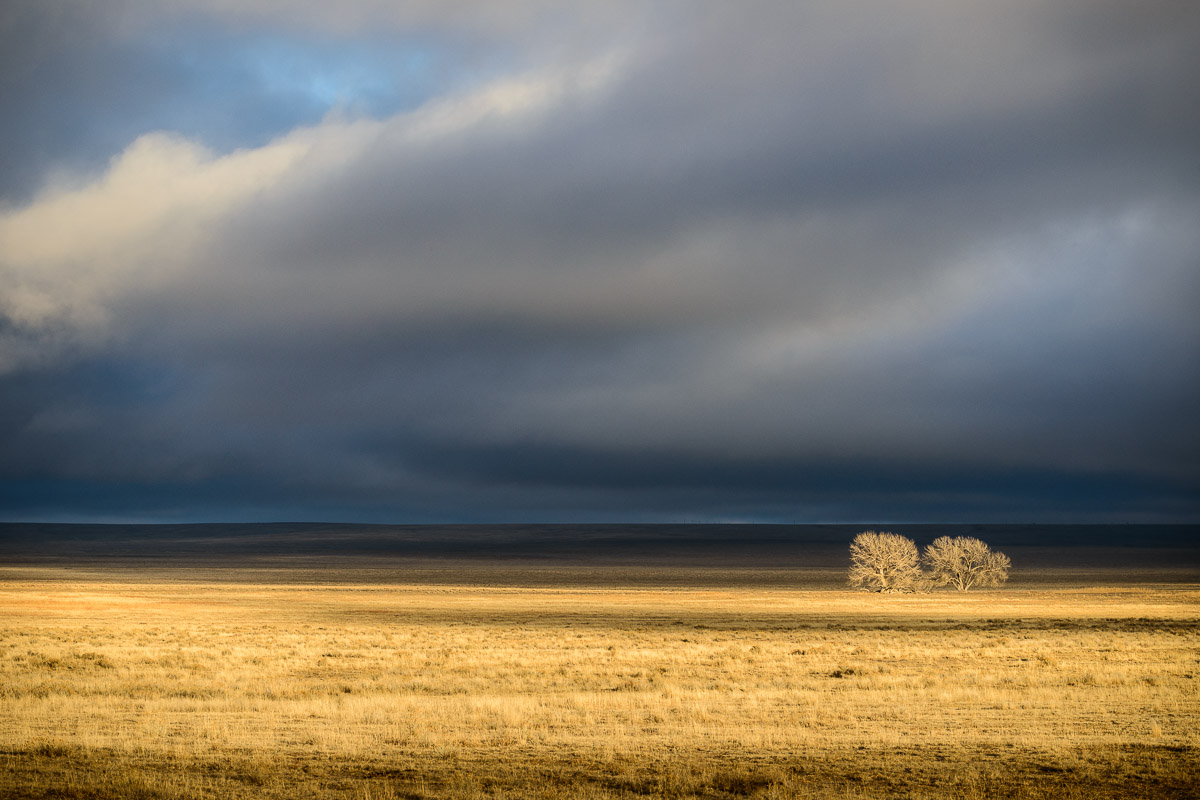
    Oh, and the image at the top of this post? It is a good example. I was driving in a remote area, with my wife and best friend, as darkness approached on a blustery winter night. We were in a hurry, but I had the guts to stop anyway and take this. I’m glad I did!

  • Prolific Creation

    Prolific Creation

    Two schools of thought involve creating fast and frequently vs. being slow and deliberate. I argue that creating prolifically is the best path.

    Is creativity a limited resource? Do you have to be concerned about using it up? My belief is, no, it is unlimited, but it is not always ready to flow.

    But I have heard about artists who are burnt out, dried up creatively. Doesn’t that argue that creativity is limited? No, an anecdote doesn’t make a proof. I don’t know these people and I can’t and wouldn’t make any judgements about why their creative springs dried up. But I believe that is a personal problem, not the nature of creativity.

    Slow and deliberate

    Some types of art is slow by its nature. Sculpture is an example. Some painting techniques take weeks to produce a work. Some large installations take months or years to create.

    Well, then, these artists have no option except to create on a slow cycle, right? I suspect they do not wait long periods of time. Most artists are sketching and experimenting with ideas all the time. They may spend 6 months working on a sculpture, but many other ideas are bubbling with them at the same time.

    My friend Kevin Caron, is an excellent sculptor based in Phoenix. He is a multi-talented 3 dimensional artist. Some of his large sculptures take months to complete. But at the same time he makes jewelry and 3D printed works. I believe these smaller items serve at least 2 purposes: provide works of his at a lower price point that more people can afford, and serve as a creative outlet to help fill in the drought between big projects.

    Prolific

    Prolific just means doing a lot. It does not describe the quality or finish of any piece.

    Most artists I know are always working. They are sketching, even doodling. I am a photographer, so most (not all) of my sketching is done with a camera or the computer.

    Sketch with a camera? Yes. If I see something interesting I may take some frames of it, knowing that these will be thrown away because they are not quality. When looking at them later I may decide there really is something there. I will go back and “work” the scene to develop the real image. This often involves sketches from different angles and at different times. When I figure out the personality or gesture I think is interesting then I go for it.

    This is something I have the luxury of doing on my home turf. I can return to a subject at will. It is different when I am traveling. It’s now or never. It is a different creative process to try to sum up a scene and optimize it in a second.

    And sketching with a computer? Sure. I often go into Photoshop and play “what if” games. What if I take this subject and this texture and this color palette? What kind of results can I create? I am sometimes pleased with the results.

    Why be prolific?

    I believe creativity is a combination of the skill to do the work combined with some unidentifiable, unmeasurable thing we usually call the “muse”. This, supposedly, is the spirit of creativity that animates us.

    I believe there is a muse. I have no idea what it really is, but I believe creativity ebbs and surges unpredictably. If the muse is gone, you can barely do anything creatively. If the muse is with you it seem. like creative ideas are bubbling all the time.

    But I don’t believe we are helpless slaves of this spirit. Creativity is also something we develop as a skill. The more we practice it the more easily we can do it.

    Creativity favors the prepared mind. – Roy Rowan

    The harder you work, the luckier you get. – Anon

    You weren’t any good at driving a car until you put in hundreds of hours behind the wheel. You were not a star at any sport you ever played until you had practiced for hundreds of hours. You couldn’t even write until you had practiced it a lot. And as for people learning to play the violin – well that’s a special subject.

    A limited resource?

    Is creativity a zero sum game? Once we use it up is it all gone? No, I think that’s the wrong way to look at it.

    Creativity is like love: the more you give away the more you have. Don’t worry about running out. Your creativity may wax and wane, but you can’t use it up. I believe the more you use it the easier it flows.

    Conclusion

    If you want to be creative then practice. If you are a painter, go crazy sketching. Most will be junk. That’s not a problem. Try every way you can think of to put paint on a canvas. You will get more skilled with time. If you are a photographer, always have your camera and give yourself permission to use it. Take a lot of pictures. They don’t cost much to throw away. Make the camera an extension of your eye. Learn to use it without thinking. Make sure you can always get the result you wanted.

    Be a prolific creator. Do it more and more. Put in the reps. Practice, practice, practice. Then, when the muse shows up, she will find you prepared. It will make her happy and she will lead you to great things.

  • Down Time

    Down Time

    I’m just coming off a week of being too sick to work. The enforced down time seemed strange to me, since I’m never sick or not working. It was an interesting time to reflect.

    Not going into my studio for an entire week. That’s unheard of. Stuck at home, your mind goes to weird places.

    But did I get anything useful to share with you or am I just ranting?

    Filling the time

    There was, of course, the requisite TV binging. Well, watching the screen, large and small. [Opinions expressed are my own. Void where prohibited by law.] There is nothing useful to watch on TV or cable. There might be a few decent shows, but they are so broken up by commercials that it’s pure frustration.

    Netflix, Amazon, and iMovies have a lot of good shows and series. That was mainly where I got my movie fix. It was a good chance to catch up on movies I had been wanting to see, especially those my wife didn’t want to watch.

    Where’s the beef?

    I enjoyed the movies and am still watching them, but that became very unsatisfying. There was no substance. My mind craved something better for it. It was like going to the buffet and gorging on dessert. I needed meat, vegetables, salad, too.

    One excellent source of nourishment was Creative Live. It has a very good selection of quality instruction and inspiration for creatives and makers. I watched several courses, including some I had already seen before. Being able to watch in uninterrupted blocks is better than a few minutes at a time whenever you can grab it.

    Another focus in the time was a Selective Color workshop by Alain Briot that I’m trying to work through. It’s pretty dense material, but I’m determined to dig more into luminosity masking and color enhancement. I’m getting the luminosity masking pretty well, but the color enhancement is far behind. For one thing, the realist in me sometimes digs in and blocks me experimenting with extreme transforms.

    Old school

    The whole world isn’t video. I went back to browse some of my old books (remember them?) on various aspects of photography and art. Especially helpful were books by the distinguished Michael Freeman. He has a fantastic talent for communicating in writing. Being able to grasp a complex subject and make it understandable to other people is a real art.

    I even dug into a history book I am reading. For some reason this year I got curious about Pearl Harbor and picked the excellent book by Gordon Prange, “At Dawn We Slept“. Wow, there is so much here. Mr. Prange was a very diligent historian. You find out what the relevant players on both sides were thinking and doing almost minute by minute. This is going to take some time but I’m definitely going to finish it.

    Learnings

    Sorry, no blinding revelations from the mountain. I didn’t change my life much.

    I did, though, conclude it is healthy to have some down time occasionally. If you spend your days nose-down working on projects, marketing, whatever busy work we have to do, it is good to pull out occasionally to rest and regroup. Sometimes we have to disengage from the demands of the urgent and let your mind rest.

    How you do it is probably very personal. Having private time to think and meditate works for me. For some getting together with friends is what they need. That’s a great idea too, but being sick for the week prevented that. Or schedule yourself into a retreat or a spa. We all have our notion of how to recharge.

    So I’m going to start scheduling down time (without the sickness).

    Try it! Let me know what you think!

  • Gestalt

    Gestalt

    No, not Gesundheit. Gestalt psychology is a a system that looks at things as a whole rather than just parts. It goes for the “big picture”.

    What does a relatively obscure European psychology theory from the early 20th century have to do with anything I have been discussing here? Quite a lot, actually. One of the famous summaries of Gestalt principles is “The whole is different than the sum of its parts.” I believe this is profoundly true for many things, especially photography.

    Proponents of Gestalt included notables such as Immanuel Kant, Ernst Mach, and Johann Wolfgang von Goethe. Actually knowing who they were is not important, just that you have probably heard the names. It is interesting to me that the theory developed as a reaction to the prevailing trend of the day to break things down to the smallest possible parts. Something that still happens with some people to this day.

    A brief explanation of Gestalt

    A simple explanation of Gestalt is that the human mind makes patterns, it completes fragmented shapes to make wholes, it extends dots to see lines, etc. We are designed to complete pictures. The following figure shows an example of this. It is called the Kanizsa triangle. The Gestalt principle of closure is illustrated.

    Kanizsa Triangle

    Almost everyone sees 2 equilateral triangles in it. There are actually no triangles. Our brain “closes” the straight line segments to see one triangle and we “close” the shapes of the cutout circle segments (Pac Man?) to see the other one.

    Other Gestalt principles include similarity, proximity, continuity, and common regions. I’m not going to go into them here. I have no illusion of this being a course on psychology.

    Examples

    My point is that that these principles are real and common to most people. They are used by designers and artists all the time to guide our perception of images. Here are some examples from my library. They were not shot consciously thinking about Gestalt psychology, but they show some things that trigger my mental library because I have learned over time that they work.

    Implied lines

    Here you see the shadows forming dark lines going from upper left to lower right. They are formed by our mental connection; they do not really exist. The three sets of shadows do not even touch each other.

    Implied arc

    In the lower part of this image you see an arc of yellow lights. They are really just discrete points. Since they are closely spaced and in a regular pattern, we see a complete arc. And it continues despite the dropout on the far side.

    Implied region

    The area inside the magenta line is seen as a distinct region of the image. Inside the line is one area, outside is another separate one. It’s not really true, but that is the way we see it.

    Application

    The marvelous human brain is unsatisfied with incomplete forms. We “fill in the blanks” unconsciously. And it is even rewarding. You feel more satisfied by solving a puzzle, by completing an image from clues. A few points is seen as a line, some repeated shapes is a region, things in proximity seem to go together. It is amazing. When an artist works with his viewer to make a game it can be fun for both.

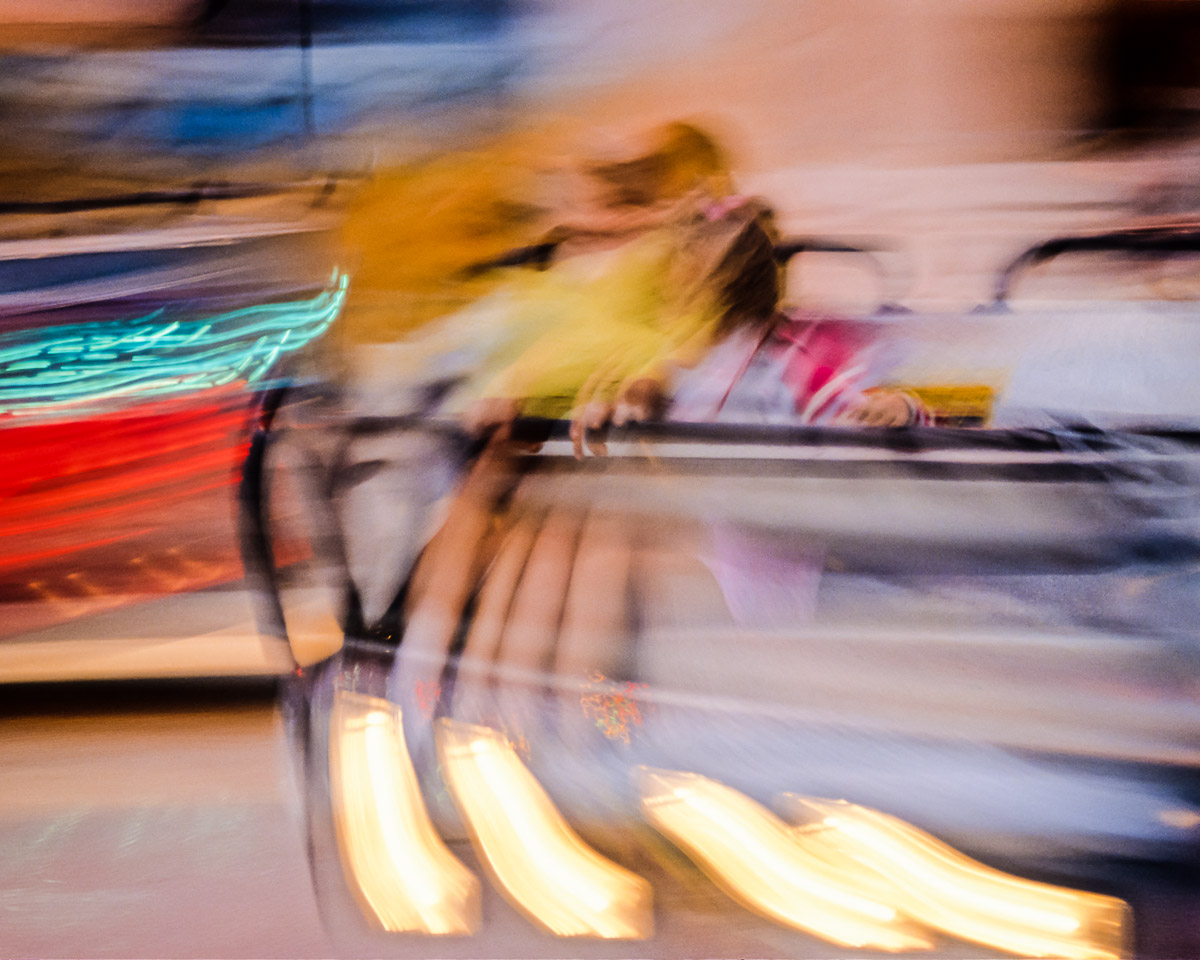
    So how about the image at the top of this topic? A few arcs? A couple of rectangular blobs? Or is it a spotlighted figure? Or a spider?

  • How Much Processing?

    How Much Processing?

    I guess this implies several possible questions. How much is too much? How much am I allowed to do? Should a final image look as “close” to the original photography as possible? This has been a dilemma for me until recently. I’ve come to the position that any amount of processing is OK, as long as I like the result.

    My history

    I started out my creative journey with the mindset of an engineer. Photographs should be an exacting match to the scene. This led to an emphasis on technical skills, warmly liked by engineers, emphasizing precision. Creativity was finding the right scene, not something that might be developed in later processing. In fairness. these were the days before Photoshop.

    Later on, I became heavily involved in my local camera club. Our club was great – better than any I encountered in the surrounding communities. But still. there is a collective think that tends to permeate these. One of the mantras in our organization was “no hand of man” in landscape shots. I was generally OK with this, but I thought sometimes that some shots could actually be improved by relaxing that constraint. But I played along.

    It came to a head for me at one contest where I got rebellious and submitted a photo that had a bit of a Photoshop twist in the clouds. I had Photoshop by them and was getting frustrated that “Photoshopped” images were generally disapproved in our contests. After winning the blue ribbon I let them know how it was created. There was a lot of discussion, ranging from it should be disqualified to what’s wrong with that? I kept my blue ribbon, but that was about the end of my involvement in camera club. I needed to stretch, not be constrained.

    I bring these up to let you know that I came from a background of avoiding heavy post processing. It has taken me a long time to give myself permission to get creative or even liberal in post.

    Reality

    I never had a darkroom, so I never internalized how much manipulation took place there. As I learned about it, one of my reactions was “they’ve been cheating all this time”.

    My investigation of darkroom capabilities brought me to finally understand Ansel Adam’s famous quote that “The negative is comparable to the composer’s score and the print to its performance. Each performance differs in subtle ways.” I began to see that famous photographers had always felt free to bend and modify their images in post production. Some of Ansel Adam’s assistants say it usually takes many hours to print one of his images. This is because he requires such extensive work in spotting, bleaching, burning, dodging, etc.

    One of the most extreme examples is his famous image “Moonrise Over Hernandez”. He had to capture it very quickly and the negative is flat, low contrast. It require a lot of work to print to his expectations. Ansel removes clouds and greatly changes the tonality and contrast of the print. So the takeaway is that the print is an interpretation of the negative. Anything is fair. I have come to believe that if Ansel had Photoshop he would do much more than he did.

    A new understanding

    So in my own journey, I have come to a place where I do not feel so constrained by the original image. An image is raw material. What is important to me is what I can visualize it becoming. As I become more skilled at tone correcting and color enhancement, my vision is being extended. If I don’t like that building or person in it, take them out or move them. If the sky is weak, replace it. Maybe this isn’t a great image on its own and it needs to be composited with one or more other fragments to create something new.

    I finally discovered – or allowed myself to accept – that this is art, not reality. The reality of the scene need not be a hinderance to what I might envision making of it. What becomes even more important is my vision as an artist and my skill in working with the image. An image is not just what it is, it should be what I want it to be.

    The image at the head of this post is an example. It is made up of 2 images and the final result does not look like either of the originals.

    Never believe a photograph. It is not truth. It is always subjective, if not outright modified.

    Let me know what you think, and check out my online gallery for more examples.