An artists journey

Tag: creativity

  • 15 Minutes From Home

    15 Minutes From Home

    It is pretty easy to take good images in exotic locations. A real test of our skill is to see how well we do in familiar territory close to home. What if we arbitrarily said we were going to restrict ourselves to 15 minutes from home? Actually, that kind of sounds like the situation many of us are in right now.

    I use ideas from Cole Thompson too often, but he often says things I wish I had said. In a recent newsletter of 3/27/2020 he challenged the idea that you have to go to great locations to take great pictures. Referring to the fact that many of his recent images were made in far flung locations, he said “You see the same coming from other photographers: exotic images coming from exotic lands. The conclusion is obvious: To create great images you must go to great locations! But that’s a lie. The real truth is this: great images are created anywhere you can see them. Even at home, your back yard or hometown. “

    He went on to show a portfolio of great images taken within 15 minutes of his home. To me, his picture of wrenches hanging in a tool shed is at least as beautiful and intriguing at the classic figures on Easter Island.

    Then why travel?

    I will readily confess to being a traveler. I love to travel (hate airports and airlines though). Seeing different cultures and different landscapes energizes me. I tend to see things with a fresh eye. It’s an opportunity to give yourself permission to be a tourist and to view new things differently.

    Travel makes you set aside time for the new. It removes you from the clutter and noise of your everyday environment. It may replace it with different clutter and noise, but the difference makes it new. Plus, you don’t worry much about the routine things that occupy you at home. That email you need to write, the business contact you need to follow up on, that blog post you have been meaning to write – they are just a distant murmur in the back of your mind. The lure of the exotic location tends to drown out the mundane things that usually shout so loud for your immediate attention.

    The immediacy of the new sights in front of us makes it pretty easy to lose ourselves in the experience.

    Burnout

    Many of us can get in a rut and suffer from creative burnout. We start to think there is nothing new to photograph. Nothing new to inspire us or make it worth even getting the camera out of the bag. Travel to a new location seems to hold the hope of drawing us out of our slump.

    I’ve been there. I still fight it frequently. Now with travel restrictions it seems worse than ever. What can we do?

    I advise you not to get overly frustrated and fight head on against it. Reframe the problem. Go out walking with your camera. Tell yourself you do not expect to make any portfolio images today. You just want to look and practice, maybe work on technique. With no pressure to try to “make” a great shot you might be surprised at what you see. Give it time to work.

    You will probably find yourself less dismissive of things. You might notice new things you never took the time to actually see because you were too focused on a preconceived notion of what you wanted to find.

    Burnout is a real problem, physically, mentally, and creatively. Let yourself heal by taking it easy. Ease up on yourself by reducing the pressure you feel to make “great” shots every time.

    And do something. Don’t let yourself wallow in feeling sorry for yourself. Get off your rear end and do something. Anything. Build something. Take walks or bike rides. Keep moving.

    Inspiration

    Ah, the problem of inspiration. I already admitted I am inspired by travel. Is that the only drug to feed my need?

    Being confined at home is a great time to learn new skills. Learning should be a life long pursuit. Here is an exceptional opportunity to catch up.

    We all have an opportunity now to pull back. It is a good time to read inspiring books. To view a lot of training online, such as Creative Live, The Nature Photographer’s Network, or B&H Photo. Or just play with Photoshop. Experiment. Try things you would not give yourself permission to do normally. Photoshop by itself is a life long learning experience.

    But these activities do not directly apply to creating images in our particular style, do they? How do they really help?

    Do you know how a laser works? (Not a laser diode; that is different mechanism) The acronym stands for Light Amplification by Stimulated Emission of Radiation. Without getting technical, a laser has two mirrors parallel to each other with a cavity in between. Electronics around it pump energy into it causing it to start emitting light. The light bounces back and forth between the mirrors, getting pumped to higher and higher energy states, until it finally breaks out as a focused, high energy beam. The point is that the signals that pump the laser to higher energy levels are not the same as the laser light. They feed the energy of the laser.

    I believe my creativity is like that. I believe it is actually common to many people. Anything that feeds my knowledge, that makes me see new things, stimulates my creativity like a laser. So for me, some authors do that. Some classes may. Even some movies. In a strange way, even writing this blog pumps my inspiration. Get pumped and then do something with it.

    Lack of faith in our creativity

    A problem many of us have is little faith in ourselves. Deep down we believe we are fakes. That we really don’t have much creativity. Just because we did something good last week does not give us confidence that we will be able to do something great next week. This is called The Imposter Syndrome.

    I believe this is more common than we let on. Some people have said that almost all creatives suffer from this. We do not like to admit it.

    I am a fine art photographer and most of my work is outdoors. My personality and workflow is such that I do not plan my outings in any detail. I go with the flow snd take my inspiration from what I find. It can be scary when I’m not “feeling” it. I have to trust that something will capture my imagination and get me started and into the groove. If I relax and let myself be attuned to what is around me, it usually works.

    But when it doesn’t, that can be a challenge to my self confidence. A usually reliable cure for me is to spend time in my image collection. I am lucky to have a large collection of images. Of that large collection, a small percentage are the ones I would not be ashamed to show to other people. Browsing through these picks can be inspiring to me. It reassures me that I can make good images over a long time. Remembering the story behind some of the images can be especially heartwarming. Like the times when I was in a hurry or not feeling inspired or creative or not happy with the work I was doing that day and suddenly I come up with a great image that I still love years later.

    Close to home

    Exercises and mind shifts like this give me the faith that valleys of inspiration, like virus epidemics, do not last. I believe most of my best work is yet to come.

    It may seem easier to shoot good images in beautiful exotic locations, but there are very good reasons to focus most of our energy on the near, the familiar, the things we grow to love. Having a relationship with an area will usually lead to more intimate and insightful pictures. And I believe that there is great potential even in the overworked area 15 minutes from my home.

    How about you? Are you shut down because you can’t travel? Let me know.

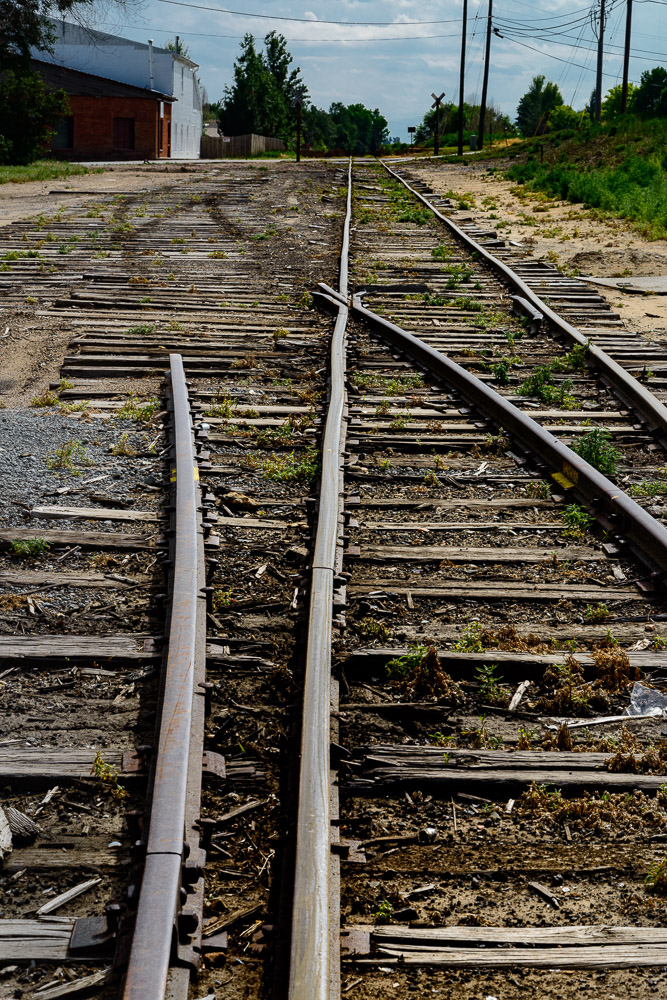
    The image at the top of this article was made less than 100 ft from my studio.

  • What Are You Going To Do?

    What Are You Going To Do?

    As I’m writing this many of us are stuck at home, effectively quarantined. It’s the Covid-19 virus, of course. The world seems to be in a panic.Many people seem to be running around like chickens with their heads cut off. But what are you going to do?

    Panic seems to be consuming the world, at least if you listen to the media for long. And our political leaders must spend most of their time listening to the media and looking for ways to feed the panic. A great line in MIB is “a person is smart, people are stupid.”

    People seem to be panicked because they are not “safe” anymore. As if they ever were. We are never safe and we never actually control our circumstances. You have a better chance of getting killed in a car wreck tomorrow than to get the virus. The illusion of safety is the unrealistic goal the media holds up and the fears of not being safe are what whip people into panic.

    You’re stuck at home

    So. you’re stuck at home for a while. You can’t go on with your normal routine. That’s great! Make some changes! Use this as a blessing. Do things for yourself. DO NOT spend your time panicking with the herd on social media or numbing yourself with hours of movies on Netflix. Take the opportunity to improve yourself and grow.

    In an email, Srinivas Rao makes this observation: “he told me a story about a man in China who was quarantined for 40 days after contracting the coronavirus. The reporter interviewing him asked how he spent his time. And he told her

    ‘I’ve always been a terrible cook. So I learned to cook. I also taught myself another language.’

    There’s a profound lesson in this story. Time and attention are precious resources. You can use them to consume content that continually stokes fear. Or you can use [them] to create content that fuels hope for yourself and others.”

    This is an important observation. For me, I am going to double down on coming out at the other end of this session a better, wiser, more capable person.

    Use the down time

    Take classes. Study a foreign language. Read. Write. Create – begin to, even if you don’t think you can. Whatever it is that draws your interest, challenge yourself to get deeper in it.

    For me, I am committed to pursue some personal projects with my art. I am also committed to learn and internalize several new photographic techniques that have intrigued me for a long time but I have never had the block of time available to really dig into them. I plan on reading several biographies and history books I have wanted to get to, as well as a fluffy fiction or 2, just for relaxation. Oh, and, I’ll admit, one of the big vices I have, watching Aussie Rules Football. It is the only sport I like to watch, and it may be the only one still being played.

    Maybe you never thought of your self as a writer. But you can write to friends. Direct email them rather than using social media. Better yet, you know those pieces of paper with stamps on them? Do it. They would love to hear from you.

    Be prudent, not afraid

    I mentioned the fear that paralyzes many. So far what I observe validates the MIB quote I used earlier. While on the media I see panic and hoarding and people barricading themselves in their houses, I don’t actually observe that from normal people around me.

    I just returned from traveling back and forth across much of the country to see family. We ate out at nice restaurants every day, went where we wanted to,Ubered, went through airports and flew in airplanes. I saw a very few (like 6) people wearing masks, none on the airplanes.

    Today I went out for a nice walk in the afternoon. The weather was good and I walked down through a natural area by the river where I live. I was surprised and encouraged that the parking lot at the natural area was completely full. I couldn’t see an empty space. Lots of people were our walking, walking dogs, running, bicycling, etc. Families with little kids. Old people (old means older than me). And they were friendly and good natured and sometimes wanted to chat. It was great to see.

    My wife went up to Rocky Mountain National Park to snowshoe today. She said it was very crowded for a Wednesday. Same thing. People were out enjoying nature and using their time well.

    I am in one of the high risk groups for the virus, but I don’t huddle inside. I don’t believe in living that way. Safety is an illusion. Be prudent, but live a worthwhile life.

    Your time is short – and precious

    It seems that a learning from this is that we are only given a very short burst of time on this planet. We should consider every minute precious. We should do what we can every day to improve ourselves and help others. Develop the habit of being grateful for what we have and what we can do right this minute.

  • Practice, Practice, Practice

    Practice, Practice, Practice

    How do you get good at anything? Practice. Does it apply to art? Yes, practice. When? Now.

    Seemingly it is a very simple thing, but constant practice trains your muscles and your brain. It refines your skill and makes your decisions automatic. It improves your concentration and your vision.

    The 10,000 hour rule

    You can learn to do many things pretty well with about 40 hours of work. Yet it is said that to become great at something takes 10,000 hours of practice. Now realistically, few people will put in 10,000 hours on anything (except maybe watching TV). That is 5 years of doing nothing else except practicing your craft for 40 hours a week. This is the level of effort required to become the level of a Michael Jordon or Tiger Woods. But isn’t that the level we aspire to as artists? I do.

    That seems an unrealistically high standard. But in most unrealistic situations, you do what you can. Putting in the time consistently is key. A good discipline is to make yourself get out with your camera every day. Having it in your hand makes it comfortable. It teaches you to see more, observe. You will not make a great image every day. That is not the point. The point is to improve.

    “The discipline of practice every day is essential. When I skip a day, I notice a difference in my playing. After two days, the critics notice, and after three days, so does the audience.”

    Jascha Heifetz, renowned violinist

    One of my exercises is to practice street photography a few times a week. I touched on this in my article on hunting images. It gives great practice in consciousness, fast reflexes, anticipation, using your camera with little thought. Most of my work is not street photography, but this is great skill development for everything else I do.

    Carry a camera

    It is hard to practice if you don’t have your tools. Not impossible, just hard. Going to the trouble of having your camera with you provides an important discipline. It is intentional. You have consciously committed to making images. It gives you permission (in your mind) to look for and take pictures. It makes you aware and on the prowl.

    The great Wayne Gretzsky famously said “You miss 100 percent of the shots you don’t take.” This is true of photography, not just hockey. When you are carrying your camera, make yourself stop and capture interesting scenes when you see them. As I noted in a another post, it won’t be there tomorrow.

    Examine, improve

    The purpose of doing this practice is to improve. It has been said that in 20 years, some people get 20 years of experience and some people have 1 year of experience repeated 20 times. Doing the same thing over and over without improving is very sad.

    Unless you have someone you trust to critique your work frequently, you have to learn to do it yourself. Be honest with yourself. And brutal. Did that work? Was it what you wanted? Is it technically perfect? Was the composition effective? And one of the hardest to judge objectively: is it actually a great picture?

    I used the 10,000 hour rule to give a sense of how long it takes to become an expert, but it is well known that the so called rule is flawed. People often practice for 10,000 hours or more but remain mediocre. Why? They are not learning from their mistakes! They get 1 year of experience 20 times. Don’t make the mistake of not learning from your mistakes.

    Be brutal on yourself. Better you than other people. The reality is most of your shots will not be very good. Most of mine are not. That’s OK. You have to get a lot of bad shots out of your system before you can start making better ones consistently. Be honest with yourself. When a frame just doesn’t work, examine it carefully. Understand why. What can you learn from it? A bad shot may lead you to a new understanding and be more valuable than a good shot that doesn’t teach you anything.

    The few, the proud

    The legendary Ansel Adams said “A photographer does well to get a dozen first-quality shots a year.” Technology has changed a lot and it doesn’t take much time or cost to shoot a lot of digital frames. But how many of yours are really great? Quantity is not quality.

    I’ll be candid, looking at my digital collection only, less than 2% of my shots are “gallery quality”. Two out of 100. Is that discouraging? No, in a weird way it is empowering. Based on Adam’s experience I am encouraged to be getting that many. Or I could be delusional. Of course I keep a lot more than that for various reasons. And since I like to do collages I have a lot that are not stand alone but would be excellent material for constructing new composites.

    Not the outcome

    This leads to the final point for this post. When I am practicing, I need to concentrate on process, not outcome. I am learning, doing repetitions, trying experiments, getting more familiar with my equipment. This improves me over time and sharpens my eye. If I get a “keeper” during practice that is just a happy accident.

    Practice daily and plan to throw almost all of it away. It is worth it.

    Do you have a regular practice regime? Has it helped? Let me know!

  • Meaning

    Meaning

    Does art have “meaning”? Especially a deep meaning that leads to truth or changes the life of the viewer. This is a thorny subject that has been debated for centuries. I’m not going to settle the question. (Sorry) But I can give my POV.

    The Elitist view

    Some say that all art does, or should, have meaning. It should educate or enlighten. It should lead the viewer to a new state of understanding. To some all art should support a cause or attempt to change the world. One of the unfortunate extremes of this is the frustrated attitude that if you don’t “get it” you are not in the privileged elite. You are too lowly, unworthy to understand.

    This very high minded view is often presented by galleries and some artists in their artist statements. I can understand it, really. They are selling a product. The more elite and special it seems to be, the higher price it can command. The more collectable it is. I’m guilty of it at some level.

    And it probably is more typical of art that takes a long time to produce. If you worked for weeks or months on a painting or sculpture you naturally want to believe it has some reason to be worth a lot. Otherwise, why did you waste your time? It is natural.

    But I don’t want to discuss those more classical media. My art is based on photography.

    Does my photography have intrinsic meaning?

    Does a photograph, one of my photographs, have meaning or represent some great truth?

    Maybe.

    Sorry, that’s the best I can do, because I believe it is the right answer. Meaning, if any, is a communication process between the artist and the viewer.

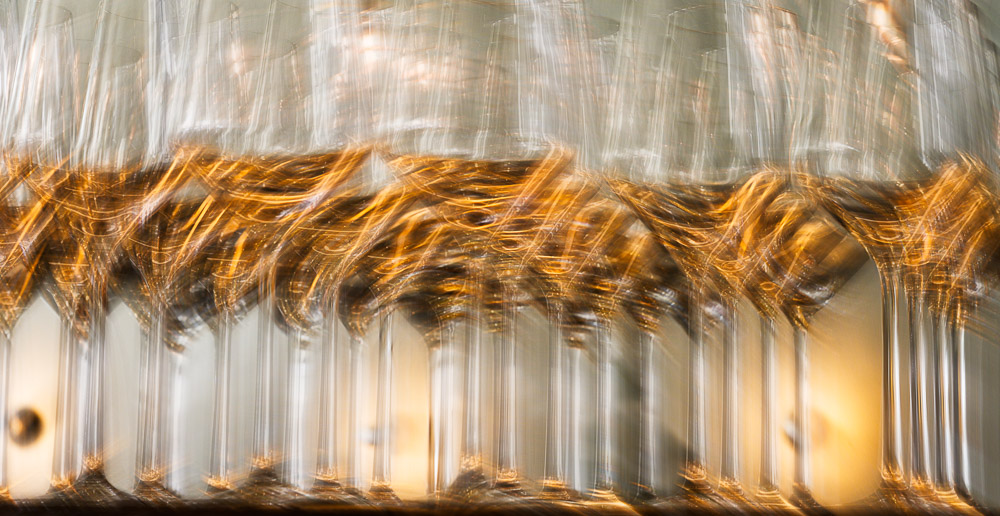
    Take the image with this post. Does it have meaning to you? I could write a whole post on the symbols and relations I see in this. That does not mean you will or should.

    Communication

    When I produce an image, it is an instant of the world seen through my eyes. But is it also interpreted through your eyes. I may believe it has significance, but I may not communicate it effectively to you. Or I may capture something I think is interesting, but to you it represents an insight or truth I did not consciously see.

    That represents part of the problem. There are multiple parties involved. There is me, the author, on one side. I produce it. It is interpreted through my viewpoint, through my beliefs and vision and talent. I had a reason for creating the final image. On the other hand, each person viewing it sees something different. Some may see deep meaning. Some may only see a pleasing image. Others may be completely bored with it. Even if I believe there is meaning there I may fail to effectively convey it to you.

    My thought is to say it is my failing if I do not succeed in conveying the meaning, but that is too simple. We each have our own values and history and viewpoints. You may not be receptive to what I have to say. If that is the case it is not so much that I have failed, but that we just can’t get together on our viewpoints. Maybe that’s kind of like the current political mess we have.

    Do I have to bring meaning?

    Ah, but there is a subtle assumption in this argument. It assumes I really was trying to teach you something deep. Here’s a secret: I don’t usually. It is often sufficient that an image is pleasing to me.

    Life is multi-faceted. There are many layers and levels. Not everything has to be deeply significant and serious. Lighten up. Let some things exist just for pleasure. I am very happy with an image that I believe conveys beauty or joy or simply brings something interesting to your attention.

    It is a consistent theme with me, but I believe our high pressure, hurried lives are causing many of us a great deal of stress and actually reducing our pleasure in life. I want to produce art for your wall that will give you a moment of pleasure when you notice it. Hopefully you will slow down a minute, contemplate it, use it as a reminder to look around more for what is going by all the time. That’s enough meaning for me.

    So, meaning? It’s overrated. I hope my art beings you to a new place, but art should bring joy, not be a school exercise. I promise I will not score you down for not seeing all I believe there is in one of my images. Analyzing the meaning of my work doesn’t being me joy, I just want to create!

    But that’s just where I am. What are your thoughts?

  • Moment Hunting

    Moment Hunting

    An intriguing Japanese concept called Ichigo Ichie has recently been revealed to me. It literally means “one time, one meeting”. A better translation may be “once in a lifetime”. An expanded translation, that appeals to me more, could be “What we are experiencing right now will never happen again. We must value each moment like a beautiful treasure. We must become moment hunters.”

    This idea of becoming “moment hunters” is very powerful to me. This is one of the things I love about photography that is different from most other art forms. I can capture moments as they are happening. When I press the shutter on my camera, the entire world visible through the lens is recorded on the sensor. It does not have to be slowly drawn and/or painted. Have you noticed that most paintings are static? If not, the artist probably took a photograph and painted from it later.

    No tomorrow

    This has been impressed more and more to me as I get older. There is no assurance of a tomorrow. Even if there is, the moment you see now probably will not exist. The light, the weather, the interaction taking place – these things will never repeat exactly, if at all.

    So now, if I see something, I take the picture. It doesn’t matter as much if I am late to something or if I lose my place in traffic or if I even have to turn around and go back (something guys are supposed to never do).

    Even when I am out driving or walking with friends I will stop and capture an image if I really like it. My real friends understand and others, well, hopefully they will be patient, but that is not my problem. The image is very important to me. I have learned that you can’t come back later and find it.

    We’ve all experienced it

    I am starting to learn. Too many times I have thought “that is really great; I will catch it next time”. Even if you get back in an hour, the light will be different; the clouds will have moved; something. Or if you note something interesting enough to return to, say next month or on another trip next year, it will be different. That very shapely tree is covered with leaves and is not as interesting. That great scene is now a housing development, never to be interesting again.

    One of my heroes Jay Maisel tells a story from early in his career. In his book “It’s Not About the F-Stop” (I do not receive any compensation from this) he has this example. He was at the Tokyo Fish Market.

    “I find a room with cakes of ice, light coming from below, cutting knives on top. This is great. I take a few shots, but I’m really supposed to be shooting something else, so I figure I’ll go back there later and really work it.

    I get back a few years later. I’m looking forward to working on it, but it’s not there anymore. It’s been replaced with air conditioning.”

    Based on this and other experiences he always tells his students “Never go back”.

    Not a new concept

    This idea of Ichigo Ichie comes from about the 16th century. It came out of tea ceremonies. The ideas migrated into Zen Buddhist philosophy and was expanded with their thoughts on transience.

    It also appears in martial art training. The idea was that even in training you can’t just stop and do it over. In a life-and-death struggle you don’t get a “try again”.

    And isn’t life such a life-and-death situation? Now is what we have. Use it.

    Ichigo Ichie was even used as the subtitle to the 1994 release of Forest Gump in Japan. It seemed to reflect the events of that movie.

    All we have is today

    Great scenes don’t stick around. Everything changes all the time. If you like the image, stop and capture it. There is little chance you can find it again later. Now, you might find a better one by coming back to a location with better light or better weather. Landscape photographers try to do this all the time. But it will be a different scene. This one you see right now will never be the same.

    Usually I focus these almost exclusively on art and photography. This concept is much broader.

    It scares me now to think of all the transient things I miss if I’m are not disciplined about recognizing them. Your kids, for example. They are growing up every day. They are learning new things all the time. Are you spending the time to interact with them, to help them and shape them?

    Or your mate? They are really the most important person in your life. I hope for your sake they will be with you the rest of your life. Are you conscious of your interactions? Do you always treat them with respect and love? Do you work to keep the romance going?

    Or friends. Being with friends is special. When it happens, be fully there. Take advantage of the time. Treasure every encounter. This is one of the things life is really about.

    Postscript

    Sorry to get so philosophical. Usually I try to stick strictly to art. This topic is very close to me and I believe it is important.

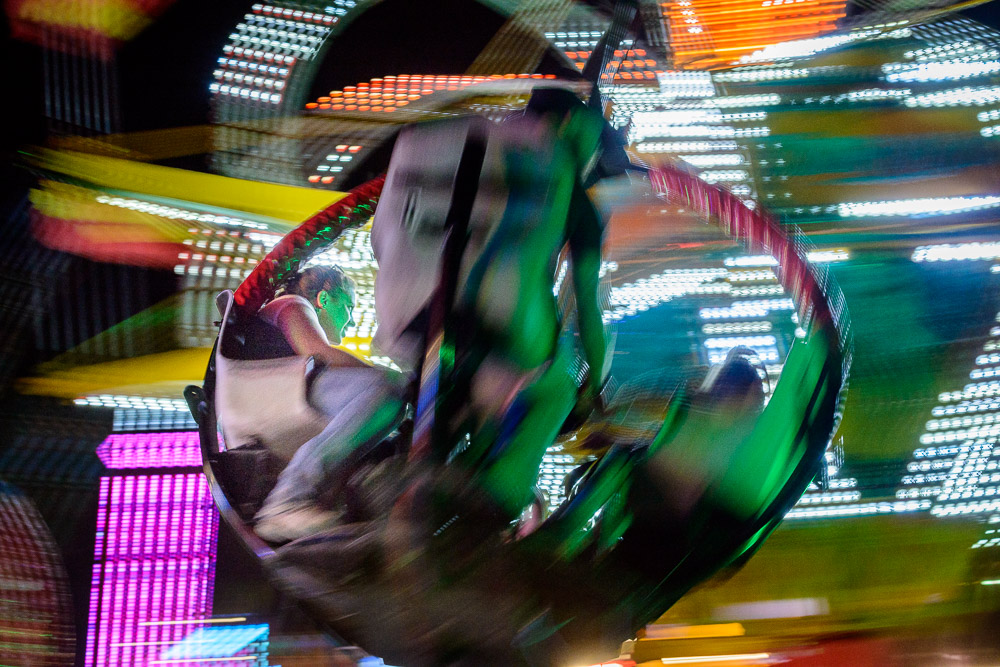
    Oh, and the image at the top of this post? It is a good example. I was driving in a remote area, with my wife and best friend, as darkness approached on a blustery winter night. We were in a hurry, but I had the guts to stop anyway and take this. I’m glad I did!