An artists journey

Tag: creativity

  • Afflicted with Curiosity

    Afflicted with Curiosity

    I admit, I have the disease. I am consumed with curiosity. It drives a lot of what I do. It pulls me in different directions. I am afflicted with curiosity.

    And I’m glad.

    In one of his books, Jonathan Kellerman has a character say “Most people aren’t overly afflicted with curiosity. It separates the creative and the tormented from the rest of the pack.” I think he has captured the idea very well.

    Curiosity

    What is curiosity, really? Is it a learned skill or a inherent personality trait? Is it good or bad?

    Dictionary.com says it is “the desire to learn or know about anything; inquisitiveness”. That is a good start. Like any fairly large concept, there is a lot more to it.

    I like that it is presented as a “desire”. There is a longing. Something burns inside you causing you to pursue things. A variety of things. You never know where it will lead you.

    Inquisitiveness is a great work, too. It implies exploration, searching, investigating. Curiosity is the basis of learning. I mean real learning, not what passes for it in our education system. Learning comes from wanting to know about something and working to figure it out.

    I am no authority, but my thought is that some people have a greater tendency to curiosity than others, but it is a skill that most people could develop. If they really want to.

    What ifs

    Curiosity starts with a question: what if, how, why? The desire to answer such questions and what we do about it can change us. Sometimes these questions are about something no one else has done. At least, we do not know if they have. The questions can arise because of something we have seen someone do and we wonder how it was done.

    Regardless of what sparked the question, something compels us to dig or investigate or try things until we satisfy the need, scratch that itch. A simple question may be satisfied by a few articles found on the internet. Some lead us into years of investigation and experimentation and end up changing our lives. This is the danger and excitement of curiosity – we do not know where it will lead.

    A drive or a diversion?

    I am presenting curiosity as mostly good, because I believe it is, but is that always true? Have you ever been in a situation with a boss/teacher/parent where the answer is a cold “because I said so”? Have you worked in an environment that had written procedures to handle every situation and you could not deviate from them? Asking too many why or how or why not questions can get you in trouble in these places. There are places that intentionally stifle curiosity.

    My reaction is that I have to get out of those situations. I get very frustrated if I can’t ask why and try something new, That is just me. I am driven by curiosity and am generally suspicious of rules.

    In some cases curiosity can be a diversion from the path you need. Many skills require repetition and long practice. For example, martial arts or music or golf need an instructor to guide you and you have to put in the hours to master it. Too much curiosity while you are building your base knowledge can delay or interfere with your training.

    This brings up the idea that there may be a proper time for curiosity. There is a tension and a natural balance between the right time and the wrong time. Sometimes you are not ready to ask certain questions. More preparation may be necessary.

    A base for curiosity

    This may be controversial, but I believe to be really effective, curiosity needs a good base of knowledge and maturity. It is something that builds over time and with great effort. The more you know, the more separate concepts you have, the easier it is to build on them and connect the dots.

    When you start on the path to learn something new, you are a novice. You don’t really know much about the subject you are studying. It is great to have curiosity, let that motivate your study, but do not believe you understand it yet. Be humble enough to know that you don’t even know how to ask good questions yet. Be patient.

    I subscribe to the model that your knowledge is a network of concepts. Learning something new builds on these concepts and ties them together in new ways. The wider your base of concepts the better you can see relations between new things. The more fertile your imagination becomes, allowing you to imagine possibilities that are not obvious to others.

    It is a never ending process. I hope to be learning new things and seeing new possibilities until the day I die. The better the mix of knowledge to build on, the richer the environment.

    Everyone has a different mix. In my case, I have a strange brew of things from photography theory and practice to artificial intelligence, software architecture, software development, user interface design, graphic design, sculpture, business, and general technology. Temper that with Christianity, raising kids, being married for a LONG time, and the lessons learned from making my way in the world over decades. I am happy to have this network of knowledge. I believe it helps my creativity and feeds my curiosity. It makes me the unique person I am.

    Do you have to be curious to be a good artist?

    This is a tough question to answer in a politically correct way. The simple answer is that I’m not qualified to answer it. I’m not sure anyone is.

    A more realistic answer is that I don’t know, but I can’t think of a great artist who was not curious. Think of Leonardo daVinci. He was a scientist, engineer, architect, he studied color and texture and anatomy and the perception of the human eye. Few artists are so extremely wide ranging, but the ones I know of share an extreme curiosity.

    In taking classes from artists as diverse as Peter Eastway or Karen Hutton, a theme that comes through strongly is that you have to explore and be driven by your curiosity. They assume that you will bring your own point of view and not imitate anyone else. And why would you want anything else? Your curiosity will draw you in a unique direction with a style that is all your own.

    This is not a proof that curiosity is necessary. But it is hard to disprove it.

    Give in to your curiosity

    I strongly encourage each of you to give in to your curiosity. Allow it to lead you to new places. Be an explorer.

    Personal projects are a good vehicle for trying new things. Pick a project that challenges you and stretches you in a new direction. Maybe a subject you seldom do. Maybe a new type of processing you never use. Set a time limit for yourself if that is the way you work. At the end, evaluate it and decide if you have learned anything valuable that you want to carry forward in your work. It does not matter if you end up with “portfolio pieces” from the project. It is the exploration that is the benefit.

    Explore, reinvent yourself, follow your creativity, stay fresh. Don’t do things a certain way because you’ve always done it or because a respected teacher taught it that way. This is your art. Go your own way. Follow your curiosity.

    I’m definitely tormented. I think I am creative in my own limited ways. It is curiosity that makes it happen. I hope I do not recover.

  • It’s Been Done

    It’s Been Done

    It’s been done. A dreaded phrase we hear all the time that is meant to dismiss and disparage our creative work. Don’t fall for it. Just because someone says it has been done does not mean you don’t have just as much right to do your own take on it.

    Over and over

    Artists have always done the same subjects over and over. There are only a limited number of subjects and not that many truly different ways to approach them.

    Are you not going to do ponds because Monet had “done” them? Are you not going to do a night sky because Van Gogh was the only one to be able to do that? Are you not going to do landscapes because there are no more to do after Ansel Adams finished? Are you going to forever avoid flowers because O’Keeffe did everything that could be done?

    Of course not.

    Are you going to avoid shooting any subject that has ever been photographed?

    Let’s see, landscapes have been done; portraits have been done; street photography has been done; abstracts have been done; food has been done; travel has been done… It is getting pretty hard to find something that has never been shot. Near impossible.

    So “never been done” must not be the important test.

    Every artist repeats subjects other artists have done before. The real question is, do I have something new to say? Can I make this fresh and unique? Can I offer something that will make my viewers think new thoughts?

    Writers, for instance, all write the same stories but try to make them fresh. It is said that there are only, depending who is giving the data, 3 to 36 fiction plots. All books are a variation of the basic patterns. A. Hyatt Mayor has an interesting take on it when he says: The really original artist does not try to find a substitute for boy meets girl, but creates the illusion that no boy has ever met a girl before.

    Likewise, can we create the illusion that our work is original?

    Do it different

    Just because a famous artist did the subject before does not mean they created the definitive work that can never be topped or even equaled. An artist should have an unshakable belief in his vision. We should not be timid and shy away from controversy. No critic owns the right to disallow your work.

    Creative thinking may simply mean the realization that there is no particular virtue is doing things the way they have always been done. Rudolph Flesch

    If we are going to do things the way they have always been done, then why bother? If we are just copying other work,that is not adding anything interesting to our art. Re-envision what has been done. Do it different.

    Creativity is not usually something radically new. Usually it is an incremental build on the past. It is the little twist we came up with that makes it uniquely our own. It is our own spin on the conventional way it has been done.

    I think artists of necessity are a little crazy. Obsessed. Focused. This drives us to separate ourselves from the crowd. To share our vision and show that we see things differently. I seem to be putting in a lot of quotes this time, so here are 2 more:

    Follow your enthusiasm … The only quality common to all great artists and creative people is that they are obsessed with their work. Richard Avedon

    If you are not criticized, you may not be doing much. Bill Swanson

    Apply your style and vision

    Our vision usually applies to the unique way we see the same thing other people see. We will not often see something that no one else in history has ever seen before. The secret is what we bring to the common. Can we make something new out of things everyone else sees? Can be see different? Be different?

    That is what we are called on to do as artists. Everything has been seen or thought of before. But how can we bring a new interpretation, a fresh point of view, an unencumbered view?

    Finishing with a final quote:

    I believe in looking reality straight in the eye and denying it. Garrison Keillor

    Most people are burdened with reality. A thing is what it is and can’t be anything else. What a limiting view! A thing can be almost anything we can envision it to be. That is creativity.

    Don’t waste time being an imitation of anybody. Spend your life being yourself.

  • Try it Different

    Try it Different

    Ruts. It is human nature to get in them. They are safe and comfortable. These days, safe is sometimes welcome. But ruts become boring and our work starts looking all the same. We do not grow as an artist if we are stuck in a rut. A great way to shake ourselves up and break out of a rut is to try it different. Force ourselves to “break the rules” we impose on ourselves. Do something we wouldn’t normally do.

    When we try it different, sometimes we learn new things about what we like and want to do. A great photographer, Karen Hutton, says “Whatever you usually do, try it different.” This is wise advice. It is self-help to maintain our edge.

    Different lens choice

    An easy way to start slow is to spend a few days using a different lens. Something you don’t normally use. This makes you look at your surroundings differently. It is amazing, but a simple thing like this can change your point of view enough to freshen your images.

    I discovered over the years that I naturally have a “telephoto eye”. That is, I tend to zoom in on details rather than shooting wide angle views. About a year ago I got an awesome 24-70mm lens for my new camera and it has become my standard lens. I now shoot the majority of my images with it. My POV has changed to adopt its range.

    Perhaps that means it is time to get a super wide angle or go back to telephoto. Just to “try it different”. πŸ™‚

    Different time of day

    Ah the magic hours, the golden light within an hour after dawn and an hour before sunset. It is beautiful. It is warm, the sky has great color, and the light is horizontal so it emphasizes texture and form. I tend to go crazy if I am in a great location at those times.

    But I see it presented as a “rule” that you never shoot between those times. Especially for landscapes. This is so bogus. The goal is to find the right light to create the effect you want for the subject you have chosen. I sometimes find the best light is at high noon. There is not a hard rule.

    Experiment. Work backwards from the light to the mood and subject. For example, you are out at, say, 1 pm. It is a sunny day with harsh light streaming directly down. Figure out what kind of mood is emphasized by this light and what subject would work best in the light. Look around with this mental filter and you may be surprised. Deep canyons often fit this. Also, vertical walls or buildings where the harsh parallel light shows off interesting texture or shadows. There is always something.

    Here is a short but good article that discusses choice of light. It emphasizes that “good light is light that matches your goal for a photo“.

    Do you find that must of your work is shot at the golden light time? Habits can be re-examined. Experiment. Learn to see the possibilities of different light.

    Different composition choices

    Now this is getting harder. I suggest you start shaking up some of your fundamental style beliefs. Photographers tend to spend years agonizing over whether or not we have a “style”. When we convince ourselves we have one, we’re afraid to step outside of the confines of what we believe our style is for fear of being lost again. The more mature we become as an artist the more we understand that we are our style.

    Compositions are made up of our choice of subject, lighting and mood, arrangement of forms, contrasts, and exposure. I recommend that you give yourself permission to play with all of these and more.

    If you are a landscape shooter, spend some time doing people, street photography. It will sharpen you eye and reflexes and it can be a joy. If you pride yourself on “perfect histograms” start playing with high key (overexposed) or low key (underexposed) images. It helps to impress the point that an exposure is proper if it creates the effect you want. A perfectly shaped histogram may be completely wrong if you were going for something else. An image is for the effect it has on the viewer, not its technical perfection.

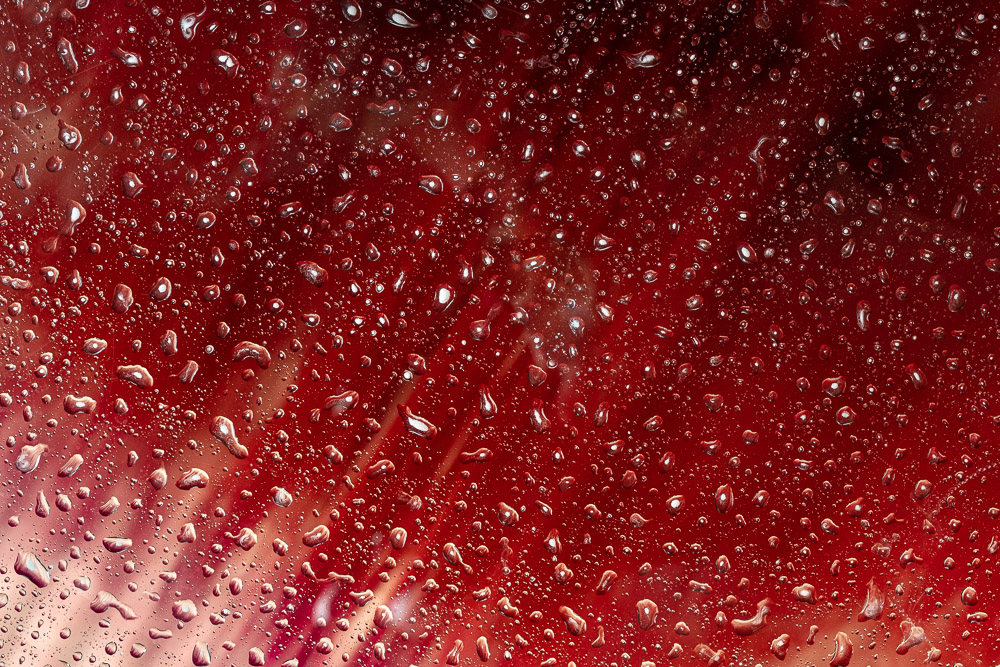
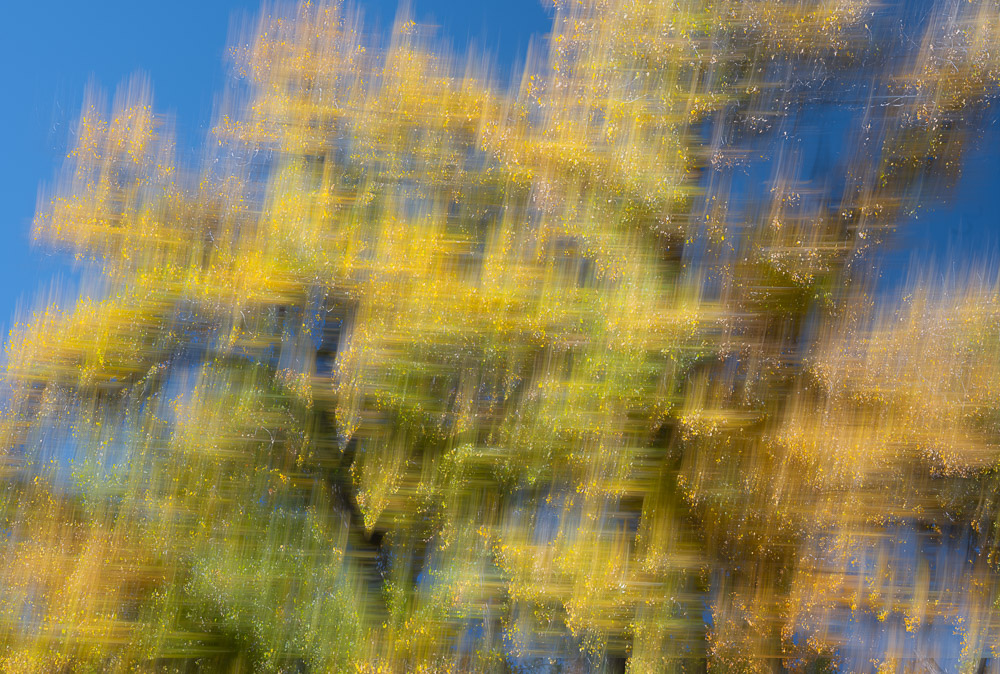
    I have a love of super detailed, “crunchy” sharp images. To explore that, I have challenged myself to experiment at the other extreme. I now sometimes do projects with little of no sharp or even identifiable subjects. Sometimes they are motion blurred or out of focus. Sometimes they are post-processed beyond recognition. I have come to love many of them and it has helped me discover new spaces I want to work in. The image with this blog is an example.

    Grow

    Sometimes we are our own worst enemies. We listen to what a teacher tells us and follow it without judgment. We get into patterns and stop questioning. Our work becomes routine, habitual. We stop learning.

    But just like we may be our own worst enemy, we can also be the agent of changing ourselves. Start experimenting. Take workshops. Study online courses. Read books. Tryout what other people tell you, but only keep what works for you. Examine yourself and your work, clearly and without bias.

    Does the work you are doing today look exactly like what you did 10 years ago? You may be satisfied with that, but for most of us, if we’re not growing, we’re dying. I know that my artistic vision is an evolving thing. It is always a little out of my grasp, so I have to follow it and try to keep up. I like it that way. I’m growing.

    Stay fresh

    Artists work on the edge. If we have just done work we like, we are compelled to better it on the next project. We are usually our own measure. That is, to see if we are getting better we compare our current work to our past work. It is part of staying fresh. We have to keep ourselves invigorated, rejuvenated, challenged. It is how we do our best work. We are driven by curiosity. The “what if” questions keep leading us in new directions. Habit kills thought.

    β€œA good shock often helps the brain that has been atrophied by habit.” Napoleon Hill

    How about you? Do you have a process for challenging yourself, for questioning conventions and norms, for keeping yourself sharp? A significant part of this is forcing yourself to sometimes try it different.

  • Dealing With Plateaus

    Dealing With Plateaus

    Plateaus are not only common in the landscape, they happen metaphorically in our lives in various ways. A simple dictionary definition of the type of plateau I am discussing is “a state of little or no change following a period of activity or progress“. In other words. we’re stuck for a while.

    Life is not a linear progression. We’re not always moving forward to achieving goals and bettering ourselves. No matter how good our intentions or our will power, there are plateaus where things go level for a while.

    This is frustrating, but something to accept. The plateaus are probably necessary to let us regroup and “catch up”. Kind of like getting a good night’s sleep. Usually we go on and start progressing again.

    Like losing weight

    Some of us have a body type that easily puts on weight. When it gets bad, we have to take some action to get our weight back in control. I hope you don’t have this problem.

    Dieting is a futile activity. It doesn’t work long term. My strategy is cutting back eating to what I need and getting more exercise. But this is not a rant on dieting.

    As I lose weight I hit plateaus sometimes. There doesn’t seem to be a reason for them. I haven’t changed what I’m doing. It’s just that sometimes the same actions do not get the same results. Sometimes my weight even goes up with no discernible cause. It can be very frustrating if I don’t remind myself that this is natural and expected.

    Plateaus in our art

    Progressing in our art is kind of like losing weight. We work at it diligently, but sometimes it is an up and down process and sometimes we get stuck at a plateau. I think we have to accept it and keep working.

    We can’t force it. Inspiration, creativity, the muse, whatever you call it is not a constant part of our life. We don’t know why it chooses to visit us sometimes and not others. But that is the way it works.

    As a matter of fact, what I observe is if we get too frustrated and try to force the creativity to happen, we are very disappointed with the results. Let it be and wait for it to happen.

    Be persistent

    We can’t force the creativity to come, but we can do things to encourage it. When we’re on a plateau, of even in a valley, I find it helps to train, to learn, to seek inspiration from other’s work. This is a great time for study, reading, reflection, trying new things. Not a discouraged resignation that our creative life is over. If a plateau is kind of like sleeping, get a good sleep. It helps a lot of things and life looks better in the morning.

    Keep working, just don’t focus on the truly creative work at this time. I know I always have a lot of filing and cataloging to do. Re-evaluating portfolio selections and changing things around. It is a good time to contact galleries and submit to shows. Do the dreaded marketing that I put off when I’m “too busy being creative” to do it. Maybe even catch up on my bookkeeping. Yuch. But is needs to be done.

    Accept the dark times, they will end

    Know for a fact that the dark times will end. Trust that your creativity is not “used up”. Creativity breeds creativity. If you have been creative in the past it will happen in the future. Probably even better and stronger.

    A plateau is a temporary stage. Our mind will decide when it is time to move on.

    Use the plateau time wisely. It will help you come out the other side stronger and better equipped to move on.

    Relish the joy of moving to the next stage

    Finally it happens. One day you wake up with a renewed vision, a new point of view, an eagerness to resume work. Rejoice in it. Fill your work with the new vision.

    You are rejuvenated. All is well. You are still an artist.

    Enjoy. Do your best work. Know that the cycle will repeat and more plateaus are coming. But trust that they are temporary and you will come out even better. That actually gives you hope.

    And I hope I will break through my current weight plateau and achieve my goals. πŸ™‚

  • What You See

    What You See

    An amazing artist, Karen Hutton, said “It’s not what you look at that matters, it’s what you see.” This is very wise. We cannot always control our environment. We cannot always surround ourselves with astounding subjects and grand scenes. Our environment should not control our art. Even when we are looking at a grand scene we should see it differently than others.

    We can’t always control what is around us

    It is easy to say to ourselves “poor me, I’m stuck in [fill in the blank]; I can’t take time off to go to the Grand Tetons to shoot amazing landscapes, so I guess I can’t do anything.” Get over it. An artist explores the subjects he can find around him.

    Adapt. Reframe the possibilities. What you see should be a trigger. Your surroundings are a canvas you can create on.

    Get excited about the environment around you rather than disappointed about where you are not. It is hard to put me someplace where I can’t find great images. That is not bragging. I’m curious about everything I see. That leads me to explore with a good attitude. My curiosity helps me seek out visually interesting things.

    That is not to say we should be equally excited about everything. Each of us is called to by different types of subjects and situations. Flowers, for instance, do not excite me to do much. I know they are a great subject for many people, but you will very seldom see me present a flower image.. Unless I figure out something to do with it that I consider “interesting”.

    You don’t require an amazing subject to make art

    I am the artist. I can’t not look for image possibilities wherever I am. It is not my subject’s job to be so dramatic and interesting that I can just lazily point my camera in its direction and make a great image. I might even say that the more difficult a subject is to “capture” the more it excites me. I have to work at it.

    The image is created in my mind. It is my reaction to the subject that forms the picture. Artists over the centuries have made wonderful pictures of bowls of fruit or fields of wheat or city streets.

    Monet is a good example. Except for some time in the Netherlands and England, he found most of his scenes in a small area of northern France. He could take something I would walk by without noticing and make a great picture of it. That is making art, not just finding it.

    And isn’t that what we should be doing? Shouldn’t an artist make art out of what is around?

    What can you do with what you see?

    Using Monet as an example again, he narrowed and narrowed his focus down to the point where he spent the later part of his career almost exclusively painting scenes of the lily pond in his garden. But he perceived art and drama in the intricacies of the color shifts and light at different times and different seasons. His images of this are amazing.

    That subject doesn’t really excite me. I would love to see his gardens, but if I went there I would shoot some images to record his famous garden, maybe try to do a study of the shapes and colors, but it is unlikely I would create any real art there. He has already done it and that is not where I should spend my time.

    But some things jump out to me that escape most other people. And they do not have to be grand scenes.

    Nearly every day I wander around my little town. Of necessity, this is where I spend most of my time. I try to keep my eyes open and attentive for things that interest me. I’m not always successful, but a day seldom goes by without taking some pictures.

    When you are “stuck” in one fairly boring location, you learn to scale your perception accordingly. I learn to be aware of smaller, more subtle things. After seeing the same scene a hundred times I sometimes suddenly perceive it differently. Maybe this is kind of what Monet did.

    Everyone sees different

    As Karen Hutton said, “It’s not what you look at that matters, it’s what you see.” We all see differently, or at least we should. If we train ourselves to understand and express our vision and feelings for the subject then our artistic interpretation will be unique.

    Do we want to make images that are simply a record of a location or would we prefer to show the way we perceive it? One of the problems that de-values photography for many people is that much photography is it is just a camera pointed at a scene. If we cannot reveal our emotions or our beliefs or our point of view then there is seldom anything special about it.

    Do you want to be one of the photographers fighting for tripod space to record a famous scene at the perfect time of day with the perfect lighting? Or would you rather turn around and find something interesting the other direction? Something they would not see because they were fixated on the iconic scene?

    Maybe that is a foolish question, since so many people are intent on shooting the same image over and over. But for me, I would rather be the one seeing something different. As Apple said in their famous ad campaign, Think Different.

    What do you see?