An artists journey

Tag: creativity

  • Looking vs. Seeing

    Looking vs. Seeing

    We all look at things every day. Do we really see them? What’s the difference?

    When we’re driving, for example, we look at everything around us. (I hope! Put that phone down!) What we mostly see are threats, dangers, problems to work around. Is that car going to run the red light? Does that driver seem distracted, so I should move away from them? Is that pedestrian going to walk in front of me? That construction is blocking the lane I want to be in so I have to make a different plan.

    We look at things like this all the time, but we don’t really see them. That’s not inappropriate for a situation like driving. After all, when the guy swerves into your lane and nearly hits you, you don’t really care what he is wearing or what color his eyes are. Looking is sufficient to take in the essential information to let us get by. Doing it is efficient. It prevents us from having to waste time and energy examining things that probably are not directly important to us.

    Unfortunately, most of us go through life in this state. Things are happening all around us but we only see the minimum necessary. We get in the habit of not noticing. It simplifies our life and reduces the clutter of things we have to examine and consider. Simple is not always better. It can lead to a minimal existence. We are aware of enough to stay out of trouble but we don’t always appreciate the beauty, irony, joy, pathos that is swirling all around us.

    But what about those of us who consider ourselves artists? We don’t want to just get by. We don’t want the minimum connection to the world around us. Artists and creatives should see more. One of our jobs is to wake up people to what they are missing in the world around them. That decision comes with costs. Actually seeing is much harder. It takes a lot more effort.

    What do I mean by that? Say I am walking down the street. I walk by a door. On the looking level it is easily dismissed as “door is closed, nothing to watch out for there”. But what about what the door actually is? It’s texture and color. Is it tagged with interesting grafitti? Is it weathered and rough or smooth and modern? Where does it lead? When is the last time I say someone go in or out it? Does a door like this say anything about our environment, or about people’s relations to each other, or about the people who built it and their history?

    Going through like this way takes much more awareness, more intention, more thought. And it is distracting. Sometimes we get lost in something we have seen and end up late to an appointment, maybe even miss lunch. It fills our minds and crowds out Facebook or the TV shows we watched last night. It focuses us on something we did not expect when we left the house.

    All in all, I think seeing is a better existence than just looking. It is more rewarding, if for no other reason that that we are more in tune with our environment; with the world around us. It encourages us to take in more, to examine things more deeply. I try to practice seeing every day. When I don’t, I feel like I have drifted through the day in a daze.

  • I Don’t See Anything Interesting Here

    I Don’t See Anything Interesting Here

    I had just parked at a trail by a river near my house. It was a crisp late fall day. As I was getting my equipment out of the car a woman passed me coming back from the trail. She asked if I was going to take pictures. (Seemed obvious to me, but people are funny) She then gave the pronouncement “I don’t see anything interesting here.” I was stunned and probably said something non-committal like “I’ll take a look anyway”.

    That has stuck with me. I’m still trying to figure it out. Sometimes it seems deep; sometimes it seems just silly. But it intrigues me.

    I must confess that I have the same problem at times. Sometimes I set out with the idea that I am looking for a certain “thing”. I don’t advocate that and I have written against it, but I fall into the trap sometimes. Our marvelous, adaptive brains do amazing things to “help” us achieve our goals.

    A funny thing happens when you go looking for something. It seems that that’s all you find. It is just human nature and it can hardly be avoided. If you go out looking to take a picture of a monkey then all you will see are monkeys or non-monkeys. Your focus and perception are tuned to reject anything that is not a monkey. You are often throwing away wonderful scenes because of your mental blinders.

    But to take it a step deeper, it raises some interesting questions that I have to ask myself. Things like, is everything interesting? What does it take to be worthwhile to take a picture? How much of a picture’s interest is based on our perception at the instant? Is it a failed outing if I don’t get a good picture? Who says if an image is interesting?

    It is my position that many things are interesting in the right conditions. I believe this to be generally true. I don’t agree with some post-modernists who seek out intentionally bland and uninteresting subjects, but I believe many things can be interesting. But on this day, in this light, in this weather it may not be interesting. So don’t force it.

    What makes it worthwhile to press the shutter? When I’m in doubt I usually ask myself “is this actually an interesting picture? Will I actually use this?”. If I can answer that it is or might be, I press the shutter. I also need to follow up and ask if this is the best time, location, atmosphere, lighting, etc.

    Ah, but how much of the interest is based on our perception at the time? A lot of it, I think. I trust my perception, my instinct, when it is calling to me. But I tend to err on the side of taking too many images. Sometimes when I’m editing later I ask myself “what I was thinking?” as I delete blocks of images. But sometimes there is a rewarding payoff. Those happy times when I discover my intuition was really on to something and I have a gem there. Of course, since I only had a vague idea of the worth at the time I might only have a sketch that I need to go back and work in more detail. But still, my subconscious is sometimes more perceptive than my conscious mind. Some say perception is reality. I don’t know, but perception certainly guides our view of reality.

    And one of the painful questions, is it a failed outing if I don’t come back with a good picture? I have come to the conclusion that there are seldom failed shooting outings. They are all useful, if only for practice. Being out, with your senses sharp and searching, getting to take pictures – how can this be bad? You don’t hit a home run every time at bat.

    Then there is the existential question of who gets to say if it is interesting? My answer is, the audience I am trying to please. In my case, that is me. Of course, I hope some other people will like it, even occasionally buy it. I will be the judge, though, of worth or success of an image. I may be wrong and I may change my mind over time, but it’s my call.

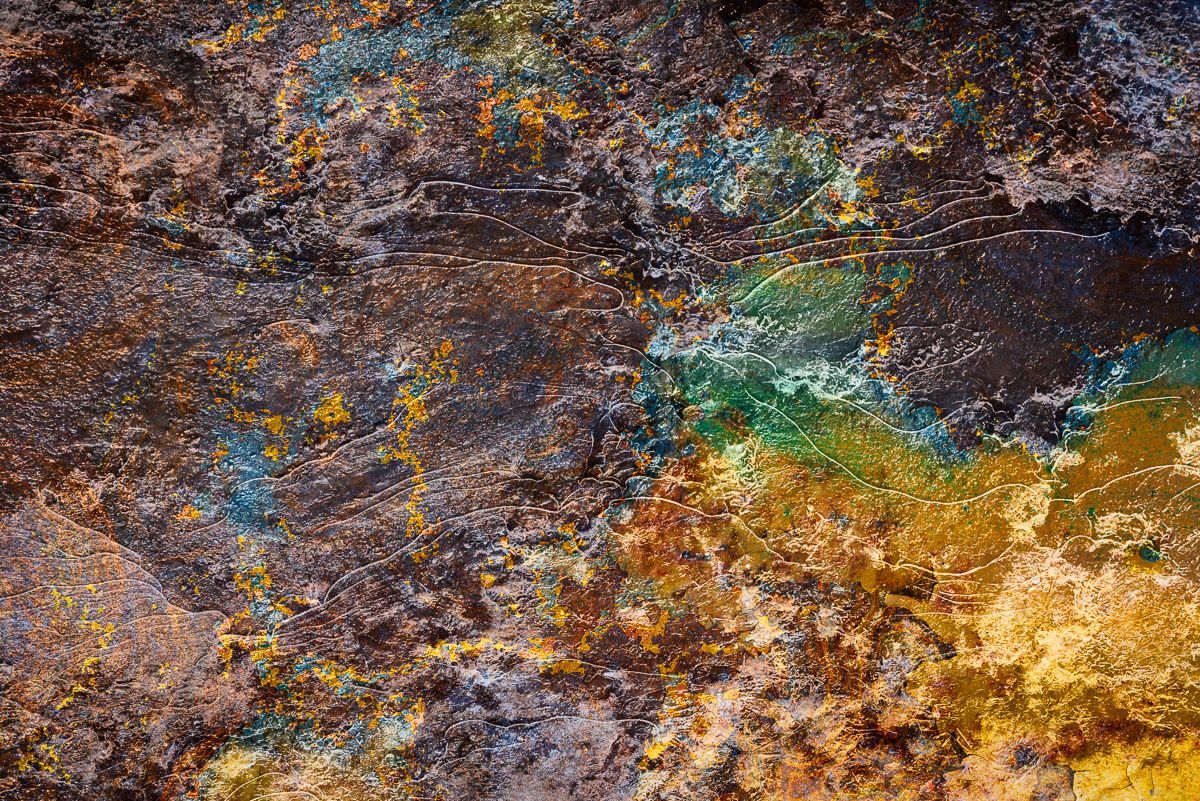
    So how about that day. After she “challenged” me about no interesting pictures I was determined to prove her wrong. That is the wrong attitude. I regret it. Following my normal process would have helped. I allowed her to throw me off. So I don’t like much of what I got that day. But it wasn’t a total waste. I hope you like the image at the top of this article.

  • Be Different, Like Everyone Else

    Be Different, Like Everyone Else

    I hate getting cynical (even though I am), but at times it seems to me that there is little originality in the art world. It’s just a business. The gatekeepers want to put you in a box to make it more convenient for them to stereotype you and know “where you fit in”. Difference and variety are actually discouraged.

    Galleries and dealers say they are looking for fresh and creative and unique, as long as it is like all the works they already carry. Curators look for cutting edge, original work, as long as it is just like the shows they usually put together.

    This sounds like middle school, where everybody is consumed with angst and frantically seeking their individuality; trying to be themselves. Which means they are desperately trying to look and dress and act exactly like everyone else in their group. Because if they actually were themselves, the leaders in their peer group would make fun of them. How ridiculous.

    Standard advice for new artists is that you have to develop a signature style and a body of work focused on a few projects or themes. That does not work well for some of us. My themes and subjects are wide ranging. I might be doing street photography this morning and landscapes this afternoon and still lives tomorrow and composites the next day and … The forces that motivate me, helped by my borderline ADD, also prevent me from focusing all my attention on one theme or subject. I wander where my curiosity leads me and enjoy seeing what I find along the way.

    So when people ask what I do, I can really only say “I’m an artist”. If they push beyond that, well, most of my work is outdoors, all is digital, it is usually based on photography, and it is “fine art” in the sense that it is not intended as documentary or reportage. I am not representing any of my work as “truth”. I lean toward the abstract and even surreal, but I also enjoy crisp, highly detailed shots of an old barn. My work may be heavily manipulated or composited – or not. I intend for the main destination of my art to be prints.

    If I put together a portfolio for a gallery it may have an image of a church building, and an abstract view of a tree, and a wide landscape on the high plains, and a pure composited abstract, and a black and white landscape in the mountains and several other seemingly disjoint things. Their reaction is “what does this mean? what do you shoot?” I can only answer that this is my style. I am curious about a lot happening in the world around me. My style is the subject, the point of view, the way it is shot, the attitude and feeling I bring. Each one is me, my expression and my reaction to what I encounter. Purity, consistency, and following rules is not my strong suit.

    Because of my wide interests, my inventory of images is pretty large. I would be glad to pull special portfolios for a gallery or designer if they have a certain subject or genre they are looking for. But if they take the attitude that I’m not worthy of consideration unless I only do the type of projects they value, it makes me wonder who they think the artist is. They expect me to be different, like everyone else.

    So should I follow the path that calls me or do what other people expect of me? I like what Darius Foroux said: If you want to stand out from the crowd, guess what, you have to stand out from the crowd.

    Visit my web site

    To get a better idea of the range of things I value and do, please check out my web site:
    photos.schlotzcreate.com

  • Seeking Boredom

    Seeking Boredom

    I actually create opportunities for boredom. I seek it at times. I enjoy it, in the right measure. It is necessary to my mental health and vital to my creative process.

    Patricia Meyer Spacks argues that the contemporary concept of boredom did not exist until the 18th century. Up until then people were too busy surviving to think about the quality of their free time. You had to plant the crops, tend the animals, harvest the crops, weave your cloth, make your furniture, kill and cook your food – there was no time to reflect on whether or not you were entertained.

    Our life today is much more indulged. We are never far from an endless stream of movies, tv shows and funny cat videos. In the same way that being “too busy” has become a badge of honor for many people, the idea has spread that life is not worth living unless you are entertained every free minute. Most of the people I know are completely at a loss if they are cut off from the internet. They are like a trapped animal ready to chew its leg off to escape.

    So am I some sort of masochist bent on inflicting pain on myself by intentionally allowing boredom? Quite the opposite. I have discovered that I need time to process information. We need to “let our mind wander” to give our subconscious freedom to make associations and connect the dots as Steve Jobs put it. A major part of creativity is being open and receptive to ideas, to what if? questions, to seeing things in different ways. I believe it is nearly impossible to do this when we are immersed in the noise of modern life.

    Being bored is a great motivator. It may force us to pick up a notebook and write, or pick up a camera and shoot aimlessly, or pick up a tool and start making something. Something will come of this. The product we are making right now may not be great, but it is exercising our brain, it is allowing our creativity to flow, it is giving us the space to connect the dots. It may lead us to a place we never anticipated.

    One of the exercises I do that is totally mysterious to most people is to turn the audio off when I am driving. Try it and you will find yourself locked up with your own thoughts. The boredom crashes in on you. Try driving across eastern Colorado or western Kansas with the radio off. The thought of it would make most people ready to chew their leg off. But if you are lucky, you come to accept it and realize the benefits it can release.

    Being alone in your own head, without someone else’s programmed video or audio track to lead you, you think random thoughts. Unanticipated ideas come. You look back on things and forward to things and think about who you really are, what you have done, what you want to do. And if you are driving you spend time really looking around, actually seeing things, wondering about them. You can think “hey, I’ve never been that way; I wonder where that road goes?”. And you might even check it out.

    One of my early guides in photography, John Shaw, said: We are surrounded by beauty and live in a world of wonder, if only we take the time to see what is all around us and permit ourselves to feel deeply and genuinely. In the smallest detail we might discover tranquil harmony, and in the largest expanse elation and joy. Thoreau said Most men live lives of quiet desperation.

    I believe a way to break out of that desperation, to feel deeply and genuinely, is to practice boredom and let that lead us to a new place. A place where we are directing our own lives and thinking our own thoughts.

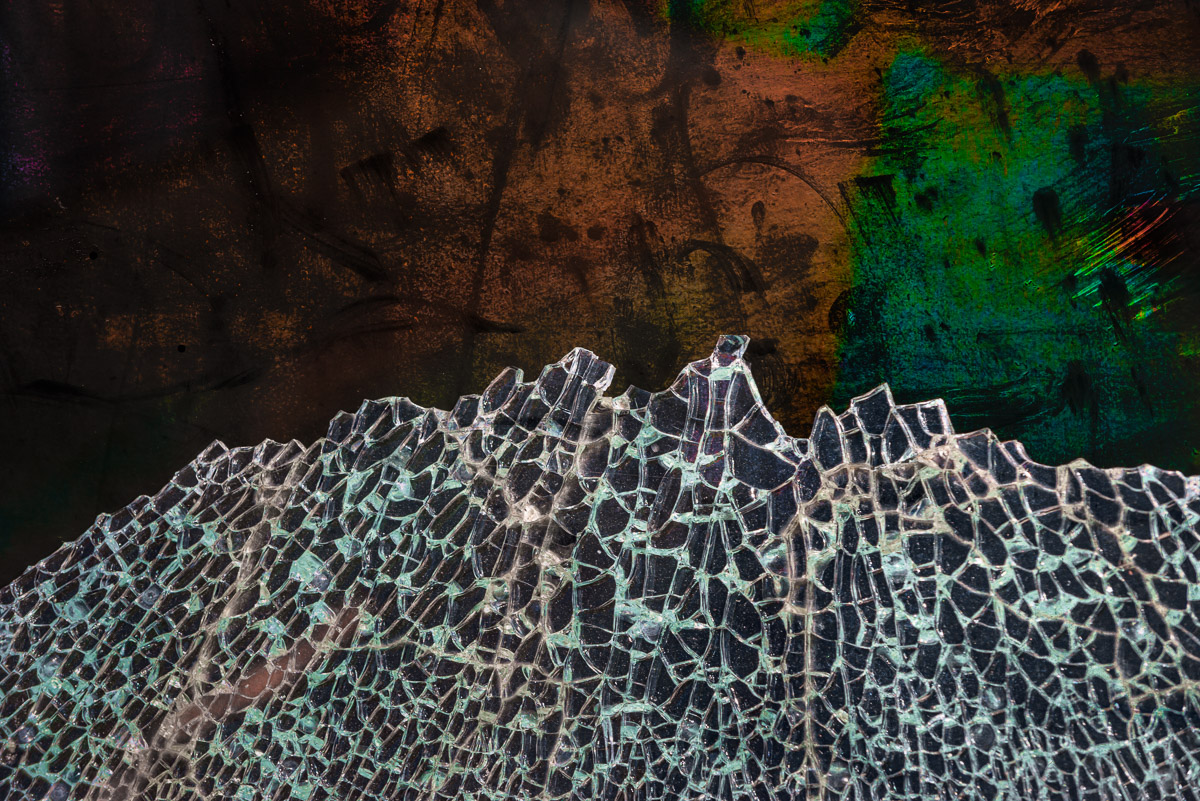
    The image attached to this article would never have been found had I not put myself in a very boring place – and gotten lucky. Actually, it’s not just luck, but that’s another story.

  • Photographic Time

    Photographic Time

    The camera’s shutter speed setting creates a unique art form. The camera captures instants too short for the eye to perceive. Or it can stay open for very long times allowing motion to be recorded. Photographic time is a distinct concept. It is one of the things that is exclusive to photography.

    A painting starts on a blank canvas. The image is created one brush stroke at a time, exactly as the artist envisions. No more; no less. Nothing is there that was not placed there by the artist.

    The camera is just the opposite. Each time the shutter opens an entire scene is captured. Everything in view of the lens is recorded on the sensor (within the limits of dynamic range). Whether or not the photographer wanted it there, it will be recorded if it is visible. The general problem of the photographic artist is to balance everything so that the shutter lets in everything we want and only what we want.

    The photographic artist has several tools available to tailor the outcome, besides the obvious of arranging the scene the way he wants. The main tools are position (move!), lens choice, aperture and shutter speed. We are concentrating on shutter speed this time, as it is one of the things that makes photography different.

    Most photographs are taken with a moderate shutter speed to create images that look conventionally normal to viewers. Normal in the sense that it looks like what they would see with their eye. This causes no surprise. This is the way you take most of your selfies.

    At one extreme, though, the shutter can seem to “freeze” time. Most good cameras have a shutter speed down to the neighborhood of 1/8000 second. With a fast flash even shorter effective times can be stopped. This allows bullets to be frozen in flight, drops hitting liquid and bouncing, a ball “squishing” as it impacts a hard surface. These phenomena cannot be observed by the eye. They happen too fast.

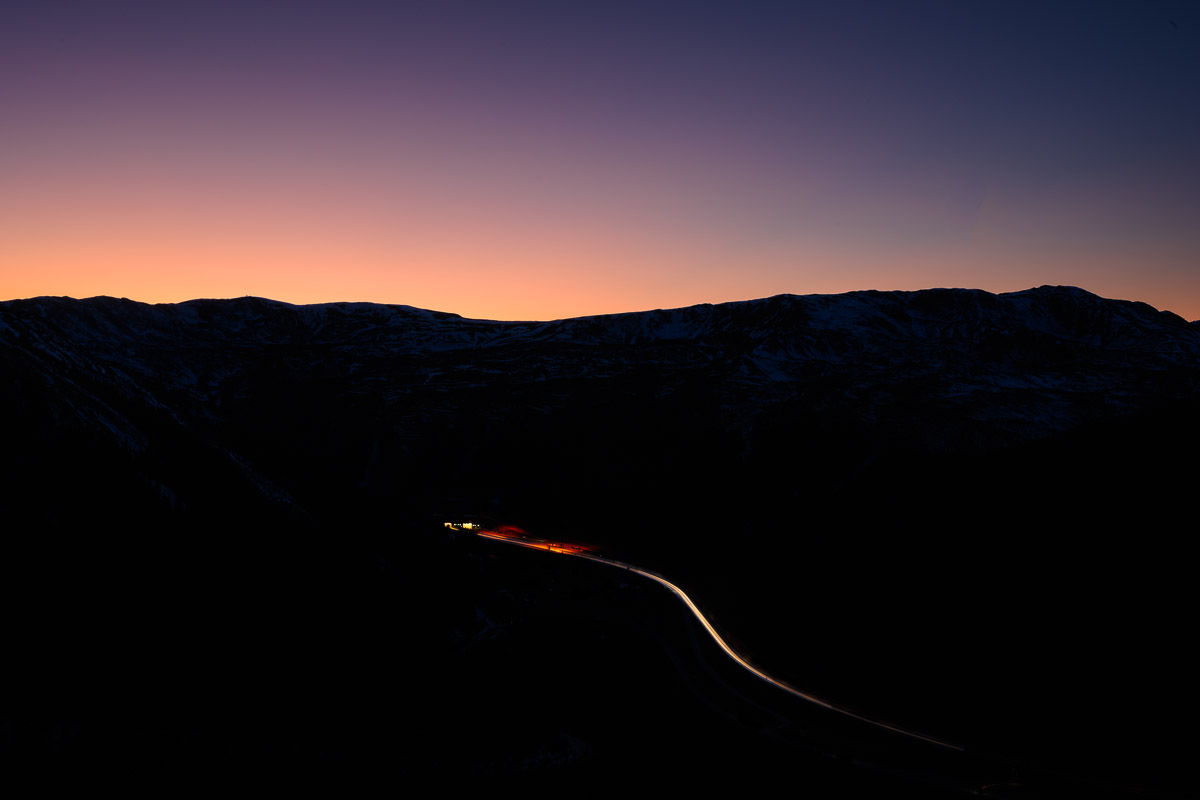
    At the other extreme, the shutter can stay open for seconds, minutes, even hours to let action be captured in one frame. This end of the spectrum is generally of more interest to me in my creative work. It allows for a path to be traced. Common items can take on a whole different meaning when streaked or smeared for unusually long times. It is fairly common to see cascades or waterfalls shot at slow speeds to let the water flow streak together. Night shots often show car lights tracing long paths along the road. A simple shot of a field of long grass takes on a new feeling when the long exposure lets us see the wind blowing the grass.

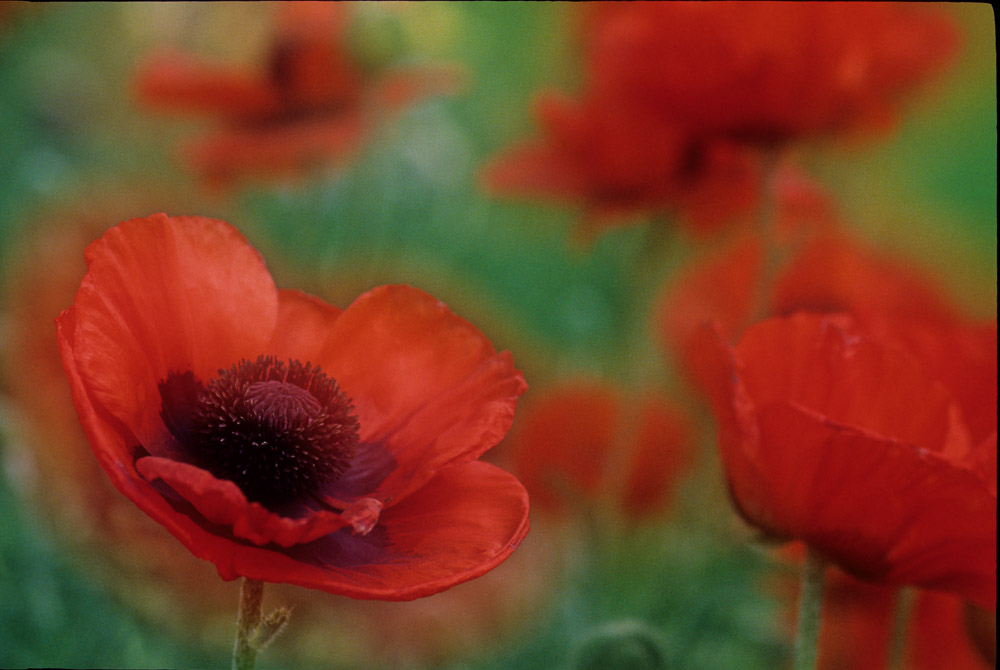
    I enjoy using the camera as a creative tool to let us see scenes not typically captured by other types of art. My work is more often at the slow shutter speed end. I like capturing motion. The image with this blog shows a fast action shot hand held at a slow shutter speed – the opposite of what most people do. For me, motion is best represented by blurred movement. I have friends who work more at the extremely fast speed of frozen motion. That’s great and I really enjoy some of their work. It is not how I think, though. Photographic time is a means of creatively showing aspects of the world in ways that are unique to photography.