An artists journey

Tag: creativity

  • Prolific, not Perfect

    Prolific, not Perfect

    This was inspired by a great blog by Benjamin Hardy. One of his points in this article is that it is better to be prolific than perfect. I believe this translates directly to my journey as an artist. Perfection is a dangerous and elusive goal. Being prolific and creating a lot of work leads to better craft and many more new ideas.

    Benjamin illustrates the point about being prolific with this story taken from a book  Art & Fear, by David Bayles and Ted Orland.

    The ceramics teacher announced on opening day that he was dividing the class into two groups. All those on the left side of the studio, he said, would be graded solely on the quantity of work they produced, all those on the right solely on its quality.

    His procedure was simple: on the final day of class he would bring in his bathroom scales and weigh the work of the “quantity” group: fifty pounds of pots rated an “A”, forty pounds a “B”, and so on. Those being graded on “quality”, however, needed to produce only one pot — albeit a perfect one — to get an “A”.

    Well, came grading time and a curious fact emerged: the works of highest quality were all produced by the group being graded for quantity. It seems that while the “quantity” group was busily churning out piles of work — and learning from their mistakes — the “quality” group had sat theorizing about perfection, and in the end had little more to show for their efforts than grandiose theories and a pile of dead clay.

    I have seen so many times in my life that the demand for perfection leads to paralysis. If you take the perfection requirement seriously it creates such a high bar that it is impossible to meet the goal. Instead you delay, study the problem, try to think of new or “creative” alternatives. But mostly you avoid doing anything, because you know you cannot create perfection.

    On the other hand, when faced with a difficult goal or a creative block, just getting busy and doing things will usually lead to progress. Planning is good, but in art and creativity working seems to clear out roadblocks faster. Many psychologists and business leaders have established that a bias to action is a predictor of success. Action brings confidence. Action gets us in motion and builds momentum. To follow the story above, doing and learning, trying and rejecting and keeping going will lead to much better work than sitting waiting to figure out how to do the one great and perfect thing.

    One word the story authors used that jumps out at me is theorizing. This is a great trap. Art is ultimately a very practical and pragmatic discipline. It is about making things. We have to make a lot of things to figure out how to make the things that please us. Theorizing about how great something ultimately could be actually inhibits us from doing the work. The fear of not living up to the theoretical perfection makes us not try.

    So cast off the inhibitions. Just do it. Make things. If you’re stuck, make something, even if just to throw it away. The process of making something gives us momentum and stimulates our creative spirit. Good writers have a habit of this. They write a certain number of words a day, even if they know it is not great. Doing it exercises the writing “muscles” and lets ideas flow. Visual artists should do the same thing. Work every day, whether or not you feel like it. Work when you are uninspired. Let your creativity flow through your work and lead you to new ideas. Being prolific really is the way to create better work.

  • Questions, not Answers

    Questions, not Answers

    Photography, being by its nature realistic, tends to present facts or answer questions. But I believe fine art photography and some other genres have a different point of view. I try to raise questions rather than answer them for my viewers. By participating in the creation process I believe the viewer is more engaged.

    Much traditional photography is based on presenting a realistic and recognizable subject to the viewer. This includes landscape photography, nature photography, product photography, fashion and portraiture, food photography, photojournalism and others. That is not to say these are of less value, but they tend to avoid ambiguity and represent the subject clearly and relatively unobstructed. Doing this is a skill, and if done well great images can be produced. I cannot resist taking pictures of great landscape and nature scenes when I find them. I love doing it and value the images.

    But I concentrate mostly on “fine art”. I quote it because there are few good definitions of the genre. One I like is: an image taken as art. That still leaves a lot of ambiguity. On a practical level I take it to mean the image should raise questions; it should usually be abstract rather than projecting a clear “meaning.” A fine art image does not have expectations of realism, accurate colors, traditional focus, frozen in time subjects, or even recognizability.

    I don’t try to force different media into compartments. If you look at one of my images and say “that looks like a modernist or abstract painting” that does not bother me. Chances are that is exactly the idea I was pursuing. If you look at one of my prints and have to ask how it was created I will probably be delighted. When you ask “what does it mean”, I will probably not answer directly. Look at it, ponder it some; it means whatever you take it to mean. Your interpretation may well be different from mine and it is equally valid. I am elated to hear some of the meanings viewers come up with. They may be far different from what I had in mind, but that’s OK. I am thrilled when an image can evoke very different responses.

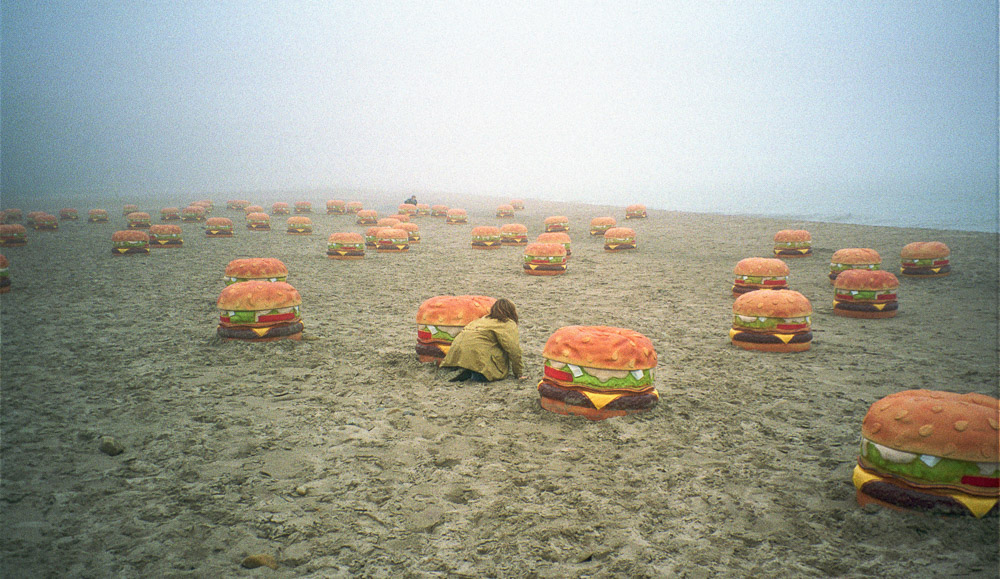
    So when you look at one of my more abstract or surreal images, like the one at the top of this article, go ahead and ask yourself “what is it” and get it over with. Then go on the the more important questions, such as how was it done, what is the context, what does it mean to you. I. hope you, as the viewer, will care enough to ask the questions and to participate in the art.

  • Ephemeral Moments

    Ephemeral Moments

    Ephemeral moments come and go in an instant. But those short moments often make all the difference between an interesting image and a plain one. It is a unique advantage of a photograph to be able to record fleeting scenes. It is a challenge for the artist to recognize and capture them.

    Ephemeral means fleeting, transient, short-lived, brief, momentary. In a sense all of our life is ephemeral, as the Bible says in James 4:14 “How do you know what your life will be like tomorrow? Your life is like the morning fog—it’s here a little while, then it’s gone.” Setting aside the more existential viewpoint for now, I want to focus on capturing brief moments.

    For a photographer, capturing brief moments is both a technical problem and a mental problem. The technical is easy: choose a vantage point giving good framing on the action, arrange for the lighting to be sufficient and of the quality you want, select a lens to fill the frame with the subject, use a fast enough shutter speed for the result you want, then just wait for the subject to do something. ☺

    Obviously it is much deeper than that. Many books and tutorials have been created on how to do it. If you’re a Creative Live follower I suggest this short class by Steve Sweatpants. What I want to talk about is what’s going on in the photographer’s mind.

    To capture ephemeral moments the artist has to be aware, hyper-aware, of what is happening around them. If it’s a couple that interests you, one small gesture lasting less than a second may make all the difference. An interesting reflection may be completely altered when the sun pops out from the clouds for a moment or if a colorful bus drives by. Be ready. That old car coming down the street may be just perfect when you notice it is moving toward a framing by a building in the right light with complimentary colors – wait for it.

    For the artist it is a mental process. I have to really “be there”. I have to free my mind of everything else and let it be receiving and evaluating input constantly, waiting for my mental processing to trigger a recognition of a significant moment. With practice I can get fast enough to recognize and compose and adjust camera settings and capture the fleeting moment. When you first start be ready for frustration. You beat yourself up constantly with the realization that there’s a great picture there, but it was over, like, 2 seconds ago. If only you had recognized it in time to act on it. It takes practice.

    Part of the fun of it is the mental challenge. I have to forget about everything else going on. Email doesn’t exist; Facebook does not exist; being cold doesn’t matter; ear buds are distracting. I have to be entirely focused on the scene at hand. With practice, you learn to anticipate better. After observing behavior for a few moments you anticipate that the person or object will move a certain way or direction. You plan it into a future shot. It doesn’t always work, but sometimes it does and it makes for better images. If you are really there in the moment you will pick up the rhythm of the dance and move with it naturally. And it gives you a lot of satisfaction.

    I believe one of the best modern masters of this is Jay Maisel. View his web site here. HIs philosophy is to “go out empty.” Meaning that he goes out to shoot without any preconceived notion of what he is looking for. He sees what is there and tries to make something of it. He would go walking around New York City every day with his camera. I don’t know if he still does since he moved out of “the bank” (a great story to look up). In regard to leaving your preconceived notions at home, Jay says “You can be looking for a long time and while you’re looking you’re going to miss everything that’s really there. The less specific the demands you place upon yourself are, the more open you can be to what’s in front of you.”

    Being open to what is in front of you is a key to capturing ephemeral moments. Be there. Be in the moment. The world around you is a beautiful and joyful place. Go out and react to it.

  • The Magic of the Frame

    The Magic of the Frame

    The Frame. Almost all 2D art exists in it and benefits from its constraints. The frame is the reality where an image gets made.

    The frame is just the edge: the edge of the canvas or the print or the sensor or the crop. It is the region within which the image is composed. Some have said that composition is simply placing elements in relation to the frame.

    Why is this important? The frame defines the world. The whole world of the image exists within the frame. Nothing outside of the frame exists except in the imagination of the viewer.

    This gets to one of the distinctions between painting and photography. If I am painting I start with a blank canvas and carefully place each element on it as a deliberate design decision. When I photograph I also start with a “blank canvas” in the sense that there is no information on the sensor or film until it is exposed to light. But when I expose an image everything the lens sees is immediately written on the medium. So one of the great challenges is to eliminate the unwanted. Photography is an exercise in keeping out the elements you don’t want. It is an understatement to say this can be tricky.

    Photographic composition is based on the same design principles that have been knows for hundreds of years: proximity, repetition, alignment, balance, color, contrast, light, etc. These are not unique to photography, they come from the psychology of human visual perception. Photographers have the task of deciding how to frame their subject to create an interesting composition that includes only the elements necessary to support the intent. The points, lines, curves, shapes, and other elements in an image change their perceived relationships as they interact with each other and the frame.

    Seeing a fine art photographer work can seem like a dance. They move, they get low, they get higher, they get nearer or farther from the subject, they circle the subject. All this to get the best balance of composition, light, and the elimination of distraction. It can seem random, but they are working the scene within the frame. They are incrementally improving the image, maybe through a series of many frames to explore variations until it is optimum.

    The image evolves within the frame. The frame is always there to bound its world. It always defines the composition by the relationship of elements to and within the frame. The frame is a fundamental constraint on 2D artwork, and that makes it it a powerful design tool. Embrace the frame. Use it to make better art.

  • Who Says?

    Who Says?

    Who are the arbiters of quality and worth in art? How did they become the gatekeepers? Why do people follow what they say? Or do they?

    Art is intensely subjective and personal. Anyone in the role of a critic can only be speaking from the viewpoint of their own likes and dislikes. Who cares? They are welcome to their opinion, but their opinion does not determine whether or not the works an artist creates are “good art”. It does not matter what their education or credentials are, they were not granted a license to be a gatekeeper. But it is a role that many want to play.

    In his excellent short book “A Beautiful Anarchy“, David duChemin has a great chapter entitle “Winning at Yoga”. He makes the point that, although humans are very competitive, that isn’t necessarily beneficial when it comes to art (or love or …). The very notion of art competitions seems as out of place as competitive yoga. If you practice yoga you are only “competing” against yourself. Likewise an artist cannot compare himself to any other standard other than his own vision and capability.

    An artist can create to win a competition or he can create to satisfy his inner vision. The first may lead to some recognition in the short term. Longer term he will probably realize that that is not his art, it is just a work product. Which is important to you depends on your values and situation. After being in that place, I have chosen to create for myself even if it does not get recognition.

    What about the gatekeepers? They can serve a valuable role, but recognize they can only tend their own garden. A gallery or a designer chooses art that generally satisfies their own opinions and values. If you find one who has curated work that you like, too, then use them. They have gone through a lot of work to sift and filter their selections. That is value. But remember, this person cannot really say what is good or bad, only what they value.

    I’m an artist. That means I have to let my creations loose into the world. Not everybody will like them. Maybe nobody will like them. They are free to criticize my work from their point of view of perfection or artistic merit. That is part of the game. I have to be able to thank them for their opinion and try to find something to learn from it. The important thing for me is whether or not I like the work and am I growing in the direction that feels right to me. I cannot let gatekeepers determine that for me. I will not settle for living someone else’s opinion of what my life should be.