An artists journey

Tag: Artist

  • It Looks Like a Painting

    It Looks Like a Painting

    This comment used to make me angry. But I have now rationalized that most people mean it as a compliment. If it looks like a painting then it must be art.

    Is painting the standard?

    For most people, painting means art. It is what they were taught. Photographs are those low value things they do on their phone. They’re mostly for memories and bragging rights on social media.

    I believe most people view painting as “high art”. Like they might view classical music. After all, both are remote and fairly difficult to understand. Removed from their daily lives. High art is something they have been taught that they should value, but they seldom partake of it.

    And paintings are viewed as difficult, labor intensive works requiring lots of training and “suffering”. That instills them with high value in many people’s estimation. It is not unusual for painters to encourage an aura of this being something so great and high that we cannot understand it. We viewers are lucky the artist will share a glimpse of such truth with us.

    And on a practical note, a painting is one of a kind. The artist paints one original. This increases the value of the work in some markets.

    Some people, looking at one of my images, describe it as “painterly”. To them, this is a compliment. Even photo reviewers occasionally use the term. Internally, I usually cringe, unless it was actually my goal to look like a painting.

    So for my peace of mind I have decided to accept “it looks like a painting” as a sincere compliment. It may be alien to my goals and values as a photographer, but is probably the best way a lot of people know of to say “it is art”.

    What does a painting look like?

    I will consider that a “painting” is some type of color medium applied to a substrate like paper or canvas by hand. I will stretch the definition to include pouring or throwing paint. Typical color mediums are oil, acrylic, watercolor, or pastel.

    The “by hand” seems to be important. Until print reproductions are made, all paintings are originals. Many people consider a “mechanically created” print inferior to a painting because it was too easy to make.

    Brushes are most often used to apply the color. Although they come in a wide range of sizes, and it is possible to create very detailed paintings, generally paintings are a somewhat coarse expression of a scene. That expression is considered part of the artistry.

    This is what people think of as a painting. It is an Albert Bierstadt painting titled “Rocky Mountain Landscape”. As someone who lives in the Rockies, I can attest this is purely fictional:

    Albert Bierstadt painting, 1870From the White House Collection. Image from Google Art Project

    An artist typically paints a scene they can observe (or make up). This means the scene is fairly static. Unless, of course, they take a picture of it and paint from a photographic print. Is that allowed? Does that make the painting something else? 🙂

    So paintings are generally relatively large, static scenes, less detailed than a photograph, and created by hand.

    Do I want my image to look like a painting?

    Do I want my image to look like a painting? Great question. Sometimes yes. Usually no.

    This is a fairly typical image I do that screams PHOTORGRAPH. It could be painted, but then that would be a painter trying to make his work look like a photograph. 🙂

    Classic B&W photograph.© Ed Schlotzhauer

    Why would I want an image to look like a painting? I do occasionally enjoy creating abstract images. Sometimes they work best done as a dreamy, blurry, hand drawn look. I love that photography can achieve a wide variety of effects. I enjoy pushing the boundary and creating an unexpected look.

    But in these cases, I have chosen to create the image with this look. My goal was not to “make it look like a painting”. Sometimes an image tells me what it wants to look like. Sometimes what it wants to look like is what most people consider “painterly”. If that is what is right for the image, then OK.

    Don’t feel inferior

    I think photography is an amazing art form. Its versatility is unsurpassed. Being technology based allows it to operate somewhat outside the limits of the artist’s mind. We can explore time and scale and space and even non-visual realms in ways that other artistic mediums can only copy.

    With photography, we can make one print and stop or we can make 1000 prints. We can re-scale a file to make a print very small to fit into a locket or up to wall-sized for a gallery or to decorate a large room. Or even billboards or the sides of buildings.

    Never let the intelligentsia convince you you are somehow inferior to painters or other “real” arts. They are just trying to protect their self interests. Photography is as real as any art. Be proud of your art.

    So when someone tells you your image looks like a painting, be gracious. Don’t launch into a lecture about why they are wrong and how they do not understand. This would be rude and even insulting. Accept it as a compliment. They are using terms they know to tell you they like your work and consider it good art. Be happy. But also be confident that it does not have to look like a painting to be great art.

    Today’s featured image

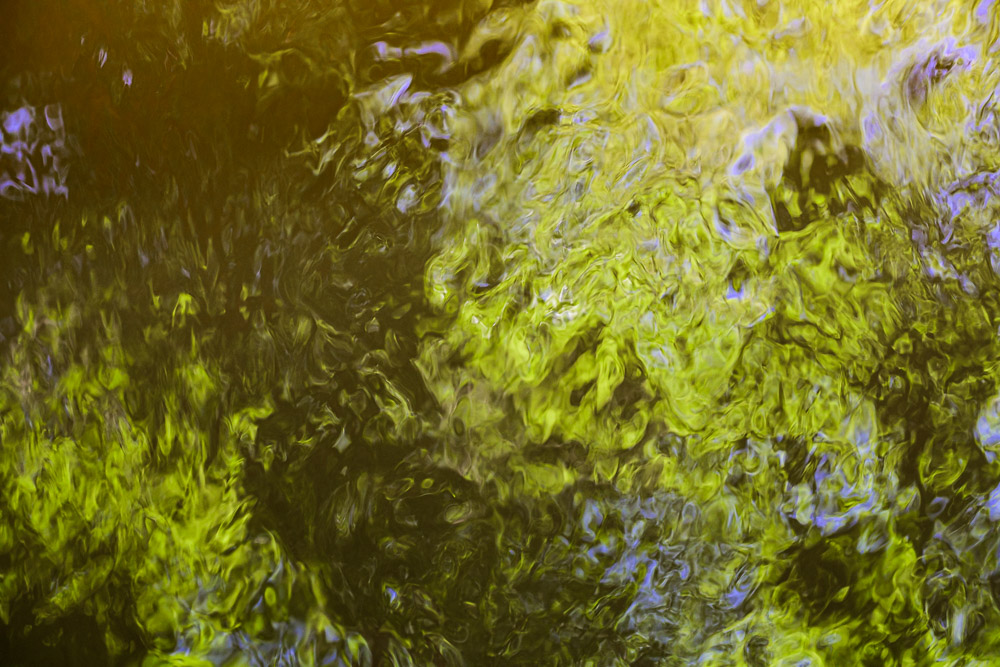
    The image at the top would be considered “painterly” by many people. Did I want it to look like a painting? No. I was exploring possibilities of long shutter speeds with flowing water and reflections in a river. I knew from experience that I could often get abstract results I like. This is an example.

    I like it. It is abstract, and it flows and has a lot of subtle details of interest. Does it look like a painting? That is for you to decide. If you think that, great. But it is not a label I try for when I am creating. I would not market my work as “looks like a painting”.

  • Authentic

    Authentic

    The important people are constantly telling us we need to be authentic. As if authenticity is some kind of badge of artistry or truth. Is this really true?

    Authenticity

    Authenticity means to be genuine or of undisputed origin. It can also mean accurate or reliable. These are correct definitions of authentic, but what does it mean to us?

    I am completely ignoring any discussion of forgery or fraud. That is a huge subject, but not very applicable to me.

    What we are usually told, and what I have said before, is that we need to be ourselves. Everything has been shot, painted, sculpted, and written about. True originality is rare. The main way to differentiate ourselves is to be authentic. To show our unique and individual interpretation of the subject.

    This is very true. I believe that. But it is hard for some people. Especially if the only metric you have to go by is social media likes. And I think some take too simplistic an interpretation of what that means in practice.

    Opposite of authenticity

    The opposite of authentic is to copy someone else. The world strongly encourages us to copy others, even as it says we need to be unique. Social media is a powerful crucible of conformity. Mediocrity is enforced. Everyone is pushed to the average. True originality tends to be knocked down. If you want likes and positive comments, you have to show things that are basically just like everyone else.

    In a similar way, many self appointed gate keepers set themselves up as the authorities to vet the worth of other people’s art. These may take the form of teachers, “influencers”, critics, curators, contest judges, gallery owners, etc.

    When they reject our work, the only true statement these people can really make is “I don’t care for your work.” If they are actually running a business, they could say “this work is not a good fit for my market.” That is a useful and accurate statement of fact rather than opinion.

    But what usually comes across is “I deem you unworthy as an artist.” That is arrogant and offensive and discourages many artists. History teaches us that the intelligentsia are not good predictors. They more often opposes things that seem a threat to their established position.

    I hope even just the description of that makes you want to rebel against it. But I’m afraid too many accept these forces as the arbiters of taste and art.

    We are complex

    Please pardon the rant. It is a hot button.

    It seems to me that artists settle into one of 3 broad groups. They conform their work to be similar to what is popular, they intentionally oppose the mainstream, or the take little notice of what trends or authorities have to say.

    Great Sand Dunes NP

    Personally, I value this last group.

    But let me get back to the idea of authenticity. We are told we are all unique (just like everybody else). And as such, we should express whatever it is we see or feel.

    Well, yes and no. Humans are extremely complex beings. We have lots going on in many dimensions. Not all of which is useful or beneficial.

    The mantra of being authentic should not be an excuse for removing our filters and doing or saying or making anything that pops into our mind. We should be thoughtfully and intentionally creating, not just pouring out our random impulses. Our work should never be the equivalent of “oh, did I say that out loud?”

    The real me

    Let me give an example in the opposite direction. I am boring. I’m the most boring person I know, and I know a lot of really boring geeks. Watching me work would be like watching paint dry.

    That doesn’t mean my art or writing should be boring. Our creative engine is completely separate from our daily life. Like most of us, what we create can rise above what we appear to be on the surface.

    I have heard it said, for instance, that many good writers are introverts and pretty boring in real life. There is an apocryphal story about a famous writer who went to a hotel for a conference. One day while he was there some students went to meet him for breakfast to visit with him. They came to the front desk and asked if he was up yet. The answer was “how would I tell?”.

    As a person he certainly didn’t light up the room.

    That’s me. If I was around, you probably wouldn’t know it. You probably wouldn’t even be able to find me. I would just be out by myself exploring and taking pictures.

    That’s the me in real life. But I try hard to make my art different and compelling. I try to make my writing interesting and engaging. Does this mean I am being inauthentic? Not by my definition. The reality is I am truly being authentic by expressing my vision and values. My creative side is different from my public persona. My audience deserves the best I can create. And why would I be satisfied with anything less?

    Simple Photoshop example. File size is 22x larger.©Ed Schlotzhauer

    My take on authenticity

    Authenticity is a holy grail for some people. I have to conclude that is because they know, deep down inside, they are fake. If you are following trends or popular influencers, you are living their life, not yours. Your art is going unmade.

    Authenticity is not something I worry about. I am authentic in my life and work. I never consciously copy anyone. My images are an authentic expression of my perceptions and feelings and viewpoint. They are not done to get likes or popularity. But they also are not unfiltered outbursts from my subconscious. I aim to bring you positive, well crafted works that make you better somehow. Or at least make you see or think something new.

    If I am shooting something I know is substantially the same as what others have done, I will ask myself why I am taking this picture. Unless I can say something appreciably different or bring you a new point of view, why do it? Sure, I take familiar pictures, but for myself. My memories. Why would I show you a copy of something someone else has already done?

    I can’t talk at any length about my style. I’m not sure I understand it. Talking about vision sounds a bit self important for me. But I can promise you that what you see or read from me is authentically me. It also means it is not AI generated. But that is another topic.

    Today’s image

    This is at first glance a throwaway travel photo. It was taken during a cooking class in Italy. This section was doing pizza. The instructor could communicate well, but her mother, shown here, did not speak English. She just yelled at us in Italian. You know, speak loudly and make lots of gestures to try to be understood. What us Americans usually do when we travel. 🙂

    But notice the repetition of angles and forms, including the pizza edge and the shadows, the repetition of triangles in the oven, and the “decisive moment” of lifting the pizza. Everything seems poised in anticipation.

    Nothing is setup or posed. And even though it was a quick grab during a class, I had the presence to think artistically. It is not a world class image, but it completely represents the event and has enough staying power to hold my attention. It is authentic.

  • Wait For It

    Wait For It

    In my last article I suggested reacting to subjects and shooting with minimal planning. This time I talk about the need to study a subject and find the optimum conditions. To wait for it. Am I inconsistent?

    Shoot what you find

    Last time I recommended that you take what you find, shoot where and when you can, make the best of what is there. Obviously, I think this is good advice, or I wouldn’t have said it.

    This is the path I take most of the time. I enjoy the challenge of working with what I find, even if the conditions are not optimum. Whatever “optimum” means.

    A quote attributed to Freeman Patterson captures the spirit of this for me. He said “It’s just light. What are you going to do with it?” I take this to mean “it is what it is”. The light is there. The conditions are there. You can’t change them. Work with it. Are you a good enough craftsman to make a great image in any light? Or are you so locked in to a certain expectation of what you want that you cannot make an image unless everything meets your criteria?

    Do you remember the blizzard conditions in the picture with that last post? It was not what I expected or wanted. That kind of day, it would be much easier to stay inside. But in retrospect, I like this image much better than “normal” pictures of plain rock walls. I worked with what I found.

    Wait for it

    On the other hand, sometimes you have to work with a thing until you discover what it wants to say.

    It is not my style or interest to plan out the optimum time of year, time of day, location, etc to get a trophy shot. I don’t care much for trophy shots.

    But you know when something keeps catching at you gently? When it seems like it is trying to tell you there is something there if you can just see it? That’s the way it works sometimes. Our subconscious is more receptive than our conscious mind.

    When you get this tingle and there is a scene you have regular access to, sometimes it helps to keep working it to see what it looks like in different conditions. This is what I call waiting to see what it has to say. Even a common, familiar, boring subject can be brilliant once. Finding that brilliance is the trick.

    If you are mindful as you are out shooting, I imagine, like me, you have suddenly seen something you walk by every day in a whole new way. Maybe it is the light that is different, or the weather, or just your mood. But something clicks and this boring thing suddenly is exciting. It is a great feeling. Like discovering a hidden secret.

    And when people ask you about it you can say, you know that thing over there you walk. by every day…? They are impressed; and incredulous. That’s very satisfying.

    Perhaps best of all, you feel like you now have a unique insight on that subject. Until now, it was incomplete. Now a dialog has been accomplished, an exchange between you the artist and this subject. You have seen what this can be, in a way no one else has.

    Resolving the conflict

    So, last time I said shoot it as you find it. This time I’m saying wait for the perfect conditions. Am I inconsistent? Am I just playing with you?

    Not at all. Both are right. There is a time for each. Do you remember that great bit of dialog in Fiddler on the Roof where someone says “He’s right, and he’s right – they can’t both be right”? And his answer is “You know, you are also right.” 

    Yes, I firmly believe both approaches are right, each at the right time and in the right conditions. Part of maturity is figuring it out.

    I completely believe you should shoot where and when you are there. Don’t pass up a shot you think you want because it could be better someday. Do it now. And if you have the opportunity, work a scene frequently to refine and improve your comprehension of it. It really is true that working a familiar subject over time will lead to deeper understanding. And with frequent access, you might indeed find it at that perfect time no one else has understood.

    You’re an artist

    And. when all is said and done, you are the artist. Only you create the image through your craft and feelings. Do the best you can.

    Are conditions unexpected and maybe not what you hoped for? Too bad. That’s what you have. Use it. Make something good out of it. It may require reframing your perspective. Changing your plans. That’s OK. We have to be flexible. That is part of the craft.

    And when we get the chance to frequently return to a familiar subject, take the opportunity to get intimate with it. Learn its moods. Dig below the surface to learn about it in more depth. Then you have the chance to catch it revealing itself to us. If you are there, if you know it well enough, if your craft is good enough, that leads to the opportunity to get an image you feel brings a unique insight into the subject. Something no one else has seen.

    A reason Monet painted water lilies in the pond at his house was because he became intimately familiar with them on a daily basis and they were changing all the time in different light and seasons. He found a subject he could live with and grow old with.

    Whether this is the first time you have seen the subject or it is an old familiar friend. Whether the weather and light is “good” or “bad”, use your expertise to make a great image if you feel it is worth it. It is up to you.

    Today’s image

    This old battered factory and silo is 1 mile from my studio. I walk and drive by it frequently. I keep my eye on it and occasionally shoot a few images. The silos are 200 feet tall and 40 feet in diameter each. An imposing sight.

    This day, magic happened. The combination of the clearing storm and the rainbow, being in just the right position to highlight the place, the light from the clearing storm being perfect. Well, it made it into something special. I had never seen it like this before and I have not since.

    I gave a print of this to a friend whose dad supervised the construction of the silos decades ago. He had recently passed away and this was very special to her. It is special to me, too. It turned a broken down old industrial eye sore into something very different.

  • What You Find

    What You Find

    This is heresy, but I recommend most of the time we work with what we find rather than planning extensively and expecting everything to be “perfect”.

    Planning

    It is common these days for photographers to research locations is detail before ever going into the field. And there are lots of tools to help us do it.

    For any given location we can find what time of the year is “optimum”, what time of day is best, even where to stand for the best view. We can research the weather we should be able to expect, the temperature, exactly when sunrise or sunset is if that is important to the shot.

    Then, of course, we can work back to where to stay, what time to get up, where the beat eating places are, etc.

    Basically, then, we can just show up at the right time, set up and take the shot we want, and leave.

    Trophies

    A well planned shot like that can lead to some excellent pictures. If you are a National Geographic photographer out on a 6 month assignment to get a certain picture, that is a great approach.

    I have 2 problems with it

    1. It is collecting trophies.
    2. What about the experience?

    Much of photography these days seems to revolve around collecting trophies. We have to get that signature picture of Half Dome or the Eiffel Tower to post on social media to impress our peers.

    That’s not me. I usually avoid places where dozens of other photographers are lined up shoulder to shoulder, fighting for tripod placements. Those sights are well covered. I do not plan to contribute yet another photo of Half Dome to the world, unless I am able to capture something unique. That is less and less likely when millions of shots are taken of it every year by good photographers.

    I fully realize this is a personal value. It also is rooted in my personality type. I derive satisfaction from creating fresh, creative images that represent my vision. Whether or not anyone else likes them. Some other people need to bag trophies. Checking off the bucket list items is more important than actually having the image.

    It would be foolish for me to criticize them. We are different. I do not agree with them, but I recognize that this behavior is true for many people. You have to do what is right for you.

    What you find

    Taking a good photograph is an emotional encounter for me. Talking about the experience you get is subtle and harder to describe. It is intensely personal.

    If you are the meticulous planner I described earlier and you show up at your target location, what happens if things go wrong? What if the weather is too stormy to get out? Perhaps there are forest fires around and it is closed or obscured by smoke. Maybe a road is slowed down by construction and you get to the location “too late” for the planned shot.

    If things like this happen and you can’t get the shot you planned, is it a failure? Are you disappointed with the outing? Was it a wasted trip?

    I’m not usually so disappointed. I am there to see, feel, internalize – and, oh by the way, make images I am proud of. A sunny day may not inherently be better than a rainy day. Why is a snow storm worse than a warm summer day? It all depends on my reaction and attitude and what I am able to do with what I find.

    How good are you?

    I believe the attitude of accepting what we find and using our skill to work with it is healthy and mature. We cannot control what we will encounter. But we can control our attitude.

    So whether I am at the Eiffel Tower or in my neighborhood, I try to make excellent images in whatever conditions I find. OK, allow 2 seconds feeling sorry for yourself, then put it out of your mind, enjoy yourself, and attack the photo problem.

    For example, recently I went out locally to shoot some pictures of trees. A favorite subject of mine. But it turned into an extremely windy day. Did that make it a waste? No. Have you ever tried to shoot pictures of the wind? It was challenging and interesting after I reframed the problem. I enjoyed it and I like some of the images.

    Making good pictures in unexpected conditions is a test of our craft and our character. Loosen your rigid expectations. Roll with the punches. Make lemonade out of lemons. Insert your own cliche.

    But cliche or not, try it. Be flexible. It surprises me that unexpected pictures in bad conditions are sometimes the most memorable to me.

    Today’s image

    This wasn’t taken on the windy day I described. But it was a much worse day. It was in the Garden of the Gods in Colorado Springs, CO. It is not the conditions I came for, but it was what I found. HIgh wind funneling through the rock formations, blowing snow starting to pile up, bitter cold in Colorado in the winter. Sounds like a great day to be out.

    Actually, after I kicked myself out into it and started seeing images, it was great. It turned out to be a very enjoyable experience. I went crazy shooting, when I could keep the snow cleared off my lens. Of course, it took a while later for my hands to thaw out and I was soaking wet and shivering. But I did not notice that very much at the time. All in all, I look back on it as a good time. And I like the image.

  • Seeing the Unseen

    Seeing the Unseen

    Photography is unique in the arts. It can record things we cannot see or imagine. Photography can be an adventure in seeing the unseen.

    Unique

    Photographers are sometimes made to feel inferior. Usually by proponents of the “real” arts, like painters or sculptors. Get over it. Photography has qualities that go beyond any other arts. Qualities that make them envious.

    Photography is a technology-based art. That technology can be used along with our artistic vision to capture and create things regular art cannot. We can peer into things the human eye cannot see. We can freeze time to examine events the human eye cannot show us. Likewise, we can extend time to show the effects of movement in new ways.

    Exposure

    The human eye is amazing. But it has limits. Even though it can see a huge range of light, photographic sensors can push beyond our eye’s limits.

    When you look at the stars, for instance, we can see what seem to be an immense number. But I have astronomer friends who have a process of taking hundreds of frames of 1 point in the sky. Then they use special stacking software to combine them and sharpen them to create levels of detail far beyond what the eye can see. Even my amateur astronomer friends routinely show me pictures they have taken of distant galaxies that cannot be detected at all with the eye.

    Those same astronomer friends have solar filters – essentially completely black glass – that let them view the surface of the sun! They can see and photograph sun spots and the corona. Things that would destroy our eye if we tried to look directly at them.

    The technology and practice of photography allows these things.

    Light range

    And “normal” (non-photographic) art is all done in the visible light range. Makes sense, That is all we can see.

    But most of us have seen infrared imaging. This is done using a special dark red filter that excludes most light we can see. What is left is what we would consider heat – the world of longer wavelengths beneath the red response of our eye. It gives us a subtly different perception of the world around us. A paint artist could not do that without taking an infrared image of the scene then painting from the photograph.

    Similar filtering can be done to see the ultraviolet world beyond the highest violets we can perceive. And have you had an X-Ray? That is just imaging done in another range of “light” we cannot see well beyond the ultraviolet.

    These are somewhat niche capabilities, but they can bring us information that is exclusive to the photographic world.

    Time

    Time is one of my favorite variables that is unique to photography. One of the three legs of the exposure triad is shutter speed. By varying the shutter speed we can effectively slow down or speed up time!

    People have developed flash systems that can freeze movement in slices of 1 millionth of a second. Even the fastest bullets are frozen in midair. Explosions can be captured as they start. You’ve probably seen pictures of a drop of liquid falling into a dish. The splash patterns are beautiful and interesting. Not many things we come in contact with in our lives are not frozen at this kind of speed.

    At less extremes, a waterfall at a fast shutter speed can look like a cascade of diamonds . A bird in flight is completely frozen at about 1/1000th of a second. Every feather is crisp and sharp. We cannot see it this way with our eye.

    At the other end, long exposures capture movement over time. This is the area I like to work. Not super long. Just long enough to change our perception of what is happening.

    We have all seen long exposure pictures of waterfalls or cascades, where the water is smooth and silky. It is so common that it is in danger of being cliche. But the reason you see it a lot is because it is a pleasing effect. Some photographers make exposures of minutes. This makes clouds streak and water blur to a milky texture. Not really my thing, but I appreciate the reality distortion caused by the time shift.

    Movement

    A subset of this idea of time is where the camera is moving relative to the subject or the subject is moving relative to the camera. The camera motion side has become popular as Intentional Camera Motion (ICM).

    Like many techniques in photography, it is easy to do but hard to do excellently. Anyone can take a blurry picture because the shutter speed was too long to stop the action. Most of us have to work to overcome this. ICM deliberately pushes this “fault” to a point of art. I do ICM for some projects and I have seen a lot of ICM that I consider excellent art. And I have seen a lot more where I have to think, “yep; that’s your standard ICM”. That’s OK. Most experiments in doing something new and creative fail.

    One interesting aspect of techniques that involve movement and time is that it is almost impossible to take the same picture twice. There is always variation. The variation often leads to pleasant surprises.

    Stretch the notion of reality

    So photography is unique in giving us alternate views of “reality”. With conventional arts, like painting, nothing can be created that the artist does not first see or imagine. Photography can show us worlds or effects we did not imagine. This sometimes opens up new creative paths to explore. And the exciting thing is it is actually reality. If the camera captures it out in the “real world” (whatever that is), it is reality. What we get may be a complete surprise, but that is part of the exhilaration.

    Photographers, never feel inferior in the arts. Know that what we do is as valid as any other kind of art. And try not not to be smug knowing we have the option of being more creative than most other forms of art.

    Go explore the unseen and enjoy your discoveries.

    Live always at the ‘edge of mystery’ – the boundaries of the unknown. – J. Robert Oppenheimer

    Today’s image

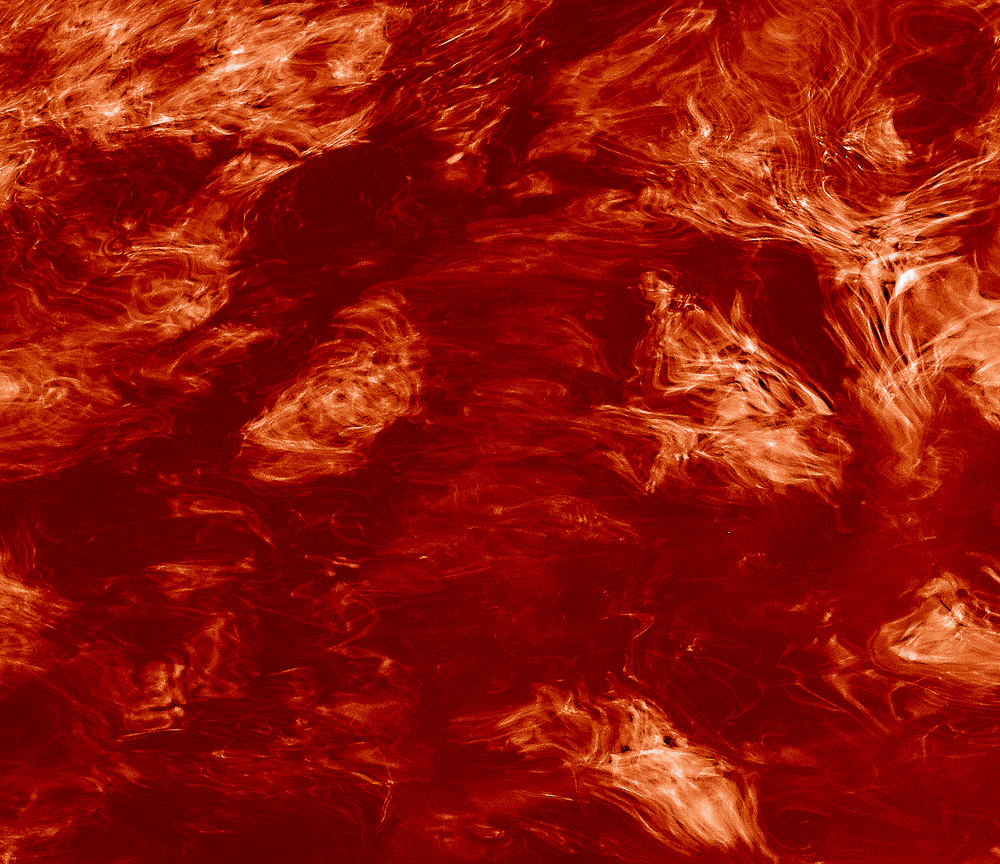
    This is part of a series I did fairly recently. It combines ICM and time and subject motion and some secret sauce optical techniques to create this look. I consider it a creative view on a reality that happens around us all the time, but only photographers can see.

    Is it “real”? Yes, absolutely. It is a minimally modified shot of a real, physical subject. It is a subject most of us can find right around our town.

    To find out more about what it is, go to my web site and find a similar looking image in Projects.