An artists journey

Blog

  • That Didn’t Work

    That Didn’t Work

    You had an idea. You tried for it, but the result must be considered a failure. If that didn’t work, what do you do? Does that mean you are a bad artist?

    An idea

    You get an idea of something you want to try. Call it an inspiration if you will. More likely it is an extension of what you have done before, maybe applied to a new subject or situation.

    As an artist, most of our work begins with an idea. As a photographer, we than follow up the idea with trying to realize it as an image. Maybe several, working different positions, lenses, shutter speeds, etc. to try to optimize the resultant image.

    If you are very experienced with your craft, you might be able to visualize fairly accurately what the result will be. But no matter how experienced you are, you will get surprises. Surprises can be fun and a great creativity boost.

    Antique diesel locomotive©Ed Schlotzhauer

    Fail

    But whether you blast away 100 frames or selectively shoot 1 frame of a scene, you will sometimes look at the result and say it was a fail. How we react to such a failure is very important. Your reaction could ultimately determine the level of success you have later.

    I’m using the idea of failing, but what does that mean? The definition will be different for each of us, but in general, I hope we can agree that it means the result does not meet our expectation. It does not necessarily mean the image is terrible or unusable, or even bad, but what we planned or pre-visualized did not happen.

    At the risk of sounding like a cliché, this is a learning opportunity.Intentionally imperfect. A blurred effect capturing the motion of the scene.©Ed Schlotzhauer

    Permission to fail

    Failure seems like a terrible fault to some of us. I am one of those in many things, but not in my photography. For my art, I have given myself not only permission to “fail”, but the expectation that I will and should. I have embraced failure as a healthy part of growing as an artist.

    This was a big step for me. I discovered that the fact of failure was not the main problem. The larger problem was fear of failure.

    How much are we held back in our art by fear of failure? Do we fear being humiliated? Or that people will dismiss us as an untalented lightweight? Do we believe we are somehow bad when a shot does not meet our expectation?

    Here’s the reality: few people care about what we do. They are not sitting around thinking about us and they take little or no notice of our work. If they’re not fixated on it, why should we be?

    We are our main audience. Our work succeeds or fails based on our own perception. All that matters is whether we get to a result we are happy with. Failures along the way should not matter.

    Risk

    Author Herman Melville once said, “It is better to fail in originality than to succeed in imitation.” I believe the greater risk in our artistic life is to fail to be creative.

    AI is constantly learning how to mimic all existing art. The only solution is to be different from what exists.

    If we are repeating the same boring stuff that 99% of photographers do, what have we contributed to art or to ourselves? Chasing likes on social media is normalizing. That is, it brings us down to the average level of everyone else.

    Theodore Roosevelt said: “It is hard to fail, but it is worse never to have tried to succeed. In this life we get nothing save by effort.” If we are an artist, the risk is to not give it our full effort and not become what we can be. To let what is within us die because of fear of failure. That seems too great a fate to risk.

    Tripod leg on edge or rushing river©Ed Schlotzhauer

    Learn, modify, try again

    The sports legend Michael Jordan said “I’ve missed more than 9,000 shots in my career. I’ve lost almost 300 games. 26 times I’ve been trusted to take the game winning shot and missed. I’ve failed over and over and over again in my life. And that is why I succeed.“

    Unlike Michael Jordan, we don’t have millions of fans watching live as we fail. We can curate our work and select what gets presented to people to see. You won’t see my failures, unless I am trying to make a point.

    Given that, why should we consider failure a problem? A failure is an experiment. We try something, we see the result, and we like it, or we don’t. Either way we can learn something new and try again. But the reality is, we learn more from failing than from success. But only if we make the effort to figure out the cause.

    So, when we’re shooting, we have an idea or a vision of what we want to achieve. We make the image. Later, we examine it closely on our computer. Sometimes the result is far from what we envisioned. That is a time to introspect. To determine what we did or didn’t do that made the result different from what we wanted. Maybe to ask if the result is better or worse than what we visualized.

    These days, I find that less of my fails are because of exposure or composition problems. Most are concept-level issues. Ansel Adams said “There is nothing worse than a sharp image of a fuzzy concept.” Concept failures are harder to diagnose and correct, but they certainly keep me thinking more.

    But whatever the cause of our failure, our goal should be to learn, modify, and try again.

    Success is not final; failure is not fatal: it is the courage to continue that counts.

    Winston Churchill

    Sketches

    I consider most of my images to be sketches. Things that are helping me work toward an idea I haven’t fully envisioned. When I shot film, these experiments were expensive, and I tried to minimize the loss. Digital frames seem almost free. No problem to take several experimental tries.

    So now we should be free to work a scene as much as seems valuable. But I seldom do it that way. My sketches are more tests to see if what I saw can become a good image. Perhaps it is a fault of mine, but I spend little effort making many slight variations of a scene.

    I don’t like doing comparison tests of 12 different views of a scene to try to figure out which is best. If I come up with 4 that are equally good, how do I decide a “best”? When I find myself in this situation, I often conclude I am not really applying much creativity to the image. I seem to be optimizing for technical concerns.

    A possible exception is shooting intentional camera motion (ICM) images. Each frame could be considered a failure from a purist technical perspective – blurry, motion, no sharp subject. These are fun because it is an abstraction technique, and each frame is unique. For these, I may do a few variations on a scene, trying different motion techniques. You never know exactly what the outcome will be. There are occasional happy surprises.

    Intentional Camera Movement©Ed Schlotzhauer

    Discoveries

    When we allow ourselves permission to fail, we sometimes discover that we have stumbled onto something entirely new. We see a glimpse of a new creative statement starting to form.

    This is a different form of courage in the face of failure. The recognition that yes, we failed in what we tried, but it opened a new insight on our world. The first emergence of this new idea is probably crude. It seems like a failure. But as we reflect on why we are drawn to it, why we do not immediately delete it, it may give new insight to change our viewpoint and try to perfect it.

    This is one of those rare and exciting moments when we get a tingling in our spine and we perk up and wonder what just happened here? That is a cue that we are about to step outside our comfort zone. It is dangerous for an artist to be too comfortable for too long.

    That is creativity. Sometimes creativity is based on recognizing that what I did didn’t work, but I now see a glimpse of something better. Being an artist is a process, not a destination. Failure can be an opportunity to advance ourselves to a better state. Analyze it, experiment, modify, try again to see if you are going in a good direction.

    Sometimes, finding “that didn’t work” could mean we are on the brink of an exciting new step in our art.

  • Bored

    Bored

    How do you react to being bored? Boredom is a great fear to many people and modern society seems to treat it as a disease. But what if there are good aspects of being bored?

    Fear of boredom

    We live in a society that constantly tells us that busyness is good and expected and that boredom is bad and scary. So, we must be constantly on the go, scheduled to the max, trying to multi-task so we can do multiple things at once.

    I have heard of psychological studies where subjects chose to inflict physical pain on themselves rather than being bored for a time period. In one study almost half the participants chose to give themselves a mild electrical shock after being left alone for 15 minutes. That sounds extreme to me. But many people today fear being left alone with their thoughts.

    Why is that? Is it because we are no longer taught how to handle it, or is there a deeper level? Many people fear their thoughts and the questions that come up in their minds when not distracted.

    Boredom isn’t really emptiness. It is an opportunity to see and confront things you have spent so much time blocking out from your mind.

    Ice Streamlines©Ed Schlotzhauer

    Constant entertainment

    To combat boredom, and its disquieting thoughts, we immerse ourselves in entertainment. Our always on, always connected life allows us to have 24/7 distraction numbing our minds.

    It seems like everyone is on their phones all the time. Whether walking down the street, waiting for a bus, grocery shopping, or driving, most people are on their phone. If not, they have their headphones on listening to music or podcasts.

    At home, if people are not on the phone, the TV is on. The hundreds of streaming channels provides limitless distraction.

    In a life saturated with constant stimulation, we forget how to simply be.

    Fear of missing out

    Fear of missing out is a very real thing that society had trained us to know. We usually think of it as needing to always be connected so we do not become irrelevant. But let me turn that around and ask what are we missing out on by not letting ourselves be bored?

    That sounds strange, but if we cannot exist without constant external stimulation and if we cannot stand to be alone with our thoughts, that sounds like a drug addiction. That is a very dangerous state to voluntarily put ourselves in.

    Somewhere along the way, we stopped seeing boredom as a natural state and started treating it as a problem that needs fixing.

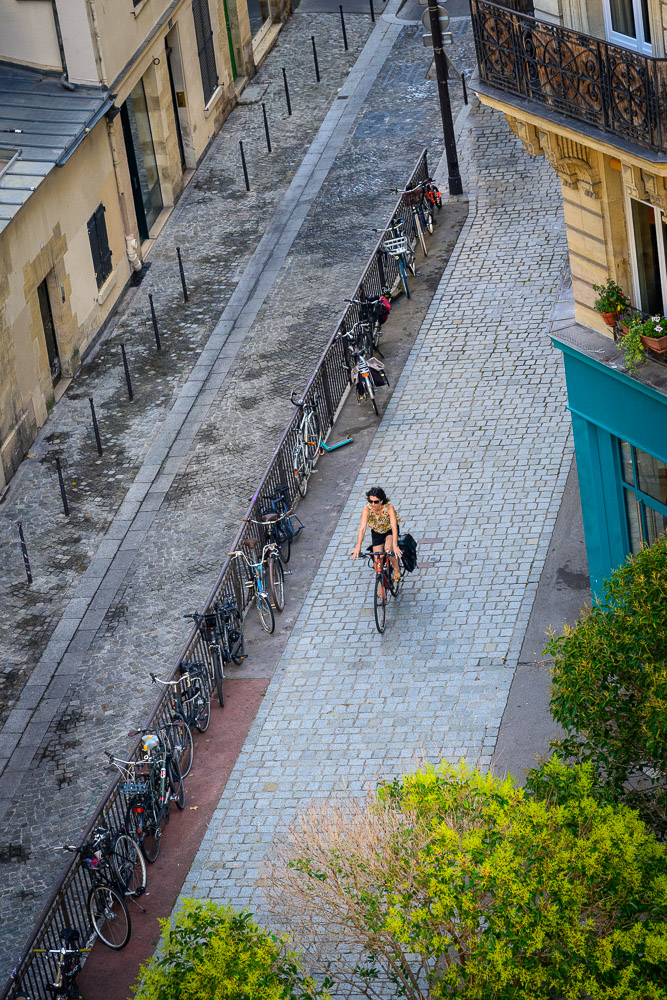
    Going to work on a Paris morning©Ed Schlotzhauer

    Need quiet

    Being uncomfortable with being bored, especially being alone with our thoughts, is not something to be feared. It is actually a signal showing us we have ignored our inner self too long.

    Our brain needs quiet time occasionally. We need to reflect, listen to our thoughts, daydream. This is a self-organizing time for our brain. It lets us subconsciously evaluate and make sense of things. We confront and understand our thoughts and our brains weave together new understanding.

    It also stimulates creativity. This is one reason I highly recommend it for photographers and other creatives. I believe it is important for us to be self-aware. We need to understand our motivations and beliefs. Artists bring our vision to other people in our work. It is important to understand what is behind our vision and what we want to do and create. And who we really are.

    Coping

    I frequently advocate mindfulness as a necessary component of the creative process. Mindfulness is being self-aware. Being self-aware comes from spending time alone with our thoughts and feelings. Call this meditation if you like. But when you start out, meditation = boredom. Within the boredom you discover things.

    My definition of mindfulness involves being very aware of what is around you, what it looks like, and what it means to you. You cannot do this effectively if you are pumping entertainment into your head all the time. Mindfulness generally thrives in quiet.

    Another facet of coping with boredom is exercise. When we move our body without stimulation from music or TikTok clips, our mind is also energized and can wander its own path. It can lead to interesting ends, or to nothing special. Either way, though, it is good exercise for the mind, too.

    This sounds a lot like some of the advice I like from Jay Maisel: get out there, move, go out empty and find what is there. This all involves being outside and reacting to the world. Our head needs to be engaged in the creative task. And being out in daylight has mental benefits.

    Giant bear peeking into an urban building©Ed Schlotzhauer

    Creativity

    Artists constantly chase creativity. Perhaps photographers more than most, because our field is so overcrowded. Can boredom help?

    It sounds counterintuitive, but research shows that boredom creates a mental space and opportunity for us to turn our thoughts inward. To reflect, daydream, and make connections that cannot happen easily when there is too much “noise”.

    One study found that after being given a boring task, people were more creative. It is thought that the boredom allowed their minds to wander, to use their imagination in new ways.

    I know my experience is that if I say, “I will be creative now,” the results will be fairly disappointing. Not entirely uncreative, just not up to my expectations.

    But when I let my mind wander without pressure or demands, if I do some simple tasks completely unrelated to photography, of perhaps read a book, then I am much more likely to do or discover something I would call creative.

    Photography

    I find that creativity in my photography must be tended and coaxed, not forced. It is like planting a seed. You water it, fertilize it, and wait patiently for it to grow.

    I tend my creative ideas by spending alone time with myself, by letting my mind wander, by stimulating myself with new ideas and new knowledge about unrelated things. Browsing art and writing by other people I admire helps fertilize the soil. Then picking up my camera and going out wandering, to see what I find lets the ideas connect. Sometimes I discover a new way of seeing or new sights I never noticed.

    I believe that even when our mind is wandering, we have control over it. Not to direct it, but to oversee. We are participating in the process, not just being a spectator. I view it like someone inspecting fruit. The conveyor belt is going by with fruit (ideas) on it. As they go by, we glance at each one, throw some out as bad, set some aside as small, but OK for making jam, and pronounce some as very good to keep.

    More exciting than plants, to me, is that our creative output is often completely new and exciting. We never know what will come up, or when, or where. We must just accept it and be ready to use it. This is when our photography is elevated from the technical to art.

    Explore boredom. It has benefits. You never know where it might lead. Creative ideas pop up unexpected, often after a spell of boredom.

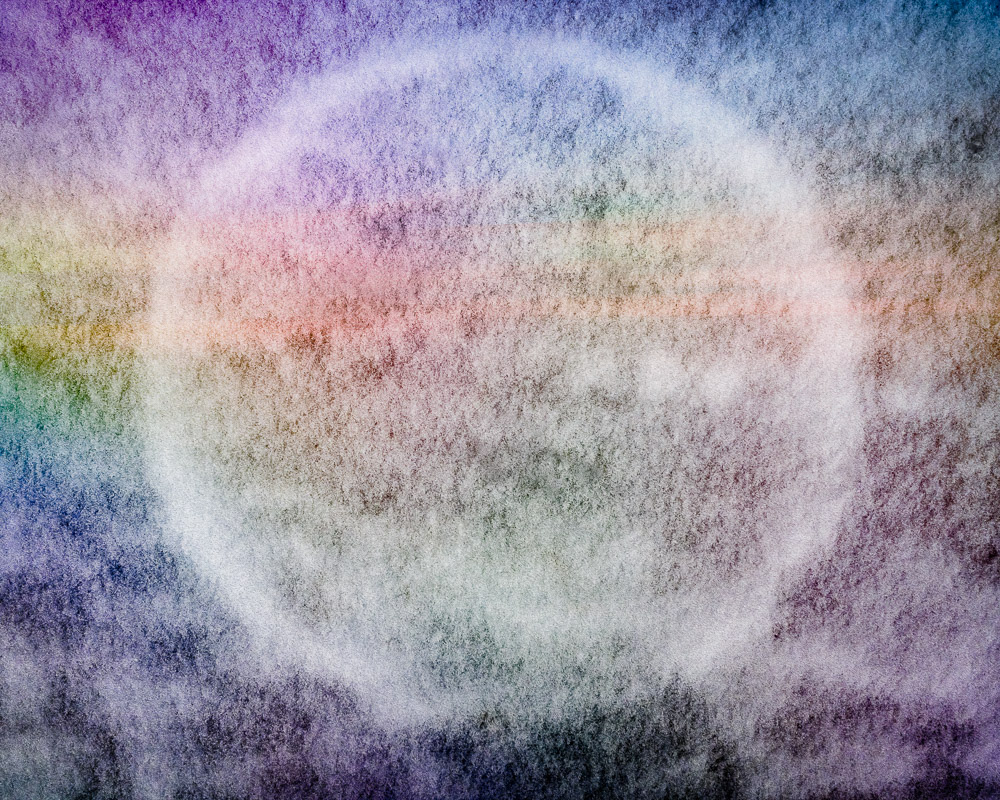
    A fanciful composited image with interesting processing. Good luck guessing what the original image is.©Ed Schlotzhauer

    My situation

    It is easy to preach to others about what seems easy to us. I am an introvert and an only child. Those things make it easier for me to handle boredom. I grew up practicing it. I like people, but I am also comfortable being alone. Sometimes I prefer it. Not that I want to go off on a month-long solo wilderness journey. But I am happy spending a day alone with myself. No radio, no TV, no internet.

    From observing other people, I realize some are terrified of being bored. That is to be expected in our society. If you are, I advocate practicing handling boredom. Start small if necessary. I believe the benefits are worth it.

    Note

    Boredom is a huge and complex subject. I have not and cannot deal with it in depth. The boredom I am describing is not part of any mental disorder. Neither is it an existential situation where you find no meaning in your life. Seek help if you find yourself there.

  • Switch On

    Switch On

    What engages your creativity? What gets you up from the chair and out the door shooting. I have discovered I have a trigger to switch me on, and it is so simple I barely recognized it.

    Need to shoot

    I think many of us who shoot for the joy and the creativity of it tend to stay in a mindful state. When I am driving or riding somewhere it seems I am often looking at everything passing with a view to framing and composing shots. Mentally, I click off a lot that I wish I could see.

    At this stage of my life journey, I feel a need to shoot. To capture what I see, and to bring some new creativity to it. It is a frustration to me to see interesting scenes and not be able to shoot them. But I am not always doing it and moving and in the flow.

    Sometimes there is a kind of inertia holding me back. There are times I feel too busy, or my thoughts are on something else. This is part of life and often unavoidable, but sometimes it is just a kind of procrastination. I’m not feeling in the “mood”. At those times when I could and should be thinking photography, I sometimes must kick-start myself to begin shooting.

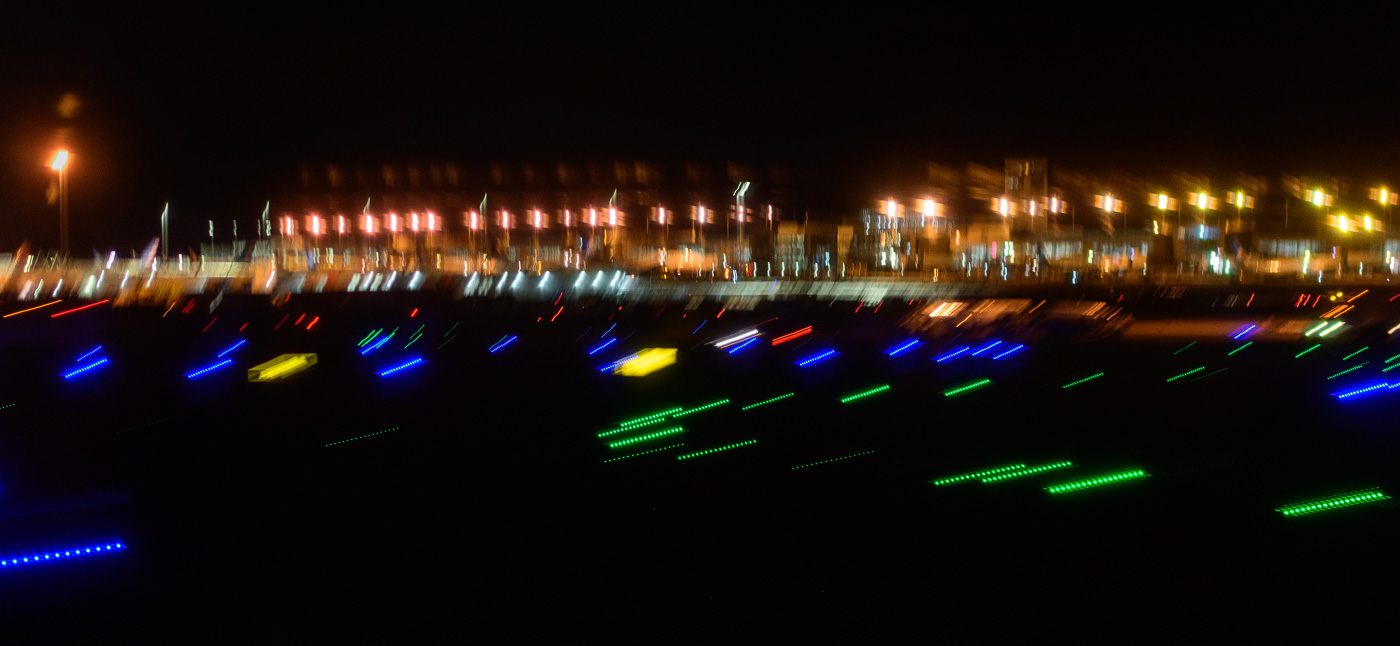
    Airport at night©Ed Schlotzhauer

    Permission to shoot

    I have discovered that I sometimes need to do something to motivate myself. As I write this, it is 93°F out, on the way to 103°F. That saps my energy.

    I need a way to increase my desire to shoot to the point it overcomes my inertia or dislike of the weather or the time involved or whatever it is that is holding me back.

    One simple technique I have learned is simply to pick up my camera. Sounds silly and too easy to be of use. But it often works on me.

    I haven’t done any deep psychological analysis on myself, but I believe holding the camera – or even the camera bag – gives me permission to take pictures. The weight of the physical object is real and compelling. I am familiar with it and comfortable with it. I like the way it feels in my hands. We have history of doing good work together. Something is awakened and barriers are set aside.

    With a camera in hand, or even in my camera bag, I am a photographer. An artist. Photographers are expected to take pictures. I should be out shooting. It becomes the easier path.

    Wherever I am, on a city street, in an airport, driving down the road, I should feel completely secure and justified taking pictures. If I am looking foolish staring at something other people do not see, that is OK. They are not artists, or at least, they’re not me.

    Stylish airport lighting©Ed Schlotzhauer

    Nothing interesting

    I am mostly over worrying about what other people think. What matters is the art I can create.

    A favorite story of mine is a time I was on a trail near where I live. I think I had my tripod set up to shoot a tree by a river. A woman walking by stopped to see what I was shooting and pronounced “I see nothing interesting here”.

    I almost burst out laughing. For her to dismiss my vision just because she could not envision what I was seeing seemed ridiculous. That helped me to be much less concerned about other people’s opinion when I am pursuing an image. Rather than shaming me, it reinforced my independent streak.

    Colorado fall day on the plains by a river.©Ed Schlotzhauer

    When I pick up my camera a switch turns on and I am now in a focused mode of seeing. What people think, fear of looking silly, or of calling attention to myself (a nightmare for an introvert) no longer matters. Of course, I will not be rude or offensive. That is not my nature. But within reason, I will do what I feel compelled to do.

    Creativity

    Just picking up my camera does not mean I am in a super creative zone. I may have to start shooting a while to get the energy flowing enough to fully engage my mind. But I find that just a few shutter clicks somehow releases most of the chains binding my brain and I relax and start flowing.

    As my inspiration, Jay Maisel, said: If you are out there shooting, things will happen for you. If you’re not out there, you’ll only hear about it. I consider that whatever trick I use to get me motivated to start framing images and pressing the shutter release is worth it. Then things start happening.

    Flowing abstract©Ed Schlotzhauer

    Pick it up

    So, when I am not in the “mood” for photography, just picking up my camera will usually jolt me out of my lethargy. Somehow, it signals me to switch on and get into seeing images.

    To follow up on where I started earlier, I reluctantly put on my camera bag and went out in the heat. We had a nice walk and even shot a few images. It was not as bad as I expected, and I’m glad I made myself get out. To be prudent, I did shave a few miles off my normal outing and took extra water.

    Do you have a trick you use to get going when you don’t feel like doing it? Picking up my camera is my signal to switch on. What about you?

  • The Camera as Teacher

    The Camera as Teacher

    We often are told that as photographers, we need to learn to see. Yes, but… There are probably at least 2 parts to that, learning to be more mindful and learning to see as the camera does. In this second case, the camera will show us what it can do. We need to understand the camera as teacher.

    Seeing

    If we don’t see a scene and recognize its potential, then we will not photograph it. This type of seeing is based on perception and attention, not the quality of our eyesight. I advocate this type of mindfulness in many of my writings.

    This kind of seeing can be learned and practiced. A camera is not even required. David duChemin had an intriguing statement in Light, Space, and Time: “We see through the lens of our thoughts.”

    I recommend that we become so obsessed with our art that we see almost everything as a potential image and be plotting how to capture it best. Obviously, there are some times and scenes we would not want to do that, but it can be our default behavior. It is good training. When I am driving or walking around, I am usually playing a “what’s here and how would I capture it” game in my mind.

    Back road in West Virginia, New Bridge©Ed Schlotzhauer

    Seeing as the camera does

    Seeing potential shots around us does not assure we will execute them well. There is a huge difference between how we see the world and how our camera records it.

    As we become serious about our art, we must become serious about learning our tools and medium. These are our means of expression. A pre-visualization of the greatest scene we have ever imagined is not much use if we cannot realize the shot.

    The camera has its own strengths and weaknesses that characterize what it can and cannot do. Any medium does. This is not a limitation so much as a creative opportunity.

    Our eyes

    Our eyes are marvelous devices. And when I say “eye” I consider the whole path from the lens into our brain. Our visual system.

    I will not try to. analyze this, only point out a few ways our visual system is completely different from a camera.

    Our eyes and our camera both have a lens and a “sensor”. The eye’s sensor is the retina. This is about the extent of the parallels.

    Our camera has a flat, 2-dimensional silicon sensor that captures the scene all at once, in parallel. That is, the entire sensor is exposed to the light coming through the lens while the shutter is open, and this makes one image capture. The pixels are all equally sensitive to light.

    Our eyes, though, are not uniformly sensitive. There is a region of the retina that has the most resolving power (the fovea). So, unconsciously to us, our eyes are always scanning our field of view. This process is called saccade. Our 2 eyes jump and focus together momentarily on a point. Then we move on to another point. We repeat this several times a second.

    Through this process, our marvelous brain works with our eyes to paint this information together into a smooth, seamless visual sensation in full 3D. We effectively have real time HDR, panoramic vision, and image stitching – in 3D.

    Refelctions over airport operations©Ed Schlotzhauer

    Meaning

    Even more exciting is that our brain also constantly tries to make sense of what we see. Scientists postulate that we utilize a bottom-up then top-down analysis process to understand scenes and to develop meaning. And we do this in. milliseconds.

    We tend to see what we pay attention to. If we are looking for something or if we are concerned about something, we see it more readily. The brain constantly attempts to give us the meaning we need in what we see. The process seems also to be directed by our knowledge and expectations.

    Our cameras do not search for meaning. At least, not yet. Eye tracking is not meaning. People detection is a focus aid, not meaning.

    Rise Against, representing the daily struggle©Ed Schlotzhauer

    The medium of photography

    All that helps to let us see that the camera does not see like we do. So if we want to use the camera as a tool for our art, we must learn what it does. Then we can use it for what it can do and stop wishing for what we would like it to do.

    We point our camera at a scene and press the shutter, but the results are not what we expect. Was this a failure on our part? Perhaps it is better viewed as a learning opportunity.

    If we used a very fast shutter speed, movement in the scene was frozen. This is different from what our eyes perceive.

    Maybe we used a very long shutter speed and discovered that all the motion is blurred. Again, our eyes do not perceive this.

    Or we shot it with a wide aperture of, say f/4, only to find that much of the image is out of focus. But we are used to our eyes “seeing” everything in focus.

    If you hand hold your camera you may be disappointed to find that many of your frames are not as sharp as you intended. After all, our eyes seldom perceive things as unsharp, but in the camera there is a balance of exposure settings to juggle to get a crisp image exposed properly.

    We pointed the camera at a brightly lit daylight scene and found that some highlights were overexposed, and some shadows were underexposed. Our eyes usually see everything correctly exposed. The automatic HDR we employ can lead us to forget that the camera can’t do that.

    Through experiments like these, and many more, we eventually learn how the camera will capture a scene under almost any condition. It takes some experience, and a lot of thrown away images. The camera gives us feedback by faithfully recording the scene according to how we adjusted it. We may not always be happy with the result. Failure is a great teacher.

    Blurred intentional camera motion of a passing train.©Ed Schlotzhauer

    Limitations help define art

    But eventually it is no longer mysterious. We learn to control the tools we have and make them work for us. Our camera becomes a means to realize our vision.

    Along the way, we discover something marvelous. These limitations we had to learn to work around are opportunities for artistic expression.

    For instance, we have a whole new perspective on time. The camera can slice time down to thousandths of a second to stop motion. Or it can keep its shutter open for seconds or more to show the effect of motion over time. Our eyes and brain cannot do this, so now we can open whole new views on the world.

    We can intentionally underexpose a foreground to create a dramatic silhouette. Or we can intentionally overexpose the scene to produce a dreamy washout. Basically, we can alter the exposure values to any degree we wish to create the effect we like. They do not always have to be “correct”. What we see with our eyes is almost always correct.

    We can superimpose multiple layers or remove distracting elements. Want to feature the form of something? Black & white is excellent for that. With the right tools we can peer into almost total darkness or shoot a picture of the surface of the sun. We need our camera and software to do these things. Our eyes can’t.

    A good tool is a force multiplier. It allows us to do things we could not do unaided.

    As we listen and let the camera teach us what it can do, we discover new artistic possibilities. Maybe we want to use them. Maybe not. That is up to us and how these things fit in our vision. But the toolbox becomes larger and better stocked as we learn more.

    So, when you look at an image and think “Wow, what just happened here?”, maybe that is an opportunity to discover a new feature of the world of photography. One that you might be able to exploit to your advantage. The camera can become our teacher.

  • Permission to Be an  Artist

    Permission to Be an Artist

    There is only one thing stopping us from being an artist. We need to give ourselves permission to call ourself an artist. No one else has the authority to do it.

    Who regulates “art”?

    Who regulates art? Maybe that seems like a silly question, but many of us are hesitant to call ourselves an artist because we have not been officially designated one by some standards board. We haven’t received our certificate.

    I don’t know if it is good or bad, but that standards board does not exist. The certificate does not exist, and if it did, it would be meaningless.

    Many people and organizations want us to think they are the keepers of the purity of the arts. But they only have authority as far as they can convince other people they have it.

    The gatekeepers, whether they are large galleries, or internet influencers, or art schools, or even your local camera club, have no authority to control what is art and who gets to do it.

    Stylish airport lighting©Ed Schlotzhauer

    Who is keeping you from being an artist?

    I believe many of us are afraid to consider ourselves an artist for fear that someone will come and say no, we are not qualified. We are afraid we would be publicly humiliated and denounced as not good enough. We did not pass the qualifications. By calling ourselves an artist, we might fear we are elevating ourself to a higher plateau.

    Well, we are. But that is a good thing.

    This is art, not brain surgery. We do not have to go to school for 12 years then do years of apprenticeship before going before a review board to grant us a license. I’m glad they train doctors like that, but it is not a good model for artists.

    The best definition I can remember of art is that anything done as art, is art. So, if you intended that image to be art rather than just a selfie or record shot, then it is art. No one can say it is not.

    That no way says that if you intended it to be art then it is great art. Its quality depends on many factors, including your skill and maturity. We learn and improve all our life.

    Transportation modes©Ed Schlotzhauer

    Photographer or artist?

    So, when someone asks you what you do, what is your answer? Are you an artist, or a photographer, or do you respond with something vague like, “oh, I like to take pictures”? How you answer and view yourself is your business. But what is keeping you from considering yourself an artist?

    I recognize that if we announce ourselves as an artist, we are claiming greater mastery. We present our work and ourselves in a different light. In a different way. Those of us who are introverts get nervous about that. We do not seek attention,

    The reality, as I see it, is that it is not about ego or skill level. If we believe we are doing art, we should confidently assert to the world around us that we are artists.

    A mindful view of fall colors near me©Ed Schlotzhauer

    Prove it

    Some people are born salesmen. They try to talk the talk without learning how to walk the walk. I do not think that is the case for you who read this. You understand that you must prove what you can do, who you are as an artist. And that is what we do with every image we show the world. It is just as important, if not more important, to prove it to ourselves.

    How do we do that?

    John Paul Caponigro said “Singular images prove your craft. A body of work proves your artistry.” I think there is wisdom in that.

    When you go through your catalog critically, do you find images you would show anyone, anywhere without fear of ridicule? If you find a few, great. You are learning the craft and starting to produce interesting work.

    Have you, or can you, put together one or more projects around a theme? A good project would have 10-20 excellent images showing cohesiveness and consistency. This demonstrates your ability to create a body of work.

    A single great image may be luck. A good body of work proves you can repeat it. That you are can create regularly and to a consistently high level of quality.

    This is certainly not the only way to prove your mastery, but it is a good way. Give it a try and you might surprise yourself.

    If you have proved to yourself that you are an artist, do not be afraid to take the label for yourself. Say it proudly. You have given yourself permission. You are the only one who matters.