An artists journey

Blog

  • Map vs GPS

    Map vs GPS

    It really is the journey, not just the destination.

    There are 2 major ways to navigate as we travel. The main choice or conflict is map vs GPS. There are alternatives, like being on a tour or “dead reckoning”, but I will rule those out for now.

    GPS

    By GPS, I mean, of course, a Global Positioning System app on our phone or in our car. What an astonishingly useful technology. Who would have thought not that long ago that we would have such precise navigation available to anyone, anywhere, right in our hand?

    GPS is an important supporting technology that aids our great transportation system.

    When we are going to an unfamiliar place, who hasn’t entered the destination in their device and welcomed the detailed, turn by turn directions? Or been annoyed by the nagging “Proceed to the route” admonition when we veer off for some reason. Even for familiar places, we often use the app, because the magic of the internet allows it to provide real time route updates to take us around congestion or road construction. Amazing.

    I would say that most of us expect this level of service now. These wonderful apps will take us by the best route direct to our destination with little decision making or navigation required by us.

    But that can be the problem.

    Antique diesel locomotive©Ed Schlotzhauer

    Physical map

    Do you remember maps? Like that image at the top of this article? You know, those folded paper things that always seem to tear when we try to open them. And spread out to cover everything around us.

    Some of you may never have held an actual map.

    What is it? A map is a representation of an area on a 2-dimensional print. There are limitless kinds of maps, but I am only talking about geographic maps. Usually, a Mercator Projection. Sorry. TMI, but I like detail.

    A typical map shows cities and towns, roads, lakes, rivers, and oceans. Some have topographic lines to show elevation and some use shading to give an idea of elevations. It is not unusual for them to show train tracks, parks, monuments, military installations, and other features of interest.

    The area the map can show is a function of the amount of detail wanted and the allowable size of the map. To “zoom in” and see more detail means it cannot cover as much area.

    In a large place like the United States, a fairly detailed map may cover a state. In other places, it might show a whole country. We can also get very detailed topographic maps that cover only a few miles in great detail.

    So, a map shows us a top-down view of what is there, but it is up to us to interpret and use the information and navigate to where we want to go.

    That’s more work. Why would anyone choose that over a GPS app? That is where it gets interesting to me.

    Waterfall in southern France©Ed Schlotzhauer

    What does it say about us?

    Yes, indeed, why ever use a map? I think it has to do with our goals, our personality, and, if we are photographers, how we work and think.

    A GPS app will take us to a destination with little thought or planning on our part. We do not have to pay much attention to where we are or what we are going through.

    It does its job efficiently. It is a faithful robot that does not distract us with sightseeing suggestions or side trip possibilities.

    Get there. Check it off. The destination is the goal.

    A map, though, can be a storybook of possibilities. It is a tool for our curiosity. Look, there is a waterfall just a few miles away. And that small, twisty road through the National Forest looks a lot more interesting than this Interstate highway. I wonder what that is over there. Oh, there’s where that town is. I’ve wanted to visit it. It’s just a little way off this route. That is worth a look. Maybe I will even stay the night there.

    A map shows the layout of everything that is around. It is kind of like browsing a buffet. I can pick a little of this, some of that, sample this other that I have wanted to try. It doesn’t try to guide us along any path. That is up to us.

    There are often endless possibilities, depending on what I am interested in and how I want to use my time. I select where to go and how to get there. I know that, for me, my interests are usually in the small towns and back country rather than big cities and major highways. If I have the choice, that is what I pick.

    Back road in West Virginia, New Bridge©Ed Schlotzhauer

    Use the right tool

    GPS and maps are both just tools. Each has strengths and weaknesses. It is up to us to choose the best tool to use for the need at hand.

    If the destination is the goal and time is tight, GPS will take us there directly and give precise directions. But if we have the luxury of choosing our own path on our own schedule, maps let us see an overview of the area. It lays out the information visually for us to see and to decide and choose. I don’t think I have ever discovered anything great that I wanted to photograph just following GPS directions.

    Map vs GPS. They are not actually in competition. I use both. For example, I recently got back from a 5000 mile driving trip. I used GPS to navigate to specific destinations, like to a hotel, once I got close. Otherwise, I used maps to let my imagination wander. And I did wander. Through swamps, finding a hidden winery, along back roads in the Ozarks, to some charming places I knew nothing about along the gulf coast. None of these were things my GPS would have suggested. I would have hated to miss any of them.

    It is said that it’s the journey, not the destination. I try to live that way. I’m partial to maps. GPS is excellent for getting to a destination. Maps, though help me discover a more interesting journey.

    Lobster shack, Maine coast©Ed Schlotzhauer

    Try maps again

    I encourage you to try maps again. When I see a detailed map like the section at the top, my pulse quickens, and I start getting excited. Sitting in a hotel room at night with a high quality, detailed map spread out on the table, visualizing possibilities for the journey ahead can be like reading a great story. But in this case, we are writing our own story.

    After all, we are creatives. We do that.

    To finish the moment, to find the journey’s end in every step of the road, to live the greatest number of good hours, is wisdom.

    Ralph Waldo Emerson

    Getting maps

    The image at the head of this article is a very small section of a National Geographic map of southern France. This covers about 70 miles by 50 miles. I have been to this area, and I used this very map for navigation. NatGeo has become my preferred map source.

    The best map providers I know of are National Geographic and Michelin. They have an amazing catalog of detailed maps. Some are printed on a plastic coated, tear proof paper, like the France map above.

    If you are in the USA and are a AAA member, you can get maps from them for free. Just go to your nearest AAA office. These are good maps, I use them, but they tear easily. But then, free…

    These map provider suggestions are for your information. I do not receive any compensation.

    About these images

    All of these images (other than the map image, of course) are places that had to be discovered by exploring while using maps. None of these could easily have been navigated to by GPS unless someone gave you a precise location. One of them is a location on that map of France.

    Try maps. They may change how you travel and photograph.

  • Photography is About Light

    Photography is About Light

    Stating the obvious? I think we sometimes forget the fundamentals of what we are doing and working with. No light, no photography. Photography is about light.

    Writing with light

    Remember that our word “photography” comes from 2 Greek words that together mean “writing with light”. So, from the beginning of our art form, it was understood that we were recording light on some type of photo sensitive material. Glass plates or tintype or film back then. Mostly digital sensors now.

    Technology changes but still we are recording light.

    Embrace that. It is what we are all about as photographers. Photography is about light.

    Low light is not no light

    Our technology improves all the time. It is possible to get sensors that do a fair job of imaging at 250,000 ISO. Maybe more. I don’t track the latest. The highest ISO I found with a quick scan was the Nikon D6 at 3,280,000!

    A 250,000 ISO is about 11 stops of additional exposure above a nominal ISO 100 setting. Eleven stops is a huge amount as exposures go. I haven’t tried it, but at ISO 250,000 I bet you could make a properly exposed landscape shot lit only by starlight.

    But the point is that very low light is not the same as no light. Have you ever been in a cavern deep underground where they turned off all lights at some point? Then we encounter the eerie experience of actual, total blackness. In those conditions it is impossible to see anything. Put your hand right in front of your face and you can’t tell it’s there. There are absolutely no photons to impinge on our retina.

    We could do no photography in total blackness. Of course, other artists would be almost equally disadvantaged. I suppose, theoretically, painters could make marks on their canvas in total blackness, but they would have no way to know what they were creating. Sculptors could mold clay by feel, but they would have very limited feedback on what they were doing. But photographers cannot do anything without light.

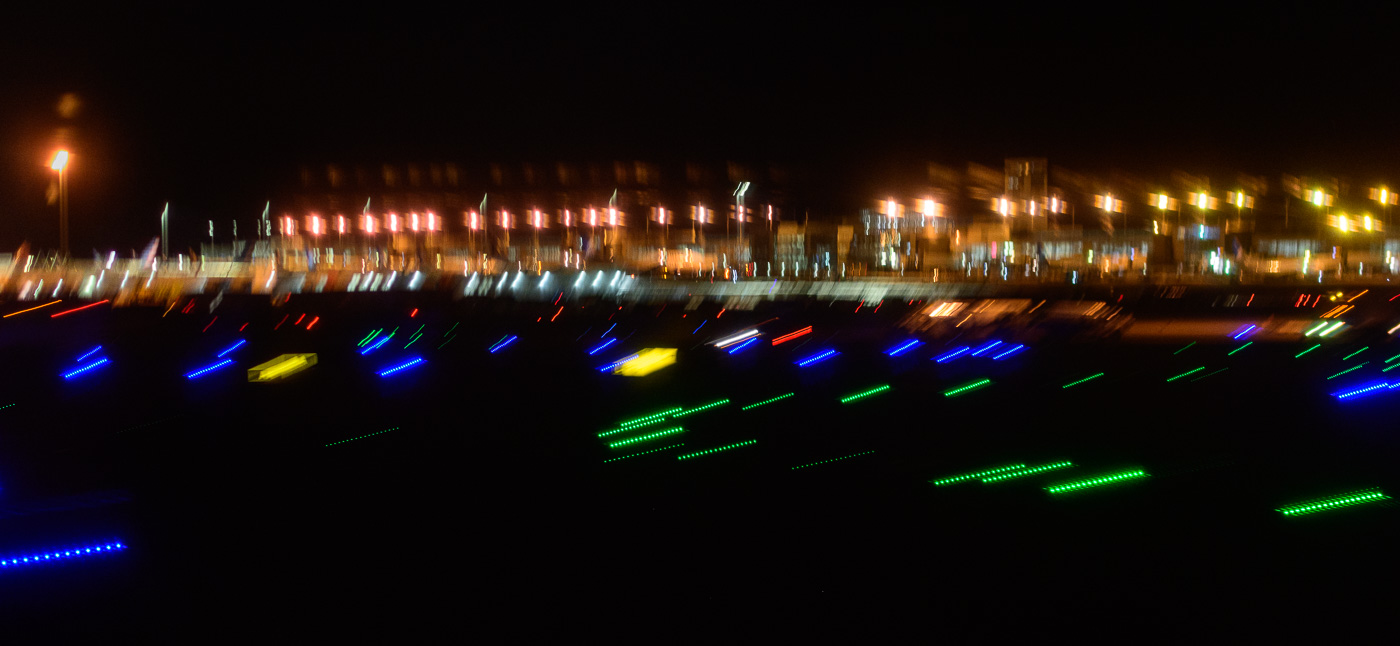
    Night shot, Airport.©Ed Schlotzhauer

    Computational photography

    One clever way to get better results in low light is used in your cell phone and by astronomers. It is generally called “computational photography”.

    Computational photography does not rely on the result of one frame. Instead, tens to thousands of shots are taken and processed by computer to bring out detail.

    This is how your phone takes decent pictures in low light despite having a tiny sensor. It is actually shooting bursts of dozens of frames. Then it quickly processes them in the phone. It uses averaging and other more sophisticated techniques to reduce noise and bring out the desired detail. I am surprised at how well it works.

    Astronomers have special needs in photographing distant galaxies. The light levers are so low that there is nothing to see with our eye. So, they instead take hundreds, maybe thousands of images with the regular sensor on their telescope and run them through dedicated processing software. Using combinations of specialized image processing algorithms and AI, their computers “reconstruct” what is probably there.

    My astronomer friends have shown me some of their new “telescopes” they got recently. These surprising instruments are generally about the size of a moderately thick hard cover book. They rely on small, cheap optics and lots of computation, but produce amazing results.

    Techniques like these let images be created in what seems like black conditions. But the reality is, it is not black. Just very low levels of lighting. If it was actually black, no photography.

    A blurry night shot©Ed Schlotzhauer

    See the light

    As I said, the purpose of this is to remind us that our art is based on light. We need to develop a heightened awareness of the light around us, because it is critical to our art. It changes all the time and is different in different conditions.

    it has been observed that a fish probably does not think about water. But we need to think about light, which is almost as important to us as water is to a fish.

    Light has many characteristics and most all of them affect our photography.

    We need to be intensely aware of the quantity of light at any time, its color, is it direct or diffuse, its angle, whether it is steady or changing, is our subject lit directly or indirectly, and many other properties. It sounds complicated. But learning the light is part of the craft. Learning to apply it creatively is part of the art.

    For instance, it is almost an axiom of photography that you do not photograph in the middle of the day. Like the “rule of thirds”, this is one of those rules I take pleasure in violating. The reality is that it completely depends on what subjects you are shooting, the nature of your light source, and what your goals are. Shooting at midday often enhances the texture of materials. In a dense forest it can create interesting dappled light patterns. In a slot canyon or a cathedral, it can create beautiful light beams. And diffuse overcast light may be perfect for many subjects, with high brightness and soft, even illumination.

    Dead branches. Interesting range of tones.©Ed Schlotzhauer

    And as a practical matter, I am not a National Geographic photographer on assignment. I can’t spend a week in the field waiting for the “perfect” shot I went out to find. I have to be creative enough to make the best use of what I find at the time I’m there.

    There are no rules, only what you can do with what you have.

    Tonality

    Tonality is one of those important things we need to think about and know how to use. It simply refers to the difference of luminance of the parts of our image. The tonality is what lets us distinguish all the parts. It creates separation of various areas.

    Think of a blank white piece of paper. This effectively has zero tonality. There is no image, because without tonal separation we cannot resolve anything. Any actual image we create has a range of tones.

    If the tones are squished together, our image is low contrast. Not much tonal separation. Maybe this is what you want, like a foggy scene.

    On a sunny day there is a wide range of tones. We refer to it as high contrast. Sometimes it can be too much. Do we need to use exposure or editing techniques to tame the contrast? But that is our creative choice

    A low-key image involves pushing most of the tones down towards dark. But the remaining light tones stand out. Likewise, if we create a high-key image, with most of the tones pushed toward light, the remaining dark tones stand out.

    Our eyes are very sensitive to tonality. We perceive tiny differences in illumination levels. Use of tones is a creative process. It should be part of our thought process and toolbox.

    One of the ultimate expressions of pure tonality is black & white photography. All color is stripped away, leaving only tonality to create the image.

    Tree reflection. Black & white.©Ed Schlotzhauer

    Color

    Our eyes are an incredible design. The rods and cones have different purposes but work together to give us sight. But overall, our eye is less sensitive to color than to illumination levels.

    Think of being in a dim room at night. We can make out the objects around us, but the colors are hard to distinguish. Turn the light on fully and the colors pop.

    Similarly, in our images, good color requires good light. We can’t see vibrant, saturated color in dim light. I mentioned low key art. Have you noticed that most of it is black & white? This is a practical result of not being able to see much color in low light.

    I believe some people’s artistic vision is drawn to color and some to black & white. If you are a color person you have to be doubly aware of light. Not enough and our brilliant colors fade.

    Graffiti abstract©Ed Schlotzhauer

    Creativity

    All art processes are defined by their technology. Photography is based on light. We cannot do photography without light. To be a photographic artist, we need to be intensely aware of light and how to use it to our advantage.

    Recognize it not as a limitation, but as a creative tool. Light is a marvelously varied thing. We are artists. We paint with light. Learning it and being constantly aware of it and deciding how we want to use it for any image is part of the art.

    We are seldom in a place where there is no light, like the underground cavern I mentioned earlier. There is always light around. It may just be moonlight or city lights or a flash. We may decide there is not enough light to make the image we want sometimes, but there is always light to work with. Recognize it. Use it creatively.

    Light is fundamental to photography. Learn to see it for what it is and learn to use it creatively. It is what you are photographing.

  • Photography is Human

    Photography is Human

    Photography is a human activity. It is by humans and for humans. Why else would anything you call art be done?

    By humans

    Photography is a uniquely human product, as is all art. Humans have an innate desire to record and to express. We preserve memories or pour out what we feel or even just want to make something “pretty” or significant.

    No other creature feels a need to produce lasting works of visual art.

    I do not believe it is just because we have opposable thumbs or have mastered tool making. It is much deeper than that.There is something we feel and have to express. We want to leave some record of our passage through this life.

    And this is a near universal, spontaneous need. It just comes out because we are human.

    Bridge beams over river©Ed Schlotzhauer

    For humans

    Who do we create art for? Isn’t it always and only for humans?

    There is no need to make a large landscape mural for your dog. He will not appreciate it. He may be your best friend, even almost a surrogate child, but he won’t even notice the art you created for him.

    But don’t assume quantity of views is a valid measure of worth, or that we have failed unless we have public showings attracting large numbers of people. I am an example of that. I have had showings, but I am clear that my main audience is myself. That is, ultimately, I am the one who gets to approve my art. But, then, I am a human. My art is for humans.

    I believe you can have a rewarding satisfaction of being an artist even if you only show your work to a select set of friends. The value of our art should not be measured in the amount of publicity we get or the number of collectors holding our work.

    I love it when other people see my work. Some are even kind enough to make encouraging comments. That is a kind of connection and validation. It feels good since it comes from humans.

    Old photo. Torn up but re-assembled.©Ed Schlotzhauer

    Uniquely human

    Humans create art for other humans. We are the only creatures who can value or even recognize it. Unlike your dog, people can be touched by an image. Viewing it can translate to multiple feelings and emotions in another human.

    Animals don’t create art. Fish don’t either. Only humans. We have a need to create.

    If we visited some tribes making cave art in France 20,000 years ago and asked them why they did it, what do you think they would say? I doubt they would say they were decorating the cave so that when they moved out and a bear moved in, it would be happier. No, they would probably just say they felt a need to create and to record events and to establish aspirational goals for younger people to follow. And because they liked it. That is human.

    Whenever we live and wherever we go we feel the need to paint on our walls.

    The largest AI model might, with good prompts, make a picture that would be acceptable for some uses. But it could never step back and look at it with satisfaction and think “Wow, i like that”.

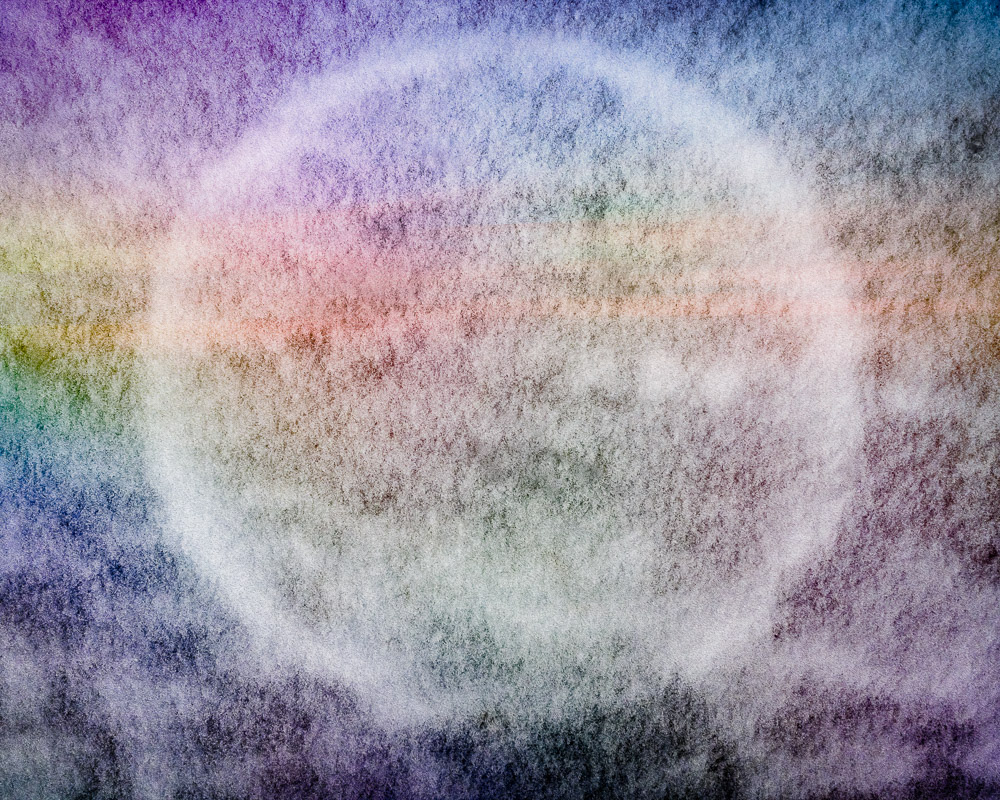
    Birds flocking in the snow.©Ed Schlotzhauer

    Not just taking pictures

    To be clear, I am only talking about photography intended to be art. What is often called fine art photography. There are other kinds.

    I guess that most of the photographic images captured daily are taken by machines. Try to picture the vast amount of automatically captured imagery. Police surveillance cameras on every corner, speed cameras, security cameras on every business and house, dash cams, body cams, Google Street View captures. More than we can probably imagine.

    There must be millions of hours of video and millions of still images captured by robots every day. However, none of those robots are emotionally attached to the images. The machines did not feel excitement or sadness or awe when they “looked” at any of the frames. They did not feel anything. And the machines did not take the images with the goal of causing happiness or warmth or longing or any other emotion in human viewers.

    Those automatically captured images are not art, and they are not for humans, really. Some may be used by humans for a particular purpose, but none of it is printed and framed and hung on their wall to be called art.

    Rusty chair, shadows at sunset©Ed Schlotzhauer

    First, live life

    Before we are artists, we are humans. In life we experience joy and success and sadness and loss. We grow from these experiences. Our values and life views develop. It gives us a point of view. Sharing this point of view is called art.

    Don’t photograph just to be technically perfect. That is shallow and dead. Photography is a beautifully technical craft. Technical skill is required to make an interesting image, but it does not by itself make an image great. Machines can do technical perfection.

    Don’t photograph to “make art”. That is a false goal. Photography is a perfectly valid art form. However, if we don’t have anything to say, we will say that. Make images that are art because you are an artist and have feelings or a view that you want to share with your viewers.

    Photography that is art comes from life. Living and experiencing is something only a human can do. Don’t give up your humanity to machines or algorithms. Live the life only you can live. Be who only you can be. Let it come through in your images.

    It’s not about metrics or hits or any other numbers. It is about you seeing and expressing something and being able to help other people to see and feel it too.

    Postscript

    Steven Levy of Wired Magazine recently gave the Commencement talk at Temple University. A topic on graduates minds is will they lose their jobs to AI. Steven addressed this and had what I consider an insightful observation.

    In his conclusion he said “The lords of AI are spending hundreds of billions of dollars to make their models think LIKE accomplished humans. You have just spent four years at Temple University learning to think AS accomplished humans. The difference is immeasurable.”

    You are a human. Art is a human activity. Only you can make art.

  • Photography is Art

    Photography is Art

    In my last post, I made the point that photography is all about technology. This time I argue that photography is art. The technology is just a tool.

    I do not consider this at all inconsistent.

    Photography is more technical

    I hope I made the point in my previous post that photography is based on technology. This seems a clear truth. But all art is.

    Have you ever been through the process of creating a bronze sculpture? Wow. It is fascinating. And complex. Most of the technology is “old” by our current view, but it is there in depth.

    And painting is heavily based on materials research and technology improvements. Finding or creating, purifying and blending pigments is a specialized technology. The manufacture and treatment of substrates to paint on has improved greatly over the years. Even a seemingly little thing like oil paints becoming available in tubes changed a lot of the practice of the art. Renoir once said “Without paint in tubes there would have been… nothing of what the journalists were later to call Impressionists.”

    But although all art is based on technology to some degree, photography is one of the most extreme. And it is strongly reliant on what we think of a “modern” technology, which makes it more visible to us.

    Sunset, Oklahoma plains©Ed Schlotzhauer

    Technology serves art

    I ended the previous article with a strong suggestion that technology needs to serve our needs, not the other way around. Photography is art that uses technology. Technology does not – or at least should not – make art.

    We sometimes loose sight of that. Using the technology can become an overriding concern. I really like the old saying “When you’re up to your neck in alligators, it is easy to forget that the goal was to drain the swamp.”

    Wrestling with all that equipment can occasionally become so intense a focus on its own that we forget the goal of what we are trying to do.

    But we have to overcome that. Technology is just a tool to use to create our art.

    Technology cannot make creative decisions

    Art is a work of human creativity. It involves novelty and non-obvious expression. Novelty and expression must come from a personal, human point of view. Technology cannot do that.

    I believe one reason photography is sometimes looked down on by more “serious” artists is that it seems too easy. It appears to be mechanically done. They will say “You just walked up to that tree, pointed your camera, and made a picture. There is no art in that.”

    If that is what we did, maybe they have a good argument.

    But if we did bring novelty and non-obvious expression, isn’t that art? Just as much as any other art form? Did the camera make the picture or was it the decisions the photographer made that created it?

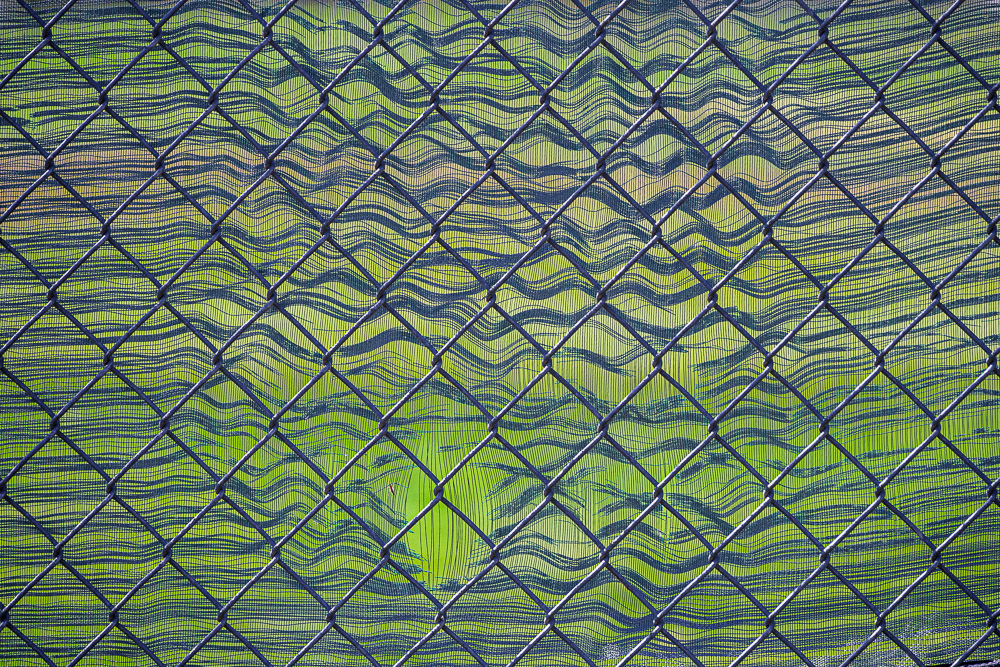
    Through a Screen©Ed Schlotzhauer

    My camera makes some important technical decisions for me and with my permission. For instance, I usually shoot in aperture priority mode. I select the aperture and the camera chooses a good shutter speed for the combination of aperture and ISO sensitivity I am using. Even so, I often override its choice by using exposure compensation. So which one of us made the picture?

    I did. It was made by my direction. Saying otherwise would be like arguing that you didn’t actually drive to work today because your car’s computers controlled everything. No, I do not understand the details of the design of my car, but I know how to direct it to do what I want.

    We produce art

    The artist makes the decision of where to view the scene, what to frame, the perspective, the lighting, the exposure, the “moment”. All of it works to capture the feeling or emotion in the photographer’s mind.

    Once all the relevant decisions are make, it is up to the technology to do its part to support the creative decisions. I have never let my camera decide, on its on, to take a picture.

    This becomes more of an issue as AI intrudes on art. But perfect AI – which we are far from – could only ever create images with a bland sameness. Decent representations, but not creative or exceptional.

    New art, good art, will only be created by humans. And only by humans who overcome the seduction of technology for its own sake. Who, rather, apply their creativity to showing us new things, new points of view, new applications of techniques. Humans can show us what they felt.

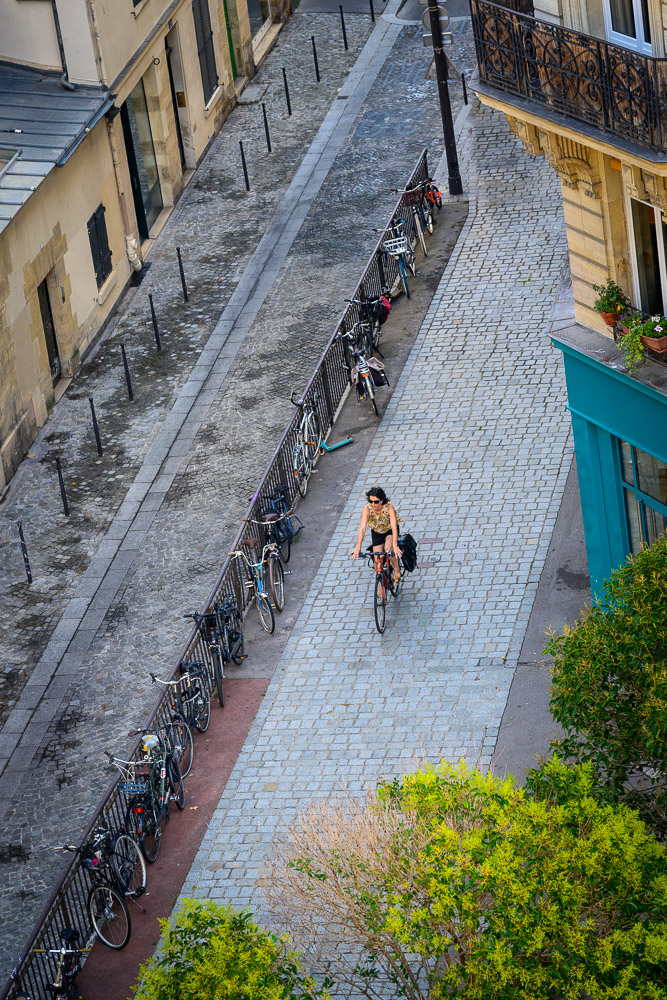
    Going around in circles©Ed Schlotzhauer

    Rise above

    Billions of people carry decent cameras with them every day. They take trillions of images every year. That does not destroy photography. If anything, it helps people to recognize what is exceptional.

    Great images, ones that are novel and creative and emotive and well executed, rise above the noise of the average. They obviously were not created by technology, even if they were created with technology. In a world where all images are good, the exceptional still stands out.

    As artists with a camera, we must always realize that we are responsible for all creative decisions in our image, from the conceptualization to the final print. We are responsible for the entire frame and everything that appears there. And we have an increasing responsibility to more forcefully apply our innate creativity and point of view to our images. If for no other reason than to prove we are human.

    We learn. We improve. Our vision changes and grows. Our ability is refined with study and practice. But it is only through showing our humanity that we become artists instead of people who take pictures.

    Technology is good. It can help us make art. Do not confuse technology with art.

  • Photography is Technology

    Photography is Technology

    There is no separating photography from technology. That is its nature. Photography is technology as much as it is art. It is one of the most technical art forms.

    What is technology?

    One definition of technology is “the application of scientific knowledge to the practical aims of human life.” Other definitions I like refer to applying knowledge to achieve practical goals.

    There is no getting around the fact that there is a tremendous amount of scientific and engineering knowledge packed in all the devices and tools we use in our photography.

    Technology pervades most things in all parts of our life these days. But photography is steeped in it.

    The technologies we use

    When you step back and look at it, every part of the chain from initial image capture to a final print or post relies heavily on technology.

    Our camera is a wonderfully crafted marvel. From the lens to the camera body and all that goes on in it. None of this would be possible without the almost magic technology behind it.

    Just consider the sensor. It can convert incoming light into electrical signals in a tiny fraction of a second. These signals are read out and converted to digital data (yes, the sensor captures analog data) in milliseconds. Our tiny memory card takes in all this data, again in milliseconds.

    And it does all this reliably and repeatably, day in and day out, in all kinds of weather, wherever we are.

    And it is almost impossible to work with images today without a good computer and great software tools. Again, these are technologies that are marvelously better than what anyone had just a few years ago. We regularly and quickly color correct, remove distractions, change tones, and sharpen our images – with far better control and precision than in film days. If we choose, we can bend and stretch pixels in ways that could not have been imagined a few years ago.

    Do. you post your images on social media for your followers to comment on? The scale and extent of the technology behind this is almost unimaginable. That post requires billions of dollars of cutting edge technology to happen.

    It is impossible to do anything photographically without technology.

    Fast action at a County Fair©Ed Schlotzhauer

    Shiny things

    This great technology that benefits us so much can be a liability. It is all too easy to get tangled up in the learning and the process of what is happening. A lot of specific knowledge is required to do our craft well.

    So we get trapped in chasing the technology itself. There are always raging arguments about how many mega pixels we need. Or which sensor has the lowest noise and best dynamic range. And are zoom lenses evil? Do we have to only use prime lenses?

    Is Lightroom Classic the best place to be managing and editing our images or should we use Capture One? And Photoshop is a life-long learning experience all by itself.

    Resolution, color accuracy, modulation transfer functions, RAW image processing – it can make our heads ache.

    A good or bad thing about technology is that there is always more of it we “need”. Studying reviews and specifications of gear can become an obsession. So much so that some spend all their time thinking about what they would do with the next big thing if they could get it and little time actually going out and making images with what they have.

    Don’t get me wrong. I’m an Engineer. I love to compare specs and I can swim in data all day. It would be a pleasant journey for me to spend a day lost in details of acutance or chromatic aberration or dynamic range. For nerds like me, comparing lenses is kind of like shopping for cars. We could talk all day about which one is best and go into great detail about why, even if we do not intend to buy one.

    This way to a Paradox©Ed Schlotzhauer

    Accumulating

    A problem with this focus on technology for its own sake is that we feel the need to always be searching for the “best”. New equipment always comes out and it is a little better than the old. We believe that to do the best job of our photography, we need the best new stuff. So it is an endless treadmill of acquiring shiny new things that will make us a better photographer.

    And it can get to the point where we get into a state of analysis paralysis. Have you seen someone out in the field lugging a huge, heavy pack with most of their “must have” gear? After all, no telling what we may encounter. So we bring the full range of ultra fish-eye to extreme telephoto lenses. And, of course, macro and perspective control lenses. A backup body (or 2) is a must. And a computer for checking our images on a larger screen and maybe doing a quick edit. Just to be safe.

    This person may spend more time trying to decide what to use and fiddling with equipment than they do finding subjects and composing and capturing images. Yes, “fiddling” is a technical term. ☺

    From what I have seen, when painters and sculptors get together with their peers and “talk shop”, there is a certain amount of discussion of technology and tools and equipment. But not like photographers. It can be an obsession with us.

    Dilapidated old store©Ed Schlotzhauer

    Make it disappear

    I don’t want to paint a gloomy picture of technology. I like it and need it, at least when it works right. It would be impossible do my art without technology.

    But go back to that original definition that technology is about applying knowledge to achieve practical goals. Its purpose is to help us do things better. It should not become an end in itself.

    Great technology used right should “disappear”. It is not about the wizard’s wand or the warrior’s sword. It is about what they can do with them. One way to make it disappear is to learn to use it so well that it is fluid and natural.

    I recommend that we choose a small set of equipment and learn it well. Learn its strengths and weaknesses. Yes, weaknesses can become strengths if used artistically. Think of film grain for example.

    Have you noticed that a lot of music pushes an instrument to its highest or lowest range? Pushing the limits can lead to interesting effects. And it tests the skill of the performer. Our photography can be a little like that. Push the limits.

    Practice with your equipment frequently. Go overboard with it. Pick up your camera every day and run through scenarios. It should be automatic. Learn to operate it in pitch dark, relying on familiarity and feel to guide you. Even if you only use one lens, get to know what it can do and learn to see like it sees. You do not always need to carry a full range of lenses. That is what feet are for. Move.

    If we develop this intimate knowledge of our technology, it becomes a tool we can wield for our creativity. It “disappears” in our creative process. Great things happen.

    I love the technology we have available today. It allows us to create great things. Always remember that the technology is for us to make art. Use it. Don’t be controlled by it.