An artists journey

Category: Technology

Ideas about the mechanics, techniques, and technology behind image making.

  • The Paint is Never Dry

    The Paint is Never Dry

    I find there are 2 categories of images in my library: ones I am “done” with and ones I want to tweak each time I open the file. Furthermore, it seems the ones I want to do something to each time I see them are the ones I like best. I refer to this as the paint being never dry.

    A significant advantage of digital image manipulation is that it is so easy to make changes. This can also be a problem.

    Wet paint

    Modern technology gives us great freedom to edit and express ourselves. It is so easy to make some changes every time we open the file. Oh, I didn’t see that little flaw. I really don’t like the relation of these tones now that I look at it again. Maybe it would have more punch if I pumped some of these colors some.

    But this is a subtle trap. A trap of time, because this is a never ending treadmill of editing, and of lack of confidence. I will write about this confidence problem in the future. Basically, it has been hard to accept that, as an artist, no one can tell me what is “right” or when I am “done”. I am the only one who can decide.

    Prints

    I wrote once about prints being a frozen moment in time. This is one of the great things about prints. They are not changeable.

    A print represents my interpretation of the image at one moment in time. It is very tempting for me to modify it a little every time I print it. But now that I do editions of prints, I have to discipline myself to create exact duplicates for each print in the edition. It would be dishonest and a disservice to the purchasers if each one was different.

    Part of the process of growth is deciding that an image is “done” and is ready to be shown and purchased . And I have to be able to stand proudly and represent it as my art, that I am proud of, even if I see opportunities for improvement.

    Creative vision

    But my creative vision is evolving all the time. It is frustrating to be locked in to printing a series a certain way when I may see it different now. I am resolved, though, that that is the requirement. I will have to exercise my creativity on new images.

    The images are my children, in a sense. But any parent finds out that after they grow up, you have to let them go. Send them on their way to be independent. I can no longer control them or manage them. Kind of the same with my images. When one is sold, the whole edition is frozen, out of my control.

    Oh, but the new images, the ones that haven’t sold yet. They are free to be interpreted and re-interpreted at will. I love to do this, but I recognize the need to let the paint dry at some point.

    As the artist, all my images are resources to me to use any way I wish. Even the editioned ones can be recycled by compositing, over-painting, or radical cropping. Anything that makes it into a whole new work of art. My creative vision can best be applied to new work rather than reworking old things.

    Growth

    I don’t believe doing a great image “uses me up”. I have to believe I have a boundless well of creativity. It is better to go out and create new work. Learn what I can from the best of what I have done and go on from there. Explore a theme and do variations. Discover new themes.

    My curiosity will lead me to new subjects, new visions for old ones, new points of view. I will learn new techniques for shooting and processing.

    It would be devastating to feel that my best work is already done. I would have to quit if that were the case. I feel sorry for the old rock bands who still tour. No one wants to hear their new work. They only want to hear the hits of 40 years ago. They are trapped. I couldn’t do it.

    So, yes, my tendency is to want to constantly rework and tweak everything. I often see things I would change in my work. But discipline has to be applied. Most old work should be left as a memory and a signpost along the way of my journey. Apply the creativity to the new images. Let the paint dry.

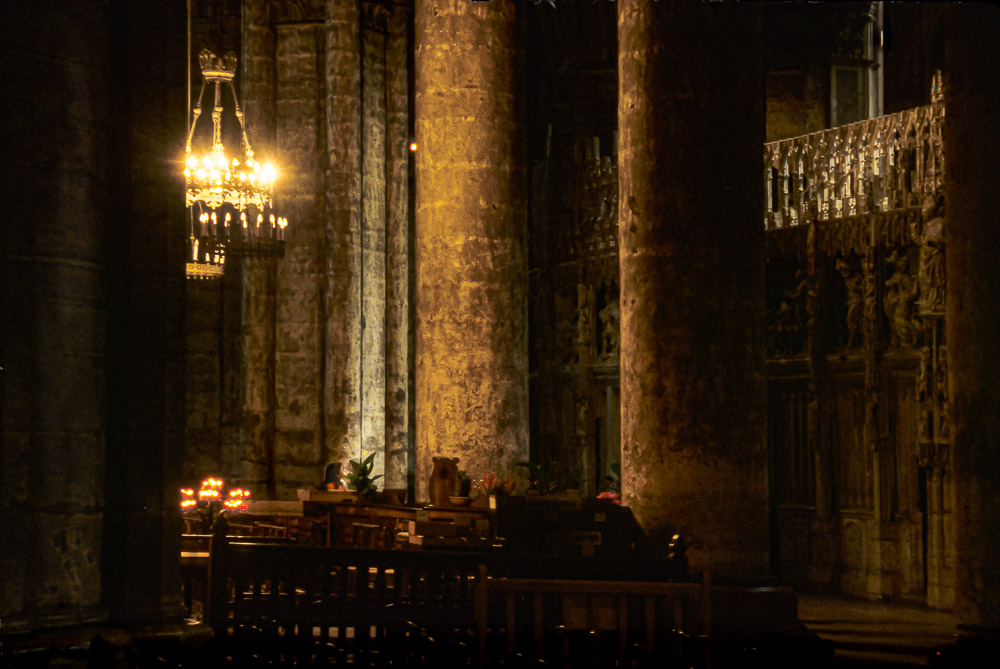
    A confession: even after writing all this about letting the paint dry, I went back and did some minor edits on the image with this article. This is an old image, scanned from film. The quality is not up to today’s standards. But I really like the feeling of the image and the memories it brings back of Chartres Cathedral in France. So I indulged myself in one more little tweak. Do what I say, not what I do.

  • Is It Interesting?

    Is It Interesting?

    I find myself pondering this question a lot these days. More and more I believe the answer to “is it interesting?” overrides many considerations of composition and technique. This is a personal judgment, of course. as is the question of what is interesting.

    Learning

    Art is almost as much about our training as it is about our natural creativity. We all start somewhere, whether we have formal training or we are self taught. When we are learning a skill or an art we concentrate on the mechanics first.

    The tendency is to focus our attention on what we are trying to master. This is natural. What we should recognize, though, is that we may not really be making art in the process. Yes, it is art in the sense that we create it as art, but it is not a mature and well rounded style yet.

    Technique

    Photography is possibly the most technical of the normal arts. We have to master many layers of technology to get skilled at the craft. There is the camera with its hundreds of settings and controls, each of which may help us make a great image or a terrible one. Then there is the computer system required to store and process the image. And the software we choose to use for managing and editing the image. If you are taking it all the way to the end of the chain, there is the whole printing process to learn.

    Each of these areas is a huge field that could require years of study to master.

    If this is where you are, plow into it. Work through the learning process. Get to the point where the camera is a comfortable tool that you can use with little thought. Ideally you should be able to adjust all the major setting in the dark, just by feel.

    The image processing software is probably an even bigger challenge. Photoshop is one of the deepest tools I have ever used, and that is from the point of view of a long career in very complex software development. There are only a few people in the world I know of who totally “know” Photoshop. Julianne Kost comes to mind, but then she is the chief Photoshop evangelist for Adobe. It is her full time job to be able to train people on any aspect of it. Others at about that level are Ben Willmore and Dave Cross. I study and use Photoshop hours a week but I will never get to their level.

    But the good thing is, I don’t have to be a Ben Willmore. As long as I know enough to realize my artistic vision, I’m OK. I know of excellent and successful photographers who I consider to have only a rudimentary knowledge of the tools. They know enough to do what they want to do. I personally can’t be happy unless I feel I have mastered my tools enough to comfortably use them as an extension of my creativity. So I study a lot. But that is just my own burden.

    It should be about creating interesting art, not our ability to use the tools.

    Composition

    The next major pillar of image making is composition. It is another thing that can become a lifelong study in itself. We can burrow into art history, visual theory, Gestalt psychology, and all manner of ideas and opinions.

    We start with only an intuitive feel for good composition, based on art we have seen and our inherent notions of what we like. Probably we cannot express in words what good composition is. As we study and practice we get to where we have a more formal view of it. We can critique our own or other images in terms of their design. Eventually, we can compose our images intuitively, without much conscious thought. We can repeatedly produce compositions that please us.

    Keep in mind that most of this time, we are producing images that are now technically “correct” and have “good” composition. But maybe nobody wants to look at them yet.

    Is it interesting?

    This idea was clarified for me in a book about poetry. (Writing Poems, Robert Wallace. The link is for a later edition of the book) Weird, huh? It is a book about writing poetry rather than a regular book of poems. I find hints and ideas to improve and better understand my art from all sorts of diverse sources.

    The author made the statement that if the poem is not interesting, what good is it? It can have wonderful form, metaphor, irony, symbolism, etc., but if it is not interesting, no one will read it.

    I believe there is something here to apply to our art.

    I have seen, and made, too many technically perfect, classically composed images of … nothing memorable. While I value sharp, well executed images, and pleasing compositions with flow and leading lines and great light, I have come to realize that is not enough by itself to really be art. This is, of course, just my personal opinion. But then all art is a personal opinion. πŸ™‚

    When you have mastered the basics I suggest you first visualize something that will make a memorable image. Then use your acquired skill to capture it perfectly. Don’t just work on technique. You’re better than that.

  • Do You Need A New Camera?

    Do You Need A New Camera?

    The reflexive answer is “Yes, of course”. Most of us lust for new equipment. But think about it a bit. What about your camera is holding you back? How will having a new camera make you a better and more creative photographer?

    Resolution

    Resolution is one of the technical parameters of cameras that increases over time. It is an easy thing to measure and use as a figure of merit for comparing cameras. Is it a good measure?

    Well, yes, more is better, some of the time. It depends on your needs. Will you be making and selling prints that are 48″ or larger? You probably need a lot of resolution. But even then, it depends on what you shoot. If your subjects are highly detailed and you want your viewers to be able to come up nose-length to the print and see every bit of the fine detail, well, it comes with a cost. You want all the resolution you can get. And more.

    Be aware there is a cost. Not just the price of the camera. File sizes get huge. After I’ve taken an image into Photoshop for editing I sometimes end up with files that are more than 4GBytes in size. Everything has to scale up with this: the computer memory, all my disk sizes, including backups, memory card size and cost, and my speed of working slows down.

    So far it is worth it to me, but there will be a limit.

    Speed

    One of the other metrics people use to justify a new camera is image capture speed. If your current camera can “only” take 5 frames a second wouldn’t it be a lot better to have one that takes 10 frames a second?

    Maybe. It depends on what you do. I no longer shoot sports so this has become insignificant to me. Occasionally I need to take a burst of a few frames to try to capture a certain moment. It is becoming more and more rare, though. I usually challenge myself to use my instincts developed over the years to know how to recognize and capture the “decisive moment” instead of blasting through a group of 20 frames hoping the one I want is in there somewhere. It usually works well for me and I feel like a better craftsman.

    Again, your mileage will vary. It depends on the real needs you have. Don’t just optimizing specs.

    Dynamic range

    Dynamic range is one that can draw me. This is the range of dark to light values the sensor can reliably record.

    I often have very wide exposure ranges in my images. It is much better for me to be able to capture the entire range in one frame instead of relying on putting together an HDR set. This is because many of my pictures are strongly oriented to motion. That makes each frame unique. It is almost impossible to stack them for HDR.

    But are you really at a disadvantage with what you have today? I shoot Nikon, so that is all I can talk about. Full frame Nikons since at least the D800 (about 2012?) have excellent dynamic range. So if you have a high end camera that is not more than about 10 years old it probably does a very good job. Note, the image with this blog is one of my earliest pictures shot on my D800. Great camera.

    Are you really being held back?

    I suggest you give it careful consideration before laying out a lot of money on a new camera. Unless you just have thousands sitting around that you want to get rid of. If so, congratulations. Check out my prints. πŸ™‚

    Instead of “do I need a new camera” maybe a better question for yourself is “how do I make better images?” This is much more difficult and important. And it is something you can do without spending much money.

    Ansel Adams once said β€œThe single most important component to a camera is the twelve inches behind it.” Meaning, of course, that the photographer, the artist,, determines the quality of the image. Do you have the skills to get the best from the equipment you have now? Do you really know all the ways you can edit and improve your “negatives”?

    Todd Vorenkamp, whose opinion I’ve come to respect, said:

    “Search yourself for improvement, not your gear. A great photographer can make a great photograph with any camera. A poor photographer can make a poor photograph with the world’s most expensive camera. Photography is a technologically based art form, but the technology does not make the art, the human behind the camera does. Do not look for solutions in something that runs on batteries and arrives in a box. “

    I believe this. And it is a gutsy thing for Todd to say, because he works for a large camera retailer. BTW, B&H is a great place to buy your equipment. Be assured I get no compensation for this plug.

    We have come to a time where camera designers are pushing the limits of physics. Improvement in resolution and dynamic range are getting much harder. Incremental Engineering improvements still happen all the time, but true breakthroughs are more rare. Newer cameras usually have small improvements and more bells and whistles to have to learn.

    How to move forward

    Most photographers are always shopping for shiny new equipment and the greatest new technology. I include myself. Nikon, if you’re listening, I would love for you to bring out a 100MPixel mirrorless body. I would probably put my deposit down immediately.

    But Todd is right, and Ansel is right – it is the photographer that makes the difference. I believe you should not go for a new camera (and the computer processing to go with it) until you are confident you can wring all the performance possible from your current one. Best to master your current tools before getting new ones to learn.

    Are your techniques good enough to make the best image the camera is capable of? Are you confident you can edit well enough to achieve your goals? Maybe hardest of all, do you understand your vision for what you want to create?

    When you can honestly assess those questions I think you will know when it is time to move on. Maybe you do need a new camera.

  • The Value of Editing

    The Value of Editing

    Image editing has great value beyond just the corrections done.

    I often hear photographers state a goal of minimizing or even eliminating the time they spend on the computer editing images. Some say they don’t like technology. Or maybe they are too busy to spend the time editing. There are some who seem to think that a well executed image should already be complete right out of the camera.

    I believe all of these attitudes are mistaken.

    Technology

    I have ceased to like technology for it’s own sake. I’m not impressed nearly as much as I used to be by fast chips with great graphic processing and lots of memory. However, the computer is a necessary tool. Virtually all imaging is done digitally now. Digital images need a fast computer to process them efficiently.

    Like it or not, photography is probably one of the most technical art forms you can find. It is inextricably linked to technology. The computer is our darkroom. Just like Ansel Adams and his generation spent hours in the wet darkroom processing their images so we will spend hours at our computer doing the same.

    Of course, we have the advantage of being able to have a nice glass of wine next to us while we work. πŸ™‚

    The inescapable fact is that computer-based processing is required for modern photography. In practice, this means learn to love Lightroom and Photoshop.

    I have seen videos from well known photographers describing their process and it is apparent they only have a limited depth of Photoshop knowledge. Yes, results are what count, but I am sorry for them. They could possibly do more if they became more familiar with the technology they use. A craftsman should be an expert with their tools.

    So if a computer is a necessary tool for our art then we should consider getting an adequate one. Bigger is better here. Bigger meaning more speed, more cores, more memory, more graphics, etc. Get one that makes editing very large files as speedy as possible. It is part of the cost of doing business.

    Need for editing

    It is a common misconception that the image you just downloaded from your high-end camera should be ready to share or print with little processing. Some people are able to do this for limited applications. For instance, I have seen wedding photographers or sports photographers who are able to ship their images out to clients almost immediately. What you often don’t see is the preparation that enabled that. They are able to shoot and ship jpg files and they spend lots of time getting their exposure and white balance dialed in before the shoot, along with presets for their typical processing steps.

    This can work excellently for an experiences artist. But only for certain niches.

    If you are following this blog I hope you do not shoot jpg files. For landscape or fine art RAW files are a requirement to make all the sensor information available to you for editing. Most of us need to dedicate the time for processing our RAW files.

    Wasted Time?

    OK, our images need some processing. Is the goal to minimize this time? To what end?

    Something I am discovering is that, at a higher level, the goal is not to see how many images I can accumulate. The goal should be to make great art. I hear people complain that time at the computer takes away from time shooting. Yes, it does. That isn’t all bad.

    I am even starting to consciously throttle my image making production because I get too far behind on the processing and refinement. Making new images is a joy. I would prefer to be out in the field shooting. But a balance is necessary and the follow on editing is equally important.

    The images have to be assimilated and processed, both by my computer and by me. This is the process I am referring to as editing.

    Value of editing

    What I have come to realize is that editing is not just about making some corrections in an image so I can get on to shooting more. Editing is an extensive and necessary process. There is the filing and culling. There is the tagging and quick corrections. Then there is the more extensive edits required to bring a promising image to fruition. Sometimes over and over. Finally, there is more culling. Yes, ample opportunity to throw things away. And be sure to set aside time to play and experiment.

    I am not a conceptual artist. Unless I am working on a project I do not shoot planned or designed images. Most of my images are discoveries, something that captured my imagination. Because of this the value of an image may not be consciously recognized by me until much later.

    Some of my images need time to mature, time for me to understand why I was drawn to them in the first place. Sometimes this requires trying several variations on editing an image. And time. It just takes time for a tricky image.

    The realization can sneak up slowly or it can come in a flash of insight. It is great when I finally understand a difficult image. Sometimes it never happens and I end up just filing it away or even deleting it.

    I have written before that we should kill our darlings. It is painful but true. One mark of our maturity is what we choose to keep.

    Understanding

    It sounds mystical, but editing, for me, has become much more than correcting an image. The time spent with my images is a key part of the process of me understanding my art. I start to see patterns of being drawn to recurring themes. Understanding the way I subconsciously work a subject over time is significant. When I spend more time with my existing images I can gather more insight to better understand my art and myself.

    Just the time spent browsing, culling, rearranging, and grading my images has led me to better understanding of some of the themes that are important to me. By removing good images that no longer align with my style or interests my portfolio gets stronger. Less is more.

    So, if anything, editing time is becoming more and more valuable to me. I value it as a necessary and important part of the image creation process. Your mileage may vary, but this is where I am.

  • JPG vs. Raw

    JPG vs. Raw

    It seems like deciding on jpg vs. raw formats for our images is a problem for some photographers. I’m not sure why. Maybe it is lack of knowledge or maybe because it is sometimes discussed in almost mythological terms. Jpg and raw are just 2 ways of saving our images. Each is good for some things but there are tradeoffs to consider. It is just technology, not magic.

    Image formats

    When you take an image on your digital camera, each manufacturer has their own proprietary magic they do on the bits coming off the sensor. This lets them tune their image to meet their goals. If you shot the same scene with different cameras you would notice subtle differences – slight color balance differences, slight variations is tonal contrast, different handling of shadows and highlights, etc. These are usually small, but they give a camera it’s unique character.

    But we need to consume these pixels in our image processing software. So there needs to be standardized ways of storing the images and reading them in our computer. These are file formats. There are 2 main choices.

    Jpg is an industry standard format. The format is very widely understood and used. All images, once converted to jpg, are compatible.

    What we call raw files are really proprietary file formats created by different camera manufacturers. Image processing software, like Adobe Lightroom, has taken the responsibility to be able to read the files written by virtually all camera manufacturers. For instance, I shoot Nikon, so the images LIghtroom reads and handles have the “.nef” extension. Lightroom knows how to interpret this and convert it to editable pixels.

    The key thing here is that these raw files all contain roughly the same information, but are not directly compatible. Thankfully our software handles the differences gracefully.

    Technical details – jpg

    The term jpg, more precisely “jpeg” is derived from a standard created by the Joint Photographic Experts Group. The name jpg is an abbreviated acronym.

    The problem was that digital files are very large, this made them consume lots of disk space back when disks were small. It also used up lots of bandwidth transmitting them back when internet was slow and much more expensive (anyone remember dial up modems?).

    The jpg standard is based on some brilliant insights on human perception to allow encoding image files so they look good but are much smaller. The underlying principle is that humans are more sensitive to variations of tone (luminance) than they are to color (chrominance). The jpg processing reduces the luminance information and greatly reduces the chrominace data to acheive reductions of about 10x typically.

    In general, transforming an image to jpg is a multi step process. It involves a transformation where the luminance and chrominance information is separated. Then the chrominance information is downsampled, or reduced. Then there is a grouping of data into blocks and a process called discrete cosine transform is applied to the data blocks. This transformed information is quantitized and encoded. Finally the data is written out in a defined format as a jpg file. It is not at all necessary to know these details, just that the data in a jpg file is far removed from the original pixels that came from the camera.

    It is a lossy compression technique. Yes, it throws away a lot of data. This is one of the big tradeoff points of jpg. But a fringe benefit is that the image is made to look “nice”. The result is pleasing to most people without further processing

    Technical details – raw

    These files are called “raw” because they contain minimally processed data from the camera sensor. They are absolutely not ready to be viewed or processed. Some people describe it as a digital negative. Conceptually this is pretty good way to help us think about it, but it is not a valid description. The data is not negative and it is not viewable. It might be better to think of it as exposed but unprocessed film.

    To follow this metaphor, a raw image processor like Lightroom “develops” the image and makes it viewable and editable.

    Why raw? It captures and beings into the computer all the data that the camera sensor was able to record. It has the full range of color and tones. Nothing has been eliminated yet.

    In addition, the raw format has not had any lossy compression applied. Nothing is thrown away or reduced. Because of these things an image from a raw file requires manual editing to complete it. Sometimes a lot of editing.

    Tradeoffs

    So jpg is made small as possible and generally nice looking as soon as you see it. You can immediately look at it or send it to someone or post it to your social media. Yes, some information has been intentionally eliminated, but that is not important to most people. If you don’t notice it then it must not matter.

    On the other hand, if you want to make a large print of a jpg you may see noisy patterns that are euphemistically called “artifacts”. This might be mitigated with clever software, but your mileage may vary.

    And there is an editing danger you need to be aware of: every time you save a jpg file it goes through the transform process to reduce data. So every time you edit it and save it you lose information and introduce more artifacts. If you want to edit a jpg always save the edited file in a lossless format, like psd or tif.

    The raw files are usually very large. On my current main camera a typical raw file is 50-70 MBytes. A high quality jpg of the same resolution is around 4-5 MBytes. So, 10 to 1 or greater differential. And the raw files require an investment of time and training and tools to process them into a respectable state.

    But, and this makes up for everything, the raw file preserves every bit of information that we can wring out of the sensor. A modern sensor is marvelous and enables very aggressive processing. The raw format contains the full resolution of the pixels. It is not limited to 8 bit data like jpg. I often do things with the image data that I could not have envisioned when I took the original photo.

    Different needs

    When would you want to use one vs. the other? Well, if I was shooting a wedding I would probably use jpg. Say I come away with 3000 images. I would want to be able to scan through and see good views of all of them so I can quickly pick the 100-200 best to share with the client. If I did my job well the images should not need much editing. I would not have time to process this many raw files.

    Also, if I am shooting snaps of my family that is a time for jpgs. And if I was on vacation and just shooting travel photos for memories that is good jpg territory. I guess if my memory card was nearly full and I didn’t have a spare I might switch to jpg to keep shooting a few more frames. I try to prevent that from happening.

    For me, any other time requires raw files. It is my go-to choice. I know I want to process the images heavily. I am not afraid of the techniques. Given the choice I will always want to retain the maximum information and resolution possible. This given me the flexibility to make massive changes or change my mind and go back to re-process the image for a different look

    I tried to present a very neutral view of the tradeoffs of the 2 formats. I can sympathize that the choice is hard for some people. For me, it is straightforward. Use jpg if I am taking shots of people and I am confident it will need little processing. Otherwise, definitely raw.

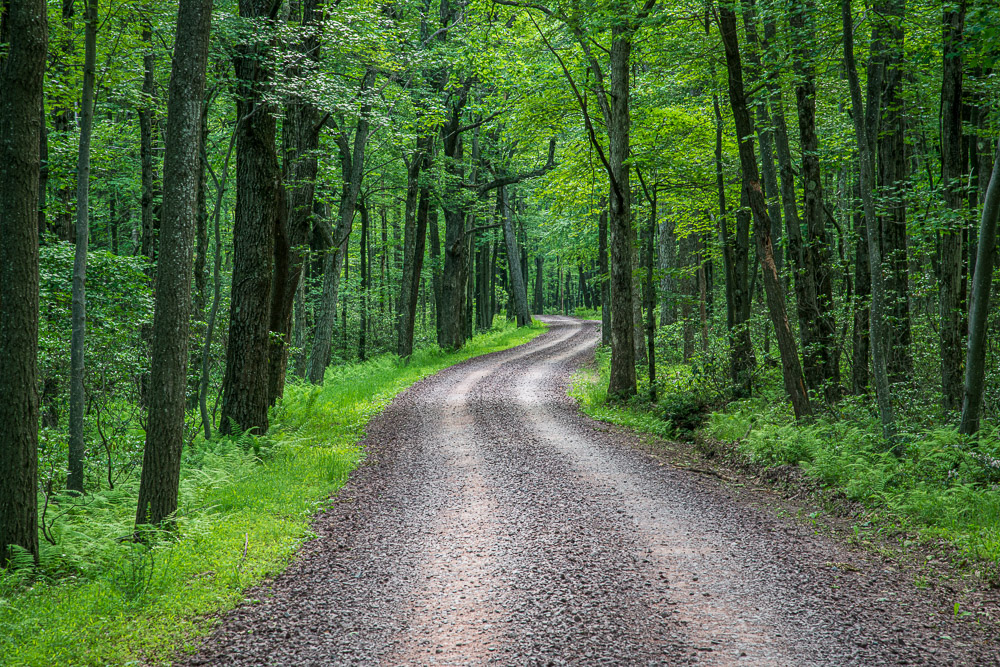
    The image with this article is a jpg. It looks fine for this application.