An artists journey

Category: Psychology

  • The Decisive Moment

    The Decisive Moment

    Henri Cartier-Bresson was well known for promoting the “decisive moment”. I know from experience that in some situations there is an optimum instant to capture the image you want. But for some it becomes a mantra. Let’s examine some nuances of the concept of a decisive moment.

    Sometimes it is not a precise moment

    Almost all of my work is shot outdoors. Sometimes I shoot straight landscapes. Often other found objects around me.

    I believe I have the experience to say that in these outdoor settings, the “decisive moment” may last from a second to many minutes. Or I may have to wait an hour for the moment to occur. In a slowly changing landscape scene it can be difficult to recognize which moment was decisive – and hope you had the presence of mind to capture it.

    In these situations, there may well be a decisive period of time, maybe not an actual moment. It often requires great patience rather than lightning fast reflexes.

    A decisive moment

    I have shot some sports and kids. These are areas with definite decisive moments.

    Sports is easier, in a way. Most sports have a rhythm, a pattern. Once you learn it for a particular sport, you can anticipate the action and predict the best moment. It still may be difficult and you may not be in the best position, but you often will know when it will happen.

    I consider kids more challenging than sports. They are unpredictable. Their moods and expressions can change quickly. Framing then, lighting them, and being in position with the right lens and camera settings requires constant attention. Then on top of all of that is the delicate trigger you need to “spring” at the right moment, when the expression or activity is just right. You have to be fully engaged and in the moment.

    I make it harder on myself, because I never do formal portraits where I try to control things. I greatly prefer being in the environment where they are comfortable and letting them basically forget about me. Candid shots are what I like.

    Now is the decisive moment

    This brings up one of the main points I want to make here: now is the decisive moment. Wherever we are and whatever we are doing, we should consider it a decisive moment. We need to be in this moment. Things will never be the same. We will never have exactly this light or these clouds. We won’t feel the same or look at the subject the same.

    This used to be a problem for me. I would see something interesting, but I was on my way to do something else “important”, so I didn’t stop. If I even remembered what interested me, it was usually not the same when I came back. The light was wrong. The vegetation had grown up and obscured it. It was raining and foggy. Just not the same. If I wait a couple of months before coming back, it may be a housing addition now!

    Well, it may still be a problem, but I recognize it and fight it now. I am much more prone to go ahead and stop and get the shot when I see it. If I am late to something, I don’t mind asking forgiveness. It has not become a problem, except maybe for my wife. She knows now to bring something to read, because I will stop at unpredictable times and places.

    Being mindful

    This all now brings us to the larger issue of mindfulness. Not the pseudo-spiritual mumbo jumbo we get from the self-help crowd. Real mindfulness involves being in the moment. Being fully aware and conscious.

    Modern society does it’s best to train us to not be mindful. We are constantly distracted and entertained. Other people’s ideas bombard us and lead us to pay attention to what they want us to do. But learning to think our own thoughts and to look around and actually see what is there is necessary and healthy.

    Do you walk down the street looking around and actually seeing what is there, or are you scrolling Facebook or email to make sure you don’t miss something? Where is your focus?

    Do you ever take time for yourself? To think, to consider things, to read? Not to think about work or politics or where you are going with your friends tomorrow night. Is the idea of being alone with yourself scary or exciting?

    I suggest you practice being alone in your own head. It might be hard at first. Give yourself some time to just think and to just look around, not expecting something – just looking. Making a quiet place in your head could be a welcome retreat in our noisy, distracting world.

    The image with this post is a result of just being mindful. I noticed this scene on a walk along an ugly little canal in town. The location was not “pretty” in itself, but the conditions were right to make an image I love. I am very glad I took the time to notice it.

    Do you practice mindfulness? Let me know your experience!

  • Invest in Yourself

    Invest in Yourself

    You are your best asset. As a matter of fact, you are your only asset. Invest in yourself to develop your skills and abilities.

    Professional

    I am primarily talking about our skills as an artist. We need to invest in our self to grow and get better professionally. It is a life-long process.

    Time

    Do you invest enough time in your art? Many of us have a “real” job to pay the bills. And we have families and other obligations. It stretches us pretty thin at times.

    But we cannot grow as an artist unless we put in the time to do the work. Practice, practice, practice. Repetition. Experiment. These things make us more skilled and more mature in our craft.

    I have heard of a gallery saying they are not interested in an artist until they have painted 10,000 pictures. Of course, that is a silly metric. There is no arbitrary number to reach your peak. I do believe, though, as Linus Pauling said, “The best way to have a good idea is to have lots of ideas and throw away the bad ones.” Same with our art. We get better with practice as we learn to recognize the bad stuff and throw it away.

    We have to put in the reps.

    Training

    I don’t know about you, but before becoming an artist, my professional life involved constant learning. I seldom did things I learned in college. One of the great benefits of my previous career was that I had to learn to learn. My life as an artist is the same.

    My friend Ramit Sethi makes a point of how much he spends on personal development, from courses to books to a personal trainer. He has a much larger budget to play with than I do. Even so, in proportion to where I’m at I may rival him. No personal trainer though. I have to be content with getting out almost every day and walking about 5 miles with my camera. His advice is good. I do like and generally follow his book buying rule: “If you see a book you like, just buy it”. As I write this I’m waiting for a new one to show up.

    It’s not the amount you spend on training that matters, it’s the results. I have occasionally spent hundreds of dollars on classes that were a marginal benefit, but gotten a lot of good from a free online class. It is a matter of what speaks to you at the time. And the fact that you’re doing it regularly. I probably watch 10-15 hours of videos a week on art, marketing, sales, general business, and selected other subjects of interest. No, no funny cat videos.

    The point, though, is that we must constantly invest in our self. When you say you already know everything you need, you start to stagnate. You can always learn something new and improve your artistic skills and yourself personally. You have to.

    Marketing

    Now it starts to hurt, at least for me. I don’t like marketing. I would rather just do art.

    But I have been told over and over and I now believe I have to invest at least 20% of my time marketing. The reality is probably more like 30-40%. I have a lot of catching up to do.

    Unless we are doing our art as a hobby, and are content to just show our work to friends, we have to market ourselves. “Build it and they will come” is a great line for a movie, but is not true in real life.

    Art is a very competitive world. Galleries don’t want to hear from you. They have too many artists already. Selling online? So is everyone else. So what can we do? We build a distinct brand and be very persistent and professional in our outreach.

    Several marketing gurus have made a point that we will never get anywhere if we do something a couple of times then get discouraged and move on to something else. Persistent, repetitive, sustained marketing is required to “break in” to the world we want. I don’t like it, but that is life.

    Personal

    As important as it is to grow and take care of our self professionally, I believe it is equally important to take care of our personal life. I hope your vision for your life is about more than just professional achievement. Do not neglect your health and fitness and your mental and spiritual development.

    The training I advocated above also helps you mentally. Keeping your brain active and learning new things has a lot of long term benefits. A substantial part of the training should be targeted at things that do not seem directly related to your art. Read biographies, history, science, psychology, and even fiction. It is amazing what seemingly unrelated things can spark a creative idea.

    A key word there is “read”. You are a professional. You cannot just watch videos. Reading has a greater benefit than watching a screen. Try it. It is good for your mind.

    Mindful

    A common thread to all of this is mindfulness. This is just a fancy psychological term for being deliberate and conscious in what we do and very aware of what is going on around us. I am studying this now and I am sure I will be writing more on it later. But for now, pay attention to what you do and be very aware of your choices.

    The picture

    I love this picture with the article. It is one of the greatest train tracks I have ever seen. Look closer if nothing jumped out at you when you first saw it.

    I can take it as metaphors for a lot of things. For this article, I will use it to make the point that there are many paths we can chose. But they do not all lead to the outcome we want. Choose wisely and deliberately. The path you want is usually not the easy one. You are your best asset. Take care of yourself. Work at it.

  • Lucky, or Good?

    Lucky, or Good?

    You’ve heard the phrase “it’s better to be lucky than good”. Some people will claim this is terrible advice. But I think there is enough truth in the phrase to merit some thought. Strive to be as good as possible, but welcome and embrace luck when it happens.

    Not the way to plan

    We can’t schedule or control luck. It is an external thing that happens, or it doesn’t. Since we can’t control luck, we better work on the things we can control. This is just pragmatic.

    The context here is art, but it really applies to most areas of our life. Work hard. Develop all the skill you are capable of. It is a life-long quest of continual improvement.

    When we are good at what we do we have more control of the outcomes. Another old saying you’ve heard is “the race doesn’t always go to the swiftest, but that’s the way to bet.” In this case, bet on skill. Our skill is a huge determinant of what we will achieve,

    Art, though, like many important things, is not completely predictable and deterministic. Unexpected or unforeseen things can happen and that can be good.

    Luck happens

    When the unforeseen happens we tend to call it luck. No matter how great our skill or how much we plan, sometimes something happens that just makes us say “wow.”

    If this event takes us away from our desired goal we tend to call it unfortunate – bad luck. If it sparks a new idea or gives a new insight or makes some problems go away we call it good luck.

    In either case this event was unplanned, unexpected, unanticipated. That is part of the beauty of it. Or it can be, depending on what we do with it.

    Be open and receptive

    Luck can be received as a gift. We should be flexible enough to re-evaluate our plans and goals in the moment to consider what we have seen or learned. Psychologically healthy people tend to have an attitude of gratitude. This luck could be pure gold. We should consider ourselves fortunate.

    It can trigger the creation of a great image or even bring us to a new place in our art. Even what we at first consider to be bad luck can have good outcomes. There have been times when I had been working on an image or even a project and a piece of bad luck causes me to reevaluate what I am planning on doing. Sometimes I conclude I was going down a dead end. The bad luck sent me to a different and better place.

    This cannot happen unless we are open. I could not possibly list all the times some lucky accident caused me to change my plan. Or the number of times I have learned something new to eagerly apply in my work.

    This image

    Let me talk a little more about this image than I usually do in these articles. I try to get out all year in all weather. In the winter I try be aware of good ice patterns, because I sometimes like the patterns and textures. Usually, here, there is enough snow to make the ice cloudy and less interesting. Nice, but kind of all the same.

    This day, though, I hit a brief window where the lakes had partially thawed. Then a hard freeze, with no snow, and calm conditions, had led to the formation of beautiful ice crystals. In addition, the edges of the lakes I was at had good rock just under the surface to give more pattern and color.

    I abandoned everything else I was planning to do and nearly froze to death shooting this ice. It was very cold.

    I love this image. It has not been altered substantially. Just some color boost and correction. I haven’t seen these conditions before or since. It was a happy accident – good luck.

    Lucky or good?

    So, is it better to be lucky or good? I will let you answer that for yourself. For me, I believe we need to work very hard on our skill and our vision. We have to be able to produce the work we want to create at the quality level we want. But I also believe we should be receptive to the happy accidents that bring joy and freshness to our life and vision. They seem to go together.

    Maybe Samuel Goldwin was right when he said “The harder I work, the luckier I get.”

  • Wonderment

    Wonderment

    Do you still have a sense of wonder? Can you get excited by simple, ordinary things around you? If yours has faded I hope I can refresh your excitement and help you redevelop wonderment.

    It came built in

    When we were small, most of us had this wonderment. Everything was new and fresh and exciting. An ice cream cone, a kitten, a flower, a ball, a bicycle – they all captivated us. We could go out and play all day with a cardboard box.

    But then somewhere along the line, we “grew up”. It is what we were supposed to do. At least, that’s what they said. We became too “mature” for that child-like wonder. Cynicism replaced wonder. Boredom chokes out the joy we had.

    Are our lives better off based on cynicism? Perhaps we should try to recapture some of what we had. I believe we can relearn some of this joy and wonder if we work at it.

    Change the context

    Most of us lead pretty routine, repeatable lives. Making a change to the routine can wake up new ways to see things. Go out for walk. Get up earlier. Sleep in later. Instead of going to one of your normal restaurants fix a picnic and go to a park. Stop and look at a sunset. Really look.

    See a road you haven’t been down? Take it. See what’s there. It will probably only take a few minutes, but you expand your viewpoint and feed your curiosity. It’s worth it to me. Even is it is ugly and awful and seems to be a waste, I believe you are better off for breaking the routine and trying it.

    Feed your curiosity

    Are you still curious? I ask seriously. Many people don’t seem to be curious about the world around them. I think that is part of the cynicism that shuts down the desire to know more. For some it is enough to try to decide what’s for dinner and which TV show to watch.

    If you are reading this blog I hope that is not you. I hope you burn with curiosity about a variety of subjects. Let that drive you to do something. Look it up. Build something. Try something new. Read a biography of someone you admire.

    Let me give a small example that is completely off topic from art, but relevant to the idea of curiosity. My city is installing fiber to the house broadband throughout the town. So for months there has been strange equipment around putting the conduits underground. I was curious about how that worked so I looked up some articles on horizontal boring. It is pretty fascinating. It is a much better way of installing pipes in areas where there is already a lot of utilities in the way. Now when I see this equipment I have a better idea of how it works and I feel better for taking the time to satisfy my curiosity.

    I believe curiosity goes hand in hand with our sense of wonder. They each support the other. As you let your curiosity grow and feel its way in different directions your wonder will grow at what you are discovering. And your wonder encourages you to be more curious.

    Slow down

    Slowing down can be hard for us. The world pushes us forward at breakneck speed. Faster, be more productive, multi-task, don’t slack off.

    But slowing down sometimes (and unplugging from media and social networks) can be very good for us. When we take it slow for a change we see new things. We see things in new ways. Let your mind rest and catch up. Give it some time to relax and think.

    And like changing the context, slowing down allows us to see things different. Instead of flashing by with little thought we can take a new look at things around us. Start to really see. Seeing leads to wonder.

    One of the things I love to do is show someone a picture and have them say “that’s pretty neat, I’ve never seen that before.” And I point out to them that it is a block from where they are and they’ve passed it 100 times without seeing it. Some people are insulted. But some learn from that that there are interesting things to see all around ir you are receptive.

    Travel

    This is an easy one. Travel takes us to new locations, out of the norm, maybe out of our comfort zone. This is good. Things seem new and different, and for a while we tend to look around more.

    It has always been said that travel is broadening. I agree. The change in perspective and environment and getting out of the usual can be very good for us. One of the hard things is to bring this awakened viewpoint back home. We so quickly fall back into our ruts.

    You have control of your attitude. Come back from the trip with a commitment to see your local area as if it was an exotic destination. Sounds silly, but try it.

    it’s an attitude

    You control your ability to find wonder around you. It is an attitude and something you can practice to improve. Like learning any new habit, it takes time and hard work.

    First, you have to decide that a new sense of wonder is worth it. It might take a while to rediscover that spark and recognize it. Then you have to practice finding it. Then you have to keep on pushing yourself to keep looking with fresh eyes, even when everything seem so boring.

    Be open to it

    Wonderment is really something we find within ourselves. We have to look inside and discover that we are curious and new things we see and find can be exciting and worthwhile.

    Climb out of your rut. Take a fresh look around. See with new eyes and a new attitude. Practice, practice, practice.

    Somewhere inside is still some of that child-like wonder we used to have. When we bring it out again we have a fresh and exciting life. Be amazed.

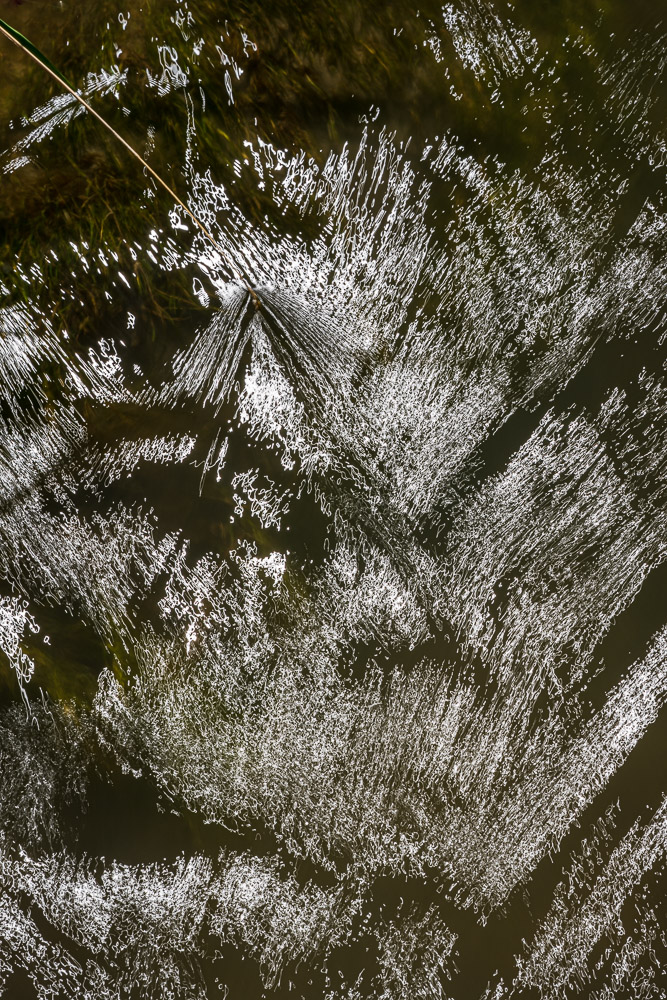
    Note on the photo: This is a perfectly common and ordinary scene where I live. You would probably walk by it with barely a glance. I have changed it in ways that makes it abstract and difficult to recognize, and to me, it exudes wonder.

  • It’s Not Necessarily About the Outcome

    It’s Not Necessarily About the Outcome

    Sometimes the muse abandons us or conditions conspire against us or we get interrupted by something urgent. This can make us create pictures that do not live up to our expectations. But unless we are shooting for a client, we probably should not worry so much about the results we get, the outcome. We should remember to enjoy the creative exercise and have fun.

    We all want great images

    I assume that creating exceptional images is a goal for most of us. I know my expectations are high. We study technique and browse images by great artists we appreciate. We spend a lot of time getting to a location, exploring, setting up, composing. But it doesn’t always work.

    Despite our best efforts, we are often disappointed. What we get may not be great. It may not even be very good. This can be very disappointing if we only judge our self by the outcome.

    They won’t all be great

    It is not uncommon for me to go out for a day of shooting and end up throwing most of them away, with none to add to my portfolio. Does this make me a failure? I try to see it differently.

    I hope we can be philosophical about it. Sometimes all we seem to get from our effort is experience. Hopefully we learn from our experiences and improve our craft. That’s a bittersweet benefit. But the reality is we will learn more from a failed shoot than a successful one.

    I’m coming to see that I am evaluating it wrong. My attitude was that I failed unless I got a number of great images. I concentrated on the outcome. There are greater goals.

    The process may be as important

    Sure, it is disappointing to not have captured those scenes that called to us at the time. But it is an opportunity for self-examination. What caused them to be unspectacular? Was there something we could have done different?

    The editing process is a mirror where we can see how our mind worked and even see our soul to some degree. The images are captured. For better or worse, the bits are there on the computer. Now we have to deal with them. We can process them, but we cannot change them substantively – well, usually not.

    I actually see something cathartic in deleting bad images. I have evaluated them and analyzed the problems and learned what I can. Now I have no more need of them. Remove them from my world. It’s a purging. In most cases I actually have an informal goal of throwing a certain percentage of my images away in the early stages of editing. The thought process is that I should be experimenting and working at the edge of my comfort zone. This causes a lot of failures. Failure is just part of learning.

    Enjoy your art

    Maybe I’m weird, but I see art as a work of joy. We should love what we do. Loving what we do is not the same as creating great work. They may be related, but they are not the same.

    There are times when I go out and don’t end up with anything to keep except the memory of the great scene and the feelings I had. That is enough. Good art should be based on the feelings we are trying to convey. If I had the feelings but couldn’t realize them in the image, that means I am on the right track but I have to learn more. That is a challenge for artistic growth. I have seen too much art that is technically perfect but seems to me devoid of feeling.

    There is a lot of talk about “flow” in the artistic process. Have you really experienced it? Not the fake stuff that is hyped by a lot of self-help gurus. There is no “hack” or shortcut to get there.

    I developed the ability in my previous professional career, before I ever heard the term defined. There was a “place” I could easily drop into, a creative mode where I did great work and would be completely unaware of time for hours.

    I can occasionally find the same place in my art, both when shooting and when processing. This is a reveling in the work regardless of the outcome. Yes, true flow is independent of what we might or might not produce. It is the joy of creation.

    Let’s learn to revel in the process, the flow. We will create great things, but that is not the goal in itself. The joy of creation will carry us to become greater. Look at what you are becoming, not just what you are producing.