An artists journey

Category: Photography

  • Reality is Overrated

    Reality is Overrated

    Is this controversial for a photographer to say? I hope so. 🙂 Photography used to be the land of total realism. Not so any more. Photography for me is purely artistic expression, with little concern for reality. That’s because reality is overrated.

    Reality – the good

    There is a long and honored tradition of highly realistic landscape and street photography. When you think of landscapes, you might think of John Fielder or Art Wolf or Ansel Adams. For street photography maybe it is Henri Cartier-Bresson or Jay Maisel or Elliott Erwitt.

    All of these artists were true to the reality of the scenes they found. Of course they looked for the best composition or the right light or the dramatic expression – that is why they are recognized artists. But the photographs they took were not modified at all, other than routine spotting or color corrections.

    Is their work good because they only shot reality? No, their work is good because they are great artists. I could walk outside and shoot a picture looking down my suburban street and publish it. It would be absolutely real and unmodified. Would it be good art because of that? Not to me.

    Reality – the bad

    Following up on the point about shooting down the street, a picture isn’t good just because it is reality. Reality can be boring. It can be depressing. It can be dreary and banal. While there may be a time and place for these things, they are not where I want to spend much time.

    I am not a critic or authority. I would never say such subjects do not constitute art. But don’t get caught up in the post-modernism depression where you don’t view art as worthwhile unless it is depressing or banal. That is just one passing movement led by some people with a very dark world view.

    Be yourself. Express your own values. Like, and buy, what you like.

    Assume no reality

    Photography has become much wider and more diverse than it was a few decades ago. It used to indeed be true that “a photograph didn’t lie”. You could believe what you saw. Not anymore. Photojournalism may be an exception, but in today’s climate, I wouldn’t rush to ascribe too much credence to any particular image you see on the news unless you know the circumstances. News has become just a business, not a guardian of truth.

    A lot of artists, including myself, no longer consider it necessary to represent reality. Now, some of my work is extremely detailed, with sharp, crunchy texture and edges. I actually like doing these sometimes. It is almost reveling in the detail that can be captured by my sensor and lenses. Quite the opposite of some of my blurred, low texture images.

    But if you see one of my images with super sharp detail, don’t necessarily assume it is reality. Even when I am going for crisp and detailed, I am not at the same time representing to you that it is reality. It could be manufactured. Even if I know that it is real, it could look so abstract to you that you could not describe exactly what it is.

    It is art, not a documentary

    My point being that I am making art. I think most “artists” are making art. Enjoy it as art. Don’t be disappointed if you find out it is not reality. I’m not sure there is much overlap between art and reality.

    Art may speak to universal truths and bring deep insights into our lives, but it does it through its metaphors and imagery. It does it by touching something within us. In the same way that Shakespear gives us a lot of insights about life, even though his stories are fiction.

    So don’t assume photography has to depict reality while painting does not. Both are art.

    It is art, not reality

    I will go out on a limb and state that art is not reality and it cannot be. Art might show a representation of reality. Even a very realistic representation. But the art is not the reality. Art is a 2 or 3 dimensional object you look at.

    To take an example that may be easier to comprehend, it is like a book. An excellent work of fiction may create a reality in our mind, but that reality is what we interpret from what the book describes. The places may seem real. The characters may seem real and alive to us. But they are feelings the author has communicated to us through the words. Not reality itself.

    I am drawn to joy

    On a personal note, I am drawn to joy and things that are uplifting. Even when my images are dark or showing bleak mid winter scenes, they are not depressing. At least, not to me. I try to find a hopeful angle on my art.

    For instance, I love finding certain types of old rusty trucks and cars. After surviving for 50 to 90 years, it seems these relics have something to tell me. They have resisted the elements far longer than most things. They may be beat up and rusty and out of service, but they are still there defiantly. That is the joy to me in old things like this. They are still standing and making a statement; they are not junk. There seems to be something significant about that generation. Some quality that makes people want to keep them. A 1952 truck is often still around in 60 years. I don’t expect that many 2022 trucks will still be in as good a shape after 60 years.

    The picture with this article is composited from shots of some old vehicles. It is detailed and sharp, but it is not “real”. No object I know of in the world actually looks exactly like this. That doesn’t keep me from creating it. I could even represent it as something that could be, even if it does not currently exist. But realism or potential realism is not an important consideration for me. I only care about if I like it. I do.

    What do you think?

  • Raw Material

    Raw Material

    I have come to consider many of the images I shoot to be raw material. They don’t become a finished picture until I have worked the raw material in post processing.

    Bits

    Today’s cameras are great generators of data. Every time I press the shutter I am sending around 50-60 MBytes of data to my memory card. And that is using a compressed RAW format.

    A funny thing happens, though. The more data there is, the less the importance of each bit. For instance, even though my camera has great metering and a live histogram, I may shoot several frames of the same subject. This will allow for minimizing motion or camera shake. Or, if I am intentionally moving the camera (intentional camera motion) I will shoot many frames to up my chance of getting a keeper.

    I never would have been so “wasteful” with film. It was too expensive. But digital images seem free. The perceived value of any frame is smaller.

    But a side effect of this commodity view leads to a different relationship with the image data. It is no longer necessarily a “picture” as an indivisible unit. It is data. I feel more free to repurpose any of the picture data for other uses.

    Repurposing

    So now I have new ways to look at an image. Maybe I like its texture and want to apply it to another image. Maybe there are one or more elements in the picture that I think would be good included in another image. There could be a form structure that could be used to build another image.

    I have moved from a “take it or leave it” judgement of an image as a whole to a sense of “parting out” a picture to harvest the good parts. That is so much easier now than it ever was in the past. The tools are there, it is a matter of adjusting the mindset.

    Post processing

    In today’s world, post processing is where a lot of the magic happens. Photoshop and Lightroom and some of the other editing programs have developed marvelous feature sets. They can handle large files and 16 bit depth and work comfortably in good image spaces like ProPhotoRGB, Photoshop is the choice (IMHO) for heavy duty pixel pushing.

    It is almost (not quite) true that is you can think it, you can do it. The tools are not perfect, but they are so good that, for the most part, they stay out of the way and let us create fluently with them.

    A lot of us have come to believe that a picture does not become a picture until we have spent some serious time in post processing. There is no reason anymore to be limited to what we originally captured, unless it turned out to be exactly what we want.

    Vision

    We artists are no longer “stuck” with what we captured at the moment we pressed the shutter. We have huge latitude for changing the look, the content, the color, and the whole feeling of the image.

    Some people are threatened by this, but I see it as an opportunity to realize my vision. There are few excuses any more. Photography is very different from painting, but we have one new similarity: if we can think it we can create it.

    Emotion

    To bring you a good image, I have to show not only what I saw but how I felt about it. Revealing the emotion behind it is easier now. Because we do not have to take the original bits of the image as fixed and unchangeable, we can add or subtract as necessary to achieve the effect we desire.

    This can be a very freeing and empowering realization. Those of us who have done photography for a long time have to re-learn how to approach image making. We have to give ourselves permission to do any amount of modification, even to the point of completely creating a new work out of raw material from others. But it gives us a medium for expressing ourselves more fully.

    This image

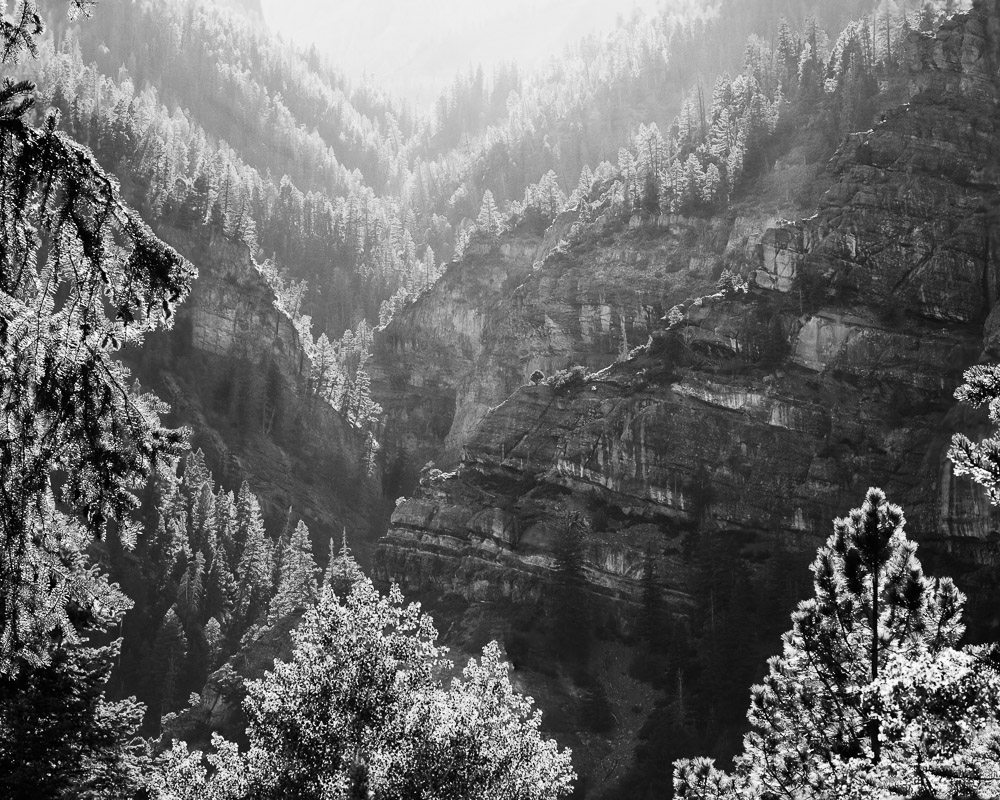
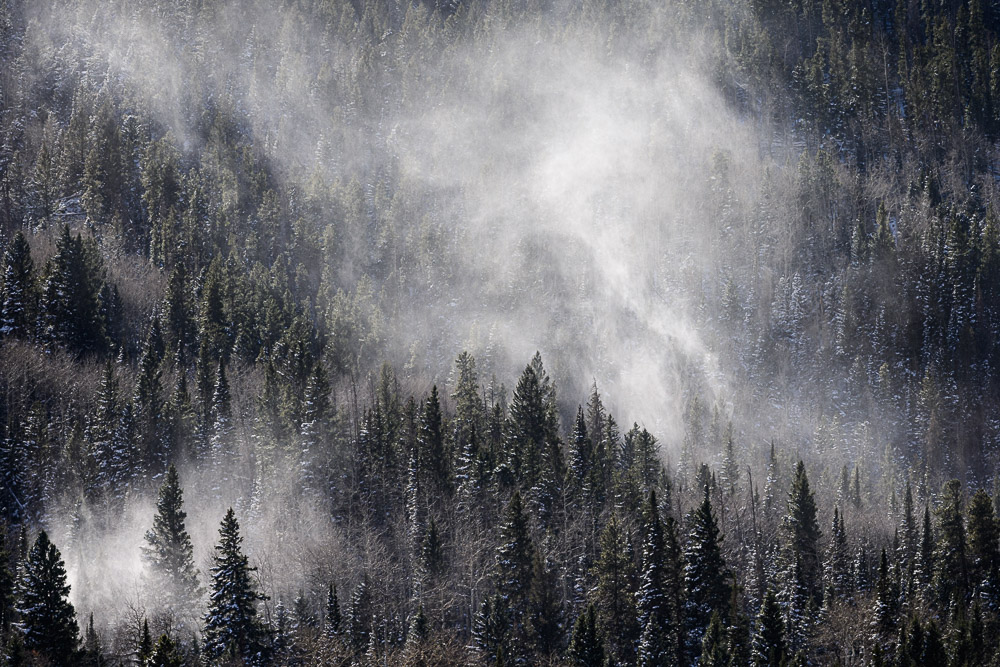
    The image with this article is an example. That is not what the original scene looked like. No in-camera technique could have given the resulting image. A lot of Photoshop time was spent in blurring the image except for the evergreens. It is not what I saw when I was there. I did not even envision this at the time. I spent time thinking about surreal variations and eventually visualized this.

    Dishonest?

    This is not dishonest. It is the same thing as a painter painting in what he likes and leaving out what he doesn’t like. The end result is art, not documentation.

    Art is neither honest or dishonest. It is art. It means what the viewer takes it to mean. We are long past the time when we assume a photograph is “truth”. We should assume that every image is altered, composited, tweaked, and blended. That’s not just OK, it is healthy.

  • Unrecognized

    Unrecognized

    Sometimes things are right there staring us in the face. But we don’t or can’t see it. We fail to see what should be obvious. This in an internal problem. We don’t get to blame anyone else. Don’t go through life with unrecognized interest all around.

    Unrecognized artist

    “Unrecognized” is a fairly ambiguous word. Well, not really ambiguous, it is just that it can be applied so many ways. One of the first things that comes to mind when I hear the phrase is my sadness at being an “unrecognized” artist.

    Even though I have sales and good gallery representation and I get exhibited, it feels like nothing. Failure. I seek to be more widely known. A goal is to share my vision with many more people.

    But this aspect of “unrecognized” is not what I am discussing in this article.

    Unrecognized beauty

    Most people I know sort of drift through life in a daze. We follow our normal paths, doing basically the same thing all the time without really seeing things around us.

    If we recognize the rut we are in, we can climb out. At least enough to make a difference. Just deciding that we are going to pay more attention to things around us will go a long way.

    There is beauty all around us, even if you live in a city. Disappointed that you don’t live in Yosemite? Get over it. Learn to appreciate where you are. Even if you are not thrilled with your environment, by learning to look more closely we can usually find things, even little things, to brighten our day. Is there a flower, or a tree, or a pattern of light and shadow on a building that catches your eye? Look at it. Stop and take a moment to appreciate it.

    This will grow a habit of mindfulness. It will help us become more aware of what is there and more grateful of the little scenes that brighten out day, make us feel more alive.

    Unrecognized self

    Many of us, I’m pointing to myself, too, have trouble recognizing where our creative instincts are leading us. We change all the time. It can be hard if we feel like we are starting to be recognized for a certain style or subject. We fear that changing would lose our market. But at least that person is aware of what is going on. Most of us, I feel, one day realize that what we are drawn to is different from what we have been practicing for a long time. This can shake us to our bones. But it can also be refreshing and invigorating to re-align with where our subconscious is directing us.

    I think this quote from a very good photographer from the past, David Vestal. is enlightening.

    As we work, we come to know more and become more patient and less inclined to rush past our own work that we don’t yet recognize. Now I am quicker to see in my own new work the “accidental” good photos that I used to ignore.

    Mr. Vestal points out 3 key things that are common and key to our artistic growth.

    Know more

    As we practice our art we learn. Our technical abilities grow and our creative capabilities are stretched. The more we learn the deeper vocabulary we have to express what we see and feel. We also have more ability to examine our art and critique it.

    If we’re lucky, we even get to a point where we know what we don’t know. But the path of knowing more sometimes means we grow away from the positions we held in the past.

    More patient

    Mr. Vestal describes part of the growth process as becoming more patient. With ourselves. I know for myself, I feel less need now to shoot quantities of images. I used to be in a frenzied rush to capture everything that was the least bit interesting. These days I will usually come back with fewer images. I can see something nice and not feel the need to take a picture. Sometimes it is sufficient to just acknowledge it and appreciate it. I would rather have a few images that excite me rather than a whole pile of “OK” pictures.

    I think this also applies to our results and growth as an artist. Have you ever found yourself trying to “force” a great image. I do. Maybe less than I used to. As I grow I am more interested in trying to see more clearly what is there and understand how I perceive it, what I want to do with it. Sometimes it doesn’t come. Rather than be a big frustration, it is an opportunity to try to figure out why.

    Have you ever come upon what would be one of your “standard” images, one you would always shoot, and said, “no, that doesn’t interest me today”? Something is speaking to you to tell you you have grown to a new position.

    Recognize

    To me, the phrase in his quote “less inclined to rush past our own work that we don’t yet recognize” is brilliant. I sometimes run across something while I am looking for a particular image. Something I didn’t think was very good, but for some reason I kept it. Looking at it some time later I liked it much better. Sometimes I realize that if far more representative of my current vision that things I used to shoot.

    He describes them as accidentally good shots. I believe these accidental shots are sometimes our subconscious trying to show us something we don’t recognize yet. As we grow in our artistic concept, we have to leave the past behind. We become bored with what we used to proudly do. Recognize that feeling. Learn from it. It is time to move on.

    I have described before that I tend to be fairly brutal about culling out bad or uninteresting shots. Sometimes, though, I am compelled to keep an image that I don’t think I like. Sometimes I find, later, that this image is significant to me. It may even be a pivot to a new direction in my journey. I did not recognize it at the time, but I did perceive that there was something there that made me keep the image and come back to it later.

    Be receptive

    I believe we should learn to be more receptive to these signals our subconscious is sending us. The subconscious mind is more powerful than the conscious mind. It understands us better. It is not deluded by ego or financial considerations or social media followers.

    I have heard it said that this message from our subconscious is usually not a light bulb going on, it is more like a tickle on the back of our neck. That little feeling that there is something here we are missing or need to figure out. Maturity is learning to be aware of this hint and follow it to see where it leads us.

    How about you? Have you ever puzzled over an image you couldn’t figure out, only to recognize later that it was a harbinger of a new direction for your creative work? The way to a new creative plateau? Did you trust your instincts and embrace the new direction? What was the result?

    I would like to know! Leave a comment or email me.

  • Blessing of Technology

    Blessing of Technology

    I admit to starting to become a Luddite in some ways. I spent a long career developing and working with advanced technology, but I am starting to object to its misuse, especially by giant corporations and the government who spy and track and infringe our rights. But on the other hand, I occasionally step back and look at where technology has taken the art of photography and have to say “wow”. We live in the best of times for digital imaging. Technology can also be a blessing.

    Old books

    I think what precipitated this is that I have been going back re-reading my library of photography books. Many of these are by well-known experts of their day. It has been an amazing realization that many of the images in some of them would not be exceptional or even noticed today. And in some, the author’s discussion of the images was mostly about exposure and technical problems. Exposure used to be an overriding concern. We have come a very long way.

    In particular, I based this on going back over the following books. This is just a fraction of my library that I have looked at recently.

    • The Fine Print, by Fred Picker, 1975
    • Taking Great Photographs, by John Hedgecoe, 1983
    • The Photograph: Composition and Color Design, by Harald Mante, 2010
    • Learning to See Creatively, by Bryan Peterson, 1988
    • Photography of Natural Things, by Freeman Patterson, 1982
    • The Making of Landscape Photographs, by Charlie Waite, 1992

    Film

    Most of these books were based on film photography. It amazes me the degree of technical sophistication and planning that was required. For instance, in The Fine Print, most of the discussion about each image was about the film choice, adjusting the camera tilt/shift settings, exposure considerations, development chemistry, and printing tricks.

    Do you remember reciprocity failure and how to compensate for exposure degradation on long exposures? Do you know exposure chemistries and how to push process a negative to increase contrast? How about dodging and burning during printing? Or making an unsharp mask?

    I skipped this whole generation by shooting slide film during those days. This complex process of color or black & white developing and printing was not for me. And I’m an Engineer. I generally like complexity.

    I would say that many of the results I notice in these old books are “thoughtful”. They have to be. It was generally a slow process. It could take an hour to set up for a shot and determine the exposure and anticipate the printing that would have to be done.

    I am very thankful I was able to skip this. I am able to be much more spontaneous and intuitive in my shooting. My standards have become very different.

    Early digital

    Did you know Kodak invented digital photography? I bet they wish they didn’t. It put them out of business.

    The first prototype in 1975 was an 8 pound monster the size of a toaster. It took 23 seconds to record a blurry black & white image that had to be read by a separate, larger box.

    But unfortunately, for them, Kodak suffered the classic problem of large corporations with entrenched technology: they did not aggressively pursue the new technology for fear of cannibalizing their existing products. They could not convince management that they are going to be cannibalized, and they would be better off doing it themselves. This has put a lot of companies out of business. Who is your buggy whip provider?

    Many years of technology improvements and innovation were required before we got an actual digital camera, the Dycam Model 1 in 1990. The first practical digital camera, in my opinion, was the Nikon N8008s in 1992. It had a whopping 1.5 million pixels and could do color!

    Collecting pixels is not much benefit unless we can do something with them. Adobe Photoshop 1.0 was released in 1990 on the new Macintosh computer from Apple. Hard to believe there was a time before Photoshop. Or Apple 🙂

    Engineering improvements

    As a note on something I have observed over a long career: don’t underestimate the power of engineering. The early digital components were just toys, but they gave a hint of what was possible. Most people dismissed them as impractical, predicting they would never be at parity with film. Now even the most die hard film enthusiasts would be hard pressed to make a good argument that film is better.

    Engineers and scientists and manufacturers and marketers can do amazing things when there is a market to support them.

    An anecdote will illustrate. A friend of mine at HP developed the ink jet printer technology. It was black and white and pretty crude and slow. Not too long after the first one was made, he told me that someday I would take an 8×10 print out of one of these printers, in full color, and it would look every bit as good as a Kodak print. I politely told him he was crazy. But now, here in my studio, I have a 17″x22″ ink jet printer that makes color and black & white prints far better than commercial prints of a few years ago. Much larger printers exist, too. It stretches belief.

    State of the art

    Look at where we are now (mid 2022 when this was written). I shoot a 47MPix mirrorless camera. The lenses have better optical properties than ever before. They support the full resolving power of the camera sensor.

    I can shoot great quality at much higher ISO speeds than has ever been possible.

    This camera has abandoned the optical viewfinder and has gone to a marvelous little video display instead. It shows a wealth of information that photographers in the 1990s and before would never have dreamed of. Or I could chose to see the information on the camera back instead.

    Since the camera is mirrorless, the sensor is live all the time, continually measuring exposure across the entire frame. No more 18% gray reflected light meter to interpret. And this exposure information is real time displayed for me as a live histogram, focus tracking, etc. Whatever I choose to see.

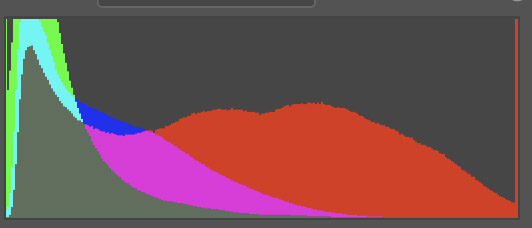
    Exposure is a minor consideration most of the time. I am usually in Aperture Priority mode and the camera’s internal computers do a wonderful job of accurately determining exposure from the data it can see from the whole sensor. Plus I have the histogram to look at to check for abnormal conditions. And the sensor has such an exceptional dynamic range (range of light capture ability from darkest tones, to brightest) that even if I miss the exposure by a stop or 2, I probably have sufficient data to correct it in the computer. Besides, I can immediately review any image to double-check it.

    An embarrassment of riches

    I am almost embarrassed to have all this power at hand. Compared to image making of a few years ago it is like going from Morse Code to an iPhone.

    I don’t worry much about exposure now. I can see what I am about to capture. Even before shooting I know from the histogram that it will be well exposed. I can immediately review any images to verify them. No doubts. No anxiously waiting for the developed film to come back to see if I got the shot.

    This technology frees me from most of the mundane technical concerns and lets me concentrate on composition and creativity. The resolution and tonal detail in my images is the best in history. The computer processing power and tools are the best in history. Printing or display of images has never been better. The ability to transfer even huge files anywhere in the world in seconds is amazing and unprecedented.

    Thank you, technology! It is a golden age of imaging. We have a blessing of technology.

  • Is Scaling Bad?

    Is Scaling Bad?

    I have written about image sharpness before, but I was challenged by a new viewpoint recently. An author I respect made an assertion that gave me pause. He was describing that when you enlarge film it is an optical scaling but digital enlarging requires modifying the information. Implying that modifying information was bad. So I was wondering, is digital scaling bad?

    Edges and detail

    Let me get two things out of the way. When we are discussing scaling we only mean upscaling, that is, enlarging an image. Shrinking or reducing an image size is not a problem for either film or digital.

    The other thing is that the problems from upscaling mostly are edges or fine detailed areas. An edge is a transition from light to dark or dark to light. The more resolution the medium has to keep the abruptness of the transition, the more it looks sharp to us. Areas with gradual tone transitions, like clouds, can be enlarged a lot with little degradation.

    Optical scaling

    As Mr. Freeman points out, enlarging prints from film relies on optical scaling. An enlarger (big camera, used backward) projects the negative on to print paper on a platen. Lenses and height extensions are used to enlarge the projected image to the desired size.

    This is the classic darkroom process that was used for well over 100 years. It still is used by some. It is well proven.

    But is is ideal? The optical zooming process enlarges everything. Edges become stretched and blurred, noise is magnified. It is a near exact magnified image of the original piece of film. Unless it is a contact print of an 8×10 inch or larger negative, it has lost resolution. Walk up close to it and it looks blurry and grainy.

    Digital scaling

    Digital scaling is generally a very different process. Scaling of digital images is usually an intelligent process that does not just multiply the size of everything. It is based on algorithms that look at the spatial frequency of the information – the amount of edges and detail – and scales to preserve that detail.

    For instance, one of the common tools for enlarging images is Photoshop. The Image Size dialog is where this is done. When resample is checked, there are 7 choices of scaling algorithms besides the default “Automatic”. I only use Automatic. From what i can figure out it analyzes the image and decides which of the scaling algorithms is optimal. It works very well.

    All of these operations modify the original pixels. That is common when working with digital images and it is desirable. As a matter of fact, it is one of the advantages of digital. A non-destructive workflow should be followed to allow re-editing later.

    Scaling is normally done as a last step before printing. The file is customized to the final image size, type of print surface, and printer and paper characteristics. So it is typical to do this on a copy of the edited original. In this way the original file is not modified for a particular print size choice.

    Sharpening

    In digital imaging, it is hard to talk about scaling without talking about sharpening. They go together. The original digital image you load into Lightroom (or whatever you use) looks pretty dull. All of the captured data is there, but it doesn’t look like what we remembered, or want. It is similar to the need for extensive darkroom work to print black & white negatives.

    One of the processes in digital photography in general, and after scaling in particular, is sharpening. There are different kinds and degrees of sharpening and several places in the workflow where it is usually applied. It is too complex a subject to talk about here.

    But sharpening deals mainly with the contrast around edges. An edge is a sharp increase in contrast. The algorithms increase the contrast where an edge is detected.

    This changes the pixels. It’s not like painting out somebody you don’t want in the frame, but it is a change.

    By the way, one of the standard sharpening techniques is called Unsharp Mask. It is mind-bending, because it is a way of sharpening an image by blurring it. Non-intuitive. But the point here is this is digital mimicry of a well known technique used by film printers. So the old film masters used the same type of processing tricks to achieve the results they wanted. They even spotted and retouched their negatives.

    Modifying pixels

    Let me briefly hit on what I think is the basic stumbling block at the bottom of this. Some people have it in their head that there is something wrong or non-artistic about modifying pixels. That is a straw man. It’s as silly as saying you’re not a good oil painter if you mix your colors, since they are no longer the pure colors that came out of the tubes. I have mentioned before that great prints of film images are often very different from the original frame. Does that make them less than genuine?

    Art is about achieving the result you want to present to your viewers. How you get there shouldn’t matter much, and any argument of “purity” is strictly a figment of the objector’s imagination.

    One of the great benefits of digital imaging is the incredible malleability of the digital data. It can be processed in ways the film masters could only dream of. We as artists need to use this capability to achieve our vision and bring our creativity to the end product.

    I am glad I live in an era of digital imaging. I freely modify pixels in any way that seems appropriate to me.