An artists journey

Category: Creative Ideas

Ideas about creativity and the creative process.

  • Moment Hunting

    Moment Hunting

    An intriguing Japanese concept called Ichigo Ichie has recently been revealed to me. It literally means “one time, one meeting”. A better translation may be “once in a lifetime”. An expanded translation, that appeals to me more, could be “What we are experiencing right now will never happen again. We must value each moment like a beautiful treasure. We must become moment hunters.”

    This idea of becoming “moment hunters” is very powerful to me. This is one of the things I love about photography that is different from most other art forms. I can capture moments as they are happening. When I press the shutter on my camera, the entire world visible through the lens is recorded on the sensor. It does not have to be slowly drawn and/or painted. Have you noticed that most paintings are static? If not, the artist probably took a photograph and painted from it later.

    No tomorrow

    This has been impressed more and more to me as I get older. There is no assurance of a tomorrow. Even if there is, the moment you see now probably will not exist. The light, the weather, the interaction taking place – these things will never repeat exactly, if at all.

    So now, if I see something, I take the picture. It doesn’t matter as much if I am late to something or if I lose my place in traffic or if I even have to turn around and go back (something guys are supposed to never do).

    Even when I am out driving or walking with friends I will stop and capture an image if I really like it. My real friends understand and others, well, hopefully they will be patient, but that is not my problem. The image is very important to me. I have learned that you can’t come back later and find it.

    We’ve all experienced it

    I am starting to learn. Too many times I have thought “that is really great; I will catch it next time”. Even if you get back in an hour, the light will be different; the clouds will have moved; something. Or if you note something interesting enough to return to, say next month or on another trip next year, it will be different. That very shapely tree is covered with leaves and is not as interesting. That great scene is now a housing development, never to be interesting again.

    One of my heroes Jay Maisel tells a story from early in his career. In his book “It’s Not About the F-Stop” (I do not receive any compensation from this) he has this example. He was at the Tokyo Fish Market.

    “I find a room with cakes of ice, light coming from below, cutting knives on top. This is great. I take a few shots, but I’m really supposed to be shooting something else, so I figure I’ll go back there later and really work it.

    I get back a few years later. I’m looking forward to working on it, but it’s not there anymore. It’s been replaced with air conditioning.”

    Based on this and other experiences he always tells his students “Never go back”.

    Not a new concept

    This idea of Ichigo Ichie comes from about the 16th century. It came out of tea ceremonies. The ideas migrated into Zen Buddhist philosophy and was expanded with their thoughts on transience.

    It also appears in martial art training. The idea was that even in training you can’t just stop and do it over. In a life-and-death struggle you don’t get a “try again”.

    And isn’t life such a life-and-death situation? Now is what we have. Use it.

    Ichigo Ichie was even used as the subtitle to the 1994 release of Forest Gump in Japan. It seemed to reflect the events of that movie.

    All we have is today

    Great scenes don’t stick around. Everything changes all the time. If you like the image, stop and capture it. There is little chance you can find it again later. Now, you might find a better one by coming back to a location with better light or better weather. Landscape photographers try to do this all the time. But it will be a different scene. This one you see right now will never be the same.

    Usually I focus these almost exclusively on art and photography. This concept is much broader.

    It scares me now to think of all the transient things I miss if I’m are not disciplined about recognizing them. Your kids, for example. They are growing up every day. They are learning new things all the time. Are you spending the time to interact with them, to help them and shape them?

    Or your mate? They are really the most important person in your life. I hope for your sake they will be with you the rest of your life. Are you conscious of your interactions? Do you always treat them with respect and love? Do you work to keep the romance going?

    Or friends. Being with friends is special. When it happens, be fully there. Take advantage of the time. Treasure every encounter. This is one of the things life is really about.

    Postscript

    Sorry to get so philosophical. Usually I try to stick strictly to art. This topic is very close to me and I believe it is important.

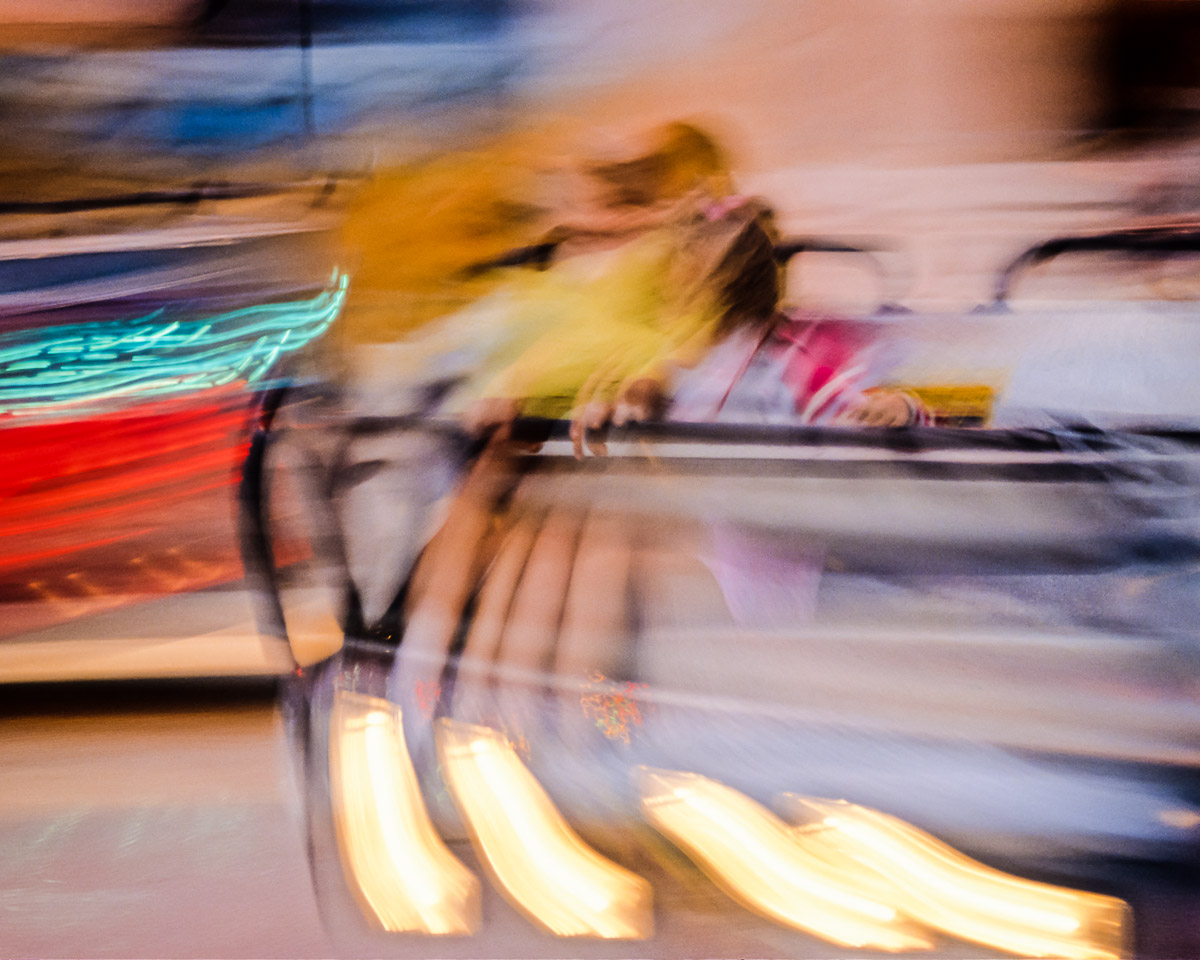
    Oh, and the image at the top of this post? It is a good example. I was driving in a remote area, with my wife and best friend, as darkness approached on a blustery winter night. We were in a hurry, but I had the guts to stop anyway and take this. I’m glad I did!
  • Hunting the Image

    Hunting the Image

    Certain types of photography have a lot in common with hunting. At least some types of hunting. This can heighten the experience for many artists.

    Some of the ideas for this article come from Michael Freeman’s excellent book The Photograper’s Eye. I encourage you to read it. It is part of a series, all excellent. And no, I get nothing from recommending this. I seem to base a lot of ideas on Freeman’s writing. He is one of the most articulate and insightful photography authors I know.

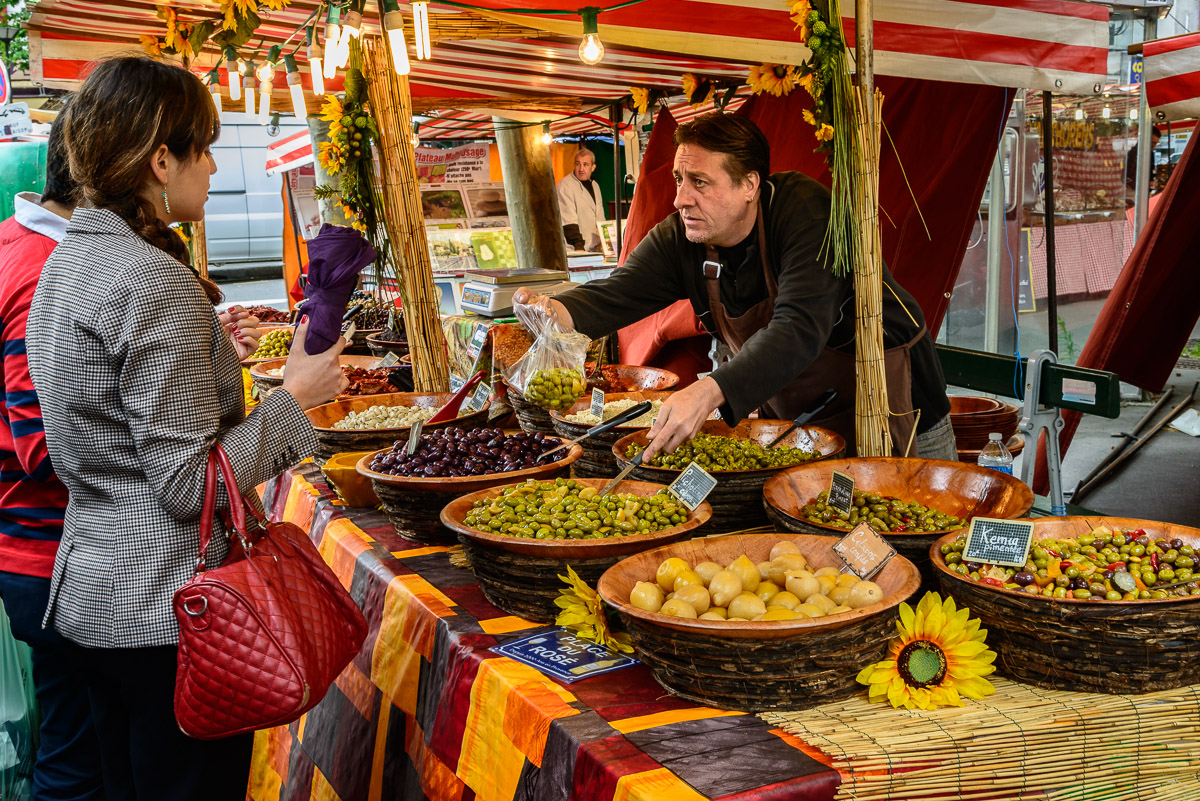
    Street photography, wildlife photography, even portrait photography have the characteristics of having a “decisive moment”, as the great Cartier-Bresson said.

    He also said: “Photography is not like painting. There is a creative fraction of a second when you are taking a picture. Your eye must see a composition or an expression that life itself offers you, and you must know with intuition when to click the camera. ” He also said “once missed, the opportunity is gone forever“.

    In my opinion, street photography is perhaps the highest form of this art. It is done in the chaos of busy, uncontrolled scenes. The photographer does not influence or position the subject or typically even ask for their cooperation. He has little control over lighting or crowds passing by. All the many decisions of recognition of an interesting scene, composition, exposure, framing, and the trigger of the decisive moment must take place in the artist’s mind in an instant. One second is a luxury in this field.

    And when the moment passes, it is gone forever. Forget it and go on the the next opportunity.

    Preparation

    The artist can do some important things to prepare for street photography. One of the simplest is to become so familiar with your equipment that it is an extension of your mind. Adjustments must be instantaneous, automatic. If your camera requires traversing through menus to adjust required settings, that will probably not work. You should be able to set up your camera in the dark.

    Another thing to do to learn to be good at this is developing an enhanced ability to observe and be aware. In flying this is called “situational awareness”. It really just means you are constantly attentive and alert. The US Marines would say your “head is on a swivel”. You have to be aware of everything going on around you. The more quickly you can recognize a developing scene, the better chance you have of capturing it.

    Hunting

    This brings me to the hunting analogy. I used to really enjoy bow hunting. Stalking through the woods tracking a quarry really focuses you and heightens your senses. I was successful in never actually shooting an animal. Eventually I realized I enjoyed the process of hunting much more than I wanted to kill something and I would be much happier hunting with my camera than with a bow or a rifle.

    Cartier-Bresson also said, in an uncharacteristically Zen-like statement, “In whatever one does, there must be a relationship between eye and heart. One must come to one’s subject in a pure spirit.” I choose to interpret is as meaning that when you go out seeking images, you must focus your whole mind and attention on what you are seeing. You must have all your skill and concentration turned up full. All your spidey senses tingling and ready to pounce.

    It is best to go out empty, as the great Jay Maisel says. He means do not bring preconceived ideas of what you want, because that is all you will see. Instead you must be completely open to what is going on all around you. It may be totally different from what you thought would be happening, but that’s OK. Embrace what is there and make the best images possible.

    In case you hadn’t guessed, I love street photography. It takes me out of my comfort zone. It gives me intense practice in mental focus, fast reaction, decisiveness. I may not be great at it, but I enjoy it and I think it helps improve my other photography.

    This awareness and tension and flow becomes almost a spiritual state. Hours can pass without you being conscious of the time. Like with any state of flow, it can be euphoric We are called by instinct and intuition to be intensely aware of those peak moments that define our subjects.

    The hunt is on!

    Let me know what you think!

  • Prolific Creation

    Prolific Creation

    Two schools of thought involve creating fast and frequently vs. being slow and deliberate. I argue that creating prolifically is the best path.

    Is creativity a limited resource? Do you have to be concerned about using it up? My belief is, no, it is unlimited, but it is not always ready to flow.

    But I have heard about artists who are burnt out, dried up creatively. Doesn’t that argue that creativity is limited? No, an anecdote doesn’t make a proof. I don’t know these people and I can’t and wouldn’t make any judgements about why their creative springs dried up. But I believe that is a personal problem, not the nature of creativity.

    Slow and deliberate

    Some types of art is slow by its nature. Sculpture is an example. Some painting techniques take weeks to produce a work. Some large installations take months or years to create.

    Well, then, these artists have no option except to create on a slow cycle, right? I suspect they do not wait long periods of time. Most artists are sketching and experimenting with ideas all the time. They may spend 6 months working on a sculpture, but many other ideas are bubbling with them at the same time.

    My friend Kevin Caron, is an excellent sculptor based in Phoenix. He is a multi-talented 3 dimensional artist. Some of his large sculptures take months to complete. But at the same time he makes jewelry and 3D printed works. I believe these smaller items serve at least 2 purposes: provide works of his at a lower price point that more people can afford, and serve as a creative outlet to help fill in the drought between big projects.

    Prolific

    Prolific just means doing a lot. It does not describe the quality or finish of any piece.

    Most artists I know are always working. They are sketching, even doodling. I am a photographer, so most (not all) of my sketching is done with a camera or the computer.

    Sketch with a camera? Yes. If I see something interesting I may take some frames of it, knowing that these will be thrown away because they are not quality. When looking at them later I may decide there really is something there. I will go back and “work” the scene to develop the real image. This often involves sketches from different angles and at different times. When I figure out the personality or gesture I think is interesting then I go for it.

    This is something I have the luxury of doing on my home turf. I can return to a subject at will. It is different when I am traveling. It’s now or never. It is a different creative process to try to sum up a scene and optimize it in a second.

    And sketching with a computer? Sure. I often go into Photoshop and play “what if” games. What if I take this subject and this texture and this color palette? What kind of results can I create? I am sometimes pleased with the results.

    Why be prolific?

    I believe creativity is a combination of the skill to do the work combined with some unidentifiable, unmeasurable thing we usually call the “muse”. This, supposedly, is the spirit of creativity that animates us.

    I believe there is a muse. I have no idea what it really is, but I believe creativity ebbs and surges unpredictably. If the muse is gone, you can barely do anything creatively. If the muse is with you it seem. like creative ideas are bubbling all the time.

    But I don’t believe we are helpless slaves of this spirit. Creativity is also something we develop as a skill. The more we practice it the more easily we can do it.

    Creativity favors the prepared mind. – Roy Rowan

    The harder you work, the luckier you get. – Anon

    You weren’t any good at driving a car until you put in hundreds of hours behind the wheel. You were not a star at any sport you ever played until you had practiced for hundreds of hours. You couldn’t even write until you had practiced it a lot. And as for people learning to play the violin – well that’s a special subject.

    A limited resource?

    Is creativity a zero sum game? Once we use it up is it all gone? No, I think that’s the wrong way to look at it.

    Creativity is like love: the more you give away the more you have. Don’t worry about running out. Your creativity may wax and wane, but you can’t use it up. I believe the more you use it the easier it flows.

    Conclusion

    If you want to be creative then practice. If you are a painter, go crazy sketching. Most will be junk. That’s not a problem. Try every way you can think of to put paint on a canvas. You will get more skilled with time. If you are a photographer, always have your camera and give yourself permission to use it. Take a lot of pictures. They don’t cost much to throw away. Make the camera an extension of your eye. Learn to use it without thinking. Make sure you can always get the result you wanted.

    Be a prolific creator. Do it more and more. Put in the reps. Practice, practice, practice. Then, when the muse shows up, she will find you prepared. It will make her happy and she will lead you to great things.

  • Down Time

    Down Time

    I’m just coming off a week of being too sick to work. The enforced down time seemed strange to me, since I’m never sick or not working. It was an interesting time to reflect.

    Not going into my studio for an entire week. That’s unheard of. Stuck at home, your mind goes to weird places.

    But did I get anything useful to share with you or am I just ranting?

    Filling the time

    There was, of course, the requisite TV binging. Well, watching the screen, large and small. [Opinions expressed are my own. Void where prohibited by law.] There is nothing useful to watch on TV or cable. There might be a few decent shows, but they are so broken up by commercials that it’s pure frustration.

    Netflix, Amazon, and iMovies have a lot of good shows and series. That was mainly where I got my movie fix. It was a good chance to catch up on movies I had been wanting to see, especially those my wife didn’t want to watch.

    Where’s the beef?

    I enjoyed the movies and am still watching them, but that became very unsatisfying. There was no substance. My mind craved something better for it. It was like going to the buffet and gorging on dessert. I needed meat, vegetables, salad, too.

    One excellent source of nourishment was Creative Live. It has a very good selection of quality instruction and inspiration for creatives and makers. I watched several courses, including some I had already seen before. Being able to watch in uninterrupted blocks is better than a few minutes at a time whenever you can grab it.

    Another focus in the time was a Selective Color workshop by Alain Briot that I’m trying to work through. It’s pretty dense material, but I’m determined to dig more into luminosity masking and color enhancement. I’m getting the luminosity masking pretty well, but the color enhancement is far behind. For one thing, the realist in me sometimes digs in and blocks me experimenting with extreme transforms.

    Old school

    The whole world isn’t video. I went back to browse some of my old books (remember them?) on various aspects of photography and art. Especially helpful were books by the distinguished Michael Freeman. He has a fantastic talent for communicating in writing. Being able to grasp a complex subject and make it understandable to other people is a real art.

    I even dug into a history book I am reading. For some reason this year I got curious about Pearl Harbor and picked the excellent book by Gordon Prange, “At Dawn We Slept“. Wow, there is so much here. Mr. Prange was a very diligent historian. You find out what the relevant players on both sides were thinking and doing almost minute by minute. This is going to take some time but I’m definitely going to finish it.

    Learnings

    Sorry, no blinding revelations from the mountain. I didn’t change my life much.

    I did, though, conclude it is healthy to have some down time occasionally. If you spend your days nose-down working on projects, marketing, whatever busy work we have to do, it is good to pull out occasionally to rest and regroup. Sometimes we have to disengage from the demands of the urgent and let your mind rest.

    How you do it is probably very personal. Having private time to think and meditate works for me. For some getting together with friends is what they need. That’s a great idea too, but being sick for the week prevented that. Or schedule yourself into a retreat or a spa. We all have our notion of how to recharge.

    So I’m going to start scheduling down time (without the sickness).

    Try it! Let me know what you think!

  • Get Your Head Out

    Get Your Head Out

    Shame on you. That’s not what I meant. I am suggesting that you need to get your head out of the day-to-day FOMO rat trap most of us are caught up in and reconnect with the amazing world around us.

    How much time have you spent on social media this week? How many times did you check your phone in the last 24. hours? Is Facebook where your face is more than with the people around you? Did you successfully keep up with today’s trending happenings? Did Fear of Missing Out (FOMO) keep you glued to your screens because you’re, well, afraid of missing out? How many hours of TV did you watch yesterday?

    Missing what's going on
    Isn’t that … Oooh, look at this!

    If you identified with this assessment, congratulations! You are exactly what the American tech giants have trained you to be. Or remember that great line in Men In Black “Gentlemen, congratulations. You’re everything we’ve come to expect from years of government training.

    Yes, I’m being harsh for emphasis. But this heads-down, isolated, tech-centric phenomena is recent. It has mostly happened in about the last 10 years. We have allowed ourselves to be deluded. Social media should not be the center of our world. Several other things are much more important. I won’t go into my list, because they represent my values and I am not attempting to sell you on mine. There is, though, one I want to discuss here.

    Reconnect

    I believe it is more important now than it ever has been to reconnect with the world around us. When did you last take actual time to look at things around you? Have you turned off the radio on your commute and looked out the window? Have you turned off your music and listened to things? When did you last stop to be amazed by a sunset?

    Well who am I and what do I have to say about this? I’m nobody important. But I have started doing just what I am recommending. And I am an artist. As an artist, I am in a position to observe the world with a different eye, a different point of view. At this time, my point of view is strongly driven by the theme of reconnecting. I hope to help people along this path.

    Addiction?

    How do you reconnect with the beautiful world around you? It’s not easy. Just like it is not easy to quit smoking or drinking if you are addicted to those things. Yes, I believe social media and entertainment has become an addiction for many of us. First step is realizing your state. You might actually have to look at yourself in the mirror in the morning and say “Hi. I’m _____, and I’m a Facebook addict”.

    If you say that to yourself it will help you start to see the situation in a different light. You might look at yourself and realize you just spent another 2 hours on Facebook (or whatever). Now the kids have gone to bed and you didn’t spend time with them or even interact with them much. Lost opportunity, again. But for what? What about that social media was more important than your family?

    I recommend a little book by Svend Brinkmann, “The Joy of Missing Out“. Or a similarly named book “The Joy of Missing Out: Live More by Doing Less“, by Tanya Dalton. (I do not receive any compensation from these). They have the time to express it in much more depth.

    What can I offer?

    But I’m just an artist. What can I offer you? I can offer images of the amazing world around us. Not vacation shots or selfies at the beach. Rather, thoughtful views of life going on all around us that you do not see unless you slow down and look. Things that help us to remember who we are and where we live.

    This kind of art is not just about pretty pictures, although the things we want to reconnect with will typically be pretty. It is something that gives us a shiver. Art like this can cause us to think and remember. It makes us stop and quietly say “wow”. It reminds us of what brings us peace and rest.

    Note, I’m not a happiness guru. I am not selling a formula for being happy. I am trying to help you reconnect with the world.

    If you surround yourself with images like this it will remind you, every day, what is out there. It will remind you to look and listen, to reconnect with the world.

    Check out my images at photos.schlotzcreate.com. Perhaps some of them will resonate with you.