An artists journey

Category: Creative Ideas

Ideas about creativity and the creative process.

  • Nature vs. Nurture

    Nature vs. Nurture

    It’s a long-standing debate and it has been studied for a long time. Can we do the things we do because it is our natural ability (nature) or is it things we have learned (nurture)? The nature vs. nurture question comes up with anyone who sets out to call himself an artist.

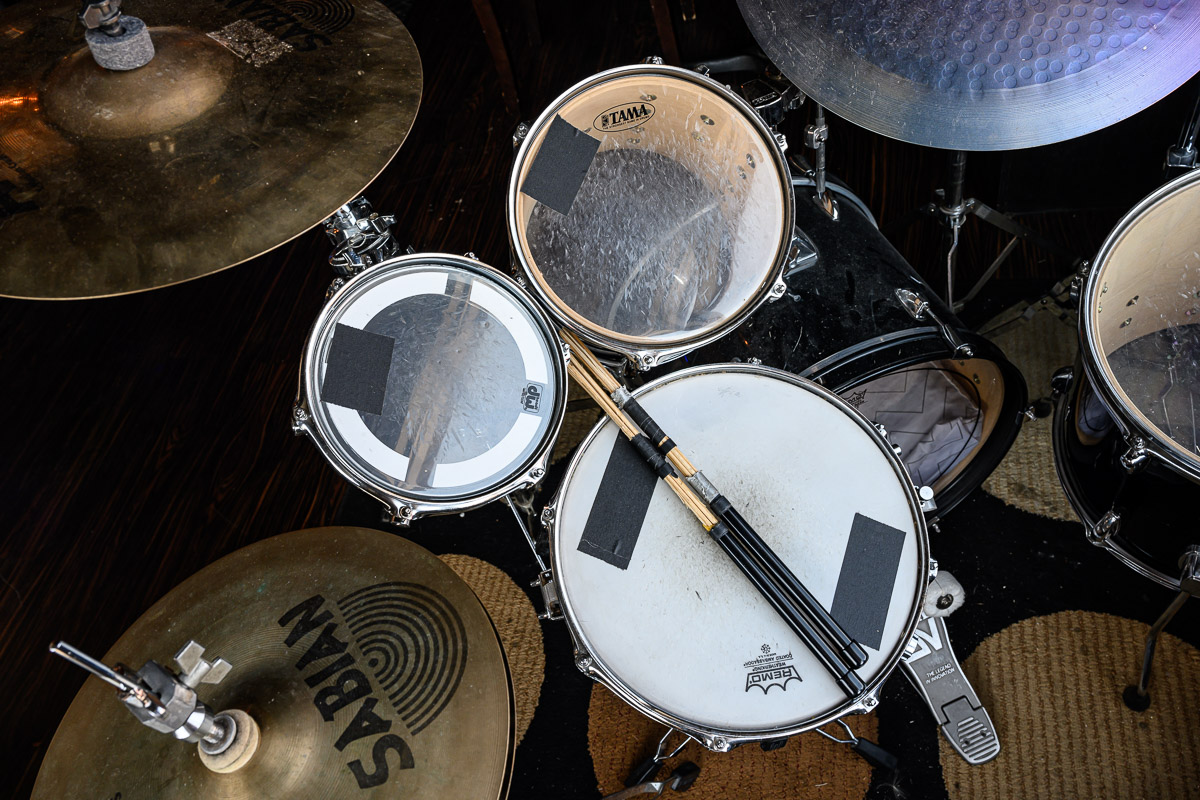
    Would you expect to sit down at drums, like in this image, pick up the sticks, and be a master immediately? Of course not. If you take lessons and practice for a long time will you become a famous drummer? Probably not. You may be a good one, but not necessarily great.

    So what should natural ability do for us? I think it makes it easier for some people to learn to do some things. We say they “take to” things naturally. Whether it is playing tennis, or doing math, or playing the drums, there is no doubt that it is less of a struggle for some. Note, though, that it is “less” of a struggle. It’s still a struggle. I’ve never met anyone with natural talent who did not have to also work very hard to excel.

    On the nurture side, should we expect that anyone can master anything if they are determined enough? Yes, but. Sorry to break it to you, but you probably can’t become a world class ballerina just because you practice enough. Most people can learn to be good at almost anything if they apply themselves diligently. Some things take certain inherent physical characteristics that cannot be learned. E.g., don’t expect to be the next Michael Jackson unless you are about 7 feet tall.

    If I decide I want to play tennis well, I can take lessons and practice hard. I might get to the point where I can beat most of the people in my area, but I won’t be competing at Wimbledon. There is a huge gap between good and great.

    10,000 Hours

    It is often quoted that it takes at least 10,000 hours of practice to master something. That may be correct, but what does it mean? That study is documenting that it takes those 10,000 hours of great practice to get to the level of a Tiger Woods in golf or a Yo-Yo Ma on the cello.

    The number gets thrown around a lot to prove how hard it is to learn things, but it is not as daunting as that. Most of us rightly get discouraged at he prospect of taking 10,000 hours to get good at something, so we don’t do it. Remember, though, that this is the investment to get to be the best in the world. Other studies, and common sense. show that it takes a much lower level of investment to get to proficiency or a level of expertise. Common numbers I hear are 20 to 40 hours.

    Try it yourself. Pick out something you think you are interested in but know nothing about. Take knife throwing as a weird example. Get a simple throwing knife at your local sporting goods store, watch some You-tube videos and practice for 40 hours. Good practice where you evaluate your mistakes and learn to correct them. You will probably be the most expert knife thrower in your area.

    Conclusion

    I asked the question of nature vs. nurture in the context of an artist. Do you have to have natural talent or else you should give up? If you have natural talent do you need training?

    What I have observed is that “making it” – whatever that means to you – takes work. Lots of work. If you have a natural talent you may get there with less pain. If it takes pain, you will probably learn more deeply because of it. Either way you have to put in the work. If you want to be an artist, put in the time. Artists don’t have to suffer, but they do have to work long and hard at their craft.

    So, nature or nurture? For me, it’s a don’t care. If you put in the time and keep developing yourself you will not need to ask the question. Some luck doesn’t hurt, too.
  • Point of View

    Point of View

    Is all art really about point of view? I think that is a big part of it.

    I am a digital artist. A camera is the original capture device for most of my images. I will talk abut this because it is probably one of the harshest examples of my point.

    Digital images. A commodity. Billions of them are made each day. What would make anything I do stand out from the crowd? Why should anyone look at, much less buy, mine?

    If I walk to the viewpoint for the lower falls in Yellowstone, wait my turn, place my tripod in the holes thousands of others have worn, and snap the picture, what do I have? If I have done my technical job correctly, I have another pretty picture of the falls. They are beautiful and it is hard to take a bad picture of them. Millions of people do every year.

    What is Lacking

    What’s lacking is a unique point of view. I just shot the same picture millions or other people shot. I have not added anything to it. I have not given you anything different.

    How do I make my image special? I need to bring a new point of view. I need to see it different, or in very special light or weather conditions. I need to do some work to get to a location hardly anyone goes to. Or I need to treat it as raw material and modify the bits. Maybe combine with others or blur it or change the colors, ending up with a more abstract image.

    Almost anything can be done with the scene or the image to make it into something unique.

    Different for Difference’s Sake?

    If being the same as everyone else is bad, then I should be arbitrarily different, right? I have to do what works for me. I have to be proud of the resulting image and I have to want for you to see it. I have to hope you will want to hang it on your wall.

    So I can’t just do arbitrary mechanical enhancements. It’s not good enough to just make it different. Different to be different is not art. I have to express my point of view.

    My POV

    Where does my point of view come from? It sounds trite to just say it comes from me, but it does. I have to bring something new to you through this common image. I have to use my imagination and creativity to expand on the ordinary. Even if it is no more than making it more vivid and real looking than you normally see. Or to re-imagine the scene and craft a new reality in my computer.

    If I am an artist, I have to bring you something worthwhile. All I have is what is in me. When I get it out, I am expressing my point of view. In reality I think that is all any artist can do.

  • Looking vs. Seeing

    Looking vs. Seeing

    We all look at things every day. Do we really see them? What’s the difference?

    When we’re driving, for example, we look at everything around us. (I hope! Put that phone down!) What we mostly see are threats, dangers, problems to work around. Is that car going to run the red light? Does that driver seem distracted, so I should move away from them? Is that pedestrian going to walk in front of me? That construction is blocking the lane I want to be in so I have to make a different plan.

    We look at things like this all the time, but we don’t really see them. That’s not inappropriate for a situation like driving. After all, when the guy swerves into your lane and nearly hits you, you don’t really care what he is wearing or what color his eyes are. Looking is sufficient to take in the essential information to let us get by. Doing it is efficient. It prevents us from having to waste time and energy examining things that probably are not directly important to us.

    Unfortunately, most of us go through life in this state. Things are happening all around us but we only see the minimum necessary. We get in the habit of not noticing. It simplifies our life and reduces the clutter of things we have to examine and consider. Simple is not always better. It can lead to a minimal existence. We are aware of enough to stay out of trouble but we don’t always appreciate the beauty, irony, joy, pathos that is swirling all around us.

    But what about those of us who consider ourselves artists? We don’t want to just get by. We don’t want the minimum connection to the world around us. Artists and creatives should see more. One of our jobs is to wake up people to what they are missing in the world around them. That decision comes with costs. Actually seeing is much harder. It takes a lot more effort.

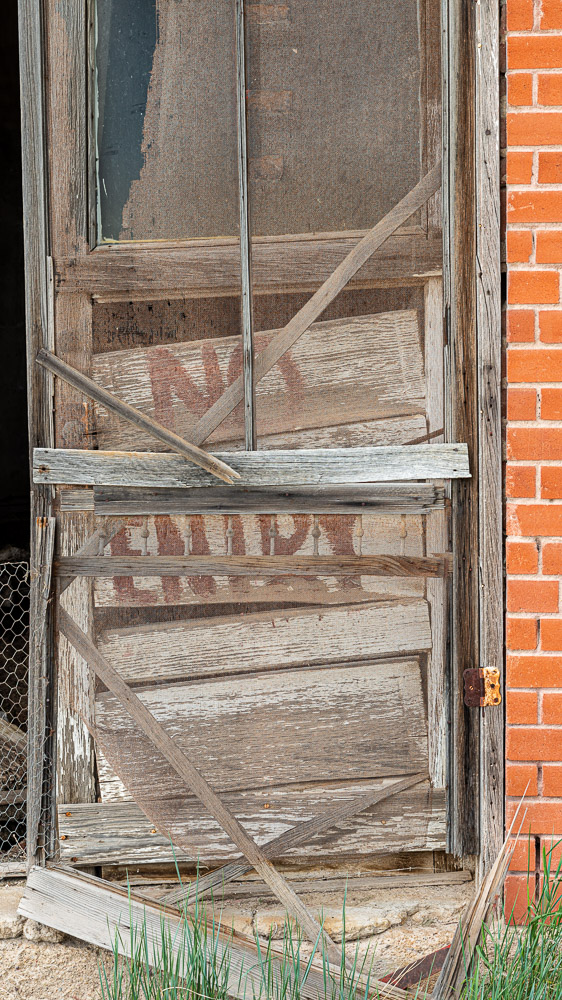
    What do I mean by that? Say I am walking down the street. I walk by a door. On the looking level it is easily dismissed as “door is closed, nothing to watch out for there”. But what about what the door actually is? It’s texture and color. Is it tagged with interesting grafitti? Is it weathered and rough or smooth and modern? Where does it lead? When is the last time I say someone go in or out it? Does a door like this say anything about our environment, or about people’s relations to each other, or about the people who built it and their history?

    Going through like this way takes much more awareness, more intention, more thought. And it is distracting. Sometimes we get lost in something we have seen and end up late to an appointment, maybe even miss lunch. It fills our minds and crowds out Facebook or the TV shows we watched last night. It focuses us on something we did not expect when we left the house.

    All in all, I think seeing is a better existence than just looking. It is more rewarding, if for no other reason that that we are more in tune with our environment; with the world around us. It encourages us to take in more, to examine things more deeply. I try to practice seeing every day. When I don’t, I feel like I have drifted through the day in a daze.

  • I Don’t See Anything Interesting Here

    I Don’t See Anything Interesting Here

    I had just parked at a trail by a river near my house. It was a crisp late fall day. As I was getting my equipment out of the car a woman passed me coming back from the trail. She asked if I was going to take pictures. (Seemed obvious to me, but people are funny) She then gave the pronouncement “I don’t see anything interesting here.” I was stunned and probably said something non-committal like “I’ll take a look anyway”.

    That has stuck with me. I’m still trying to figure it out. Sometimes it seems deep; sometimes it seems just silly. But it intrigues me.

    I must confess that I have the same problem at times. Sometimes I set out with the idea that I am looking for a certain “thing”. I don’t advocate that and I have written against it, but I fall into the trap sometimes. Our marvelous, adaptive brains do amazing things to “help” us achieve our goals.

    A funny thing happens when you go looking for something. It seems that that’s all you find. It is just human nature and it can hardly be avoided. If you go out looking to take a picture of a monkey then all you will see are monkeys or non-monkeys. Your focus and perception are tuned to reject anything that is not a monkey. You are often throwing away wonderful scenes because of your mental blinders.

    But to take it a step deeper, it raises some interesting questions that I have to ask myself. Things like, is everything interesting? What does it take to be worthwhile to take a picture? How much of a picture’s interest is based on our perception at the instant? Is it a failed outing if I don’t get a good picture? Who says if an image is interesting?

    It is my position that many things are interesting in the right conditions. I believe this to be generally true. I don’t agree with some post-modernists who seek out intentionally bland and uninteresting subjects, but I believe many things can be interesting. But on this day, in this light, in this weather it may not be interesting. So don’t force it.

    What makes it worthwhile to press the shutter? When I’m in doubt I usually ask myself “is this actually an interesting picture? Will I actually use this?”. If I can answer that it is or might be, I press the shutter. I also need to follow up and ask if this is the best time, location, atmosphere, lighting, etc.

    Ah, but how much of the interest is based on our perception at the time? A lot of it, I think. I trust my perception, my instinct, when it is calling to me. But I tend to err on the side of taking too many images. Sometimes when I’m editing later I ask myself “what I was thinking?” as I delete blocks of images. But sometimes there is a rewarding payoff. Those happy times when I discover my intuition was really on to something and I have a gem there. Of course, since I only had a vague idea of the worth at the time I might only have a sketch that I need to go back and work in more detail. But still, my subconscious is sometimes more perceptive than my conscious mind. Some say perception is reality. I don’t know, but perception certainly guides our view of reality.

    And one of the painful questions, is it a failed outing if I don’t come back with a good picture? I have come to the conclusion that there are seldom failed shooting outings. They are all useful, if only for practice. Being out, with your senses sharp and searching, getting to take pictures – how can this be bad? You don’t hit a home run every time at bat.

    Then there is the existential question of who gets to say if it is interesting? My answer is, the audience I am trying to please. In my case, that is me. Of course, I hope some other people will like it, even occasionally buy it. I will be the judge, though, of worth or success of an image. I may be wrong and I may change my mind over time, but it’s my call.

    So how about that day. After she “challenged” me about no interesting pictures I was determined to prove her wrong. That is the wrong attitude. I regret it. Following my normal process would have helped. I allowed her to throw me off. So I don’t like much of what I got that day. But it wasn’t a total waste. I hope you like the image at the top of this article.

  • The Raw Edges

    The Raw Edges

    Art is created by people on the raw edges of human experience. But that does not mean suffering. A heightened state of awareness can just as easily be a state of joy.

    I was intrigued by this quote from Ryan Frawley (I couldn’t find the reference):

    Art is born at the raw edges of human experience, and joy or love or awe will get you to those edges as surely as unhappiness will. An artist is one who responds to the unknowable mystery of existence with fascination, not despair. 

    We all know the stereotype that the miserable, doubt plagued, suffering artists are the truly creative ones. That is not my experience so far in my journey as an artist. I certainly hope it is not correct. That’s not the kind of life I want to live. Who would?

    The really good artists I have met are passionate and joyful. There are a lot of passionate people in the world and some joyful ones. Most of them are not artists. So passion by itself is not the key.

    I believe one of the key differences is self awareness. It seems to me that most people drift through their lives in a fog of busyness and activity, trying to anesthetize themselves with entertainment, which our world uses as a proxy for happiness. This puts our focus inside our head. Entertainment may lead to brief happiness, but it is not joy. Real joy is an internal decision. It may be closer to contentment, where you are at peace with yourself regardless of your current state of happiness.

    As Ryan said in the quote above, this joy or love or awe leads to a response in the artist. One of the aspects of this is a heightened awareness of the wonders and possibilities all around. To opening yourself to more of the experience. To seeing with fresh eyes or a new viewpoint. This makes an artist an explorer. Each stimulus can reveal a new path or lead to a new insight. Looking.

    Where we look and what we see can make all the difference. If we choose to look mostly inside ourselves we tend to be isolated, cut off from what is happening around us, unaware. If we maintain a state of joy and awe we can see a bigger and more wonderful world. The heightened awareness makes us see more, feel more, perceive more. That is where a lot of art comes from. Everybody has a chance to see roughly the same things, but what do we each perceive? Fascination is a wonderful guide to lead us to perception.

    Try it! Try to feel joy and awe. It is not an easy transition. It’s unfair of me to say to “just start feeling awe”. But you can start with small steps. Practice it. One of the keys to these attitudes is that they are internal values and perceptions. They are not dependent on what is happening to you. They are a choice. Look around with more open eyes figuratively. Look outward. Be more aware of your surroundings. That boring scene you go by every day may look fascinating one day, maybe when the light is just right. You might come to a whole new appreciation of it. Then tomorrow notice something else.

    You do not have to wait for the world around you to “get right”. You just change your own attitudes, your perception, and that changes everything. The artists I know seem to have the talent for engaging this heightened self awareness. Maybe that is more important than talent.