An artists journey

Category: Craft

  • Projects Give Focus

    Projects Give Focus

    Sometimes when we feel burnt out or empty and aren’t finding anything exciting to shoot, setting ourselves a project to do can help to focus our creative energy and invigorate us. For some of us, the projects become the core of our work.

    Focus

    I tend to be an omnivore photographically. I look for interesting scenes, almost regardless of what the subject is. So, in other words, I shoot everything. Sometimes that leads to my attention being stretched too thin.

    Temporarily selecting a particular subject for a project focuses my attention and energy down to a narrow point. Rather than finding any interesting subject I spend some time tuned up to only a certain subject.

    I find that this period of focus can be refreshing. I would not want to permanently exclude a broader viewpoint. That would become boring and it is not my style. But doing it for a short time is a good creative exercise.

    Creative channel

    Creativity is an ephemeral thing. It seems to come and go. Once we have developed it, I don’t really believe it ever goes away, but I do see it get stronger and weaker at times. When we cannot feel the pull of our creativity, it is scary. We doubt ourselves. We fear that we are a fraud.

    At these times taking on a project can often be a great refresher for me. Picking out something that interests us and is very narrow and specific presents a new challenge. Just the slight seeming reframing from “go be creative” to “find a creative approach to this subject” creates a very different exercise.

    I’m fairly competitive and like solving problems. A project is a challenge and a problem solving opportunity.

    For a short time I get to narrow my focus down to just the project subject. It fills my thoughts. My creativity has a clear goal. It becomes a problem to solve.

    I find that good things come out of this.

    Body of work

    A lot is said about having a well curated body of work. Projects can add greatly to this. When done, the project may only be 10-20 carefully selected images. But hopefully, they have a theme, a consistent style, and they tell a story. This helps build your body of work.

    Several projects in your portfolio are like boulders in a stream. They stand out as the rest of the collection flows around them. They are solid cores that the rest build on.

    Ansel Adams famously said “Twelve significant photographs in any one year is a good crop.” I would say that, in the digital world, we shoot a lot more and probably our standards have relaxed from Ansel’s. Still, shooting projects increases our probability of good images. We have most of our creativity focused on a certain theme for a period of time. That has to help. These great images build our portfolio.

    Doing good?

    The process of selecting a project is subjective. Some people feel they can and should contribute to a cause. Whether that is wilderness preservation or global warming or human trafficking or any other large important cause, that can be great. You can feel like you are making a difference in the world. And maybe you are. I would not discourage you. Wanting to do good is a great human trait.

    But a project does not have to be grand in scale or in impact. It only has to be focused in scope and interesting to you. Remember, first, the project is for your benefit. It can be as small or large, as local or global as you want. The purpose of the projects I am talking about is to energize you. To get you through a creative slump.

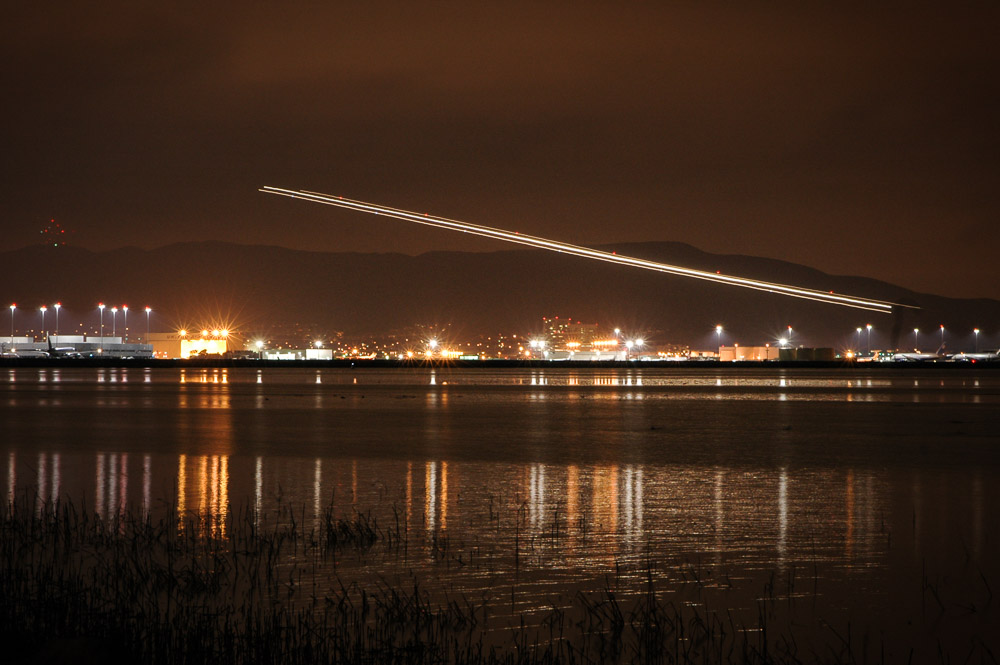
    For instance, I am doing a project on speeding trains. Sounds dumb. Maybe it is. But I see something in these that inspires me to work it. I like what I am seeing so far. As a matter of fact, I dropped this blog for a few minutes to go out and capture one going by. I hope you don’t mind the interruption. πŸ™‚

    Only projects?

    If projects are so good, why not only do that? A valid question. Some artists only do projects, like Brooke Shaden or Jennifer Thoreson. It works for them. It is aligned with their creativity and the way they see the world.

    A project-only world doesn’t work for me. As I said before, my interests are wide ranging. I like to go out empty and be inspired by what I find. That is just me. I find that contrasting this with occasional projects gives me a good balance and it keeps me sharp and energized.

    I will certainly not try to tell you you have to do it like me. Your mileage may vary.

    Remember, we are discussing art, not brick laying. Art is a purely creative process. There is no one way or objective right or wrong. If anyone tells you it has to be done a certain way, run. Fast. Don’t look back.

    Try assigning yourself projects occasionally. They do not have to be big or long or hugely involved. Pick something of interest that you would seldom work on. This gives yourself permission to spend time on it. Let your creativity focus on the project and see what you come up with. Hang your 10 best images from the project on your wall and consider them. It might become a habit.

  • To Be

    To Be

    No, I’m not addressing the existential “or not to be” question. I was triggered by reading questions from photographers about planning photo trips. There were lots of concerns about locations and what lenses to take and time of day or even time of year, but it seems to me they are missing a fundamental point. You are an artist. You are going out to be, to create, to be inspired. Collecting a stack of the same standard pictures everyone else takes is not the goal.

    Being the same

    I have written on this before. I hope you believe your task as an artist is to create new work, your own work, not imitate what has already been done. Yes, Yosemite is full of iconic locations. If I was there I’m sure I would shoot at some of them. The difference is these shots would be just for me, to remember being there. I would not be shooting for my portfolio unless I encountered exceptional and unique circumstances at one of these overshot scenes.

    I see a lot of photographers actively planning trips to these locations to intentionally try to duplicate these iconic shots. It makes no sense to me. If that is what you like, have fun. Each of us is motivated by different things. But if you were starting out as a writer would you write a knock-off of Moby Dick just so you could have a copy of it you could say you made? I hope not. Write your own book.

    Maybe you don’t really know who you are as an artist yet. I understand. I’m still trying to figure it out for myself. I decided long ago, though, that imitating other people will not help me create my own work.

    Letting go

    If you are not going to imitate other work then you are put in a potentially scary place: you have to create on your own. But what if I can’t? What if I’m not really creative? Maybe I don’t have anything to say? These are all normal and valid concerns.

    You will never know until you try. And guess what, when you try you will probably fail. How’s that for encouragement?

    I want it to be encouraging, though. When you start doing anything new you are not good at it at first until you try and fail and practice – a lot. As a matter of fact, if it is too easy you are either not challenging yourself enough or you have picked something that will not keep your interest for long. If it is too easy it becomes boring.

    Let go and start doing your own art. Follow your own vision, not someone else’s. Don’t visit all the iconic locations to recreate someone else’s art. Focus on your own ideas.

    Sometimes you will be left high and dry creatively. That’s OK and normal. Push on. Don’t fear that. Use that time to start understanding what interests you. Believe that you have a creative voice. Keep digging and you will find it.

    Put yourself in a different place

    One strategy I like to use is to intentionally ignore the popular, iconic locations. I like to seek out little known things that most people have never seen. I love the challenge of finding something in nothing.

    I’m lucky in that from my house I can be in the Colorado mountains in 30 minutes or far out on the eastern plains in less than an hour. I go to these places a lot and enjoy them immensely.

    But I also wrote recently about driving through the heartland and finding interesting things to photograph. That takes a special discipline and mindset. It is fun for me after long practice. I have come to firmly believe there are interesting scenes almost anywhere.

    This brings up a special point. There are interesting scenes all around. You don’t have to go to mountains or national parks or famous locations to do your art. You don’t have to take off for 2 weeks to travel to exotic locations. Beauty and interest is everywhere. Most of it is ignored by everyone around you. Learning to see what is there is a skill that can be learned.

    React, create

    Learn to be open to what is there around you. Accept it and embrace it as creative possibility. What can you do with it? Just “be”.

    You have seen people who thinks selfies or family shots mean lining everyone up in front of a location and giving big fake smiles for the camera. I’m not criticizing them because that makes them happy. I want to encourage you not to try to manage your shots like that. Accept what is there and work with it. Use your creativity to isolate it, to make it interesting for other people, to point out this interesting thing they probably didn’t see.

    A photographer friend wrote this in a private newsletter:

    “To just be. That is what it is all about. When I find a high place with views all around, every sense just soaks it up into my pores. It is subtle; the opposite of the raucous and titillating world in which we normally live. … These sounds mean vast open spaces and pure freedom. I can peer into this space, keeping my gaze wide. At first I see the far-off trees and rocks and snowfields. Each thing has meaning. …

    But after a while my gaze becomes soft, and I focus on the air between myself and the distant ridges. Everything becomes a soft palette of shape and color, devoid of meaning or expectation. The world just is. My experience of sound, sight, and senses just are. If I look for myself I fail. I literally can’t see β€œme” without a mirror – not my face or head, the features we most often associate with identity. It’s times like these that I can look for myself and just see the beautiful world. It is in this place where I can be exactly what I was designed to be. Just me. And for a brief moment, I am a bird sweeping into the storm.”

    When we can learn to experience places or events in this manner we can just be and flow with them and into them. Even if it happened on a walk in our neighborhood. The experience becomes part of us and we reflect it back out in our work. What we produce is something from deep within. It is honest. It may even surprise us.

  • What Excites You?

    What Excites You?

    I believe artists are passionate people. We do our best work when we are excited about it. Have you considered what excites you? Do you seek the excitement?

    Do you get excited when you are shooting?

    I try to have that level of excitement. Of course, we are just human and it will not be there in full strength all the time. Like everything in life it ebbs and flows with our mood or circumstances.

    I find that I have different grades of excitement about the things I shoot. It can range from “I really should shoot this; it is kind of interesting; I might can make a decent image out of it” to “Wow! I’m so excited right now I can hardly be still enough to expose a frame properly”.

    I don’t consider anywhere along that continuum to be “wrong”. But the high excitement side is definitely more fun and easier to get, well, excited about.

    Not all scenes are great

    What makes the difference in the excitement level? One is probably the inherent quality of the scene or subject. When I say inherent quality this is a subjective measure, as is almost everything in art. It can only be evaluated by you for you. I think it is a function of the scene itself and how it interacts with our values and our mood. Sometimes we just don’t feel it, even though the artist right next to you thinks it is spectacular.

    It may not be what you wanted or hoped for, but it is what it is. Work with it.

    Another difference is our perception of the scene. The reality is that most of us are not surrounded by world-class, once-in-a-lifetime opportunities everyday. Most of what we see is rather average. An average scene offers the opportunity to exercise our creativity by making it interesting. We have to work hard to make something of it. This is valuable exercise. It is not a bad thing.

    As a matter of fact I will assert that the rare, unique, wonderful scene may not be that much of a creative opportunity. If the scene is amazing in itself, we may only have to record it. Yes, it lets us use the technical and compositional skills we have spent a long time developing to capture it well, but we actually don’t have to do much. Just don’t screw it up. It can be exciting to know we captured a rare and great moment, but it may leave us a little unsatisfied because we did not contribute much to it.

    Dealing with the average

    Mostly we encounter more mundane, average, day-to-day scenes. How can we build or keep our excitement going when surrounded by ordinary?

    I have stated before that I like to go out empty and let myself be drawn to subjects. Still, just in wandering around randomly I mostly encounter pretty average things. If I think there is something there, the exercise is to be able to make it above average. Can I see it differently? Is there a better angle or lens choice that would bring it out to advantage? Does it need to be simplified? Or juxtaposed with another element to make a different statement? Does it need different light or even a different season?

    My friend Cole Thompson says “I believe the real test of creating isn’t cherry-picking great images from great locations, but rather to see the extraordinary in the ordinary. To be able to find something remarkable in my everyday surroundings.” Very wise.

    When I am able to take an ordinary subject that I am drawn to and make it into something special it builds excitement in me. It gets my energy flowing. I become more conscious of other things around me and more empowered to go after them. It is a reinforcing cycle. It helps me see other things as well.

    Ideas to being back excitement

    Working with the ordinary is one process that is very important to get me excited. Each of us is different. We have different values and expectations and points of view. So there is no simple list of “hacks” that will work for everyone. But let me give some suggestions to try:

    • Set yourself projects to work on. The thought process of concentrating on a fixed subject causes us to focus and think different. It can be energizing.
    • Travel. A change of scenery can help to change our perspective.
    • Shoot with someone. The interactions and discussions can be stimulating and refreshing.
    • Take on a new style or technique. It doesn’t have to be a permanent change, just something to shake up the norm.
    • Make it look strange or absurd. It helps you see it fresh. This is the Russian Formalism technique called “ostranenie”. It is interesting. More on this another time.
    • Go to a museum. Not just a photography museum. Studying works by masters can never hurt.
    • Look at other work. Read blogs and other artist’s web sites. Get books of art. Get more familiar with the way other artists see the world. Do not copy them, but feel free to steal. πŸ™‚
    • Find what gives you joy. A sense of joy is an important driver for excitement. Know what works for you.
    • Get out and do it. Really. Just making yourself do it can lift you from a funk and get you going.

    Shoot for yourself

    One of the most powerful motivators is reserved for a select few.

    Do you consider yourself a “fine artist”? One of the definitions of that is that we create work for ourselves. If you are in the enviable position of creating art to please yourself, take maximum advantage of it. Follow your instincts. Don’t worry about what you see other artists doing.

    When you get excited about a subject or a location or a technique follow your feelings. Work it to see what develops. It may be something entirely new that you become extremely excited about and that changes you. Or it may end up not being interesting to you and abandoned. Either way, you followed your artistic instinct. This builds excitement.

    You don’t get a hit every time your swing, but it is important to keep swinging.

    Is it work?

    What is the difference between work and art? Maybe nothing. Please don’t read this blog as saying we should sit around waiting for the muse to visit us. Or to think you shouldn’t go out today because you just don’t feel any excitement.

    Most of the things I describe or suggest are active. Based on taking positive steps toward creating something. We have to work at it. Action leads to feeling.

    So whatever inspires you and creates excitement for you, don’t just think about it. Get out of the chair or up from the couch and go do something about it.

    Finally, here are some quotes to reinforce that concept:

    Motivation exists, but it has to find you working. – Pablo Picasso

    Hard work will outperform talent any day of the week. – Joel Grimes

    Inspiration is for amateurs. Us professionals just go to work in the morning. – Chuck Close

    Catch on fire with enthusiasm and people will come for miles to watch you burn. – John Wesley

  • Heartland – Spring, Redux

    Heartland – Spring, Redux

    Three weeks ago I wrote an article about reasons I don’t like spring. I thought I should update it and discuss my progression of getting comfortable with spring artistically. It happened via a driving trip through some of the heartland of America.

    Heartland

    You know, the flyover country. The middle section of the US that most of you have not been through, or at least, haven’t paid attention to. Most people try to avoid this area. There are long distances to drive and seemingly little to see. Unless you learn to appreciate what is there.

    I just got back from driving over 2000 miles without getting on a freeway at all. That was by choice. I love back roads and little towns. I believe driving on a freeway is a type of narcotic. Your senses blur and you get tunnel vision just looking at the road ahead. You become desensitized to the view or the geography or great scenes. And if you have expended effort to pass some slow trucks or campers you certainly can’t entertain the notion of stopping to take a picture. They would get ahead of you again.

    So I was making my way through eastern Colorado and Nebraska and Kansas and Ohlahoma. Like I said, most people would pay to fly to avoid these areas. Not me. I would pay more to drive it. A lot of it, not all of it, is very good country.

    This is true rural America. Not in a fake dude ranch type of tourist trap, but a land of farmers and ranchers. Hardworking people who earn an honest living and feed most of the rest of us in the process. Generally they are good people.

    Great year for it

    A few weeks ago I wrote a post talking about it being hard for me to get into spring. Coincidentally, this has been one of the prettiest springs in years. Where I live and most of the area I drove through had near record moisture this spring. Everything is exceptionally green. The grass and hay and crops are tall and healthy. The trees are very green and full.

    It became hard for me to not be seduced by the look of this year.

    Going for this long trip forced me to be immersed in it. I was there, I wanted to make good pictures, so I began to loosen up and find interesting subjects and compositions. I gave myself permission to stop whenever I wanted to look at things. Pretty soon I found myself liking more and more. Subjects became more frequent.

    Some of these things required miles of driving down dirt roads, even 2-track lanes. But there were usually rewards of things I have never seen of even imagined were there. Would you guess the image at the top of this blog is from Kansas? Even if you’ve been through Kansas 100 times, I bet you haven’t seen this.

    So now I feel I am fully “into” spring. I see it’s beauty and don’t currently waste my time and creativity longing for fall and winter. I am completely in the moment

    Wide open spaces

    This trip also steeped me in one of my favorite themes, wide open spaces. I saw a lot of them. There is something both compelling and a little frightening to me about a view with only the road and the horizon in the distance. It draws me to it while repelling me a little.

    There are occasional weathered abandoned houses and barns that add to the bleak beauty. I love composing these into scenes that portray the vast distances or bounty of crops.

    In a lot of these areas I just park my car in the middle of the road while I’m taking pictures. And I’m talking about setting up my tripod, composing perhaps several shots, maybe shooting HDR brackets or several long exposures to capture motion of the grass. Only 2 or 3 pickup trucks seem to come by a day, so I almost never inconvenience the locals.

    Jump into summer

    To be honest, this trip almost jumped me over spring into summer too quickly. I talked about the extraordinary moisture that made the vegetation very lush. But in the course of the trip we were hit with an abnormal heat wave that made things seems more like summer.

    In some parts of the trip the temperature was 108F. Add a 30-40 mph dry wind and conditions were not fun. That is good for showing the dynamics of the grass or wheat rippling furiously, but not pleasant to be out in.

    Amazing country

    I have made this journey before. I have family at the destination, so it was not just a random selection. Each time I go I try to take a different route, always avoiding freeways.

    Like almost every time I make it, I come back with a renewed love for this heartland area and the people there. It is a good place. Good country. It makes me feel better about America.

    At one point I stood at the exact geographic center of the contiguous 48 states. The point where a map of the 48 states would balance exactly. I couldn’t help thinking that I hope America can stay balanced. Revisiting the heartland would help.

  • How Many Pictures Do You Shoot?

    How Many Pictures Do You Shoot?

    Think back over the last month or so. How many pictures did you shoot and how often did you go out shooting? This idea jumped out at me listening to an interview with the great Jay Maisel. He uses this as a probe to find out about his students.

    Who cares how many?

    In reality, it should not matter to anybody else, except you, what your photogrpahy habits are. It’s a trick question in the sense that there is no right or wrong answer. At least not quantitatively.

    Jay uses the question as a probe to understand his student’s style and work habits. He would rather hear that you carry your camera all the time and shoot some every day. If you say you go out once a week and shoot some he will likely tell you that you need a lot more practice. If you say you go out once a month he may tell you to go home. That would be a shame because his workshops are expensive and hard to get into.

    I’m hoping to convince you that you, and only you, should care how many shots you take.

    Predictor

    So in Jay Maisel’s experience your shooting habits are a predictor of your ability. Frequent photo practice, in his view, helps you become more experienced, quicker to see a good image, and more practiced in the technical aspects of using your gear. This all combines to make you far more capable of recognizing and capturing the best moments and gestures.

    The repetition and the self evaluation that comes with it also makes us more thoughtful. We learn to see more when we practice seeing. Our ability to open up and be receptive to the stimulus around us increases.

    Repetition

    In one sense the constant repetition of taking a lot of pictures frequently builds the equivalent of muscle memory. It is the same way a good athlete does a lot of practice. Besides their intense training a basketball star may spend hours just shooting baskets. A baseball player may spend hours in the batting cage hitting balls over and over. A soccer star may spend hours just kicking the ball around, kicking goals, taking passes.

    Doing this makes them more used to the feeling of the ball or the bat. The pump or the swing of their muscles. The rhythm of the movement. It builds familiarity with the movements they want to do in a game. The motions become routine and automatic.

    I believe a similar effect happens to us in our image making. There is great benefit in being out a lot. Taking lots of pictures, even if we throw most of them away. We are practicing the motions of using our camera, framing, composing, executing images. It becomes a smooth and automatic reaction. The camera controls become instinctive. Our fingers learn to find and use them in the dark, without having to think.

    In addition, lots of repetitions gives us lots of opportunities for failure and evaluation. When the result we get does not match what we visualize we can ask why. This gives us lots of very personalized feedback to help us improve.

    Then when we are taking “serious” pictures, this helps us work smoothly and confidently. We can concentrate more on our creativity and less on the techniques of using the gear. The camera becomes an unconscious extension of our creativity. We are adept at framing great compositions so it flows easily.

    Obsessive

    This may seem fairly obsessive. Good. I hope so. It is and it should be.

    A great athlete or musician, or artist, should be obsessive about their work. It is not a simple 9 to 5 job you can just step away from. It consumes a lot of your thought and time.

    In looking at examples of athletes or musicians I find that good ones may come to a point where they can say “I’ve achieved good proficiency in what I do and some fame and recognition; I can settle back and enjoy the good life.” But the top ones are driven, obsessed. They practice hours every day even if they are considered to be the best. They know that they can improve and they are driven by some internal guide to only compare themselves to their own results, not other people.

    Your mileage may vary.

    I talk a lot about how Jay Maisel does his work. It is because I believe we can learn a lot from him. He is a fantastic artist, an interesting character., and very open about what he does

    But Jay is Jay; you are you; I am me. We cannot and should not just try to imitate another artist, no matter how much we admire them. We each are different. Each one has different vision and responds to different stimulus and motivation.

    I am not trying to be a (slightly) younger Jay Maisel. Nor am I encouraging you to be that. When you find wisdom, though, it pays to study it. A wise mentor usually has something we can learn and adapt for our own life.

    I was reminded of this again recently viewing a class by Jennifer Thorson. She has an interesting class on conceptual fine art photography on CreativeLive. Her work and working style is completely opposed to my thought processes or interests. I would never do the types of work she does. Nevertheless, I learned things from her that I can adapt. Part of my constant practice is to learn from the best.

    Practice, practice, practice

    One of my key learnings from Jay Maisel is to practice, practice, practice. Have your camera with you all the time, as far as you can. Take lots of shots. Experiment. Try new things all the time. Make a lot of mistakes and learn from them. Get so familiar with your camera that you can do most of the settings automatically.

    I try to get out with my camera 4-6 times a week and shoot something each time, usually regardless of the weather. I find that when I have a camera with me, it gives me permission and encouragement to shoot. Has it made me a great artist? Well, that is an evaluation for someone else to make. Just doing these things will not do that by themselves. If you shoot baskets 10 hours a day it will not make you a Michael Jordon. But it helps.

    Try it for a few weeks. Get out a lot and take lots of pictures. Try to build muscle memory. Let me know if it helps!

    “We are what we repeatedly do. Excellence, then, is not an act, but a habit.” – Aristotle