An artists journey

Category: Craft

  • Is It Interesting, Part 2

    Is It Interesting, Part 2

    In the first part of this I made a point I learned from a book on poetry, that if it isn’t interesting, no one will read it. It doesn’t matter how formally structured or well composed it is. More and more I am coming to believe this is true for most art, too. But how do we get from boring to interesting?

    Familiarity

    It is conventional wisdom that you do your best work in an area you are familiar with. I sort of believe this, but I violate it all the time. Being an explorer nature I get a lot of energy out of photographing in new areas. Things seem fresh and waiting to be discovered. I get really psyched in interesting new places.

    I am getting enough experience to see the other side, too. Yes, having familiar places can help us to make more interesting images. We learn the range of possibilities. We see the variations with seasons and weather and light. Familiar subjects give us an opportunity to pick and choose. To wait for the best conditions without having to feel rushed because this is the only time we will see this location.

    Once we become well acquainted with an area we can develop a more sophisticated view of it. We won’t waste our time on shots that have little hope of being good. This is a progression to shooting more interesting images.

    I do not feel this is an absolute. That is, it is incorrect to take it to the extreme and sat you will only get interesting images of areas you are familiar with. But I do agree that familiarity probably makes it easier.

    Recording

    Most of us have a progression we go through. We start out making record shots of places we visit. Of the billions of photos taken every day most are record shots or selfies. Have you ever gotten stuck being forced to watch 2000 pictures of someone’s trip to Disney World? Just shoot me.

    I call this taking pictures “of” something. We are recording the superficial. We have not formed a refined artistic opinion of the subject. This is still operating at the “oooh, pretty; I will take a picture of it” level.

    If you follow this blog you probably do a much better job than average. Our record shots can be well composed and exposed. They are decent images. But mostly they are there to record an event that will trigger a memory for us. That doesn’t make them very interesting to other people.

    I’m not being critical, really. We all react this way when we see a new thing that captures our interest.

    Interpreting

    After we get over the initial excitement of a great new location, we can start to examine what we are being drawn to. We become more aware of our feelings and perceptions. Now we can peel back some of the superficial and uncover deeper aspects of the subject.

    I call this taking pictures “about” something. It reveals to our viewers a new side of the subject or our emotional reaction to it. We are giving an interpretation of what we see. These images are probably more appealing than simple record shots.

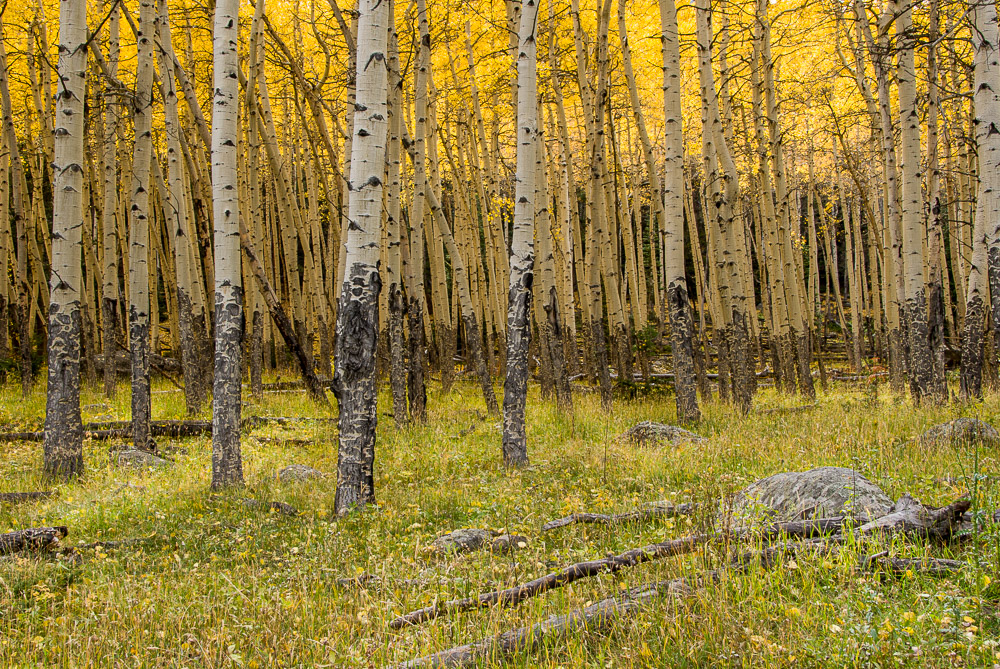
    Being intimately familiar with a location or a subject does make this easier. Take trees as an example. I have aspen trees where I live. If I didn’t know them well, the first time I saw them I would get a “wow, an aspen tree” shot. After having seen thousands of them in all conditions I have a much more focused appreciation of them. There are far fewer situations where I will capture an image, because I look for certain compositions that appeal to me.

    Hopefully I now make images about aspens, not just of them. Because I appreciate them more, I shoot them more selectively.

    Saying something

    At this point, we have figured out what attracts us about the subject. We have refined our emotional attraction to the subject to the point we know what we want to represent to viewers. Now we can bring our creativity in to allow us to synthesize an interesting image based on our vision. This is above and beyond just our emotional reaction.

    To continue the aspen example, it is the difference between “I like aspen trees because” and “here is a fresh and interesting image; it happens to be of an aspen”.

    Unfortunately, I have to give up the description of what makes an interesting image. I don’t have the knowledge or the vocabulary to be able to quantify it. Actually, I don’t think it is possible to do it.

    Thousands of tutorials and books are out there to teach us how to become better photographers. They can help boost us from the taking pictures “of” to taking pictures “about”. We can study vast amounts of description about composition and gestalt psychology and eye movement and contrast and lighting and color harmony and art history and … All of this is extremely valuable and should be studied.

    I don’t think it is possible for any of the training to give us the secret of making an interesting image. It is too complex and subjective and personal. I sincerely hope it cannot be quantified. If it is ever reduced to a formula then there will be no room left for artistic vision.

    Vision

    At the end, artistic vision is the secret ingredient that creates interesting images. You develop it through your training and experience and self examination. It is unique to an individual. No two of us will have the exact same vision.

    People may not like your vision. It may not be popular – remember, van Gogh never sold a painting in his lifetime. But what emerges is your vision. Embrace it and develop it. Use it to make unique and wonderful images.

    Familiarity with an area or a subject probably helps speed the process. I do not believe it is a requirement. If it were, it would be foolish for me to go to any new locations to try to make images. I do not believe that. Once we have developed our artistic vision I believe we can quickly apply it it new situations.

    Example

    Since I do not know how to describe the details of what happens, I will give some examples. I love the Trail Ridge Road area in Rocky Mountain National Park. I am a frequent visitor there. It resonates with me and I have refined my view of it a lot over the years.

    I give 3 examples here of that progression. The first was taken many years ago. It is a picture “of” Trail Ridge Road.

    Image “of” Trail Ridge Road

    This next image was shot years later. I have a much different feel for Trail Ridge Road. This captures much more of my emotional reaction to it. Notice that here the road is less visible and important than the setting.

    Image “about” Trail Ridge Road

    Finally, the image at the head of this article is a very recent interpretation. I feel I am getting down to the essence of Trail Ridge Road and, I hope, it is interesting also.

    The first time, I usually skim off the outer layer and end up with photographs that are fairly obvious. The second time, I have to look a little deeper. The images get more interesting. The third time it is even more challenging and on each subsequent occasion, the images should get stronger, but it takes more effort to get them.” – Michael Kenna

  • Take It Out

    Take It Out

    A lot of times, our image can be improved by taking out some of what’s there. This point of view tends to come with experience. When we start photographing the tendency is to go wide and try to get “everything” in the frame. It is a learned discipline to restrict our view and take out distracting elements.

    A subtractive art

    One way that photography is fundamentally different from most other arts is that the sensor in our camera automatically records everything it sees. Other arts construct an image by consciously selecting and adding elements to the frame. If you don’t like something in the scene you are painting, don’t include it.

    This creates a very different workflow and thought process for photographers. I have to be aware of everything in the frame in real time. That is, I don’t have the luxury of easily picking and choosing what I will include. Unless I am very careful everything the camera is pointed at will be recorded. Yes, I could spend many hours in Photoshop removing the things that distract, but I don’t like doing it like that. Besides taking a lot of time, I believe it is better to be careful when composing the image capture. I feel better as an artist to get the captured image as close to the desired result as I can get it.

    It takes lot of discipline to make myself aware of every bit of the frame. Even those far away corners where distractions seem to lurk. And those mysterious things poking in from the edges must be seen and dealt with. And that trash in view. Being aware is crucial. I must move or reframe to eliminate distractions.

    You are responsible for every part of your image, even the parts you’re not interested in. – Jay Maisel

    Elimination

    Photography is much more about elimination than inclusion – John Paul Caponigro

    Mr. Caponigro is on to a great truth here. I find when I am composing a shot that I’m caught in a strong tension. “What should I include?” fighting with “what should I exclude?”. Usually this battle plays out quickly in my subconscious. I have a lot of experience. But even so, I sometimes find myself blindsided. I look at an image and think “what is that doing here?” when I was blind to a distracting element.

    I find that the decisions to eliminate things often are more taxing that the ones to go ahead and include them. When you are unsure it seems safer to include it, just in case. This is usually the wrong attitude. If you are not sure it should be there eliminate it. Taking things out, to some limit, usually makes for more clear images. Anything that competes with the main subject and composition should be very suspect.

    Minimalism

    Does the desire to take out distracting elements lead to minimalist images? Maybe. Not necessarily.

    Minimalism tends to be an extreme. To me it can be a bleak and harsh discipline. My work is not minimalist. I love the richness of excellent textures and compositions that may include a lot of elements. Simplicity and reduction of distraction are different from minimalism.

    I would characterize minimalism as a mind set. The process is to take out absolutely everything that is not completely required for the image. My attitude is to strongly consider eliminating everything that seems to be distracting. I allow for occasional riots of seemingly useless complexity when I thing it adds to the image.

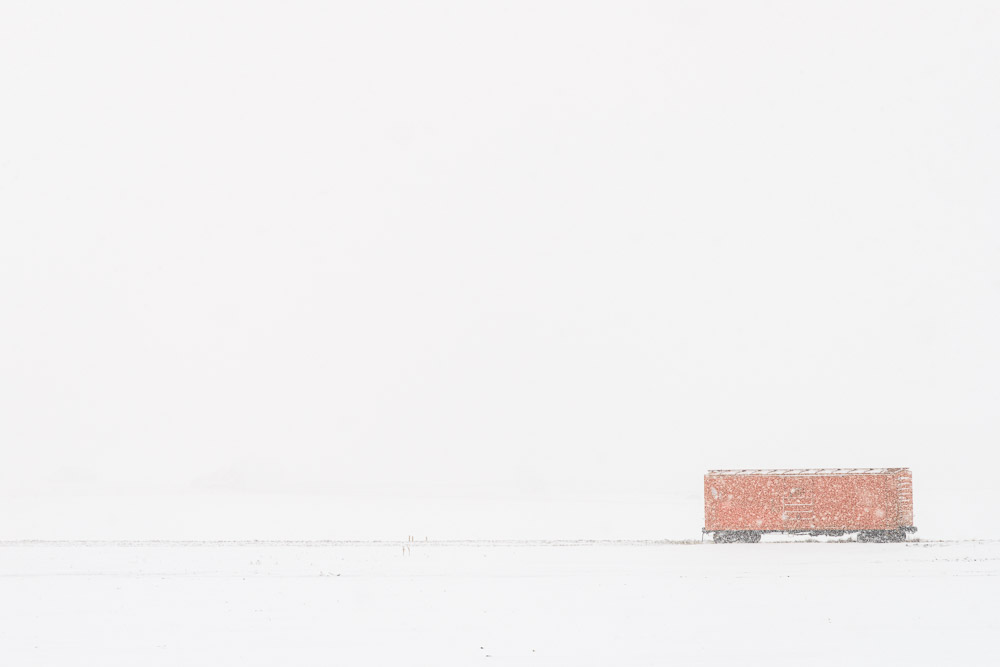
    The image with this post is borderline minimalist. If I had removed the grass and the hints of field it probably would qualify for minimalist in my mind. I don’t care. I don’t like labels.

    Ambiguity

    Less information often leads to more interpretation. – John Paul Caponigro

    Have you noticed in some paintings or songs or stories that less is actually more? Less complete information leads to some ambiguity. It allows space for the viewer to fill in what’s missing. Viewers like to be challenged a little, to have to work some to figure out an image. It is engaging and stimulating. It also allows for their private interpretation to be applied. They may well create a story that is different from what the artist envisioned. That is wonderful. It means the image is big enough to encompass multiple points of view.

    Enjoy the creative stimulation of the frame. Deciding what’s in the frame is composition. Where you put the frame is cropping. Keeping things out of the frame is selection, selectivity, defining the subject. Less is often more. Use your judgment and don’t be afraid to take it out.

  • Rule of Thirds

    Rule of Thirds

    The famous Rule of Thirds. I use that name here, even though I don’t like it. It has become almost a deep seated religious belief to some. Let’s examine it. It is a good idea, not a rule that can’t be broken.

    What is it?

    Briefly, the Rule of Thirds says to divide the frame into a 3×3 grid of 9 equal squares, like a tic-tac-toe grid. Important features, like horizons, should be placed on one of the grid lines rather than centered. Also, the grid intersections are “special” and powerful. Place major subjects on one of the intersections.

    Theory says that aligning subjects with this grid creates more interest and tension than most other arrangements. This are not really wrong. The Rule of Thirds is generally good advice. The fault is in the application as a prescription rather than just good advice.

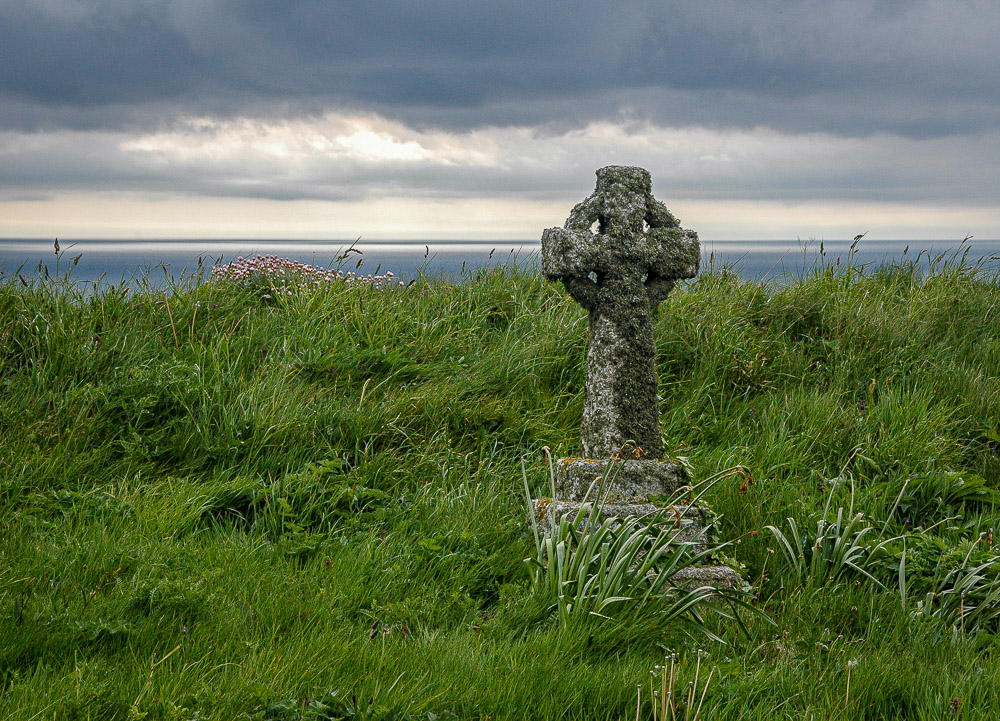
    The image with this article is faithfully cropped to the Rule of Thirds. The horizon is on the upper line and the gravestone is aligned along the right one. It works for this.

    Origin

    The rule of thirds was first written down by John Thomas Smith in 1797. And he was quoting remarks by the painter Sir Joshua Reynolds from 1783. It goes way back.

    Reynolds says:

    Analogous to this “Rule of thirds”, (if I may be allowed so to call it) I have presumed to think that, in connecting or in breaking the various lines of a picture, it would likewise be a good rule to do it, in general, by a similar scheme of proportion; for example, in a design of landscape, to determine the sky at about two-thirds ; or else at about one-third, so that the material objects might occupy the other two : Again, two thirds of one element, (as of water) to one third of another element (as of land); and then both together to make but one third of the picture, of which the two other thirds should go for the sky and aerial perspectives. This rule would likewise apply in breaking a length of wall, or any other too great continuation of line that it may be found necessary to break by crossing or hiding it with some other object : In short, in applying this invention, generally speaking, or to any other case, whether of light, shade, form, or color, I have found the ratio of about two thirds to one third, or of one to two, a much better and more harmonizing proportion, than the precise formal half, the too-far-extending four-fifths—and, in short, than any other proportion whatever.

    They were very wordy back then. But basically, he is describing what we still call the Rule of Thirds.

    Even further back

    But the basis of what we term the Rule of Thirds goes much further back, probably to around 450 BC. It was known as the Golden Ratio in ancient Greece.

    The artists back then worked out a mathematical description of their concept of beauty. The ratio was key to the design their temples, such as the Parthenon. It is surprisingly similar to the ratios of the Rule of Thirds.

    I won’t go into depth on it, but the Golden Ratio is about 1.618. It is actually an irrational number, which means it never repeats. Like pi. Sounds weird, but if you use the ratio to divide a frame they way they suggest you get something like

    Golden Ratio
    https://www.pixpa.com/blog/golden-ratio

    As you see, the proportions are roughly 2/3 to 1/3. Like the Rule of Thirds.

    To a large degree, beauty is universal.

    Why does it work for photography?

    It works for photography for the same reason it works for painting or architecture or other media. It creates compositions that are both balanced and dynamic. They are balanced because the 2/3 to 1/3 split creates arrangements that for some reason are pleasing to most people. Having the horizon or major features offset from the center creates more interest and avoids boring, static compositions. Following the grid also helps to introduce a certain dynamic layout that gives interest to an image.

    It touches us on a deep psychological level by keeping our images less centered and boring. Having things off center helps emphasize what is important to us, e.g. more sky or more foreground, and it gives our minds some work to do to balance the elements. Viewers like to have to figure things out a little bit.

    The Rule of Thirds is very pragmatic. It has proven itself for a long time. All photographers should learn it when they are learning composition.

    Learn it, use it, learn to see by it’s pattern. When you are starting you need to learn the normal conventions. This is one of the oldest and most fundamental. Internalize it. Unlike most artistic opinions it is backed by centuries of use.

    Is it a rule?

    No, at best it is a guideline, a “rule of thumb”. It contains good advice for most compositions. But composing is an art, not a science. Don’t take it too literally. Do what feels right to you as an artist. But know why you are doing it. If you don’t understand the Rule of Thirds then you will not know when it should be broken.

    You enter an image in your local camera club competition. It gets down-voted because it was not composed according to the Rule of Thirds. Talk to them. Find out if they have a valid artistic opinion about this or if they are just being legalistic. If they are legalistic, sorry, it is time to leave this group. You have outgrown them.

    If you post an image on social media and it gets negative comments because it is not “Rule of Thirds’ compliant, then just ignore the comments. You are the artist and the only one who can decide how to compose your image. If you intentionally broke the rule for a good reason, then good to you.

    Break the law

    As a guideline, it should be followed when it makes sense and abandoned when it doesn’t. Yes, the Rule of Thirds can make your compositions generally pleasing to most people. That is why you should pay attention to it most of the time. It is time honored and proven.

    Maturity and experience will help understand that there are times when the rule should be abandoned. For instance, for a very symmetrical composition, off-centering it to follow the Rule of Thirds would probably look weird and damage the impact of the symmetry.

    Or in the case where you have a subject you want to fill the frame with. Do it. That supersedes the rigid rule.

    Or let’s say you are a photojournalist who has just captured a unique event that the world needs to see. Didn’t have time to compose according to the Rule of Thirds? No problem. Most people would agree that a strong or important subject overrides the rule.

    Basically, if you understand the “rule” but feel you have a good artistic reason to break it, do it. You are the artist.

    Create

    Ultimately, that is what it comes down to: you are the artist. If you understand composition and believe you have a better idea than the Rule of Thirds feel free. You may be right or you may be wrong. Either way, you made an artistic choice. That is what you need to do.

    Composition rules are based on principles of perception and gestalt psychology. They usually make sense and any artist should learn them and internalize their application. But creation sometimes involves taking a new direction, abandoning norms, breaking rules. Do not insult your viewers by being ignorant of the norms. Rather, delight them by occasional creative rule breaking. Be an artist.

    Learn the rules like a pro so you can break them like an artist. —  Pablo Picasso

    There are rules about perception, but not about photography. – Jay Maisel

  • Improvement

    Improvement

    In a recent post I quoted Todd Vorenkamp saying “Search yourself for improvement, not your gear”. I believe that our improvement needs to come from within us, not from better gear. What is your plan to make yourself a better artist? Do you have one? I am an Engineer. I know that nothing gets better by accident. We all need a plan and strategies to improve ourselves. I am not saying we need a 5 year plan or a 10 step process. But we need to consciously strive for improvement.

    Study

    Whatever you believe in and value and spend your life doing, you should be a lifelong student of. We are lucky to live at a time when we have so many channels for learning available to us.

    If you were an aspiring artist in the 16th century you would have to apprentice to a master. There you would spend several years doing grunt work and menial tasks while studying the basics of drawing. Eventually you might advance to a stage where you were trusted to add some parts to a painting the master started. Someday you might be trusted to make copies of the master’s work. Now after 10-15 years you could be deemed ready to go out on your own. Of course, all you know is your master’s style. You don’t really know what you want to be yet. A pretty poor system in my opinion.

    Now, though, there are an abundance of schools and online classes. There are books and magazines. There are mentors available and unlimited examples to view online. Most of us are reasonably close to good museums where we can examine great art at will. We could spend all our time studying and never make an image if we are not disciplined.

    Online classes

    I have gotten lots of good information from classes at CreativeLive and Kelby One. B&H Explora has a great free library to view, among all the sales stuff. Anything by Julieanne Kost is extremely worthwhile. Some other great instructors are Dave Cross and Ben Willmore. I do not receive any compensation for these plugs. Many of these things require subscription. It is worth paying for good instruction. For free stuff, there is more on YouTube than you could ever watch. Be careful. Be wary in deciding who you are going to listen to, especially on YouTube. It’s the wild west.

    One reason I love Julianne Kost, besides that there may not be anyone on the planet who knows more about Photoshop, is that she said “I don’t want a recipe, I want to learn to cook.” This is wise advice. A lot of training presents recipes to do exactly what the instructor did. I don’t want that. I want to know how to fix my own dishes, to create my own recipes. She is good at presenting her training from that point of view.

    The real thing is to do it continually. Learning should be a habit we cultivate for our whole life. We never know all of everything. It might be harder to find new and deeper things to learn, but it is there. I suggest you commit to study as an ongoing process, not an event.

    Critique

    I will put this here, even though I am very bad at it. It has been a long time since I went for a formal critique of my work.

    I know it can be valuable. I remember years ago when I was in a camera club the critique was good discipline. As I matured, I also learned that you had to carefully evaluate it, because most critique was normative. It was trying to mold me to fit the biases of the group or the evaluator. Use at your own risk. Be smart about it.

    I hear there are some good critique sessions you can submit your work to for evaluation. I have not done it, but I would if I found one I trust.

    Possibly the most valuable thing about critiques is that they get you used to hearing negative comments about your work. This, in itself, is good training.

    Experiment

    There is a big difference between 20 years of experience and 1 year of experience repeated 20 times. A lot of people get trapped by their success. They become known for a style and feel they have to keep doing it for fear they may lose their audience.

    I believe an artist grows and evolves throughout their career. Your interests change, your style may change, certainly your point of view changes. How will you follow these changes unless you give yourself permission to experiment some?

    That doesn’t mean you have to suddenly make an abrupt 90 degree turn and go a completely new direction. Experiments may be personal. Most of them will fail. Some, though, will have a glimmer of a new idea, a new viewpoint. Follow up on them. Keep pushing.

    A willingness to experiment and play is healthy. It will keep us fresh and creative as an artist. Evaluate what you have learned about yourself from the experiments and decide what to keep and build on.

    A note about the image with this article: this was the result of an experiment. I liked it. Other people seemed to agree, since it went into a gallery and sold.

    Be open and flexible

    Are you willing to entertain new ideas? New technology and techniques? New points of view that are alien to your normal thoughts? You don’t have to buy in to them. You don’t have to adopt them.

    Stretching yourself with new ideas is kind of like yoga for the mind. You stay flexible. When a mind becomes rigid and inflexible it shuns new ideas, new thoughts. The creative place within us requires fuel, new possibilities, new ways of looking at things. Otherwise we stay in our comfortable rut.

    Creativity is like anything else with our bodies. We have to work at it to develop. If we don’t exercise we lose the ability to move and we get unhealthy. Likewise, being open to new things is an attitude, a habit. We can work to get better at it.

    Think about it

    We should be our own best critic and our own best evaluator. If you’re an artist, how can you not obsess about your art? It is a major part of your life. It should occupy a lot of your thought.

    I am an introvert and an Engineer. That gives me an ability to look at my work fairly objectively. I know that will not be the same for everyone. We are all different.

    But whatever talents we have, we need to learn to be able to evaluate our work fairly. You see what other artists do. You know your own work. What you do has to stack up against your own expectations and your evaluation. We never think we have arrived at the pinnacle. And we shouldn’t. Hopefully we will always be growing.

    Thinking about where we are and where we need to go will help us plot our course. Being realistic will help keep us from deluding our self and also keep us from beating our self up. Don’t be negative. Improvement is a lifestyle. Look for new ideas. Embrace new points of view. Experiment with things that are very different that what we normally do. Grow.

    What’s not here?

    Your equipment is probably not holding you back significantly. Learn to think. Creatively visualize new things. Try new techniques. Grow into the artist you want to be. Then you will do wonders with that expensive new camera. 🙂

  • Teamwork

    Teamwork

    Teamwork can be a great thing. In my professional life I have been on excellent teams and worked with talented people to achieve amazing results. Different people can bring varied background and experiences to the mix and blend them to achieve good results.

    Art, though, is a different thing. We are basically not trying to create a good result or a solid product, we are creating a work of art. Art is inherently not a team sport. It is a creation from one head – the artist’s. Some artists use a team, but they supplement the effort of the artist. The creativity and decisions come from one head.

    Teamwork does not lead to creativity

    I am going to have to say some controversial things. Things that go against the conventional wisdom you hear everyday. But all “conventional wisdom” should be challenged sometimes.

    Collaboration is not creativity. It sounds like I am dismissing collaboration as useless. Not so. There are good times for it. Collaboration can let us overcome obstacles and come up with solutions to hard problems.

    Working collaboratively is all the buzz in the corporate world. Schools have picked it up as the great thing for doing projects. I was there for years and my experience was that collaboration is a leveling process. It lets a group create at around the average of their capabilities. It is like the Olympic scoring where they throw out the high and low scores and average the rest.

    This may be decent insurance for a company. It ensures that they will probably get OK work not poor work, but it is not creativity. I have not seen these efforts lead to actual original, creative solutions. And I have been through lots of creativity exercises with very capable teams. Even sessions facilitated by top consultants.

    Let me concede for the moment that a team effort may lead to a creative solution. Whose creativity is that? Can I call this my creative work? Other people directly contributed to it. Is it really mine?

    A lonesome sport

    For an artist, the buck stops here. The artist has no one else to blame or defer to. No one else is responsible for coming up with the ideas and making the decisions. Right or wrong, it is his call.

    Think what goes through your mind when you see an art piece: what was the artist thinking? Why did the artist make these decisions? Why even choose that subject? You don’t wonder if the artist’s team did mind mapping or used a focus group to select and refine the ideas and style. No, you assume the art is the work of a singular artist.

    It can be lonesome and terrifying. As an artist you are sometimes almost paralyzed with fear and uncertainty. There is the terror of the blank canvas, when you don’t seem able to come up with ideas. There is the embarrassment of riches, where you have several images you like a lot but are unable to select the one to present. A certain subject is calling to you. Should you pursue that, even though it is different from your normal work? Should you go with the creativity you feel or play it safe and stick to producing work that is safe and mainstream?

    Only you as the artist can solve these problems and answer these questions. That is, only you can answer them for you. Your answers are part of what make your art your art.

    Teamwork examples

    OK, to answer your objection that teamwork can work sometimes. Yes, it can, in certain ways. There are husband and wife teams like Wendy Shattil and Bob Rozinski or Sarah Marino and Ron Coscorrosa that work together very closely. And there are great friends who collaborate closely, like Tony Hewitt and Peter Eastman. These are very healthy, symbiotic relationships.

    From what I’ve seen, these teams work closely on idea generation and location scouting. They give each other very candid and honest critique. They encourage each other and honestly want the other to succeed. But at the end of the day, they are in competition. Only one name goes on the print. They collaborate, but the final art is one person’s work.

    If it was not one person’s work it would be a corporate product, not art.

    A land of introverts

    It has been said that a disproportionate number of artists are introverts. I believe that is true. We tend to enjoy working alone without having to negotiate with anyone to get something done. We are OK being in our heads without needing the validation of other people’s opinions. And many of us are shy. It is easier to create in silence than to ask other people for help or critique.

    We may get completely caught up in our work, almost as a way to hide from the world. It is safe – until we have to exhibit it or sell it. We can let our inner self be expressed through our art rather than have to interact with people.

    I disagree, though, that it is disproportionate. Who says what the right proportion is? Given the descriptions above it seems natural that introverts would gravitate to art. That is like saying a disproportionate number of talk show hosts are extroverts. No, the introverts run away from that and say “you can have it”.

    Teamwork is not the natural style for us introverts. We tend to be very independent and self reliant. Not to say we are immune to fear and self doubt. If anything we are more susceptible to it. But good or bad, we want it to be our own work.

    A circular argument

    Since this is based on my first person experience, it is somewhat of a circular argument. The thesis is that artists are generally introverts and don’t do teamwork. This is true of my experience in my world. That is all I can really speak for.

    There certainly are many successful extrovert artists. These people would need lots of interaction with other people and need to bounce ideas off other people. But even so, who creates the art?

    Let me come back to the original thought. Introvert or extrovert, the art is almost always the creative expression from one head. It is not a team sport. We can get inspired and motivated by talking to other people. People can stimulate us or give us feedback to help point us in a slightly different direction. But in the end, no one but me is responsible for what I create. And I wouldn’t want it any other way.