An artists journey

Category: Artistic Process

  • Wait For It

    Wait For It

    In my last article I suggested reacting to subjects and shooting with minimal planning. This time I talk about the need to study a subject and find the optimum conditions. To wait for it. Am I inconsistent?

    Shoot what you find

    Last time I recommended that you take what you find, shoot where and when you can, make the best of what is there. Obviously, I think this is good advice, or I wouldn’t have said it.

    This is the path I take most of the time. I enjoy the challenge of working with what I find, even if the conditions are not optimum. Whatever “optimum” means.

    A quote attributed to Freeman Patterson captures the spirit of this for me. He said “It’s just light. What are you going to do with it?” I take this to mean “it is what it is”. The light is there. The conditions are there. You can’t change them. Work with it. Are you a good enough craftsman to make a great image in any light? Or are you so locked in to a certain expectation of what you want that you cannot make an image unless everything meets your criteria?

    Do you remember the blizzard conditions in the picture with that last post? It was not what I expected or wanted. That kind of day, it would be much easier to stay inside. But in retrospect, I like this image much better than “normal” pictures of plain rock walls. I worked with what I found.

    Wait for it

    On the other hand, sometimes you have to work with a thing until you discover what it wants to say.

    It is not my style or interest to plan out the optimum time of year, time of day, location, etc to get a trophy shot. I don’t care much for trophy shots.

    But you know when something keeps catching at you gently? When it seems like it is trying to tell you there is something there if you can just see it? That’s the way it works sometimes. Our subconscious is more receptive than our conscious mind.

    When you get this tingle and there is a scene you have regular access to, sometimes it helps to keep working it to see what it looks like in different conditions. This is what I call waiting to see what it has to say. Even a common, familiar, boring subject can be brilliant once. Finding that brilliance is the trick.

    If you are mindful as you are out shooting, I imagine, like me, you have suddenly seen something you walk by every day in a whole new way. Maybe it is the light that is different, or the weather, or just your mood. But something clicks and this boring thing suddenly is exciting. It is a great feeling. Like discovering a hidden secret.

    And when people ask you about it you can say, you know that thing over there you walk. by every day…? They are impressed; and incredulous. That’s very satisfying.

    Perhaps best of all, you feel like you now have a unique insight on that subject. Until now, it was incomplete. Now a dialog has been accomplished, an exchange between you the artist and this subject. You have seen what this can be, in a way no one else has.

    Resolving the conflict

    So, last time I said shoot it as you find it. This time I’m saying wait for the perfect conditions. Am I inconsistent? Am I just playing with you?

    Not at all. Both are right. There is a time for each. Do you remember that great bit of dialog in Fiddler on the Roof where someone says “He’s right, and he’s right – they can’t both be right”? And his answer is “You know, you are also right.” 

    Yes, I firmly believe both approaches are right, each at the right time and in the right conditions. Part of maturity is figuring it out.

    I completely believe you should shoot where and when you are there. Don’t pass up a shot you think you want because it could be better someday. Do it now. And if you have the opportunity, work a scene frequently to refine and improve your comprehension of it. It really is true that working a familiar subject over time will lead to deeper understanding. And with frequent access, you might indeed find it at that perfect time no one else has understood.

    You’re an artist

    And. when all is said and done, you are the artist. Only you create the image through your craft and feelings. Do the best you can.

    Are conditions unexpected and maybe not what you hoped for? Too bad. That’s what you have. Use it. Make something good out of it. It may require reframing your perspective. Changing your plans. That’s OK. We have to be flexible. That is part of the craft.

    And when we get the chance to frequently return to a familiar subject, take the opportunity to get intimate with it. Learn its moods. Dig below the surface to learn about it in more depth. Then you have the chance to catch it revealing itself to us. If you are there, if you know it well enough, if your craft is good enough, that leads to the opportunity to get an image you feel brings a unique insight into the subject. Something no one else has seen.

    A reason Monet painted water lilies in the pond at his house was because he became intimately familiar with them on a daily basis and they were changing all the time in different light and seasons. He found a subject he could live with and grow old with.

    Whether this is the first time you have seen the subject or it is an old familiar friend. Whether the weather and light is “good” or “bad”, use your expertise to make a great image if you feel it is worth it. It is up to you.

    Today’s image

    This old battered factory and silo is 1 mile from my studio. I walk and drive by it frequently. I keep my eye on it and occasionally shoot a few images. The silos are 200 feet tall and 40 feet in diameter each. An imposing sight.

    This day, magic happened. The combination of the clearing storm and the rainbow, being in just the right position to highlight the place, the light from the clearing storm being perfect. Well, it made it into something special. I had never seen it like this before and I have not since.

    I gave a print of this to a friend whose dad supervised the construction of the silos decades ago. He had recently passed away and this was very special to her. It is special to me, too. It turned a broken down old industrial eye sore into something very different.

  • Seeing the Unseen

    Seeing the Unseen

    Photography is unique in the arts. It can record things we cannot see or imagine. Photography can be an adventure in seeing the unseen.

    Unique

    Photographers are sometimes made to feel inferior. Usually by proponents of the “real” arts, like painters or sculptors. Get over it. Photography has qualities that go beyond any other arts. Qualities that make them envious.

    Photography is a technology-based art. That technology can be used along with our artistic vision to capture and create things regular art cannot. We can peer into things the human eye cannot see. We can freeze time to examine events the human eye cannot show us. Likewise, we can extend time to show the effects of movement in new ways.

    Exposure

    The human eye is amazing. But it has limits. Even though it can see a huge range of light, photographic sensors can push beyond our eye’s limits.

    When you look at the stars, for instance, we can see what seem to be an immense number. But I have astronomer friends who have a process of taking hundreds of frames of 1 point in the sky. Then they use special stacking software to combine them and sharpen them to create levels of detail far beyond what the eye can see. Even my amateur astronomer friends routinely show me pictures they have taken of distant galaxies that cannot be detected at all with the eye.

    Those same astronomer friends have solar filters – essentially completely black glass – that let them view the surface of the sun! They can see and photograph sun spots and the corona. Things that would destroy our eye if we tried to look directly at them.

    The technology and practice of photography allows these things.

    Light range

    And “normal” (non-photographic) art is all done in the visible light range. Makes sense, That is all we can see.

    But most of us have seen infrared imaging. This is done using a special dark red filter that excludes most light we can see. What is left is what we would consider heat – the world of longer wavelengths beneath the red response of our eye. It gives us a subtly different perception of the world around us. A paint artist could not do that without taking an infrared image of the scene then painting from the photograph.

    Similar filtering can be done to see the ultraviolet world beyond the highest violets we can perceive. And have you had an X-Ray? That is just imaging done in another range of “light” we cannot see well beyond the ultraviolet.

    These are somewhat niche capabilities, but they can bring us information that is exclusive to the photographic world.

    Time

    Time is one of my favorite variables that is unique to photography. One of the three legs of the exposure triad is shutter speed. By varying the shutter speed we can effectively slow down or speed up time!

    People have developed flash systems that can freeze movement in slices of 1 millionth of a second. Even the fastest bullets are frozen in midair. Explosions can be captured as they start. You’ve probably seen pictures of a drop of liquid falling into a dish. The splash patterns are beautiful and interesting. Not many things we come in contact with in our lives are not frozen at this kind of speed.

    At less extremes, a waterfall at a fast shutter speed can look like a cascade of diamonds . A bird in flight is completely frozen at about 1/1000th of a second. Every feather is crisp and sharp. We cannot see it this way with our eye.

    At the other end, long exposures capture movement over time. This is the area I like to work. Not super long. Just long enough to change our perception of what is happening.

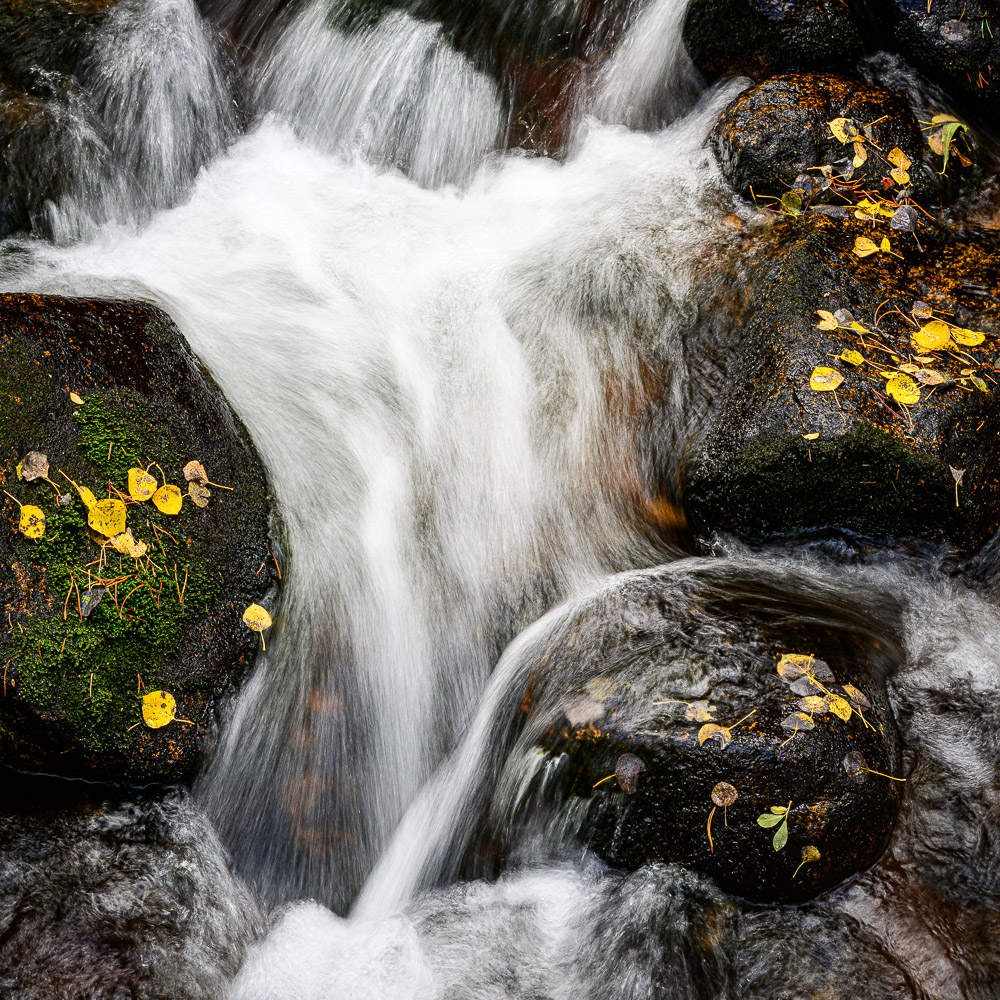
    We have all seen long exposure pictures of waterfalls or cascades, where the water is smooth and silky. It is so common that it is in danger of being cliche. But the reason you see it a lot is because it is a pleasing effect. Some photographers make exposures of minutes. This makes clouds streak and water blur to a milky texture. Not really my thing, but I appreciate the reality distortion caused by the time shift.

    Movement

    A subset of this idea of time is where the camera is moving relative to the subject or the subject is moving relative to the camera. The camera motion side has become popular as Intentional Camera Motion (ICM).

    Like many techniques in photography, it is easy to do but hard to do excellently. Anyone can take a blurry picture because the shutter speed was too long to stop the action. Most of us have to work to overcome this. ICM deliberately pushes this “fault” to a point of art. I do ICM for some projects and I have seen a lot of ICM that I consider excellent art. And I have seen a lot more where I have to think, “yep; that’s your standard ICM”. That’s OK. Most experiments in doing something new and creative fail.

    One interesting aspect of techniques that involve movement and time is that it is almost impossible to take the same picture twice. There is always variation. The variation often leads to pleasant surprises.

    Stretch the notion of reality

    So photography is unique in giving us alternate views of “reality”. With conventional arts, like painting, nothing can be created that the artist does not first see or imagine. Photography can show us worlds or effects we did not imagine. This sometimes opens up new creative paths to explore. And the exciting thing is it is actually reality. If the camera captures it out in the “real world” (whatever that is), it is reality. What we get may be a complete surprise, but that is part of the exhilaration.

    Photographers, never feel inferior in the arts. Know that what we do is as valid as any other kind of art. And try not not to be smug knowing we have the option of being more creative than most other forms of art.

    Go explore the unseen and enjoy your discoveries.

    Live always at the ‘edge of mystery’ – the boundaries of the unknown. – J. Robert Oppenheimer

    Today’s image

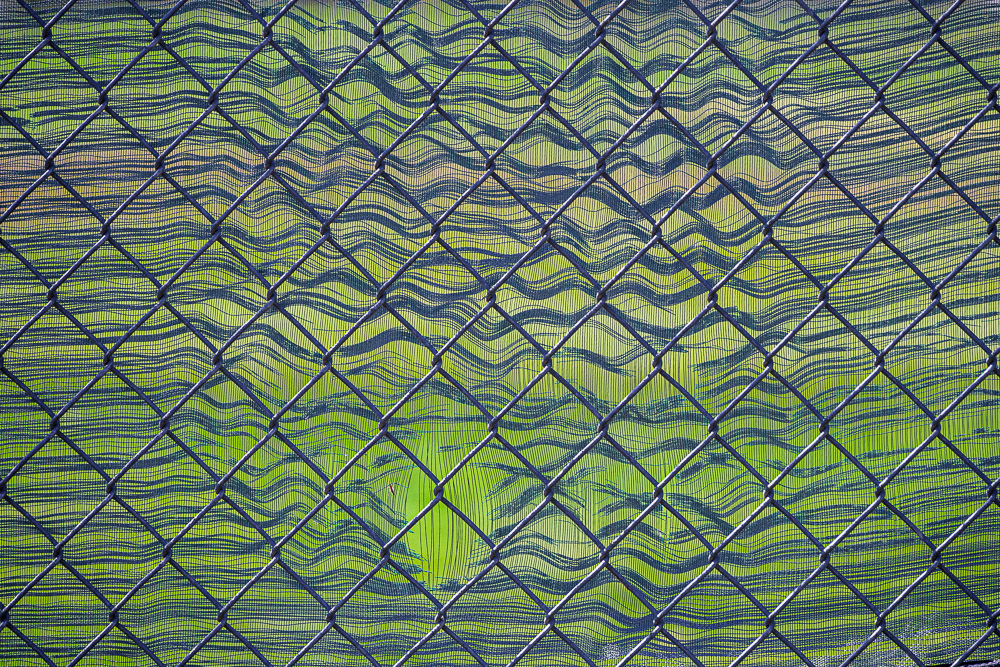
    This is part of a series I did fairly recently. It combines ICM and time and subject motion and some secret sauce optical techniques to create this look. I consider it a creative view on a reality that happens around us all the time, but only photographers can see.

    Is it “real”? Yes, absolutely. It is a minimally modified shot of a real, physical subject. It is a subject most of us can find right around our town.

    To find out more about what it is, go to my web site and find a similar looking image in Projects.

  • It Doesn’t Have To Be a Portfolio Shot

    It Doesn’t Have To Be a Portfolio Shot

    Of course we want to build a great portfolio, but don’t stress too much. Sometimes it is best to just go shoot and see what happens. In other words, not every shot has to be a portfolio shot.

    A portfolio shot?

    We all probably have one or more “portfolios” we maintain. Maybe you don’t formally build a physical portfolio box or book. Now days it is probably one or more Lightroom collections (or albums, depending on which flavor you use). That is a separate discussion.

    The portfolio represents our best work. Typically there will be multiple ones for categories like landscapes or portraits or street photography, etc.

    It should be a very limited set. A maximum of 20 works well. If you have 200, either you are a truly exceptional artist or you haven’t edited enough yet. Editing hurts. It is painful to take out a favorite. But the reality is that every one removed makes the remaining set stronger. It is healthy to constantly challenge our portfolio. Test to see if new images are better than existing ones. If they are, replace the old one.

    So my point here is that it is easy to get in our head and not take a picture of a scene unless we are sure it is superior to anything already in our portfolio. This freezes us into fear and indecision.

    Be mindful

    Photography should be a process of mindfulness. We should be present and open wherever we are. This helps us to actually see the possibilities in what is around us at the moment. Being there and being in the moment lets us make the most of whatever situation we find.

    Self-censoring fights against mindfulness. When we pass opportunities because they will probably not make portfolio images, we are building a mental wall to exclude things. It constricts our thinking and leads us to miss great shots that come unexpectedly.

    Practice the craft

    If you are a musician you practice hours a day. Even simple scales train the musical senses. If you are a gymnast you practice hours a day. Strength and flexibility exercise is as important as working on routines.

    Why should it be different in the arts? Our art is part craft. Practice makes us better. We need to be very fluid in handling our equipment. Exposure decisions should be quick. Composition should be almost automatic because we have built such a large base of experience.

    So we need to spend a lot of time just taking pictures. For the practice, if nothing else, even if we discard most of them. It makes us a more virtuoso photographer. The great majority of this practice does not produce portfolio shots. But it sets us up to skillfully make the great shot when we find it.

    Get in the flow

    A lot gets written about flow states. here are reasons for this. One is that it is a simple concept most of us can relate to. Another is that it is a powerful and compelling experience. Everybody seems to understand the basic concept, so I will not define it.

    It is hard to force a flow state. You kind of fall into it and don’t realize it until later. To get there you have to be working – hard. Not working on getting into a flow. Working hard on our craft. That means being out doing it. Not just dabbling in it, but spending significant time and attention. As we immerse ourselves in it for an extended time we may find that we have hit a groove. Time seems to stand still. The stars align, so to speak, and everything seems to work better; ideas come freely; we are on a creative high. We feel good about what we are doing and the results are above normal. It seems to flow.

    Looking back on it with a warm glow we may realize we were in a flow. It is important to realize that the flow is not the goal. The experience we feel and the work we produce is. Flow helps enable that.

    Be surprised

    And by being out and shooting freely with less self-censoring, I often am surprised by what I get. Maybe it is from being more mindful. Perhaps it is when I am in a flow. But regardless of why, I am frequently pleased with images that I thought at the time would be boring. And I am glad I shot them.

    The famous Wayne Gretsky said “You miss 100% of the shots you don’t take.” I think there is application to our photography. Just thinking about a shot does not create an image. Thinking about a shot and deciding not to take it means no image. But when something tickles your subconscious and you go ahead and grab the shot, you might find gold. Even when you are relatively sure it will not make it into your portfolio, it might trigger another thought. Which might trigger another thought. And so on. It can bring you to a better way to see the subject. We can surprise ourselves.

    So don’t be quite so picky. Be very picky in the excellence we demand in our craft. But be careful in prejudging our shots. Do your best with what is there and see where it leads. It could be that it is not a weak subject that is at fault. It could be that we aren’t letting our self think about it very well.

    Today’s image

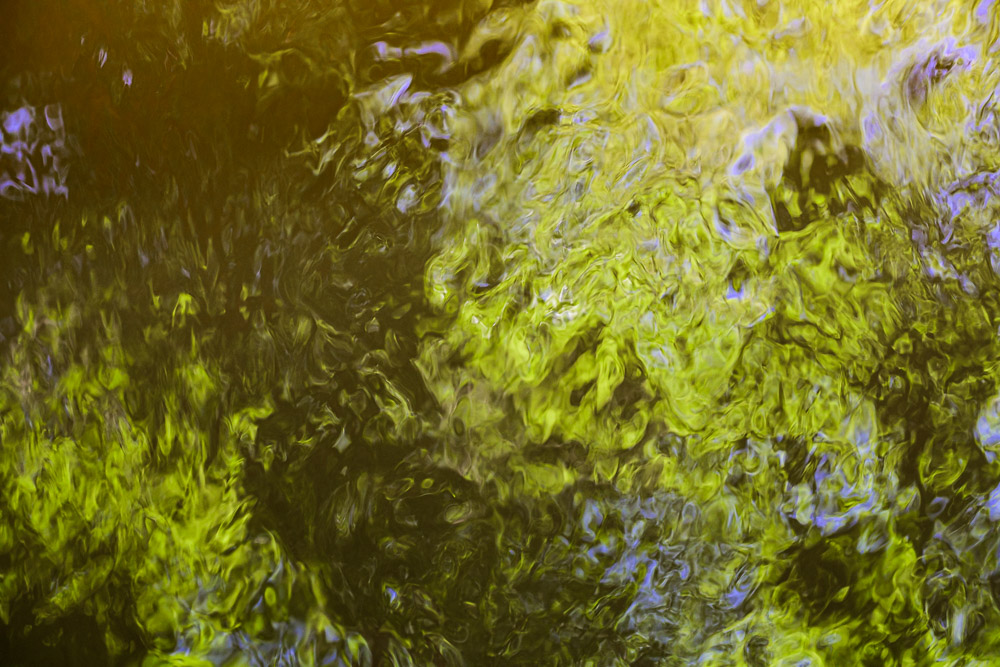
    I’m a sucker for these. I love shooting them. You never know precisely what you will get, but the surprise can be fun. I really like this one. It is also a great exercise for working on timing. Being able to recognize a shot and execute it. It fascinates me that a few tenths of a second or a slight movement of the frame can make all the difference.

  • How Not to be Creative

    How Not to be Creative

    You can find suggestions everywhere about how to be creative. I decided to turn it around and offer suggestions on how not to be creative. Is that creative? 🙂 I can’t guarantee that doing the opposite will make you creative, but perhaps they may be warning signs for consideration.

    Creativity

    We all want to be creative (I hope). But what it is? How do you define it?

    We all have different views and expectations. For photography, maybe it comes down to making images that seem fresh and “different” in a good way. They say that everything has been photographed. I don’t buy that. But even if it has, there are new viewpoints or treatments or lighting on our subjects. And there are still lots of things no one has thought to photograph.

    Few of us will create wholly new art genres the world has never seen. Few of us really want to. But we can do work that people look at, come back to, and admire as a whole new way of seeing a subject. We can project our feelings onto the print, giving it our unique stamp.

    We often use the metaphor of the muse inspiring us to creativity. If the muse is with us we are creative. If she is not, we can’t seem to do fresh work. Yes, our creative inspiration seems to come and go; to have highs and lows. I do not believe some imaginary Greek goddesses actually have anything to do with it. It is really happening within us.

    So rather than chasing after creativity, I want to look at ways to stifle the creativity we have.

    Distraction

    If you live in the Western world, you are probably paralyzed by distractions. Our devices and entertainment rather successfully compete for all of our time and mental bandwidth.

    People open their phones dozens of times a day because of fear of missing out (FOMO). We are expected to be online and available to our employers 24/7, even when on vacation. The wonders of the internet has opened up far too many “opportunities” to spend our time and attention.

    But rather than being an incredibly empowering technological aid to us, it has become the master we are slaves to. People are online at work all day then spend many hours at home doom scrolling funny cat videos or new dance moves or movies we don’t really care about.

    So, a great way to subvert your creativity is to be so distracted we do not have time for original thought. Creativity requires quiet time and very limited distractions. In general, the more attention we give our phones and other devices, the less opportunity to be creative we have.

    The technology is not bad in itself. I have 1G fiber and i would not want to let go of it. What we do with it is where we can hurt ourselves.

    Stress

    Another great creativity killer is stress. Stress focuses all of our attention on the problems we are facing.

    The world always tries to keep us treading water. Just a couple of days ago my fuel pump went out, while we were driving in a hard to access location in the mountains. Do you know how long it takes and what it costs to get your car towed over Trail Ridge Road in Rocky Mountain National Park? And do you know what it costs to replace a fuel pump? That can peak your blood pressure.

    That’s just one little example. All of us deal with many sources of stress all the time. It comes with life.

    Like our devices, stress occupies all of our attention if we let it. When we are stressed and worrying, we are seldom thinking creative thoughts. It seems more survival mode.

    So, to kill creativity, give in to worrying about stress. Fixate on those problems. Live with a survival mentality.

    Of course, we can’t just wish our stressors away. We need to deal with them. How we deal with them is up to us. Attitude is a big deal.

    Trying too hard

    Want to chase away the muse? Trying too hard is a good way.

    We should always be trying hard. What I mean, though, is trying to force our self to create something on our schedule. Just sitting there saying “I have to create something; now; do it; right now”. How does that work for you?

    Maybe it works better for you than it does for me. If I try to force myself to be creative it seems to have the opposite effect. I am a total blank.

    Actually, I can often lure creativity to visit me by ignoring it and thinking about or working on something else. I believe artistic creativity comes from the subconscious. Our minds need to be occupied with something not too demanding so our subconscious can be free to wander and think new thoughts. But then we must be conscious enough to realize what just happened and capture the idea.

    Too busy

    Another good way to not be creative is to be too busy. Busy with demanding tasks that occupy all our attention and mental bandwidth.

    The world around us encourages a high level of busyness. What do you say when someone greets you? “How ‘ya doing?” “Man, I’m staying really busy!” It’s almost a badge of honor.

    Being busy is much better than being idle. But like most things, when taken to an extreme, it can be destructive.

    If you are one of those super busy people with a full calendar, how do you find time to be creative? Maybe it is as simple as doing some prioritization and putting some blocks of time in your calendar where you will let your mind relax and give yourself the space to focus on your art.

    Imitation

    The last creativity killer I want to talk about is imitation. Are you trying to make art like your mentor or favorite artist?

    I believe this is a trap because we cannot be them. We can make work that looks a lot like theirs. But this is looking backward at what they have done in the past. We cannot be in their mind and have the same thoughts and influences that will guide them to new work. So all we can really do is copy them. That is not creative. We are not adding anything new.

    Can we learn from other artists? Of course! That is how advancements are made. The critic Lionel Trilling is quoted as saying “Immature artists imitate. Mature artists steal.” Many others have said similar things in slightly different ways. The consistent point made is that we take what we can learn from others and add it to our own art. Just imitating them, though, is a dead end.

    Conclusion

    Creativity is something we all have in varying amounts. It is an enabler and motivation of being an artist. But we are surrounded by many powerful forces that want to stifle our creativity.

    All the creativity sucking problems I list here are real and probably attack most of us most days. They are easy to identify but very hard to overcome.

    We cannot just pretend they are not there. Instead, we have to be very aware of them and actively work to fight them. If we don’t, we will be sucked into their trap and our art will never be seen. The path of least resistance is to give in and let our creativity be choked out.

    Fight!

  • Another Way to Copy

    Another Way to Copy

    My previous article talked about using presets to make our work look like another artist‘s. This is going to continue talking about another way to copy another artist. Not directly or intentionally, but with the same result. That way is going to the same locations.

    Trendy locations

    It seems like locations are as trendy and popular with photographers as clothes styles are with some other people. Can’t you look at a lot of popular photography and score pretty well in a “guess the location” game?

    Some locations get over-photographed to the point of becoming cliche. Do you get tired of seeing pictures of Iceland or Greenland or the Antarctic or Africa? A little closer to. home, how about Yosemite or the Tetons or the Palouse region or fall images from Vermont?

    It is not at all that these places are not beautiful. Just that there is a herd instinct to rush to do the same thing. It seems like a photographer publishes a nice image of a fresh new location and everybody wants to follow to get, what, the same picture?

    The problem of visiting iconic locations

    There is nothing wrong with these locations. Absolutely not. They are iconic because they rightly deserve to be. The problem is our own and what we commonly do when we get there.

    From my own experience and from reading others’ experiences it seems there is a common trap we fall into. An often photographed location causes a certain amount of awe and wonder. We see the famous image we have dreamed of and shoot it. And then we are kind of done.

    Most of us can’t, on that first visit, see beyond the obvious. This is common. The location is famous and grand and set apart in our mind as this special thing. We have always seen it a certain way and we are locked into only seeing it that way.

    Access is important

    What is the difference between our shots of iconic locations and the, probably better, work we do routinely? One significant difference is access. I want to thank Brooks Jensen, the editor of LensWork magazine for helping me see this insight in issue 152, Editors Comments. He, in turn, was inspired by a comment of David Hurn. He proposed that the most important aspect of a potential subject is that we have access to it.

    What we routinely see and shoot we become very familiar with. We become analytic in looking at it. Having the freedom to frequently return to the location gives us the opportunity to see and evaluate it in all seasons and weather and lighting conditions. From all angles and possible views. It becomes an old friend we know well. When we take a shot of it, it likely captures its true personality. We know its best side and its worst.

    These familiar scenes may not be the grand locations most people think about. But we can represent them in meaningful ways, because we know them well. And we know them well because we have access to them.

    Access, frequent return visits, is what builds this familiarity.

    Approaching an icon

    So what strategy can we use when we get the chance to visit one of the. icons? I agree with Mr. Jensen that photographing exotic locations is actually more difficult than photographing the familiar.

    Don’t avoid. traveling to these places! Travel is usually worthwhile for many reasons. But perhaps we need a strategy for approaching the great locations.

    I suggest that when we get there, give in and have fun shooting all the normal tourist views. These are your first impressions. Then when that is out of your system, slow down and start being more analytic. Be suspicious of the conventional scenes you just captured. Try to look beyond them. Find a new point of view you have never seen. Ask yourself how you feel about this thing or place. How you relate to it and perceive it. Why are you taking this picture? Stop and think and just look a while before proceeding.

    Make it a mini photo project. That involves having a theme, a point of view, knowing what you want to say, maybe having a story behind it. You will probably find that few if any of your initial “wow, I’m here” shots make it into the final project. The important ones will be the more thoughtful views where you were interacting with the subject on a deeper level.

    Go your own way

    We can even use that learning to take back to the familiar subjects we see every day and have easy access to. The familiar should not be less exciting. Probably it should be more exciting, because we have the access and opportunity to get deep into the subject.

    Sometimes I go out among my familiar surroundings with nothing in mind. My plan is to just react to these familiar subjects in, hopefully, a fresh way. Sometimes I go out with a project in mind, looking for opportunities to add to it. Either way works, because of the frequent and easy access I have to the material. On our home ground we have an advantage. No one else gets so much access to the subjects you are intimate with every day.

    Never try to copy another artist, unless you are doing it for your education, to learn a new approach. Do not publish these as your original work. You are copying. Trust that you have a viewpoint and believe you have something to say with your work. You do.

    Today’s image

    No challenge guessing the location. Yes, I shoot icons. Everybody does. This was not my first visit to it, so I approached it differently. I didn’t want just another tourist shot of the famous Eiffel Tower.

    After walking around it for a while, I was drawn to this composition. I felt inspired by its immense size and beautiful curves and lines. I didn’t have a wide enough angle lens to capture it in one shot, so I had to shoot multiple and manually stitch them together.

    Maybe this is still a common shot of the icon, I don’t know. I don’t look at many others. But is seems different to me and I like it. It is one of my best memories of it.