An artists journey

Category: Artistic Process

  • Photography Isn’t Creative

    Photography Isn’t Creative

    Photography isn’t creative. I know, those are fighting words. Please put down the pitch forks for a few minutes and let me explain the distinction I see.

    A medium

    Photography is a medium, not something magic. Merriam Webster defines the aspect of “medium” I am referring to as “A means of effecting or conveying something; a mode of artistic expression or communication”.

    I know artists who express their art by taking pictures, some who put paint of a canvas, some who sculpt, others who make fabric creations, some who write or create music or make videos. I have known some who build art from scrap metal, even some who cut out bits of paper and create designs on a wall with them, and one or two who dance. These are just some I know personally.

    These artists all use a different medium for their creation. The medium sets parameters about what the resultant creation is: large, small, heavy, light, 2 dimensional, 3 dimensional, persistent or transient, etc. But the medium does not create the art. It is the mode through which the art is expressed

    Going around in circles©Ed Schlotzhauer

    Cameras don’t create

    A camera is a tool of the photographer. Some people think photography is not art because you just point a camera at something and press the button and capture it. When you do this, you usually get pictures that look like you just pointed the camera at something and pushed the button. No life. No excitement. Not that much interest. A record of something, not art.

    Luckily we have not gotten to the point that AI-equipped cameras try to make art all by themselves. It is still up to the photographer as artist to make the creative decisions.

    These decisions are what shape most of the outcome.

    Skill

    Photography is a medium and a technology. As such, it has limits on what it can do. Some things can be done very well and some things are difficult or impossible. For instance, it is difficult to create 3D images photographically. Not impossible, but difficult.

    Amazing things can be done by a craftsman wielding their tools expertly. As a photographic artist, we learn to think photographically, to internalize how to use the technology to create what we visualize. How to use our tools.

    But what I am describing is a process of an artist using tools to create art. The tool does not create the art. It helps express the artist’s will.

    A general flow for photography is establishing a concept, visualizing the intended result, capturing the image, and refining it on the computer. Which of those stages allow creativity?

    Trick question. All of them.

    Silhouetted tree against glass skyscraper©Ed Schlotzhauer

    People create

    A paintbrush does not create a great work of art. A chisel does not produce an amazing sculpture. And a camera does not produce an amazing, creative photograph.

    It is the artist using the tool that receives the credit, because it is his creative vision that applies the tools skillfully to achieve his intent. Every artist or craftsman I know appreciates excellent tools and likes to use the best he can afford. The quality and precision of great tools makes the creative process more of a joy when you know how to use them well.

    Same with photography. All the photographers I know love to talk about their tools. They long to have the highest quality cameras and lenses, the best computer and monitor. But they also recognize that these things are only tools. Good tools might make their work a little easier, but it doesn’t change their art.

    But the tool does not do the creative work. Photographic technology is a medium. If we are using a camera we must understand the strengths and weaknesses of the medium. As creatives, we must know how to use the medium to achieve our goals. That is very different from just taking a picture.

    Zig-zag shadow©Ed Schlotzhauer

    The medium isn’t the art

    So the medium is the channel we use to create or deliver our art. Nothing more. It is a “means of effecting or conveying something.” What we convey is our artistic vision. How we use the properties of the medium is part of the creative process.

    The way we express our vision may be different in a painting versus a photograph. We may have to choose the correct medium to achieve certain outcomes. You would have a challenge to express your music as a painting, for instance. Or maybe that would inspire you to push the medium of painting in new directions.

    Note: AI isn’t people

    An elephant in the room in conversations about art and creativity is AI. Let me go on record as saying, in my opinion, AI does not and cannot create art. It can make nice pictures that are very useful for advertising and utilitarian use. But it can never create, because computers can’t think, or feel, or appreciate art.

    AI models are trained using data from existing work. This is a major ethical question being debated, but not the issue here.

    Everything the model “knows” is work that has been done in the past. It will not be inspired to create something new. Inspiration requires a consciousness. Only humans are able to do that.

    AI can be useful as a helper, just not as a creator.

    Fall trees via intentional camera movement©Ed Schlotzhauer

    Photographic art

    Despite being maligned and excluded from the ‘inner circle” of fine art by established interests, photography continues to make inroads as a recognized art medium. Photographic artists continually push the limits of the medium and use those limits to inspire their creativity. Much of the creative discovery is at the limits of what can be done.

    Photography is just a medium. As that, it is not creative in itself. But artists can product creative works using it. The medium influences the art. The art uses the medium.

    Postscript

    As I write this, it is the day of the 50th anniversary of the release of the movie Jaws. The story behind it is fascinating. I would like to share a few highlights I have found that are relevant to today’s topic.

    Jaws was conceived as a low budget horror movie. It was given to an almost unknown director named Stephen Spielberg. But 2 unanticipated things happened that set it apart and allowed it to become one of the iconic movies of history.

    First, Spielberg collaborated successfully with a relatively unknown music writer, Jon Williams. Many say half the impact of the movie was the famous theme song.

    But of even more interest to me is that a huge factor in what the final product became was that the mechanical shark didn’t work. It was cheaply made. No one had thought to test it in salt water. Because it didn’t work reliably and he felt it looked pretty dumb, Spielberg showed it a lot less than they originally planned. Surprisingly, this resulted in greater drama and made the shark more menacing. Overall, the movie was a great success, partly because of a balky mechanical shark.

    A great artist, creatively adapting to the limitations of his medium and budget, unexpectedly created something wonderful. Something that is still recognized as great 50 years later. Creative problem solving. That is inspiring.

  • Ethics of Editing

    Ethics of Editing

    I thought this question was completely discussed and laid to rest. But just in the last week I have seen 3 posts questioning the ethics of editing images. Not really saying it is wrong, just questioning it in general.

    Let me give you my conclusion so you can stop reading if you disagree: the question is wrong. It is not an ethical issue for art.

    Are photographs special?

    Because of its nature of recording the scene in front of the camera, some people still assume that photography is some kind of “pure” imaging form. That is, that what you see is reality. It is not and never has been.

    You would never make that assumption of a painting. It is clear to everyone that it is a constructed image. Even if it was painted as “plein air”, the artist would leave out things that distract and freely put in things that “should” be there.

    Just because the sensor (or film) images everything in the field of view of the lens does not certify that the resulting image is “truth”. And speaking of the field of view, changing it is a valid and common way to change the story you are telling. Zooming in on a small part or moving to the side a little may completely alter the message of the image. Is that ethical?

    Giant flamingos, in Colorado.©Ed Schlotzhauer

    Modifying darkroom prints

    Prints were routinely modified even from the days of film and darkroom printing. Filters made serious modification to tonal renderings in the captured negatives. Negatives were spotted to remove dust (or distractions). Dodging and burning further altered the tonality of the original scene.

    If you are familiar with Photoshop, you know that one of the layer blend modes is Screen. Do you know where this name came from? A way of compositing film images was to project 2 images together onto a screen, then re-photograph the resulting combined image.

    Photographers are resourceful. They find a way to make the image they need or want to make. Even if the result departs from the original.

    Modifying digital images

    But it is so much easier to alter digital images. Does that somehow make it unethical to do it?

    We have wonderful technology in our computers and image processing software. But would we be better artists if we printed our images “straight” – unmodified in any way?

    No, we would not. Digital sensors are amazing, but the straight output of a RAW file is bland, low contrast, probably with a bad color cast, and it has dust spots and distractions. You could never sell an image like this, and it would be foolish to even show it to viewers in this state. Other than to make a point about how important correction is.

    Even black & white prints are an advanced modification of color images. It is no longer a throwback to simpler and more pure times.

    We are expected to correct the color and contrast, to remove spots and distractions, to alter the lighting and tonality to make it more pleasing. You could never win a contest or be admitted to a gallery without doing at least those steps.

    Beyond that, pixels can be processed and combined much more freely than film images ever could. To say that it is wrong to do that with digital images is like saying that writing should only use the grammar and vocabulary of 19th Century English, because it was more pure.

    Antique narrow gauge steam locomotive snowplow©Ed Schlotzhauer

    Why do it?

    Is it too simple to say, “because we can”? Simple but true. We can. Pixels are raw material. They can be modified or combined or stretched or colored at our will. The same way that a painter can use any colors or put any brush strokes down on his canvas.

    What we choose to do depends on the image. Sometimes we compose the “final” shot almost entirely in camera. We recognize what we want to do, and we can make it happen in the field. These images still need a lot of work to bring out the quality we want, but the result may be very close to the scene as shot.

    But sometimes I go out shooting what I call “raw material”. These images are deliberately not intended to be a finished image by itself. They become parts blended or composited together with other parts to form a final image concept. Is that valid? Is it ethical? To me, completely.

    Terra Incognita©Ed Schlotzhauer

    When not to do it

    There are times that images should be labeled as “truth”. If you are representing the work as photojournalism or documentary, it should relatively unmodified. Relatively in the sense that it may be cropped or spotted or exposure balanced. Things like that that do not seriously alter the result that is presented to the viewer.

    Even so, there are the issues of point of view and field of view. I discussed field of view. For journalism what the photographer chooses not to show may completely change the ‘truth” of an image. And anyone, even a seasoned journalist, has a point of view they bring to the shoot. That POV determines how they represent the scenes, what to feature, how to frame it, etc.

    So, we must accept that what we see is the truth from their point of view.

    Kentucky Coal Miner©Ed Schlotzhauer

    Ethics?

    One of the articles I read recently asks “how much we can ethically alter a photograph?” My response is that only photojournalists and documentary photographers should be expected to “tell the truth”. Other than that, there are no ethics involved. The concept does not even apply to art.

    All other photographers are creating something artificial. The resulting image is a creative work of fiction. Trying to say that there is some artificial ethical limit on what they do is like saying all writers must only tell the absolute factual truth. I hope not. I like reading fiction.

    There are many reasons for creating images. A few uses of them should maintain a semblance of truth. Most do not have any link to truth.

    My images are only truth in the sense that I created them (no AI involved), they are my product, and they represent what I felt or believed at the moment. Any ethical questions are within my mind and based solely on my values. If anyone else raises an ethical concern about my work, I thank them for being interested, I might want to find out their concerns, but I would tell them to apply their ethical anxieties to their own work.

    Of all the things there might be to worry about in the world, the ethics of altering my images is not one of them.

    The real ethical dilemma

    There is a serious ethical issue that needs a lot more discussion. That is AI generated work and creating images that deliberately lie about events. But I am out of room here.

  • Too Many Photographs?

    Too Many Photographs?

    Do you shoot too many photographs? Can we shoot too many? I think this is a question we can only answer individually. A lot of it depends on why we are shooting.

    Easy to do

    We are blessed with amazing digital technology that allows us to frame and compose and take photos rapidly. And some of our cameras can vacuum up 20 or more images a second if we want to. Memory cards are so large now that we can keep stuffing images into them for days and days.

    This is one of the things I love about photography compared to other arts. The way I shoot is usually spontaneous. See it – take it. Maybe think about it some and try some alternate compositions. Maybe.

    Working like this fits my personality. I have shot for so many years that much of the thought process of composition, exposure, etc. is subconscious.

    But a downside of this is that it is easy to shoot a lot of frames. Sometimes more than I ever intended.

    Dancing in the Rust©Ed Schlotzhauer

    Travel

    One of those times when we take many more images than usual is when we travel. Everything seems new and different and special. We are compelled to shoot. And we do.

    On a 3 week trip to France I shot over 4000 images. And I think I am rather disciplined. I know people who take many thousands more images than me on a trip.

    This is not a problem, unless it becomes one for us. It is fun and exciting. A benefit of traveling as a photographer is to take new and interesting images. We reward ourselves by putting our self in a “target rich” environment with our photography equipment.

    We seem to give ourselves permission to take more pictures when traveling. I don’t know why. We should feel total permission all the time.

    Projects

    Another thing that seems to generate a lot of images is a project. Assigning our self a theme or topic to focus on for a time can be energizing. Directing our attention can stimulate new energy and creativity.

    But it takes a lot of great candidate images to put together a story line and a few excellent selects for the final portfolio. When we focus on a project we suddenly see opportunities in places we never dreamed. That can lead to a lot of shots.

    There aren’t any metrics that matter for something like this. But for something to discuss, I figure that to get to a final set of 20 images for a project I need maybe 100-200 strong images that do a great job of representing the theme. To get to those strong selects may require hundreds of attempts. And this is for 1 short term project.

    I have some long term projects that I have accumulated a thousand or more candidate images for. And counting.

    Terra Incognita©Ed Schlotzhauer

    Arguments against

    It seems to me that the arguments against shooting a lot of images come down to 2 things: cost and time.

    It is said that shooting digital images is free. This is not true. If you care about treating your images as an important asset, they have to be managed and curated. This is an overhead expense we have to consider.

    Cost

    Disk space is getting pretty cheap, but that is offset by the quantity we require. I have an obscene amount of disk space. My main image storage is a 20TByte RAID disk. It is roughly half full. In addition, I am a fanatic about backup. A Time Machine backup runs every hour incrementally backing up to an external hard disk. In addition, I have another large network RAID disk for backup plus yet another external drive. These get complete backups of my images and Lightroom catalog every night.

    And once a week I run a backup that I keep offsite for more safety.

    Rotating magnetic drives wear out and have to be replaced. I have a stack of bad ones waiting for me to get into a mood to smash with a sledge hammer. I almost got there this week. SSD’s have an advantage of speed and reliability and I am in a slow process of switching to them as the price gets more reasonable. I don’t have a stack of them to smash – yet.

    This setup is definitely not cheap and has to be managed.

    Ice Streamlines©Ed Schlotzhauer

    Time

    But that is “just” money. There is another hidden cost that sneaks up on us.

    It takes a tremendous amount of time to load, examine, cull, sort, tag, and file all these images. And then the promising ones require a lot of editing. This can add up to a major time investment.

    Without a disciplined approach to managing our images, we basically end up with a “shoe box” full of pictures. A very large shoe box where is is almost impossible to locate an image we have in mind. Can you quickly locate your best images? How do we search for candidates for a project if we have 10’s of thousands of random files on the computer but no organization system?

    I spend more time selecting and filing and editing than I do shooting. And I shoot almost every day.

    I consider this a major unaccounted cost of shooting. The cost is in time. Time that is necessary to spend, but that we cannot apply to more creative parts of our art.

    Learning/growing

    Have I convinced you to shoot less? I hope not. That is not my goal.

    I believe the benefits of shooting a lot outweigh the costs. I just believe in being upfront about the costs so we can make an informed decision.

    For one thing, improving requires a lot of practice to hone and refine our skills. Our vision will only develop over time as we come to understand what we like and are drawn to.

    Cartier-Bresson said your first 10,000 photos are the worst. I think that is true, but it does not mean your next 10,000 photos will be great. Just better. It takes a lot of practice.

    Photography is a combination of art and craft. Both of those improve with practice. but only if we are honestly evaluating our work. Be your own worst critic.

    Linus Pauling said “The best way to have a good idea is to have a lot of ideas and throw away the bad ones.” I think this applies to photography as well. Are all of your shots keepers? I hope not. If they are, you are not out on the edge pushing yourself to try new things.

    Shoot a lot, experiment, do foolish things that probably will not work. Who knows? That is one way discoveries are made. And it can be a lot of fun.

    Why

    But most fundamentally, why are you shooting? Is it to make money? Is it to get likes on social media?

    Know what your goals are. I cannot criticize your goals. That is your personal choice.

    I can say I have come to understand that in my life, my goal in making pictures is the joy of creating something that gives me pleasure. The satisfaction of being creative and creating something I consider beautiful or interesting. Selling prints is welcome and a pleasant validation, but not my driving motivation.

    I am my main audience. If other people like my work, that is nice and it makes me feel good. But if they hate it, I will still create for myself. If I like my images, I am still being successful, even if everybody else dislikes them.

    Dallas Love Field abstract©Ed Schlotzhauer

    No

    So no, I’m not shooting too many photographs. They are for me. You will see few of them, so you do not care how many I shoot.

    I shoot when I travel. I shoot for projects. Just walking around my hometown gives me all the reason I need to shoot something interesting. Something that no one else was likely to see in the same way.

    My art is an important creative outlet in my life. It keeps me young (relatively). Art makes me think and keep a mindful attitude in the world around me. It feeds my curiosity.

    This is worth it to me despite the cost and time involved in keeping up with it. Whether I shoot many or few images does not matter. What matters to me is the art I am able to create and the satisfaction I get from it.

    I sincerely hope you are able to get as much joy from your work.

  • Choose Your Style

    Choose Your Style

    Many photographers wonder if they have a style, especially if they are fairly new to the game. Do you ever look at the wonderful work other photographers are publishing and think it would best to choose your style to be like them? Don’t.

    What is considered a style?

    There is no hard and fast rule that defines what a “style” is. To some, it is the type of subjects you shoot. That is, they see little or no difference between style and genre. Here is another list, longer almost to the point of being absurd, but still talking mostly about what the subject is.

    Others refer to photographic style as the effects you use to make your final picture. Our phones have an abundance of them. You can find many sets of “styles” available to purchase for use in LIghtroom Classic or Photoshop. They are mostly shortcuts for making your picture look a lot like another artist’s work.

    More advanced authors extend the concept to include not only what you shoot, but how you shoot it..This is starting to get to the point.

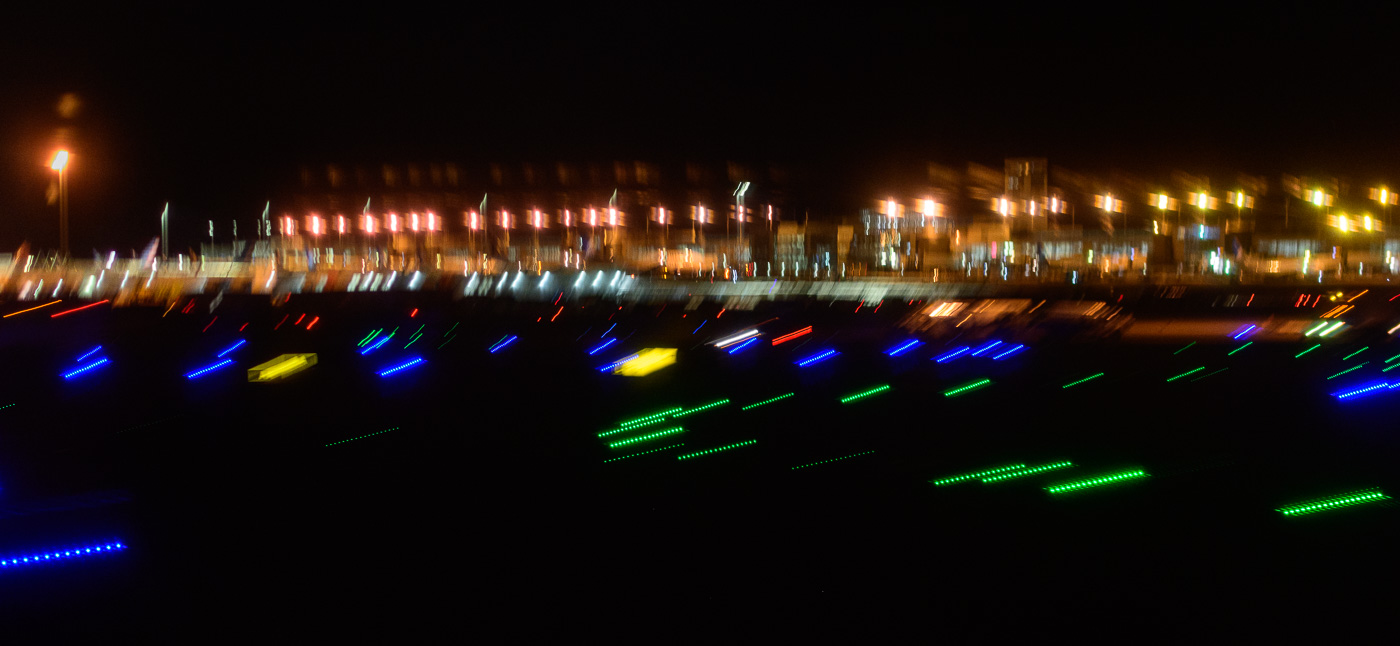
    Refelctions over airport operations©Ed Schlotzhauer

    My view

    When you look at some famous photographer’s work, can you make a good guess who made the image? That is because they have an established and recognizable style.

    In my view, style is not as much about what you shoot as it is about what the final image looks like. This final image is not only a function of what the subject is and how you “treat” it to get the look you want, but how you were thinking about it, and the lens you choose and how you frame and compose and expose it. In other words, your own viewpoint on it.

    You have a point of view, the way you see the world around you that is different from anyone else. This determines your style. It comes naturally.

    That is why, when you see a print of a grand landscape with superb detail and the blue sky printed almost to black, there is a good chance that is Ansel Adams. When you see another black & white image, but blurred in a long time exposure and overall very dark, it may well be a Cole Thompson. Those things are not certain, but they have a defined style.

    Can you copy one?

    One of the ways we learn is to copy. It is instructive, and can be fun, to try on the style of famous artists to see if it “fits” us. We may find bits and pieces that we adopt.

    But most of the time we will decide soon that that was instructive, but I’m done with it. Maybe we’ll go off to copy someone else for a while.

    Ask yourself why you are copying someone else’s style. Is it because you admire their work and want to explore it in more depth? Are you really searching and trying to figure out what your style is? Is it because one is “popular” and you think it will help you to sell more?

    I can’t question your motives, but I can predict that you will eventually give up trying to copy a style and settle down to doing your own work. It is hard to just copy. You are faking it. Besides, in a new situation, how would you copy someone if you haven’t seen any similar work they have done?

    Stylish airport lighting©Ed Schlotzhauer

    How do you develop yours?

    In most cases, you don’t. What you do is shoot a lot. Cartier-Bresson said your first 10,000 photos are the worst. I think one of the things he was telling us is that we have to experiment a lot to find out who we are.

    Yes, we can copy other people’s styles to see if we can learn anything from them. If we are lucky, we might have good mentor to give us honest feedback. But ultimately, it is up to each of us to figure out who we are as artists.

    I believe a style is something we look back on and discover. It is not something we plan to get to someday.

    Look in your image catalog

    How do we know if we have a style and understand what it is? A good start is examining your image catalog. I am using Lightroom terminology, but it applies to whatever sorting and filing system you use.

    I assume you have a system for grading your images. You know which you consider your best. Have you put together portfolios? Small collections of your very best work organized by subject or project or location, for instance. If not, pick out, say, your 50 best images. Be brutal. This is important and you do not have to show them to anyone else.

    Now go through them carefully and examine them from the point of view of what they can tell you about your artistic likes and beliefs. Are most of them landscapes? Are they predominantly square cropped or black & white or low key? Can you see that your favorite pictures are typically shot with a certain lens?

    What about the subject matter? Are your favorites more likely to be a rusty truck than a portrait? Do you favor highly detailed or very simple? Sharp or intentional camera movement (ICM)? Travel locations or mostly close to home?

    There are too many questions to enumerate. The idea is to look at this body of work and figure out who you are as an artist. This is you. This is your style. It certainly does not mean this is all you can do. It is just what you naturally gravitate to.

    Now you can stop trying to be someone else and concentrate on developing yourself.

    Giant flamingos©Ed Schlotzhauer

    Be who you are

    This is a very enlightening exercise. You will probably come away thinking “wow, I have a style!” It can be very hard for us to think about and accept our style. That is just something that other people have. People who are real artists.

    But yes, you do have a style. It is unique to you, so there is no need to try to copy someone else’s. Your point of view and values will come through in your images, if you are being honest with yourself.

    Here is a recent personal example. I was watching a video by a photographer talking about his style. It wasn’t very interesting to me and I was about to turn it off when he said something that caught me. He said he understands his style to be very simple. He is a portrait photographer and he uses simple lighting, plain backgrounds, and basic head shot poses.

    That lit up something in me. I hadn’t considered something like simplicity a dimension of style.

    I did the exercise I recommended above and saw clearly for the first time that I like complexity, detail, extremes of color and contrast and action. That is a common thread through many of my favorite images.

    What does it mean? Nothing in itself. It is just some insight on my work. But I understand myself a little better now. I will be less surprised when I see I am being drawn to these.

    Steam locomotive traction wheels©Ed Schlotzhauer

    Choose your style

    I started with the notion of whether or not we should choose our style. I hope I have established that you don’t really choose your style. Your style chooses you. You can imitate someone else’s style for a while for the education and experience, but ultimately we find ourselves drawn back to what comes naturally to us.

    Don’t fight it. Don’t worry about it. Relax. Be yourself.

    But to be yourself, you have to continually learn and practice and improve. It is a lifelong quest.

  • The Magic of Silhouettes

    The Magic of Silhouettes

    We’re all familiar with silhouettes. Do you ever think about why they are interesting? I believe there is a kind of magic of silhouettes.

    What silhouettes are

    “A silhouette is the image of a person, animal, object or scene represented as a solid shape of a single colour, usually black, with its edges matching the outline of the subject. The interior of a silhouette is featureless, and the silhouette is usually presented on a light background, usually white, or none at all.”

    You are familiar with them. You see them often. A featureless black form in a picture. Have you ever thought how something that shows no detail can be interesting?

    We know from experience that they happen when a foreground object has a bright light behind it. A simple explanation and they are easy to generate, but that by itself does not explain their impact.

    On mountain top looking toward setting sun. Reflecting on life?©Ed Schlotzhauer

    Origin

    I love history and finding out how things came to be. I assumed silhouettes have been an artistic technique for centuries. Not exactly. It mainly dates from the 18th century. Cutting portraits out of black paper became a popular and inexpensive art form. It was especially popular for miniatures, small images on lockets and things like that.

    You can argue the technique was used by Greeks and others as far back as 7 to 8 centuries BC on some of their pottery. Perhaps it is possible to include some even older cave art. But as far as I could find, there was no name given to it back then and the technique seems to have fallen mostly out of practice until the 18th century.

    Here is a piece of nerd interest that will be of absolutely no use to you, but is an intriguing part of our history. The word “silhouette” is not an artistic or technical term. In 1759 Étienne de Silhouette was the French Finance Minister during the Seven Years War. The country’s finances were hard pressed and he had to institute a lot of unpopular austerity measures. So much so that people began to use the term “silhouette” to refer to things done cheaply.

    This was the same time period (18th century) when paper cutouts were becoming popular for portraits and the name transferred and stuck. Silhouettes were an inexpensive art form. It fascinates me that no one remembers Étienne de Silhouette, but we use his name all the time without realizing it.

    Looking through clock, Musee Orsay©Ed Schlotzhauer

    Why are they interesting

    But that still leave open the question of why they are interesting. Just being black does not make it interesting. Being featureless would seem to make them less interesting, not more. Why do they catch our interest?

    They are somewhat different from what we normally see, but that should not in itself be enough to make them special. There are a lot of “gimmick” techniques that photographers and other artists use to try to catch our interest. Generally these fads do not have staying power and fade out as quickly as they appear.

    I believe there is something fundamentally important and intriguing about silhouettes that catches our attention and has lasting power. There seems to be something about them that captures the essence of a subject.

    Less is more

    Less really is more sometimes. This is particularly true in photography, where our super megapixel sensors capture lots of information and detail. We can confuse our viewers with too much detail. I generally love lots of detail, but the subjective experience we want to present is more important than technical details.

    A silhouette is an exercise in simplicity. We remove all information about a subject except its outer form. The way our marvelous brain works, this is usually sufficient for us to recognize the object.

    But even though we recognize it, it is presented in a completely different form. With no interior detail we only have its outline. We are left to guess what is in the big, black, featureless area in the middle of it.

    And we do. We fill in the blanks. Based on our experience, we “know” what is in that shape. But still, the mystery remains and we perceive it different. We see it in a new way.

    It is an exercise in simplicity and minimalization. Absolutely nothing except the information about its shape.

    Similar to black & white

    In some respects silhouettes are related to black & white photographs. They often are presented in black & white. I believe there is a reason for this beyond just the big black area.

    The beauty of black & white is that it removes all color from the image. Color is the most powerful visual sense. We tend to see it first. It can overpower everything else.

    But when the color is removed, we more fully perceive the shapes and tonal relationships that are there. The image is transformed into a different art form, giving us an altered way to see it.

    Silhouettes are like that, but with an emphasis on just the shape of the isolated black forms. The shapes become the subject of the image. There is generally no tonal range in the silhouetted object, just form.

    So, although silhouettes are often made as black & white images, that is not required. It is often preferable to leave the color information in the rest of the image to emphasize the difference of the silhouetted objects and to draw more attention to them.

    Silhouetted tree against glass skyscraper©Ed Schlotzhauer

    The featured image

    The image featured at the top of this article illustrates some of these points. This was taken in a field on a tiny, nameless back road in northeast Oklahoma. I doubt if I could find it again.

    I chose to make both the foreground and mid ground black. Everything that is black is featureless black silhouettes. But there is no problem at all knowing what they are. Adding interior detail would not have improved the image. I could argue that it would have weakened it. It is the exterior shapes we see.

    And this is a case where I felt that preserving the color of the background helps set the context and emphasize the shapes of the foreground. I believe the color adds to the mood.