An artists journey

Category: Artistic Process

  • What Do You See?

    What Do You See?

    We all have different interests, which triggers different perceptions of things around us. What do you see? That determines a lot about what you will photograph.

    Visual mechanics

    If we are an average human beings, we have fairly similar optical equipment. We have rods and cones, corneas and irises, an optical nerve. In the brain we have the occipital lobe doing the major image processing, the parietal lobe handling spatial recognition, and the temporal lobe interfacing to memory. Memory is important to the scene recognition process.

    This is fascinating in a general way, but I’m not interested in any of that for this discussion. I don’t care about the mechanisms of how we see.

    If I was shopping for a car and the salesman insisted on going on in great length about the design details of the engine, he would probably lose a sale. I’m not uninterested in that, but I am more interested in what the car will do for me.

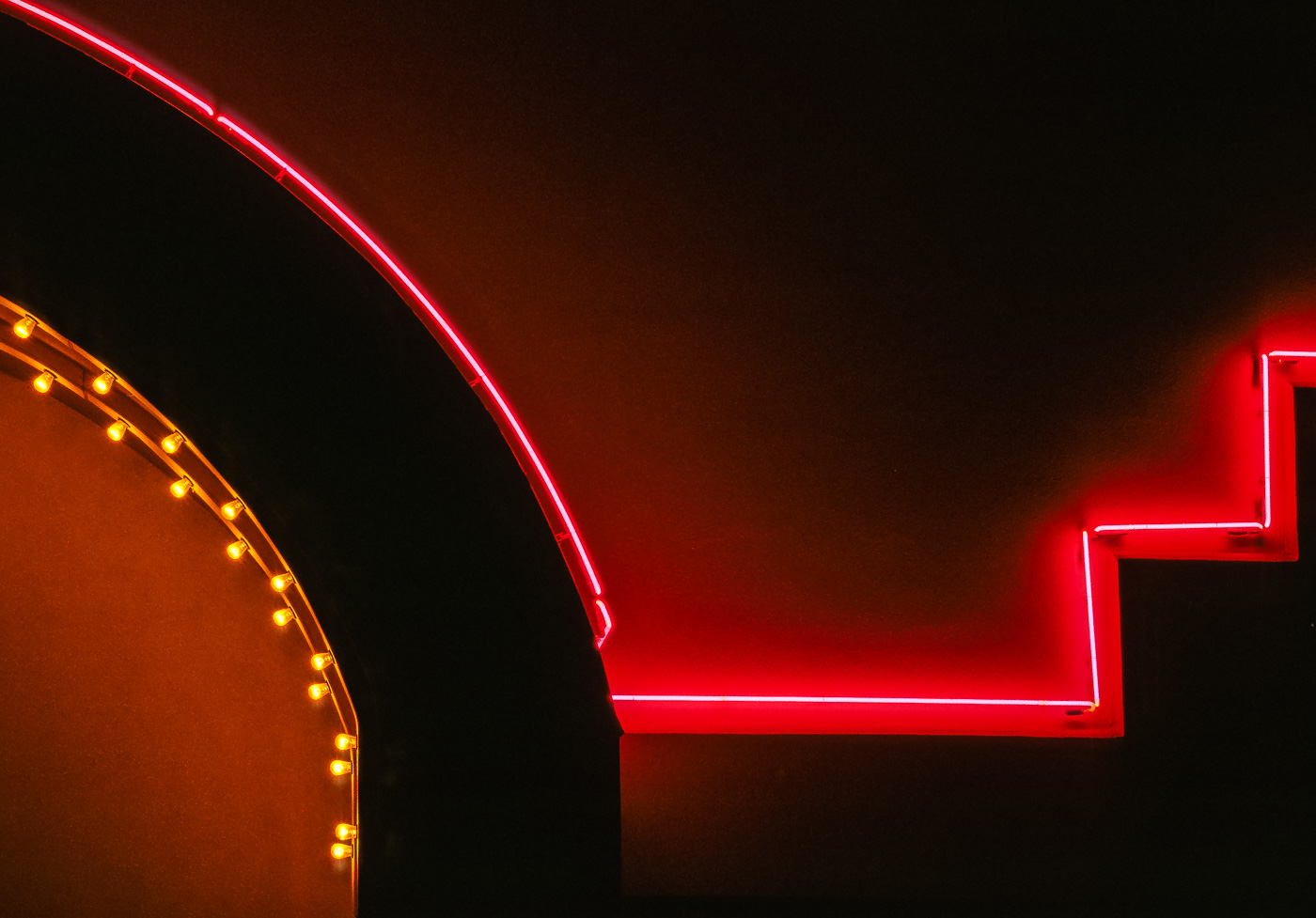
    Stylish airport lighting©Ed Schlotzhauer

    Perception

    In a similar way, I’m not very interested in the mechanism of sight. I want to know how we use our vision. Why do we see what we see? Do we see the same things others around us see?

    I refer to this as our perception. That is not based on how well our visual system works, but in what we are drawn to notice and decide to photograph. Basically, what we choose to see.

    I have heard it said that if you take 2 photographers and put them side by side in a 10×10 foot area they couldn’t leave and have them take pictures, they would be different. Sure, they would image many of the same subjects, but their work would be different. One may favor wide angle shots taking in all the field around them. The other may favor telephoto views narrowing in on details. Even if they used the same cameras and lens, their compositions would be distinct. Basically, they are perceiving different stories. They see and feel different things.

    I haven’t tried this literal experiment, but I have been on photo walks where a group traveled through the same area for an hour or two. When we compared results there were significant differences in treatments and subject selection. We each had different perceptions.

    Decrepit sign along old Route 66.©Ed Schlotzhauer

    Insight

    To me, our perception is closely related to the insight we bring to a scene or subject. Insight in the sense of intuition. A Psychologist’s definition of insight is “when a solution to a problem presents itself quickly and without warning.” I believe that is too limited for our application to photography.

    I prefer to broaden it to include more of our consciousness. The term noesis better captures it. Very simply, it is “the power of acute observation and deduction, discernment, and perception.”

    In our photography, that is basically saying we are looking, we recognize the interest to us, and we know what to do with it. That allows that we could be intentionally looking to photograph the subject, or we may just suddenly recognize that it is interesting. But either way, our perception is working, our eyes are open, and our mind is engaged.

    Selective attention

    Most people are not open and engaged most of the time. We are glued to our tiny screens for much of our day. Even when we put them down, we tend to be lost in thought about our to-do list or an important meeting coming up or a problem we are trying to solve.

    It is a human tendency to have tunnel vision when we are worrying or focused on a problem. Psychologists call this selective attention. There is an old but famous video used as an experiment in this. Try it before reading ahead to the next paragraph. Really focus on counting the passes.

    Did you notice the gorilla? About half the people who are concentrating on counting the passes didn’t. This is selective attention. Even when something bizarre passes through our field of view, we can miss it completely because we are concentrating on something else.

    There is a second finding that came out of this. Most of the subjects who missed the gorilla were very surprised they had done it. They seriously overestimated their ability to multitask. It seemed inconceivable to them that they could miss something so obvious.

    Rusty chair, shadows at sunset©Ed Schlotzhauer

    Are you open?

    When we have the privilege of getting in the “doing photography” mode, whatever that means for you, we must fight to free ourselves from the things that are stealing our attention.

    When we are distracted, we will miss amazing things. Doing photography means to take ourselves out of this, to invert our attention to what’s going on around us, to be receptive.

    This is being open. It is letting the noesis I described earlier function: “the power of acute observation and deduction, discernment, and perception.”

    There is power in this. It turns simple seeing into deep observation and insight. We are aware of relationships and gesture and color and composition and beauty and detail that would otherwise flow by unobserved and unrecorded. It allows us to capture moments that others around us did not perceive.

    I love it when I show someone an image and they say ‘Wow, I pass by that every day and I have never noticed it!” I treasure a memory of one time when I was setting up to take a picture and a woman passing by dismissively said “I don’t see anything interesting here.” But I did. That was satisfying.

    It is very natural to be thinking about our daily worries. I can’t help you with that. I do too. But some of our significant distractions are self-inflicted. If we are photographers, I believe we need to set aside blocks of time where we put the phone down and out of sight and pay attention to what we are missing all around us.

    We only have a certain amount of attention. Moment by moment we choose what to spend it on. Multi-tasking is very ineffective for creative tasks. When we try to do our art and something else, both will suffer.

    Giant bear peeking into an urban building©Ed Schlotzhauer

    Give yourself permission

    One joy of being a photographer is that we can give ourselves permission to step out of the flood that carries most people along. Picking up our camera is an excuse and an opportunity to be immersed in the moment, in a creative flow. Eyes open, mind engaged, not distracted. This is tremendously energizing. It makes us feel very alive. We start to see.

    We photograph what we are looking at. That’s the direction our head is pointing, so that is where our field of vision is. That limits what we could see. But what are we seeing? That is our choice. We “see” with our mind. What we notice in our field of view is determined by our interests and curiosity. With practice and experience we can learn to see more. To more clearly see things that are not obvious to other people.

  • Critique Your Own Work

    Critique Your Own Work

    It is important to be able to honestly critique your own work. Can you objectively see it as others do? I believe it is a learned skill.

    It will be critiqued

    Every time we look at our images, we are critiquing them. When our friends or even our spouse look at them, they are critiquing them. They will probably keep their real opinions to themselves, but inside their head, they are being honest.

    And, of course, when we approach a gallery or enter a contest, we are explicitly inviting critique. The gallery manager or judge is seeing hundreds or thousands of competing images. They will be brutally honest and severe in their comparison and criticism. They are only going to choose a handful of the many competing entries they are given.

    Even if we are just posting on social media to show other people where we are and what we are doing, they are forming opinions of the pictures. I would theorize that, if you care at all about images, it is impossible to look at a picture without forming an opinion. And everyone who looks at yours does it.

    Transportation modes and triangles©Ed Schlotzhauer

    First do it ourself

    That may sound harsh, but I believe it is reality. Since it will happen, shouldn’t we jump in and be the most severe critic of our pictures before others do? Shouldn’t we eliminate weak pictures and fix the problems in the others? If we are very deliberate to only show our best images, that will save us embarrassment and make us look like a better photographer.

    You will never see my unedited images unless I am teaching a workshop on editing and want to prove a point. I shoot a lot. Most are not great. And I don’t even intend some of them to be very good. Some are purely experimental. “What if” moments where I am exploring to see if what I did seems to lead in a useful direction.

    It is common to make several shots of a scene. But I will typically pick only 1 as the best. That is the only one you would ever see. And even then, the best of a set still may not be a very good image.

    And it is much more than the technical perfection of an image.

    Spreading oak branches.©Ed Schlotzhauer

    Study

    My friend Cole Thompson believes in what he calls “photographic celibacy“. He does not look at the work of other photographers so that he is not influenced by them.

    That does not work for me. I consider it valuable to study all forms and genres of image making. There are things to be learned from photography and painting and movies, graffiti and magazines and advertising. Most any genre from Renaissance to Romanticism to Impressionism to Abstract to post-modernism can give us insight in how other artists have chosen to express their ideas.

    Read books where artists discuss their thought process. Go to museums and galleries. Cultivate friends who have artistic perception. Take in as much as possible.

    But learn. Don’t follow.

    Keeping Knowledge locked away©Ed Schlotzhauer

    Learn your taste

    We are artists. That means we have a point of view to share with the world, and particular visual styles we use to do it. We each must find and understand our values and style. These preferences guide our photographic decisions.

    If you are new at photography, it is natural to look at an artist and say we want to make work that looks like theirs. That is OK, for a while. Copy someone we are studying to internalize how they do it. But it is important then to re-center ourself and decide what, if anything, of what we learned we want to adopt to our own art.

    Maybe it is nothing. We may greatly admire their art, but conclude it is not applicable to what we feel and want to do. For example, I really like some of Joel Grimes‘ portraits. But it is unlikely I will ever do an image in his style. I don’t shoot portraits, and the edgy, high-tech style is not mine.

    My point is that, with lots of experience and practice, I am learning how I see and what kind of images I want. Anything that makes me better at that adds to my skills and is valuable. Anything that doesn’t may be interesting and educational, but probably not valuable.

    Give it some time

    We are all basically using the same tools. It is not the technology that differentiates us.

    Famous jazz musician Miles Davis said, “Sometimes, you have to play a long time to be able to play like yourself.” This is probably true of any art form. I believe it is true of photography.

    We learn and practice and imitate other artists and chase “likes”, but eventually, if we persist, we learn to be ourselves. I don’t think there are shortcuts (sorry). If you have been at it for a while, you are probably not producing the same type of work now that you did 20 years ago. Hopefully, you are now creating images that are uniquely you.

    Each of us is a mix of genes and education and experience and values and motivations, tempered by our unique life experiences, and wrapped in a frail human body. No one else’s mix is the same as yours. That’s why we should not try to “be” some other artist we admire. We can’t. We can only authentically be ourselves.

    But even when we learn to be ourselves, that doesn’t mean our work is good. The sad truth is that most of the trillions of photos shot every year are unexceptional. We must learn the skill of critically evaluating our own work.

    Graffiti abstract©Ed Schlotzhauer

    Make a portfolio

    An excellent way to examine yourself and understand where you are artistically is to put together a portfolio. I find that I am not as critical as I should be unless I do this. Pretend you are going to submit your portfolio to a gallery. The portfolio can’t have more than 20 images.

    That limit is the problem and the beauty. It is not difficult pulling out 300 pictures you like. Forcing that down to 200 hurts some, but isn’t too much of a problem. Then grit your teeth and make the cuts down to 100. This is getting painful. You are having to cut some of your favorite pictures.

    Then it gets hard. You think you can’t possibly take any more out. But the goal staring at you is 20. From here on out, you are having to do serious self-examination. Each image must be scrutinized more carefully. Every one must be justified to stay in the select set.

    Liking, even loving an image is not enough. We must objectively decide if it is a strong piece of art on its own. Is the technical craft and the composition solid enough to stand up to criticism? Does it go beyond a record shot, having that “something extra“?

    This is painful. When it gets down to about 30, every one you eliminate feels like you are giving up one of your children. Each picture must compete head-to-head against every other one. The weaker must be eliminated. You try to talk yourself into cheating and keeping 25 or 30 for the portfolio. But push on. Cutting the last 10-20 images is by far the most difficult. But also, the most instructive.

    Abstract, Charles de Gaulle Airport, Paris©Ed Schlotzhauer

    Self-examination

    Congratulations! You have put together a portfolio! The regret over the ones eliminated will fade quickly. You just eliminated them from this portfolio. You didn’t delete them from your disk. Now it is time to reflect on what you have created and try to learn.

    Just look at your images for a while. Consider each one individually. Why do you like it? How is it better than all the ones you eliminated? What do you learn about yourself from it? Then reflect on the whole set. You might be surprised to discover a harmonious style or approach, even though each may be a different subject.

    Forcing yourself through the process of narrowing down a set of good pictures to a very small set of great pictures is an excellent way to learn to critique your work. Having a fixed goal forces us to make hard decisions instead of being vague.

    You will probably discover that you have a set of images that you are proud to show anyone. Ones you believe will stand up to close examination by experts. And that you have a style that is your own.

    Critique your own work, severely. Be such a severe critic that you are sure you will not be ashamed to show anyone the survivors. And make sure your work proves you are human, not an AI.

  • Image Quality

    Image Quality

    As photographers, we often obsess over image quality. The highest resolution, the sharpest focus, the best light, the best composition. All these things are important, but is that really what defines image quality?

    Technical perfection

    Photography is more closely tied to technology than most other 2-dimensional art forms. Our cameras embody sophisticated technology. Our editing tools are leading edge, sometimes AI driven.

    The field seems obsessed with specifications and details. What is the MTF of this lens? Does this sensor have 14 bits of dynamic range or only 12? Should I go to a 100 MPixel medium format system to be a better photographer?

    I have chased all of this at times, and I still have that tendency. A couple of times recently I have gone through the specs and lens choices for medium format, longing for a move up to the “better” gear.

    Underlying all this is the belief that better technology will give us better image quality. But a more technically perfect image is not necessarily a better one.

    Abandoned tracks join©Ed Schlotzhauer

    Composition rules

    The visual arts seem to accumulate a large set of rules meant to guide our work. These are generally sound principles, based on long history of practice and evaluation. Most of them are good, except for the “rule” part.

    The “rule of thirds”, for instance, helps balance compositions and give some dynamic life to an image. Same for rules like leading lines or diagonals or don’t center the subject. All are good advice to keep in mind. The problem comes when it becomes an absolute rule. When a gallery or a photo club judge rejects our photo because it did not conform to one of the standard composition rules, then we are in the wrong place.

    Know and use the rules, and understand that you can freely “break” them whenever you feel you need to. Guidance like these “rules” are good general advice. But general advice does not apply to each individual case. You are the artist. Your decisions create the image. Trust your intuition.

    Canterbury Cathedral©Ed Schlotzhauer

    Work the scene

    Other advice I have heard recently is to work the scene to develop it into the best shot. We are counseled to take many exposures from different angles and maybe with different lenses, with the objective that by shooting all this variety, one of the shots will be “best”.

    It is probably true that one will be best, but is this the best, or only way, to get there? Let’s work through a scenario. Say I am there with lenses of 24mm, 35mm, 50mm, 70mm, 100mm, and 200mm (full frame equivalent). Let’s further say that that I have access to shoot front left from ground level, center above ground level, front right at eye level, and rear center at ground level. Just those individual choices give 24 shots to take. Then throw in bracketing for aperture and exposure and composition and that gives possibly hundreds of shots. For one scene.

    It is true that if you do that, you may occasionally be surprised by the one you select as best. It is a great learning exercise if you are developing your style and vision. And a good exercise to go through occasionally to check yourself.

    But I generally know what I want. I have the experience of shooting and viewing hundreds of thousands of images. My preferences are established, but flexible. That is, I experiment frequently so as not to fall into a rut. But I do not need to shoot hundreds of frames of one scene to get to what I would consider “best”.

    And ever worse, I fear that blindly following this “work the scene” advice will lead to the best possible shot of a mediocre scene. Meanwhile, we miss the better, more imaginative, more creative scene because we were over-concentrating on one thing. I prefer to use my judgment to frame the best shot and go on to find the next, even better one.

    Antique diesel locomotive©Ed Schlotzhauer

    Disappointment?

    I have done all of these. For years I chased technical perfection. During my time in a camera club, I faithfully followed the composition rules. I shamefully confess that as a judge I criticized some images for not following the rules. And at times I have ended up with piles of images bracketing one scene to insensibility. Usually with the result that I kept one of the first ones I shot and threw the rest away.

    Many of these efforts led to technically good images that are lifeless and disappointing. They do not capture my reaction or relationship to the scene. There is no depth of insight. Only a very small fraction are printed and hanging on my wall now.

    I have had to completely rethink what “image quality” means.

    Image quality

    These observations are strictly my personal judgments. I have no authority over your artistic values. As artists, we each should come to our own conclusions.

    I have seen that many of the famous photos and paintings in history are not technically perfect. But something about them elevates them above the crowd. What is that? I know I have images shot with inferior cameras with cheap lenses that are “better” than many taken with much better cameras. This makes me wonder what image quality really means.

    Now days, we are inundated with images. Most are adequately sharp and well exposed. What makes one stand out among those trillions of bits of noise?

    We must reevaluate what it means to be a good image. It is no longer the obscurity of the location or the difficulty of the shot or the perfect composition or the sharp detail. None of those are enough, by themselves, to make an outstanding shot. In a Substack article, Lee Anne White said: “There are always photographs that are technically solid, but missing that something extra“. Ah, that something extra is so hard to describe.

    Photography is a craft as well as an art. We must strive to do an excellent job of technical perfection, composition, etc. But those things are not the something extra that make an outstanding image.

    Looking at a Monet©Ed Schlotzhauer

    Something extra

    In the crowded and noisy world of images, it seems that what we look to now is an emotional attachment. Something must touch us personally. To do that, it generally had to touch the artist, too. We must be able to let our emotional reaction to the scene come through our image.

    Maybe this is what Cartier-Bresson meant by the decisive moment. Perhaps this is what Jay Maisel means by the gesture of something. Either way, an idea is that the subject is expressing something. We must be in sync with it and ready and able to capture the best expression of that.

    These instances sometimes happen in a fleeting moment. Perhaps we can anticipate them and be setup and prepared. Sometimes it is a singular event, and we have one shot at it. But either way, we must recognize and react. We must understand what is happening and be mentally and physically prepared to capture it.

    And being prepared involves understanding our emotional involvement with what it is. We must recognize when that gesture is best expressed to us, and pounce on it.

    Of course, images do not have to be of a fleeting moment to be good and express an amazing gesture. There are those that are static scenes, where you can linger over it to wait for the right light or weather.

    Still, what the viewer relates to is your feeling about it. Why did you take this picture? Why did you select it out of all the others?

    Paraphrasing Jay Maisel: “If the thing you’re shooting doesn’t excite you, what makes you think it will excite anyone else?”

    If an image meant something special to me, and I can capture that and make you feel what I felt, then there is a chance the image is meaningful to you, too. That it embodies the “something extra.” Isn’t this what image quality is about?

  • Challenge and Stimulation

    Challenge and Stimulation

    We are all motivated by different things. That is good. Otherwise, we would all make the same art of the same subjects. But do you understand your personal challenges and stimulation?

    Different personalities

    Our personality type partially determines what motivates us and how we approach our art. I have mentioned introverts versus extroverts, but there are other dimensions.

    Some of us are visual learners. We take in new ideas best through pictures, diagrams, even videos. Others receive information best through words. There is not a best way. It all depends on how we are wired. I am more of a visual learner.

    Some want to carefully design their art and work slowly and deliberately. Others work better at a fast moving, “run & gun” approach. Some feel that their images must be created entirely in camera in a single frame. Others prefer to manipulate images heavily and even composite them together. Some like hyper-realistic, razor sharp images where others prefer to use intentional camera motion to create impressionistic images.

    All people can make art, but they must approach it in the way that makes sense to them.

    Zig-zag shadow©Ed Schlotzhauer

    Different goals

    Some of us are challenged by the hunt, the contest. We need to be working toward a goal of a competition. It is a contest against others. Winning is the motivation. A prize and its bragging rights are up for grabs.

    Others of us could care less about that. We are challenged by inward values and goals. We are self-motivated to do our best work even if just for ourselves. An audience is nice, but not necessary.

    There is not a best way. What matters is what works for you and understanding yourself well enough to know those things.

    I got frustrated recently reading David duChemin’s Light, Space, and Time: Essays on Camera Craft and Creativity . He goes on a lot about working a scene from many angles and points of view to get the “best” shot. The best shot seemed to be all important. Then I realized he is an extrovert. I should have figured that out from a video I saw of him. As an extrovert, the product is the goal. With me, an introvert, it is more the experience.

    There is no one right way in art. We tend to project what works for us onto other people as “the answer”. That is an error.

    We need challenge

    However it comes, we all need challenge and stimulation. Challenge gets us out the door on a cold morning. We are seeking something. We need to do this. Some people need the fire of competition to test and motivate them.

    Challenge might come from wanting to enter a contest or the prospect of a gallery show or to pay the bills. Or it might be the need to answer questions for ourself. Questions like what can I do with this topic, or is there more interest to be found in this subject I have photographed many times?

    Challenges do not have to be public. It could be a personal quest. One for me has been to get what I consider to be an interesting and non-cliché shot of the Eiffel Tower. That is a challenge for such an iconic and over-shot subject.

    Pictures of pictures©Ed Schlotzhauer

    It may be the challenge of having “failed” to get results we were happy with in previous attempts with a subject. The belief that there is a better way to do it if we just learn from our mistakes and dig deeper, is a challenge.

    Whatever it is for us, our challenge presents us with a goal or idea that has been out of our reach, but we are striving for it. We need to elevate our art, our ideas, our craft a little to get there. It is an effort, and it tests our ability.

    We all need to test our ability frequently. Whether it is by entering competitions or by our self-examination when we review our images in Lightroom, we need to honestly evaluate if we are growing as an artist. Challenges stimulate growth.

    We need stimulation

    We also need stimulation. Maybe I should say that I need stimulation. I realize that we are all different.

    Stimulation is different from a challenge. It is something that elevates our thoughts or consciousness beyond your present state. Stimulation is that spark that ignites something in us, that tweaks our interest. It gets us excited.

    Each of us is stimulated by different things at different times. I do not think there are any universal answers. I can only give anecdotes of the kind of things that stimulate me.

    Travel stimulates me. When I am out of my home area, things look different. I look at things as new and interesting. It energizes me and helps me to continue to see things fresh when I get home.

    Learning stimulates me. New ideas, new images, new techniques add to the mix of things swirling in my head and sometimes pop out in surprising new ways. That excites me. It might even take my art in a new direction. It is great to feel that you have stepped up to a new level.

    I don’t usually need stimulation to get out the door and take pictures. But it helps to break me out of ruts and look at the world in new ways.

    Rusty chair, shadows at sunset©Ed Schlotzhauer

    Creativity

    We humans sometimes need to be prodded to do our best work. Challenges and stimulation are part of that. I view it as the classic carrot and stick. Stimulation is the carrot. It energizes and excites us to go forward. Challenge is the stick. We have accepted a challenge now we have to get busy and go for it to keep from failing.

    Creativity is not well understood, despite many smart Psychologists spending whole careers studying it. Creativity seems to happen in our subconscious. That is why ideas “pop out” at seemingly random times, like when you’re going to sleep or in the shower.

    The process may not be understood, but history tells me we can do things to feed our mind and encourage our subconscious to be more creative. Some of the important things are these ideas of challenge and stimulation. And keep working. It is important to avoid just sitting around feeling sorry for our lack of creativity.

    Terra Incognita©Ed Schlotzhauer

    Feed your head

    My model is that we can lure our subconscious to work for us by assigning it a task. Say we want to create a new art project that is significantly different from our normal work. We do not know the best way to approach it or even understand yet what the end should look like. But by turning it over to our subconscious and letting it work on it without much interruption from us, we are often surprised later to find that we have clarified our thoughts a lot and now have a direction for the project. Maybe a creative new direction.

    Giving the subconscious a goal is setting the challenge. But I also find my subconscious needs stimulation to energize it. The stimulation is often completely unrelated to the goal. Start to learn a new language, research how knives are forged, read a biography of a famous person, go to a museum. I’m not sure the topic matters as long as we are stimulating our mind with new learning and following our curiosity. (TikTok is not new learning) I do believe that the new information makes new connections in our mind and energizes it to do creative work.

    Surprises happen. That is creativity.

    Keeping Knowledge locked away©Ed Schlotzhauer

    Push through

    So, when we get stuck and it seems the creative muse has left, often the best things to do is to not worry about it. Instead, decide if there are some challenges you are wanting to undertake. Then go on a learning binge. Don’t stress about your challenges or lack of creativity. Just follow your curiosity and learn new things. Immerse yourself in something new that is stimulating to you.

    But through it all, keep working. You may not be doing career changing art, but it is important to keep trying. Creativity will come back even stronger, but in its own time. When it happens, accept it and be grateful. And it will happen if you challenge it and stimulate it.

  • That Didn’t Work

    That Didn’t Work

    You had an idea. You tried for it, but the result must be considered a failure. If that didn’t work, what do you do? Does that mean you are a bad artist?

    An idea

    You get an idea of something you want to try. Call it an inspiration if you will. More likely it is an extension of what you have done before, maybe applied to a new subject or situation.

    As an artist, most of our work begins with an idea. As a photographer, we than follow up the idea with trying to realize it as an image. Maybe several, working different positions, lenses, shutter speeds, etc. to try to optimize the resultant image.

    If you are very experienced with your craft, you might be able to visualize fairly accurately what the result will be. But no matter how experienced you are, you will get surprises. Surprises can be fun and a great creativity boost.

    Antique diesel locomotive©Ed Schlotzhauer

    Fail

    But whether you blast away 100 frames or selectively shoot 1 frame of a scene, you will sometimes look at the result and say it was a fail. How we react to such a failure is very important. Your reaction could ultimately determine the level of success you have later.

    I’m using the idea of failing, but what does that mean? The definition will be different for each of us, but in general, I hope we can agree that it means the result does not meet our expectation. It does not necessarily mean the image is terrible or unusable, or even bad, but what we planned or pre-visualized did not happen.

    At the risk of sounding like a cliché, this is a learning opportunity.Intentionally imperfect. A blurred effect capturing the motion of the scene.©Ed Schlotzhauer

    Permission to fail

    Failure seems like a terrible fault to some of us. I am one of those in many things, but not in my photography. For my art, I have given myself not only permission to “fail”, but the expectation that I will and should. I have embraced failure as a healthy part of growing as an artist.

    This was a big step for me. I discovered that the fact of failure was not the main problem. The larger problem was fear of failure.

    How much are we held back in our art by fear of failure? Do we fear being humiliated? Or that people will dismiss us as an untalented lightweight? Do we believe we are somehow bad when a shot does not meet our expectation?

    Here’s the reality: few people care about what we do. They are not sitting around thinking about us and they take little or no notice of our work. If they’re not fixated on it, why should we be?

    We are our main audience. Our work succeeds or fails based on our own perception. All that matters is whether we get to a result we are happy with. Failures along the way should not matter.

    Risk

    Author Herman Melville once said, “It is better to fail in originality than to succeed in imitation.” I believe the greater risk in our artistic life is to fail to be creative.

    AI is constantly learning how to mimic all existing art. The only solution is to be different from what exists.

    If we are repeating the same boring stuff that 99% of photographers do, what have we contributed to art or to ourselves? Chasing likes on social media is normalizing. That is, it brings us down to the average level of everyone else.

    Theodore Roosevelt said: “It is hard to fail, but it is worse never to have tried to succeed. In this life we get nothing save by effort.” If we are an artist, the risk is to not give it our full effort and not become what we can be. To let what is within us die because of fear of failure. That seems too great a fate to risk.

    Tripod leg on edge or rushing river©Ed Schlotzhauer

    Learn, modify, try again

    The sports legend Michael Jordan said “I’ve missed more than 9,000 shots in my career. I’ve lost almost 300 games. 26 times I’ve been trusted to take the game winning shot and missed. I’ve failed over and over and over again in my life. And that is why I succeed.

    Unlike Michael Jordan, we don’t have millions of fans watching live as we fail. We can curate our work and select what gets presented to people to see. You won’t see my failures, unless I am trying to make a point.

    Given that, why should we consider failure a problem? A failure is an experiment. We try something, we see the result, and we like it, or we don’t. Either way we can learn something new and try again. But the reality is, we learn more from failing than from success. But only if we make the effort to figure out the cause.

    So, when we’re shooting, we have an idea or a vision of what we want to achieve. We make the image. Later, we examine it closely on our computer. Sometimes the result is far from what we envisioned. That is a time to introspect. To determine what we did or didn’t do that made the result different from what we wanted. Maybe to ask if the result is better or worse than what we visualized.

    These days, I find that less of my fails are because of exposure or composition problems. Most are concept-level issues. Ansel Adams said “There is nothing worse than a sharp image of a fuzzy concept.” Concept failures are harder to diagnose and correct, but they certainly keep me thinking more.

    But whatever the cause of our failure, our goal should be to learn, modify, and try again.

    Success is not final; failure is not fatal: it is the courage to continue that counts.

    Winston Churchill

    Sketches

    I consider most of my images to be sketches. Things that are helping me work toward an idea I haven’t fully envisioned. When I shot film, these experiments were expensive, and I tried to minimize the loss. Digital frames seem almost free. No problem to take several experimental tries.

    So now we should be free to work a scene as much as seems valuable. But I seldom do it that way. My sketches are more tests to see if what I saw can become a good image. Perhaps it is a fault of mine, but I spend little effort making many slight variations of a scene.

    I don’t like doing comparison tests of 12 different views of a scene to try to figure out which is best. If I come up with 4 that are equally good, how do I decide a “best”? When I find myself in this situation, I often conclude I am not really applying much creativity to the image. I seem to be optimizing for technical concerns.

    A possible exception is shooting intentional camera motion (ICM) images. Each frame could be considered a failure from a purist technical perspective – blurry, motion, no sharp subject. These are fun because it is an abstraction technique, and each frame is unique. For these, I may do a few variations on a scene, trying different motion techniques. You never know exactly what the outcome will be. There are occasional happy surprises.

    Intentional Camera Movement©Ed Schlotzhauer

    Discoveries

    When we allow ourselves permission to fail, we sometimes discover that we have stumbled onto something entirely new. We see a glimpse of a new creative statement starting to form.

    This is a different form of courage in the face of failure. The recognition that yes, we failed in what we tried, but it opened a new insight on our world. The first emergence of this new idea is probably crude. It seems like a failure. But as we reflect on why we are drawn to it, why we do not immediately delete it, it may give new insight to change our viewpoint and try to perfect it.

    This is one of those rare and exciting moments when we get a tingling in our spine and we perk up and wonder what just happened here? That is a cue that we are about to step outside our comfort zone. It is dangerous for an artist to be too comfortable for too long.

    That is creativity. Sometimes creativity is based on recognizing that what I did didn’t work, but I now see a glimpse of something better. Being an artist is a process, not a destination. Failure can be an opportunity to advance ourselves to a better state. Analyze it, experiment, modify, try again to see if you are going in a good direction.

    Sometimes, finding “that didn’t work” could mean we are on the brink of an exciting new step in our art.