An artists journey

Category: Artist

  • Reflecting

    Reflecting

    At the beginning of a new year, I guess it is natural to reflect back on the one that just ended. To remember our successes and analyze our failures. Reflecting on the past puts us in touch with the flow of time.

    A calendar page

    Most of us have just “put up a new calendar” – does anyone (except my wife) still use paper calendars? Regardless, the metaphor holds. It is a new year, untracked, fresh with possibility.

    For some reason, the act of starting a new year causes us to spend a little time reflecting on the year that has just ended. This can be painful, because most of us did not accomplish all our goals or live up to our dreams. But it is also useful and necessary.

    The process of considering what we wanted to accomplish in the past year and making plans for the coming year is very useful. It helps focus our minds on our goals. Without it, we would tend to drift along year to year never going anywhere. Because the reality is, to accomplish our goals requires intense focus and detailed plans to get there.

    Limited resource

    Time is a reality none of us can escape. We travel along in the stream of time and have no choice but to flow with it. The amount of time we have is unknown, but is ultimately limited.

    Let’s put some hypothetical numbers to it. There are 8760 hours in a year (ignoring leap years and leap seconds ๐Ÿ™‚ ). Sleeping 8 hours a day, as you should, takes away 2920 hours a year. I assume here you work a “normal” job to support your art habit. So that is 8 hours a day for 50 weeks a year, totalling 2000 hours.

    What’s left is 3840 hours, But wait. We can’t use all that. This is ALL the time left over. There is cooking and cleaning and home repair and mowing the yard and picking up the kids and family activities and being with friends and watching TV and … For most people, all of this is used up each year. Our lives are busy and we can’t figure out where the time goes.

    But let’s say you are very committed and disciplined and you save 1000 hours a year for creating, producing, and marketing your art. That doesn’t sound like much, but that is 1/2 of a full time job – basically 4 hours a day 5 days a week devoted to your art. Do you set that much aside for something so important to you?

    The point is that our time is a limited resource. Every moment we can set aside to spend on our art is precious. We should be disciplined and mindful of what we do. Isn’t this more important to you than following your favorite TV show?

    The dream life

    Are you living your dream life? Did you know that many people envy you?

    People in general look at artists through a romantic lens. It is a life that seems desirable to them, as they go though their day-to-day lives, all the same, no time to do what they think they want to do. The artist seems to have a life of creativity and independence.

    Now, you know that is a skewed view. You know that the artistic life is difficult. We deal with rejection all the time. Disappointment is routine. And yet we must push on and rely on our creativity driven by our will power to carry us through. We have to be tough and resilient.

    But use this year end time to step back and see it from a larger perspective. Maybe they’re right. Unlike most people, we get to use our creativity. We create things that other people appreciate and probably can’t do. Most people don’t think they are creative and they envy other people who are openly and consistently artistic. To them, what we do is almost magic and must be highly rewarding.

    They are right. It is rewarding. We love to exercise and display our creativity. While most people are too afraid or timid to do it, we proclaim our self as an artist. Isn’t that a dream life? Try to look at it the way non-artists do.

    New Year’s Resolutions

    So here we are now at the start of a new year and it is traditional to make New Year’s Resolutions. I would say, don’t bother. They are ineffective. A resolution is just a suggestion, really a wish. You are just telling yourself “I wish I would do this, but I don’t really hold myself responsible to do it”. Most are totally broken and discarded within a month.

    Either commit as a definite goal with plans and determination to make it happen, or don’t bother. Being an artist is hard. You won’t get there by just wishing it would happen. We have to believe in our self and push through the hard times.

    How are you going to direct your creativity this year?

    Looking back, what have you done well this past year that needs to be built on? What did not work and needs to be changed? Many dream of doing the things you do. Few follow through and actually believe in themselves enough to do it. There is an old saying “whether you think you can or you think you can’t, you are probably right.” What do you think?

    Those 1000 or so hours we have to devote to our art are precious and valuable. Do you hunger enough to do it? Do you believe you have a gift that needs to be used? Are you willing to put in the hard work? To deal with the rejection and criticism? Are you willing to persevere when people tell you you aren’t good enough?

    Don’t have a New Year’s Resolution. Instead be resolute. Nothing but yourself and your fears and doubts can keep you from using your talent and living the artistic life.

    Believe in the worth of your talent. Make a plan and believe in yourself. Don’t look back.

  • Am I A Failure?

    Am I A Failure?

    It’s the end of a calendar year. For most of us, it is a time of reflection. Are you having doubts and insecurity about your art and your capability? Do you, sometimes, deep down inside, fear you are a failure? I know I do. At this time of the year especially, I wonder if I am a failure.

    An ongoing problem for most creatives

    I have written before about failing. We all feel it. I think creatives feel it more than most.

    The fact that we are creatives means we have to create. But when we show our creations to the world, we are very likely to get rejection and criticism. That hurts. It bruises our ego and makes us insecure. As creatives we have to be out doing new, fresh, interesting work that sets us apart from our peers. But we can’t always feel the inspiration or be on top of our game. When we look at other artists work or awards, it is natural to feel inadequate. A failure.

    My reading tells me most artists feel this way at times. Sometimes a lot. Even the famous or well known are troubled with this doubt.

    What are your metrics?

    We have to be careful to select what we are measuring and how we are doing it. When we feel a failure it is usually compared to what we see other people doing, or our goals, or based on some negative feedback we get.

    So one problem is who do we compare our self to? Remember, what you see on social media or magazines or gallery shows is the very best work they can do. But we compare our everyday work, or even our throw-aways, to them and feel a failure. What if you took your carefully selected portfolio of a few great images and compared those to these other people? Would you compare better? Even if you say they are better, can you justifiably say, “but mine is very good”? Don’t assume you are not up to the measure.

    External metrics

    And we tend to tie our sense of worth to external measures. Like money or recognition or winning contests. One problem with this is that these are things out of our control. We might work hard and market our self extensively, but still we cannot control our sales success. We may enter a lot of contests and open exhibits, but the fact that we are not picked very often is mostly dependent on circumstances we cannot know or understand. And no, saying we just need to get better doesn’t ensure success there.

    Recognition is more subtle and in some ways more dangerous. What artist doesn’t want recognition? It makes us feel significant. It validates us and our work. We may seek it, even need it, but we have little control over it happening. The “best” artists are often passed over for seemingly inconsequential reasons. Personal preferences of judges or curators, biases, maybe entering subject matter that is not popular with them. Any number of reasons.

    Who said you failed?

    But when we are not selected for the show or contest or gallery, what do we internalize? When no one is rushing to buy our prints, what do we assume? We tell our self we are a failure. We are not good enough. No one said that. It is what we tell our self. We are our own worst critic. We rush to think the worst.

    Of course, we could try to game the system. We could study the styles and opinions of the judges or gallerists and design work to match their preferences. This might get some show entries and even sales. But whose work are you doing at that point? Are you still an artist if you subvert your vision to the opinions of others?

    The moment I decide to create my work first for your approval, and not because it scratches some creative itch within me, I have lost.

    David duChemin, “The Soul of the Camera”

    All critics have their own opinions. Many are locked in to certain positions because they have developed a reputation in that movement. Some cannot rise above their training. A few are just narrow minded. A lot just may not like our style of art. I’m not saying it is useless to listen to them, just that their opinion is just that, an opinion. It is not law or given from God.

    Take the failure or criticism as just an input. Think about the merits, if any, but feel free to discard the advice. Your own opinion must direct your art.

    Understand your goals

    Be careful of needing to seek the approval of others. They can reject your work, but they cannot judge your art. David duChemin also said, in the book cited above: “Craft can be measured; art cannot”.

    The reality is, no one but you can judge your art. Our creativity is a gift from God. When we create art, we are giving back a praise and thanks to him. It is from within. The judgment of our art is our own.

    Sure, we can, if we are lucky, find one or more trusted mentors who can give us good feedback. But even then, it is up to us to accept or reject their input.

    Out art must scratch the particular itch within us. That is the goal that matters. We must create what we have within. This is internally driven, not dependent on the whims or opinions of other people.

    Never give up

    I have heard it said that if you can be talked out of your goal, you should give it up. Some disagree, but I think there is a good core of truth to it. Being an artist is particularly difficult. You must be driven and willing to follow your heart despite rejection. It was much easier to become an engineer than to become an artist. The goals were clearer and more easily attained.

    I like the phrase what is the thing you can’t not do? This is your art. I think it is a good description. If we have art in us, we are almost compelled to produce it. It doesn’t matter if it is rejected. It doesn’t matter if we don’t get rich with it. This is our art. We have to do it. Other people’s opinions may hurt, but they should not knock up off course.

    If I do the art that is within me crying to get out, and I’m happy with it, I am not a failure.

    Despite what I may feel today.

  • Time Builds Perspective

    Time Builds Perspective

    I find that a distance of time often builds a healthy perspective on my images. Sometimes, when the images are “fresh”, the experience of the capture clouds my judgment. Letting them age can build a clearer judgment of them. They can take on a new life.

    Let go

    I have written that we need to fall in love with our images and capture the emotions we were feeling at the time. That is true, but the experience of the moment is not sufficient to make it worthwhile. I could point to many images in my catalog that bring back great memories. Ones where I felt alive and on fire when I took them.

    They will always be meaningful to me, but that does not make them great images. I have to learn to let go of my emotional attachment to them and look at them with detachment. That is the only way to begin to see if they could bring satisfaction to other people.

    Be analytical

    I have said that we need to balance our emotional side with our analytical side. This is one of those times. Looking at one of my images may bring back a flood of joy or suffering or pain or other feelings. But I must coldly and analytically figure out if I have brought any of that to my viewers.

    Just because it was significant to me does not mean it should be to you. This may be the last picture I took of my father before he died, but that doesn’t make it meaningful to you unless it brings out something significant about the human condition.

    I may have a group of shots I took in 2 feet of snow in white-out conditions where hardly anyone was dumb enough to be out. The images may be beautiful to me and bring back the experience as a pleasant memory, but what can they convey to you?

    If I can’t bridge from personally important to an exciting image from your perspective, it is only a selfie.

    Distance

    One way to be able to see this is to use time as a distance mechanism. I have found myself instinctively doing this a lot, but it was interesting to see it discussed by Alister Benn, CaptureLandscape’s 2020 Photographer of the Year:

    When I turned professional, I suddenly found the time between shooting in the ๏ฌeld and getting around to processing was extending from a matter of hours, to months, or even years. I have thousands of images I have never looked at since importing them (apart from rating and deleting any obvious weak ones.)

    Alister Benn – Luminosity & Contrast

    He goes on to describe how this separation helped him by allowing him to view images more objectively. They are distanced from their original meaning. How he perceives and reacts to the image right now is all that matters. Sometimes he looks through old images and “discovers” ones he was cool to at the time that he can now develop into a great image. Seen on its own without the baggage of the emotions of the shoot, it means something new. Distance builds perspective.

    See them for what they are

    Alister asks how, then, does he decide what images to work on? “Simply, I work the ones that speak to me.” Sitting in front of the computer days, or even months after the shoot, they look different. They have different meaning. A meaning may arise independent of the original context.

    He is in a different place – literally and figuratively. He has different feelings and emotions. The images are perceived different. Some become more important. Presumably some become less important. But he is processing them from the point of view of where his head is at the time.

    At the time

    Interestingly, this means that there could be a kind of ebb and flow to our perceptions. At any given time our feelings will be different. We may be happy, sad, melancholy, reflective, hopeful. How we feel at the time determines how we perceive our images and how we process them.

    In a recent article, I suggested an exercise to discover our natural themes: pick your “best” 100 images from your portfolio. Brainstorm descriptive terms. Group those into categories and name them. I also gave the opinion that this was not deterministic, because repeating the exercise at another time could be a little different, because you would pick different images as your “best”.

    I think I was discovering the idea that even our portfolio is not a fixed set. There is not necessarily 20 or 50 or 100 images that is fixed in time that represent me. The members can change, not only as we do new work, but as we change our perspective. Time brings new points of view. Distancing our self from the emotions of when we captured the image changes how we view it. We are always growing and learning.

    It’s actually exciting for me to look back through old images in my catalog. The excitement is when I have one jump out at me and I look at the way I processed it and say “what were you thinking?” Then I re-process it from a different point of view and create a new, different image.

    Example

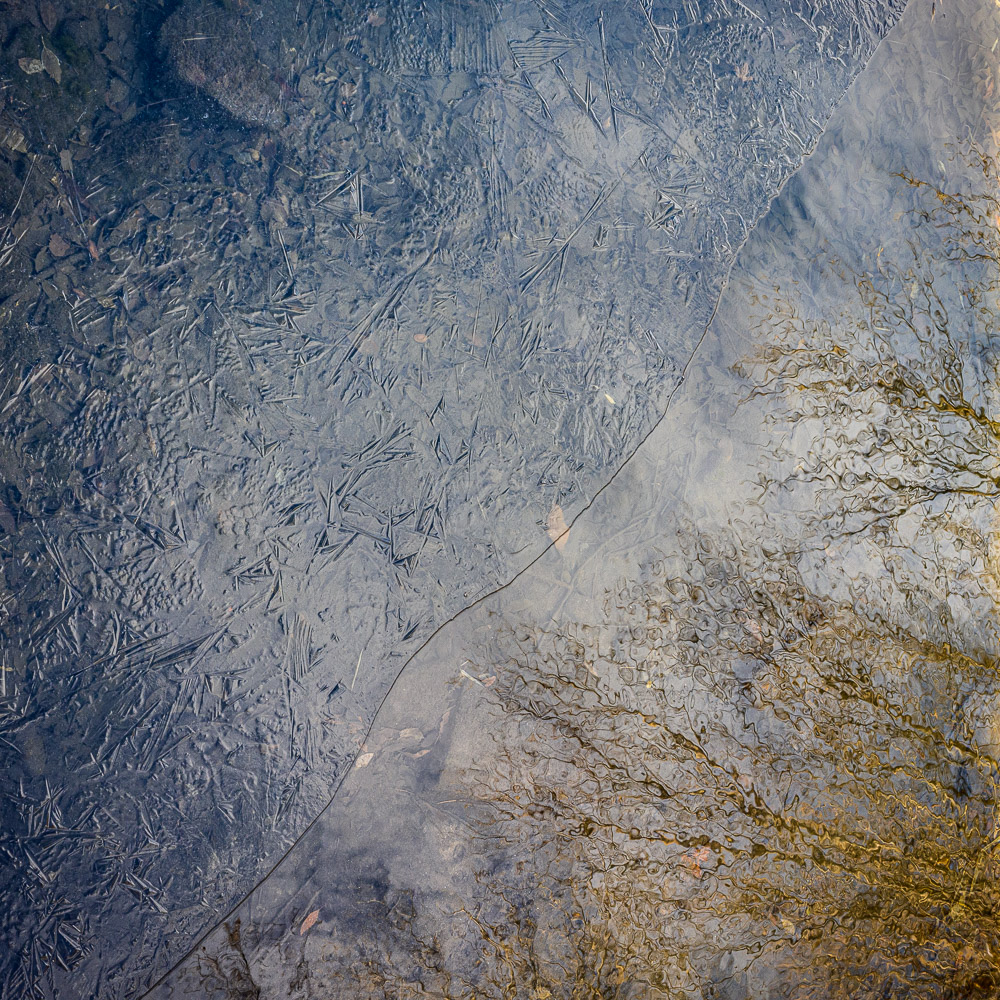
    The image here is an example of this idea. Every time I come back to it, I see something different. Sometimes I love it, sometimes not as much. It is in or out of my portfolio on any given day. The longer I live with it, the more I like it. I am tending to see more layers and ideas swirling through it. Right now I would say it is a definite “in”. It speaks to me.

  • Real Reality

    Real Reality

    As I write this in November 2022, Meta (Facebook) has just laid off about 11,000 employees. I feel sorry for the people, but it got me thinking about virtual reality vs “real reality” I don’t know about you, but I greatly prefer real reality.

    Virtual reality

    Have you noticed that many of the largest tech companies (Meta, Microsoft, Google, etc) want to move us to a world where we experience life through virtual reality goggles. We would sit in our chair and “experience” any place or time, we can do things that would be illegal or impossible in the real world. And generally is seems to be perfectly safe.

    In the virtual world we don’t have to worry much about the consequences of our actions. Game over. Restart. We don’t die or go to jail. What’s not to like?

    Real life

    Contrast that with the real world. Things take time and money and most of us have to work to earn a living. We are “stuck” in the era we are born in. Our society has lots of laws and restrictions we have to live with. We get hot and cold and wet. We get sick and break bones. People can be cruel. Marriages break up. We die.

    Wow, the virtual world sounds pretty good, doesn’t it. ๐Ÿ™‚

    It’s about the experience

    To me, one of the differences is a safe, manufactured, managed experience vs what life brings us and what we can find in the world. The real world is real. The virtual world is fake. Even when the technology gets to the point where the virtual world looks real (it’s a long way from it now), it is still fake.

    Deep down inside, you know fake experiences are fake. Unless you live your life with only fake experiences.

    Let me chance making you upset with me. I don’t have much use for Disney World or other similar entertainment vendors. It may be fun to take the kids or grand kids there, if they’re under about 8, just to watch their excitement as they are entertained. But otherwise, I can’t escape the knowledge that it is all fake. It is all a manufactured experience made by a large corporation. That leaves me completely unsatisfied. Except for a good roller coaster. ๐Ÿ™‚

    When you know the pirates on the river cruise aren’t able to attack you, it looses any terror. When you figure out the rocket ship you’re flying isn’t going to crash no matter how badly you “fly” it, there is little incentive. Even that good roller coaster that thrills for a couple of minutes, in reality, has no lasting hold for us. It will not fly off the track or crash into something or drown you when it seems to plunge into the lake. Shallow experiences. It is just shaking us around in a safe and controlled way.

    Being there

    This quote captures an essence of the notion of “being there” in real life:

    When I am out, I am there to be in the countryside, to have an experience; to notice, to engage, and perhaps record some good data with my camera. I am not thinking about making images, otherwise, I risk missing the experience altogether, and that seems counter intuitive. The experience comes first.

    Alister Benn, “Luminosity & Contrast”

    It’s not a game. No one is directing it or controlling it. No ads are being served up to us. It is the wild, unpredictable, real world. I agree with Alister’s description of the experience being key. The experience triggers our interests and creativity. We may not even know why we are drawn to an image at the time. We will figure it out later. Right then it is our subconscious speaking to us. But the experience has to be real to be meaningful.

    Safe?

    If there is no risk, there is no reward.

    When we are experiencing the actual world, we are not necessarily safe. If I am in the mountains taking pictures, I could get lost; I could make a misstep and break my leg; i could slip and fall off a cliff; a bear could attack me. Or if I am in the city shooting images, I am even more at risk.

    The fact that there is danger involved heightens the experience. People these days seem to believe that anything unsafe is bad and should be avoided. The reality is that life is unsafe. We don’t know what is going to happen 5 minutes from now.

    Putting our self in situations that can be uncomfortable or even a little dangerous can be good for us. We become more self reliant and able to think and handle situations. It gets the blood pumping and sharpens our senses. A little real danger is far more exciting than a lot of fake danger.

    To me, the dangers of being a couch potato and spending our lives anesthetized in entertainment outweigh the dangers of exposing ourselves to the real world. Entertainment is a dangerous drug.

    Don’t be stupid

    Oh, I can’t say that can I? It would imply that some people do not use good judgment. But as I talk about risk and experience, let me balance that with the counsel to do it realistically. You have to appraise the level of the risk and your capability. I’m not saying you should put yourself in danger.

    For instance, when I talk about going out in very cold conditions and snow, I dress appropriately. I have the equipment. And a good 4-wheel drive to get around. And a lot of experience. Getting a good picture is not worth killing myself.

    Don’t put yourself in any situation that you can’t handle or that is not worth the potential cost. Get training on identifying and countering the types of threats you could face. Most of all, be aware of yourself and what’s going on around you. Situational awareness applies even out in the woods. Be realistic and make sure you are physically and mentally capable of what you are doing.

    Live a real life

    My art involves outdoor photography. I do all of my shooting outside. As such, I have to get out in it. Weather almost doesn’t matter. Today, as I write this, it was 22F and snowing and with enough wind to make it pretty chilly. I was out walking nearly 5 miles in it. It was a nice day. The experience was more memorable than the images I got.

    It is not always pleasant. That is not my goal. Life isn’t always pleasant. Where I live we have temperatures from 110F to -20F. We can have winds over 60 mph. There is snow and blizzards and thunderstorms, even tornadoes and wildfires. Being out in those things makes you take a moment and say “Wow!”. It is real life.

    I feel real and alive and in the moment when I am out experiencing the world live. I am a player, not a spectator. Despite the limitations of my opportunities and capabilities, I want to experience life for myself. I am not content to let a corporation or a game developer or a movie maker package an experience for me, to feed me the same program they give to 1,000,000 other people.

    Look at the image with this article. Look closely in the top right. That woman is living a real life experience at the moment.

    Live life to make art

    Artists are often pictured as counter-culture, wild, living on the edge. To some extent, that is true. We don’t have to look different or dress different, but we should be different. Our art is about bringing experiences to people. As such, we have to experience things ourselves. That is a source of inspiration for us. Our passion from what we experience needs to be felt by our viewers.

    Do we have to suffer to make art? Is danger required? Of course not. Monet painted many of his great works in his back yard. The issue to me is are we actually living a life that fuels our creativity and vision? We have to have real experiences, not fake, packaged, safe entertainment.

    I don’t think I can generate passion for my viewers playing a flight simulation wearing a virtual reality helmet. It may be enjoyable, but it is a fake experience. I don’t want to show fake experience to my viewers. We don’t have to hang out over a cliff to live life. But get out. Be real. Live your own life, not something someone else packages and sells you. Take risks where necessary. Be yourself.

  • Apples or Oranges

    Apples or Oranges

    If you’ve taken a personality test, it probably showed you to be either rational or emotional. This may be true for most people, but you are an artist. This notion of your personality being a binary, either/or relationship probably presents a false dichotomy. It is based on built in assumptions that go back many years. People are not such a simple thing where you can label or classify them easily into rational or emotional, apples or oranges.

    Basis

    People have been trying to figure out human behavior, well, as long as there have been humans. There was a flurry of activity in the late Nineteenth and early Twentieth century time period. Two prominent psychoanalysts of the time were Carl Jung and Sigmund Freud.

    I won’t attempt to go into their beliefs. It is too deep and depressing and actually not that useful. One outgrowth of Jung’s theories, though, that has become ingrained in our culture is a model of personality theory.

    Jung postulated that there are patterns of personality common to most people. Many personality tests have been developed. You may have taken one or more of them. They can seem very insightful, but in the same way a horoscope can seem to predict events or behavior. We tend to believe what we are told from an “authority”. I do not recommend you bother with any of the tests.

    Anyway, one part of Jung’s theories is that people’s personality tends to be rational or emotional.

    Only choice?

    What I observe is that people are complex creatures. A simple model can predict some behavior of large populations of people, but is too simple to say much about an individual. Each individual has innate tendencies, but they are also modified by past experience, beliefs, education, circumstances, age, and a host of other factors.

    And we have this annoying habit of jumping around all over the map at different times as far as our behavior seems to go. Let me use myself as an example. I have a rational mind trained by decades of engineering experience. I fit that mold well at the time. But I also have become intuitive and emotional. I follow my feelings and intuition first. Rational thought is generally used to analyze my intuitive decision and justify or reject it.

    Also, in another completely different dimension, I am very introverted. If we were together at a networking event there is a very good chance you wouldn’t know I was there, because I probably wouldn’t come talk to you. I’m too shy. Yet I have little trouble speaking in front of a large audience. I actually enjoy it and feel relaxed and welcome spontaneous discussion and questions. Weird. Complicated. Contradictory. But that is what people are.

    Artist viewpoint

    This is about artists, though. Let’s focus down on this strange group.

    I believe artists have to be both rational and emotional. At least if you are a photographer.

    Rationally, we have to know our tools and processes. We have to understand what we can and can’t do and how to use the technology to accomplish what we want. Using the equipment, both camera and computer, need to be second nature. No matter the actual complexity. As effortless as a painter using a brush.

    The rational mind also gives us purpose and continuity. We decide where we are going, what our goals are, and how to market our self. Without a conscious focus on these things, we will drift. Our rational side helps us work out composition, framing, exposure considerations, and lighting.

    But on the “soft” side, we have to understand our feelings and intentions. Why are we doing what we do? What experience are we trying to bring to our viewer? If we do not have strong feelings for our work how can we expect our viewers to? For most work, if we are not conveying strong emotions, it will fall flat.

    Those of us who are naturally rational may have trouble with this. But it is possible to bend, to learn, to open up. We have to.

    It’s a balance

    The trick for artists is that we have to balance these two sides. Most non-artists can get away with not having to do that as much. Think of your stereotype of an accountant. Cold, objective, numbers person? Unemotional?

    An artist needs balance. The rational side will decide what we are trying to do and what path we will follow to get there. It keeps us focused. Yet if we are totally rational our work will be static and dry. Precisely composed and technically perfect, but empty.

    Our feelings will bring us passion and emotion, love of the image. Our viewers will sense this. They want to feel what we were feeling when we created it. But if we live totally in our feelings we will drift. We will follow every whim that tweaks our interest at the moment. We could even become one of those self-indulgent stereotyped artists whose personal life is a mess, who can’t keep focus on any goals and neglect their family and friends and even personal care.

    Talking about that tendency to go too deep into the emotional side, Sean Tucker said:

    Our rational minds are the foil that serves to balance those tendencies. They allow us to go deep but stay tethered to something truer and more stable than our shifting moods. They allow us to make our way far into the maze, knowing that we still have a thread to follow back into the light when we are done.

    Sean Tucker, The Meaning in the Making

    I love this image of the rational mind providing a safe path back when we have run off too deep into the wilderness of our feelings. We need to explore this maze, but we need to be able to get out, too.

    Don’t be put in a box

    Never allow yourself to be defined into a box by other people. Always surprise them, and yourself. Do the unexpected. If someone labels you as something, understand that that is just their opinion. It does not make you into anything. Other people’s expectations should not define us. You do not have to be either an apple or an orange.

    Likewise, do not put yourself into a box. It limits your thinking. It artificially places bounds on what you can and can’t do. What thoughts you will allow yourself to even think. How much freedom you have to experiment.

    Always do new things and try new ideas. This self-limitation is an even more serious problem, because we do not think there is anything we can do about it. Be aware of it and fight it.

    When we feel trapped in one of these boxes, rather than accepting it we should ask “who put the box there” and “so what?” That is someone else’s box. If someone comes up to you on the street and draws a chalk box around you on the sidewalk and tells you you are in this box, just step out of it and keep going. Let them have their box. You don’t have to be in it.

    Balance

    I believe, as artists, we have to be both rational and emotional. I’m not trying to give a new personality theory. Are we exhibiting both conflicting traits at the same time or are we bouncing back and forth between them? Don’t know and don’t care. The results are all that matter to me.

    It doesn’t have to be either apples or oranges. That is letting someone else define the problem. We are walking a tightrope. If we get overbalanced too far one way or the other, we will fall off into the pit. We won’t like that and won’t be doing much satisfying art there. But we have to walk the tightrope. It is part of the artist calling.

    Today’s image

    The image above represents this tightrope. I took a brief time to get a reasonable composition, proper exposure, depth of field, balance of forms, etc. That was mostly instinctual. But mostly, I hope you get how I feel about the guy. And I hope it makes you feel something, too, and think about him. I have my story, influenced by the range of sights and emotions at the time. I’ll let you tell your own.