An artists journey

Category: Art

  • Why Do It?

    Why Do It?

    Here’s a dirty secret of the photography world: we don’t make much money on fine art sales. Then why do it?

    Crowded market

    The art market in general is crowded, over-saturated, cutthroat. And photography is even worse. Everyone is a photographer. Trillions of images are shot every year. If only 1 trillion pictures are taken a year, that is an average of over 2.7 billion pictures a day. Who has time to look at anything anymore?

    And people have come to view photographs as some pixels on their phone screen. They quickly scan through hundreds of them a day. That devalues art in general and fine art in particular.

    Even if your work is excellent, how do you get people’s attention? Not many people go to galleries. If you are looking for a nice image to go over your couch or fireplace, where do you go? Etsy? Art Marketplace? Amazon? Maybe, but you will quickly drown in choices. Some of them are good.

    Other channels

    The fine art photographers I know who are making money sell through galleries or art fairs. But even that generally does not support them.

    No, most “professional’ fine art photographers support themselves through conducting workshops or selling online courses or writing books. There is still money to be made there. Seems like everybody is a perpetual beginner and needs training. A photographer who makes a name for himself can do well teaching other people.

    Fine Art

    I keep saying “fine art” photography. That is what I generally do and what I like. It is a small niche of the overall photography market.

    People whose main motivation is selling art are told, rightly, to go to Art Marketplace or Amazon or places like that and research what people are buying. Then do more of that. Following the crowd is a sure strategy to sales.

    That is not what I do and I do not want to do it. I am interested in creating art – exploring and using my creative vision – instead of copying what other people are doing.

    Self motivation

    I would love to sell more of my prints. ( photos.schlotzcreate.com or contact me ed@schlotzcreate.com πŸ™‚ ), but maybe not for the reason you would first think.

    In my view, my art will be expressed mainly as prints. A print has many great qualities that are well beyond what a screen can provide.

    I want people to appreciate my work enough to pay for a large, excellent quality print to put in their home or office. Something they want to look at frequently over the years because it stirs something in them. It creates a relationship between us, between my vision and its effect on their life. I want to know who is buying the print and why. To me, another nice nighttime shot of the Dallas skyline they buy off Amazon does not do that.

    I spent a great career as an engineer, but I kept alive a secret desire to express my creativity through photographic imagery. It is one of the important things I do to keep growing as a human. I don’t actually have to support myself financially through my art. I can be selective. Call me privileged if you want, or call it good planning and knowing how to build a good life.

    Can’t not do it

    So I have a strong desire to share my works with people, to have them resonate with some of them enough to decide to buy them to look at for years to come. I hope my art will add something to their lives.

    But if no one sees my work and no one buys my prints, I still have to do them. Ultimately, my art is for me. It is something I need to do, that I am driven to do. My art completes something in me. It is something I can’t not do.

    I have long since given up on the romantic notion of becoming rich and famous through my art.

    Today’s image

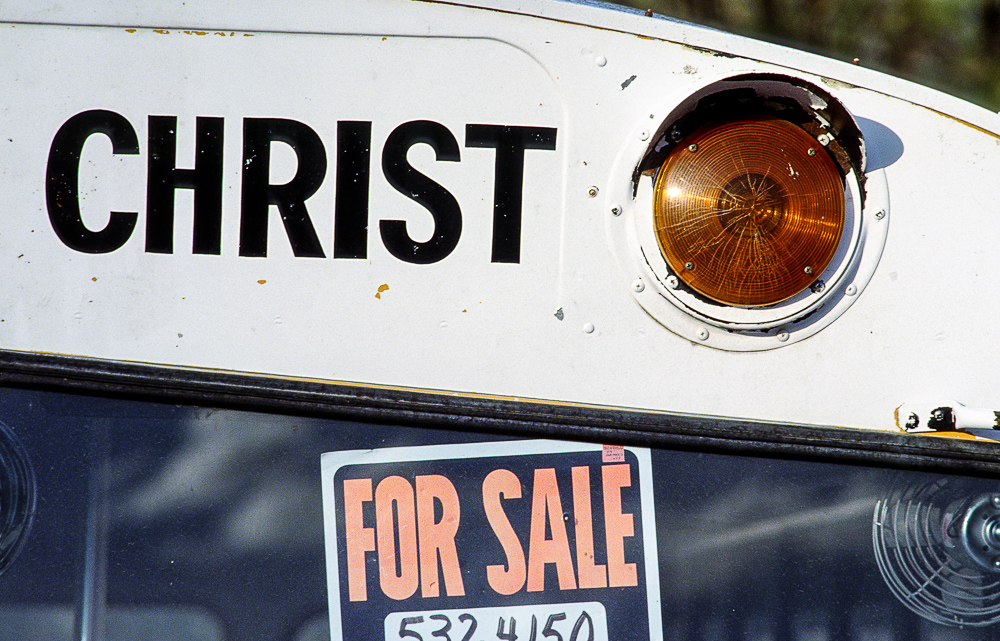
    I can’t pass up something like this. The simplicity and distinct graphic lines grab me. In this case, I risked getting fired, because I took it at a company I worked for where they had a strict no camera policy. But I walked in this door every day and when the light was right… Well, I couldn’t stop myself.

  • Mix a New Image

    Mix a New Image

    Recently I was watching a video series on audio mixing. That is a separate story. But I was struck by some of the similarities between the process of mixing for certain genres of music and image editing and creation for certain types of art. It made me think of the ways we mix a new image.

    Audio mixing

    Producing an audio recording is simple but difficult. Let me take a rock band as an example. The group goes into a studio and the source material is captured, sometimes for the group all together but more often by “tracking” each band member individually. It is fairly typical to start with the drummer, because the percussion is the base beat that everything else fits into. Then guitars and/or other instruments are overlaid. Finally, the vocals are recorded last, because the singer needs to hear everything else.

    Each individual or instrument is recorded on one or more tracks. The drum, for instance, might need 10 or more tracks to capture the full drum kit. And there are multiple takes for each track.

    Then in the studio, the recording engineer works with the performers to create a mix that pleases them and had good production value.

    Digital image creation

    Let me take an example of creating a fine art composite image. It will be built of many layers and elements.

    The artist has a general plan for what will be needed and how it will come together. This helps to ensure that all the pieces are photographed and the individual images are created with consistent lighting and perspective and mood and focal length, etc. The artist shoots each element separately.

    Working in the computer, the elements are brought together and blended to create the final image.

    On the surface, there seem to be certain parallels of structure and process. but let’s go a little deeper.

    What really goes on?

    What I observed in several videos and in first hand experience is that a song is basically re-built from scratch in the mixing phase. Of course, simple problems are fixed. Pops and noise is removed. Parts of tracks may be re-pitched. The best parts of several takes are cut together for each performer or instrument to make the master.

    Then it gets weird. After a good basic master is put together the producer goes on to ‘liven up” the sound. This may involve equalizer changes, to tailor the frequency response of a track. It probably involves effects processing that will add delays and reverberation and echoes to give the sound depth and sound like it is performed in a large venue. Maybe even adding things like claps or new percussive effects.

    And it goes on. The producer then may start to “play”. It may involve intentional distortion in parts. It may introduce new sounds that were not in the original recording. As an example, one trick I saw was playing tracks into a garden hose and recording the weirdly distorted sound and mixing it in subtly. You miight even see them put is a track played backwards! Several other very strange techniques can be used to create strangely distorted effects that you would not directly notice, but that add character to the overall sound mix.

    My learning was that, to the recording producer, the original recordings were just raw material to be used, changed, distorted, added to and anything else that could be thought of to produce a sound they liked.

    Similarities

    Isn’t it about the same with photography sometimes? I used the example of fine art compositing. Brooke Shaden and Renee Robyn are 2 good practitioners I think of.

    All the individual pieces that were shot are just raw material. The artist puts them together to create the basic image, then starts to mold it into a final work of art.

    The finishing may involve distortion, warping, masking, radical color changes, and extreme lighting changes. Then new elements are probably introduced, like textures or patterns. There may be multiple layers of them combined using blending modes. Often subtle and not immediately recognized, but making the image into something different.

    An artist using a non-destructive workflow will end up with dozens of layers to create this final image. The end result may only look a little like the original parts.

    Let go more

    This emboldens me to think I am usually too cautious with my vision of what the final image could be. Being an ex-engineer I have an ingrained tendency to go for realism. The final image must look exactly like the original.

    This is probably a mistake. I am self-limiting my artistic freedom. Long past are the days then the novelty of capturing a scene gave interest to a picture. Now an image needs to be a work of art. It needs to show vision and creativity from the artist. That involves letting go of an absolute realistic goal for the image.

    Have you ever heard a “dry” (unmodified) recording of a famous singer? There are very few of them who are so perfect they would let it be heard. All music is heavily processed. It is coming to be the same with images.

    I do not mean AI. That is a separate issue. I am claiming that, to be well received, many images need to be heavily and artistically processed. We have the tools. Let’s use them well.

    A song is built by getting good tracks recorded. Then the producer takes it apart and builds a final song. In a similar way, we can often do the same with an image. The only thing stopping us is our self-imposed limits.

    I will try to learn to not be afraid to mix a new image. Think like a song producer. The original data is raw material to be created with. Post processing is just another tool we use to achieve our vision or feeling.

    Today’s image

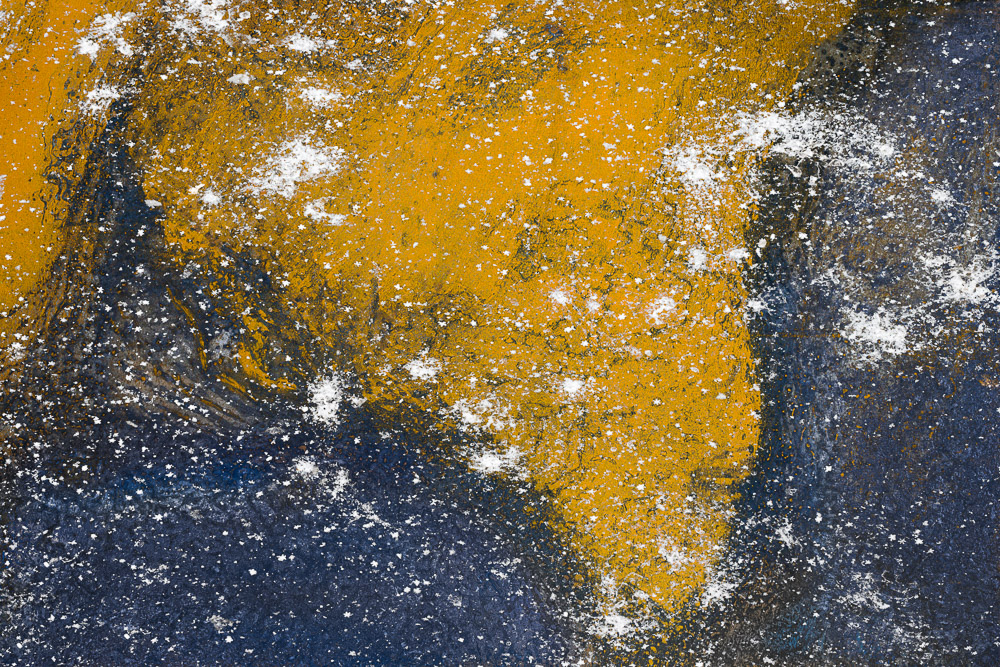
    This is me starting to let go. A little. It seems like a pretty conventional aerial image. But of someplace you don’t recognize. Looks can be deceiving.

    Sometime I may describe what it is.

  • Not A Spectator Sport

    Not A Spectator Sport

    For most of us, I believe photography is not a spectator sport. We only learn a little by watching other work, even great photographers. Photography is craftsmanship and creativity and vision. These have to be developed. Watching only helps a little.

    It’s a first person experience

    I have written before about life and our art not being a spectator sport. To me, this is still strongly true. But I’m taking a slightly different direction here. Many of us take workshops or watch videos to observe other photographers taking pictures. I watch a lot of videos, but I have to realistically ask why. What is gained by it?

    The reality is that we do not learn our art or develop our vision by watching someone else. Unless they are an exceptional teacher. But even then, it does us little good until we have internalized it and made it our own style.

    Craft

    Photography is a craft. Any craft has to be learned and then practiced over a long period to master it. So I’m not saying there is never anything to be learned by watching another practitioner work. I’m just saying that it is a somewhat dangerous act. We must be careful what we are taking in.

    Some instructors are good about talking us through what they are doing and thinking. Giving us insight into their thought process. This is very beneficial. As long as we carefully examine what we are learning and deciding what to keep and what to leave.

    The basic craft aspects of photography can be learned, to some extent, by watching a good instructor. Then we have to practice, and practice, and practice… Repetition, evaluation, mistakes, trial and error practice that teaches us how to do the craft. So there is a little instruction then a lot of self-teaching.

    It is easy to make the mistake of trying to mimic a teacher. We respect them and are in awe of their ability, so we want to be just like them. Don’t do that. They have their vision, we have to create our own.

    Creativity

    Our art is not really ours if we are just copying someone else. The instructor we admire and copy may be very creative. Doing the same thing does not make us creative.

    Maybe I’m wrong, but I have studied this a long time. A good instructor may inspire us to be more creative, they may challenge us, they may give us some good ideas, they may even give us some hints how to do it. But we cannot achieve creativity by watching them. It has to come from within.

    Cole Thompson was tempted to copy the style of artists he revered, especially Ansel Adams. He famously started the idea of “Photographic Celibacy” – never looking at other photographer’s work. I think that is going too far. We can learn a great deal from studying other people’s work. But it worked for him and it emphasized the danger of copying other artists.

    We don’t have to be celibate. But we do consciously have to maintain our own identity. Follow our own interests.

    Vision

    What we express with our art is our own vision. We each have a unique vision, unless we are slavishly copying someone else. A tendency when we are starting out is to try to copy someone, because we are insecure. We don’t think we have developed a “vision” yet.

    I think Chuck Kimmerle insightfully captured the essence of it in an article in Nature Vision Magazine #1: “We can’t discuss style without mentioning vision. The two are related but vastly different. While style is fairly easy to describe, vision is much harder to define. At its core is who we are as individuals: our experiences, lifestyles, likes and dislikes, politics, spirituality, family, priorities, and so forth. Our soul. It is the story of our lives, a personal diary if you will, and is what makes us unique. Vision is what drives our style. Unlike our personal style, our vision rarely changes.”

    This vision influences and comes through in the work you produce. We can’t help it. That is one reason why several photographers can be out together shooting the same area at the same time and produce a variety of different images.

    So don’t worry that you don’t have a vision. You do. The trick it to let go and let our vision express itself. Don’t be concerned about it being different from what other artists do. Eventually you will recognize yours.

    Who are you learning to be?

    So watch other photographers and get what you can from them. But never loose sight of who you are learning to be – you.

    Just this morning I watched a short tutorial on an aspect of Lightroom editing by a good instructor. He was very good about describing why he did every step of the process. It was a little valuable. But overall my internal dialog was “nope, nope, that’s interesting, not the way I see it, not the result I would try to get”.

    Was he a bad instructor? Not at all. He is good and quite well known. Was is a useless genre? No. He was editing a landscape image. that’s reasonably close to what I do.

    So why did I reject a lot of what he said? Because I am pretty confident in my craft and vision. I can watch another photographer and not be intimidated or pressured. This is because, for the most part, I have learned to be me. I know what I want to achieve. I appreciate picking up tips on doing the craft better, or easier ways to get to the product I want, but no one is going to (very easily) convince me to become something I’m not and don’t want to be.

    How do you learn?

    So how do you learn? Do you intently study a master and “try on” their style for a while? Do you study basic theory, such as composition, design, color, etc? Do you go to workshops where the instructor shows you where to put your tripod and what settings to use and how to set up your shot to get the same results he got?

    Any or all of this and anything else you do is fine, as long as it works for you. But never forget the purpose of studying is to learn to be a better you. Not a knock-off copy of someone else. No matter how much you admire them. Personally I would shun experiences where the instructor seems intent on making you a copy of them.

    Most of us are self-taught. That is, we do not have a fine art degree with a specialty in photography. We learn through various formal or informal methods. Make the most of it. Learn from every opportunity you get. But you will grow fastest by getting out and working and evaluating and learning from the results. Pick up ideas and techniques anywhere. But don’t ever forget the goal is to grow as an artist and find your own path.

    So is it true that photography is not a spectator sport? Well, that’s a little bit of click bait. Be a life long learner. Eagerly watch other photographers work. Listen to what they say. But discard what does not apply to you. Never forget the goal – be you.

    Today’s image

    I couldn’t find a single image that illustrated this idea of “not a spectator sport”. I guess because I have always believed it and gone my own independent way. This image was chosen because maybe it shows that, if you are in a place like this at a time like this, shoot! Don’t watch someone else. Make your art.

  • Out of Context

    Out of Context

    Every image has a context, the setting or framework or circumstances where it was created. Sometimes we try to tell the context to our viewers. But really, aren’t most images viewed out of context?

    The setting

    Every traditional photographic image has a context. It was created someplace, about someone or something, for some purpose. That is an inescapable reality. Photography records the world around us. But how important is it for an artist to bring the context to the viewer?

    If I am showing you street photography, it might help to tell you the country I’m in. That may help frame the culture, architecture, people we’re seeing. But, say I’m shooting in the USA for an American audience. Does it really matter if it is in New York City, or Cincinnati, or Seattle, or Dallas? You look at the image and try to read the subject and deduce what the scene means to you.

    Context in this case is supplied from a shared cultural experience. We all know enough of what it is like in a large American city to understand the image.

    Or for a landscape, if it is an interesting picture, does it really matter if it is the Colorado mountains instead of the Sierras, or the Maine coast as opposed to the Oregon coast? The impact of the picture is what intrigues us.

    The story

    And about story, we are told repeatedly that we must tell a story in an image or a project. I struggle with this. Somewhere I missed the training to understand this. Or I read too much into what “story” means.

    One legacy of growing up as an Engineer is I start out thinking fairly literally about a proposition. To me a story has character development, conflict, and resolution. What writers call the story arc.

    Personally, I don’t think many images tell much of a story unless they are about people. Even then, when we see a person we are compelled to figure out or create a story to explain what we see them doing, or their expression, or gesture. Regardless of the artist’s intent.

    But I seldom present images of people. To me, a landscape or an old rusty truck or an abstract motion blur doesn’t tell a story. If it does, the story would be something like “pretty” or “gritty” or “interesting shapes”. Is that actually a story? That seems weak.

    My inclination is to say most images do not, by themselves, tell a story. But they might provide enough structure for the viewer to invoke whatever memories or meanings they want. To create a story for themselves.

    Do we have to supply the story?

    As artists, we often feel compelled to write the story and present it to our viewer to help understand the image. Or, more likely, a gallery requires us to do it. Sometimes that is successful. If they actually take the time to read it. Maybe for a photo project people will read the artist statement summarizing the intent of the project. Maybe.

    Even if viewers read a title, they tend to make up their own story about what the image is. Is that bad? I don’t think so. It is their story. If they are happy with it, great. I sometimes ask viewers to tell me what they are thinking when they see one of my images. Often I am surprised. Sometimes they are far off of what I saw and felt or what the image is actually “about”. Their story may be completely outside the context of the “real” image. But they are not wrong, because this is what they experienced. I believe the best art leaves room for varying interpretation.

    I know that a well written story sometimes adds a lot of context to an image. But part of me thinks a strong image should stand on its own. If I have to explain it, it is lacking impact. A type of exception I often see is a project like Cole Thompson’s Ghosts of Auschwitz. His images are strong and impactful by themselves, but a few words taking you to the context of where they were taken and what he was feeling makes it a deeper experience.

    Maybe the story is already there

    What I’m about to say goes against all the conventional wisdom we normally hear. Maybe we do not write the story. Perhaps, in general, the scene is already telling its story. We see it, recognize it, frame and compose it, and try to help it tell its story in the best way we can. But it is its story, not ours. Maybe we give ourselves too much credit.

    If this is true, maybe we are documenters more than creators. This aligns with an interesting statement Ben Willmore makes when he says that in composing a scene we should reduce the negatives and enhance the positives. Doing that does not really change the story. Maybe we can slant the story some and write some of our own vision into it.

    I am not minimizing the creativity and skill needed to make a good image. Not at all. I know it is exceptionally hard and I wrestle with it every day. I’m just suggesting that maybe we are not actually writing the story. Rather, we are helping our subject tell its own story. Maybe our job sometimes is to recognize the story that is already there and help to bring it to life.

    In isolation

    This idea carries over into viewing an image. When we view an image in a gallery or on the wall or online, we are typically seeing it in isolation. A gallery may provide a title and perhaps even a short statement posted on the wall next to the image. People may or may not read it.

    Does that matter? Once an image is printed and hanging on a wall, it is complete in itself. When someone looks at it, their appraisal or appreciation of it does not need to be tied to my knowledge of the context or its meaning to me. The image tells its own story, or it does not.

    I actually love to provide an image that raises more questions than it gives answers. It would be a joy to me for someone to buy it and hang it on their wall at home and pause over it every time they see it. For them to feel free to create varying stories to fit it. When they are showing it to friends I want then to say “today I see…”.

    When they buy the print I could give them a written description of what it is, the context where it was created, and what it meant to me. But then it is all my story. Isn’t that taking away some of their joy and creativity in participating in the art?

    An image exists

    So if we typically see images by themselves, that means when a viewer takes the time to look at it, the print has to be strong enough to “tell it’s own story”. Or at least to tell a story to them. It must be able to communicate something meaningful to the viewer. Perhaps its job is to connect to memories or to raise interesting questions that make people want to live with it.

    If we have to use words to complete the image, maybe it is not strong enough. The words can supplement the effect, but they should not be required to make us see it as a good image.

    Context could be important, but usually we should not push it too hard. As artists, we should not be so arrogant as to believe the viewers will or should internalize the context and meaning we intended. Part of their appreciation can be to make their own stories. As an artist I have created this image, but I have to send it our on its own to make its place in the world.

    Today’s image

    To me, this image has a lot of story. But who wrote the story? Not really me. I saw it, and stopped and took the time to frame it and compose it and narrow in to what I thought the story was. Then I edited it some, not altering any important components.

    I can’t honestly say “look at this great story I told”. No, I found a story already existing and tried to put a little of my touch on it to bring it to you.

    Would knowing the context make this a better story? Or would it interfere with you discovering your own story?

  • Why Photography?

    Why Photography?

    Photography is my chosen art. Obviously I wouldn’t continue doing it unless I loved it. But why? Why photography?

    Faults

    I’ll be honest. As a modern art form, there are negative aspects to photography. I’m talking about people’s view of it, not what I believe of it. And I’m not making a pun about photographic negatives. Many “serious” artists and critics view it as a lesser art, if art at all. After all, it is too easy. Just point your camera at something and take a picture. Where is the art?

    The critics view photography as a mechanical art. Where the camera does the work and the photographer just holds the camera and pushes a button. How can it be “Art”, with a capital A, if it is fast and easy?

    Billions of people are taking trillions of pictures every day. So it is considered a “common” craft. Just for selfies. But those critics discount the difficulty of doing something special in a field that is so crowded. Millions of books are written, but we still celebrate the relatively few authors who creates a standout book.

    And photography can be reproduced pretty easily. You can get a stack of prints made at Walmart for a few bucks. This, too, devalues it in many people’s estimation.

    And it’s getting to where your AI chatbot can make a fairly realistic picture. Is there any photography anymore? Or painting, for that matter?

    Alternate view

    But let’s examine some of those statements. I’m a firm believer that something is not correct just because people say it, especially if it is “experts” talking.

    It is true that trillions of photos are taken every year. Very few of them are considered art, even by the people taking them. They are for utilitarian purposes, mostly selfies to post on social media. Of the ones whose makers consider them to be art, most are, well, forgettable. In this crowded field where the majority of people on the planet have a camera and take pictures, it is extremely difficult to take a memorable one. It takes a lot of skill and vision and technique and luck to make one of the exceptional ones.

    And the fact that they can be reproduced easily should not be a factor, except for top collectors. The ability to make prints is actually democratizing. And a great art print is a very different thing than a cheap drug store copy. The materials and ink and care that goes into an art print sets it apart. If you have seen and handled one you have experienced the quality factor. A great print can be shown on your wall the rest of your life and be passed down to your heirs.

    Even painters very often have prints of their works for sale. And they usually request a significant price for them. Does that make their prints not art?

    It’s what I can do

    I said I was being honest. I long ago discovered I have little talent or patience for drawing or painting, and sculpting is too slow and expensive for me. Does that mean I’m not an artist? Absolutely not. I found areas I have an inclination for.

    I originally latched onto photography as a creative outlet to my highly logical, left-brained Engineering career. Intuitively I knew I had to have a balance. It served it’s purpose, even though I wasn’t very good at it.

    But being somewhat obsessive and a perfectionist, I later pushed myself to learn and understand why I considered myself mediocre. So I improved my knowledge and education and technique. I learned about design and composition and lighting and editing. And I moved beyond just straight representational images of big landscape scenes and even pushed myself into uncomfortable areas like abstract and surreal.

    So when I retired, I was eager to go full time into art as a creative activity. I do not regret it. It has been a great move for me and I feel I have grown rapidly. I would have gotten frustrated and quit if I had tried to force myself into doing art I was not suited for.

    Fast moving

    A joy to me in photography is that it is relatively fast moving. Move, see, compose, shoot. I get into a flow and can spend hours creating. And likewise in post processing. Unlike some photographers, I like it. Working with the images on the computer is another important part of the creative process of photography. I can edit for hours and not even realize what time it is.

    This pace and rhythm of photography is part of what works for me. An important component of my creative energy. I know myself enough to know I would not be happy spending weeks working on a painting, to then have to set it aside and not touch it again.

    My images are much more malleable. Even after “finishing” one I can get a new idea and revisit it, maybe alter it, maybe create a new work based on it. What I shoot is raw material. The elements emerge, combine, re-emerge and get re-imagined in a very fluid way. I love this.

    Versatile

    This immediacy of photography also enables one of the other things I love about it. I can do it anywhere, almost any time. Day or night; walking around town; looking out an airplane window; winter or summer; in the rain or snow or fog; alone or with other people.

    If most painters see a scene they want to paint, what do they do? Take a picture. They use that to work up sketches to define their image. I skip directly to the end. My “sketch” may well be the finished image. I’ve done 20 interesting images before they finish a sketch.

    I never have to worry about what pallets of colors I have with me. Did I bring a large enough blank canvas? Do I have the right grades of pencils with me? Are they sharp? Don’t care. I can take a crisp, detailed shot of a rusty truck and turn around and take a time exposure of a stream. The camera is a powerful tool that lets me express my art in a variety of ways. But I am the artist and only I determine what I want to accomplish.

    Element of reality

    Another aspect of photography that is unique and significant to me is that photography contains elements of reality. The sensor records the scene in front of it as imaged by the camera lens, to the extent I allow it. That is, I may blur it or overexpose it or underexpose it. That is an artistic choice. But I am working with a capture of reality.

    Photography is unlike any other art in this respect. To me, there is something honest in that. That, even if I composite or heavily edit or alter the colors or tones to create a completely different scene, still, the component parts are pieces of reality.

    I enjoy images of mine that are straight captures of a real scene and I enjoy the ones that are created scenes that do not exist. Both contain reality. One much more directly than the other.

    I don’t use Photoshop as a blank canvas to paint imaginary scenes on. I have no problem with those who do that. It is another good talent. But I don’t. Everything I create is built from pieces of reality. In my weird value system, it wouldn’t be photography if it did not contain actual elements captured by a camera.

    Easy to reproduce

    I love that after editing an image and thinking it is almost ready, I can make a test print on my printer in my studio. In a few minutes. A print on paper is very different from an image on screen. Most of us are only used to seeing images on screens.

    But a well done print on high quality paper is an entirely different thing. It becomes a physical object with presence. Our relationship with it is different. We hold it and look at it differently. We feel the texture and the forms and colors of the image are seen in a new way. A print changes our perception.

    And this is just a test print. Usually it will have to be edited more and reworked is some ways to eliminate problems we did not notice until it was on paper. After a few cycles I now know how to print this image. This next one that comes out of the printer is one I can be proud of. We eagerly show it off, because it expresses our intent, what we saw and felt when we captured the image. It has become a physical piece of art. And I can push a button and make another one for you. Does this devalue the medium? Not to me. I think that is fantastic.

    This is a unique feature of photography. I love it.

    Photography is a versatile, fast moving, high quality art form. It has advantages and disadvantages over other types of media. But that is true whenever you compare one type to another. It is the perfect art form for me. I hope I have given you a clear picture of why photography for me.

    Today’s image

    A busy airport at night is a wonderland of lights and shapes and movement. If you are that nerd who gets his camera out and shoots out the window during takeoffs and landings. I am. I love the colors and abstract forms. πŸ™‚

    It also illustrates one advantage of photography I discuss in other places. The ability to record time. Not just a still instant, but movement over a period of time if we wish.

    This is one of those scenes you seldom see painted. We cannot see this directly with our eye. The painter would have to take the picture then paint it. But is that different from taking a photograph and making a print?