An artists journey

Tag: fine art photography

  • Switch On

    Switch On

    What engages your creativity? What gets you up from the chair and out the door shooting. I have discovered I have a trigger to switch me on, and it is so simple I barely recognized it.

    Need to shoot

    I think many of us who shoot for the joy and the creativity of it tend to stay in a mindful state. When I am driving or riding somewhere it seems I am often looking at everything passing with a view to framing and composing shots. Mentally, I click off a lot that I wish I could see.

    At this stage of my life journey, I feel a need to shoot. To capture what I see, and to bring some new creativity to it. It is a frustration to me to see interesting scenes and not be able to shoot them. But I am not always doing it and moving and in the flow.

    Sometimes there is a kind of inertia holding me back. There are times I feel too busy, or my thoughts are on something else. This is part of life and often unavoidable, but sometimes it is just a kind of procrastination. I’m not feeling in the “mood”. At those times when I could and should be thinking photography, I sometimes must kick-start myself to begin shooting.

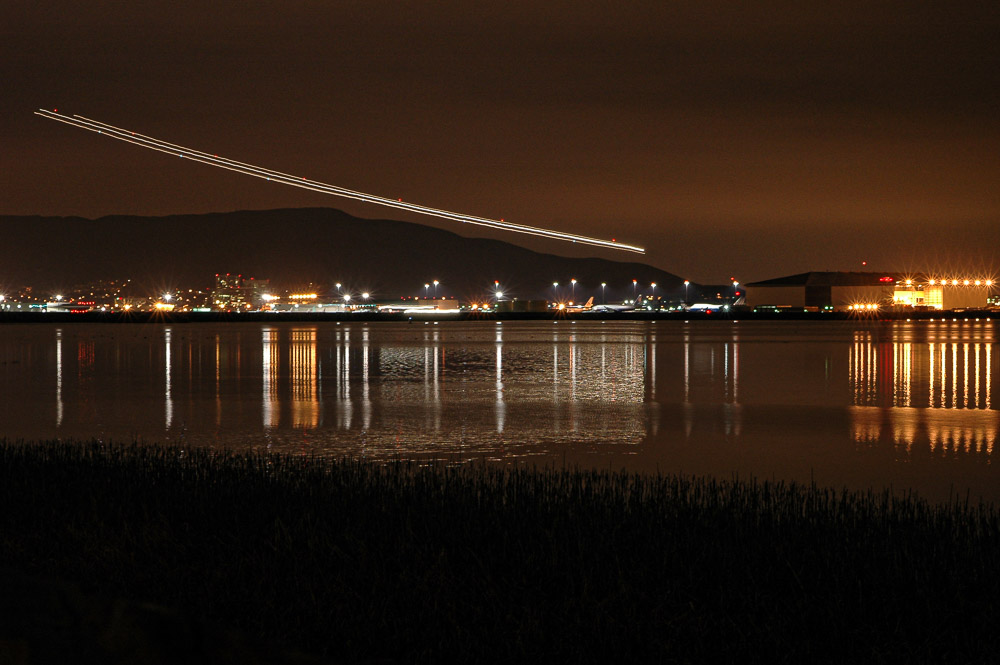
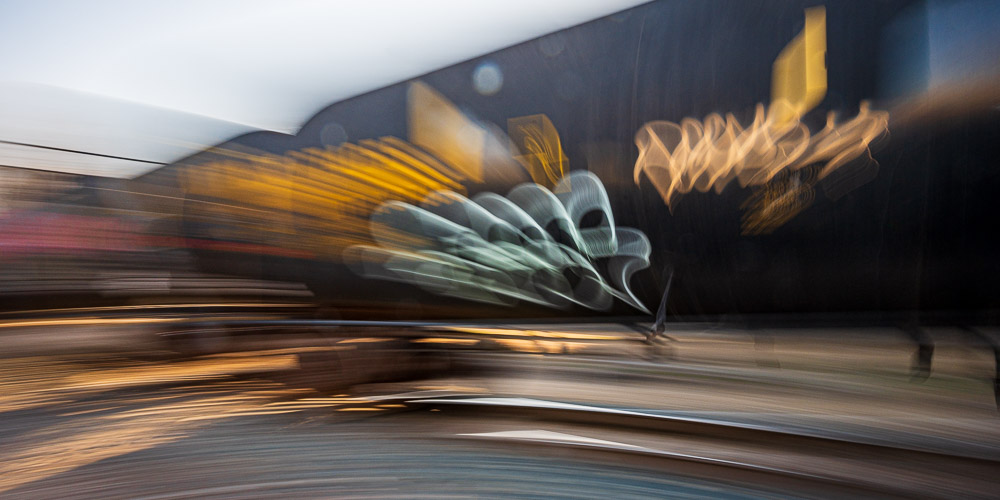
    Airport at night©Ed Schlotzhauer

    Permission to shoot

    I have discovered that I sometimes need to do something to motivate myself. As I write this, it is 93°F out, on the way to 103°F. That saps my energy.

    I need a way to increase my desire to shoot to the point it overcomes my inertia or dislike of the weather or the time involved or whatever it is that is holding me back.

    One simple technique I have learned is simply to pick up my camera. Sounds silly and too easy to be of use. But it often works on me.

    I haven’t done any deep psychological analysis on myself, but I believe holding the camera – or even the camera bag – gives me permission to take pictures. The weight of the physical object is real and compelling. I am familiar with it and comfortable with it. I like the way it feels in my hands. We have history of doing good work together. Something is awakened and barriers are set aside.

    With a camera in hand, or even in my camera bag, I am a photographer. An artist. Photographers are expected to take pictures. I should be out shooting. It becomes the easier path.

    Wherever I am, on a city street, in an airport, driving down the road, I should feel completely secure and justified taking pictures. If I am looking foolish staring at something other people do not see, that is OK. They are not artists, or at least, they’re not me.

    Stylish airport lighting©Ed Schlotzhauer

    Nothing interesting

    I am mostly over worrying about what other people think. What matters is the art I can create.

    A favorite story of mine is a time I was on a trail near where I live. I think I had my tripod set up to shoot a tree by a river. A woman walking by stopped to see what I was shooting and pronounced “I see nothing interesting here”.

    I almost burst out laughing. For her to dismiss my vision just because she could not envision what I was seeing seemed ridiculous. That helped me to be much less concerned about other people’s opinion when I am pursuing an image. Rather than shaming me, it reinforced my independent streak.

    Colorado fall day on the plains by a river.©Ed Schlotzhauer

    When I pick up my camera a switch turns on and I am now in a focused mode of seeing. What people think, fear of looking silly, or of calling attention to myself (a nightmare for an introvert) no longer matters. Of course, I will not be rude or offensive. That is not my nature. But within reason, I will do what I feel compelled to do.

    Creativity

    Just picking up my camera does not mean I am in a super creative zone. I may have to start shooting a while to get the energy flowing enough to fully engage my mind. But I find that just a few shutter clicks somehow releases most of the chains binding my brain and I relax and start flowing.

    As my inspiration, Jay Maisel, said: If you are out there shooting, things will happen for you. If you’re not out there, you’ll only hear about it. I consider that whatever trick I use to get me motivated to start framing images and pressing the shutter release is worth it. Then things start happening.

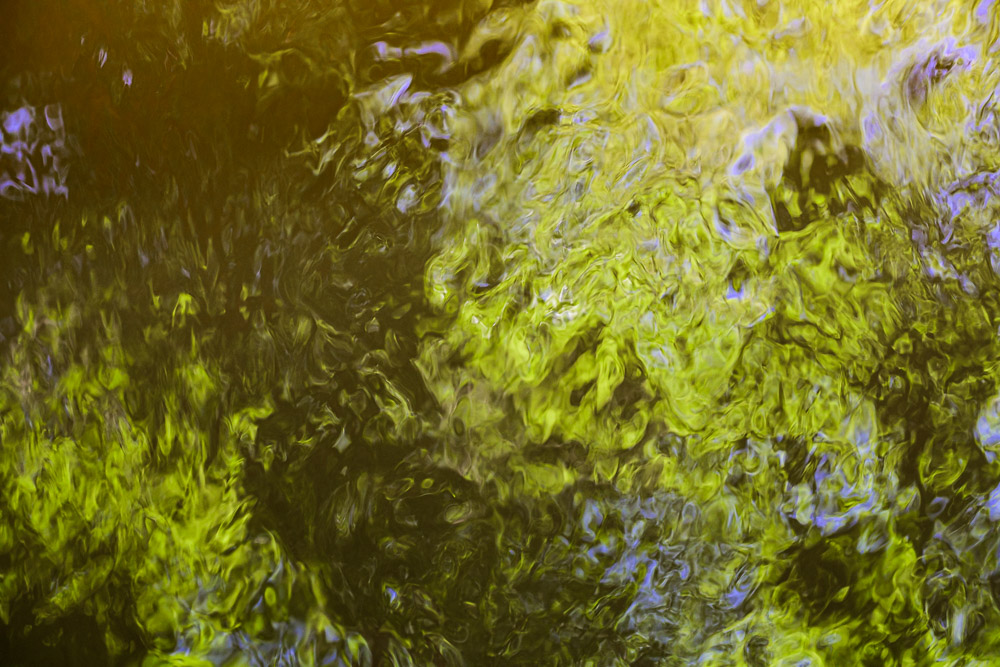
    Flowing abstract©Ed Schlotzhauer

    Pick it up

    So, when I am not in the “mood” for photography, just picking up my camera will usually jolt me out of my lethargy. Somehow, it signals me to switch on and get into seeing images.

    To follow up on where I started earlier, I reluctantly put on my camera bag and went out in the heat. We had a nice walk and even shot a few images. It was not as bad as I expected, and I’m glad I made myself get out. To be prudent, I did shave a few miles off my normal outing and took extra water.

    Do you have a trick you use to get going when you don’t feel like doing it? Picking up my camera is my signal to switch on. What about you?

  • The Camera as Teacher

    The Camera as Teacher

    We often are told that as photographers, we need to learn to see. Yes, but… There are probably at least 2 parts to that, learning to be more mindful and learning to see as the camera does. In this second case, the camera will show us what it can do. We need to understand the camera as teacher.

    Seeing

    If we don’t see a scene and recognize its potential, then we will not photograph it. This type of seeing is based on perception and attention, not the quality of our eyesight. I advocate this type of mindfulness in many of my writings.

    This kind of seeing can be learned and practiced. A camera is not even required. David duChemin had an intriguing statement in Light, Space, and Time: “We see through the lens of our thoughts.”

    I recommend that we become so obsessed with our art that we see almost everything as a potential image and be plotting how to capture it best. Obviously, there are some times and scenes we would not want to do that, but it can be our default behavior. It is good training. When I am driving or walking around, I am usually playing a “what’s here and how would I capture it” game in my mind.

    Back road in West Virginia, New Bridge©Ed Schlotzhauer

    Seeing as the camera does

    Seeing potential shots around us does not assure we will execute them well. There is a huge difference between how we see the world and how our camera records it.

    As we become serious about our art, we must become serious about learning our tools and medium. These are our means of expression. A pre-visualization of the greatest scene we have ever imagined is not much use if we cannot realize the shot.

    The camera has its own strengths and weaknesses that characterize what it can and cannot do. Any medium does. This is not a limitation so much as a creative opportunity.

    Our eyes

    Our eyes are marvelous devices. And when I say “eye” I consider the whole path from the lens into our brain. Our visual system.

    I will not try to. analyze this, only point out a few ways our visual system is completely different from a camera.

    Our eyes and our camera both have a lens and a “sensor”. The eye’s sensor is the retina. This is about the extent of the parallels.

    Our camera has a flat, 2-dimensional silicon sensor that captures the scene all at once, in parallel. That is, the entire sensor is exposed to the light coming through the lens while the shutter is open, and this makes one image capture. The pixels are all equally sensitive to light.

    Our eyes, though, are not uniformly sensitive. There is a region of the retina that has the most resolving power (the fovea). So, unconsciously to us, our eyes are always scanning our field of view. This process is called saccade. Our 2 eyes jump and focus together momentarily on a point. Then we move on to another point. We repeat this several times a second.

    Through this process, our marvelous brain works with our eyes to paint this information together into a smooth, seamless visual sensation in full 3D. We effectively have real time HDR, panoramic vision, and image stitching – in 3D.

    Refelctions over airport operations©Ed Schlotzhauer

    Meaning

    Even more exciting is that our brain also constantly tries to make sense of what we see. Scientists postulate that we utilize a bottom-up then top-down analysis process to understand scenes and to develop meaning. And we do this in. milliseconds.

    We tend to see what we pay attention to. If we are looking for something or if we are concerned about something, we see it more readily. The brain constantly attempts to give us the meaning we need in what we see. The process seems also to be directed by our knowledge and expectations.

    Our cameras do not search for meaning. At least, not yet. Eye tracking is not meaning. People detection is a focus aid, not meaning.

    Rise Against, representing the daily struggle©Ed Schlotzhauer

    The medium of photography

    All that helps to let us see that the camera does not see like we do. So if we want to use the camera as a tool for our art, we must learn what it does. Then we can use it for what it can do and stop wishing for what we would like it to do.

    We point our camera at a scene and press the shutter, but the results are not what we expect. Was this a failure on our part? Perhaps it is better viewed as a learning opportunity.

    If we used a very fast shutter speed, movement in the scene was frozen. This is different from what our eyes perceive.

    Maybe we used a very long shutter speed and discovered that all the motion is blurred. Again, our eyes do not perceive this.

    Or we shot it with a wide aperture of, say f/4, only to find that much of the image is out of focus. But we are used to our eyes “seeing” everything in focus.

    If you hand hold your camera you may be disappointed to find that many of your frames are not as sharp as you intended. After all, our eyes seldom perceive things as unsharp, but in the camera there is a balance of exposure settings to juggle to get a crisp image exposed properly.

    We pointed the camera at a brightly lit daylight scene and found that some highlights were overexposed, and some shadows were underexposed. Our eyes usually see everything correctly exposed. The automatic HDR we employ can lead us to forget that the camera can’t do that.

    Through experiments like these, and many more, we eventually learn how the camera will capture a scene under almost any condition. It takes some experience, and a lot of thrown away images. The camera gives us feedback by faithfully recording the scene according to how we adjusted it. We may not always be happy with the result. Failure is a great teacher.

    Blurred intentional camera motion of a passing train.©Ed Schlotzhauer

    Limitations help define art

    But eventually it is no longer mysterious. We learn to control the tools we have and make them work for us. Our camera becomes a means to realize our vision.

    Along the way, we discover something marvelous. These limitations we had to learn to work around are opportunities for artistic expression.

    For instance, we have a whole new perspective on time. The camera can slice time down to thousandths of a second to stop motion. Or it can keep its shutter open for seconds or more to show the effect of motion over time. Our eyes and brain cannot do this, so now we can open whole new views on the world.

    We can intentionally underexpose a foreground to create a dramatic silhouette. Or we can intentionally overexpose the scene to produce a dreamy washout. Basically, we can alter the exposure values to any degree we wish to create the effect we like. They do not always have to be “correct”. What we see with our eyes is almost always correct.

    We can superimpose multiple layers or remove distracting elements. Want to feature the form of something? Black & white is excellent for that. With the right tools we can peer into almost total darkness or shoot a picture of the surface of the sun. We need our camera and software to do these things. Our eyes can’t.

    A good tool is a force multiplier. It allows us to do things we could not do unaided.

    As we listen and let the camera teach us what it can do, we discover new artistic possibilities. Maybe we want to use them. Maybe not. That is up to us and how these things fit in our vision. But the toolbox becomes larger and better stocked as we learn more.

    So, when you look at an image and think “Wow, what just happened here?”, maybe that is an opportunity to discover a new feature of the world of photography. One that you might be able to exploit to your advantage. The camera can become our teacher.

  • Permission to Be an  Artist

    Permission to Be an Artist

    There is only one thing stopping us from being an artist. We need to give ourselves permission to call ourself an artist. No one else has the authority to do it.

    Who regulates “art”?

    Who regulates art? Maybe that seems like a silly question, but many of us are hesitant to call ourselves an artist because we have not been officially designated one by some standards board. We haven’t received our certificate.

    I don’t know if it is good or bad, but that standards board does not exist. The certificate does not exist, and if it did, it would be meaningless.

    Many people and organizations want us to think they are the keepers of the purity of the arts. But they only have authority as far as they can convince other people they have it.

    The gatekeepers, whether they are large galleries, or internet influencers, or art schools, or even your local camera club, have no authority to control what is art and who gets to do it.

    Stylish airport lighting©Ed Schlotzhauer

    Who is keeping you from being an artist?

    I believe many of us are afraid to consider ourselves an artist for fear that someone will come and say no, we are not qualified. We are afraid we would be publicly humiliated and denounced as not good enough. We did not pass the qualifications. By calling ourselves an artist, we might fear we are elevating ourself to a higher plateau.

    Well, we are. But that is a good thing.

    This is art, not brain surgery. We do not have to go to school for 12 years then do years of apprenticeship before going before a review board to grant us a license. I’m glad they train doctors like that, but it is not a good model for artists.

    The best definition I can remember of art is that anything done as art, is art. So, if you intended that image to be art rather than just a selfie or record shot, then it is art. No one can say it is not.

    That no way says that if you intended it to be art then it is great art. Its quality depends on many factors, including your skill and maturity. We learn and improve all our life.

    Transportation modes©Ed Schlotzhauer

    Photographer or artist?

    So, when someone asks you what you do, what is your answer? Are you an artist, or a photographer, or do you respond with something vague like, “oh, I like to take pictures”? How you answer and view yourself is your business. But what is keeping you from considering yourself an artist?

    I recognize that if we announce ourselves as an artist, we are claiming greater mastery. We present our work and ourselves in a different light. In a different way. Those of us who are introverts get nervous about that. We do not seek attention,

    The reality, as I see it, is that it is not about ego or skill level. If we believe we are doing art, we should confidently assert to the world around us that we are artists.

    A mindful view of fall colors near me©Ed Schlotzhauer

    Prove it

    Some people are born salesmen. They try to talk the talk without learning how to walk the walk. I do not think that is the case for you who read this. You understand that you must prove what you can do, who you are as an artist. And that is what we do with every image we show the world. It is just as important, if not more important, to prove it to ourselves.

    How do we do that?

    John Paul Caponigro said “Singular images prove your craft. A body of work proves your artistry.” I think there is wisdom in that.

    When you go through your catalog critically, do you find images you would show anyone, anywhere without fear of ridicule? If you find a few, great. You are learning the craft and starting to produce interesting work.

    Have you, or can you, put together one or more projects around a theme? A good project would have 10-20 excellent images showing cohesiveness and consistency. This demonstrates your ability to create a body of work.

    A single great image may be luck. A good body of work proves you can repeat it. That you are can create regularly and to a consistently high level of quality.

    This is certainly not the only way to prove your mastery, but it is a good way. Give it a try and you might surprise yourself.

    If you have proved to yourself that you are an artist, do not be afraid to take the label for yourself. Say it proudly. You have given yourself permission. You are the only one who matters.

  • Confidence

    Confidence

    I believe one of the things we develop as we mature as photographers is confidence. Not arrogance, but certainty in who we are and what we want to do.

    Introvert

    I’m an introvert. I suspect many of you are, too. Introversion seems to be strong in artists. After all, what we do is not really about social events or winning contests or getting to praise ourselves. If you seek those things, you are probably an extrovert and you do art for entirely different reasons than I do.

    As an introvert, you wouldn’t think at first that confidence is one of the traits I would claim. But confidence comes from competence. We know we can do what we need to do. We know what we like and when we find it, we are confident we can deal with it well.

    An un-pre-visualized shot taken from a moving boat on the Seine River.©Ed Schlotzhauer

    Arrogance

    This is not arrogance. Arrogance gets into hubris and self-importance. Confidence is the simple assurance that I can do it. Now, the “it” may be different for different people. For me, it is that I know that when I see a scene I want, I can photograph it in a way that will make an image I will be proud of. That does not mean I know how to make that image well known and sought after in galleries. That is a whole different skill set.

    But our confidence is arrogance if we believe we are too good to learn how to improve. We should always listen to criticism. And be our own worst critic. Learning and practicing and trying to improve are part of our life-long growth.

    Confidence also lets me stay away from things I know I would not like or would be bad at. For example, if, for some strange reason, you came and asked me to shoot a wedding, I would turn you down. Even if the money is great, I know from experience that I would hate it. I do not enjoy the pressure of a bride’s expectations and performing to someone else’s shot list. And I really do not enjoy trying to pose people and make them seem like they’re having fun.

    But if you want me for a second shooter to get candid shots, we might do a deal. I love shooting spontaneous moments, and I’m often pleased with the results. Studying people and anticipating a good moment is fun for me.

    An unexpected travel shot. It came from taking the time to stop and watch and wait.©Ed Schlotzhauer

    Not technical skill

    The confidence I am talking about is not mainly in the technical side of photography. I have done photography for many years, and I am introspective enough to learn from my mistakes. Technical skill should be a given for a serious photographer.

    You won’t find me “chimping” a lot, checking the back of the camera to see if I got the shot. I may check to verify I nailed the focus and placed moving elements in the right position or got the right blur if it is a slow shutter speed. But the technology of making a properly exposed image is rather straightforward.

    I urge you to practice to the point where you are confident in your ability to get what you visualize. It makes me wonder when I hear photographers asking a workshop leader or another photographer what exposure they used. That is basic craftsmanship that we must put in the reps to learn.

    Besides, our cameras do a wonderful job of helping us out. With great auto focus, including eye tracking, with powerful computers analyzing the overall exposure, even giving us real-time histograms, with constantly improving sensors with great dynamic range, it gets easier all the time. I remember when shooting film, there was always the fear of not exposing correctly. Now, with digital systems, our technical confidence should be high.

    ICM blur of dead tree. Take that, generative AI.©Ed Schlotzhauer

    Vision

    Our vision shapes our work, and it is unique to each of us. Confidence bolsters our creativity. We see connections and possibilities. Scenes are recognized intuitively as aligning with our vision. Our confidence encourages our creativity to express new insights, because we know we can do that new thing we have never tried.

    We are self-assured to go for it, to stretch for that artistic vision just out of reach.

    And even if we could not quite reach far enough this time, we know we did the right thing by trying and next time we will be even better equipped to succeed. Our confidence is built by failure, because each failure brings us closer to our goal.

    We take in information, blend it in our brains, and a random spark ignites some sort of alchemy. Whole new things emerge. We’re almost spectators in the process. But confidence tells us what is happening, that we have seen it before, and we will go with it to see where it leads us. Confidently.

    Very abstract created image. Representa the evolution of an image.©Ed Schlotzhauer

    Independence

    Despite its potential for good, more often social media is a force for conformity. When we are unsure of ourselves and rely on likes or comments for feedback on our worth, we are channeled to do work like everything else we see there.

    The “same as everybody else” images get likes. But the fresh, possibly genre-bending new things are voted down. Until a well-known influencer picks it up and starts promoting it. Then, suddenly, everyone is doing it.

    Our confidence in our own vision and ability should help us break out of this stifling cycle. If you’re out shooting with 10 other photographers and you see something they ignore, will you shoot it? I hope so. That is confidence in yourself.

    Confidence helps give us independence. We do not have to follow what someone else thinks. We do not have to do work that is mostly like what an “authority” thinks is good.

    It is a wonderful freedom to set our own standards and select our own subjects and treatments. This allows us to make the art we can bring to the world, not someone else’s.

    Color outside the lines

    So confidently color outside the lines. Or inside, if that is what you prefer. Or don’t do that paint-by-numbers sheet at all. Go find your own blank frame to fill in.

    Outside, inside, saturated or black & white, tack sharp or blurred, rule of thirds or not, shoot at the golden hour or at noon. Find what you are called to do right now and confidently do it.

    No one can tell you what you must like. No one can tell you what picture you must make. That should come solely from within you. Have confidence in yur vision and ability.

  • Shoot It Now

    Shoot It Now

    Shoot it now. If you see it and like it, shoot it. It may not be the same later. This moment is the most control you have.

    Conditions change

    The world about us is in constant motion and change. The light, the weather, what people are doing, how things are arranged, even our attitude. Things are different all the time. We must give ourselves permission to take advantage of what we find when it is there and right.

    It is too easy to say: “that’s nice. I will plan to come back and shoot that scene when I have time.” But we’re not in control of events. When it is convenient for us, everything else may be wrong. My experience is, it likely will be so different that we will lose interest in it.

    Or have you found conditions to change quickly, but you were able to take advantage of it? Maybe you were at a location you like, trying to make a good landscape. Except conditions were not helpful. Perhaps it was cloudy and rainy, and the mood was not what you hoped for. But you stayed there seeing what you could do, and, for a moment, the clouds broke. A golden sunbeam poured through and spotlighted the subject you wanted. It was magic.

    The whole look and feel of the scene changed in a blink. And then it was gone in seconds. You had to shoot it right then, in those few seconds when conditions were optimum.

    When we find a subject we like in conditions we like, we better shoot it right then. It may never be the same.

    40,000 ft sunset©Ed Schlotzhauer

    Nothing is permanent

    When something has been there for a long time, it is easy to take the attitude that it will be there forever, so we can shoot it at our leisure or when conditions are spectacular.

    Maybe. But maybe not. We do not control circumstances and other people’s decisions.

    This image at the top of this article of the car on a roof is an example. I shot it at various angles and conditions for years. It was always there as an exercise to work on. Until one day it was gone. I didn’t pass by the location for a couple of days and next time, the car was no longer there. I can never shoot it again. All the future shots I had envisioned for finding certain weather or light are useless now. I have to be content with the ones I have, that I took the time and effort to shoot when I had the chance.

    In the same way, that interesting railroad track fragment in the next picture was evocative to me and a metaphor for several ideas. But it does not exist anymore. It was removed

    Another example, at the other extreme, last week we had a heavy rain – rare here. I walked a new trail the next day and there were a couple of places where dirt had washed across the path, making interesting patterns. That is something that interests me, so I shot a couple of frames and went on, intending to come back and work it some more after I thought about it. I only walked down, maybe, a half mile and came back, and a city worker was sweeping the path. Gone.

    Shoot it now.

    Derail track to nowhere.©Ed Schlotzhauer

    Now is the moment

    A good picture is a dance of many conditions. If everything comes together ideally, we have a much better opportunity to get an image we want.

    Likewise, when we have a mindful attitude and are open to seeing things, we often encounter things we did not deliberately go looking for. And when the conditions and our observation come together at the right time and place, we discover magic.

    But those magical moments are transitory. Light changes, people move, trees are cut down, even building are torn down. Floods change things. Forest fires alter the landscape. Have you ever gone back to a spot you really liked after a couple of years and found it a condo development now?

    Familiar subject at an optimum time.©Ed Schlotzhauer

    Gone forever

    It’s like in a conversation where you had something important to say, but as you were waiting for the right opportunity, the direction changes and it would no longer be relevant. The opportunity was there, but you didn’t take it and now it is gone forever.

    One of my heroes, Jay Maisel, said “Always shoot it now. It won’t be the same when you go back.” I have found this to be true too often.

    What if you break open a river rock?©Ed Schlotzhauer

    To be honest, I am a mindful explorer. I follow some of Jay’s other advice to “go out empty”. That is, I usually do not have specific shots in mind. Instead, I am mindful of interesting things I encounter as I wander. This may not be your style. I understand. Photography, like all art, is intensely personal.

    But for me these days, I try to shoot it now. If possible and it’s not too disruptive, I stop to shoot it when I see something I feel is worthwhile. Apologizing for being late feels better than missing the shot. I have a lot of regrets of shots I didn’t stop to take when I had the chance.

    That realization of the possible fleeting nature of our subjects drives me to act outside my comfort zone. My “what if” is engaged all the time.