An artists journey

Tag: creativity

  • Do You Take Pictures?

    Do You Take Pictures?

    Do you take pictures? Well, of course. We all do. I suggest if we are serious about making art that may not be the best attitude.

    Take pictures

    It is estimated that about 2 Trillion pictures are taken a year. That is several hundred pictures for every person on the planet. Probably 99.999% of those are shot on cell phones. Nothing wrong with that. Cell phones have gotten amazing. But realistically, most of the shots taken are selfies or predictable tourist pictures. Again, nothing wrong with that. If the picture makes them happy, it is good.

    Everybody takes pictures. Do you know anyone who has never taken one? I don’t.

    But I am writing to an audience who admires photographic images and probably aspires to make much better ones themselves. What makes a picture good?

    There are obvious qualifiers like being sharp, well lit, subject easy to see, things like that. Those are things that, if you do not do them, it probably will make the picture bad (unless you did it deliberately). But, as you have figured out from experience, eliminating the problems does not mean your pictures become “good”.

    Rocky Mountain fall panorama©Ed Schlotzhauer

    Taken by pictures

    The concept of being taken by pictures is one I picked up from John Barclay. It resonates with me, because I have seen it working in my art.

    What I have seen in my photo shoots is that sometimes something special happens. We no longer are looking for pictures. We have found a subject or place that captivates us. It releases some kind of creative energy within up. We are not just trying to take a picture, we are trying to capture the magic we are feeling. We have to shoot this. There is no choice not to.

    It may be very easy or it may be hard. That is, the scene may present itself to us complete. We have found a treasure. We just have to compose it, set the camera, and take the picture. It is already perfect. Don’t mess it up;

    Sometimes it teases us. We know there is something great hiding there, just out of reach. Maybe we have to walk around to look for the right angle. Perhaps it is zooming in on the right piece. Or waiting for the right light, Maybe it is a matter of thinking about it to figure out what is calling to us. Whatever it is, we usually know it when we see it. The inner voice guiding us says “Yes!”. Then we know we have captured the essence we are searching for.

    When this happens it is very rewarding. We know we have glimpsed something great and good and we feel like we have captured a view of it.

    What is the difference?

    The difference is taking a picture vs making art. Taking vs giving.

    When you’re at the Eiffel Tower and you think “I like that and I should shoot it”, you probably know how to make a good record of it. You and 50,000 other people that day. When anyone sees it they say “yep, that’s the Eiffel Tower”. No passion. It is just a fact. You might even want to hang a print of it on your wall. But you could get the same thing from any print on demand web site.

    But when we are taken by a scene, there is an intensity and passion invoked in us. It is a personal experience. With luck and skill on our part, some of the feeling might be shared by some of our viewers.

    We did not take the picture to show it to you. We had to take it for us. It was something we were drawn to. It is like it was a gift given to us.

    Geese flying at sunset©Ed Schlotzhauer

    If it does not captivate you

    I use a recent trip to France as an example a lot lately. It is recent and fresh in my mind.

    I was unashamedly a tourist. That means I shot a lot of pictures because I felt I needed to record where we were and what we were seeing. Just like everyone else with their smart phones. Even though I was using a nice mirrorless camera, they were still mostly tourist shots.

    Some of these are nice. That is, they are sharp, well composed, and show what I want of the scene. I will keep too many of them, but just for my own private memories.

    But a few were moments where something spoke to me and drew me into an image. These times were meaningful to me. As far as images go, these were the Wow moments of the trip for me. Whether anyone else ever sees them or appreciates them doesn’t matter. They are special to me. When I go back and look at them I remember the feelings of the moment.

    It’s about emotion

    A common theme that recurs is that it is about passion, emotion. Did I feel anything deep or special about this, or was it a record shot? Record shots are pretty and a few will go into a slide show or book of the trip.

    The really meaningful images weren’t shot to a plan and were not shot primarily to record the event or place. They may be random occurrences. But these are special to me. Times when I was truly engaged and excited by what was there.

    If I wasn’t excited about what I saw, why should you be?

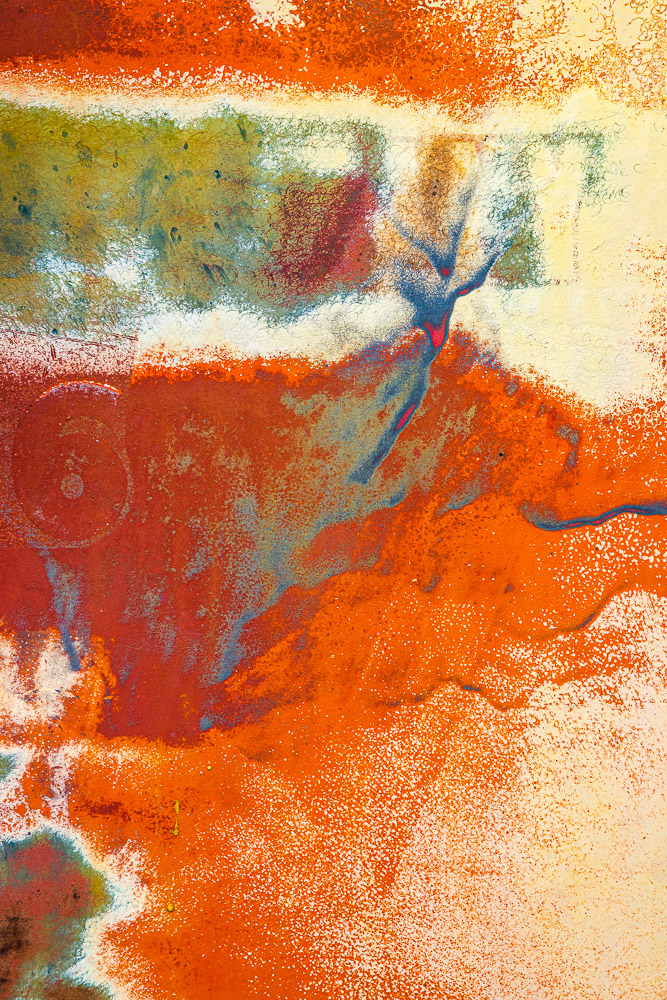
    Car wash brush abstract©Ed Schlotzhauer

    Don’t settle for just taking pictures

    So take pictures. But don’t settle for just taking pictures. Let’s turn up our sensitivity to hear when something is calling to us. If we are not actively listening, we will probably miss it. We know something great is there. Now we have to find it. Work the scene. Peal away the clutter. Follow your instinct. Let yourself be taken by pictures. It is worth it.

    When we get caught up in a situation like this, it doesn’t really matter if all we have if a cell phone. Use what you have. But follow you passion. Figure out what is really there and get the shot. Take the gift. Appreciate it.

  • Take a Cheap Trip

    Take a Cheap Trip

    Most of us like to vacation. Travel is booming at levels not seen for years. Popular vacation spots are often overcrowded. And costs continue to increase. What if I suggested a way to take a cheap trip? One that may benefit your photography. And it’s not a timeshare sales pitch.

    High costs

    Travel inflation seems to be higher than other inflation in general. It restricts some of what we can do.

    A trip overseas for a few weeks can be out of reach, both in money and the time required. It can suck up our entire savings for a year or more. Even taking a local road trip is getting to be a burden and out of reach for some of us.

    But some of us rely on travel to refresh and relax us. What are we to do?

    Antique narrow gauge steam locomotive snowplow©Ed Schlotzhauer

    Why do photographers travel?

    Photographers seem to have a special fondness for travel. We expect the travel experience to renew us, shake out the cobwebs, invigorate our vision and interest. And we want to come back with exciting new images to show and talk about.

    This has long been the case. From the beginning photographers tended to travel.

    As soon as the technology allowed fairly portable equipment, it seems like photographers were traveling. Matthew Brady traveled and photographed extensively during the American Civil War. Other famous artists like William Henry Jackson and Ansel Adams shot exclusively outdoors. And I’m just highlighting American photographers.

    These artists traveled to places most people couldn’t go in those times. They opened up our understanding of the world and what was going on. In this, they did a great service.

    Our travel expectations are probably more modest. We will seldom go to uncharted lands no one has ever seen. But we go to places new to us. Or at least places outside of our normal routine. It is enlightening and changes our perspective and understanding. That is usually a good thing. And refreshing.

    I think a yearning to travel is an inherent part of society these days. Especially for photographers.

    Shake it up

    But I promised you a cheap trip. Here goes: shake up something you usually do.

    Yes, that’s it. That’s all.

    We all fall into ruts. Shooting the same subjects in the same way with the same lens in the same lighting. It becomes a habit. A habit is where we avoid thought and go through life on automatic. Shake that up by changing something. Force yourself to confront a different situation where we have to think.

    One simple thing is to pick one lens we seldom use and photograph exclusively with it for a while, say a month. Some of us are naturally wide angle shooters. Switch to a telephoto. Some of us see only telephoto shots. Switch and only carry a wide angle for a while. Or a macro lens and only shoot closeups. Or a fish eye, or a tilt/shift. If you are a landscape photographer, try street photography. If you do portraits, try night skies.

    And yes, just carry that one lens. Not your whole kit. It will force you to play the game.

    Maybe try putting aside your “serious” camera for awhile and only use your phone. Or shoot with the expectation that you will process everything to black & white. Maybe it could be as simple a thing as deciding everything you are doing now will be cropped square.

    Chain link fence with frayed cloth©Ed Schlotzhauer

    Just do something different

    It really does not matter what you choose, as long as it is different enough from what you usually do. During this time you are not concentrating on adding to your portfolio. The goal is to break free from your normal habits and learn to see better. Think again.

    How is this a cheap trip? Travel encourages us to see different. We are out of our comfort zone. We become more mindful. Basic assumptions have to be re-examined. Things look new and different so we pay more attention to them. Making a change in our routine triggers similar things.

    One way to simulate that same effect as travel to force our self out of our normal rut. A cheap and easy way to do that is to force a change in how we see through our camera.

    Sound too easy? Try it. You may be surprised.

    Practice mindfulness exercises

    Making a change like this is one example of a mindfulness exercise. I’m not talking about chanting and navel gazing. The purpose of mindfulness is to set aside our preconceived notions and expectations. Wall out the distractions that are enticing us to other things. Learn to be in the moment, and to look around and actually see what is there.

    Some people can get there through meditation. Some others through travel or workshops. Maybe for you going to a museum and looking at the work of great masters does it. But regardless of the mechanism that works for you, mindfulness comes down to creating a still place for yourself. A place where you can set aside distractions and competing thoughts for a while. Where you can free yourself to really see and consider what is around you for what it is. Where you can immerse yourself in the experience of creating.

    In a canal©Ed Schlotzhauer

    A cheap trip

    I am not really joking when I say changing up your normal routine or environment occasionally is a cheap trip. It can produce some of the same benefits we often get from travel. Granted, it may not be as much fun, but it is a lot cheaper. And you can do it anytime or anywhere.

    No, I’m not suggesting that this is an excuse to go buy that great new lens you have been wanting. Of course, whatever excuse works for you is up to you. But that shoots down the idea of a cheap trip.

    Getting out of our normal territory and traveling to a new location often puts us in a more mindful attitude as we shoot. It amazes me that everything we see becomes an interesting subject. Part of that is because we set aside the uninterrupted time to be there and shoot. But I believe a large part of it is that we are seeing things new. That refreshes and energizes us.

    I am suggesting another way to stimulate a similar effect of travel is to change something about our routine. Something to make us think, reconsider, focus more on what we are doing. Something to make us see past mechanics and rules of composition and social media likes.

    Make it a habit to challenge yourself like this periodically. It does not require an uncomfortable 10 hour plane ride.

    Today’s image

    The image at the top of this article is an example of shaking myself out of a rut. This was taken in the Rockies in fall. Normally during this time I am concentrating on beautiful fall colors and aspen trees.

    In this case, I tasked myself with ignoring the leaves and shooting the mountains after dark. No trees or fall colors visible. This is the Eisenhower Tunnel from the Loveland Pass road. Stars are just becoming apparent as the last light fades, illuminating the mountain silhouettes. The trail of lights in and out of the tunnel adds unique interest.

    I felt good about it. Definitely not a conventional fall landscape.

  • Being a Tourist

    Being a Tourist

    Yeah, we’re highly trained and experienced photographers who always take “serious” photographs (whatever those are). But do you ever find yourself being a tourist? I recommend it as a balance to our vision.

    Tourist

    Tourism is huge business. Especially after Covid restrictions people seem to be in a frenzy of wanting to travel. So much so that it has become a problem for popular areas. And many people are just rotten and inconsiderate tourists. Don’t be a bad tourist. I am not discussing any of these issues. Just the subjective point of view of a tourist.

    Tourists queue in front of the Louvre in Paris in 2017. The museum shut down for one day earlier this year after employees walked out due to overcrowding (Credit: Getty Images)

    I have written before about how I like to travel. This is a different take on it.

    The desire for travel and tourism seems to be inherent in most of us. It is a longing to explore and experience new and different things.I liked this definition of what a tourist is:

    In simple terms, a tourist is an individual who embarks on a journey to explore new places, experience different cultures, and seek relaxation or adventure. They are the adventurers, the beachcombers, the culture enthusiasts, and the thrill-seekers. They are the ones who venture beyond their everyday lives to discover the wonders that the world has to offer.

    As a photographer

    All of those things can be true of a tourist, but a photographer may have additional objectives. I realize that many people on vacation only want to take selfies and classic tourist shots of iconic places. Nothing wrong with that if it is what gives you pleasure. But I am discounting it here, because I have additional goals and, if you are reading this, I figure you do too.

    Pinocchio?©Ed Schlotzhauer

    Whether traveling or being in my home area, I want to shoot images that reflect my vision. That bring a unique and different perspective on what I am seeing. This can be a challenge as a tourist. We are in unfamiliar territory seeing new sights with perhaps a tight schedule or even the dreaded “group tours” to deal with.

    If we are traveling to a distant location for vacation, we probably cannot justify taking all the gear we would like to have. We may have language and transportation challenges to overcome. And we may not be in full control of our schedule.

    Ultimately, unless you are one of the fortunate ones who can plan a multiple week stay in one location, we are under real or perceived time pressure. I hope you do not plan one of those “6 countries in 5 days” trips. But even with a more leisurely schedule, we know we have places to go and things to see in the time we have.

    This means we do not usually have the luxury of settling in and getting to know an area. To find the rhythms and pace of the place. To learn to see beyond the superficial. We are a tourist.

    Out of control

    In effect, this renders us out of control. We have to live with the schedule and the travel arrangements and the lighting and the weather and whatever other conditions you encounter. Usually we cannot say “I will come back tomorrow to get a better shot”. Tomorrow we are likely to be someplace else.

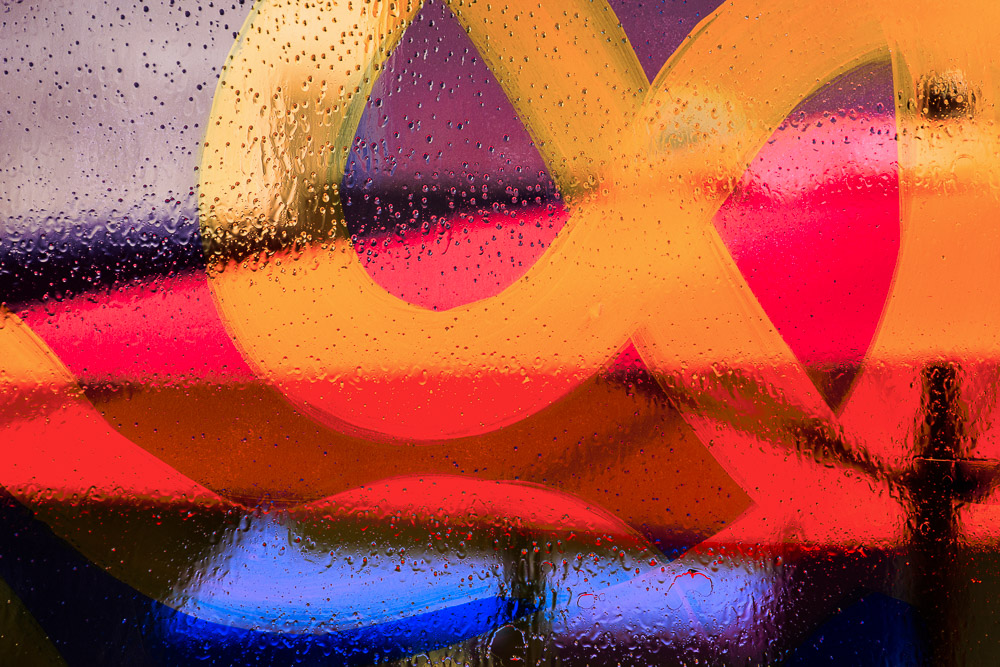
    Color spill©Ed Schlotzhauer

    And in this situation it is very hard to have a feel for what is good. Everything is different from our normal experience. Wow, what a great street scene we think. But in reality it is mediocre at best. If we looked around or spent much more time we could do much better. But we don’t know because we do not know what to expect and what is good and bad and we are pressed for time.

    We know that if we could control the circumstances better we could make better images. But we usually can’t do that.

    If you are a control-oriented person, this will be extremely frustrating. I am not a controlling person, I tend to take things as they come, but it can still be quite annoying even to me.

    Out of your comfort zone

    Being a tourist in an unfamiliar area puts us out of our comfort zone. Everything is new and calling to us to be photographed. It is hard to take more than standard tourist shots, because we do not have time to think much about each subject. We may not have the chance to walk around it to view it from different viewpoints or contemplate it at leisure before having to rush off to the next sight. And we seldom have the chance to compare it to other similar scenes to find the best one.

    Dealing with this and making shots we will be happy with when we get home takes a lot of discipline. We have to learn to be flexible and able to respond to circumstances instead of carefully planning and controlling our shoots.

    Strategies

    I have informally developed some strategies I use to try to survive in these situations. Let me cover it with disclaimers: these kind of work for me; no guarantee they will be right for you. As always, these are descriptive, not prescriptive. I do not believe in dictating a methodology to anyone.

    Refreshing glass of cider©Ed Schlotzhauer

    When you are a tourist, everything is interesting. Go ahead and shoot that tourist shot. You will want it for the memory. Now that that is out of the way, pause and look for the more interesting thing. That may be a detail of the main subject. It may be something totally different if you turn around and look. If you are on a dreaded group tour, spend time scanning for interesting shots while the guide is describing the current historical monument.

    I try to go with some project ideas in mind. This helps to channel my thoughts away from just the tourist views to some themes I will be paying attention to. On a recent trip to France my themes I tried to keep in mind were: antiquity, Joie de vivre, trees, devoted to God, and think B&W. It is not that I was actively working on these project ideas. Just that they gave me a framework for considering the sights I encountered. I find doing this gives me more focus and helps me avoid running off randomly in all directions.

    And I try to get into a kind of flow state. I am unlikely to truly achieve flow, but I can approximate is by being tuned in to what is happening around me. The goal is a heightened sense of awareness. In this mode I recognize a possible shot more quickly and can be ready to react to it. I want to be shooting instinctively for fast moving situations and more meditatively when possible.

    Being mindful

    I know it doesn’t sound like it from what I said above, but I think the thing that helps is to be very mindful. Experience openly and freely, but keep the analysis running in the background. Take it all in but be very conscious of how you are reacting to it. Quickly reinterpret what you are seeing through your own vision filter.

    Remember, as a tourist you are breaking out of the ordinary. Use that you your advantage. Shake up your habits.

    We all tend to form habits. Talking about photography, John Szarkowski referred to this as “habitual seeing” . Being a tourist everything is fresh and new. It is a great chance to break some habits and see things in a new way, flex your mental muscles. Try to bring this new found ability to see back as one of the important souvenirs of the trip.

    In the definition I gave of a tourist above, one of the key words to me is “experience”. If we are mindful and actively trying to capture that experience we are more likely to get some images that represent how we felt and experienced the trip.

    If it fails

    Keep in mind I am suggesting that you be experimenting on what may be a big expensive trip. When you are trying something new, you may get worse results, not better. No guarantees.

    My argument is: that’s OK. You’re not going on a National Geographic assignment where you are contractually obligated to bring back certain results. This is our art. We should always be experimenting. If you are disappointed with some of your results but you come back a better artist, isn’t that a win? It is for me. The experience is more important that the product we bring back. However, in my case, my wife is there beside me taking all the conventional selfies and tourist shots on her phone. So they will be there if I want to see them. 🙂

    These shots of mine are all “tourist” images from a trip to France. Hopefully they are not just standard boring travel shots.

  • Have an Opinion

    Have an Opinion

    I spent most of my photographic career just recording scenes. But now I think you probably won’t make a compelling image unless you have an opinion and express it in your art.

    Just the facts

    I started mostly focusing on just the facts. My goal was literal representation of scenes. I wanted to capture what was actually there, with no interpretation. I regret that.

    Being an engineer didn’t help. It is very easy to get caught up in technical details of resolution and depth of field. My excuse is that I grew up in Texas and moved to Colorado in my early 20’s. The mountains were new to me and I wanted to record everything I could. I was basically running around saying “Wow, look at this! I never knew this existed!”.

    If I had an opinion about it, it was something like awe and excitement about the new landscape. I took a lot of accurate, factual representational pictures back then, but very few are in any of my current collections. Beautiful images some of them, but little depth. Not compelling.

    Is it interesting?©Ed Schlotzhauer

    What makes it special?

    What makes an image special or worth lingering over? That is a hard question. Great photographers have been wrestling with that for 150 years. Painters have been agonizing over it for hundreds of years. There are no rules or definitive answers (despite all the rubbish you may find on the internet).

    I am not in a position to give you a definitive answer either. If I could it would make my art a lot easier to do.

    I think we can agree that some images jump out at us or hold us to linger over them. If we can agree on that then we can agree that there must be some quality or qualities that distinguish one from others.

    It could simply be the composition or lighting or the precision of the execution or the decisive moment or something in the scene that grabs our interest. Maybe some combination of all of that.

    I am drawn to believe it is all that but more. We see far too many well executed images of beautiful scenes that seem soulless, flat, uninspired. So there must be an unidentified quality that some get but others do not.

    It is probably oversimplified, but I speculate that part of it could simply be whether the photographer was excited about it. We tend to be drawn to excitement in others. When someone is telling us a story that happened to them, their excitement has a lot to do with our engagement. If it is just a “I went to the grocery store and got some oranges”, well, we quickly drift away. But if it is “I went to the grocery store and the most amazing thing happened…” then, if they can keep the story going, we will follow.

    Could it be that simple with our pictures?

    Express yourself

    I said when I started my photography I believed mainly in literal representation. It seemed wrong to try to project my feelings or opinion on them. Now I think I was totally wrong. That is why most of those early images were completely forgetable. I wasn’t truly being authentic because I was keeping my feelings to myself.

    One thing the great and very quotable Jay Maisel said was “What you’re shooting at doesn’t matter, the real question is: ‘Does it give you joy?’”.

    Now I believe that unless I am feeling something strong, it is useless to press the shutter. I want to believe that my excitement will carry through in some of my images. The good ones.

    Another quote that guides me is “if it doesn’t excite you, why should it excite anyone else?” I think that is a Jay Maisel too, but I can’t find it. If not, maybe I’ll claim it. 🙂 Either way, I believe it. Why should you care about any of my images unless they came from something inside of me? Not just pressing the shutter button and capturing what is there.

    So it is not enough for me to just capture an image of something. I want you to know what I was feeling, how I perceived it. I may have loved it or hated it, but you be able to sense it and participate in it.

    It is not only OK for me to express my feelings, I think it is completely necessary to make something good.

    Curious reflections in a shop window©Ed Schlotzhauer

    Nobody has to agree

    But there is a dark side to human nature: when we express our feelings, some people will not agree. I know now that that is fine. When I took the attitude that everybody does not have to like what I did, it was tremendously liberating.

    So now when someone says “I like that” or “I don’t like that” I basically ignore the comment. It is no use to me without more discussion. Actually, if someone does not like a picture I love to get into a conversation with them to find our why they felt that way. I will not change my image and I do not try to change their mind, but I am always curious about the reasons for negative reactions.

    One of my goals is to create a reaction in you. I’m generally a positive and upbeat person and that is more often the type of reaction I aim for. But I would rather cause you to hate my work than to be indifferent to it. If you are indifferent I failed to move you at all.

    I encourage you to fall in love with your subjects. Or find the subjects that revolt you and you want to have changed. Either way, feel something. Strongly. Your audience needs it and deserves it.

    Today’s image

    This was a quick “grab” shot, but that was because I did not want to disturb or upset the guy looking at me. I was more shy then. This has a lot of feeling for me. I was suffering and I’m sure they were, too. It was in a village in central Italy and it was about 100°F that afternoon. We were dying and the only people stupid enough to be out sightseeing. This old couple seemed to have found a relatively shady spot in the narrow street. Hopefully with some breeze. I’m sure that other neighbors would soon gather for their daily ritual.

    I fell in love with the area and the way of life. They seemed to have contentment in their circumstances and the pace and traditions of their life. I came away with great respect for them. I wish I would have visited with this gentleman, but the heat was about to take me down and I don’t speak Italian. I’m pretty sure he did not speak English. So I let it go be. I’m sorry for that.

  • The Hardest Part

    The Hardest Part

    I have figured out what I consider the hardest part of photography. Excluding Marketing. It is selecting a portfolio.

    Pick a few

    It’s a common situation. Perhaps I am entering a selection for a gallery competition. Maybe a client has requested a few choices for a job. It could be just needing to pick some images for this blog post. Whatever the reason, I am faced with the problem of selecting a small set of images for a certain use.

    Oh sure, I have the images that would work. It’s not like I”m not happy with my choices. The problem is selecting only a few.

    I’m calling what I am doing here making a portfolio. That is not precisely correct. Formally, a portfolio is a collection of images designed for presentation to an audience. Often one-on-one. However, the process is substantially the same for that and the situations I described. So I will not distinguish them.

    Embarrassment of riches

    Please don’t take it as bragging, but I have lots of images that I like. I have been at it a long time. Lots as in many thousands. That’s just the ones I promote to my top level selection category. A lot of others in my catalog would be useful for certain applications.

    Yes, I have a disciplined filing system. Everything is culled through multiple levels of selection. I find it is hard to pick the ones I like best from a shoot, so my process is oriented around rejecting the ones that are not as good. I don’t know why, but it is easier for me to say “I don’t like that one as well” than to say “I like that one best.” That is repeated through multiple levels. I apply more stringent criteria at each level.

    Giant bear peeking into an urban building©Ed Schlotzhauer

    Most of my images are filed geographically and I have an extensive keyword system for tagging all sorts of information. And I use it.

    All this should make it easy to find just what I want. You would think, but no. It is easier in that I am only wading through thousands, not hundreds of thousands of images to pick. But that’s not even the most difficult part.

    No guidance

    We are awash in training material to help us become better photographers. Some if it is actually good. There are thousands of hours of videos on camera operation and composition and visual design. Many more on techniques in the field and techniques for post processing. And gear guides are limitless. As are books to supplement the videos. All of this can help boost our knowledge and improve our technique.

    But when it comes to pulling together a portfolio, the advice is: it’s hard, keep editing, get it down to a few great images.

    Thanks, but that is not really helpful. Well, it is helpful to find out that I should expect it to be hard and I have to do it myself. But where is the video that shows me to pick this image instead of that one?

    Should a choose a tight theme with carefully coordinated image selections, as for a project? Or would it be best to present a range of subjects and styles to show the breadth of my work? Would it help to research the curator of the exhibit to try to guess what they would like? Why would this image work better than that one?

    I feel kind of left hanging out there.

    I’m on my own

    That’s the point and the conclusion. We are on our own. We have to be grown ups and make responsible decisions. That is no fun. It is downright hard. That’s why, to me, this is the hardest part.

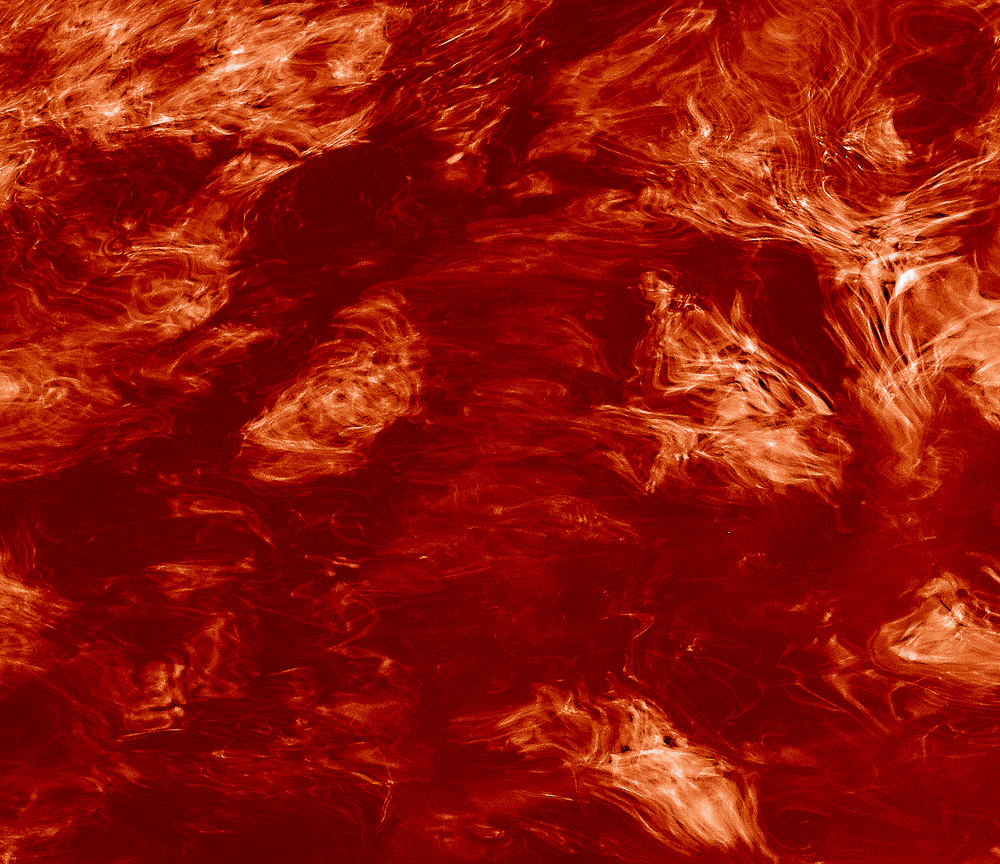
    Very abstract created image. Representa the evolution of an image.©Ed Schlotzhauer

    So a typical scenario is that I have to select, say, 4 images for a gallery. Open theme. I’m on my own. No guidance. It is very easy to go through my catalog and pull 50 images that I would like to submit. Another pass or two might get it down to 30 images. Then it gets harder and harder as I push on. I love every one of these images. Eliminating one seems like I am abandoning it. I know that’s not the case, but the feeling is there.

    It is sometimes easier if I set it aside for a few days to let the emotions settle down. Then I do my best imitation of being coldly realistic to screen out some more. But what seems to happen is that I get down to, say, 8 images. I can only have 4. That final cut is extremely painful.

    i envy people who have a colleague or mentor they can work with to advise the process. I don’t. The decisions have to be made by me with no help. I have an awesome wife, but she isn’t an artist and cannot help with this.

    Well, I get there. It is painful. I come away with sadness because I had to eliminate some of my favorites in the final mix. That disappears with time, though. After a few days I can look at the final set and be proud of them.

    Overthinking it

    A reality is that I tend to overthink it. What I know is that the images I pull are all very good. And I know, and have demonstrated to myself often, that, with a set of excellent images, every time you eliminate one, you make the overall set stronger. That is, if you make intelligent choices. I try to remind myself of great advice I got one time that you will be judged by the worst image you show.

    So why do I agonize over it so much? It’s not like I throw a great image away if I remove it from the set.

    I think there are two problems. First is that I love these images and feel bad about taking one out, because I’m emotionally attached to it. I can live with that. But the second and bigger problem is, how do I know I have made the best choice?

    Self doubt

    That is the core of the problem. There is no guidance. I am on my own. There are much bigger and more important choices in life that are like this. Who to marry, what career to pursue, where to live, what investments to make, etc. We must use our judgment to make the decision. It hurts. We want someone to look over our shoulder and tell us we did the right thing. Unfortunately, being an adult doesn’t work like that.

    Picking some images for a use is way down in importance from those big life events. Why is it so painful then? I think it is the same fear of failure and the consequences. But I try to be realistic.

    So I try to convince myself that the final set I choose will be excellent. Even though I feel like I am in the spotlight and I am being examined to see if I am worthy, I know that if I do the best I can, that will be good enough. And if not, well, nobody dies.

    I tell myself that, but it doesn’t feel like it when I am in the pain of the process.

    All parts of the photographic process are interesting and challenging. All are subjective, But there seems to be a lot of help to be had in all phases of it up until the final image selection.

    Resources

    There actually are a couple of resources I have found to help give some education in this. Unfortunately they are not freely available. Peter Eastway, editor of Better Photography magazine, has written an excellent ebook on creating a portfolio. As it says, it is specifically oriented to putting together a portfolio or exhibit. But it still gives a lot of good insights.

    Creating a Portfolio might be available at www.betterphotographyeducation.com without a subscription. If not, it is an excellent publication and you will enjoy it. 🙂

    Another option that I have found out is not paywalled is a three part series of newsletters in the Paper Arts Collective newsletter. This is a hidden gem of a publication. The series I’m referring to was titled Evolution of a Small Project, and it traced the decisions and selection process he went through to put together an exhibit. If you do prints then you should check out Paper Arts Collective.

    But I come back to my original problem. It is hard, no one can really help you, you have to make hard choices yourself based on your judgment and artistic vision. And you have to have confidence in your decisions. To me, it is the hardest part.