An artists journey

Tag: creativity

  • Cooking

    Cooking

    No, you’re not in the wrong place. I have not suddenly changed from writing about art and photography to giving cooking lessons. I am exploring an idea that occurred to me recently. I think our cooking style reflects our photographic style, and maybe vise versa.

    Weird, but stay with me for a minute.

    Cooking styles

    Do you cook? I hope so. It is rewarding and satisfying. A kind of art in itself.

    What kind of cook are you? Do you follow the “rules” (e.g. follow the recipes) or do you “wing it”? Is your pantry and refrigerator well stocked so you can always come up with something? Or do you take your recipe to the store and buy what you need for it? Is your goal to exactly recreate the dish as specified in the recipe or do you apply creative license? Do you plan our the week or months meal list ahead of time or do you come home and try to decide what is for dinner that night?

    We are all in different situations and make different tradeoffs. For instance, if you are cooking for a large family you tend to do things different than if you are cooking for one or two. If you are cooking for someone with food restrictions you may have to plan more carefully.

    I’m intrigued by the idea that how we cook gives some insight on us as an artist. I think you will see where I lean in my thinking.

    Recipe follower

    Some people follow recipes exactly. They will not even try it unless they have all the ingredients and equipment necessary before starting.

    If you exactly follow the recipe I think that says something about your style. Could it mean you are likely to follow influential artists and try to create in their style? Do you enjoy going to workshops where a leader will guide you to locations and help you compose shots to get similar results as theirs?

    Maybe this means you also browse social media and photo sites looking for images you like to give yourself ideas for your work. Is your reaction “I wish I had shot that; I’ll try to do it”? Then research the location so you can plan to go there and capture something similar.

    Recipe is a suggestion

    Another approach I observe is the cook who looks at recipes, but mostly for motivation and ideas. They will freely substitute ingredients and end up with something substantially different from the recipe. Good, but not the same.

    This cook, I believe, has greater confidence and experience. They know they can cook. That is not the issue. What I want to make tonight and how do I like it seems to be the basis of their decisions. A recipe, to them, is a kind of general guide. Descriptive, not prescriptive, to get sociological.

    The recipe calls for an ingredient they don’t care for, so they substitute something else. It calls for something they don’t have, so they use something they have on hand. Not random substitutions, but based on knowledge of the ingredients and their effect on the dish. All the while, they know they will create something good, regardless of how close to the recipe it is.

    Artistically, it seems this person is more likely to say yes, thanks, but I see it a little different. I’m going to shoot this other view. They have the confidence to follow their own vision, even if an instructor is trying to lead them in a different way.

    What recipe?

    Another cooking style I see is someone who seldom if ever consults a recipe. After all, most cuisine styles are fairly simple. There are general principle about how to combine things and what things go together to create certain flavors. Italian food has certain patterns based on certain ingredients, as does Mexican or Chinese or most any other recognizable type. When you learn the patterns almost any dish can be created. Most dishes are variations on the pattern. No recipe needed.

    This person is experienced and confident. They can go into their pantry and quickly envision a dish based on what is there. If they served it to you, you would probably say “that is very good. What is it?”. And they would just say it is an Italian inspired dish they made up.

    As an artist, they probably would not be in the instructor led workshop. They would just be out on their own, following their own muse, confident in their own decisions and style. Their attitude would be that they may not be as good as that instructor, but they would rather make their own decisions and go their own way.

    The best style

    Which of these styles is best? I think it is impossible to say. What you are is what is best for you.

    But I wonder if there is a progression? When we start don’t we strictly follow recipes? As we get more confidence and experience perhaps we learn to be more free with the recipe. Eventually we learn the principles well enough that we give ourselves wide latitude in creating according to our own tastes.

    I will admit that, in cooking, I am somewhere between the “recipe is a suggestion” and “what recipe?”. I have extensive files of recipes and cook books that I used to follow. If I have something in mind to fix I may still consult a recipe, but more for inspiration and to get an idea of what ingredients the recipe designer used. When the cooking starts I am likely to set the recipe aside and “wing it”. What I serve may only slightly resemble the original, but it will be good. 🙂

    No one told me how

    This comes around to a fundamental truth of being an artist: you are on your own. You are solely responsible for your art. No one can make the artistic decisions for you. It is a lonely but empowering place.

    You can either spend your time copying your favorite teacher or develop the skill and confidence to go your own way. Until you find your own way it is not really your art yet.

    Even when you are determined to be your own person, it doesn’t come with instructions. It can be very difficult and unsettling: this or that subject, what treatment or color palette, reject what I used to do and go a different direction? No one is there to guide you. It really is a “the buck stops here” situation.

    Hence, the idea that the person who can endure, even thrive, in this situation probably also expresses himself in his cooking. I believe the artist is often comfortable also making creative decisions in the kitchen. Recipes become unnecessarily restrictive – just another set of rules.

    Unscientific

    If you haven’t thought it already, let me be the first to say this is totally unscientific. It is my hypothesis. My own idea. I do not intend to do a scientific study to prove or disprove it. I just put this out here to help us understand ourselves better as artists. Let’s just think about it and kick it around.

    I don’t want you to perceive this as a black & white, all or nothing proposition. It is more a metaphor of art. For instance, if I am trying a new recipe for a dish I am unfamiliar with, I usually follow a recipe. Once. 🙂

    What do you think? Is there any correlation between artists and their cooking style? Let’s discuss it! I want to hear from you!

    Excuse me for now, though. I have to go home and figure out what is for dinner.

  • Creativity is a Process

    Creativity is a Process

    Is creativity something that just happens when the “muse” takes you over and directs you? I want to challenge that. I believe creativity is a process that we can follow almost anytime, not just when we are “inspired”. I hope this will seem inspiring, because it means we can create great work any time we decide to.

    The myth of the muse

    Ah, if only the inspiration would come! I guess I will sit and drink wine and read poetry while I wait for the muse to visit. That sounds like a pleasant way to spend a rainy day, but not a way to create art.

    The concept of muses comes from Greek and Roman mythology. They were 9 goddesses who controlled the arts and sciences and inspired artists. It is amazing how the concept has stuck. The idea of muses makes a good metaphor. We all know that our creativity seems to increase or decrease at unpredictable times. None of us understand the reasons why. But I will not believe my life and psyche is at the whim of Greek goddesses.

    I don’t feel like it

    If you believe some external influence controls you then it is easy to say “I’m not feeling it today, so I’m not going to do any art.” Maybe you can do that. I can only behave that way for very short periods of time.

    My art is something I have to do. Not doing it is worse than feeling like I am not inspired. I would make “bad” art rather than no art at all. I don’t have to show it to anybody.

    I find that when I assign myself a project to focus my creativity or just pick up my camera and get outside looking around I start to feel and see possibilities. Something magical happens to me when I hear the shutter click that first time. Now I am drawn into creative mode. My camera, like many new ones, has a fully silent mode. I don’t use it. I want to hear that shutter slap. It activates decades of muscle memory and discipline. I have made an image. Now I can go on.

    Hard work

    The bad news (for some of us) is that art is hard work. We cannot always sit around waiting for “inspiration”. We have to make our own inspiration.

    Inspiration is for amateurs. Us professionals just go to work in the morning.” – Chuck Close

    Hard work will outperform talent any day of the week.” – Joel Grimes

    Motivation exists, but it has to find you working.” – Pablo Picasso

    A professional is someone who can do his best work when he doesn’t feel like it.” – Alistair Cooke

    Sorry for the blizzard of quotes, but I find encouragement in the experience of others who have been there before. I could have found a lot more quotes on the subject.

    So, if you just dabble in art and it is not a driving passion, it is OK to wait for inspiration. But if you are serious about your art you have to just do it. Create your own inspiration. Work. Push on. Get moving to get the juices flowing.

    The process

    I said creativity is a process. What is the process? As Fast Company magazine said: “stop your whining and sit your ass in the chair.” Sorry to be crude, but it is true. They were referring to book authors, but the same principle applies to other creative efforts.

    It doesn’t do much good to complain about lack of inspiration. Do something. Taking positive action will lead to the work flowing. Eventually. It is hard at first, but it is a learned process. “Professional” creatives, like screen writers, copywriters, commercial artists, illustrators, wedding photographers – people who must deliver work to clients on a schedule – just have to get it done. Whether or not they feel like it. The rest of us can, too.

    Assign yourself a deadline. Define a project and a timetable. Go out and say you won’t come in until you have shot a certain number of images. Re-evaluate and re-organize your portfolio. Take some action to get some momentum going. It will overcome the barriers in your mind and get ideas flowing. The work you do right then may not be great, but it will get you going.

    Projects focus us

    I have said that projects are a good way to get ourselves going when we don’t feel like it. Actually, I am coming to believe it is one of the best tools we have. What is a project and why does it work?

    A project as I describe it is shooting and editing a collection of images that center on a theme or subject. I believe it helps focus us to write an artist statement before starting the project. This collects our thoughts on the purpose of the project, its scope, its meaning, and what your interest or motivation is.

    Write something? You’ve got to be kidding! No, I’ve come to believe writing is just another part of the creative process. It is organizing a linear series of words to communicate rather than communicating solely visually. Both are forms of expressing our thoughts. Both, I believe, are complimentary creative processes.

    The artist statement does not have to be long, maybe 200-300 words. It will serve as the guide to focus us and give unity to the project. So be clear to yourself.

    Maybe I’m just weird, but putting the blinders on and restricting my thoughts to a project gives me a huge boost of creativity. Rather than my thoughts being diffuse and wandering all over the place, they are focused on one thing. My creativity and energy have something to work on. Throwing myself into coming up with diverse ways to express a single subject is a challenge and, actually, fun.

    Get going

    Whether you challenge yourself with projects, go to museums, read books, write, finger paint, whatever, do something. Do not fall into the trap of feeling depressed and uninspired and, therefore, not doing art. Get moving to get your mind working. Doing creative things breeds creativity.

    Let me know what you do to get your creativity going,

  • Boredom

    Boredom

    Boredom. We’ve all been there. We get in a funk. What we usually see and shoot is distasteful to us. We are discontented. Everything has been done, there is no creativity left. Do you ever feel like this?

    The time of year

    This article will be published in the depths of winter. Many of us don’t think there is anything interesting to see or shoot. After all, there are no flowers or green trees or lush fields.

    I would say, look again. Get out in it. Yes, out in the cold and snow if you have that. Or the rain and clouds. Whatever winter is in your area.

    Forget what you want to be shooting. Look with fresh eyes at what is there. You may discover a whole new world. In the words of an old song, “if you can’t be with the one you love, love the one you’re with.” While I do not recommend this as a way of managing your relationships, it can be very useful artistically.

    I actually love shooting in winter. Today I was out shooting in 70+mph winds and temperatures not much above freezing. Do I love being out in that kind of wind? Not at all. When you have to bundle up in layers of wind-tight clothes and hold your tripod to keep it from blowing over, it looses some of its charm. However, there were great opportunities out there. I have, by chance, been working on a project about wind. Today was a great opportunity to fill in some gaps in the image set.

    It happens to all creatives

    We all feel blocked, bored, empty at times. The “muse” is not around. We fear our best work is behind us and there is nothing to look forward to. Might as well give up.

    You are not alone. We all feel this sometimes. Like temperature and climate and relationships, our mental energy is cyclic. Sometimes the spark seems to be gone. It is a low time for us.

    Recognize that this is a natural part of life. Don’t be (too) discouraged. It will change. The creative energy will flood us again. Just give it time.

    Use it!

    But we don’t have to sit passively waiting for the creativity to return! Use this boredom to propel us to a new level.

    If we are bored perhaps we have plateaued on our current path. Maybe we aren’t reaching far enough. It is a great time to reexamine where we are and how we feel about our art. And actually do something about it.

    Boredom is frustrating to most of us. Use that! That is an energy and motivation. What are we lacking? Should we strike out in a new direction? What would we love to do if we had the opportunity?

    Like with our body, if something hurts, that is a sign that we need to take care of it. Taking care of it doesn’t necessarily mean we should rest it and take a “oh, you poor thing” attitude. Maybe we need to work it, eat right, exercise, build it up.

    The point is, the frustration of boredom can be a motivation to change our self or redirect ours thoughts or energy.

    Opportunity

    I have made some of the best discoveries of my life because I was bored. Really.

    Let me give an example. Way back, we owned a timeshare. For those who don’t know them, it is a vacation ownership scheme that was popular at one time. Don’t buy one. It’s not a good investment. The way it worked was, you “bought” a fraction of a property, say one week during the year. Typically your ownership time would be traded for a week at another property. Because of this, we got to visit beautiful places around the world. But a side effect was that we were “planted” at a single location for the week.

    This led to interesting trips. On one occasion I can think of, we were in a nice place way out in the country in Devon, England. Ten miles or more from the nearest town. It quickly got boring. As a result, we started exploring. Even though this wasn’t an area you would find featured on many tourist itineraries, the things we found were intensely interesting. We still cherish the memories.

    Because of the boredom, we were led to explore with our eyes and minds open. We had to forget the expectations that were not being met and become receptive to the wonderful things that were there. Repeating this experience many times completely changed my travel style. Therefore, now I want to settle in somewhere, get to know it, and have to find out what is there.

    Use boredom to your advantage

    So I encourage you to let boredom be motivating. With the right attitude it can free and empower us. It can lead us to opening our eyes to our surroundings, to learning new subjects or techniques, to re-evaluating our work and making improvements, to getting out and doing something about it. Or, you can sit on the couch and feel sorry for yourself. Your choice.

    The image with this article is one of many surprises we discovered on that “boring” trip to Devon I talked about above. It is a beautiful place with hidden gems all around.

  • Try and Fail

    Try and Fail

    No, I’m not saying try “to” fail. If you have been there trying to do creative work, you know that you will create a lot of failures along the way to some good work. In creative work we often do not clearly know where we are going. That leads to a lot of failed experiments and dead ends. When we try and fail, is that bad?

    Attitude

    Our attitude about failure will have a lot to do with our results. A reality for many of us is that, if we are not failing, we are not stretching ourselves and developing new skills or vision. As creatives we cannot play it safe. We have to be risk takers.

    I love a quote from a blog by Benjamin Hardy. He was talking about Molly Bloom and said “The moment you realize you can try and fail — and that everything will be okay — then you are free to create.

    This is a liberating event in our creative journey. Failure isn’t final. Failure leads to growth. When you fail, no one comes and takes away your camera or your brushes. No one even laughs at us. Realizing we can fail and go on with no consequences frees us to try without worrying much about failing.

    Learn by doing

    We don’t upgrade our skills and exercise our creativity just by thinking about it. We have to take action. But just taking random action will usually lead to random, unwanted results. We need a way to follow a path that will take us to desired results.

    You are probably familiar with the “do it, try it, fix it” loop. It goes by different names, but the concept is pretty much the same. This is an excellent process for improving things.

    The basic idea is you try something new. Then you evaluate the results, Was it a success or an improvement? Decide what, if anything, you want to keep of this experiment to incorporate into your tool set. Then, based on the evaluation, plan what to try next. That becomes the basis of the next experiment. It is important to realize this is a cycle, meaning it continually loops and repeats.

    Evaluate

    At the evaluation stage many experiments may be tossed out. They did not take us in the direction we want to go. It was a failure, but that does not mean we failed. We just tried something that we decided didn’t work for us.

    This is part of a process. It is a deliberate plan to systematically push the limits. To do that, we will try a lot of things that don’t work out satisfactorily. The failures are expected, planned even. Not something to be ashamed of. We should be happy to know we tried. Now we are free to do another experiment in a different direction.

    Freedom

    Freedom is at the core of the process. We are not just trying random things and mostly being disappointed with the results and insecure with our creativity. Instead, we are following a deliberate process of improving our self and our art. And knowing we can try anything with no fear of failure is extremely liberating.

    It is easy to get discouraged and think of our self as the failure. We have probably all felt like a fraud who has no right considering themself an artist. Remind yourself that we have to change and grow creatively, and to do that requires a lot of risk taking and failed experiments. Following a process like outlined above makes it a methodical plan. It help us keep in mind that the failure is not a personal failing but a necessary and expected outcome of the growth process. It can be exciting. We can risk more when the fails are not catastrophic.

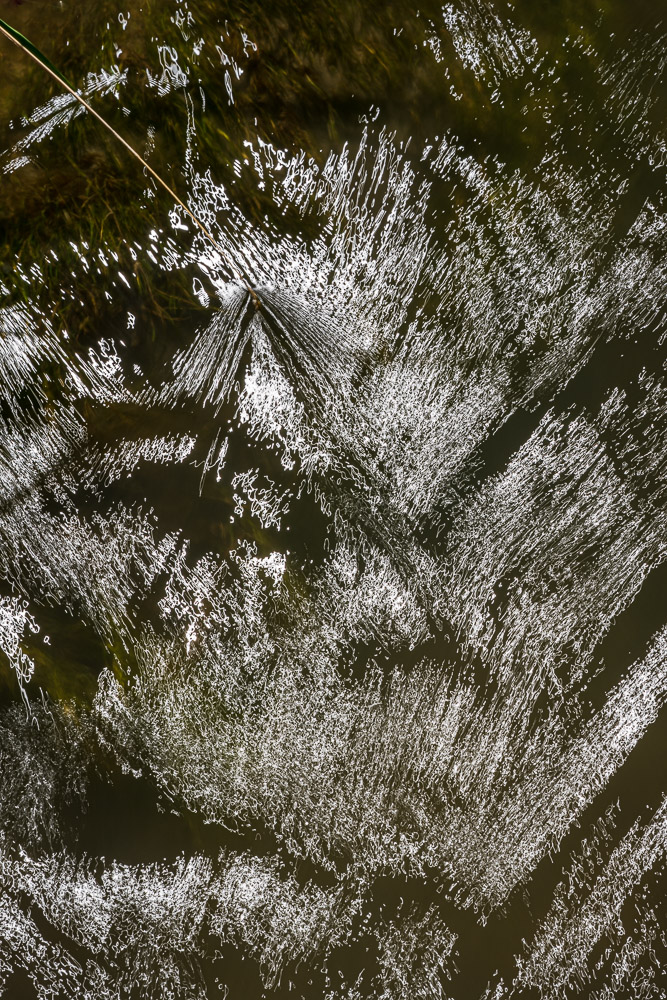
    The image with this article is an experiment. It is probably not what it appears to be. I will leave it to you to decide if it was a failure. I have my own evaluation.

  • To Be

    To Be

    No, I’m not addressing the existential “or not to be” question. I was triggered by reading questions from photographers about planning photo trips. There were lots of concerns about locations and what lenses to take and time of day or even time of year, but it seems to me they are missing a fundamental point. You are an artist. You are going out to be, to create, to be inspired. Collecting a stack of the same standard pictures everyone else takes is not the goal.

    Being the same

    I have written on this before. I hope you believe your task as an artist is to create new work, your own work, not imitate what has already been done. Yes, Yosemite is full of iconic locations. If I was there I’m sure I would shoot at some of them. The difference is these shots would be just for me, to remember being there. I would not be shooting for my portfolio unless I encountered exceptional and unique circumstances at one of these overshot scenes.

    I see a lot of photographers actively planning trips to these locations to intentionally try to duplicate these iconic shots. It makes no sense to me. If that is what you like, have fun. Each of us is motivated by different things. But if you were starting out as a writer would you write a knock-off of Moby Dick just so you could have a copy of it you could say you made? I hope not. Write your own book.

    Maybe you don’t really know who you are as an artist yet. I understand. I’m still trying to figure it out for myself. I decided long ago, though, that imitating other people will not help me create my own work.

    Letting go

    If you are not going to imitate other work then you are put in a potentially scary place: you have to create on your own. But what if I can’t? What if I’m not really creative? Maybe I don’t have anything to say? These are all normal and valid concerns.

    You will never know until you try. And guess what, when you try you will probably fail. How’s that for encouragement?

    I want it to be encouraging, though. When you start doing anything new you are not good at it at first until you try and fail and practice – a lot. As a matter of fact, if it is too easy you are either not challenging yourself enough or you have picked something that will not keep your interest for long. If it is too easy it becomes boring.

    Let go and start doing your own art. Follow your own vision, not someone else’s. Don’t visit all the iconic locations to recreate someone else’s art. Focus on your own ideas.

    Sometimes you will be left high and dry creatively. That’s OK and normal. Push on. Don’t fear that. Use that time to start understanding what interests you. Believe that you have a creative voice. Keep digging and you will find it.

    Put yourself in a different place

    One strategy I like to use is to intentionally ignore the popular, iconic locations. I like to seek out little known things that most people have never seen. I love the challenge of finding something in nothing.

    I’m lucky in that from my house I can be in the Colorado mountains in 30 minutes or far out on the eastern plains in less than an hour. I go to these places a lot and enjoy them immensely.

    But I also wrote recently about driving through the heartland and finding interesting things to photograph. That takes a special discipline and mindset. It is fun for me after long practice. I have come to firmly believe there are interesting scenes almost anywhere.

    This brings up a special point. There are interesting scenes all around. You don’t have to go to mountains or national parks or famous locations to do your art. You don’t have to take off for 2 weeks to travel to exotic locations. Beauty and interest is everywhere. Most of it is ignored by everyone around you. Learning to see what is there is a skill that can be learned.

    React, create

    Learn to be open to what is there around you. Accept it and embrace it as creative possibility. What can you do with it? Just “be”.

    You have seen people who thinks selfies or family shots mean lining everyone up in front of a location and giving big fake smiles for the camera. I’m not criticizing them because that makes them happy. I want to encourage you not to try to manage your shots like that. Accept what is there and work with it. Use your creativity to isolate it, to make it interesting for other people, to point out this interesting thing they probably didn’t see.

    A photographer friend wrote this in a private newsletter:

    “To just be. That is what it is all about. When I find a high place with views all around, every sense just soaks it up into my pores. It is subtle; the opposite of the raucous and titillating world in which we normally live. … These sounds mean vast open spaces and pure freedom. I can peer into this space, keeping my gaze wide. At first I see the far-off trees and rocks and snowfields. Each thing has meaning. …

    But after a while my gaze becomes soft, and I focus on the air between myself and the distant ridges. Everything becomes a soft palette of shape and color, devoid of meaning or expectation. The world just is. My experience of sound, sight, and senses just are. If I look for myself I fail. I literally can’t see “me” without a mirror – not my face or head, the features we most often associate with identity. It’s times like these that I can look for myself and just see the beautiful world. It is in this place where I can be exactly what I was designed to be. Just me. And for a brief moment, I am a bird sweeping into the storm.”

    When we can learn to experience places or events in this manner we can just be and flow with them and into them. Even if it happened on a walk in our neighborhood. The experience becomes part of us and we reflect it back out in our work. What we produce is something from deep within. It is honest. It may even surprise us.