An artists journey

Tag: creativity

  • Lucky, or Good?

    Lucky, or Good?

    You’ve heard the phrase “it’s better to be lucky than good”. Some people will claim this is terrible advice. But I think there is enough truth in the phrase to merit some thought. Strive to be as good as possible, but welcome and embrace luck when it happens.

    Not the way to plan

    We can’t schedule or control luck. It is an external thing that happens, or it doesn’t. Since we can’t control luck, we better work on the things we can control. This is just pragmatic.

    The context here is art, but it really applies to most areas of our life. Work hard. Develop all the skill you are capable of. It is a life-long quest of continual improvement.

    When we are good at what we do we have more control of the outcomes. Another old saying you’ve heard is “the race doesn’t always go to the swiftest, but that’s the way to bet.” In this case, bet on skill. Our skill is a huge determinant of what we will achieve,

    Art, though, like many important things, is not completely predictable and deterministic. Unexpected or unforeseen things can happen and that can be good.

    Luck happens

    When the unforeseen happens we tend to call it luck. No matter how great our skill or how much we plan, sometimes something happens that just makes us say “wow.”

    If this event takes us away from our desired goal we tend to call it unfortunate – bad luck. If it sparks a new idea or gives a new insight or makes some problems go away we call it good luck.

    In either case this event was unplanned, unexpected, unanticipated. That is part of the beauty of it. Or it can be, depending on what we do with it.

    Be open and receptive

    Luck can be received as a gift. We should be flexible enough to re-evaluate our plans and goals in the moment to consider what we have seen or learned. Psychologically healthy people tend to have an attitude of gratitude. This luck could be pure gold. We should consider ourselves fortunate.

    It can trigger the creation of a great image or even bring us to a new place in our art. Even what we at first consider to be bad luck can have good outcomes. There have been times when I had been working on an image or even a project and a piece of bad luck causes me to reevaluate what I am planning on doing. Sometimes I conclude I was going down a dead end. The bad luck sent me to a different and better place.

    This cannot happen unless we are open. I could not possibly list all the times some lucky accident caused me to change my plan. Or the number of times I have learned something new to eagerly apply in my work.

    This image

    Let me talk a little more about this image than I usually do in these articles. I try to get out all year in all weather. In the winter I try be aware of good ice patterns, because I sometimes like the patterns and textures. Usually, here, there is enough snow to make the ice cloudy and less interesting. Nice, but kind of all the same.

    This day, though, I hit a brief window where the lakes had partially thawed. Then a hard freeze, with no snow, and calm conditions, had led to the formation of beautiful ice crystals. In addition, the edges of the lakes I was at had good rock just under the surface to give more pattern and color.

    I abandoned everything else I was planning to do and nearly froze to death shooting this ice. It was very cold.

    I love this image. It has not been altered substantially. Just some color boost and correction. I haven’t seen these conditions before or since. It was a happy accident – good luck.

    Lucky or good?

    So, is it better to be lucky or good? I will let you answer that for yourself. For me, I believe we need to work very hard on our skill and our vision. We have to be able to produce the work we want to create at the quality level we want. But I also believe we should be receptive to the happy accidents that bring joy and freshness to our life and vision. They seem to go together.

    Maybe Samuel Goldwin was right when he said “The harder I work, the luckier I get.”

  • It’s Messy

    It’s Messy

    Despite the image some artists try to present, the artistic process is messy. At least, for me. It is not a clear, linear path from inspiration to end result. Sometimes things don’t work. We hit dead ends. We change our minds. Even after arriving at what I thought was the end product, I may decide I don’t like it. When people look at the result, they cannot see the messy way we got there.

    Vague goals

    I can’t speak for other artists, only myself. Most of the time I only have a vague notion of what I intend to achieve when I start an image. Sure, I may have a general idea, or a theme, or I may be thinking of a project I am working on. But that is a kind of an idea, not a plan. It is definitely not precise.

    I hear artists describe having a definite plan from the beginning, with everything sketched out in detail. I sometimes envy them. But most of the time I think that sounds like a boring process. There is no room for inspiration on the spot. When I start pulling a final image together I often let what I see on the screen guide and inspire me to the end. I am glad I work in a medium that is very malleable.

    So I guess I’m a bad artist because I don’t know for sure where I am going when I start a work. Or maybe this is the process that works for me. I like to be flexible and adaptive.

    Evolving ideas

    Another side of my adaptive process is that I am open to exploring new ideas as I go. Ideas tend to build on each other, spawning new ones or modifying what I was thinking. I often end up seeing an image in a completely different way from where I started.

    For this to happen, I have to be open and receptive. Being locked into a rigid plan blocks this exploration and learning. I seldom hesitate to change my vision part way through the process. Even to discard an image because it no longer is shaping up the way I now see it.

    You could argue that I would be more efficient to do my experimenting and work out my vision before starting to refine an image. Perhaps you are right, but that is what I had to do when I was designing major software projects as an Engineer. The reality is that I am too visual to do that now as an artist. I have to see it, then make modifications.

    Mistakes

    I freely admit I make mistakes. I don’t plan them, but I don’t necessarily see them as failures.

    An “oops” is often followed by a “huh, that’s interesting; I wonder if I could use that?” Sometimes a mistake will open up a new view or thought process. It can make me see new possibilities.

    These are often happy accidents. They can lead to a creative new end and maybe even a modification of my “style”. The result of a mistake is often a realization of something I could do but I’ve never thought of it before. It is unlikely the mistake creates a finished work that I love, but it informs a new direction I could explore. It is a growth opportunity.

    Seeing new opportunities

    Opportunity is a key word in this process. My background is a long history of realism. So it can be hard for me to “loosen up” and take an image in an unexpected direction.

    To counter that, I often force myself to spend some time considering unusual processing or unlikely seeming combinations of images. Most of these experiments are failures, in the sense that they seldom make it to the final image. However, they can inform my vision. There may be some aspect of the processing that I like and work in to future images. Or it may encourage me to try something else along the same line that I do end up liking.

    We live in great times for exploration. Our image processing tools are the best anyone has ever had. Our high quality digital images have the most detail and potential for post processing that has ever existed. The barriers to our vision are mostly internal. We just can’t see it or give our self permission to go there.

    Failure to recognize

    Have you ever viewed an image in your editing software and been really undecided about it? It is not what you wanted. Your instinct is to delete it. But something way in the back of your mind says to keep it for a while.

    That happens to me. I have said before there is something cathartic about deleting images I don’t want to have around. But sometimes I need to keep them. To let them age a while. Or maybe to let my subconscious work on them a while.

    Now realistically, most of the time, when I look at them later, I know there wasn’t really anything of interest there. But sometimes… That is the joy of this. Sometimes there is an undiscovered gem. Very rarely I look at one of these saved images and realize my subconscious was trying to show me something I did not perceive at the time. This particular image may not be great, but there is a realization there that can inform my work going forward.

    That is an a-ha moment. A growth opportunity. After I get over beating myself up for not realizing the potential at the time I can add it to my repertoire of situations and patterns to look for. I have grown as an artist. Maybe it can even help me be more receptive while I am shooting.

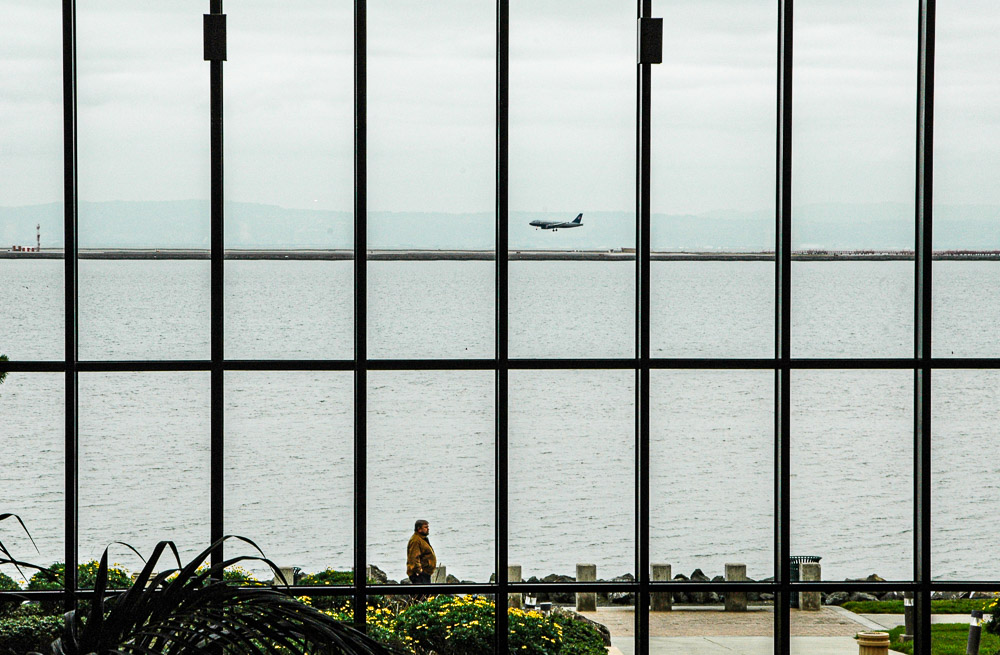
    The image with this article is one of those slow to recognize ones. Look it over and see how many pairs of things you can find. It amazes me. I did not consciously recognize that when I shot it, but I think that is what was drawing me to it.

  • Self-centered

    Self-centered

    If you describe someone as self-centered, that is probably taken as a negative. It often is, but there is another way to see it. If you are a “fine art” artist, I believe you have to be self-centered to really be true to yourself.

    Who do you listen to?

    It’s a problem these days that people are so “connected” to social media that it can be hard to maintain our identity. Is all your work instantly posted, tweeted, shared to “the world”? Do you measure your success by the “likes” or lifts or re-tweets you get?

    This echo chamber of voices can make it hard to listen to your own. If a significant number of your followers don’t like something you post, is it bad? As with any criticism, you have to try to be objective.

    These people giving you feedback – what do they know of your intent, your feelings, the direction you feel your art should go? What do they know about the process you followed to get there?

    Most pictures on the internet don’t get more than 1-2 seconds of attention. When someone hits the “thumbs down”, what does that mean? Is that a well reasoned, critical evaluation based on objective knowledge?

    Likewise, when most people gush over your post and give you glowing praise, what does that mean? Unless they are an artist who takes the time to look more deeply, probably very little. If they follow the praise with “and I will contact you to buy it,” that carries weight.

    Who should you listen to?

    The feedback of random people on the internet probably will not take you to where you need to go as an artist.

    Do you have a small set of trusted friends who will give you reasoned and honest feedback? If so, you are lucky. I desperately wish I did. Try to build such a group. If they really are good friends their honesty will be valuable for you, even when it hurts. If they really are good friends, they will hurt you occasionally.

    Do you work with one or more galleries? Ask them for evaluations, especially of your new work. I haven’t tried it, but I understand portfolio reviews can be good. Your mileage may vary, depending on which ones you choose. I know of successful artists who still go to them for the feedback. Read Cole Thompson’s portfolio review by Mr. X that changed his art.

    Are there artists in your area who you trust? Your style may be totally different and you may not even like what they do, but that is not the point. Can they give you objective and well reasoned feedback? Try to put a group together. I am looking to collect such a group in my area.

    Ultimately, though, it comes down to having to trust your own instinct. You are you. You are the artist. No one else can answer for you or decide what your style or theme or subject is.

    Can you be objective about your own work? Some people can, some can’t. Learn to. Since you are the only one responsible for your work, you have to be able to make your own decisions.

    Unashamed

    Sean Tucker used the term unashamed in a discussion of this problem in his book The Meaning in the Making. I think it is a good word choice. This is where the self-centered aspect comes in. It is understanding who we are and what we are trying to do, regardless of what anyone else thinks. Not arrogance but confidence. We have to realize that only we own our results and are responsible for our decisions.

    Anyone who does anything publicly will be criticized for it. That is true for us when we present our art to the world. A lot of people will hate it. Some will love it. The ones who don’t like it will be quick to tell us what is wrong and how to fix it or why we should quit. As an artist, we must be able to say “thank you for the feedback, but I am going in this other direction.” We have to believe it and in our self.

    Do you believe in you? Are you confident to the point of seeming self-centered? Good. Your opinion of your art is ultimately what matters. That doesn’t mean you will get rich or famous. But you will be at peace with yourself.

  • Finding Inspiration

    Finding Inspiration

    Are you empty sometimes? Are there times when you don’t have any ideas or new projects? We tend to desperately put pressure on ourselves to find something creative and new, but this is often counter-productive. So how do we go about finding inspiration?

    Relax

    Ouch. This can be hard. Our art is important to us. We need to be proactive and driven to produce. But first. relax.

    If you are in a slump creatively, just go with it. You will come out of it. But the more pressure you put yourself under the harder it sometimes is. It is very hard to force ourselves out of a slump. Our subconscious will eventually get re-engaged and start pumping out the great ideas. Give it time to rest and rejuvenate.,

    Take a walk

    Really. “Waste” the time. Carry your camera or not, it’s up to you, but don’t require yourself to take any pictures.

    When you walk, go slow. This is not mainly for the exercise. It is for your head. Look around. Look at everything. See things as it for the first time. Play the game that you just teleported to [your favorite exotic destination] and you are looking around in wonder at everything. Try to see how many things around your neighborhood you never really “saw” before.

    None of these may be in your “style” or preferred subjects, but learning to see new things is good.

    Read a book

    I have heard it said that most adults never read another book after they graduate from school. Maybe that is just males. 🙂 Even so, I hope that is a false statement. Books are one of the most important inventions in history.

    Reading something new will expand your thinking. Studying something related to your art will give you a new appreciation of different styles and ideas. It may teach you something you can apply to improve your images and refresh your creativity.

    Even if not, you will still be better off mentally for exercising your brain. Books are a major repository of the collected wisdom of centuries.

    Watch an educational video

    I can say to watch videos because I do not produce any videos. I’m not selling anything.

    The good thing about the internet is that there is a wealth of information there, free or for relatively low cost. There is probably no aspect of our art that someone doesn’t have a video about.

    That being said, the “signal to noise ratio” (the percentage of useful information) is fairly low. Be careful of who and what you take in. Even so, it is not too hard to find good stuff.

    If you are up to it, it can even be healthy to watch bad videos. That sounds weird, but do you find, as you get more mature and confident in your craft that you can sift the good from the bad? If you watch a bad video, or one you disagree with, it can be empowering to be able to refute the presenter and know why you believe they are wrong, at least for you. It can help bolster your confidence.

    Read other artist’s blogs

    You are reading mine. Thank you! I would love to hear your thoughts.

    Probably thousands of blogs are written every week. Pick a few new ones to add to your list. They do not have to be leaders in your field. Look around and find artists in other fields whose work you admire, who influence you, whose style you admire. Follow them. This is another great source of wisdom and inspiration.

    I follow a few people. Not many. But I am constantly amazed at the wisdom they give away.

    Be open

    None of these suggestions will do much good unless you open yourself to receiving what they might give. Openness is an attitude. Our attitudes are under our control.

    Are you totally focused on one subject? Why? Widen your view. Have you become cynical? As you learn to look around more, re-awaken your wonder and joy. Find new things that excite you. Cast a wider net. Get enthused about something. Give yourself permission to try new things.

    Inspiration sneaks up on us when we aren’t expecting it. The more we can be open and receptive, the more often we will find it. I find that stimulating my mind with new thoughts and learning new things helps keep me open to inspiration. Try it!

    About the image here

    I can’t claim this is super creative as such, but I am very happy I made this image. This is the epitome of depressing conditions: way out in the midwest, nothing around anywhere, temperature was 108F, winds blowing so hard I had to hold the tripod, totally clear blue sky – what to shoot? I decided the interest was the wind. How to capture the effect of it? I think, by being open to exploring new ideas, I made something good out of it. At least, I’m happy with it.

    This image is part of a series I am working on, tentatively called “Maria”. It is not published yet.

  • It’s Not Necessarily About the Outcome

    It’s Not Necessarily About the Outcome

    Sometimes the muse abandons us or conditions conspire against us or we get interrupted by something urgent. This can make us create pictures that do not live up to our expectations. But unless we are shooting for a client, we probably should not worry so much about the results we get, the outcome. We should remember to enjoy the creative exercise and have fun.

    We all want great images

    I assume that creating exceptional images is a goal for most of us. I know my expectations are high. We study technique and browse images by great artists we appreciate. We spend a lot of time getting to a location, exploring, setting up, composing. But it doesn’t always work.

    Despite our best efforts, we are often disappointed. What we get may not be great. It may not even be very good. This can be very disappointing if we only judge our self by the outcome.

    They won’t all be great

    It is not uncommon for me to go out for a day of shooting and end up throwing most of them away, with none to add to my portfolio. Does this make me a failure? I try to see it differently.

    I hope we can be philosophical about it. Sometimes all we seem to get from our effort is experience. Hopefully we learn from our experiences and improve our craft. That’s a bittersweet benefit. But the reality is we will learn more from a failed shoot than a successful one.

    I’m coming to see that I am evaluating it wrong. My attitude was that I failed unless I got a number of great images. I concentrated on the outcome. There are greater goals.

    The process may be as important

    Sure, it is disappointing to not have captured those scenes that called to us at the time. But it is an opportunity for self-examination. What caused them to be unspectacular? Was there something we could have done different?

    The editing process is a mirror where we can see how our mind worked and even see our soul to some degree. The images are captured. For better or worse, the bits are there on the computer. Now we have to deal with them. We can process them, but we cannot change them substantively – well, usually not.

    I actually see something cathartic in deleting bad images. I have evaluated them and analyzed the problems and learned what I can. Now I have no more need of them. Remove them from my world. It’s a purging. In most cases I actually have an informal goal of throwing a certain percentage of my images away in the early stages of editing. The thought process is that I should be experimenting and working at the edge of my comfort zone. This causes a lot of failures. Failure is just part of learning.

    Enjoy your art

    Maybe I’m weird, but I see art as a work of joy. We should love what we do. Loving what we do is not the same as creating great work. They may be related, but they are not the same.

    There are times when I go out and don’t end up with anything to keep except the memory of the great scene and the feelings I had. That is enough. Good art should be based on the feelings we are trying to convey. If I had the feelings but couldn’t realize them in the image, that means I am on the right track but I have to learn more. That is a challenge for artistic growth. I have seen too much art that is technically perfect but seems to me devoid of feeling.

    There is a lot of talk about “flow” in the artistic process. Have you really experienced it? Not the fake stuff that is hyped by a lot of self-help gurus. There is no “hack” or shortcut to get there.

    I developed the ability in my previous professional career, before I ever heard the term defined. There was a “place” I could easily drop into, a creative mode where I did great work and would be completely unaware of time for hours.

    I can occasionally find the same place in my art, both when shooting and when processing. This is a reveling in the work regardless of the outcome. Yes, true flow is independent of what we might or might not produce. It is the joy of creation.

    Let’s learn to revel in the process, the flow. We will create great things, but that is not the goal in itself. The joy of creation will carry us to become greater. Look at what you are becoming, not just what you are producing.