An artists journey

Category: Psychology

  • Recording the Obvious

    Recording the Obvious

    The great photographer Edward Weston once said “I see no reason to record the obvious.” But isn’t recording the obvious what most of us do most of the time? What are the alternatives?

    Cameras record everything

    As I have pointed out many times, our marvelous high tech sensors are great recording devices. They do a great job of capturing what they are pointed at.

    Because of that, these days our phones have become an invaluable data capture device. We record a sign we want to look into later, or a wine label we want to remember, or selfies of us and friends. When I rent a car I always do a 360 degree bracket of it before leaving the lot, just in case there are and disputes about when some damage happened. We have our phone with us, so when in doubt, snap a picture.

    Most of this is never intended to be considered art. It is just data. Maybe memories. They are a ubiquitous part of our lives.

    Most pictures are of a clear, well defined subject

    Most of these images, whether on our phone of our “real” camera, follow the rules of composition we have been taught. The subject is centered and as sharp and well lit as we can do. Perhaps we have a clear foreground, middle ground, and background. Maybe we have made the lighting interesting: high key or low key or strong side light.

    What is common is that the photos are “of” something. They are generally straight representation or even utilitarian.

    I do not dismiss this as unimportant. But it is not art. If we want to make art we have to take a different path.

    Can there be more?

    Trillions of pictures are taken every year, no exaggeration or typo. One more image I take is just a drop of water in the ocean. Why should I bother? How can I stand out? What can we do to be a new voice?

    We are often told to be creative. But almost everything has already been tried. True creativity, in the sense of something that has never been seen, is very rare. We may never do something truly creative, but we can do work that is fresh, because it captures our feelings and point of view.

    If we try to get in touch with what we feel and our reaction to a scene, we can capture it in a way that no one else has seen. We are unique, in that our thoughts and experiences and values are different from anyone else. Therefore we should be able to see things somewhat different.

    This difference that is unique to us is what sets our work apart from everyone else. We just have to follow our unique view and not try to make our work look like everyone else’s.

    Look for the story within the story

    You walk up to a beautiful landscape. There are 20 other photographers there snapping away. What do you do? Are you going to make the same image as all the others?

    Go ahead and shoot it. Capture a record of that standard scene. Get that out of the way. Now start responding to it at a deeper level. What do you really see? It may be a famous scene, but what draws you? Everyone else is using wide angle lenses. Maybe you feel like using a telephoto to isolate just part of it. Small sections of a scene can give an impression of the whole. This is making the picture “about” something.

    It doesn’t matter what people expect to see there. What do you see? What tweaks your interest? One fresh, interesting frame is better than a whole memory card full of “me too” shots. You are the audience you have to please.

    Look deeper

    I find it useful to keep asking myself questions and demanding an answer. Especially “why?”. Forcing myself to go through 3 or 4 levels of why questions about a scene can reveal a lot. But only if I make myself answer truthfully and with some detail. It is too easy to accept a vague idea of what I feel. No, be specific.

    Can you find something more there than the surface image? Is it actually interesting? Does it excite you? Paraphrasing the great Jay Maisel, “If the thing you’re shooting doesn’t excite you, what makes you think it will excite anyone else?”.

    So peel back the layers until you discover the truth or essence of what you are drawn to. It doesn’t have to be a deep, profound truth. It could simply be “I really like the way the water is flowing over that rock.” But you have identified what part of the scene you are drawn to and why. Now the resulting image can clearly convey your intent.

    Edward Weston famously told us “This then: to photograph a rock, have it look like a rock, but be more than a rock.” (Guy Tal based a whole book on the idea. It is good. Get it). This statement is pretty Zen-like, but it brings up a lot to think about.

    How can a picture of something as simple as a rock actually be about a deeper idea? Maybe it can or maybe it can’t. I have to say that some of the pictures in Mr. Tal’s book did not bring deep concepts to me. That is the problem of conveying feelings to another person. It doen’t always work. But, the artist attempted it and discovered something meaningful for him. Perhaps I cannot perceive it, but it was there for the artist. It is an honest attempt to bring me more than a rock.

    Get over the obvious

    So I encourage us all to dig below the obvious when we are creating our images. The obvious may be pretty, but is there any substance to it, in the sense of engaging our brain, our thoughts, our feelings?

    I have come to believe that I just bring you the same images you would have shot if you were there, I have probably not added much value for you. I owe it to you to force myself to understand what I was drawn to and capture my feelings, while making a beautiful image.

    Today’s image

    New Orleans French Quarter comes alive at night. The color and interest of this scene really drew me in, but it lacked depth. I had an idea of what I would like to see and I refined it as I watched various people stop and look in. This person finally paused there in the entrance, alone, questioning, swiveling. He seemed torn between conflicting ideas. Go in or keep going? To me this captured inner conflict and moral ambiguity. Choices.

  • Reality

    Reality

    Is reality objective? Is there one reality that we all share? Do our perceptions and experiences and values form a reality for us? How do we know?

    Objective reality

    Is there an objective reality? Sorry to disappoint you, but I will leave most of this discussion to the philosophers. I have know some of them and listened to them discuss this, and I know I cannot follow the twists of their arguments. It’s above my pay grade as some would say.

    I believe most of us wish for an objective truth. It would seem like it would make this chaotic and confusing world make more sense. While I can’t help much with arguments for objectivity, I can give some perspective against it.

    It’s personal

    Even though there may ultimately be a “true” reality, doesn’t it seem like we each perceive our own version of it? Why else could we have a society so polarized? In America these days, if an event happens about half the people see it one way and the other half see it the opposite way.

    Are half the people at any time totally foolish? More likely nearly all of us are wrong. We have lost sight of the societal norms we used to share. When we collectively believed in certain rights and wrongs, in shared goals, in expectations of behavior, it was much easier to share a common view. To see roughly the same reality.

    I cannot solve this problem and it would be foolish to waste effort here trying. My point being that each person’s reality seems to be based on their values and perceptions, on their beliefs, and on who they listen to and talk to.

    Do we form it?

    I think I can safely say we form our own reality to a large degree. The conclusions we come to may be false. There may be objective reality we completely miss. But our own reality is what we perceive. The way we choose to react to what happens to us.

    There is an old story, completely made up I”m sure, about a psychologist studying kids to understand their perceptions. They made 2 identical rooms piled high with horse manure. One boy was put in each one with a shovel. In the first one, the boy cleared out a little space and sat down and did nothing. When they interviewed him and asked him why he did that, he said the place was filthy and smelly and there was nothing of interest there and he couldn’t wait to get out. But they found the other boy gleefully digging through the piles of manure and throwing it all over. When they asked him why he was having so much fun he said with all this manure , there must be a pony around.

    Reality is based on perception and our choices of what to believe. Each of us can look at the same facts and perceive a different reality. We do it every day without even realizing it.

    There are, of course, limits to this. Objective reality often intrudes on us. You may truly believe you can levitate, so you step off a cliff to prove it. Objective reality wins.

    Just because we believe something strongly does not necessarily make it true. Even so, it could form our personal reality. At least until objective reality crushes us.

    Seeing through our own lens

    But this isn’t a blog about philosophy. It is about art. Where does that come in to this discussion?

    I have touched on this before, but I believe a photographer can either think they are capturing and presenting objective reality or they can realize they have a subjective viewpoint.

    I know I have been on both sides of this dilemma. Way back as a young photographer and engineer, I thought the goal was to be impartial and objective. Being an engineer pushed me strongly toward the objective side. “Pure” photography. Think Mr. Spock.

    Now I realize it is almost impossible to be truly objective. Even if I attempt to present a scene “just the way it is”, I am making subjective decisions of framing and composition and lighting and timing. These selectively view only parts of the scene and strongly influence the perception of the viewer. Any scene I photograph is influenced by my point of view and feelings.

    As I push further and further into fine art, I realize strongly that my point of view and subjective judgement are a primary component of the image. It is the reason for the image. One of the mantras is “is the image I made the same as what anyone else there at the time would have made?” If it is, then why did I bother? I am not adding anything. I am not sharing my experience or my perception.

    A work of art which isn’t based on feeling isn’t art at all.

    Paul Cézanne

    Photography as seeking reality

    But let me come back for a moment to the perception of reality in a photograph. I think this is a trap most people fall into because we don’t really examine our perceptions.

    I believe most people consider a photograph to be reality for 2 reasons. First, they know the sensor records the live scene it was exposed to, so therefore this must be real. But second and more subtle, I believe most people are wishing for truth.

    We want confirmation that there is truth and absolutes, even if we do not really know what they are. So we invest photographs as a symbol of truth.

    This is one reason why people love pictures of beautiful landscapes, sunsets, waterfalls, forests, etc. It is a reality to grab onto. We wish it to be real, so we believe it. We want truth.

    I confess that I love to take these beautiful pictures, too. It is good for the soul sometimes. Please take pictures of beauty when you find it. But remind yourself it is a subjective view of reality.

    Whose reality?

    So do not be too quick to accept a picture as truth, an objective reality. It can be beautiful. We may love to hang it on our wall and look at it every day, but it does not necessarily represent reality.

    The reality we see is the artist’s reality. It is the sum of their perceptions and feelings and values. Do not lose sight of the fact that, if you were standing next to them at that time, you might have perceived something different. You might have pointed your camera in a different direction or framed it different. Your reality could differ from this other artist.

    A photograph is reality, but it is the artist’s reality.

    No great artist ever sees things as they really are. If he did, then he would cease to be an artist.

    Oscar Wilde
  • Expressing Joy

    Expressing Joy

    Sometimes we feel overwhelmed and beaten down by life. But how can we do our art if that is our attitude? It is hard for me because my art is an expression of joy and wonder, not a gloomy negative presentation. If we take a wider view, I believe we will be a better person if we go through our life expressing joy and that should infuse our art.

    Beautiful world

    It truly is a beautiful world we live in. Sometimes we don’t apply our attention to actually seeing it. It is too easy to get caught up in our problems and go through life with our head down, internally focused.

    Go look. Really look.

    Where I live I can see mountains, plains, forests, wide open spaces, all basically from my house. If you are in a city you can find parks or greenbelts, bike trails or walking trails, beautiful art and architecture. You can probably find trees and flowers and rivers or oceans close by. We can always just look up at the sky, day or night, and marvel.

    Where you are probably has some distinctive characteristics. Learn to see and appreciate them. Mountains are beautiful. Deserts are beautiful. Rolling hills and forests and oceans are beautiful. It is a matter of getting in tune with what is around you. Almost everything can be beautiful in its own way. I won’t argue what “beauty” is, but most people share a view that nature is beautiful.

    It is popular these days to see the world negatively. That everything is polluted, global warming is destroying the environment, humans have wrecked the world, the government is not doing enough to fix things. Maybe. There are problems, but decide to see beauty, too. Choosing to see good where we can is not a head-in-the sand attitude. It is self preservation. Besides, nothing is ever as bad as news channels and extremists on either side want you to believe. Look and decide for yourself.

    Beautiful life

    You’re alive. Life is a precious and beautiful thing. This is our only chance at life. We are living our life right now, this is not a rehearsal. Don’t let it slip by unnoticed. Seize the day.

    Each day is precious. Once it is gone, it is gone forever. Find the good in every day and hour.

    We can live our life bemoaning all the problems there are or we can choose to take a positive attitude. We can’t change the world, but we can make our lives and the environment around us better.

    Next time you are wishing you could change the world, let the sound of your laughter emerge. Be caught smiling, giggling, singing. Demonstrate joy.

    Tania Carriere

    Something my wife taught me is that we shouldn’t act like we feel. We should act the way we want to feel. Our actions go a long way to determining how we feel. Sounds like some kind of new age hokum, but actually it is true.

    Joy of creating

    How does this relate to art? I guess it depends on who you are and what you do. I do not relate to or agree with postmodernist,  metamodernism, post-postmodernism views or any of their spinoffs. To me they are bleak and empty, lifeless and devoid of hope or joy. As art, they do not make the world better. They spread depression.

    I need to feel that my art will improve us, or at least our attitude. And I need to feel affection or affinity with my subjects. Without that, I am not drawn to shoot or process with any enthusiasm. That does not mean the subjects need to be “beautiful” in any conventional sense, just that I am drawn to them. Even if it is an old rusty car or a dilapidated shack, I need to feel attracted to it. I need to fall in love with my subject and see it in a joyful and positive mindset. Like the great Jay Maisel said, “Photography is an act of love.” and “What you’re shooting at doesn’t matter, the real question is: ‘Does it give you joy?’“.

    Art is a creative activity. To me, creation is a positive thing. It is difficult for me to “create” when I feel the outcome is negative and depressing. I am constantly asking myself why I am shooting this and how can I bring what I feel to my viewer. Any image I show you I hope is uplifting in some way.

    Joy is an attitude

    We tend to confuse the notions of joy and happiness. They are very different. I am happy when I look in my wallet and find $20 I didn’t know I had. I am happy when the sun shines nicely and warms the day up, or I sit down to a nice meal. The stock market being up makes most of us happy. These are all external events we do not control. Things that happen to us.

    Joy, on the other hand, is an internal decision. It comes from within us, based on our attitudes and values, not just feelings. It actually is a decision. We decide to be joyful or not. It may not be a conscious decision for many of us, but it is our decision.

    Everything can be taken from a man but one thing: the last of the human freedoms—to choose one’s attitude in any given set of circumstances, to choose one’s own way.

    Viktor E. Frankl, Man’s Search for Meaning

    Mr Franlk was writing this based on observing extreme circumstances: people in Nazi concentration camps. The point being, no matter what circumstances are pressing on us, we are free to choose our response, our attitude.

    I have to choose an attitude of joy and wonder to do the work that wants to come from me. My art seems to be tied to that.

    Conclusion

    I cannot make art unless my head is in the right place. A significant part of getting my head in the right place is having a joyful attitude. When I am expressing my joy, I feel most creative and alive.

    For me, I have to get out and explore to find images. But when I am out, if I am not grounded by joy, I seldom am drawn to subjects to shoot. Being out where the images are is necessary, but I have to see and feel them. I find that without joy, I don’t recognize or feel enthused to make images.

    My art is an expression of joy. This is the way I work. Your mileage may vary.

    This image

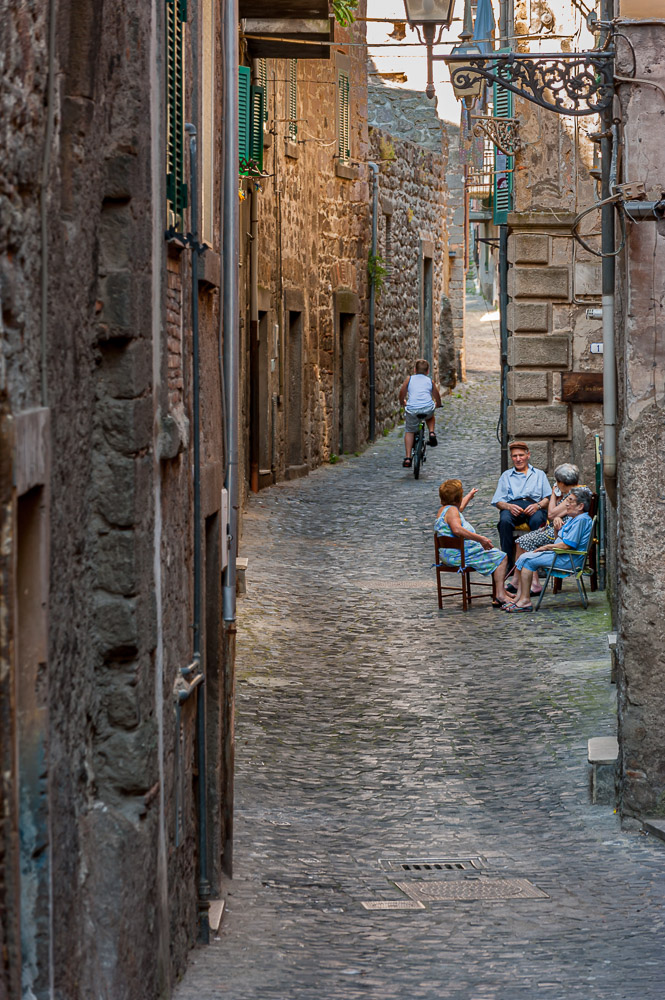
    This is joy? Yes, to me and for me.

    It is in a small town in Italy. A miserably hot day (at least 100F). I was trudging back to the hotel, dying from the heat. But looking down this side street, this group of old friends was making the best of it, enjoying each other’s company as they have probably done for decades. It was a shady spot with some breeze. Probably the most comfortable place around. They knew how to cope with it. And how to live a good life with joy.

    After seeing this and capturing it, I felt better, too. Expressing joy is contageous

  • Side Trips

    Side Trips

    I love to wander, to travel slowly. Side trips are a refreshing joy to me. Let me encourage you to join in the adventure.

    Wandering

    I am a wanderer. It seems to be deeply ingrained in me. A good way to frustrate me is to put me in a situation with a tightly planned itinerary. It feels so scripted and limiting.

    For years I resisted my wife’s pleas to go on a cruise. I knew I would not like the regimentation and fixed schedule. Reluctantly, I finally relented, but only because we would be gong with close friends. I was right. It was frustrating and I was always concerned about getting back to the ship in time. Seems like we are always leaving port just as the light was getting good for photographing on land. I don’t totally hate cruises. We have been on several now. but I have to put myself in cruise mode and accept that I am not going to be doing much photography that is interesting to me.

    Some of my peak travel experiences came back when we owned a timeshare. Ours was exchanged in blocks of 1 week. They were very nice properties, but often in out of the way places. After a day or so we had “seen everything”, but we were there for a week, so then I could get down to hard core wandering. I would get the most detailed map I could find (can’t count on data service in these places) and we would head off. We encountered places we had never heard of or envisioned. Things that were not on any tourist brochures. It was a great joy.

    BTW, don’t buy a timeshare now. the prices and rules have changed so much that they are not a great deal. Timeshare now is VRBO.

    Excursions

    This kind of wandering I described from our timeshare I would call excursions. We had a great fixed base and went off exploring on day trips. I prefer this to planning a route, packing up every day, estimating where we will get to, and trying to arrange ahead for lodging in unknown places. What can I say, I am spoiled.

    I also frequently do similar excursions from home. Recently I had to take my wife to the airport for a short trip. The airport is about an hour from our house. After dropping her off, I went for an excursion in eastern Colorado. It turned out to be a 12 hour trip. No itinerary, no real goals, just the freedom to wander and explore the wilds of the plains. I loved it. I haven’t processed them fully yet, but I think I got some shots I will love long term.

    Side Trips

    Another example: on a family trip coming back from the southeastern part of the country, we were passing through Arkansas. We were on 2 lane highways, as I prefer, when I saw an intriguing sign talking about a marker for the Louisiana Purchase Survey. Never heard of it before. Curious, and always up for possibly interesting side trips, I turned off on a very small road that took us about 5 miles out into what became swamps! Did you know Arkansas had swamps? Neither did I.

    Anyway, after the Louisiana Purchase in the early 1800’s the government devised a system for surveying the land so they could start parceling it out. Two survey teams were sent out and where they crossed was designated the”Initial Point of the first survey of the American West” . A marker stone was set there. in the middle of the swamp. Lucky for us, it is in a nice Arkansas park now with boardwalks to take us over the swamp to the survey marker.

    This was a fascinating bit of history I did not know and the location was spectacular – to me, since I love swamps. We probably took over an hour seeing this bit of interest we did not know existed. A great side excursion. Sure it put us “behind” on our trip, but so what? This side trip is what I remember.

    I love interesting side trips to find obscure things I did not know existed.

    Exploring

    Long ago I figured out that I am an explorer by nature. Not a Lewis & Clark “head out into the uncharted wilderness for years” guy. But someone who likes to discover new and interesting things. I will get out in all kinds of weather, but I don’t sleep on the ground anymore. 🙂

    Exploring doesn’t require long treks in the wilderness. I explore all over my small town all the time. I am surprised that I can still find new and interesting sights. When I’m in town, almost every day I take side trips a few miles around my studio. I have done it so much that is is getting harder to see compelling new sights, but sometimes there is the thrill of discovery. Sometimes familiar things take a whole new look in different light or weather.

    If I go to a new city I usually head out on the streets to get oriented and familiar with the sights and looks. Sometimes I even take a camera. Exploring is creative fun. There are always surprising new things to discover.

    Don’t be in such a hurry

    I know it is totally counter to the modern lifestyle and expectations, but slow down. Look around more. Find new interesting things where you thought you had seen it all. Be willing to take side trips and excursions. It is a creativity exercise that keeps your mind open to discovery.

    Not all side trips pay off in great images. Probably most don’t. Even if not, there is the joy of trying and learning something new. As has been said by wiser people, “it’s not the destination, it’s the journey”. But sometimes…

    This image

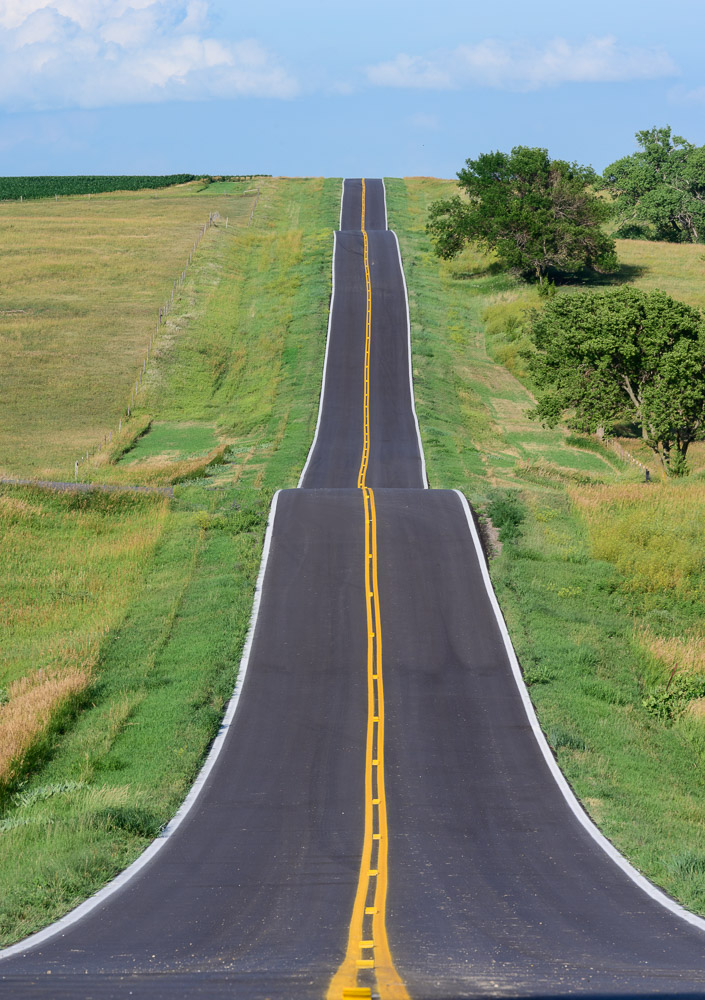
    Today’s image is a classic “found along the way” find for me. This is in the Lake District in England. We knew roughly where it was, but, as I am prone to do, we came in from a non-normal way. Basically we came in the back door. I won’t say more because I don’t want to rental car company to know what we did. 🙂

    it was a great and beautiful place and I’m glad we did the side trips and wandering necessary to see it.

  • License to See

    License to See

    I have written before on learning to see. This is a follow on to that and talks about a psychological tool that works for me to see more and move to actually making images. When I pick up a camera, that is a license to see.

    We forget to see

    I have made the point many times that as adults, we become so busy and caught up in daily life that we protect ourselves by closing our world down around us. Our interest and curiosity doesn’t extend much beyond our immediate problems of every day life. Job, kids, kids activities, paying bills, maintaining the house and car. It seems like there is not much room for anything else.

    Yet every day as we go to work or kids activities or shopping, we pass through a beautiful and interesting world. But mostly we don’t pay much attention to it. It just doesn’t seem important because we are focused inward.

    We are robbing ourselves of a lot of joy and good mental health. Learning to see more of what is around us is great for our head and our attitude.

    We have to relearn to see

    I hate to repeat myself, but I think this is important. Seeing more of what is around us is a learned skill. One that can be developed with practice.

    We used to do it. As kids we were interested in everything around us. This gets beaten out of us as we grow up. But the fact that you used to do it means you still could. It’s a matter of relearning and practicing.

    It’s also a matter of valuing it and increasing its importance. If you are an artist, I believe it is a vital skill. Isn’t that one of the important things that distinguishes us from non-artists? We observe, we see things, we see things different. To see things different, we have to first see things.

    Awareness comes first

    Seeing, in my view, starts with 2 things. First is curiosity. Curiosity helps us eagerly seek to find out about things. It gives us the motivation to see. Second is awareness. Curiosity is necessary, but it can be directed inward. We can get lost in our head and not do anything external. Awareness helps get us in touch with the world around us.

    In more flowery language than I usually use, Eden Maxwell says: “To be aware is the prerequisite for experiencing life beyond illusion, your own, or the cumulative self-consciousness amassed by society.”

    Awareness requires us to be, well, aware. Sorry. It seems too simple and obvious, but do you actually practice it? We can practice doing it. Driving to work tomorrow, after you pass a car ask yourself: what color was it? What make was the car? What color shirt was the driver wearing? When you go for a walk stop and look at a tree you pass all the time. Did you ever really notice the pattern of the branches and the shape of the leaves? Did you see that bird’s nest? Pay attention to the reflections in windows you go by.

    All these things add to your awareness of things around you.

    My hacks

    But these things require work, or worse, thinking. It seems most people don’t want to do those things anymore. Everyone wants a quick hack to make it seem like they can do something.

    So let me present 2 tools that work for me. I will call them “hacks”. For me they are a license to see. They trigger action.

    The first is picking up a camera. Yes, that simple. With a camera in hand I become immediately focused on making images. It amazes me how this works, but it usually does. I may think I am being aware and thinking like an artist, but a camera in hand focuses me. Most often I fall into the zone and flow and move toward actually making images instead of just thinking about doing it. The camera is compelling. This usually works even with an iPhone in hand.

    There are times, though, when my head just doesn’t seem to be in it. Then I have to go to the next hack: take a picture. Something happens to me mentally when the shutter clicks. The sound triggers years of muscle memory and behavior. It breaks the fear of not being able to find a subject. I am in motion now. The mental block is removed and I can go on creating images. This first frame may be intentionally a throw-away. It doesn’t matter how good it is. Now I am across the barrier and actively making images.

    Artists

    As artists, we have to be more aware of the world around us. We have to see better to help interpret life and the world to other people. Seeing is a learned skill that can be practiced and improved.

    I hope these simple “hacks” – picking up a camera and taking a picture – work for you. They are tools I use all the time in my own life, especially when I am not feeling motivated. It gets me out of my head and actually moving and doing something. Once in motion things seem to roll along better.

    Today’s image

    Following my own advice, one day sitting, bored, in a car wash, I decided to pick up my camera and see what I could do. I am happy with the result. It was not planned, it happened because I held my camera and looked around. The world is rich in images and interest. We just have to see.