An artists journey

Category: Psychology

  • The Highway – Update

    The Highway – Update

    I’ve written before about shooting from the car. I enjoy driving and I do a fair amount of my image captures during car trips. My advice has been to avoid freeways or major highways when you do this. On a recent driving trip I decided to reevaluate this. To drive some freeways to see if they still have the same effect on me. Spoiler alert: the highway is a creativity killer.

    Please understand that my advice here is from my personal experience modified with my personality. Even more than most of my articles. Your behavior may be completely different.

    Highway anesthesia

    What I had found and observed was that driving a freeway is a mind numbing and deadening experience. The miles roll by at high speed. My attention narrows to mainly the road and cars ahead of me. The goals become to get to the destination, pass that traffic in front, and don’t get a ticket.

    I may pass by beautiful or interesting sights, but there is too much inertia to stop. He impetus to push on down the road was powerful. It would require something truly amazing to break into my coma and pull off, let all the traffic I passed get ahead of me, and look foolish with all the passing cars staring at me. So I seldom do it.

    On the freeway, I may see something potentially interesting, but I can usually talk myself out of stopping. I can convince myself it wasn’t really great. That I will find a better view down the road. Or that it is too dangerous to stop here (maybe a valid objection).

    Whatever the reason or excuse, the whine of the wheels is hard to interrupt.

    A test

    I just got back from a 2700 mile driving trip through parts of Colorado, New Mexico, Oklahoma, Texas, and Kansas. That is a lot of open miles. I decided to check to see if my anti-freeway prejudice still holds. To see if I can overcome the bias against stopping.

    I drove over 300 miles on freeways or major divided highways. Well, I did not stop for a single picture during any of those miles. I told myself I would stop when I wanted to. I thought about it. But nothing I encountered could inject enough energy to make me do it.

    In fairness, a lot of this time I was not in what would be considered pristine landscape areas. But I consider the test valid, because other times, in the same general areas, I got some interesting pictures while driving smaller roads. I believe the difference was the attitude I have when driving smaller roads.

    i examined my reactions as carefully as I can and verified that driving freeways causes a different mindset. I am reluctant to stop or to go back to shoot an image. It is hard to break the rhythm, to stop. The highway is hypnotic.

    A comparison

    Here is a comparison of a specific subject. I drove through huge areas of wind turbines. In one case, on a back road, I stopped and took some side roads and even walked in some fields and got some interesting shots including the turbines, Another time, driving a high speed highway, I drove by a perfectly composed scene, with a single stark white turbine out in a field, with a perfect clear blue sky. The turbine was parked and it was perfectly positioned with one blade pointed straight down and the other 2 lifted in a perfect, symmetrical “Y” and directly facing me. But I drove by it. I wouldn’t bother to stop. I still kick myself about that missed opportunity.

    One of the main differences was that on the back road, it was easy to interrupt the trip for promising pictures. On the freeway, even a very interesting image couldn’t convince me to stop.

    Another subjective comparison: there are people I know who would pay $1000 to avoid driving across Kansas. I can understand that. But a partial solution is to get off I-70 and take back roads. When I do this I am much happier and I usually come back with some decent pictures.

    Why?

    I wish I could give a definitive explanation of the root cause of this. If I could, I might be honored as a respected psychologist. But I’m not and I can’t.

    I have theories, though, based on my on reactions and introspection. Remember, anything I say here is unscientific and may only apply to me.

    I believe the way I travel sets a context, a framework of perception and decision making. On the freeway there is the implicit goal of making progress. Getting to the destination as soon as possible. Minimize stops or interruptions. I’m in a rhythm and I don’t want to break it.

    Driving down the freeway and seeing a picture causes a conflict. Now 2 sets of goals are in opposition: speed vs. interrupting the trip for something that actually slows things down. The conflicting goals have to be weighed and balanced. But even if I decide the scene was worth stopping for, the moment is gone. I’m a mile down the road and it would take miles of driving to backtrack to it. And it is much easier to justify that it probably wasn’t worth it and let the momentum carry me down the road.

    On a small back road, though, the pace is slower, the traffic is light, and I have put myself in a position of committing to looking for images instead of covering as many miles as possible. Traveling this way also seems to keep me more alert. I am more actively engaged with my surroundings and paying attention, not only to the road, but to everything around. There is a constant background thread of playing with compositions in my mind as I drive by them. It is very educational.

    My travel style

    My preferred travel style is to only plan on making 300-400 miles a day at most. I avoid nearly all freeways and large divided highways. I then give myself permission to stop whenever something interests me and even to turn off for side trips according to my whim. Unlike the typical male, I will even turn around and go back when a light bulb goes off and I recognize I have passed an interesting scene.

    As an extreme example on this trip, we got from Colorado to New Mexico via back roads – well hardly what you would call roads and you would be hard put to find them on a map. My Jeep was caked with mud and I left it on during the rest of the trip as kind of a badge of honor. But we saw very interesting things and I got some good images.

    My wife knows, on a driving trip, to bring lots of books and magazines to read while we are stopped. I am very fortunate to be able to create this environment for myself. It would not work for everyone. As a matter of fact, most would probably hate it.

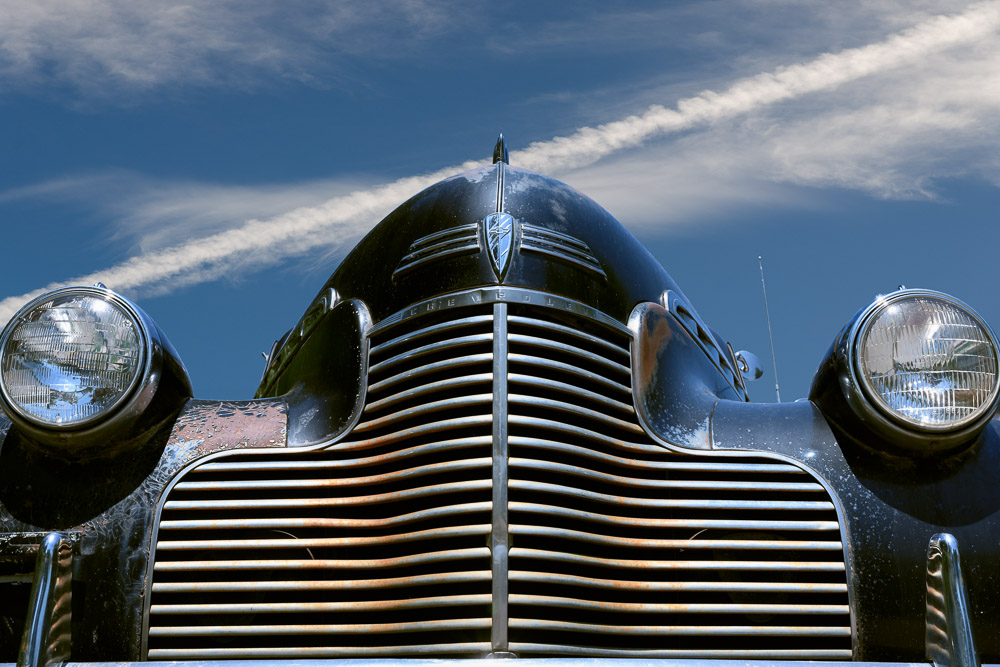
    For fun, the image with this article is from back roads in the Texas hill country. It is the old General Store in Luckenbach (yes, that one). Not my normal style, but it was fun.

    Slow down

    My recommendation is to slow down and give yourself permission to stop for anything interesting. I fully realize this will not work for everyone. But have you tried it? If you are on vacation, can you take an extra day or 2 for your art? What do you have better to do?

    I have practiced this on most driving trips for years and I can completely recommend it. Your mileage may vary. It is a very personal choice.
  • Rule of Thirds

    Rule of Thirds

    The famous Rule of Thirds. I use that name here, even though I don’t like it. It has become almost a deep seated religious belief to some. Let’s examine it. It is a good idea, not a rule that can’t be broken.

    What is it?

    Briefly, the Rule of Thirds says to divide the frame into a 3×3 grid of 9 equal squares, like a tic-tac-toe grid. Important features, like horizons, should be placed on one of the grid lines rather than centered. Also, the grid intersections are “special” and powerful. Place major subjects on one of the intersections.

    Theory says that aligning subjects with this grid creates more interest and tension than most other arrangements. This are not really wrong. The Rule of Thirds is generally good advice. The fault is in the application as a prescription rather than just good advice.

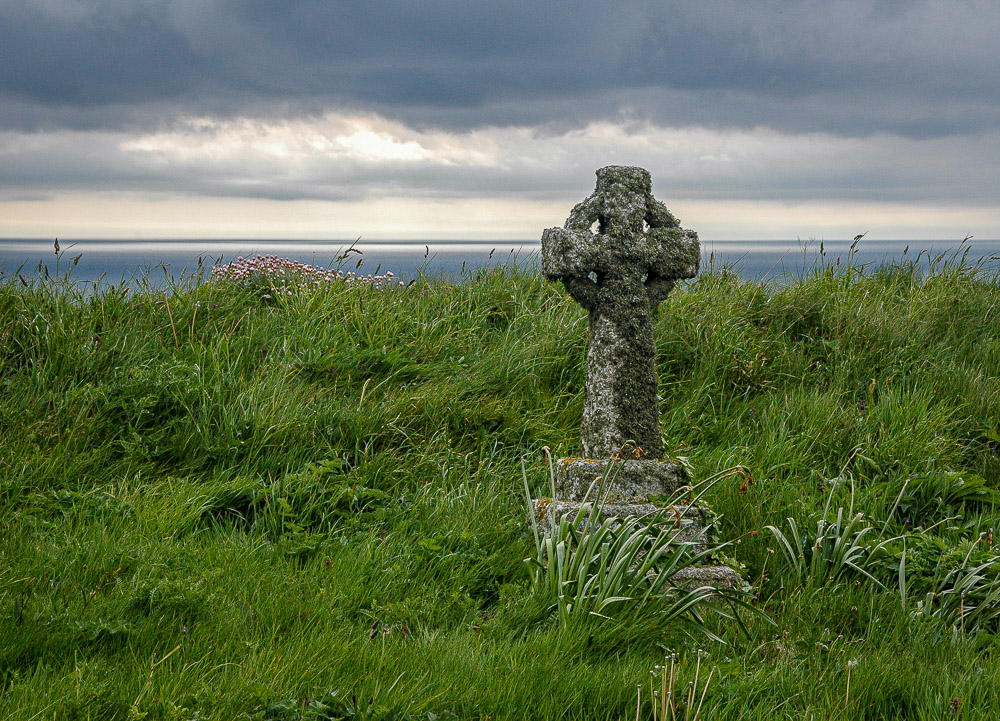
    The image with this article is faithfully cropped to the Rule of Thirds. The horizon is on the upper line and the gravestone is aligned along the right one. It works for this.

    Origin

    The rule of thirds was first written down by John Thomas Smith in 1797. And he was quoting remarks by the painter Sir Joshua Reynolds from 1783. It goes way back.

    Reynolds says:

    Analogous to this “Rule of thirds”, (if I may be allowed so to call it) I have presumed to think that, in connecting or in breaking the various lines of a picture, it would likewise be a good rule to do it, in general, by a similar scheme of proportion; for example, in a design of landscape, to determine the sky at about two-thirds ; or else at about one-third, so that the material objects might occupy the other two : Again, two thirds of one element, (as of water) to one third of another element (as of land); and then both together to make but one third of the picture, of which the two other thirds should go for the sky and aerial perspectives. This rule would likewise apply in breaking a length of wall, or any other too great continuation of line that it may be found necessary to break by crossing or hiding it with some other object : In short, in applying this invention, generally speaking, or to any other case, whether of light, shade, form, or color, I have found the ratio of about two thirds to one third, or of one to two, a much better and more harmonizing proportion, than the precise formal half, the too-far-extending four-fifths—and, in short, than any other proportion whatever.

    They were very wordy back then. But basically, he is describing what we still call the Rule of Thirds.

    Even further back

    But the basis of what we term the Rule of Thirds goes much further back, probably to around 450 BC. It was known as the Golden Ratio in ancient Greece.

    The artists back then worked out a mathematical description of their concept of beauty. The ratio was key to the design their temples, such as the Parthenon. It is surprisingly similar to the ratios of the Rule of Thirds.

    I won’t go into depth on it, but the Golden Ratio is about 1.618. It is actually an irrational number, which means it never repeats. Like pi. Sounds weird, but if you use the ratio to divide a frame they way they suggest you get something like

    Golden Ratio
    https://www.pixpa.com/blog/golden-ratio

    As you see, the proportions are roughly 2/3 to 1/3. Like the Rule of Thirds.

    To a large degree, beauty is universal.

    Why does it work for photography?

    It works for photography for the same reason it works for painting or architecture or other media. It creates compositions that are both balanced and dynamic. They are balanced because the 2/3 to 1/3 split creates arrangements that for some reason are pleasing to most people. Having the horizon or major features offset from the center creates more interest and avoids boring, static compositions. Following the grid also helps to introduce a certain dynamic layout that gives interest to an image.

    It touches us on a deep psychological level by keeping our images less centered and boring. Having things off center helps emphasize what is important to us, e.g. more sky or more foreground, and it gives our minds some work to do to balance the elements. Viewers like to have to figure things out a little bit.

    The Rule of Thirds is very pragmatic. It has proven itself for a long time. All photographers should learn it when they are learning composition.

    Learn it, use it, learn to see by it’s pattern. When you are starting you need to learn the normal conventions. This is one of the oldest and most fundamental. Internalize it. Unlike most artistic opinions it is backed by centuries of use.

    Is it a rule?

    No, at best it is a guideline, a “rule of thumb”. It contains good advice for most compositions. But composing is an art, not a science. Don’t take it too literally. Do what feels right to you as an artist. But know why you are doing it. If you don’t understand the Rule of Thirds then you will not know when it should be broken.

    You enter an image in your local camera club competition. It gets down-voted because it was not composed according to the Rule of Thirds. Talk to them. Find out if they have a valid artistic opinion about this or if they are just being legalistic. If they are legalistic, sorry, it is time to leave this group. You have outgrown them.

    If you post an image on social media and it gets negative comments because it is not “Rule of Thirds’ compliant, then just ignore the comments. You are the artist and the only one who can decide how to compose your image. If you intentionally broke the rule for a good reason, then good to you.

    Break the law

    As a guideline, it should be followed when it makes sense and abandoned when it doesn’t. Yes, the Rule of Thirds can make your compositions generally pleasing to most people. That is why you should pay attention to it most of the time. It is time honored and proven.

    Maturity and experience will help understand that there are times when the rule should be abandoned. For instance, for a very symmetrical composition, off-centering it to follow the Rule of Thirds would probably look weird and damage the impact of the symmetry.

    Or in the case where you have a subject you want to fill the frame with. Do it. That supersedes the rigid rule.

    Or let’s say you are a photojournalist who has just captured a unique event that the world needs to see. Didn’t have time to compose according to the Rule of Thirds? No problem. Most people would agree that a strong or important subject overrides the rule.

    Basically, if you understand the “rule” but feel you have a good artistic reason to break it, do it. You are the artist.

    Create

    Ultimately, that is what it comes down to: you are the artist. If you understand composition and believe you have a better idea than the Rule of Thirds feel free. You may be right or you may be wrong. Either way, you made an artistic choice. That is what you need to do.

    Composition rules are based on principles of perception and gestalt psychology. They usually make sense and any artist should learn them and internalize their application. But creation sometimes involves taking a new direction, abandoning norms, breaking rules. Do not insult your viewers by being ignorant of the norms. Rather, delight them by occasional creative rule breaking. Be an artist.

    Learn the rules like a pro so you can break them like an artist. —  Pablo Picasso

    There are rules about perception, but not about photography. – Jay Maisel

  • Talent

    Talent

    Not everyone can do everything. When your parents told you you can be anything you want to be, they weren’t being entirely honest. Each of us is suited for some things and not for others. We each have certain gifts and talents. It is wired in to us.

    I could never have been an NBA basketball player or an NFL football player. I don’t have the strength or physical traits or athletic skill – or the killer drive to succeed in sports – that is required. No amount of work on my part would have overcome the deficiencies i have.

    Some things come easy

    How do you know what your talents are? One way is to look around at your peers. You will probably find that some people struggle with things that seem easy to you. Many of us have trouble recognizing this. We think if we can do it then everybody else can, too.

    Let me give one example. I am OK with math. I don’t love it, but I do it comfortably. A career in Engineering helped a lot, but there was also a natural inclination. They are related. You wouldn’t succeed in Engineering without being comfortable with math. It is frustrating to me to see people struggling to figure out simple things when it should be easy for them to calculate or even estimate an answer. I have trouble understanding that inability because I don’t have it.

    But this is supposed to be about art. I find that composition and exposure come easy to me. Yes, I have studied for a very long time, but it always felt like it wasn’t a problem. I still enjoy reading about principles of perception, and leading lines, and contrast and using the frame, and exposing to the right and all the other “theory”. It is comfortable and familiar and valuable. I do not struggle a lot with this. When I see someone who seems unable to get it together, and who worries way too much about what camera settings to use, I’m afraid I just have to walk away. I can’t relate to their mystery.

    Some things come hard

    Being easy is not the measure of your talents, though. Some things we are capable of doing come hard. It can take a lot of work to develop the ability. I would go so far as saying that if it took hard work to develop that talent, that is better. You will appreciate it and value it more when you succeed. You will probably know it better because you had to work at it. Things that are easy are not very personally rewarding.

    If you feel you have a talent for something, don’t give up. Not until you have spent a great deal of time and effort on it. Sometimes talent isn’t recognized until we reach a certain stage of life. Perhaps it has to build on other things or we have to get to a point of maturity to appreciate it.

    One thing that came hard for me is giving myself permission to really experiment. To play far outside the norms and the conventional rules. I am getting better now. Hopefully I will continue to grow in that creative direction. I feel a pull that makes me think I should.

    My background was very literal and hyper realistic. It was a struggle to break out of that. But I discovered I like the other side as well. Maybe more. Now I am comfortable with intentionally blurring things. I can composite images and play with more extreme colors. It seems the further I go off the normal path of photography the more I like it. Is this a talent? Hard to say. Maybe it is just a preference. I’m not sure where the line it.

    At some point, though, we sometimes have to decide we were wishing for a talent we don’t really have. If we have done an honest job of trying and it is just not working, time to change direction. In the process we have learned something new about ourselves. I’ll mention this later, but I found that I have very little talent for drawing or painting. I had to abandon that.

    Do you need talent?

    Do you need talent to be an artist? A sensitive topic, and I will probably offend someone. My feeling is yes, you do. The mechanics, the rules and patterns can be learned by almost anyone. What is the difference between someone who can barely take a usable selfie and another person who makes what people recognize as very good art? I don’t know. It could be creativity, or knowing how to use the tools better, or natural skill. For lack of a better term I will call it talent. Something separates the very good from the rest.

    But, and this is significant, I believe most people can learn to do a lot. You don’t have to be the best in the world to enjoy doing something. Get over thinking everything is a competition with 1 winner and everyone else a loser. Do what you can. Relax. Enjoy what you can do.

    Study yourself

    To grow, it is necessary to curate our talents like we would our art. We should evaluate and refine and seek to understand. It is a life-long process.

    I see it as a past/present/future sequence. We must honestly evaluate where we have been and what talents we have discovered. We also need to realistically assess where we are now. Are we content with what we are doing? Do we feel we are making the most of what we have? And looking to the future helps us plan a path forward. Where do we want to go? What talents will it require? This obviously is wider in scope than just art. We are evaluating our life.

    To be realistic, I’m not talking about forcing myself into a lotus position and doing navel-gazing for days. I would probably need the rescue services to pry me out if I ever got folded up that way. The idea is that we need to be self-aware. We are the only one who really understands what we feel and like and what our goals actually are. I believe we should be intentional about our life.

    Optimize your strengths

    One of the big disservices of the corporate world is the annual review. We and our manager and maybe our peers are supposed to review what we have accomplished and assess our strengths and weaknesses. A lot of focus is on coming up with a plan to improve our weaknesses.

    Sounds good, right? Sounds like the self-evaluation I recommended. What I finally figured out over the years is that it is a normalization process. The corporation is trying to make us interchangeable parts they can move around at will. This optimizes their goals, not mine.

    It finally was clear that, if you are a top performer, you get rewarded for what you do excellently. You very seldom get down graded for your weaknesses. It became my goal to optimize my strengths. When my weaknesses were pointed out I could say, yep, that is a weakness, and be confident that it will not hold me back.

    Relating this to art, it became clear to me early on that I had so little talent for drawing or painting that I would never be happy pursuing that. Also, I have a relatively short attention span for working on an image. I want to see results quickly. I did not want to spend weeks working on a single painting. But I was compelled to create art. Finding photography worked for me as the outlet that I needed . That became a whole world that was creatively satisfying and challenging. By following my strengths I can honestly consider myself an artist.

    Our talents are our strengths. They make us unique. We should try to be very aware of them. We should cultivate them and be looking to develop new ones. I believe we all have a lot of potential. No one but you can really know you. Keep pushing yourself. Learn new things. Try new directions. Find those buried talents and bring them out. Be all you can be.

  • A Sense of Wonder

    A Sense of Wonder

    Remember wonder? Most of us came with a sense of wonder. Think of a kid at Disneyworld. Or that kid with a brush or a pencil or sidewalk chalk drawing their creations. Or just playing with toys.

    Somewhere along the way this sense of wonder is squeezed out of most of us. We “grow up” and see everything coldly and analytically, or we live in fear of everything that could happen to us. Of course we have to grow up, but losing our joy and wonder of the world is a tragedy.

    My point of view here is mainly that of an artist, but the comments generally apply in a much broader scope. In a sense this article is a followup to a previous one on learning what excites us.

    Wonder drives us

    As artists (or well-balanced people) wonder is what makes us take a fresh look at everything around us. It propels us forward to discover and explore. Wonder lets us walk around the block and see something we have never noticed before that interests us or leads us to make a connection with something else.

    Wonder is the “what if?” that leads us to see new things or try new things. Without it we tend to do the same things over and over mechanically, routine. As artists we can easily get in a rut. We always produce similar work, because that is what we do. Maybe that is what we became known for.

    A rut is stagnant. It always goes the same places. We don’t grow. Eventually we get bored with what we are producing and it shows.

    Wonder feeds our curiosity

    One of the greatest benefits we have as humans is curiosity. Most of us are not grubbing around to look for our next meal or to simply survive. We want to create, to make our mark. We know there is something more than the day to day activities that occupy us. Questions intrigue us and we want answers. Or at least, we want to try to figure them out.

    I believe, and this is totally non-scientific, that wonder leads and drives our curiosity. If you don’t wonder at something why would you be curious? Wonder sparks the “how?”, “why?”, “what if?”, “could I?” side of us. It shows us there are new dimensions to explore, new sights we have not found yet.

    Being open and receptive to wonder makes us take a fresh look at the world around us.

    Permission

    Are you looking around you and really seeing things? Or are you moving through life in a fog, with your headphones on and buried in your phone?

    Not to sound judgmental, but that is what I observe of most people around me. The reality is that wonder is a still, small voice that needs quiet to be heard. It is easily drowned out by noise. The world around us inundates us with a constant stream of media designed to keep us captive and tuned in to their stream. I know from my own experiments that I have to unplug to activate my wonder and curiosity.

    Try it. Go out sometime without a camera or sketch book, just you. Leave your phone in your pocket. Put away the headphones. Just wander. It will seem very strange at first. Disconcerting. But keep at it.

    After a while I predict you will start to look around more. You will start to actually see things, maybe for the first time. Let your curiosity feed on it. What is that? Was this always here? That’s interesting, but I’ve never noticed it.

    It basically comes down to giving your self permission to slow down and explore. This is a hard step for some of us. Practice it. It is kind of like meditation. It may seem strange at first, but it gets easier and more beneficial with practice.

    And in my experience, it works the same driving in a car. That is, turn off the radio and just look around (as much as you safely can). Give your self permission to take side trips, to stop and look at anything that catches your eye. Let those cars pass you. Try it. It feeds your mind and it gets easier with practice.

    Play

    I started off talking about the natural wonder we had as children. To some extent we can recapture it. We just have to un-learn some of our adult traits. A good path is to learn to play again.

    As kids we played a lot. BTW, I hope you let your kids have lots of unstructured time for play. Not with socially relevant or educational toys, but with a box or some paper or string or … Anyway, adults can play, too. It is good for us. Very good.

    Follow your curiosity. Pursue goals that probably won’t lead to a profitable outcome, but that you are interested in. Learn something new.

    As an artist, assign yourself a strange project. One you have never done before and aren’t likely to put in your portfolio. Explore the dark recesses of your tools, like Photoshop blending modes for example. Not to create something great, but to explore and find out what might happen.

    That’s one of the things about play, it is usually unstructured and just for you. There is no intent to produce something for other people. The benefits are indirect and very personal.

    Be different

    I highly recommend you redevelop a child-like wonder for your work and the world around you. Give your self permission to be unconventional. You will start to see more. You will become more curious about things. Hopefully you will act on your curiosity. Observe, experiment, plan to throw your experiments away. The joy and learning is in the doing or the seeing.

    In my art I have followed my curiosity and am starting to see beyond the traditional limits of my media. I push past the conventional views I have long held and try to re-imagine the normal. I am doing whole new views of common everyday scenes. You may not like it. Nobody has to other than me. But it renews me. I feel like I am opening up new doors.

    Please try to renew your art and your life. It is the only life we have.

  • The Value of Editing

    The Value of Editing

    Image editing has great value beyond just the corrections done.

    I often hear photographers state a goal of minimizing or even eliminating the time they spend on the computer editing images. Some say they don’t like technology. Or maybe they are too busy to spend the time editing. There are some who seem to think that a well executed image should already be complete right out of the camera.

    I believe all of these attitudes are mistaken.

    Technology

    I have ceased to like technology for it’s own sake. I’m not impressed nearly as much as I used to be by fast chips with great graphic processing and lots of memory. However, the computer is a necessary tool. Virtually all imaging is done digitally now. Digital images need a fast computer to process them efficiently.

    Like it or not, photography is probably one of the most technical art forms you can find. It is inextricably linked to technology. The computer is our darkroom. Just like Ansel Adams and his generation spent hours in the wet darkroom processing their images so we will spend hours at our computer doing the same.

    Of course, we have the advantage of being able to have a nice glass of wine next to us while we work. 🙂

    The inescapable fact is that computer-based processing is required for modern photography. In practice, this means learn to love Lightroom and Photoshop.

    I have seen videos from well known photographers describing their process and it is apparent they only have a limited depth of Photoshop knowledge. Yes, results are what count, but I am sorry for them. They could possibly do more if they became more familiar with the technology they use. A craftsman should be an expert with their tools.

    So if a computer is a necessary tool for our art then we should consider getting an adequate one. Bigger is better here. Bigger meaning more speed, more cores, more memory, more graphics, etc. Get one that makes editing very large files as speedy as possible. It is part of the cost of doing business.

    Need for editing

    It is a common misconception that the image you just downloaded from your high-end camera should be ready to share or print with little processing. Some people are able to do this for limited applications. For instance, I have seen wedding photographers or sports photographers who are able to ship their images out to clients almost immediately. What you often don’t see is the preparation that enabled that. They are able to shoot and ship jpg files and they spend lots of time getting their exposure and white balance dialed in before the shoot, along with presets for their typical processing steps.

    This can work excellently for an experiences artist. But only for certain niches.

    If you are following this blog I hope you do not shoot jpg files. For landscape or fine art RAW files are a requirement to make all the sensor information available to you for editing. Most of us need to dedicate the time for processing our RAW files.

    Wasted Time?

    OK, our images need some processing. Is the goal to minimize this time? To what end?

    Something I am discovering is that, at a higher level, the goal is not to see how many images I can accumulate. The goal should be to make great art. I hear people complain that time at the computer takes away from time shooting. Yes, it does. That isn’t all bad.

    I am even starting to consciously throttle my image making production because I get too far behind on the processing and refinement. Making new images is a joy. I would prefer to be out in the field shooting. But a balance is necessary and the follow on editing is equally important.

    The images have to be assimilated and processed, both by my computer and by me. This is the process I am referring to as editing.

    Value of editing

    What I have come to realize is that editing is not just about making some corrections in an image so I can get on to shooting more. Editing is an extensive and necessary process. There is the filing and culling. There is the tagging and quick corrections. Then there is the more extensive edits required to bring a promising image to fruition. Sometimes over and over. Finally, there is more culling. Yes, ample opportunity to throw things away. And be sure to set aside time to play and experiment.

    I am not a conceptual artist. Unless I am working on a project I do not shoot planned or designed images. Most of my images are discoveries, something that captured my imagination. Because of this the value of an image may not be consciously recognized by me until much later.

    Some of my images need time to mature, time for me to understand why I was drawn to them in the first place. Sometimes this requires trying several variations on editing an image. And time. It just takes time for a tricky image.

    The realization can sneak up slowly or it can come in a flash of insight. It is great when I finally understand a difficult image. Sometimes it never happens and I end up just filing it away or even deleting it.

    I have written before that we should kill our darlings. It is painful but true. One mark of our maturity is what we choose to keep.

    Understanding

    It sounds mystical, but editing, for me, has become much more than correcting an image. The time spent with my images is a key part of the process of me understanding my art. I start to see patterns of being drawn to recurring themes. Understanding the way I subconsciously work a subject over time is significant. When I spend more time with my existing images I can gather more insight to better understand my art and myself.

    Just the time spent browsing, culling, rearranging, and grading my images has led me to better understanding of some of the themes that are important to me. By removing good images that no longer align with my style or interests my portfolio gets stronger. Less is more.

    So, if anything, editing time is becoming more and more valuable to me. I value it as a necessary and important part of the image creation process. Your mileage may vary, but this is where I am.