An artists journey

Category: Psychology

  • It’s Complicated

    It’s Complicated

    Last time I wrote about the cognitive theory of vision that says we have a library of images stored in our mind and we automatically match them against scenes in front of us. This time I will say, it’s complicated. Nothing in life is that easy and straightforward. The simple theory can’t explain everything.

    To reference one of my favorite quotes from The Count of Monte Cristo (movie version). “it’s complicated”. Life and art is. A model, like the model I described last time, is a simplified version of reality. It may be useful to explain some things, but it cannot fully describe real life.

    The safe path

    If it is true that we are drawn to reproduce images we already know we like, we get stuck. Now, I think many people would acknowledge that this is true and they spend much of their career remaking the same images. Maybe they are OK with this. It is, after all, safe and comfortable.

    I can only speak for myself, but safe is not my goal. Safe gets boring and all the same. If I were a wedding or portrait photographer I’m sure I would have a different attitude. I’m not, so I can get as far “out of the box” as I want.

    Where is creativity?

    If we only remake images that match our mental library, where is the creativity? Where is that spark that takes us completely outside the normal? What causes a change of direction?

    The answer is: I don’t know for sure. But I know it happens. While I believe creativity is a learned process, it is undeniable that it sneaks up on us unexpectedly sometimes. Maybe we intentionally go out looking for something new. Maybe a familiar scene make us ask a question that leads us in a new direction. Sometimes we might have just had something weird to eat and it sparks our brain in a strange way.

    Be receptive

    I believe creativity is something you can practice and stimulate and cultivate. But those things only encourage it to happen. When it happens, when something new hits you out of the blue, you need to be receptive to it. Sometimes our natural reaction is to resist the risky new “thing”. We may not even recognize it as an entirely new direction at the time we first see it.

    Embrace the new idea. Run with it and see where it goes. At worst you decide you don’t like it. Better to have tried and failed than to not try at all. At best, though, it may change you. It may be a new viewpoint on the world.

    Think of Bilbo in The Hobbit. He did not want to leave home, but he came back changed in ways he could never have imagined. Most of us are not inviting life changing experiences like that when we follow a creative instinct. But it may be a close as we come.

    Personal

    I’m an artist. If I go through life taking the same pictures over and over, because that’s what is in my mental library, I am stale. I thrive on creativity. I enjoy following my curiosity to find new things. I am refreshed by expanding my vision in new ways. It makes me grow. It keeps me young.

    I embrace creativity, not for its own sake but for what it does for my vision. When I grow to a new place in my art I find I need to add some new images to that mental catalog and maybe remove some that I do not care for any more. That is life. That is growth. It’s complicated, but awesome.

    Let me know what you think!

  • When the Flash Goes Off

    When the Flash Goes Off

    The process of taking a photograph is intensely personal, yet there are probably commonalities among the population of artists. I am a hunter, a stalker. I call that instant when I recognize there is a viable picture in front of me “the flash going off”. It is often a blinding recognition.

    Disclaimer: some of this was inspired by Michael Freeman. I highly recommend his great book The Photographer’s Mind. It is part of a really good series. I will get no revenue from recommending this.

    Let the camera make the decisions?

    Long ago, back in the 1940’s, Bill Brandt said “Instead of photographing what I saw, I photographed what the camera was seeing. I interfered very little, and the lens produced anatomical images and shapes which my eyes had never observed.” I haven’t researched him enough to know if he was being truthful or if this was a tongue in cheek exaggeration.

    Maybe it works for you, but if I just let my camera roam unattended, it doesn’t do much useful work. Maybe I’m kidding myself, but I think I am completely guiding and directing the image making process. I may let the camera give me its opinion of things like exposure, but I make all the final decisions.

    A theory of the process

    OK, I make the creative decisions. How do I do that for scene selection and composition? Have you ever tried to analyze your process for making an image? Many of the things that happen are so fast or are part of such a deep experience base that we are barely aware of what is going on. And if we try to slow down the process enough to reflect on in, it becomes a muddle. I did an experiment once of trying to describe how to tie my shoes. I know how to do it, I can do it quickly and precisely, but to describe it – well, try it.

    A possible explanation of the photography process is taken from cognitive vision theory. The basic idea is that, over time, we develop a history of the types of images that we are drawn to, that excite us or interest us. A photographer creates a mental library of these images.

    The mind is quite fast at recognizing patterns and matching expectations. When we see a scene we seem to process it through our library and almost instantly recognize a promising image or reject it. This theory makes sense to me, as I recognize that scenes that have features I like seem to jump out at me.

    Drive by

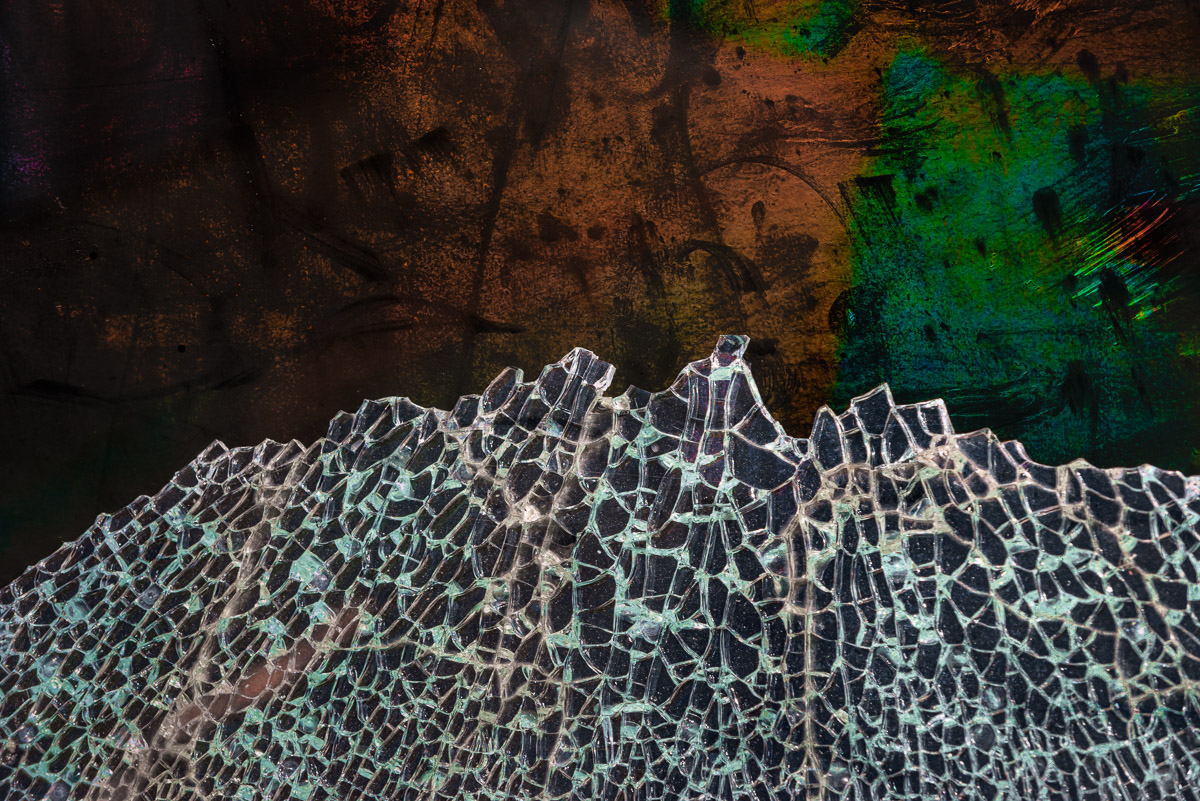
    Some anecdotal evidence for this is what I see of my scene recognition behavior while I’m driving. It is not unusual for that flash bulb to go off alerting me of something that is probably worthwhile to photograph – about a quarter of a mile after I drive by it. Like this image with this post.

    It is hard, mentally, to turn around on the highway and go back to check something out. It is especially hard when my wife is along. She rightly says “why didn’t you stop when you first saw it instead of having to go back?” I can’t get her to understand that when I am driving my mind is primarily occupied with that. The image recognition process is running in the background. This causes it to be delayed a few seconds. But when it gets a hit, it is like a highlight replay. It is clear and obvious, despite my having passed it by.

    I’m usually glad when I bite the bullet and go back for the image. Whatever triggered the response is usually worth checking out. I admit, though, I sometimes take a picture even when I don’t like the scene, just so I don’t have to admit to my wife that it wasn’t worth going back for.

    Learned library

    This library, if it really exists, must be learned. We don’t come prewired with it. Although it could be said that some things, like sunsets, are universal. How do we create the library? Well, we all see images all the time. When we see something that appeals to us perhaps we somehow add it to the library.

    A better way is to very consciously go through our catalog of images we have saved. Sort them into 2 piles, the ones we really like and want to build on, and the ones we are cool to and don’t really care about. Study the keepers. Decide what attracts us about them. Thinking about them will help build the library of images that match our vision.

    Conclusion

    The mind is incredibly powerful at recognizing patterns and matching images. Allow it to help sift through the clutter all around us. Pay attention when the flash bulb goes off. That is our pattern recognizer trying to tell us something important.

    Let me know what you think!

    To see the kinds of things I respond to, check out my galleries at photos.schlotzcreate.com

    Next week I will give an alternative viewpoint to this.