An artists journey

Category: Photography

  • Limiting File Size

    Limiting File Size

    In a previous article I talked about the “bloat” that happens when we edit in Photoshop. Is there anything we can do about it? Should we be concerned about limiting file size?

    RAW vs Tiff

    RAW files are fundamentally different from Photoshop files. A RAW file captures and preserves the data directly from the camera sensor. This data still contains the artifacts from the Bayer filter technology, that is, each pixel represents 1 value of red, green, or blue. Data in this form cannot be shown on your computer monitor until it is processed and expanded by a RAW converter like Lightroom Classic.

    It is very important to realize that this data is unaltered, no matter what fancy processing you do in your RAW editor. The adjustments you make are kept as a collection of “processing instructions”. These are applied in real time whenever you view your RAW file.

    Because of this design, Lightroom can only change the look of pixels. It cannot in any way add or remove or alter individual pixels. No matter what it looks like on screen.

    For instance, even if you use the Healing tool to completely remove a person or object from the picture, the original data is always still there. What it saves is instructions telling it what region to select and what region to copy from. This processing is applied, again, each time you view the image in the editor. Actually, it usually just keeps an edited preview of the image to show quickly, but that is getting too deep.

    Photoshop manipulates pixels

    Photoshop, though, is the heavy duty pixel pusher. It has no moral imperative to prevent you from doing anything to image data. You can freely add or remove or alter or stretch or shrink or copy over anything. Unless you take steps to edit non-destructively (more on that later), you can remove something from the image by simply copying other pixels over the area you want to remove. The original data is permanently gone. Photoshop doesn’t care.

    To do this level of manipulation requires Photoshop to expand the original RAW data to a pixel structure. The pixel data has 3 values, red, green, and blue, for each pixel and each of the values is probably 16 bits if you are editing in one of the “safer” color spaces. I recommend it. This expansion automatically makes Photoshop’s file size at least 3 times larger than the RAW file.

    Once the file has been expanded to pixels and edited, there is no going back. It cannot be reprocessed back into a RAW file. You can’t put the genie back into the bottle.

    Even RAW files can get big

    I am presenting this in a rather black & white (metaphorically) contrast. RAW file editing is no longer immune from growing quite large. The “culprit” is masks.

    It used to be that RAW processing was rather coarse and simple. If I adjusted the exposure of the image it applied to the entire image. And the processing instruction was small and simple. This is the literal data that is saved for that adjustment:

    crs:Exposure2012=”+0.65″

    Don’t worry about the exact meaning of all of it, That is for the Engineers. The point is that only these literal 24 characters are stored to change the exposure of the entire image.

    But then the designers at Adobe and others created very useful and necessary magic. We can mask areas and selectively adjust them! This is an awesome and very welcome change. It pushes back the boundary where we have to go to Photoshop to finish our files. These masks and edits are stored as text with the other processing instructions. As you might guess, it can get large.

    After doing a lot of masking and editing I have seen some of these “sidecar” files grow into 10 megabytes or more. So if my original RAW file is 50 MBytes and the editing instructions add another 20 MBytes, that is quite a lot bigger. Still nothing like going to Photoshop, but I needed to point out that RAW processing is not entirely free.

    Non-destructive editing

    Please give me a moment to plug a non-destructive editing style in Photoshop. Photoshop can do amazing and totally un-undoable things. I know that I often change my mind or have new insights about an image after it ages a while. So weeks of months or more after an initial edit, I may look at an image again and see a different direction to be taken. If the Photoshop edit has gone down a path of no return, this can be hard.

    Sure, I could go all the way back to the original RAW file and start over, but this is usually not what I want to do. I don’t want to repeat the hours of detailed work I already did. Typically there was a branch, a fork in the road while I was editing. I chose one path and later I decide I would like to explore the other one.

    With discipline, Photoshop edits can be almost totally non-destructive. This means you can undo any decision later. Or perhaps strengthen or reduce the effects of an edit.

    Probably 2 techniques serve for about 80% of the goal of non-destructive editing. The first is to use a new blank layer for pixel changing edits. So if I want to remove an element from the image, I will typically create a blank layer, then use stamp or move to overlay changes onto the image. the original information is still there is I later want to expose it or do a better job of removing it.

    The second powerful technique is adjustment layers. Use adjustment layers rather than doing adjustment directly to the image layers. This allows the adjustments to be changed in the future. It also allows for masking to limit the effects to selected areas.

    Steps to limit Photoshop file size

    It is a tradeoff: do all your processing in Lightroom or go into Photoshop. Adobe and others are constantly pushing out the boundary by giving us more and more power and capability in our RAW editors. This is very welcome.

    But there comes a point when we may have to do things Lightroom cannot do. There are things we can do to limit the overall Photoshop growth to the minimum, about 3 times the original RAW size. Basically, these destroy the non-destructive edits I recommended before. So all of those edit layers can be flattened down before saving the file.

    This commits the edits permanently. They can’t be undone in the future. But the file size will be smaller. And rasterizing smart layers will save a lot of space. Also making changes permanent.

    If it sounds like I am negative on doing this, I am. Once I invest a lot of time editing an image in Photoshop it becomes the “master” image. I usually want to keep the freedom to change my mind.

    Why bother?

    Maybe it’s the wrong attitude, but I try to act as if the file size does not matter. A large file is just a price to pay for the ability to craft an image I am pleased with. Disks are relatively cheap.

    It’s a pain when I out grow the 4GByte limit for Tiff files and have to go to a .psb file. Lightroom does a bad job of the user experience. But I put up with it because I want to hold all that work in an editable state.

    So officially my attitude is “why bother?”. Don’t sweat the file size growth. You went to Photoshop for a reason. Use it. Do your work. Files get large, It’s just a cost of doing business.

    Today’s image

    This is an example of a very simple looking file that grew dramatically. The final Photoshop file is 22 times larger than the edited RAW file!. From 61.5 MBytes to 1.34 GBytes. It sure doesn’t look that complex. It was necessary and I would still do it the same way again.

  • So Big!

    So Big!

    Our modern cameras have lots of pixels. This is a great benefit for us, especially if we want to make large prints. But sometimes the files we are editing can get so big we have trouble dealing with them. Why is that?

    Sensors

    I have made the point before that our modern sensors are amazing. The camera I shoot captures 47 MPixels for each shot. That’s 47 million pixels. There are sensors that go up to 150 MPixels in some medium format camera bodies. I haven’t seen the need to move to that yet.

    Why do we need so many pixels? Some will state that we don’t. That it is just pixel envy that keeps us seeking more. There is a good argument that about 20 MPixels is enough for the vast majority of applications.

    That is for you to decide for your own needs and preferences. I can state that I believe the quality of our images has moved far beyond film days. Digital images produce the sharpest, most detailed, most colorful, most editable results that have ever been possible, except in some very niche applications. There is no going back.

    Raw files

    Raw files hold the information that comes directly off the camera sensor. There is minimal processing done. I have discussed Bayer filters and how we get color images. The Raw file is not really an image we can look at yet.

    But there are some great features of raw files we need to be aware of. First, this is the closest we can get to the exact data that was captured by the sensor. Little processing has been done. All the processing and interpretation of the resulting image is ours. Among other reasons, this is a reason to always shoot raw instead of jpg files.

    Second, the nature of the raw file is that it cannot be edited. The original data is always preserved. Yes, of course, I can go into Lightroom Classic (I will always call it just Lightroom from here on) and do amazing things to the image. All of the changes are saved as what are termed “processing instructions“. The original data is never altered. It cannot be altered.

    One of the things this means is that years from now when I have new tools or change my mind about how I want the image to look, I can go back and re-edit it. I can even reset to the original captured bits and start over. No data is ever lost. This is a great things.

    And thirdly, the raw file is relatively compact. My camera captures 47 million 14 bit resolution sensor values, each either a red or green or blue data. It is not yet “demosaiced” to expand the Bayer sensor data to full color data for each pixel. In addition certain meta data values are stored in the raw data. Things like the camera and lens information, capture time, my copyright information, etc.

    Raw file size

    My camera is set to do a lossless compression of the data before saving it. So no data is ever lost in the process. Looking at a randomly selected file I just shot, its file size is 58.08 MBytes on my file system. The size of my raw images varies because of the amount of lossless compression that can be done on each image.

    But think about this a minute. I captured 47 million 14 bit images. This should have been 94 MBytes of data, not counting the extra meta data. I am assuming they store the 14 bits in 2 8 bit bytes. I don’t know if that is true. This means the saved raw file is even smaller than the data that came off the sensor. As I edit it and add processing instructions, the file gets somewhat larger, but seldom huge.

    Photoshop bloat

    Now I sent this raw file to Photoshop and immediately saved it. No editing. The file size is 229.16 MBytes! It is about 4 times larger! And I didn’t even do anything to the image! Why is this?

    Well, Photoshop edits pixels, each a triple of (red, green, blue) values for each pixel. Photoshop expands the Bayer data to the flat grid Photoshop needs, This is what Photoshop works with and what is saved. That automatically makes the file at least 3 times its original size. The raw file was compressed, that probably accounts for the difference.

    Now to illustrate more of what Photoshop does, I added a blank layer and used the spot healing brush to correct a couple of blemishes, very little. Saving the file again grows the file size to 548.08 MBytes! It doubled!

    To continue the demonstration, I added a curves adjustment layer and saved the file again. Now the size is 632.72 MBytes.

    The difference

    It is clear that LIghtroom and Photoshop show very different behavior when editing images. This is because of their nature and design.

    Lightroom is called a parametric editor. It does not modify the image data, Rather, it keeps a list of processing instructions to tell how to change the look of the image when it is viewed.

    Photoshop is a pixel editor. It can add/delete/modify pixels at the most detailed level. You have to be careful that you do not lose the original data. It does not care. It will do any amount of change you request. And it has the power of layers to build of levels of modification. This can lead to huge file sizes.

    Did you know that there are maximum file sizes for Photoshop files? Standard Photoshop psd files can only be up to 2 GBytes in size. Tiff files can only be 4 GBytes. I exceed these limits a lot. The only choice then is to switch to Photoshop’s “big” file type, the psb. It can grow much larger. Actually, it can handle us up to 4.2 Billion GBytes. That will work for a while. 🙂 Unfortunately it is not a choice to automatically use it.

    Any solution?

    Well, there is the “if it hurts don’t do that” solution. Stay in Lightroom for most of your image processing. Only go to Photoshop for situations that Lightroom cannot handle. This is a good strategy and I use it.

    But if you have to do that detailed pixel grooming and you have to use many layers to process your image to your taste, accept it. The cost is much more powerful computers and larger and faster hard drives. I have both. It is a cost of doing business the way I want.

    Editing large files in Photoshop will lead to very large files on your disk. I have a lot of multi GByte files. That is, some of my files have grown to about 100 times the original captured file size! Ouch. I can’t do this routinely. It has to be for special images that are worth the time and file size to do this.

    When you have to call out the big power tool, Photoshop can do almost anything. But the cost can be high.

  • Don’t Rush

    Don’t Rush

    It seems most people rush to share results of any photo outing on social media immediately. But why? Does that make sense? Wouldn’t it be better to wait until you have a few great images ready? Let your work and vision mature.

    Don’t be a slave to social media

    I am freely admitting my prejudice here. I am not a fan of social media and I don’t participate in much of it.

    A lot of people I see feel compelled to post some of everything they do to social media as soon as they are within cell phone range. They put themselves under a lot of pressure. If you are dependent on the “likes” and upvotes you get online, you serve a very capricious master. And what if several people don’t like your work? What do you do? Change? Abandon what you are doing? Who is deciding your style and artistic interests?

    It’s not collaboration

    Is your art a group process or are you, the artist, solely responsible for your creations? “Collaboration” is one of those powerful sounding words thrown around in corporations these days. I’ve been there. I know there is a place for it in corporations where they’re trying to achieve at least an average result and wanting to make several special interest groups feel included. But I claim it is not appropriate for our art.

    Our art should be a highly personal expression. To a degree, it should not matter if it is not universally popular. Maybe we should not try to be universally popular. If it appeals to the masses and looks like “everybody else’s” art, is it a creative expression? My work is going to be my own total responsibiity.

    Ask why you are sharing

    If you are sharing on social media, I think it is important to ask why you are doing it. Likes feel good, but do these people actually buy your art? Sorry to be crude and talk about money, but isn’t that the grease that lets things run?

    If your social media strategy is well tuned and you have a good mailing list of people who are real customers and eager to buy your work, good for you. That is a reason to publish on social media.

    But, how fast should you do it? Conventional wisdom on social media is that you should show work in progress. This is where I tend to disagree. I believe we should never show our work until it is ready.

    Curating takes time

    A lot of my art has to mature. I may have an idea of something I want to pursue, but my first attempts are usually not representative of where I will end up. It is typical for me to have to work with an idea or a subject for a while to refine my view, to understand my underlying feelings about it. The ideas have to age, to mature some. This can take from days to years.

    So if I’m shooting a project, the first images I shoot may be scatter shots all around the idea I haven’t really “discovered” yet. After doing work on the project a while I begin to understand what I really want to say and what will make the best visual presentation. It could be that one or more of those original images actually work for the final project, but that is almost an accident. It usually means I shot an image instinctively even though I did not consciously understand where I wanted to go. But projects can last from weeks to years, so my vision likely evolves over that time.

    In a similar way, it is sometimes the case that I shoot an image, I like it, but something tells me it is not complete yet. Maybe it needs to be worked as a low key black & white image. Maybe I need to do some serious cropping to isolate the part that really interests me. Perhaps I need to composite it with some texture or other elements to complete the look. Or maybe it just isn’t as good as I originally thought.

    Be patient

    If you’re like a lot of photographers, you shoot a lot of images when working a scene. Sometimes it is not immediately clear to me which is the pick of the group. I often have to live with them a while to understand what I was really drawn to. It may take days or weeks before I can look at the set and say “this one” is the one that captures what I was feeling at the time.

    If I am under pressure to get a quick look out to social media, I would find that what I am publishing is not really representative of what I end up with. Maybe that is OK for you. But I do not want anyone to see what I would consider inferior work. A secret of most photographers is that they seem very good because you only see about 1% or less of what they shoot. They throw away or rework what doesn’t work before it ever gets out of their studio. What you do see is good.

    A line from a famous old Paul Mason ad said “We will sell no wine before its time.” I don’t know if this is still true or if it ever was, but the idea has merit. Don’t be in such a rush to get things out. Wait for them to mature. A few great images is more impactful than a bunch of mediocre ones.

    Today’s image

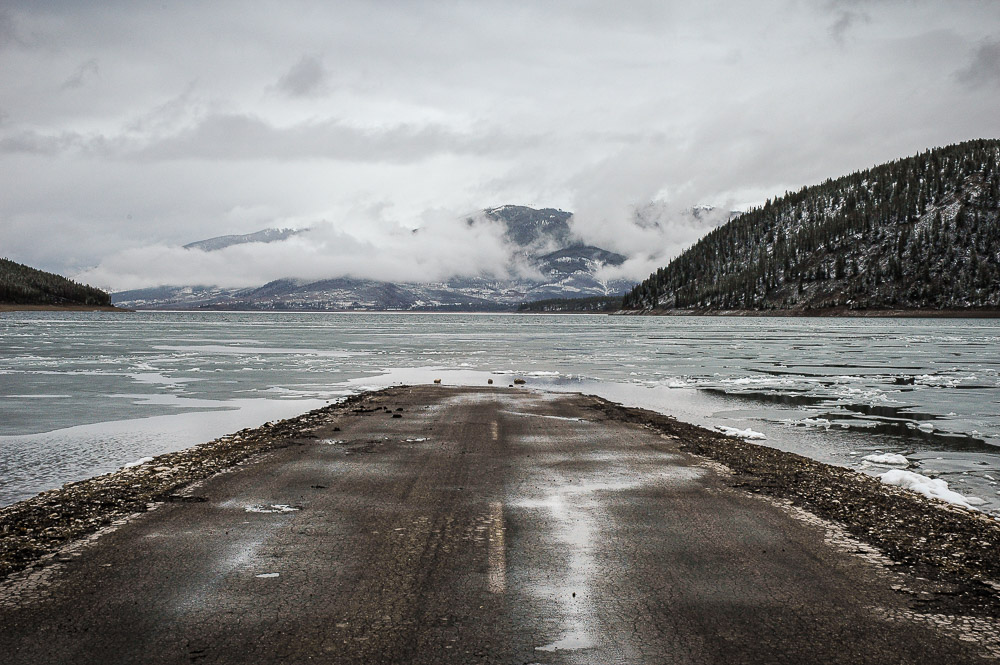
    This is a pano I shot earlier this year. At first it was a pick of the day. I really like the clouds and mountain shapes. After living with it for a while, though, I realized I do not like the foreground or the middle ground (the lower forests are too dark). And there is more visual clutter to remove than I wanted to do. So this went into the “eliminated” pile. There was another one that I liked much better.

  • Recording the Obvious

    Recording the Obvious

    The great photographer Edward Weston once said “I see no reason to record the obvious.” But isn’t recording the obvious what most of us do most of the time? What are the alternatives?

    Cameras record everything

    As I have pointed out many times, our marvelous high tech sensors are great recording devices. They do a great job of capturing what they are pointed at.

    Because of that, these days our phones have become an invaluable data capture device. We record a sign we want to look into later, or a wine label we want to remember, or selfies of us and friends. When I rent a car I always do a 360 degree bracket of it before leaving the lot, just in case there are and disputes about when some damage happened. We have our phone with us, so when in doubt, snap a picture.

    Most of this is never intended to be considered art. It is just data. Maybe memories. They are a ubiquitous part of our lives.

    Most pictures are of a clear, well defined subject

    Most of these images, whether on our phone of our “real” camera, follow the rules of composition we have been taught. The subject is centered and as sharp and well lit as we can do. Perhaps we have a clear foreground, middle ground, and background. Maybe we have made the lighting interesting: high key or low key or strong side light.

    What is common is that the photos are “of” something. They are generally straight representation or even utilitarian.

    I do not dismiss this as unimportant. But it is not art. If we want to make art we have to take a different path.

    Can there be more?

    Trillions of pictures are taken every year, no exaggeration or typo. One more image I take is just a drop of water in the ocean. Why should I bother? How can I stand out? What can we do to be a new voice?

    We are often told to be creative. But almost everything has already been tried. True creativity, in the sense of something that has never been seen, is very rare. We may never do something truly creative, but we can do work that is fresh, because it captures our feelings and point of view.

    If we try to get in touch with what we feel and our reaction to a scene, we can capture it in a way that no one else has seen. We are unique, in that our thoughts and experiences and values are different from anyone else. Therefore we should be able to see things somewhat different.

    This difference that is unique to us is what sets our work apart from everyone else. We just have to follow our unique view and not try to make our work look like everyone else’s.

    Look for the story within the story

    You walk up to a beautiful landscape. There are 20 other photographers there snapping away. What do you do? Are you going to make the same image as all the others?

    Go ahead and shoot it. Capture a record of that standard scene. Get that out of the way. Now start responding to it at a deeper level. What do you really see? It may be a famous scene, but what draws you? Everyone else is using wide angle lenses. Maybe you feel like using a telephoto to isolate just part of it. Small sections of a scene can give an impression of the whole. This is making the picture “about” something.

    It doesn’t matter what people expect to see there. What do you see? What tweaks your interest? One fresh, interesting frame is better than a whole memory card full of “me too” shots. You are the audience you have to please.

    Look deeper

    I find it useful to keep asking myself questions and demanding an answer. Especially “why?”. Forcing myself to go through 3 or 4 levels of why questions about a scene can reveal a lot. But only if I make myself answer truthfully and with some detail. It is too easy to accept a vague idea of what I feel. No, be specific.

    Can you find something more there than the surface image? Is it actually interesting? Does it excite you? Paraphrasing the great Jay Maisel, “If the thing you’re shooting doesn’t excite you, what makes you think it will excite anyone else?”.

    So peel back the layers until you discover the truth or essence of what you are drawn to. It doesn’t have to be a deep, profound truth. It could simply be “I really like the way the water is flowing over that rock.” But you have identified what part of the scene you are drawn to and why. Now the resulting image can clearly convey your intent.

    Edward Weston famously told us “This then: to photograph a rock, have it look like a rock, but be more than a rock.” (Guy Tal based a whole book on the idea. It is good. Get it). This statement is pretty Zen-like, but it brings up a lot to think about.

    How can a picture of something as simple as a rock actually be about a deeper idea? Maybe it can or maybe it can’t. I have to say that some of the pictures in Mr. Tal’s book did not bring deep concepts to me. That is the problem of conveying feelings to another person. It doen’t always work. But, the artist attempted it and discovered something meaningful for him. Perhaps I cannot perceive it, but it was there for the artist. It is an honest attempt to bring me more than a rock.

    Get over the obvious

    So I encourage us all to dig below the obvious when we are creating our images. The obvious may be pretty, but is there any substance to it, in the sense of engaging our brain, our thoughts, our feelings?

    I have come to believe that I just bring you the same images you would have shot if you were there, I have probably not added much value for you. I owe it to you to force myself to understand what I was drawn to and capture my feelings, while making a beautiful image.

    Today’s image

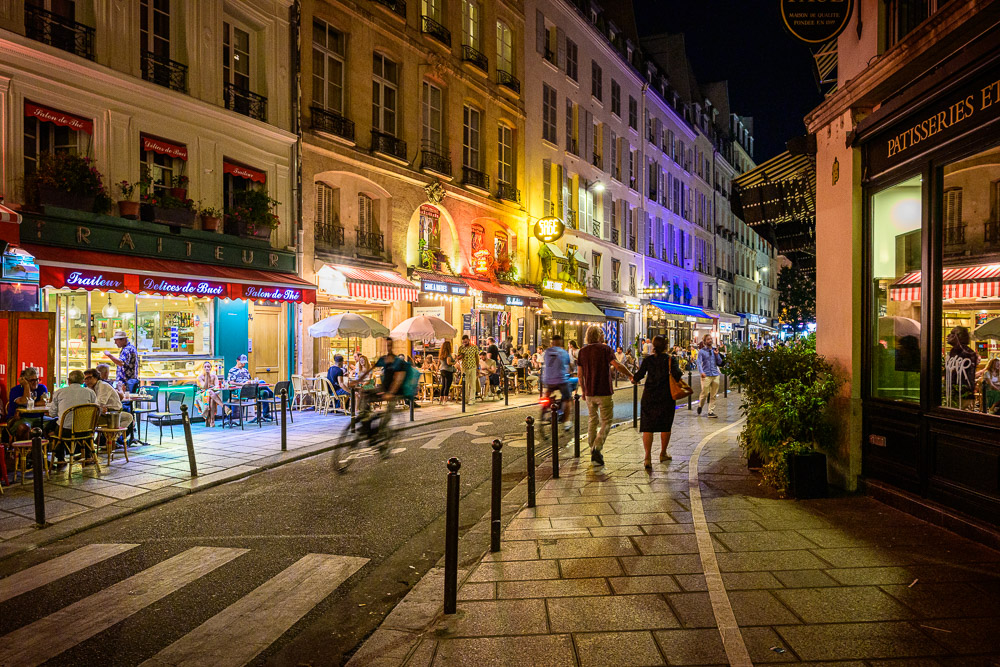
    New Orleans French Quarter comes alive at night. The color and interest of this scene really drew me in, but it lacked depth. I had an idea of what I would like to see and I refined it as I watched various people stop and look in. This person finally paused there in the entrance, alone, questioning, swiveling. He seemed torn between conflicting ideas. Go in or keep going? To me this captured inner conflict and moral ambiguity. Choices.

  • Reality

    Reality

    Is reality objective? Is there one reality that we all share? Do our perceptions and experiences and values form a reality for us? How do we know?

    Objective reality

    Is there an objective reality? Sorry to disappoint you, but I will leave most of this discussion to the philosophers. I have know some of them and listened to them discuss this, and I know I cannot follow the twists of their arguments. It’s above my pay grade as some would say.

    I believe most of us wish for an objective truth. It would seem like it would make this chaotic and confusing world make more sense. While I can’t help much with arguments for objectivity, I can give some perspective against it.

    It’s personal

    Even though there may ultimately be a “true” reality, doesn’t it seem like we each perceive our own version of it? Why else could we have a society so polarized? In America these days, if an event happens about half the people see it one way and the other half see it the opposite way.

    Are half the people at any time totally foolish? More likely nearly all of us are wrong. We have lost sight of the societal norms we used to share. When we collectively believed in certain rights and wrongs, in shared goals, in expectations of behavior, it was much easier to share a common view. To see roughly the same reality.

    I cannot solve this problem and it would be foolish to waste effort here trying. My point being that each person’s reality seems to be based on their values and perceptions, on their beliefs, and on who they listen to and talk to.

    Do we form it?

    I think I can safely say we form our own reality to a large degree. The conclusions we come to may be false. There may be objective reality we completely miss. But our own reality is what we perceive. The way we choose to react to what happens to us.

    There is an old story, completely made up I”m sure, about a psychologist studying kids to understand their perceptions. They made 2 identical rooms piled high with horse manure. One boy was put in each one with a shovel. In the first one, the boy cleared out a little space and sat down and did nothing. When they interviewed him and asked him why he did that, he said the place was filthy and smelly and there was nothing of interest there and he couldn’t wait to get out. But they found the other boy gleefully digging through the piles of manure and throwing it all over. When they asked him why he was having so much fun he said with all this manure , there must be a pony around.

    Reality is based on perception and our choices of what to believe. Each of us can look at the same facts and perceive a different reality. We do it every day without even realizing it.

    There are, of course, limits to this. Objective reality often intrudes on us. You may truly believe you can levitate, so you step off a cliff to prove it. Objective reality wins.

    Just because we believe something strongly does not necessarily make it true. Even so, it could form our personal reality. At least until objective reality crushes us.

    Seeing through our own lens

    But this isn’t a blog about philosophy. It is about art. Where does that come in to this discussion?

    I have touched on this before, but I believe a photographer can either think they are capturing and presenting objective reality or they can realize they have a subjective viewpoint.

    I know I have been on both sides of this dilemma. Way back as a young photographer and engineer, I thought the goal was to be impartial and objective. Being an engineer pushed me strongly toward the objective side. “Pure” photography. Think Mr. Spock.

    Now I realize it is almost impossible to be truly objective. Even if I attempt to present a scene “just the way it is”, I am making subjective decisions of framing and composition and lighting and timing. These selectively view only parts of the scene and strongly influence the perception of the viewer. Any scene I photograph is influenced by my point of view and feelings.

    As I push further and further into fine art, I realize strongly that my point of view and subjective judgement are a primary component of the image. It is the reason for the image. One of the mantras is “is the image I made the same as what anyone else there at the time would have made?” If it is, then why did I bother? I am not adding anything. I am not sharing my experience or my perception.

    A work of art which isn’t based on feeling isn’t art at all.

    Paul Cézanne

    Photography as seeking reality

    But let me come back for a moment to the perception of reality in a photograph. I think this is a trap most people fall into because we don’t really examine our perceptions.

    I believe most people consider a photograph to be reality for 2 reasons. First, they know the sensor records the live scene it was exposed to, so therefore this must be real. But second and more subtle, I believe most people are wishing for truth.

    We want confirmation that there is truth and absolutes, even if we do not really know what they are. So we invest photographs as a symbol of truth.

    This is one reason why people love pictures of beautiful landscapes, sunsets, waterfalls, forests, etc. It is a reality to grab onto. We wish it to be real, so we believe it. We want truth.

    I confess that I love to take these beautiful pictures, too. It is good for the soul sometimes. Please take pictures of beauty when you find it. But remind yourself it is a subjective view of reality.

    Whose reality?

    So do not be too quick to accept a picture as truth, an objective reality. It can be beautiful. We may love to hang it on our wall and look at it every day, but it does not necessarily represent reality.

    The reality we see is the artist’s reality. It is the sum of their perceptions and feelings and values. Do not lose sight of the fact that, if you were standing next to them at that time, you might have perceived something different. You might have pointed your camera in a different direction or framed it different. Your reality could differ from this other artist.

    A photograph is reality, but it is the artist’s reality.

    No great artist ever sees things as they really are. If he did, then he would cease to be an artist.

    Oscar Wilde